
Home Blog Page 304

LEADING PARTNERS

0

US, Japan remain committed to UXO clean-up efforts in Solomon Islands

BY JOHN HOUANIHAU

The United States and Japan remain committed to the World War II unexploded ordnance (UXO) cleanup effort in the Solomon Islands.

Japan and US are the two leading countries helping in the UXO removal campaign in the Solomons.

The US and Japan embassies in Honiara gave this assurance in response to an article which Island Sun had published Monday this week but then later retracted, titled – ‘Clean Up Your Mess’. The article was not balanced and had called on the US and Japan to clean up WWII UXO and insinuated that the two countries had not done anything towards this cause.

Speaking to Island Sun on Thursday, US Embassy Chargé d’affaires in Honiara, Dan O’Hara and the Japanese Ambassador to Solomon Islands, His Excellency Keiichi Higuchi, put the record straight.

“More than a decade ago, our two countries began a war legacy partnership to help identify and remove bombs and other UXO remaining from World War II. The United States and Solomon Islands have made progress on this UXO priority together.

“And this partnership has accelerated over the last few years, as we work to protect citizens from these hazards. To date, since the beginning of that cooperation, about a decade ago, the United States has provided more than $93.5 million Solomon dollars,” Chargé O’Hara explained.

He said that the US primary partner here in Solomon Islands, as in many other countries, is the HALO Trust.

“In the past two years, the HALO teams that the United States government has funded have deployed to over, as of the latest data we have, 197 locations across the Solomon Islands, and identified more than 3,000 UXO items for the RSIPF to destroy.

“HALO is seen as one of the most highly accomplished clearance, humanitarian UXO clearance organisations. They’re famous for doing demining. They do lots of UXO work. They do lots of different things. They’re incredibly professional in what they do. But unlike in other places I’ve worked alongside HALO Trust, here in the Solomon Islands, they are limited to only being able to do what the government allows them to do.

“In this case, the Solomon Islands government has limited HALO to only doing what’s called non-technical survey, which is essentially historical research and using observable conditions,” he said.

He said that with the funding that the United States has provided HALO, in the last two years they have conducted a non-technical survey of 1,008 suspected hazardous areas covering nearly 35 million square metres.

“In that time, citizens have reported more than 3,000 UXO items to HALO personnel, and HALO has submitted all of those items on 437 call-out forms to the RSIPF to address. HALO Trust has conducted 1,540 risk education sessions in nearly 200 locations around the country, providing information to citizens on how to protect themselves and properly report war remnants.

“So, I think the bottom line is the US is doing everything we can within the framework that exists. And alongside Japan, we’re doing everything we can to expand that framework so that more can be done,” he said.

Japanese Ambassador Keiichi Higuchi, meanwhile, said that the work on the UXO clean-up effort is an evolving effort.

“It’s not like we put some money up and then finish. It’s not like that.  Every year, we review whether it’s an appropriate contribution that we made as the Japanese government. And if there’s more that we could do, then of course we will think about what we can do to solve the problem here,” he said.

Higuchi said that through the partnership, a team from Tokyo came to Honiara, providing training for the RSIPF team.

“We assess after we go back to Tokyo, whether it was an appropriate level of involvement, or whether we could work more closely with other teams. I mean, with a team from Australia, a team from the United States. So, all of this makes our understanding more accurate and up to date so that we know more accurately what we can do in the future towards reducing the risks associated with the UXO,” Higuchi said.

Japan has donated towards the UXO removal programme in the Solomons in many ways.

Some of Japan’s assistance include:

-On May 17, 2023 former ambassador HE Yoshiaki Miwa and then Foreign Affairs Minister, Jeremiah Manele, signed and exchanged notes for the Economic and Social Development Programme project which is worth JPY 120 million (around SBD 6.7 million).

-Japan has also donated a 12-metre landing craft to help boost UXO removal operations.

-The Project for Unexploded Ordnance Disposal in Central and Western Solomon Islands under the Grant Assistance for Grass-Roots Human Security Projects (GGP) programme worth JPY 85,084,020 (around SBD 6.2 million).

-Enhancing the National Unexploded Ordnance (UXO) Programme in the Solomon Islands which involves conducting environmental assessment and establishment of a coordination office for disposal of UXOs, worth JPY 79,107,000 (around SBD 4.4 million)

-Donation of a pneumatic shovel worth SBD 2.6 million, two all-terrain carts worth SBD 298,000, a station wagon worth SBD 358,000, pick-up truck single cabin worth SBD 746,000, 2 fully-fitted rayboats worth SBD 418,000, two storage boxes for explosives worth SBD 47,700, and a fire extinguisher machine worth SBD 29,800.

For feedback, contact:[email protected]

‘NO ONE LEFT BEHIND’

0

9th PWWM Forum calls for collective action to ensure Pacific Islands progress together

BY LORETTA B MANELE

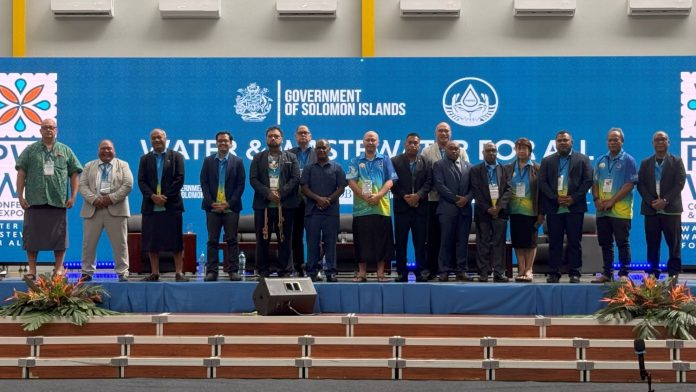
The 9th Pacific Water and Waste Water Ministers (PWWM) Forum calls for collective action to ensure that no Pacific Island is left behind in achieving sustainable water and wastewater services.

The Forum held from August 25-26 in Honiara have released a statement titled “Water Resource Security for Resilience”, in which ministers and ministerial representatives stressed on components such as;

-The varying nature of challenges across Pacific Islands

-How disproportionately affected the Pacific is by water and wastewater related impacts of climate extremes

-The critical importance of national hydrological services

-The fundamental role of water in peace and security

-Urgency for resilient and inclusive solutions

On how the nature of challenges vary across Pacific Islands, ministers stressed that this includes the unique and significant challenges faced by atoll and low-lying communities that are reliant on rainwater and shallow aquifers.

They also stressed on the value of sharing locally developed solutions through sustained communities of practice such as the Pacific Partnership for Atoll Water Security.

Another point raised during the meeting was how disproportionately affected the Pacific is by water and wastewater related impacts of climate extremes.

The ministers stressed that this comes with the expectancy of climate change to significantly increase the likelihood of hydro-meteorological disasters like flooding and droughts which as mentioned, already accounts for over 75% of reported natural disaster events in the region.

Critical importance of national hydrological services was also highlighted.

The ministers noted that this is essential to enable evidence-based decision making for sustainable water resource management, disaster risk reduction and climate change adaptation.

On this note, they welcome the development of a regional hydrology strategy to identify and address urgent national capacity needs.

Ministers also emphasised the fundamental role of water in peace and security and building Pacific resilience.

Henceforth, they call for prioritization and deeper integration of water and sanitation into national development plans, climate change strategies and disaster preparedness frameworks namely; the 2050 Strategy for the Blue Pacific Continent Implementation Plan and the Boe Declaration on Regional Security and its Action Plan.

Further on is the emphasis on the urgency of resilient and inclusive solutions.

On this front, ministers reaffirmed their commitment to regional cooperation, capacity building and innovation.

They call for collection action to ensure that no Pacific Island is left behind in achieving sustainable water and wastewater services.

For feedback, contact:[email protected]

SI delegation backs launch of Pacific inter-parliamentary association

0

BY NED GAGAHE

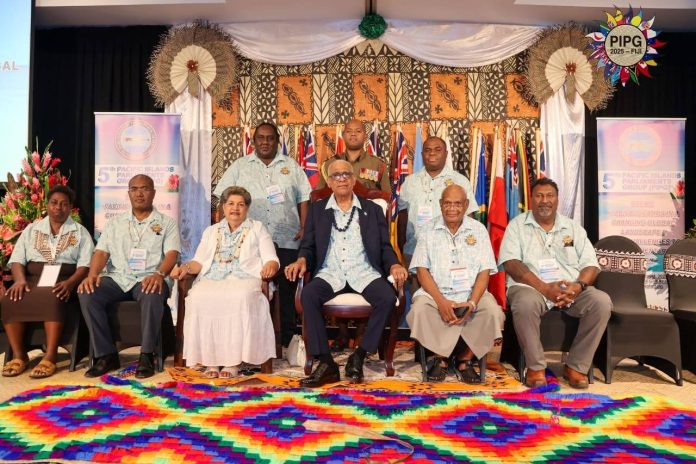
A six-member delegation from the National Parliament has returned after participating in the 5th Pacific Islands Parliamentary Group (PIPG) Conference held at the InterContinental Hotel in Natadola, Fiji, from August 26–29, 2025.

Speaker of Parliament Patteson John Oti led the delegation which included Clerk to Parliament Jefferson Hallu, Chairman of the Foreign Relations Committee MP Peter Kenilorea Jr, Chairman of the Environment and Conservation Committee MP George Temahua, MP Mary Daniella Garu, and Director of Committees and Secretary to the PIPG delegation Wilson Orisi.

This year’s conference was historic, marking the official transformation of PIPG into the Pacific Inter-Parliamentary Association (PIPA)—a new regional body aimed at uniting Pacific legislatures to confront common challenges.

In a statement, Parliament said the move from PIPG to PIPA represents “a bold step forward in strengthening democratic governance, fostering integration, and building resilience across the Pacific.”

Held under the theme “Pacific Islands in a Changing Global Landscape: From Challenges to Parliamentary Action”, the conference spotlighted the vulnerabilities of small island states while emphasizing the critical role of parliaments in defending sovereignty and driving collective action.

Since its inception, PIPG has provided a platform for political dialogue, peer learning, and regional solidarity.

PIPA will now carry forward this legacy with a renewed mandate to strengthen parliamentary cooperation across the region.

Kenilorea Jr reaffirmed Solomon Islands’ full support for PIPA, announcing that Parliament had unanimously approved a motion mandating Speaker Oti to sign the statutes on the country’s behalf.

“This endorsement by Parliament underscores Solomon Islands’ commitment to regional unity and democratic values,” Kenilorea said.

Speaker Oti also played a central role in shaping PIPA’s institutional framework, serving as one of five technical committee members who co-authored its foundational report.

The conference featured powerful keynote addresses from distinguished leaders and scholars, including former Kiribati President Anote Tong on parliamentary oversight and sovereignty, Ambassador Kaliopate Tavola on ocean resources and cultural assets, Dr. Tarcisius Kabutaulaka of the University of Hawai‘i on the potential of a regional parliament, Dr. Manumatavai Tupou-Roosen on embedding Pacific values in governance, and Sione Tekiteki of AUT on parliamentary cooperation amid global uncertainty.

Delegates also visited the Nacocolevu Agriculture Station in Sigatoka to observe sustainable farming innovations before concluding with the signing of the PIPA statutes and the election of the inaugural Executive Board.

Tahiti has been confirmed as the host of the first official PIPA meeting in 2026.

Earlier this month, Parliament in Honiara gave its full backing to the initiative, with a motion moved by Kenilorea Jr receiving unanimous support.

For feedback, contact:[email protected]
Students interact with water experts

0

BY LORETTA  BRIGIDIA MANELE

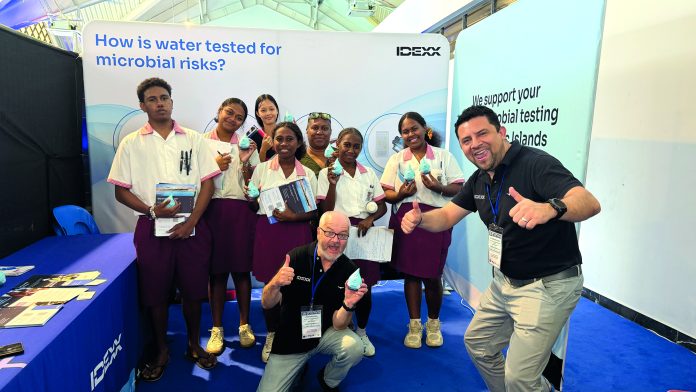
On Wednesday, August 27, 2025 students from six schools in Honiara got the opportunity to interact with water experts at the “16th Pacific Water and WasteWater Association Conference and Expo 2025” at the Aquatic Centre in Honiara.

Henry Kuper, Health and Safety coordinator from Solomon Water in an interview said getting students to involve in this conference is a privilege as this is the first time for Solomon Islands to host such a conference.

He voiced that this was an opportunity for students to directly interact with water experts and enhance their learning on water related issues.

“It is an opportunity for students to interact with water experts here at the conference. Having students here will help trigger their learning because water is not just about turning on the tap, there is a lot of technical mechanisms behind it,” said Kuper.

He mentioned that prior to meeting the water experts at the expo, the students were treated to a session from Solomon Water which catered to asking and answering of questions between students and the presenter.

Kuper expressed that he was really proud of the students for asking questions during the session because it showed that they were really interested in the session.

He noted that they wanted more schools to attend the day’s session for the students but only students from six schools namely; KG, St Nicholas College, Honiara High, Betikama, Chung Wah School and Woodford International School showed up.

For feedback, contact:[email protected]
Solomon Water boosts employee capacity with leadership pathway

0

BY SAMIE WAIKORI

The Solomon Water through the World Bank-funded leadership pathway programme has been investing in capacity trainings that continue to boost leadership capability, especially for it’s female employees.

Speaking on the session of Leadership Development Journey at the Pacific Water and Wastewater Annual Conference held at the Aquatic Centre on Thursday, August 28, 2025, Head of Corporate Service of Solomon Water, Michelle Maelaua shares her challenges and growth of leadership journey within the organization.

She said Solomon Water employs up to 242 employees and in terms of gender composition, women make up 24 percent while men cater to a 76 percent domination.

Maelaua added that 7 percent of these women hold leadership supervisory roles in the organisation, a number that hasn’t moved much.

She said reviewing the organisation’s corporate strategy plan 2024/2028, they identified the need to push that ratio hence their investment in not just capacity building trainings but also in providing a space for women.

“So as part of that, we have, with the help of World Bank, registered about 10 females in the organisation under this leadership pathway programme.

“So initially, there’s two levels to this programme, which we initially signed up 10 female leaders, coordinators,” Maelaua said.

She stated the leadership pathway programme is now in its second phase and has helped them a lot – by instilling in them knowledge and understanding of leadership.

“It is quite different from other programmes we did. It is more practical for us,” Maelaua said.

She said the program started in 2024, and one achievement from it was the development of a leadership development plan.

In an interview, Maelaua furthered that as an organisation, one of the important things to do is to develop human resources, an area Solomon Water prioritises.

On top of that, she said it’s important that Solomon Water trains more of its employees to become leaders through the leadership pathway programme or other capacity programmes.

For feedback, contact:[email protected]
HE Turner visits UK funded projects in Isabel province

0

BY JOHN HOUANIHAU

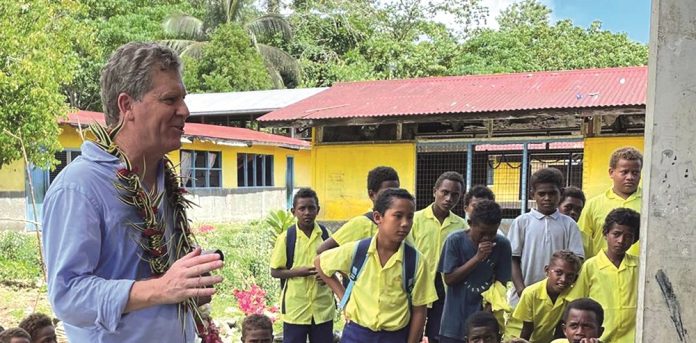
British High Commissioner to the Solomon Islands, His Excellency, Paul Turner has visited Isabel province.

His visit was purposely to see health and education projects funded through United Kingdom (UK) multilateral support to Gavi and the Global Partnership for Education.

As part of the visit Mr Turner said that he also had discussions with Isabel Premier, Lawrence Hayward about the review of the Provincial Government Act.

Turner visited the local hospital in Buala, which recently received both HPV and polio vaccines from Gavi.

The UK recently announced £1.25 billion (AUS $ 2.5 billion), which makes the UK the largest global donor for vaccines and the top three donors to the World Health Organisation (WHO) and the Global Fund, having just pledged £310 m (Aus $ 620m) to the WHO for 2025-28.

Turner also visited schools in Buala since UK is the top bilateral donor to the Global Partnership for Education (GPE) enabling organisations like UNICEF to provide basic water and sanitation facilities at schools. 

During the visit Turner said he saw firsthand the recent upgrades to schools’ sanitation facilities undertaken by UNICEF through UK (GPE) funding.

He also had the opportunity to have broader discussions with the Premier and his Executive Committee on a range of issues linked to the provincial government functions and central government.

During the discussion the Premier raised the issue of the ongoing review of the Provincial Government Act, saying it was important to get the right balance between central and provincial government. 

Turner agreed that more responsibilities and resources were needed at the provincial level and that provincial government needed more support in collecting business licence fees from mining companies.

Turner said the UK had been on its own journey with devolution to Scotland and Wales, though it was difficult but important balance to strike. 

He told the Isabel Provincial Government that he hopes the UK can offer advice and assistance on a new Provincial Government Act if requested by the Prime Minister’s office (PMO).

For feedback, contact:[email protected]
‘World to double spending to achieve SDG 6’

0

BY LORETTA B MANELE

Challenges in the access to safely managed water and sanitation implies that the world will have to double spending to achieve SDG 6, says Gustavo Saltiel, Strategic Adviser on Water Supply and Sanitation with the Water Global Practice (Water GP) at the World Bank.

He highlighted this when delivering his presentation “Strengthening WASH governance in the Pacific: Adapting the World Bank’s PIR Approach” at the Aquatic Centre in Honiara on Wednesday, August 27, 2025.

SDG 6 is the United Nations’ Sustainable Development Goal for Clean Water and Sanitation and this goal aims to ensure access to safe and affordable drinking water, adequate sanitation and hygiene for all by 2030.

In early remarks, Saltiel explained that their presentation is about strengthening WASH governance in the Pacific using what they call the “PIR approach or methodology” in which PIR stands for “Policies, Institutions and Regulations”.

Moreover, he voiced that we are facing a huge challenge.

“I think everybody is aware of the size of the challenge. Two million people worldwide do not have access to safely managed water supply.

“Almost double do not have access to safely managed sanitation. Fifty percent of the waste waters globally are discharged into the environment without any treatment or limited treatment. Millions of deaths are associated with lack of potable water and lack of sanitation services,” he stressed.

Saltiel mentioned that access to WASH services in health facilities and schools is very limited and numbers for sub-Saharan Africa may be similar to the Pacific.

“All these challenges will be exacerbated by climate change and the difficulties for new utilities to provide safely managed services and reliable water supply and sanitation services will be even more difficult.

“Globally, there are 350 million cubic meters of water per day that are lost as to non-renewable water and this is a huge opportunity,” he said.

Saltiel explained that this in a way shows the size of the challenge and this challenge implies that what the world will need to spend to achieve Sustainable Development Goal No. 6 is huge.

He went on to state that it has been estimated in a global study done by the World Bank, called the “Public Expenditure Review” that the world will need to double spending levels to achieve SDG 6 or this will amount globally to 150 million US dollars per year.

“In East Asia and the Pacific alone, it will be 13 billion US dollars additional to meet SDG 6, not by 2030, even by 2035. So, the challenge is huge, which means that business as usual is not an option,” said Saltiel.

On this note, he stressed that we need to change that and this means basically addressing challenges at two levels.

Saltiel explained that one level is what they call the enabling environment level, policies, institutions and regulation (PIR) and second is the utility level.

He said on the PIR, on the policy side, we have common challenges with familiar situations.

Saltiel stated that this includes financial and institutional capacity, overlapping and unclear roles and responsibilities, unrealistic policies, reforms and targets.

He added that many countries, cities, utilities commit to universal access to water supply and sanitation, safely managed.

For feedback, contact:[email protected]
Solomon Water recognises gender equality

0

BY SAMIE WAIKORI

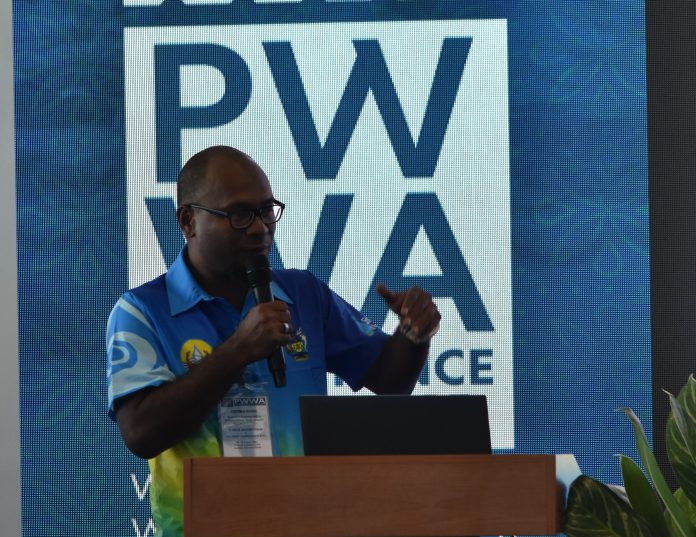
Solomon Water highly recognises gender equality as part of its action plan that forms an integral aspect of its Strategic Plan launched in 2024.

The policy aims to encourage gender equality in the organisation, where women representation in its workforce is only at 35 percent.

A presentation by Solomon Water at the 16th Pacific Water and Wastewater Annual Association Conference and Expo in Honiara on Thursday, August 28, 2025 highlighted the importance of gender and social inclusion in the strategic plan of the organisation.

Solomon Water has embedded gender and social inclusion and recognises the impact that gender equality has in this action plan.

Solomon Water has a reputation as an employer of choice for gender equality and has been working towards it, despite being a male dominated organisation.

The organization has female employees and a snapshot in terms of gender scale at Solomon Water is 35% representation of women in the workforce and 75% male and they have 16 women who have actively taken up leadership roles.

In the technical field, there are 13 female engineers, coordinators and team leaders.

Solomon Water recognises the energy that women bring to the workforce and have delivered 11 trainings so far for technical and non-technical fields.

Of the 75 participants in these trainings, 19 were women.

Moreover, Solomon Water’s Strategic Plan launched in 2024 recognises the challenges faced in the Pacific region and in the local context and have incorporated it into the development of their strategy.

The strategy’s focus is to ensure that people have the right knowledge and skills to support what they are required to do.

With the organisation structure that’s developed at the moment, Solomon Water is working towards defining job descriptions and competencies. They are measuring and linking individual performances to organisational performances.

The organisation is also implementing performance reviews on an annual basis and when they step in as part of community support, they identify training gaps and put them together as a training development plan.

Like any water authority or organization in the Pacific, Solomon Water will always come across challenges, but will continue to strive to deliver it’s services.

For feedback, contact:[email protected]

Governance of water resources is spread among stakeholders

0

BY LORETTA B MANELE

At the moment, there is no champion that oversees the governance of water and oversight of it is however spread among key stakeholders says Stephen Attallifo Mosese, Solomon Water’s Catchment Officer.

He was speaking at the 16th Water and WasteWater Association Conference and Expo 2025 on Wednesday, August 27, 2025 at the Aquatic Centre.

Mosese explained that there are key agencies that have a legislative role or governance role that encompass water resource governance.

He said for instance, there is the Ministry of Mines’ Water Division that oversees policy, Ministry of Environment that looks after Environmental protection, Ministry of Lands that takes care of some areas, Ministry of Health that sets health standards and the Ministry of Forestry that issues milling and logging license.

“So, you can see this is a highly fragmented governance set of arrangements that are currently in place. We have overlapping responsibilities and coordination,” said Mosese.

He added that they also have limited devolution of authority which means that in Solomon Islands there is the provincial and local councils that are not empowered because they lack resources.

In this regard, Mosese said to resolve the fragmentation in governance, the national government is working on the Water Resources Bill.

He also stated that this bill will replace the 1996 Water Rivers Act which is outdated and lacks provisions and support to address reality issues.

“We will have coordination and connectivity amongst leaders of governance, national, provincial, local water boards and importantly, it will also address water issues. And, this has been a long-standing issue,” said Mosese.

He furthered that this bill aims to resolve this problem and importantly it is based on international frameworks such as the Integrated Water Resource Management Principles.

For feedback, contact:[email protected]

NRH urges relatives to collect bodies as hospital morgue reaches capacity

0

BY JOHN HOUANIHAU

The National Referral Hospital (NRH) management is issuing a public call to relatives of the deceased to collect their loved ones’ bodies from the hospital morgue within 48 hours.

The Ministry of Health Medical Services (MHMS) issued the statement on Wednesday, August 27, 2025.

This urgent plea comes as the hospital faces an unprecedented increase in the number of bodies being stored, creating critical pressure on the facility’s limited mortuary space.

The MHMS statement said that NRH morgue remains the only available facility for the safekeeping of bodies awaiting repatriation, funeral arrangements, as well as those pending forensic examinations or post-mortems due to the absence of a funeral home in the city.

It further adds that there are 18 bodies being stored at once, far exceeding the morgue’s optimal capacity.

MHMS said this congestion is causing significant concern among hospital authorities, who are struggling to maintain hygienic and dignified conditions within the facility.

In response, NRH management is asking relatives to make arrangements for the prompt collection of deceased family members, ideally within 48 hours of their arrival at the morgue.

The MHMS said that the hospital is now considering activating a daily storage fee for bodies that remain uncollected beyond this time frame, in hopes of encouraging more timely retrievals and alleviating the strain on the morgue.

The statement said that the hospital administrators however acknowledge the difficulties such as financial constraints, travel logistics, and the need for legal or forensic clearances can impede the prompt collection of bodies during these times.

NRH management has expressed empathy for these challenges and affirms its willingness to work with families wherever possible to resolve outstanding issues.

The current situation highlights the urgent need for additional mortuary and funeral services in the city according to the MHMS.

The NRH morgue is facing mounting pressure, and the lack of alternatives is an ongoing concern for both the hospital and affected families as the only storage facility for deceased bodies.

 The NRH management is urging community members, relevant authorities, and potential partners to consider long-term solutions, such as establishing a dedicated funeral home or expanding morgue capacity.

In the meantime, the hospital will maintain open communication with families and provide updates on any new policies or support services.

NRH management reiterates its commitment to ensure dignity and respect for the deceased, while balancing the operational realities of the hospital’s essential services.

For feedback, contact:[email protected]