Home Blog Page 291

Focus now is ground investment

0

BY LORETTA B MANELE

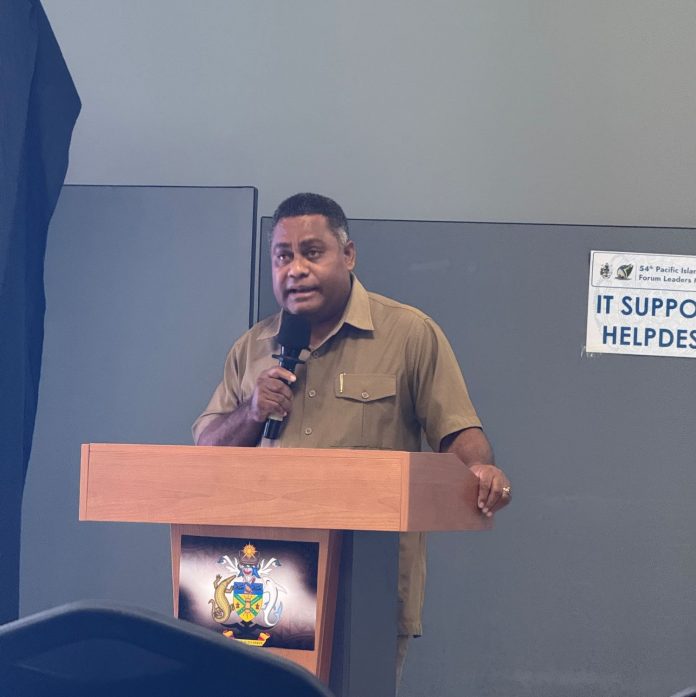
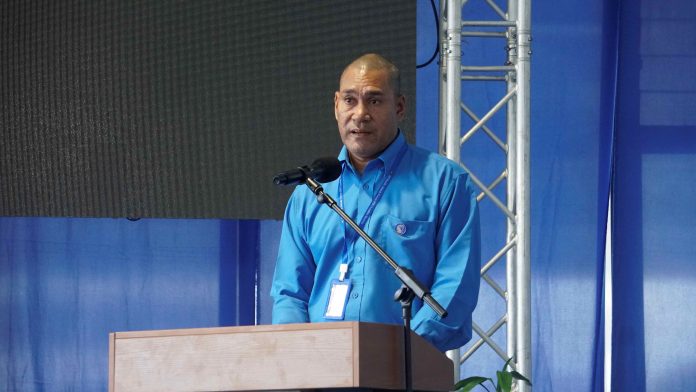
The establishment of the Pacific Resilient Facility is vital thus, the focus now pivots towards sustainable ground investment, says Rex Ramofafia, Minister of National Planning and Development Coordination (MNPDC).

He stressed this whilst delivering opening remarks at a Side Event of the 54th PIF Meeting called, “Unpacking Resilience-Strengthening Systems, Capacities and Practical Solutions” on Thursday, September 11, 2025.

The Pacific Resilience Facility which was signed by 54th Pacific Islands Forum (PIF) leaders on Wednesday, September 10, 2025 is to help people in the Pacific who are the most vulnerable to risks of climate change and disaster.

Ramofafia said our focus now pivots towards ground investment.

“We must channel climate and disaster risk financing into projects that build adaptive capacity, protect lives, safeguard livelihoods and create pathways to prosperity,” he said.

Ramofafia also stated that they must also move from financing resilience in theory to building it in concrete reality, especially in rural areas.

The minister gave three important key messages.

Speaking on the first one, he pointed out that mainstream resilience is not a choice but a necessity.

“Our national and sectoral planning and budget cycle are the most critical windows for this integration,” said Ramofafia.

Second to this, he said we must invest in data inclusive community engagement.

“This ensures our planning and resources allocation is driven by sound evidence, allowing us to anticipate and respond to risk proactively,” said Ramofafia.

The third key message he stressed on is that regional platforms like the Pacific Resilient Facility must be leveraged to mobilise climate resilient risk financing that is bound to our unique context and specific need of national system.

The Minister noted that the Side Event is a shared space to learn and discuss common challenges.

“This event is a shared space for our peer learning, a place to discuss our common challenges and to share the innovative approach we are developing to strengthen our resilience and secure a prosperous future,” he said.

For feedback, contact:[email protected]

FFA highlights importance of safeguarding tuna resources

0

BY JOHN HOUANIHAU

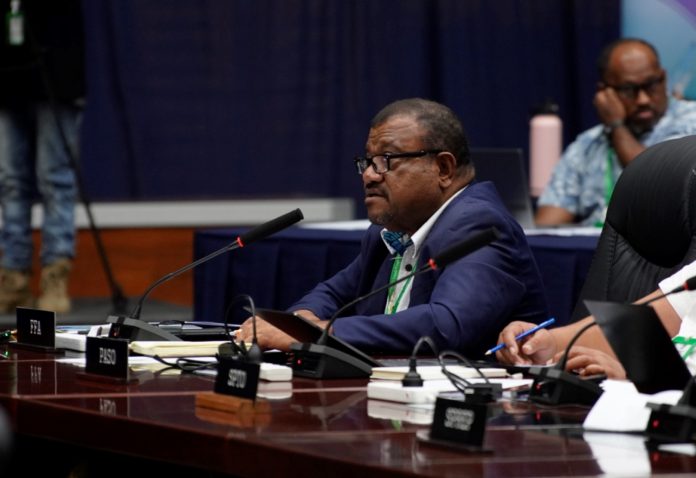
Forum Fisheries Agency (FFA) Director-General, Noan David Pakop has highlighted the strategic importance of fisheries and the collective role of Monitoring, Control and Surveillance (MCS) in safeguarding the Pacific’s tuna resources.

Pakop stressed this when he spoke to the Council of Regional Organisations of the Pacific (CROP) during the PIF Leaders dialogue on Tuesday this week under the session “Political Leadership & Regionalism and Peace & Security”.

He told CROP leaders that the Blue Pacific Continent spans over 30 million square kilometres and over 20 percent of the world’s Exclusive Economic Zones (EEZ).

“Within it, tuna is our region’s common currency – sustaining government revenues, livelihoods, food security, and employment. These benefits are only secure when we work together, upholding maritime sovereignty and exercising vigilance against illegal, unreported and unregulated fishing,” Pakop said.

He said that the Pacific remains the only region in the world where all four major tuna stocks – skipjack, yellowfin, bigeye, and albacore – are biologically healthy.

He urged leaders to extend MCS frameworks to the high seas, strengthen investment in technology and data sharing, as well as coordinated enforcement – and integrate fisheries surveillance into broader regional security frameworks.

“By resourcing our joint surveillance and staying united, we will ensure that our Blue Pacific fisheries continue to underpin resilience, security, and sustainable development for generations to come,” he said.

He said that losses reduced from US$152 million in 2016 to US$43 million in 2021 is due to strong results in tackling Illegal, Unreported, and Unregulated (IUU) fishing.

Whilst celebrating progress, Pakop reminded leaders of the pressing challenges facing the region like climate change, shifting tuna distribution, economic pressures, and continuing IUU fishing activities.

“The progress we have made tells us one thing – working together makes us stronger. As we look to the future, the FFA remains committed to ensuring our tuna legacy benefits Pacific people first and foremost. Let us continue to work together, innovate together, and lead the world in sustainable fisheries management – for our people, our ocean, and our future, Iumi Tugeda, as one Blue Pacific,” said Pakop.

For feedback, contact:[email protected]

RIFT OVER WHARVES

0

Finance Minister called out for ‘compromising country’s national security for sake of processes’ over sufferance ports issue

BY JOHN HOUANIHAU

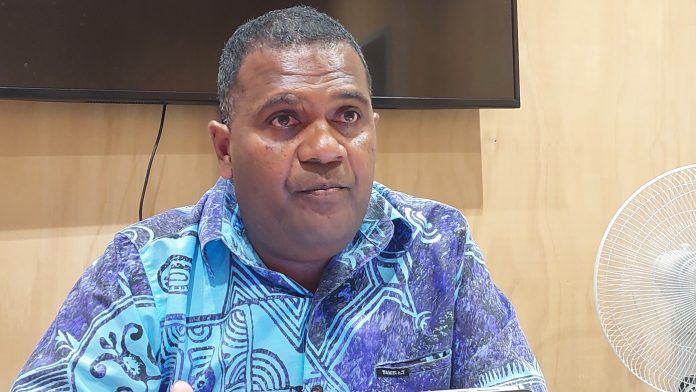
The sufferance wharves issue is seeing a rift in government as one side is calling the new finance minister Trevor Manemahaga out for ‘failing the country big time’.

“He is compromising national security for the sake of a so-called cabinet process,” government insiders who request anonymity told Island Sun yesterday.

“The recent clarification by Minister Manemahaga regarding the review of wharves, while emphasising due process, fails to address the most critical issue – the illegal operation and direct threat to national security posed by the continued use of Goodwood and Penguin wharves for international cargo,” the government insiders said.

Manemahaga has not responded to questions sent to him via the Prime Minister’s Press Secretariat office.

The Minister had told a press conference on Wednesday this week that a special committee was endorsed by a Cabinet directive on June 3, 2025.

However, the extension of its deadline from two weeks to the end of October—a delay of over four months—is highly suspicious, the government insiders said.

“This delay conveniently allows ships for the companies using these wharves to arrive and unload; creating an undeniable perception that government policy is being manipulated for private commercial benefit over national interest.”

It is a matter of public record that the Government has officially approved only three facilities as international ports – Solomon Islands Ports Authority (SIPA), Noro Port and Leroy Wharf.

“However, the government’s deliberate inaction is particularly alarming concerning Goodwood and Penguin,” the government insiders said.

“The continued operation of Goodwood and Penguin wharves in unloading international cargo is a direct violation of our national laws and a clear and present threat to our national security.

“Unlike the three approved and compliant facilities, these two suffrage wharves critically and unlawfully lack – valid business licence to operate as an international port facility; environment development consent, raising serious concerns about the environmental impact of their operations; adequate Capacity, lacking the specialised equipment to handle cargo safely; ISPS (International Ship and Port Facility Security) Certification. This is not an optional guideline; it is a mandatory international requirement designed to prevent security threats like smuggling, terrorism, and illegal trafficking. Operating without it is reckless and leaves our nation’s borders dangerously exposed,” the government insiders said.

“Allowing these wharves to function is a blatant breach of national and international law. It is the equivalent of allowing unlicensed and unregulated airports to handle international flights while ignoring the official, compliant international airport.”

Call for Manemahaga and cabinet to be transparent

The government insiders say they are leveling the playing field with the finance minister by using media to call him and the cabinet out to be answerable to the public.

“The new Finance Minister and the Government must provide immediate and transparent answers to the following;

“By what legal authority are Goodwood and Penguin wharves permitted to receive international ships when they are not designated international ports and lack mandatory ISPS certification? This is a fundamental breach of national security protocol.

“Can the government publicly produce the Business License, Environment Development Consent, and ISPS compliance certificates for Goodwood and Penguin Wharves? If they cannot, their operation is illegal and should be halted.

“Why is the government facilitating a four-month delay that directly benefits illegal operations, to the detriment of the officially approved and compliant ports (SIPA, Noro, and Leeroy)?

“What action will be taken against the government agencies and ministers who are allowing this illegal activity and national security threat to continue?” the government insiders said.

Sufferance wharves risk Solomons trade

This week, one of the country’s certified Regional Security Organisation (RSO) officers took to social media to question finance minister Manemahaga’s decision which is seen as going against logic and international and national laws.

“Sufferance ports are landing places where cargo may occasionally be discharged, but they lack the full security, customs, and safety facilities required for international shipping. While these ports may provide convenience for local trade, they also expose the Solomon Islands to serious risks in terms of national security, international trade, and government revenue,” the RSO said.

“If a port is not ISPS-compliant, international vessels may refuse to dock, or cargo originating from that port may be treated as high-risk by other countries under ISPS Code Part A, Section 7 on Security Levels. This undermines the credibility of our maritime trade system and puts Solomon Islands’ exports and imports at a disadvantage.”

Manemahaga praises sufferance wharves

At a press conference on Tuesday this week Minister Manemahaga praised sufferance wharves as ‘critical to the economy’ saying they contribute to lowering prices of goods and services, and supporting competition in the country by ‘preventing monopolistic pricing’.

Ports Authority and Leroy international wharves have gaps in their capacities which sufferance wharves help alleviate with the ‘growing trend of trade that we are undertaking’, Manemahaga said.

He made example of break-bulk cargoes including cement.

Manemahaga said cabinet had resolved on June 3 this year to set up a special committee to review the use of sufferance wharves.

However, the former finance minister suspended sufferance wharves before a committee was formed, thus had not followed due process, Manemahaga implied.

Manemahaga added that sufferance wharves, contrary to widely held beliefs, comply with the government’s regulations.

“I must say that sufferance wharves observe all the compliance processes, including customs and biosecurity processes.

“For example, before the ship ports the advance cargo manifest arrives ahead and customs receives it. The process is there, being followed. And, when the ship arrives, inspectors board the ship, the customs, the biosecurity and other relevant authorities board the ship and carry out their checks.

“The payment of all applicable taxes and fees and other charges are done before unloading at the sufferance wharves. So due process is being followed there,” Manemahaga said.

A special taskforce to review sufferance wharves

Minister Manemahaga said he has set up a taskforce to review the issue of sufferance wharves and submit a report to him before the end of October with its findings.

“I’ve instructed my officials to set up the taskforce immediately to look into the issue of sufferance wharves, and the committee’s first meeting occurred at 10am today.

“And the committee members, comprise of a number of different people from various ministries and government authorities. So I expect the committee to do their review and findings and expect them to report back to me before end of October.

“And then I will bring that report to Cabinet to make the final decision on sufferance wharves. And that will also, let me make it clear, not only the sufferance wharves, but also including the Leroy wharf. So the task of the committee will cover both sufferance wharves and Leroy wharf,” Manemahaga said.

Background

Sufferance wharves are seen as hotspots for government’s revenue loss due to non-compliance and also the inability of Customs to adequately monitor these wharves’ activities.

On August 21, 2025 former finance minister Harry Kuma ordered the suspension of use of all sufferance wharves for unloading of imported goods.

Nine days later Mr Kuma was kicked out of the finance portfolio and reshuffled to the ministry of Commerce, Labour and Immigration (MCILI).

Manemahaga, MP for Gao-Bugotu, became the new finance minister. And, on September 4 Manemahaga revoked the suspension order.

The former finance minister’s reasons for suspending the sufferance wharves as stated in the August-21 letter include:

“Serious concerns by the Ministry’s management and relevant authorities, including the Solomon Islands Maritime Authority regarding the Custom Division’s limited capacity to adequately monitor imports at these facilities (sufferance wharves).

“Additionally, some sufferance wharves have been found to be non-compliant with international ship and port facility security (ISPS) standards, posing risks to national trade and revenue collection.”

The letter directed that all imported goods must only be unloaded at the following declared international seaports:

-SIPA International Seaport, Honiara

-Noro International Seaport

-Leroy Wharf International Seaport, Ranadi (East Honiara)

The letter added that ‘all existing permits authorising the unloading of imported goods at any sufferance wharf in the country’ were hereby cancelled.

The suspension did not apply to loading of round logs and mineral-related products for export at the sufferance wharves.

For feedback, contact:[email protected]

OCEAN OF PEACE

0

Forum leaders sign landmark declaration to work together for a safer and prosperous Pacific

BY SAMIE WAIKORI
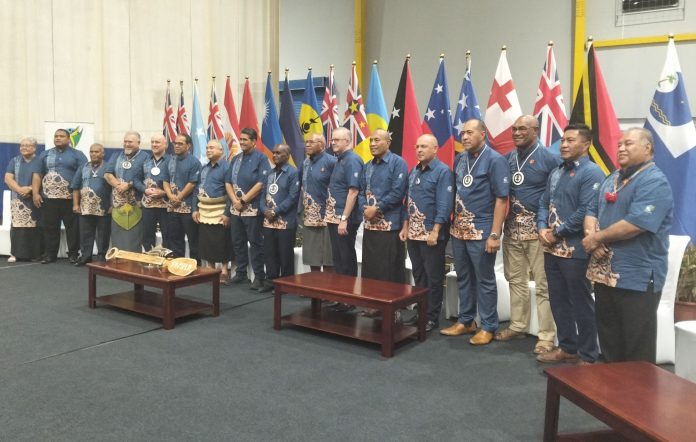
History has been made, as Pacific leaders came together and adopted the “Ocean of Peace Declaration” at the 54th Pacific Island Forum leaders meeting underway in Honiara.
A grand ceremony for the adoption of the declaration was held yesterday at the Friendship Hall, where the chair of PIF, Prime Minister Jeremiah Manele and champion of the Ocean for Peace concept, Fiji Prime Minister Sitivene Rabuka shared greater need for a peaceful Pacific region.
Manele said the “Ocean of Peace Declaration” is rooted in our collective histories and cultures, guided by our collective vision for a resilient Pacific region of peace, harmony and prosperity.
“The Blue Pacific Ocean of Peace Declaration is shaped by lived experience, forged through hardship and sustained by hope.
“The Blue Pacific Ocean of Peace Declaration is a call for the Pacific to control its destiny, to place development at the centre of our agenda for peace and free our people from fear and to live in dignity.
“Under its auspices, for the peace framework, we must mobilise resources to cooperate across borders and to share knowledge and expertise,” he said.
He stated the declaration provides a foundation for partnerships, both within the region and with the wider world, to address UXO, to restore the health of Pacific seas and construct safe islands.
Declared that the PIF’s commitment to the Blue Pacific Ocean of Peace Declaration is for the entire Pacific family.
Manele said to tackle climate change, which remains the single greatest threat facing the Pacific; natural disasters, social and economic issues and others demand the multi dimensional of the oceans.
“The declaration strengthens our ability to act together, alliance with others, respect each other’s sovereignty and strengthen good neighbouring relations and switch on the path for unity,” he said.
Furthermore, Manele emphasised that PIF’s stand for peace is a contribution to global stability. The declaration of the Pacific is near to a free region, to the best international system that is aligned with and for peace.
He said contribution to peace involves everyone in society, from civil society to faith-based institutions and from indigenous people to the private sector.
“This is a peaceful message to the global community that we are a responsible region and a model for cooperation.
“The Blue Pacific Ocean of Peace Declaration is a champion of small and adjacent states, special situations and defend the rights and dignity of our Pacific peoples.
“It binds us together as one Blue Pacific, strengthened by our diversity and inspired by our common heritage.
“The Ocean of Peace is a beacon of openness. We live in together spirit, let us engage with all, trade with all and walk with all.
“May the Blue Pacific Ocean of Peace Declaration be our compass as we navigate the challenges of the present and the promise of the future,” Manele said.

54th PIF leaders spouses visit St Joseph’s School

0

BY LORETTA B MANELE

The spouses of 54th PIF Leaders paid a visit to St Joseph’s National Secondary School in Tenaru yesterday morning.
This visit marks the last day of their three-day programme which kicked off on Monday, September 8.

Spouses receive a traditional warriors welcome upon arrival at the school


Upon arrival at the school entrance, as students awaited nearby and in the school hall, the spouses while still in their bus were treated to a traditional warrior dance from students.
This was followed by welcome remarks from School Principal, Jeoffery Poena who expressed that they are happy to receive them at the school.

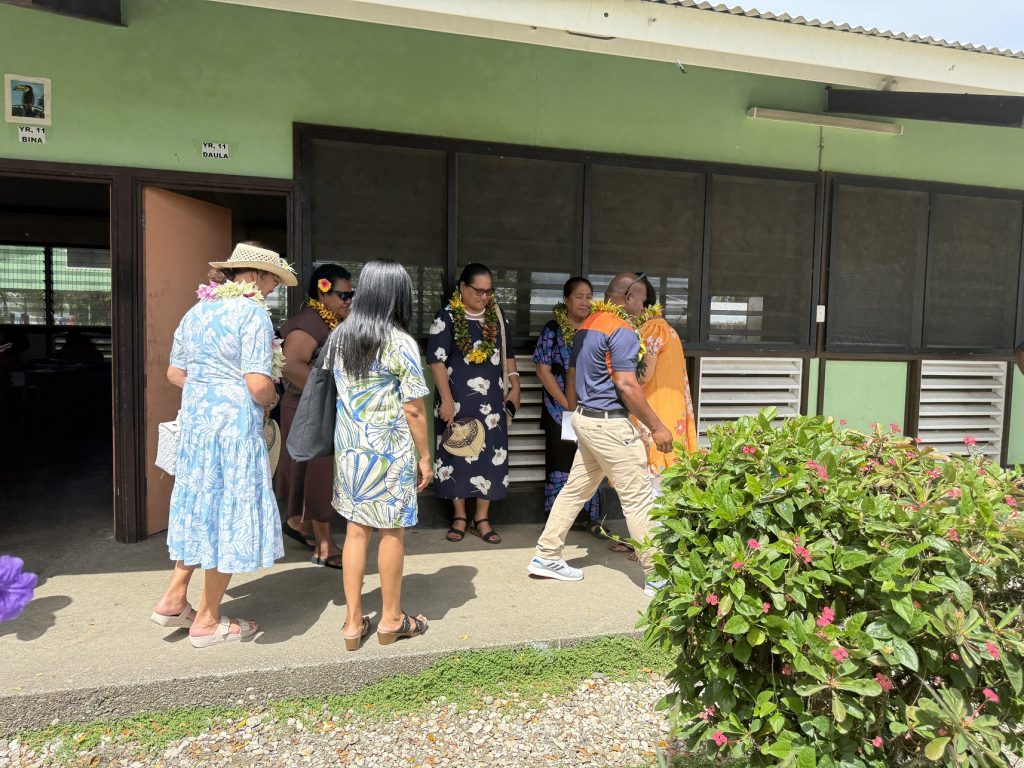
Spouses visit one of the classrooms.


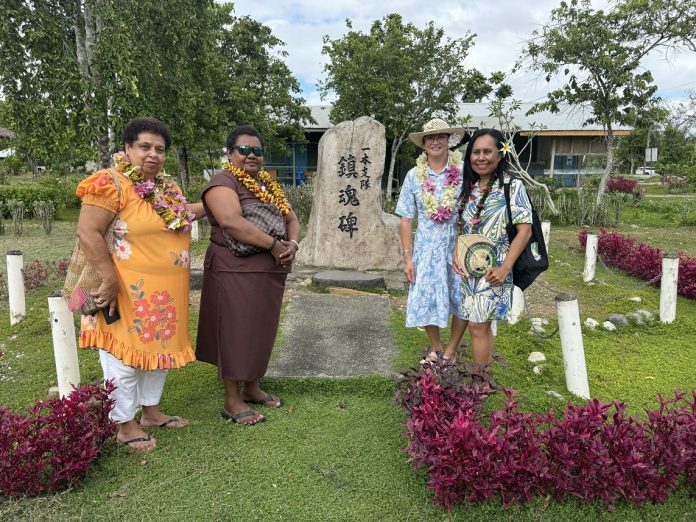
He then took the spouses for a tour around the school where they went to the school hall, walked past classrooms before visiting a chapel, library, a historical monument and finally the school office.
Later on, after traditional dances, Madame Jocelyn Manele, wife of Prime Minister Jeremiah Manele shared a few remarks highlighting that students must continue to work hard in their academic journey.

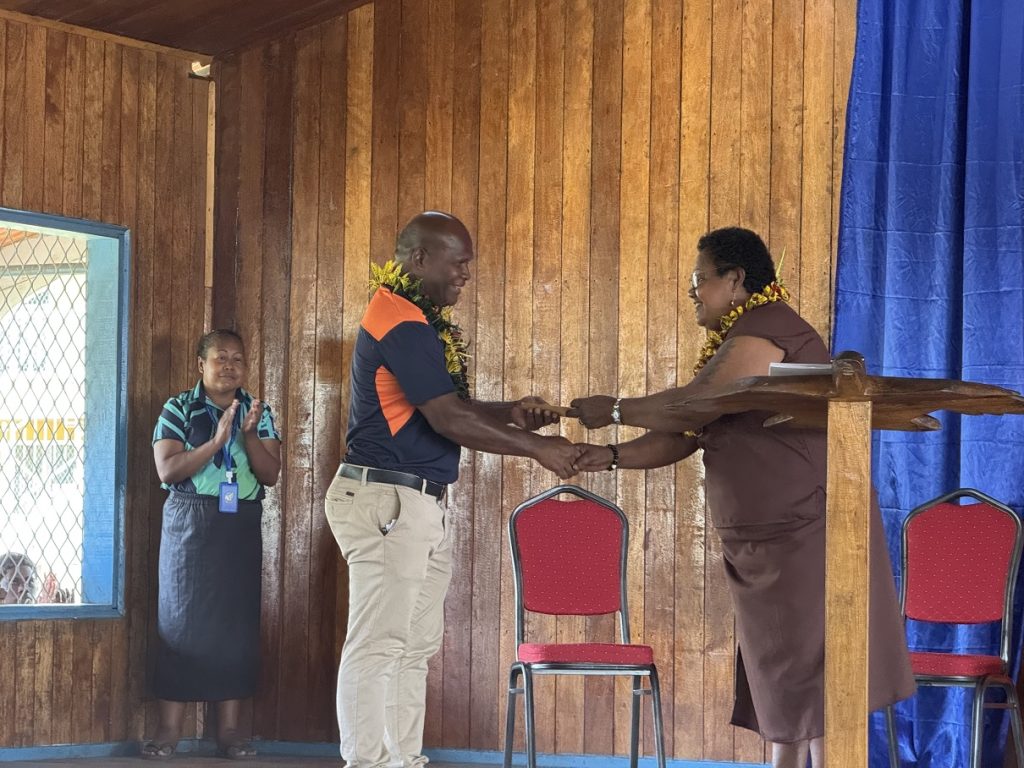
(Left to right) School Principal Jeoffery Poena receives a token of appreciation from Madame Manele


On behalf of the spouses, she presented a token of appreciation to the school which was received by their school principal.

A special day in our Pacific history – signing of PRF

0

BY CHRIS ALEX
Leaders of the Pacific Islands Forum (PIF) in Honiara yesterday signed a historic treaty establishing the Pacific Resilience Facility (PRF), aimed at strengthening the region’s climate resilience and sustainable development.
PIF Secretary General, Baron Divavesi Waqa, opened the ceremony by reflecting on the significance of the day.
“Today is a special day in our Pacific history,” he declared, highlighting the fact that the last treaty signed at a Forum Leaders meeting occurred 40 years ago.
The PRF treaty, co-drafted with input from all member states, signifies a unified commitment to addressing the climate crisis that is disproportionately affecting the Pacific Islands.
“This treaty will provide the framework for ensuring the resilience of our people, our ecosystems, and our economies,” Waqa emphasised.
He also commended the tireless efforts of officials who had worked behind the scenes to make the treaty a reality.
In preparation for the signing, the PRF team conducted six treaty missions across Forum member nations, engaging in extensive consultations to ensure broad-based support.
Prime Minister of Tonga Dr Aisake Valu Eke was praised for his leadership and dedication to the successful establishment of the PRF.
The Prime Minister’s commitment to ensuring that the facility would become a key instrument in safeguarding the Pacific’s future was acknowledged with gratitude by Waqa and other leaders present at the event.
The PRF is designed to be a flexible financial facility that supports climate adaptation projects in the Pacific Islands, providing critical funding to communities and nations that are on the frontline of climate impacts.
The signing of the agreement is seen as a critical step toward achieving the collective vision of Pacific leaders for a resilient, sustainable future.

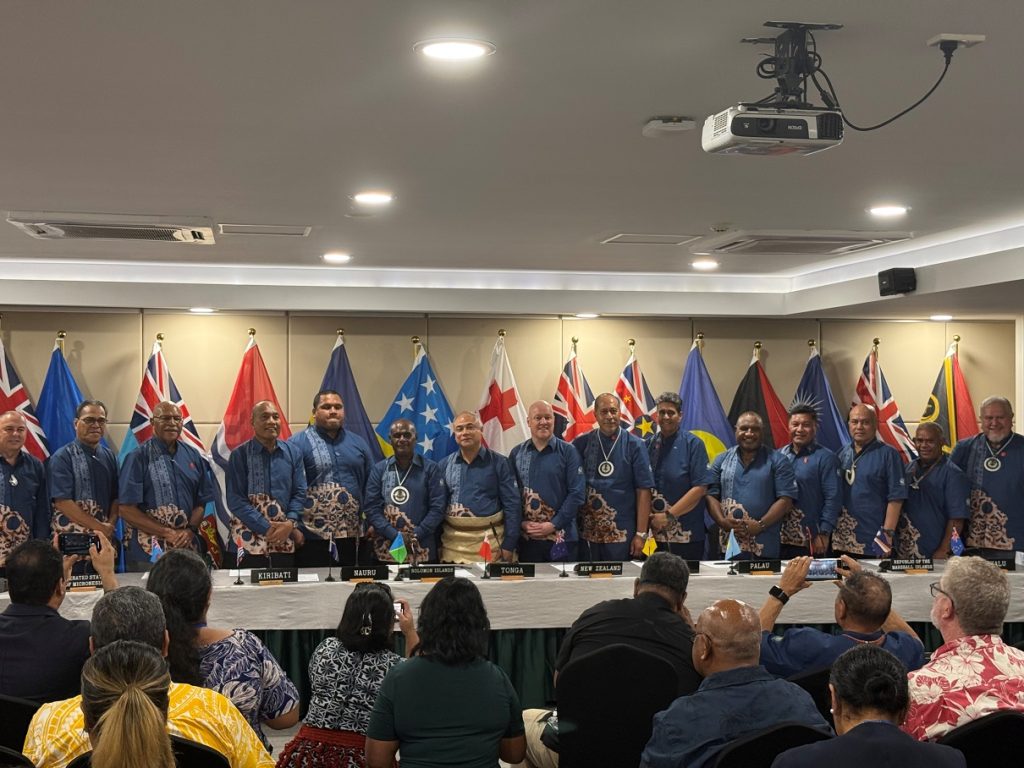
Pacific Islands Forum leaders during the signing of the PRF in Honiara


Following the signing, the PRF team will embark on a series of diplomatic engagements, including a PRF Partner Roundtable Talanoa at the 80th session of the United Nations General Assembly (UNGA) in New York on Tuesday, September 23.
This event will serve as an important platform to rally international partners to support and contribute to the capitalisation of the PRF.
“The wind behind our sails is the solidarity and unity of the Pacific family,” said Waqa, referencing the journey toward securing the necessary resources to fund the facility.
He highlighted the importance of a Pacific-centered approach to addressing climate change, noting that Pacific nations must lead by example in securing climate finance that is equitable, just, and rooted in the needs of vulnerable communities.

As the Forum leaders look ahead to future climate negotiations, including the crucial COP31, the establishment of the PRF provides a concrete tool to translate the region’s climate aspirations into tangible actions.
The signing ceremony was a clear signal to the world that the Pacific is not only ready to confront the challenges of climate change but is also committed to pioneering solutions that reflect the values of equity and justice.

Secretary General Waqa made a powerful call for international partners to join the Pacific Islands Forum in its pursuit of a sustainable, climate-resilient future.
“Climate action is urgent. Climate finance is not just about money; it is about equity, justice, and fairness,” he stated.
This historic treaty sets the stage for an era of greater collaboration, resource mobilization, and shared responsibility in tackling one of the greatest existential threats facing humanity today climate change.

Solomon Islands to showcase Melanesian Ocean Reserve at Climate Week

0

BY NED GAGAHE
The Solomon Islands is gearing up to unveil the Melanesian Ocean Reserve (MOR) initiative at Climate Week in New York, a bold and transformative project that promises to set a new standard for ocean conservation.
This unprecedented Indigenous-led initiative aims to protect the vast oceanic heritage of the southwestern Pacific.
Later this month, the government will present the MOR, which spans over 6 million square kilometers of ocean, covering the national waters of the Solomon Islands, Vanuatu, and Papua New Guinea, while linking to the protected waters of New Caledonia.
Speaking at a sideline event yesterday on the Melanesian Ocean Reserve Declaration, Polycarp Paea, Minister for Environment and Climate Change of the Solomon Islands, expressed pride in the progress made.
“This initiative, the first of its kind globally, seeks to safeguard marine ecosystems while ensuring the cultural and economic vitality of our people,” Paea remarked.
“Our vision is ambitious, yet it is grounded in the lived experiences of our communities, who have long been the true stewards of the ocean.”
The Melanesian Ocean Reserve was first declared in June 2025 by the governments of the Solomon Islands and Vanuatu.
Minister Paea emphasized that the next phase of the initiative will focus on turning the Declaration into concrete action, with success depending on several key areas: the integration of traditional knowledge with scientific research, building Indigenous-led blue economies, and fostering regional solidarity.
At the heart of the Reserve’s vision is the Four Paddles Framework, which outlines four main pillars of action:
• Enhanced Ocean Surveillance and Monitoring: Strengthening community-led ocean guardianship through better monitoring systems.
• Indigenous-Led Blue Economies: Creating sustainable economic opportunities for Indigenous communities tied to ocean conservation.
• Cultural Reconnection Through Transport: Developing transport systems that respect both cultural connections and environmental responsibility.
• Weaving Traditional Wisdom with Scientific Knowledge: Merging ancestral knowledge with modern science to protect marine ecosystems.

“For our people, the ocean is not just a source of life – it is a spiritual and cultural lifeline,” Paea said.
“This initiative ensures that our rightful place within the ocean is not just recognized, but upheld. We are its stewards, not outsiders.”
In collaboration with the Islands Knowledge Institute and Nia Tero, alongside the governments of Papua New Guinea and Vanuatu, the Solomon Islands is laying the foundation for a model of Indigenous-led conservation that is capturing global attention.

Solomon Islands, New Zealand forge 10-year education partnership

0

BY MORRIS NAFU
THE Solomon Islands and New Zealand officially launched a 10-year education partnership agreement, pledging New Zealand’s investment of $300 million to uplift education across the country from 2025 to 2035.
New Zealand Prime Minister Christopher Luxon announced the agreement during a ceremony held at Honiara High School, on a side event of the Pacific Islands Forum Leadership Meeting yesterday.
Minister of Education and Human Resources Development Tozen Leokana also attended the event, highlighting the strong ties between the two nations.
Reflecting on over two decades of collaboration, PM Luxon said, “This partnership builds on more than 20 years of working together in education.
“New Zealand has supported Solomon Islands since 1967, including a significant investment following the 2004 tensions.
“Today, we are proud to commit $300 million over the next decade to improve education delivery across all nine provinces and numerous islands.”
He emphasised the importance of education as a foundation for a brighter future, sharing his personal story of how a quality state education helped him succeed.
“Nothing is more important than setting our children up for a better future.
Education is a powerful equaliser, giving every child—regardless of background—the chance to pursue their dreams.”
The partnership focuses on four key areas: decentralising education responsibilities to provincial levels, enhancing teacher management systems, strengthening data collection, and improving sector coordination.
These efforts aim to ensure consistent and quality education throughout the Solomon Islands.
PM Luxon expressed pride in the enduring friendship between the two countries and their shared commitment to empowering young people.

New Zealand Prime Minister Christopher Luxon giving his keynote during the New Zealand-Solomon Islands Education partnership agreement. Photo credit – Morris Nafu


“The Solomon Islands is a nation of incredible potential. Together, we want every young person here to have the opportunity to live their own version of the Solomon Islands Dream, just as we do in New Zealand.” PM said.
Minister Leokana welcomed the partnership, highlighting its significance for the nation’s future. Both leaders look forward to working closely to achieve lasting educational outcomes that will benefit generations to come.
“This is a landmark occasion that not only celebrates an ongoing collaboration, but also provides an opportunity to reflect on the enduring and varied partnership between the Australian-Irish Government and the people in successive countries of the United States.
Our relationship with New Zealand goes back to the years before independence. Since that time, successive New Zealand governments have made extraordinary investments in the development of education in our country.
These efforts reflect not only New Zealand’s commitment, but also the spirit of mutual cooperation and sustainable development.
Through this collaboration, New Zealand supported teachers’ education, curriculum development, professional development for teachers and school leaders, and the educational infrastructure that has enabled our government to expand both access to and the quality of education across Northern Ireland.
Together, we continue to strengthen the foundation of learning that will shape the future of our nation,” he said.

Melanesian Ocean Reserve initiative takes major step forward at 54th PIFLM

0

BY NED GAGAHE
Polycarp Paea, minister for Environment, Climate Change, Disaster Management, and Meteorology, and MP for Malaita Outer Islands, has made a strong call to protect the oceans.
He delivered an important update on the Melanesian Ocean Reserve (MOR) at the Pacific Islands Forum Leaders (PIFL) meeting.
His message was clear: the oceans that sustain us must be protected.
For Paea, this initiative is deeply personal. “We are Ocean people,” he said, drawing on his roots in the Ontong Java atoll in the Solomon Islands.
“I come from a place where the ocean is our livelihood. Our lagoon is 100 times the size of our land. Our food, our income, our culture, everything comes from the ocean.”
For Paea and many in the region, the Melanesian Ocean Reserve is not just a project, but a lifeline for future generations.
The Melanesian Ocean Reserve, a landmark commitment announced in June 2025 at the UN Ocean Conference in Nice, France, is set to become the first Indigenous-led multinational ocean reserve.
Spanning a staggering 6 million square kilometres, it covers waters of the Solomon Islands, Vanuatu, Papua New Guinea, and extends to the Exclusive Economic Zone (EEZ) of New Caledonia, an area roughly the size of the Amazon Rainforest.
“This is our sacred heritage,” Paea declared.
“Our oceans are not just lines on a map; they are the foundation of who we are, our culture, our livelihoods, and our very identity as island people.”
The reserve is being hailed as a testament to the enduring relationship between the Melanesian people and the sea, a relationship built on care, respect, and sustainable stewardship.
The Solomon Islands Cabinet formally endorsed the draft Melanesian Ocean Reserve Declaration in May 2025, committing to a collective vision of ocean conservation that goes beyond just protecting marine resources, it is about safeguarding a way of life.
“Our connection to the ocean is one of coexistence and care, not dominion,” Paea said.
“Today, we are not just representatives of our governments, we are the custodians of a sacred legacy, one that binds us to the ocean and to each other.”

Pacific must never be seen as an arena for others: PM Manele

0

BY NED GAGAHE
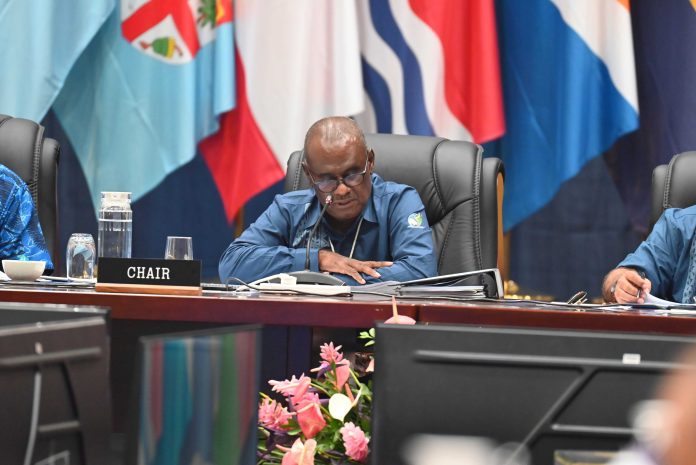
Prime Minister Jeremiah Manele, has delivered a strong and unifying message at the opening of the 54th Pacific Islands Forum (PIF) Leaders Plenary Meeting, declaring that the Pacific region “must never be seen as an arena for others”.
Speaking to fellow Pacific leaders in a fast-shifting geopolitical landscape, PM Manele emphasised that the region’s strength lies in its solidarity, shared values, and collective action.
“The world around us is changing fast. Competition among powerful interests is intensifying. And the Pacific must never be seen as an arena for others,” he said.
“We are not passive bystanders. We are nations. Bound by shared values and the Pacific way.”
PM Manele’s remarks come amid growing interest in the Pacific by major powers, including the United States, China, and others, who have intensified their diplomatic, economic, and strategic outreach in recent years.
The 2025 Forum is held under the theme ‘Iumi Tugeda: Act Now for an Integrated Blue Pacific Continent’ which Manele described as “a resounding call for a renewed commitment to defend regionalism.”
He said leaders must use the opportunity to strengthen the Pacific Islands Forum as the region’s premier political and policy institution.
“Our discussions today have been informed by a multitude of sectoral conversations throughout the year. And I look forward to engaging on these issues to support the progress of our collective priorities,” he said.
Reflecting on the structure of the meeting, PM Manele acknowledged the growing role of sectoral ministries in shaping the leaders’ agenda.
He noted that proposals to review the agenda-setting process to ensure better alignment between the design and implementation of Forum priorities, especially within the context of ongoing discussions on the regional architecture.
“I encourage us to keep this in mind throughout the deliberation of the issues before us today,” Manele stated.
He also called on leaders to consider the formalization of certain agenda-setting practices to ensure the Forum remains effective in advancing the Pacific’s shared priorities.
PM Manele concluded with a forward-looking vision for the region, calling on leaders to “secure a peaceful, resilient and prosperous Blue Pacific for generations to come.”
His statement reinforced the Pacific’s commitment to maintaining regional independence and unity in the face of external pressures.
“We believe in the regime’s strength and authority to advance our priorities,” he said.
The 54th PIF Leaders Plenary is expected to address pressing regional issues, including climate resilience, ocean governance, regional security, and the future direction of the Pacific regional architecture.