Home Blog Page 274

Lotikena calls for inclusive health approach

0

BY BEN BILUA
GIZO

Health officials have been urged to refocus approaches when implementing the national healthy setting resolutions.

Deputy Premier of Western Province, Brian Lotikena emphasised that targets should be on the root cause of health issues rather than clinical approaches.

He said spending more funds of promotions and conferences cannot solve the country’s health issues.

Lotikena stressed that more support should go towards how to create an environment that promotes healthy lifestyle in homes, communities, work places and churches.

He said the Healthy Setting initiative is a brilliant framework to encourage not only bottom-up approach but also inclusive if implemented perfectly.

“The Healthy Island setting initiative is akin to taking the fight to the root causes of our health issues rather than waiting for people to get sick and then addressing their illnesses at the hospital.

“This is perfect because we are taking a preventative approach where we create environments and settings in our homes, communities, work spaces, churches, and so forth, that deter sickness.

“It is less costly, very practical and once our populace becomes used to it, it becomes a healthy lifestyle.

“This in my view, is a more sustainable approach because we are targeting habits, behavior and mindsets,” Lotikena said.

He acknowledges the government and donor partners for supporting the National Healthy Setting Conference.

For feedback, contact:[email protected]

Best way to predict the future is to create it: Lotikena

0

BY BEN BILUA
GIZO

The Deputy Premier of Western Province urges health professionals to embrace change and take responsibility to shape a better future.

Speaking at the closing ceremony of the National Healthy Setting Conference in Gizo last week, Brian Lotikena said the country’s progress depends on the willingness of leaders and citizens to transform lessons learned into practical actions.

He challenges them to shift community mindsets through health interventions, education, and sustainable planning.

Lotikena said a proactive approach is vital in addressing the country’s health challenges.

“It is time to leave behind regrets and fears of uncertainty,” he said.

Lotikena reminded participants that the strategies, plans, and interventions developed during the conference are only the beginning of long-term work that requires commitment.

He added that the conference outcomes now demand action on the ground, calling for cooperation among health professionals, communities, and government institutions.

“I would like to emphasize here that this past week has been one where we are looking at ways and means to create a better, brighter, and sustainable future for our children and their children. The best way to predict the future is to create it. Let’s create a better and brighter future for Solomon Islands,” Lotikena said.

For feedback, contact:[email protected]

Tuna stock in the Pacific remains healthy

0

BY SAMIE WAIKORI

A recent assessment on tuna stock globally has indicated that tuna stocks in the Pacific region remain biologically healthy.

The Pacific region is host to more than half of the world’s tuna catches and is home to tuna species like albacore, yellowfin, bigeye, and skipjack.

A report on the findings was prepared during the Honiara Summit on SDG 14.4, and later presented at the Third UN Ocean Conference in Nice, France.

Prime Minister Jeremiah Manele highlighted this in his address during the 80th session of the UN General Assembly in New York last Friday.

He said this year, Solomon Islands co-hosted a summit on SDG 14.4 with several UN and regional partners.

Manele said the event gathered Pacific leaders, fisheries organizations, the private sector, and scientists to assess global health of tuna stocks, climate impacts and strengthen partnerships on small scale fisheries.

He mentioned that conclusions of the meeting were presented at the third UN Ocean Conference in Nice, France.

Manele stated that “over half of the world’s tuna is caught in Pacific waters, and all four species—albacore, yellowfin, bigeye and skipjack remain biologically healthy. 

“Our region stands ready to collaborate with the international community and share our experience in fisheries management and restoring fishing zones to sustainable level based on science,” he said.

Manele emphasized that the finding is proof that the world acts better together as stewards of the ocean.

For feedback, contact:[email protected]

Call to support healthy setting implementation

0

BY BEN BILUA
GIZO

The Deputy Premier of Western Province calls on the government, donor partners, and all stakeholders to come together to support the implementation of the Healthy Setting Resolutions.

Speaking at the closing of the National Healthy Setting Conference in Gizo, Brian Lotikena said the lack of cross-sectoral coordination remains one of the biggest challenges in addressing health issues across the country.

“Everybody seems to be operating within their own silos without being aware of what is going on in other sectors. We seem to be paddling our own canoes in open waters without looking out for each other. That kind of behaviour is un-Solomon like,” he said.

Lotikena stressed that health is a cross-cutting issue that requires collaboration among government ministries, NGOs, donor partners, and communities.

He acknowledges the efforts of the Ministry of Health and Medical Services and donor partners for investing in the Healthy Setting initiative, which he said lays the foundation for long-term development.

“This is a huge undertaking and it will require resources, manpower, leadership, and commitment by all players across the board,” he added.

Lotikena said the conference has provided valuable insights, options, and strategies for stakeholders to pool resources and better address health sector challenges.

“Our future depends on how we work together to create a conducive environment that will ultimately fulfill the program’s intended outcomes,” he said.

Lotikena also acknowledges the government for choosing Gizo as the host of the 2025 National Healthy Setting Conference.

“On behalf of the Government and the people of Western Province, I would like to convey our most sincere thanks and gratitude to all of your participants for gracing our shores during the past week. We also hope that you were able to visit some of the sites around here and get to have a taste of Western Province,” he said.

For feedback, contact:[email protected]

5th community-based fisheries dialogue 2025 kicks off in Honiara

0

BY NED GAGAHE

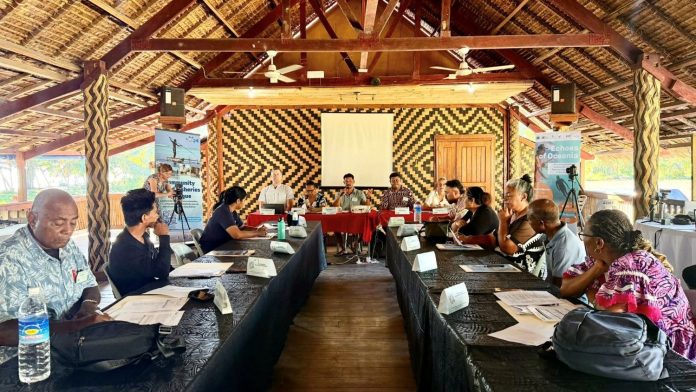
The Fifth Community-Based Fisheries Dialogue (CBFD5) officially commenced yesterday, September 25 2025, at Ginger Beach Retreat in Northwest Guadalcanal.

This year’s dialogue brings together around 30 participants from across the Pacific region, including civil society organisations (CSOs) and other non-state actors (NSAs), to focus on the future of community-based fisheries management in the Pacific.

Organised with support from the Pacific Community (SPC), the dialogue aims to review progress made since previous dialogues, strengthen accountability, share lessons, and explore practical solutions to scale up successful coastal fisheries initiatives.

In a press statement, SPC confirmed that day one of the event “dives deep into what matters most for Pacific coastal fisheries,” setting the stage for future actionable priorities in managing and protecting vital coastal marine resources.

Key outcomes from CBFD5 will be formally presented at the 18th Heads of Fisheries Meeting and the Seventh Regional Fisheries Ministers’ Meeting in 2026.

This is to ensure that the voices of local communities, CSOs and NSAs are reflected in regional decision-making processes on coastal fisheries.

The Dialogue is coordinated by the CBFD5 Advisory Group members, with Secretariat support from SPC, and is made possible by the financial support of FAO and MiCOAST.

Now in its fifth year since launching in 2021, the Community-Based Fisheries Dialogue has become a recognised regional mechanism, endorsed by Pacific Fisheries Ministers. It was established in response to the Pacific Island Forum Leaders’ 2016 call to elevate the importance of sustainable coastal fisheries.

The dialogue serves as a platform for CSOs, NSAs, and local communities to:

  • Provide policy advice to Pacific leaders on key coastal fisheries challenges.
  • Share on-the-ground experiences and lessons from community-based initiatives.
  • Engage with governments and regional partners on sustainable coastal fisheries governance.

The CBF Dialogue Advisory Group (CBFD-AG) oversees the planning and implementation of the annual dialogue. It advises SPC on operational aspects such as setting the agenda, selecting participants, and appointing the convenor and vice-convenor.

The first day featured four key sessions:

Session 1 – Updates on CBFD4

Participants reflected on achievements from last year’s dialogue, including how recommendations were taken forward to Pacific fisheries leaders and lessons learned to shape future actions.

Session 2 – Voices of CSOs & NSAs

CSOs and NSAs from across the region shared their experiences—highlighting community-led successes, challenges faced on the ground, and pressing priorities to strengthen local fisheries management.

Session 3 – Information & Awareness

Discussions focused on impact-tracking, behaviour change strategies, and leveraging storytelling platforms like Echoes of Oceania to amplify community voices and foster regional learning.

Session 4 – CBFM Monitoring

Participants explored how local knowledge and accessible technologies can support long-term, intergenerational monitoring of community-based fisheries management (CBFM) across the Pacific.

The dialogue concludes today.

Photos: SPC

For feedback, contact:[email protected]

Successful retreat for Dominican sisters 

0

By RODRICK DESURI 

AUKI 

Six sisters of the Dominican Order in the country successfully held their retreat at the Charity Sisters’ facility at Buma Catholic Station, Malaita Province. 

The retreat which ran from September 20-24, is an annual event that the Dominican Sisters hold to have free time and revisit the journey they have gone through. 

According to the retreat master, Fr John Adai, it is the precise time for them to stop their daily work of spreading the gospel and look back on their journey. 

He said that during such a programme, they also spend their time in prayer and personal reflection. 

“The most important thing is that it is a time to stop and look back. A time to make a redirection for a new start. A beautiful time of prayer and personal reflection,” said Fr Adai.

He stressed that it is also a time to look back, re-strengthen, and revitalise.

Fr Adai mentioned that retreat programs are organized annually and recollections are held monthly.

Meanwhile, media reports indicate that the Dominican Sisters are diverse Catholic women who belong to various congregations within the Order of Preachers founded by St. Dominic.

They are also as mentioned, devoted to living by the Dominican charism through prayer, study, community, and ministry and often focus on teaching, caring for the poor and suffering, preaching the gospel, and advocating for justice.

Also stated is that their daily life is structured around four pillars namely; engaging in consistent prayer, academic study, fostering community life, and serving others in various ministries.

The primary mission of the Dominican Sisters is to preach the truth of the Gospel to others.

For feedback, contact:[email protected]

SIPPA team in West Kwaio for cervical cancer testing 

0

By RODRICK DESURI 

AUKI 

A two-member team from the Solomon Islands Planned Parenthood Association (SIPPA) is in Sinamuari Clinic, West Kwaio, Malaita Province, to conduct cervical cancer testing among women of ages between 25 and 40.

Registered nurse, Mercy Surana said the testing programme will help women, especially in rural areas, to know whether they have cervical cancer or not. 

She said the team started the testing on Wednesday, September 24, and will finish off today, Friday, September 26, 2025.

Surana explained that from this programme, mothers will be able to learn more about their bodies and if they have cervical cancer or not.

“With this, the women will also get educated about related information, what to do if they have it, and prevention measures for cervical cancer if they don’t have it,” she said.

Jacinta I’ama’afu appreciates the SIPPA team for bringing the cervical cancer testing program to the rural areas.

She said many women in the communities have heard about cervical cancer as a killer, don’t really know much about how to find out if they have or do not have the disease.

“We have heard about the killer disease, but we don’t know how to know if we have it. But today, we are lucky that this vital outreach program has come to our doorstep,” she said.

I’ama’afu encourages other mothers who have not been tested to come forward and get tested.

“I want to make a call and encourage other mothers who are yet to come for testing to come forward as soon as possible, as this opportunity only comes once,” she said.

According to reports from the World Health Organization, cervical cancer is the fourth most common cancer in women globally, with around 660,000 new cases and around 350,000 deaths in 2022.

The highest rates of cervical cancer incidence and mortality are in low- and middle-income countries.

This reflects major inequities driven by a lack of access to national HPV vaccination, cervical screening, and treatment services, as well as social and economic determinants.

Countries around the world are working to accelerate the elimination of cervical cancer in the coming decades, with an agreed set of three targets to be met by 2030.

For feedback, contact:[email protected]

Malaita youth leader warns of indigenous economic displacement by 2050

0

BY NED GAGAHE

A young voice from Malaita has raised serious alarm at the United Nations, warning that indigenous youth in the Solomon Islands are at risk of losing control over their land, culture, and economy by the year 2050.

Maverick Peter Seda, speaking at the Human Rights Council in Geneva this week, addressed the international community on behalf of indigenous youth and the Malaita Provincial Youth Council.

Seda, a recipient of the UN Voluntary Fund for Indigenous Peoples, said the future of young people in Malaita is increasingly under threat due to growing environmental and economic pressures.

“For us, land and ocean are not just resources. They are our identity, our way of life, and the foundation of how we govern ourselves,” Seda said.

He stressed that traditional practices such as storytelling, hunting, cooking, and customary justice are not only cultural expressions but also tools for conflict resolution and leadership.

Seda said Malaita, which holds the largest ocean territory in the Solomon Islands, is facing an increase in seabed mining activity and illegal fishing.

He highlighted that these environmental threats are eroding both biodiversity and cultural survival.

“These are not just environmental issues. They are human rights issues. If our oceans are destroyed, so is our culture,” he said.

Seda warns of increasing economic marginalization of indigenous youth, as foreign investors gain dominance over local industries.

“If this trend continues, by 2050, indigenous youth may no longer have any control over their economic future,” he told the council.

He calls on international leaders to recognize the direct link between economic displacement and cultural erosion.

In response, Seda highlighted two grassroots initiatives from Malaita that are giving youth a voice and helping to protect traditional knowledge.

The Malaitolo Programme – A school-based programme that integrates traditional land and ecological knowledge into the high school curriculum.

The Tea-Room Project – A community hub that provides space for indigenous youth to access traditional knowledge and engage in open dialogue on leadership, culture, and civic responsibility.

Seda said these projects show how indigenous communities are building their own solutions—efforts that deserve support.

In his closing remarks, he aligned Malaita’s struggle with those of other Pacific indigenous communities facing similar challenges.

“The future of our region depends on how we protect our youth, our culture, and our land today. We call on the world to support indigenous-led solutions, not just foreign interests,” he said.

For feedback, contact:[email protected]
Health pushes to raise retirement age for key workers

0

BY MORRIS ANFU

The Ministry of Health and Medical Services (MHMS) is pressing ahead with plans to extend the retirement age for frontline health workers from 55 to 65, aiming to address a severe shortage in the sector.

This proposed extension of service comes amidst ongoing challenges in maintaining a robust health workforce.

MHMS Permanent Secretary, Paulin McNeil, appearing before the Bills and Legislation Committee (BLC) for the Public Service Bill 2025, explained that the move will allow the retention of seasoned professionals to guide younger staff.

She highlighted that nearly 40 percent of the current workforce is approaching retirement age, highlighting the urgency.

The proposal specifically targets clinical roles, including doctors, nurses, lab technicians, and other medical service providers, while sparing administrative positions.

“This is mainly for our health clinicians, doctors, and nurses—our labs, medical teams, and those directly involved in patient care.

“Admin roles are different; anyone can handle those, but we desperately need to bolster our clinical workforce,” McNeil said.

Opposition Leader Matthew Wale countered that the matter could be addressed more flexibly through regulations rather than embedding it in the main Bill.

McNeil noted that the ministry currently has about 12 workers past 55 operating under fixed-term appointments (FTAs) nationwide, but stressed these falls far short of what’s needed.

On whether expanding FTAs might be a simpler alternative, she affirms the preference for raising the retirement age to 65 for health services.

“Of course, it could impact the budget and finances, but given our situation, it’s essential,” McNeil stressed.

The Public Service Bill 2025 is still being scrutinized and expected to conclude this week before making it’s way to parliament soon.

For feedback, contact:[email protected]

Health worker describes MHPSS training as helpful

0

BY JOHN HOUANIHAU

The “Mental Health and Psychosocial Support (MHPSS) for Children and Families Advanced Training” concludes today, Friday, 26th September.

The week-long training, conducted at the UN Joint Presence Office Conference Room, ANZ Building at Ranadi in Honiara, is designed to equip provincial mental health workers with necessary skills to effectively address mental health challenges.

Hellen Kwai, representing the Mental Health, Acute Clinic at the National Referral Hospital, in an interview with Island Sun, shares her experience about the training.

Speaking about Thursday, the fourth day of the training, she said the training was about child development.

Kwai also said the training is crucial as it enables them to engage with patients

“Additionally, it is vital for me to assist communities by sharing what I have learned during the training,” she said.

One of the topics that stood out to her from the training is “trauma”, in particular, on how children can become traumatised at home due to violence between their parents.

“When a child experiences trauma, the recovery process can be lengthy, while some may recover more quickly. Typically, it takes about six months to heal from trauma; however, this duration can differ between children and adults. As a mental health nurse, I plan to return to my community to raise awareness in churches and schools regarding what both parents and children need to understand,” Kwai said.

She added that stigma currently poses a considerable challenge for individuals on the streets.

“But we must not stigmatise them simply because they are ill. Their condition is similar to other illnesses in that it can be treated with appropriate care. They are experiencing mental illness. This workshop aims to dismantle such misconceptions,” she said.

Kwai expressed her desire to witness this form of training being implemented within communities and urges her colleagues to disseminate the information to others and participate in future sessions.

She furthered that her recommendation is to acknowledge the presence of many individuals with mental health issues on the streets.

“It is important to treat them with respect and offer assistance when they require it. Avoid stigmatising them,” Kwai said.

For feedback, contact:[email protected]