Home Blog Page 1606

We have not forgotten our development partners: Hou

0
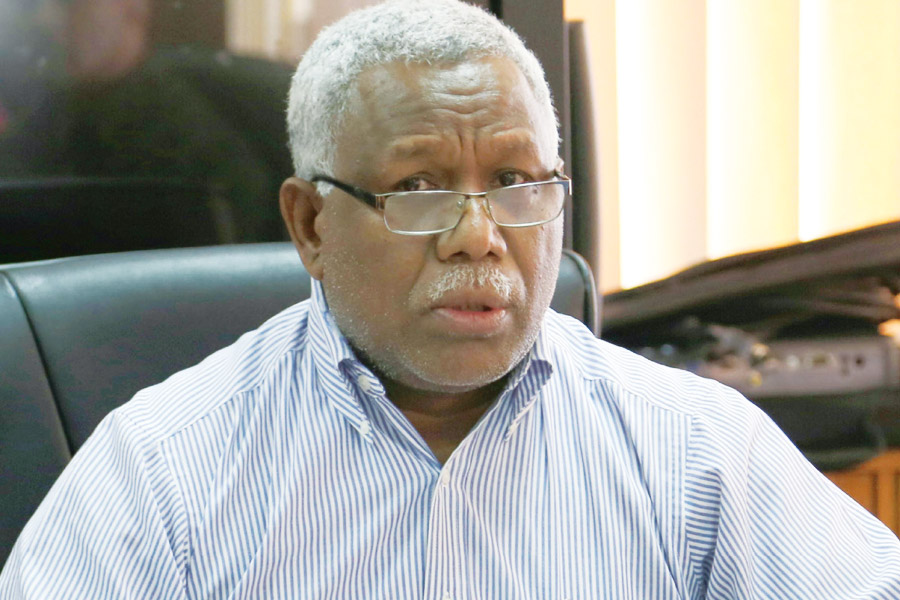
Deputy Leader of the Official Opposition and MP for Small Malaita Hon Rick Hou.

BY CAROL-ANNE SULEGA

THE newly elected Prime Minister and Member of Parliament for Small Malaita Hon Rick Hou assures the country’s development partners that his administration is ready to re-engage and work together in advancing the interest of the country.

Prime Minister Hou made the assurance to the country’s development partners in his victory speech on Wednesday after polling a majority of 33 votes against Hon Moffat Fugui who polled 16 votes.

One ballot was dubbed ‘spoilt’.

“For too long, we have left our development partners in the cold which has negatively affected the progress of important Government programmes.

“But today, I assure you that my Government will take extra efforts in working closely with each and every one of our partners as we work towards our common goal to move this country forward.

“On that note, I would also like to thank our developing partners for their continuous support,” Hou said.

The Prime Minister then acknowledged the efforts undertaken by the former Minister of Finance Hon Snyder Rini in renewing dialogue between the Government and donor partners.

Isabel loses opportunity to host mini-town

0

BY BEN BILUA

AN exclusive report has revealed that Isabel Province would have hosted a mini-township if Sumitomo had remained the licence holder of the Isabel Nickel Project.

Source familiar with the report says Sumitomo had long term plans which included transforming their operation site in Isabel Province into a major commercial town.

The source said the opportunity disappeared the day Sumitomo pulled out its investment interest from the country this year.

He said Sumitomo has the power and money to established flourishing towns across Isabel province.

A proposed commercial road from Kia to Buala and feeder roads to both sides of Isabel was also contained in Sumitomo’s plan.

“Most beautiful and attractive tourist destination in the world and also major cities are established after commercial mining development.

“Gold Coast, Australia is one example, we miss this chance and I don’t know if other investors can build a mini-township for Isabel with roads from one end to the other,” the source said.

He said the downfall of Sumitomo Mining Company was due to money minded decisions and corrupt dealings by authorities and landowners – which are shallow actions with no long term benefits for Isabel province.

He continues that the withdrawal of Sumitomo has redmarked the country’s mineral industry in the international arena, discouraging big companies like Sumitomo from taking an interest in investing in Solomon Islands’ mineral.

“Sumitomo is like a big boy in the global mineral industry, they have all the capacity and resource needed to deliver the best operation.

“Now Sumitomo is out and definitely there will be communications between all the mineral companies – most of them are described as big boys that Solomon Islands is not a conducive country to operate.

“This will be a major blow to our mineral industry,” the source said.

He pointed out that mining companies who are trying to operate in the country at the moment are small to medium companies which are struggling to survive in the stock market with very limited experience and resource.

Our source warns the Ministry of Mines and Energy to do more research on mining investors before endorsing any mining application.

“How we going to benefit from our minerals depends on decision from the Ministry of Mines and Energy. We will become losers if this Ministry makes one single mistake on their decisions,” the source said.

He calls on landowners and government of Isabel province to halt any mining development until the Mines and Mineral Act Amendments are passed in Parliament.

Call to separate disaster risk reduction from disaster management

Dr Melchior Mataki, second from right, with ITRI speakers’ from Taiwan

By PRIESTLEY HABRU

In Bonn, Germany

SOLOMON Islands head of delegation to the Conference of Parties (COP23) of the United Nations United Nations Framework Convention on Climate (UNFCCC) Dr Melchior Mataki has highlighted the need to separate Disaster Risk Reduction (DDR) from disaster management.

He was speaking in a side event with the Industrial Technology Research Institute (ITRI) of Taiwan at the COP23 currently underway in Bonn, Germany.

Dr Melchior noted lack of clear definitions of resilience, DRR and adaptation, saying that stakeholder groups conceptualised them differently.

He emphasized the difficulty of separating development issues from climate adaptation and DRR in proving additionality for climate finance.

“Therefore I’m calling for ‘whole-of-government’ and ‘whole-of-society’ approaches,” he.

Dr Melchior who is also the Permanent Secretary of the Ministry of Environment, Climate Change, Disaster Management and Meteorology MECDM) said partnerships and appropriate legislative and policy frameworks are indispensable to building resilience.

As such he underscored the need to separate DRR from disaster management in policymaking, and reported on measures taken in his country and its associated challenges, including competing national priorities and lack of capacity, technology and financial resources.

Robert Yie-Zu Hu of ITRI then introduced his organisation’s work on technology for renewable energy, energy efficiency and storage, the environment and smart buildings.

He outlined Taiwan’s energy targets, including zero nuclear energy by 2030 and 20 percent renewable energy by 2025, saying that this is ‘not an easy job’.

He explained Taiwan’s development strategies for solar and wind energy and noted innovations in: energy storage, which he said is a solution for variable and unpredictable renewable energy output; air-conditioning systems; and dye sensitised cells, which he said can generate solar energy in very low light.

Ming-Dean Cheng, Central Weather Bureau, Taiwan then presented on the Solomon Islands Synergistic Analysis for the Environment (SoSAFE), an early warning system for extreme weather events and earthquakes in the Solomon Islands.

He said SoSAFE relies on automatic weather data stations, which collect good quality data despite a significant information gap. He also outlined a project to predict epidemics of dengue fever.

Mei-Yu Chang, Ministry of Science and Technology, Taiwan who presented on disaster response and risk management in her country, outlined an increase in extreme weather events in Taiwan over the last decade, including tropical cyclones, flooding, droughts, landslides and typhoons.

She said Taiwan has high exposure and vulnerability to natural disasters due to its concentrated urban population, increasing elderly population and complex geographical factors.

Outlining Taiwan’s central emergency response system, she shared examples of its applications that provide flood warnings, produce hazard maps for landslides, communicate information to the public, and evacuate houses during typhoons.

Taiwan is an observer at the COP meetings each year as it is not yet a member of the UNFCCC despite support from its friends like Solomon Islands.

An election victory promise to restore basic medical services

0

Dear Editor,

FOLLOWING closely on his election victory in the Solomon Islands to become the new Prime Minister, the Hon. Rick Houenipwela says one of his Government’s immediate tasks is to reopen closed clinics around the country.

Prime Minister Houenipwela said his Government will work closely with the Ministry of Health and Medical Services to reopen the clinics.

“One of our immediate tasks is to work with the ministries, and especially the Ministry of Health, to identify clinics around the country that have been forced to close down with the view to reopen them,” he said.

“It goes without saying that it is the responsibility of the Government to provide basic health services and, indeed, all other basic services to its citizens, especially in the rural areas.”

As I have consistently reported it is widely known that most, if not all, of the country’s 344 rural health clinics are run down and many needing urgent repairs and renovations in order to function effectively to serve the health needs of great numbers of local people.

The situation at Tatamba in Isabel Province, in the Reef Islands in Malaita, the Western province and on Savo Island is bordering on critical and many in the community are having to go without medical care or faced with travelling huge distances by canoe, as is the situation at Tatamba, to reach a clinic where they can get treatment.

At the National Referral Hospital the rehabilitation workshop that was previously used to manufacture and custom fit prosthetic limbs has been abandoned due to white and termite infestations.

There are said to be more than 400 former patients of the NRH awaiting artificial limbs after succumbing to diabetes and having undergone amputations.

I would please urge Prime Minister Houenipwela and the new SIG government to include the full restoration of the NRH’s rehabilitation workshop when getting to grips with rebuilding or fully renovating the rural health clinics.

I  would also request the Prime Minister to ensure when dealing with either re-building or restoration programmes that power facilities are provided at each of the rural clinics , whether by solar panels, diesel engines or, if possibly, by connection to the electrical grid.

It is well know that in some rural clinics doctors are having to perform surgical operations by the use of kerosene lamps and flash lights.

Toilet facilities must also be provided at rural clinics where such do not exist and hygiene and sanitary facilities restored at those clinics where toilets have not been repaired for a long period of time.

To carry out the work of  restoring basic health facilities the SIG might need the help of its traditional donor partners from the region and it would be my wish that it be fully recognised the work needed is worth supporting and help be forthcoming from Solomon Islands’ friends.

Yours sincerely

Frank Short

Solomon join forces to ensure more climate action

0
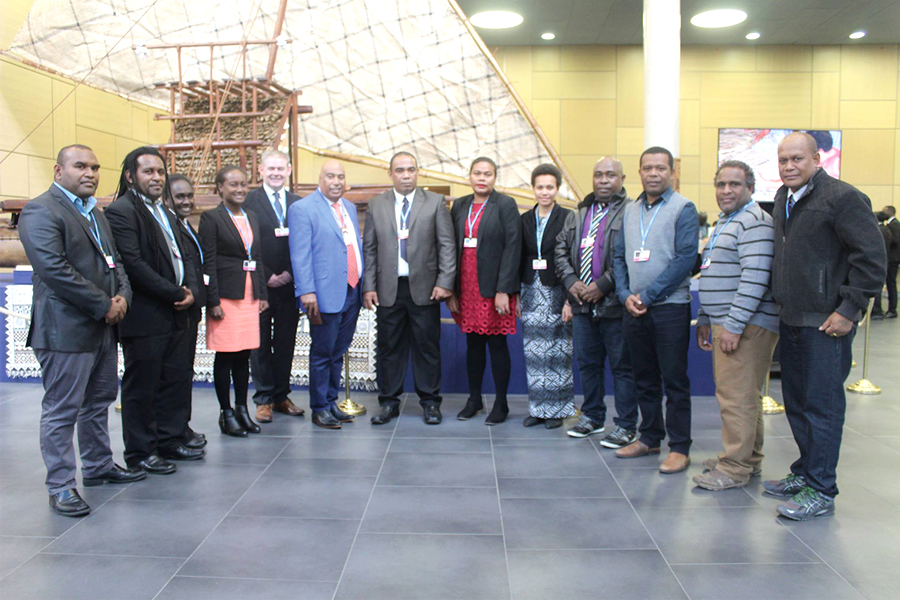
Solomon Islands delegation to COP23 in Bonn, Germany.

BY JARED KOLI

IN BONN, GERMANY


THE Solomon Islands government is seeking more global cooperation to ensure accelerate more action is done on the climate change front.

Chief negotiator for Solomon Islands in the global discussions at COP23, and High Commissioner to Australia Collin Beck, said as Fiji took the Presidency of COP23, Solomon Islands also take global responsibility.

HE Beck said it is important to increase that ambition of the Paris Agreement

He said the future, and the uncertainty that people face at the moment is at stake, and the Paris Agreement is supposed to be an agreement that is guarantee their future security.

“At the moment, global temperature keeps rising to the point where it already reached 1.1 degree Celsius, so its impact resulted in category 5 hurricanes occurring around the world. This is just a beginning of more to come, unless we do more to reduce greenhouse gasses,” he said.

Tourism, fisheries which are affected by ocean acidification, especially on corals must be protected. HE Beck said livelihood of people is losing.

“So much is at stake for our people, and the ambition of the Paris Agreement is low, number of delegation are following specific areas of the Paris Agreement in trying to ensure that every countries of the world do fare share. We are at front line of climate change, we must do fare share.

“We have countries following technology, finance, capacity building, adaptation, mitigation, global stock take and different areas. As we are trying to reduce emissions, we will continue to adapt.

“One of the things that we are seeking here is more global cooperation to ensure more action is done on climate change front. Action is slowly coming. The Green Climate Fund (GCF) which we receive from Tina Hydro is part of mechanism of Paris Agreement,” says the Chief Negotiator.

Speaking to local journalists covering COP23, HE Beck adds that it is important to increase the ambition of the Paris Agreement, and with Fiji’s Talanoa facilitating dialogue, will assist in trying to put pacific views in the 1.5 degrees partway.

A special assessment report from Intergovernmental Panel on Climate Change (IPCC) will also be reported, which shows the current status of each party.

“This is an assessment of where we are, in terms of 1.5 degrees Celsius partway, the situation of how much people are doing, aggregates how much it will cost and third is how we will translate, close this gap where need to put in on 1.5 degrees, because at the moment we are heading to three degrees.

“This means we are will be losing our islands, especially low lying islands, with food security, water security are also becoming an issue. All this global warming could shift into a warm war which will bring us to fight over land, over water as people move from one customary land and move to another.

“These are the things we are trying to protect,” he said.

One of the beauties of this Paris Agreement is that it has opportunities. HE Beck said there is enough finance, enough technology, enough capacity for climate action.

He said the challenge now is to ensure to live up to the spirit of Paris Agreement.

Solomon Islands is not only contribute on discussion at this COP, but is also leading certain discussion on least developed countries – coordinating global stock take. The country is taking a lot of leadership in terms of ensuring everyone do a fair share.

Solomon Islands delegation to COP23 comprise of H.E Beck, Permanent Secretary of the Environment and Climate Change Ministry, Dr Melchior Mataki, his Under Secretary, Chanel Iroi, Director Climate Change (Ag) Hudson Kauhiona and five more government officials which include Climate Change Adaptation and Mitigation Officers.

Negotiators have until Tuesday to finish their work and capture the progress made thus far in this session. Heads of state and ministers arriving in Bonn Wednesday, and will have to create conditions for rapid progress next year in the rulebook negotiations, as well as accelerating urgent action on the ground in the coming months and years.

World Bank and GCF sign Accreditation Master Agreement for Tina river hydro

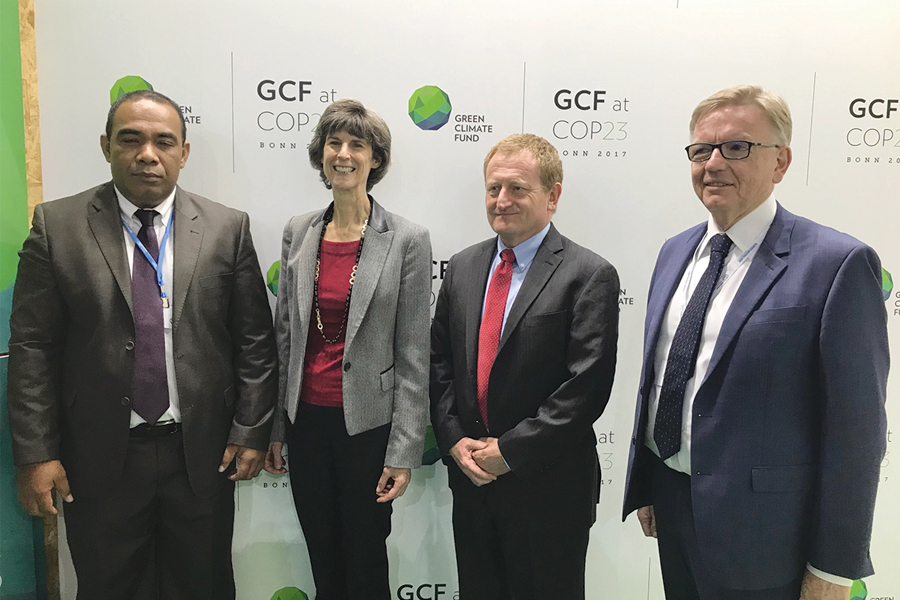
Permanent Secretary of the Ministry of Environment, Climate Change, Disaster Management and Meteorology Dr Melchior Mataki with officials from GCF and World Bank in Bonn, Germany.

BY JARED KOLI

 IN BONN, GERMANY


THE World Bank (WB) and Green Climate Fund (GCF) have signed an Accreditation Master Agreement which will soon see a roll out of the much awaited fund for the multi-million Tina River Hydro project in Central Guadalcanal.

The signing which was done in Bonn, Germany this week and was witnessed by Permanent Secretary of the Ministry of Environment, Climate Change, Disaster Management and Meteorology Melchior Mataki and Solomon Head of delegation to COP23 and Chief Negotiator, Collin Beck who is also Solomon Islands Ambassador to Australia.

Dr Melchior told Island Sun in Bonn this week that this an overall agreement governing the relationship between the two organisations.

“The AMA is between GCF and WB. After the AMA, then the Funded Activity Agreement (FAA) will need to be signed and this will then see the disburse of funds. However, the FAA cannot be signed without AMA being signed,” he said.

Dr Melchior said funds will follow after FAA, but the ministry do not have a date as yet but we are calling for it to done soonest.

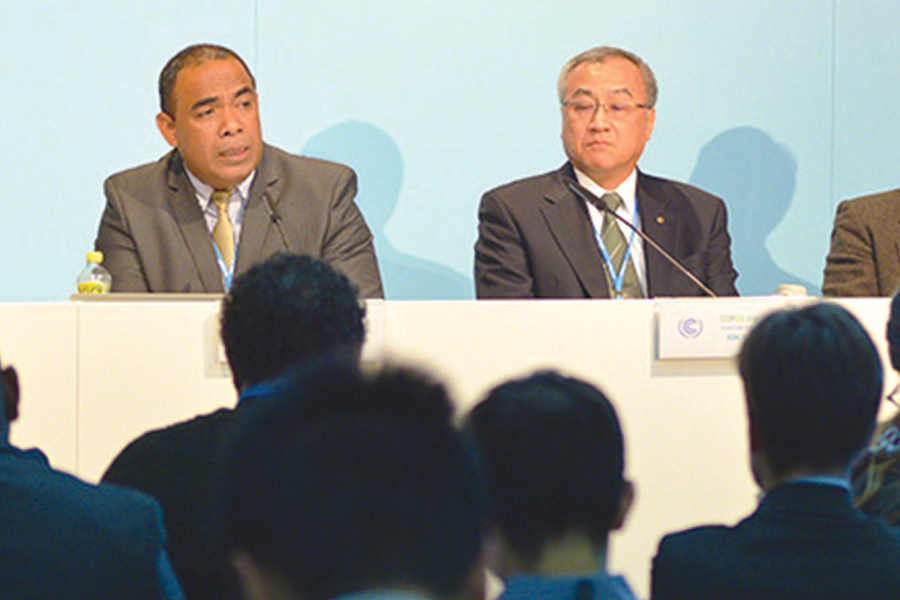
The Solomon Islands government delegation is undertaking four key tasks for multilateral global process on climate change at the 23rd Conference of Parties (COP23) here in Bonn, Germany.

Dr Melchior informed Island Sun that this is part of global climate action under the Paris Agreement to increase renewable energy and reduce the amount of greenhouse emissions from fossil fuel.

“One of the things that we are seeking here is more global cooperation to ensure more action is done on climate change front, action is slowly coming. The Green Climate Fund (GCF) which we receive from Tina Hydro is part of mechanism of Paris Agreement,” says the Chief Negotiator His Excellency Ambassador Collin Beck.

Speaking to local journalists in Bonn, HE Beck adds that it is important to increase the ambition of the Paris Agreement, and with Fiji’s Talanoa facilitating dialogue, will assist in trying to put pacific views in the 1.5 degrees partway.

Negotiators in Bonn have until Tuesday to finish their work and capture the progress made thus far in this session.

Heads of state and ministers arriving in Bonn Wednesday, and will have to create conditions for rapid progress next year in the rulebook negotiations, as well as accelerating urgent action on the ground in the coming months and years.

Gov’t strives to fulfill multilateral global process on climate at COP23

0
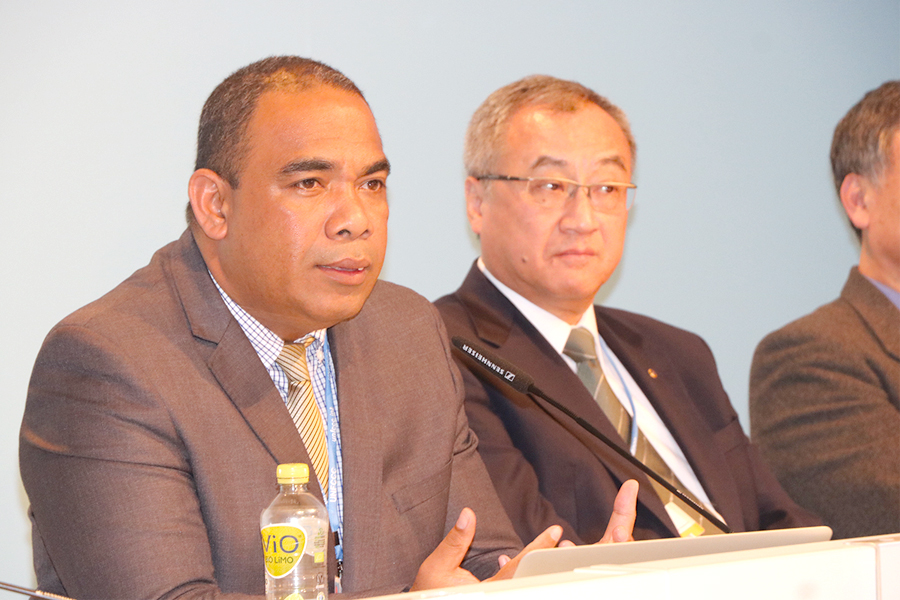
PS for Ministry of Environment, Climate Change and Meteorology Dr Melchior Mataki speaking during a high level meeting at COP23.

BY JARED KOLI

IN BONN, GERMANY

THE Solomon Islands government delegation is undertaking four key tasks for multilateral global process on climate change at the 23rd Conference of Parties (COP23) in Bonn, Germany.

Permanent Secretary of the Ministry of Environment, Climate Change, Disaster Management and Meteorology (MECDM) Dr Melchior Mataki informed the local media covering the conference that these tasks needs to be sorted out to address the key issues that are needed in the implementation of the Paris Agreement.

The first is the importance of the 1.5 degrees partway.

“It has been a long standing issue that Solomon Islands and other vulnerable countries are fighting for, and wanted to having it fulfil in the main negotiations at COP23. Even in the work programmes of subsidiary bodies.

“Essentially, it’s about the main streaming of the 1.5 degrees to drive global ambition to address climate change,” he said.

The other is the government wants to see a clear articulation of the work programme for the implementation of the Parish Agreement. That is one of the most important issue for the people of Solomon Islands.

“If we do not sort these out, then work on this should be pending and will not address the key issues that are needed in the implementation of the Paris Agreement.

“Thirdly, we want to see the main streaming of Loss and Damage. It is one of the important issue for us because I think a number of different factors are there, including a very low ambition we have, especially on emitters.”

Dr Melchior said Loss and Damage is a reality for us in the Solomon Islands.

“For example, some of our islands have already face huge difficulties, in terms of loss of land and damage to properties as a result of extreme weather such as cyclones, and it is hard for us to regain this. There is no way of compensating it as well. Now it will be discussed. We would like to see these two subsidiary bodies to take some decisions of Loss and Damage on their discussion and work programme,” he said.

The adaptation fund which is the third priority task, is very important funding mechanism, according to the Environment Permanent Secretary.

“Our intention here is to really see the decisions comes – where the adaptation fund can really be made a mechanism for the implementation of the Paris Agreement – to also have the same status of the Green Climate Fund (GCF).

These four key tasks for multilateral global process to align to the overall work that parties to the Paris Agreement are going through.

Negotiations at COP23 should be reached by the end of this week.

Pacific delegates demand changes to GCF

0

By PRIESTLEY HABRU

In Bonn, Germany

PACIFIC Islands delegates to the Bonn Climate Change Summit has demanded simplified accessibility and approval to the Green Climate Fund (GCF) – one of the key multiple funds under the United Nations Framework Convention on Climate Change (UNFCCC).

The Green Climate Fund (GCF) is a new global fund created to support the efforts of developing countries to respond to the challenge of climate change

Climate Change Adviser of the Pacific Islands Forum Secretariat (OIF) Mr Exley Taloiburi said he and his Pacific colleagues wanted Small Islands Developing Countries like Pacific islands countries to access GEF easily.

“The GEF is primarily the biggest fund for climate change with USD10.3 million and seven countries in the Pacific have applied for it namely: Cook Islands, Papua New Guinea, Samoa, Vanuatu, Fiji, Tuvalu, Nauru and Solomon Islands.

“What we are asking for here in Bonn in the negotiations this week is for accessibility and approval of the fund to be simplified.

“Secondly it should be based on vulnerability of a country to climate change instead of the economic status of that country.”

Mr Taloiburi explained that the GCF requirement has always been that the applying country must have a middle –income status.

He added Pacific delegates are also pushing for the time period between approval and disbursement of the fund to be shortened.

“For instance the Tino Hydro National Project in Solomon Islands which have successful secured USD86 million under GEF have been granted approval of the fund in May this year, but it has not yet received the money.

“Fiji and Tuvalu has also received approval to be granted the fund, but have to wait for a year or even more before the money was actually wired to the recipients. This affects estimate budget and planning of the recipient country,” he added.

The Solomon Islands lead climate finance negotiator said commitments by developed countries for long-term finance toward climate change was also uncertain.

“This commitment is that by 2020, they will mobilise USD100 billion per year to assist developing countries address adverse effects of climate change. The issue was USA President Donald Trump’s threats to withdraw his support of the Paris Agreement.

“USA is a key financier of climate change projects but if President Trump was true to his words, then this long-term finance commitment would end.”

Taloiburi said USA has committed USD3 billion to the cause and the Obama’s administration has already given USD1 billion to the climate change funding initiative.

“We are hoping President Trump would pay the outstanding USD2 billion. Otherwise we have to be prepared for the uncertain future,” he added.

He said there might a shortfall for Pacific Islands’ countries if USA pulls the plug on this long-term financing commitment.

“Who is willing to support this initiative? This is the question we asked the developing countries during these negotiations.

Taloiburi said the developed countries have an obligation under the Paris Agreement to provide finance for vulnerable countries most of whom are members of the Small Islands Developing (SID) and Least Developing Countries (LDCs).

Despite threats by USA to ignore the Paris Agreement, he noted that bilaterally most Pacific Islands countries including Solomon Islands are still benefiting from USAID who continues to provide funding for climate change projects in the region.

SI pushes for Adaptation Fund beyond 2020

0
Moortaza Jiwanji, Programme Manager Pacific Risk Resilience Programme UNDP Fiji and Exley Taloiburi, Climate Change Finance Adviser, Pacific Islands Forum Secretariat.

By PRIESTLEY HABRU

In Bonn, Germany


SOLOMON Islands and other Pacific Islands are pushing for climate change Adaptation Fund to continue when the Kyoto Protocol lapses in 2020.

This is one of the main items Pacific Islands’ delegates are negotiating at the Conference of the Parties (COP23) to the United Nations Framework Convention on Climate Change (UNFCCC) currently underway in Bonn, Germany.

“Solomon Islands and other Pacific Islands countries are negotiating for the Adaptation Fund under continue when it the Kyoto Protocol lapses and the Paris Agreement supersedes it in 2020,” said Mr Exley Taloiburi, who is the Climate Change Finance Adviser for the Pacific Islands Forum Secretariat (PIFS).

He explained that the Pacific Islands delegates wanted to change specific word like ‘shall’ instead of ‘should’ in the clauses of the Paris Agreement.

“In order to allow the continuity of the climate adaptation fund to address our climate change challenges,” Taloiburi said.

He noted that climate change adaptation is Pacific Islands’ priority issue and not reducing its greenhouse gas (GHG) emissions or mitigation.

“The Pacific Islands countries put together only emits 0.03 percent of GHG so it’s not an issue for us.

“The global finance allocation is such that only 8 percent goes to adaptation whilst 92 percent to mitigation. So there is a huge mismatch and that is why we demanded that the adaptation fund to continue post 2020 when it will come into force.

“We see this fund as the only dedicated fund to support concrete adaptation projects under UNFCCC,” Taloiburi said.

Solomon Islands which have benefited from this fund under the Strogem Waka Lo Community Fo Kaikai (SWoCK) which aimed at Enhancing Resilience of Communities in Solomon Islands to the Adverse Effects of Climate Change in Agriculture and Food Security.

The five year project which began in April 2011 was allocated US$5,533,500 that to strengthen ability of communities in Solomon Islands to make informed decision and manage likely climate change driven pressures on food production and management systems

Meanwhile, Taloiburi said apart from Solomon Islands; Papua New Guinea, Cook Islands and Samoa have also benefited from this international fund that finances projects and programs aimed at helping developing countries to adapt to the harmful effects of climate change.

Negotiations at the COP23 will end today before heads of government that are parties to the UNFCCC adopt the outcome of this annual climate change summit at the end of the week.

Poland is set to host COP24 in 2018.

Honiara has a new ambulance in service

0

Dear Editor,

MR. Douglas Kelson, the Chairman of the local branch of St John Ambulance service, has told me a new ambulance has been introduced in partnership with the Ministry of Health to undertake ambulance services in Honiara and Guadalcanal.

 The ambulance, a Mercedes make, is said to be fully operational with a full range of life support equipment, including a ventilator, oxygen and entox for pain relief.  The vehicle has been fitted to meet international standards.

 In recent days the ambulance has called at all the local clinics in Honiara a part of an initial awareness program.

 Those operating the ambulance have all been fully trained in their duties as paramedics.

 I expect there might be some in the community, especially those living in the more remote parts of Guadalcanal that are not familiar with the word ‘Ambulance’ and what such a vehicle is used for and its function.

 Well, the history of the ambulance goes back a very long time in history.  It began with simply carts, usually wooden ones, used to transport sick patients to hospital.  Over centuries and with advances in technology the wooden cart has been transformed into ambulances such as the one I have mentioned now in operational service with St John’s Ambulance.  Its purpose though remains the same, to convey those that are sick, especially the infirm, to hospital.

 The St John’s Ambulance Service provides what is known as paramedic services, the new terminology for first aid and the ambulance currently in service is used to transport patients, usually in an emergency to the nearest point of care, a clinic or a hospital depending much on the condition of the patient when put into the ambulance.

 Mr. Kelson, the former ambulance commissioner in Papua New Guinea for 8 years is currently working to avail the public of the ambulance service now in operation and detailing how a call for use of the ambulance should be made.

 Accompanying this brief introduction to the ambulance is a set of photographs taken recently when the ambulance team made visits to local medical clinics.

 It was just a short time ago I wrote to mention that the NRH’s own ambulance had been off the road for several months awaiting repair, but I am pleased that now, at least, there is one emergency ambulance available.

 Because of the large population residing in Honiara and in Guadalcanal several more ambulances are needed to meet the growing need of being able to speedily respond to emergencies and to convey injured patients and those seriously ill to hospital.

 I once again appeal to the traditional supporters of medical services in the Solomon Islands, the Government of the Republic of China (Taiwan), the Government of Japan, the European Union and the Government of Australia to give consideration to donating more ambulances for use by the NRH and by St John’s Ambulance Service.

 Yours sincerely

 Frank Short