Home Blog Page 1139

HIV-positive patients at 10 percent risk of developing ATBD annually

0

BY LORETTA BRIGIDIA MANELE

WHILE a HIV-positive person has an annual risk of 10 percent of developing TB (tuberculosis), a HIV-negative person is at greatest risk of developing the disease after two years of initial infection.

This is according to Infectious Disease doctor Wei-Ru Lin from Kaohsiung Medical University Hospital (KMUH) in Taiwan.

Moreover, he stressed on the difference between a HIV-negative person having a 10 percent lifetime risk of developing ATBD (Active TB Disease) compared to a 10 percent annual risk for people living with HIV.

Dr Lin explained that a 10 percent lifetime risk means 1 in 10 HIV-negative people with Latent Mtb Infection (LTBI) will develop ATBD over the course of their entire life.

“So if you have a group of 100 HIV negative people with LTBI, 10 will develop ATBD at some point in their lives, meaning that 90 will never get sick with TB. Most of those who develop ATBD do so within the first two years after infection”, he said.

On the other hand, Dr Lin stated that people living with HIV have a 10 percent risk of developing ATBD each year.

He said that from a group of 100 HIV-positive people who have LTBI, 10 of them after the first year will be likely to have developed ATBD.

Dr Lin mentioned that treatment and care for HIV related TB includes HIV testing and counselling, HIV prevention methods, co-trimoxazole preventive therapy (CPT), care and support and antiretroviral therapy (ART).

Dr Lin who is also the Director of Infection Control Center at KMUH along with colleague Ching-Tzu Hung, an Infection Control nurse of KMUH had facilitated a three day Infection Prevention and Control workshop at the Taiwan Health Centre during their brief visit last month.

Participants were thirty-three health workers from the National Referral Hospital (NRH), SINU’s School of Nursing, Honiara City Council (HCC) and Guadalcanal province.

Sharing Marovo Carvings with the world

0
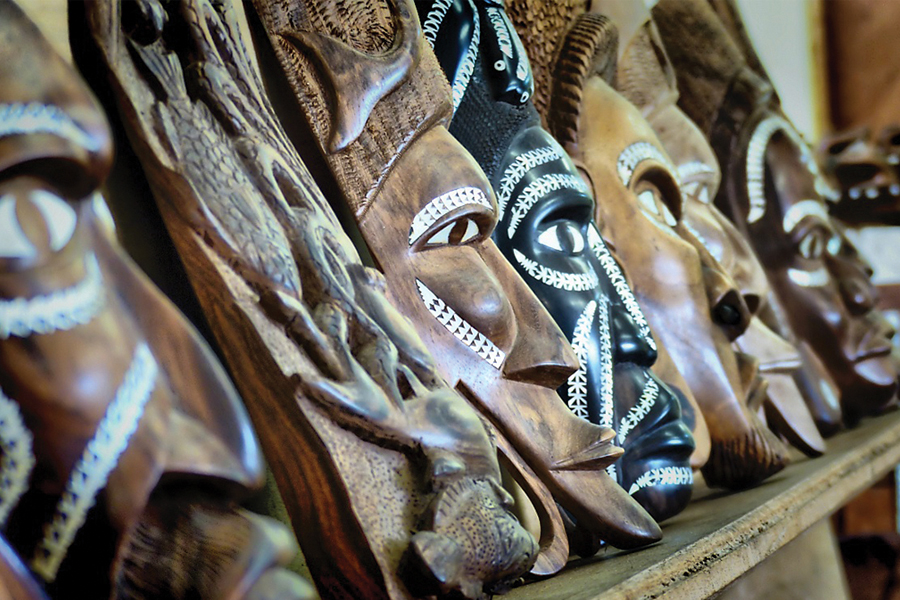
Carvings from Marorvo.

BY ELLISON VAHI

THE Marovo Carver is a short Documentary about Marovo Carvings, life and culture in the Solomon Islands.

Elliot Spencer as the Director and Producer of the Documentary Filmed it as it tells the story of Tasiro, a Marovo Carver from Nggatokae Island.

Elliot Spencer first met with Tasiro when he visited the Solomon Island in 2004 when sailed by yacht with a small crew direct from Brisbane to the Santa Cruz Islands of Temotu Province.

“I liked it so much that I ended up staying. While still in my teens, I learned Solomon Islands Pijin, hunting, fishing, gardening, and story-telling solo style,” he said.

Spencer said that when met up with Tasiro, he was amazed by his level of skill as he calved directly into the wood following only his imagination.

“His name also struck me special, Tasiro is the name of my favourite actor Toshiro Mifune from the Akira Kurosawa’s film Seven Samurai 1954,” he added.

Bare triton bowl and two woodspoons made from Kerosene wood.

In relation, the documentary is part of a platform for over 75 Film Festivals around the globe where all budgets, genres and geographies are represented in one place, whom 80 countries attend it for over the course of the five days with attendance of more than 50,000 people participated.

With much adoration for the carver’s art, Mr Elliot then started producing the project as he wanted to create the cinematic film in which would showcase Solomon Islands arts and culture in a very positive way.

“I love Marovo Carvings and I have many old friends who are Marovo Carvers. The goal was to share Marovo Carvings with the World, and inspire a sense of pride among Marovo Carvers” Mr Elliot said.

Usually telling strong human stories Elliot’s work has tackled many challenging contemporary matters from refugees, indigenous issues, and the environment. While filmmaking in the Solomon Islands and China Elliot has learned to speak Mandarin and Solomon Islands Pijin which have given him a unique insight and creative freedom while filmmaking abroad.

Elliot is most known for his work “Long Yearning: Modern China Ancient Poems” Awarded Best Film Human Rights at the 5th Life After Oil International Film Festival 2018, Best Experimental Film at the ATOM (Australian Teachers of Media Awards 2017, Best Documentary at the Asia Peace Film Festival 2017.

Carvings from Marorvo.

“It’s always great to be awarded as it’s highly competitive out there, often thousands of films are entered into a single festival. Marovo Carver was made on a non-profit basis, so getting live screenings and feedback that the film has been impacting audiences is important to me,” he said.

In addition to, it’s a very positive film as it shows the original beauty of the Solomon Islands environment and the openness of Solomon Island people.

Hence, the film does bring to light some of the pressing issues facing the Solomon Islands especially with regards the environment impacts that Global Warming threatens.

“I want to put pressure on the World at large to respect the Solomon Islands and the Pacific region which I consider sacred.

“Sharing this news with the Solomon Islands. Together, we can all be proud of the Marovo Carvers,” he added.

To date, Marovo Carver was Awarded Best Short Documentary and Grand Prize Winner at the IAFOR IDFA (International Documentary Film Awards) in Japan, and Best Indigenous Film at the POP (People of Passion Awards) in Australia.

Picture by Elliot spencer.
Carved wood work. Bareho village, Solomon Islands.

Traditional land summit to be hosted in Auki

0

BY GEORGE MANFORD

AUKI

THE United Nation peace programme together with the Ministry of National Unity, Reconciliation and Peace and Malaita province will host a three-day summit on traditional governance and customary land system.

Deputy Director from the Ministry of Traditional Governance, Peace and Ecclesiastical Affairs Mr Genesis Kofana said the idea behind the summit is Malaita province wants to come up with a land law especially to pave way and allow land in Malaita province for development especially for investors.

“We try to understand ourselves on what we have in our traditional systems where we can engage developments.

“As development comes from the western society it will remove some of our laws in the traditional system and some will still remain us our fundamental laws.

“Those fundamental laws of the customary land including tribal ownership and equal sharing for resource owners still remain based on customary land value.

“This is the main concept behind this summit that the Malaita provincial government has agreed upon that all lands in Malaita province must be free for development purposes.

“We will also be looking at creating a legal frame work which includes management, leasing, benefit sharing, and registration so that the same formular will apply to all kinds of development in our lands.

“Some of our senior state’s men will be available during the three days summit.”

“It is enough of talking about land but we need to move forward in development.”

Mr Kofana also highlighted that a group presentation concerning customary land reform will be made during the summit by some local chiefs who visited Fiji last year.

‘A single cough can generate tuberculosis’

0

BY LORETTA BRIGIDIA MANELE

A single cough can generate more than 9,000 bacterium, in other words, TB bacteria.

This is according to Dr Wei-Ru Lin, an infectious doctor and Director of Infection Control Centre at Taiwan’s Kaohsiung Medical University Hospital (KMUH).

He gave a lecture about tuberculosis (TB) to a number of local health workers during an Infection Prevention and Control workshop at the Taiwan Health Center (THC) that took place from October 30 to November 1.

Dr Lin expressed that TB is a single-cell organism bacteria, more specifically a mycobacteria of 70 different types.

He said TB can be defined as Latent MTb infection (LTBI) and TB disease.

In relation, Dr Lin expressed that LTBI is TB bacilli (class of bacteria) that is a live dormant inside the lung but does not cause destruction of organs.

TB disease on the other hand is said to be an infectious TB bacilli that results in signs and symptoms of the disease and progressively invades and damages parts of the body.

Health workers were also told that active TB disease may occur in the lungs known as pulmonary TB or in other parts of the body, called extra pulmonary TB.

Some people may experience both cases.

Dr Lin mentioned that the most common and infectious from of TB is Pulmonary TB.

He added that the damage caused by this TB disease sends pus containing TB bacilli into the lungs, which a person with TB may cough up in spit or sputum.

The other TB disease, extra pulmonary TB is normally rare but occurs in up to 40 percent of TB cases among people living with HIV.

Dr Lin went on to speak on the transmission of TB.

He stressed that TB is transmitted through the air and once TB bacteria is inhaled it pushes its way into the lungs.

“Another thing you should know about TB is that it loves oxygen. So it often initially takes root in the oxygen-filled regions of the lungs. To get inside the lungs, TB typically travels through the nose and mouth.”

“Getting there turns out to be fairly simple. A single cough can generate more than 9,000 bacterium. A sneeze can produce triple that amount and propel the germs up to 10 feet away,” said Lin.

He stated that not all individuals who are exposed to the disease can be infected.

In the case of symptoms of TB disease, Dr Lin said due to general infection and immune response, there are symptoms like fever, night sweats, weight loss.

He then spoke about treatment for the disease which includes four drugs that are taken within two phases and both depend on whether or not the patient has been treated before.

Dr Lin said the drugs are Rifampicin (R), Isoniazid (H), Ethambutol (E) and Pyrazinamide (Z) and are the first defence used for drug sensitive tuberculosis.

The first phase is the intensive phase where all four drugs are taken for a 2-3 months period and the second phase is the continuation phase where only two drugs (rifampicin and isoniazid) are taken for 4-6 months.

Dr Lin noted that treatment support such as monitoring side effects, encouraging the patient to keep taking treatment and the provision of extra care needed (psycho-social) is also essential.

ROs urged on self-disciplinary principles

0
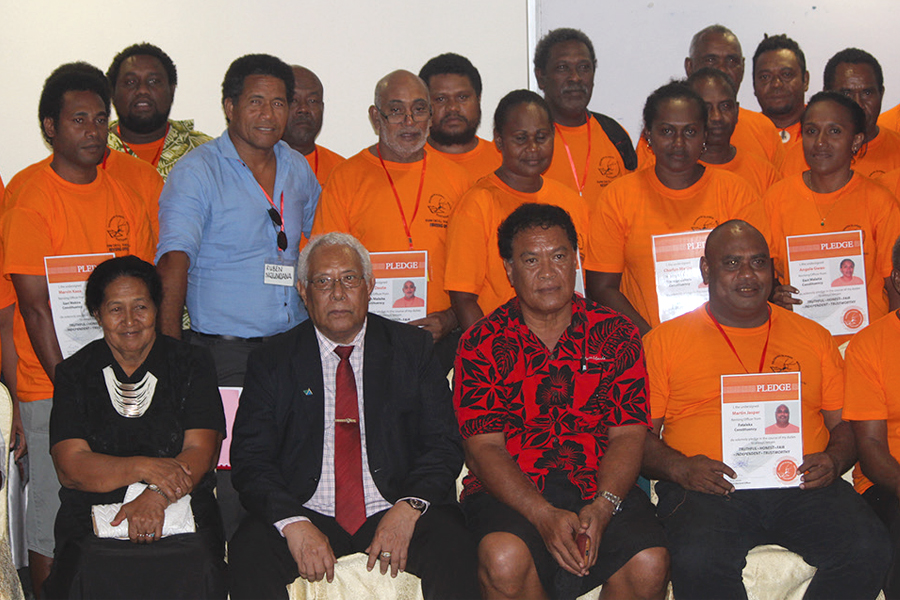
Participating ROs pause for a group photo with the SIEC CEO and Chairman after the training.

By Gary Hatigeva

Participating ROs pause for a group photo with the SIEC CEO and Chairman after the training.

APART from their oaths to uphold integrity, Revising Officers appointed to carry out the Omission and Objection Inquiry phase of the Registration process have been reminded to use their rightful self-disciplinary principles when executing their tasks out in the field.

Speaking to the ROs after their final day of training on the crucial phase, Chief Electoral Officer of the Solomon Islands Electoral Commission (SIEC), Mose Saitala shared that it is important officers do not allow their conscience to be influenced or intimated, and follow what is right according to the laws, to guide them in their duties.

Saitala stressed that ROs are responsible for this scrutiny process and the manner in which they fulfil their duties will affect the citizen’s trust in the electoral process and the election authorities.

He said it is therefore, important that officers undertake to commit themselves so that they will perform their duties to the highest standards of integrity, impartiality, transparency, fairness, accuracy and respect for the law.

“I encourage you to go out and do your duties without fear or favour to ensure results are favourable for everyone,” the SIEC CEO stressed.

Also sharing similar sentiments, Pastor Kenneth Mamali, representative of the Solomon Islands Full Gospel Association (SIFGA) Executive, who facilitated the Pledge Ceremony, pointed out that the points highlighted are also something that comes back to self believes and disciplines of individual officers.

Before conducting the ceremony, Pastor Kenneth gave the officers encouragements and reminders, using biblical illustration that is related to the nature of the challenges expected in their work.

The SIFGA representative then used a biblical character that stood up to the tests and challenges encountered while serving people in the bible days, and this according to the Reverend, is also something these Revising Officers can learn from, as a relevant and applicable situation to what they are about to go through in the field.

He agreed with CEO Saitala that officers will be faced with a lot of challenges while out in the constituencies, through friends, electorates, candidates and even close relatives, but are again reminded to always refer back to the bible character, which he is confident, will help them uphold the highlighted integrity.

This will definitely help officers to maintain their impartiality and honesty status, which will give a positive prospect for a freer and fair outcome, at the same time, bring a good name for the country and the people they serve.

Meanwhile, in her remarks to mark the closing of both the training and the ceremony, one of the SIEC Commissioners, Mrs Taeasi Sanga also agreed that the CEO’s points on officers is acceptable as these officers can play a crucial role and added that a credible voter list is the foundation for an acceptable election result.

“Therefore the integrity of the process rests squarely in the role that you as Revising Officers play.

“The knowledge on procedures required to perform and fulfil your roles and responsibilities is equally important as wisdom that helps you to morally conduct yourself to the highest standard of impartiality.

The Revising Officers will as of this weekend, be sent out to their respective constituencies to carry out the Omission and Objection programmes, ahead of the public inquiries.

End/// 2 pic

Police commissioner rubbishes conspiracy article

0
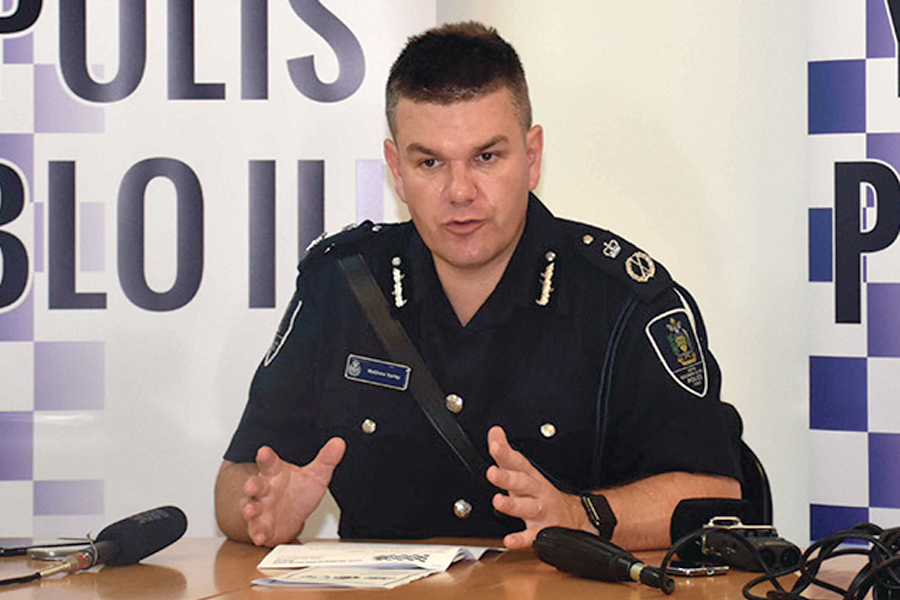
Commissioner of Royal-Solomon Island Police Force Matthew Varley

BY JENNIFER KUSAPA

POLICE Commissioner Matthew Varley has dismissed articles by Alfred Sasako in the Island Sun newspaper over allegations of corruption and conspiracy inside the Royal Solomon Island Police Force (RSIPF).

“I can’t be anymore plain than to say that much of the content of the article that has being put forward to me today around conspiracies of what is going on in the RSIPF and the corruption team is just misinformation and false,” Mr Varley said.

Varley said the matters affecting the charges currently before the court are on the operation police announced in relation to the arrest of the MP last week and is something that police cannot comment on, that case now before the court and the argument is the due process if there are people who wish to raise allegation or conspiracy around that particular case they are entitled to do that through the normal defence mechanism through court and of course that matter will be heard in due course.

“I don’t want to comment on that I think that’s the matter that needs to be tested by defence in court and I don’t want to say anything that will prejudicial to the court process however it is important to state that the said officer was not involved in the arrest of the MP last week and has not been in involved in that case for well-over a year,” Varley said.

“However a year ago police identified that the said officer was one of the officers attached to that case and that he had attachment to that same constituency as a result of that, he was transferred on to other cases, he was not the officer who arrested Dickson Mua last week,” Varley said.

Varley said but there are allegation that somehow there’s attempt to dismantle the corruption team inside the Police Force.

“I think it is important that there are few facts put straight, when I took over as commissioner I discovered that there were a lot of cases that we had on our books in the corruption team that are been un-actioned and had not been able to resolved for many years and there was no system for us to be able to prioritise and triage those cases, so for the past year we have developed and implementing a new review and triage system on corruption cases in the RSIPF.

“And I can tell you that almost 100 of those cases have been fully reviewed, categorised and prioritised and from there we finalised 18 cases that we were able to assess that did not have satisfactory evidence or did not meet the standard for a reasonable prosecution in court in effect there is no evidence for those cases to continue and we closed them off,” Varley said.

However there are 75 cases currently on hand in the Corruption team.

“I have said this before I’m not going to comment on individual cases but I’m doing so, making some information available today so that people can have the facts about what the police force is doing, we have 75 cases on hand,” Varley said

Those cases are in various stages of progress and they have all been reviewed under our new triage system and been categorised not only by the corruption team but also by senior management in the RSIPF.

There are 10 active investigations that are occurring at the moment there are other cases before the court or in front of the DPP for assessment.

He also refuted claims that mass arrest will be made on MPs.

“There is no mass arrest of MPs planned, that is a fabrication and complete untruth, we will deal with cases individually as they come up for finalization and the DPP sanctioned them for charges and I have said all along we will do that in our time when the evidence is ready.

“There is also an allegation that the Corruption team has been pulled apart or dismantled through some sort of secret conspiracy which is complete rubbish in fact the corruption team has been strengthened when I took over as Police Commissioner,” Varley adds.

Therefore Mr Varley said his officers have his full confidence in investigating and dealing with the corruption cases before them.

Violence increasing in communities: Report

0

BY LYNTON AARON FILIA

THERE is an increasing number of reported violence on women and young women in Guadalcanal, Malaita and Western provinces, a report from Strongim Bisnis and Oxfam shows.

As a result, women from the selected locations in the research highlight that they are facing ‘lack of opportunities to participate in community’s social economic development’.

The report said women and young women across the three provinces have explicitly identified facing risks of violence.

It is in the course of undertaking unpaid care tasks which is a common form of punishment from husbands or partners for not completing their expectations.

To make it worse, many women interviewed in the research reveal that they are beaten by their husbands.

“Two have died in the past two years; one had a pot of hot rice thrown at her by her husband and this killed her. The other committed suicide because her husband was always belittling her,” the report shows.

Alcohol is also another aggravating factor, as highlighted by a young woman in Guadalcanal, saying “Sometimes our husbands drink and if we don’t please them, it causes trouble.”

Peculiarly, Guadalcanal women and young women, while identifying with the high risk of being attacked by a male member of the community going to and from the garden, also reveal that they are at risk of being attacked by Vele (local magic practitioners).

This threat is countered by women going to gardens in groups, the report says.

While women’s roles are expanding to encompass economic roles with paid work, women and young women in the three sites generally do not feel as though care duties are changing over time.

Some time and effort-saving resources have been secured at the household and community levels such as roads, tanks, water supply systems, solar power, wheelbarrows, kitchen and cleaning equipment and greater availability of transport.

Women’s increasing economic role has not been mirrored by an increase in support from men or new services or resources to ease their burden.

While most women want their husbands and sons to provide more support in this work, there was reluctance among some women to delegate work due to bride price and traditional gender roles.

Less young women participate in social norms: Report

0

BY LYNTON AARON FILIA

SOCIAL norms around age have become very limited to young women and youths, a report shows.

A 2018 report compiled by Strongim Bisnis and Oxfam Solomon Islands shows less participation of women and young people with social norms around age.

Youths appear to be affected by age-based discrimination to varying degrees and more so for unmarried youth especially young women.

According to the report, young unmarried women experience triple discrimination due to age, marital status and gender.

As described by a young woman in the Western province community, “Young married women can make some decisions, but if we are unmarried, we don’t have power.”

To varying degrees, this manifests in young men and especially young women exclusion from family and community decision-making and economic opportunities.

Young women are extremely restricted by social norms; they have a huge burden of unpaid care work, have limited education and economic opportunities and are managing the risks of violence in households and communities on a daily basis, often through limiting their mobility.

In some instances, such as in Guadalcanal, they showed more support for discriminatory social norms than young men and were challenged envisioning alternative futures.

However, from the report young women from Western province supports the theory that education of young women as well as other community members, is an important lever for young women’s empowerment.

Taxis & buses have not been taxed for so long: IRD Commissioner

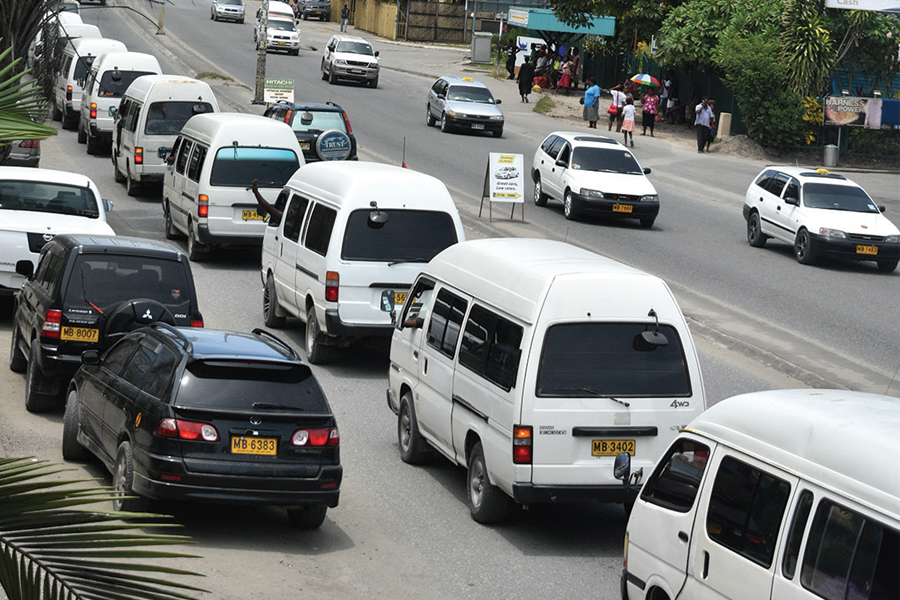
Buses

BY BARNABAS MANEBONA

IN a new twist to the ongoing public transport saga, the Inland Revenue Division (IRD) has revealed that bus owners have ‘not been taxed for so long, while other industries, sectors and employees have been taxed of their income’.

Commissioner of IRD, Mr Joseph Dokekana, in a media statement on Wednesday this week, explained IRD’s stand on the current public transport issue, justifying the business income tax as ‘very fair and marginal’ and ‘reflects the true position’.

Buses are taxed $10,000 per year and taxis $7,000 per year. Island Sun understands that this rate was established in 2013 under a project to tax bus and taxi businesses; it has not been enforced since then – until this year.

While defending the tax rate, Dokekana also issued a stern warning that IRD is ‘also ready and able to deal with those who knowingly step outside the tax system and hold them to account’.

“Bus and taxi owners are liable to pay income tax just like all other businesses in Solomon Islands. This is not a new tax,” the IRD statement said.

Dokekana adds, “The law is clear if you earn income and make a profit you need to pay income tax, just like those persons who are employed or run a business.

“The tax imposed has gone through due process through interviews and actual records inspected and it is very fair and marginal.

“We [have] also taken into account the impact it will have on the owners as they have not been taxed for so long while other industries, sectors and employees have been taxed on their income.”

Since last week, public transport owners have been rallying behind their interim associations (public bus and taxi associations) demanding that the IRD explains the huge tax returns, which they claim is unreasonably exorbitant.

After two meetings, bus and taxi operators decided on a sit-in protest yesterday in which no bus or taxi operated. This had a drastic effect on Honiara commuters from all walks of life, who had to make their journey on foot, or hitch a ride with some Good Samaritan.

Speaking to Island Sun yesterday, chairman of the interim public transport association, Mr Henry Wale nodded that they have not been paying taxes all along as stated by the IRD Commissioner.

He however asserts that IRD’s tax enforcement this year was sudden and had shaken public transport operators, hence their reaction in seeking an explanation from IRD and demanding that the tax be slashed.

Wale explains that the tax rate imposed by IRD is too high, and would result in their businesses making very minimal profit – ‘or none at all’.

Meanwhile, Commissioner Dokekana clarifies IRD’s attempts to gauge public transport owners’ stance on the tax rate, saying, “IRD have been attempting to talk to the Public Transport Association for the past [three] years but meetings arranged were never attended as they have no active association.”

He reiterates, “IRD promised to work with the members of the private sector who are willing to comply with the Solomon Islands laws and to make it easier for them to meet their tax obligations.

“IRD will work with individual owners to help them pay the tax payable by instalments over a period of time.”

It is understood that over 300 bus and taxi owners have registered with IRD and received default assessments and a guide.

SIPA eliminates export cheats at our ports

This is the Weigh-In-Motion (WIM) installed at the Point Cruz SIPA Ports.

By Alfred Sasako

This is the Weigh-In-Motion (WIM) installed at the Point Cruz SIPA Ports.

A rejuvenated Solomon Islands Ports Authority (SIPA) has installed a $2million miniature sensor at the Honiara Port, cutting out cheats and saving millions of dollars in export revenue for the Government, it was revealed this week.

The investment has put SIPA in a class of its own. With it SIPA has become the only regional port in the South Pacific to have installed the Weigh-In-Motion (WIM) sensor, a senior Management officer told Island Sun.

WIM was developed by Quartz Riz, a Malaysian company, which was engaged by SIPA to install it at the Point Cruz Ports. Company technicians are in Honiara, overseeing WIM’s trial runs, while truckies and other Ports users are undergoing training to familiarise themselves with the operations of the new electronic system.

By installing WIM, SIPA has also fulfilled a compliant issue required under the Safety Of Life At Sea (SOLAS) Convention, which accords safety its highest priority.

The senior official said that with WIM now in place, SIPA has news for those who might want to outsmart the system.

“WIM will take care of cheats, provide safety of cargo handling in terms of weight and a much faster for those clearing their cargo from Point Cruz ports. At the same time correct charges are paid base on their weight.

“The little fella also takes care of exporters and others to pay SIPA the correct fees based on weight rather than guess work as was the case in the past,” the officer said.

According to the officer, WIM is embed in the concrete in a designated route for vehicles entering and leaving the Ports security area. It is linked to two overhead cameras.

“As the vehicles enter the area, their details including vehicle registration numbers, weight and costs are automatically recorded and printed for the driver to see. It’s a very efficient system because drivers no longer have to go through the weigh bridge, which takes a much longer time as it had to be done manually.

“For now some delays would be experienced. But as soon as everyone is familiar with how it works, delays would be a thing of the past,” the official said.

“WIM is fully automated and there is no waiting time – something that is very important for business people. It’s good for us, it is good for port users and it is good for the government. It’s a win-win situation.”

The official said safety in cargo handling is the underlying consideration for the installation of the machine.