Home Blog Page 1133

CCECC graces Gilo

0
One of the CCECC staff showing headmaster Pesira one of the item donated to the school.

A primary school of perseverance

By Alfred Sasako

One of the CCECC staff showing headmaster Pesira one of the item donated to the school.

WHEN Gilo Primary School headmaster, Romano Pesira, wrote to China Civil Engineering Construction Corporation (CCECC) recently, seeking help for the school, no one expected a timely response.

Mr Pesira asked CCECC, one of China’s 85 State-Owned Enterprises (SOEs), to consider building an access road to Gilo Primary School, a stone’s throw away from the main road.

The company is completing a 10km-long stretch of road from Mberande to Mbokokimbo after it won the project last year. The project is due to be completed next month.

Country Manager Pengfei Huang told the gathering since its arrival, CCECC has been concentrating on construction work and building community relationship.

“This project began on 1st March 2018 and will be completed at the end of November,” Mr Huang said.

“With the support and help from government and communities, this project is progressing very successfully at this time. Meanwhile, a great relationship has been established between communities and CCECC,” he said.

The Company employs about 30 local workers on the road construction project. Mr Huang said CCECC is considering building a wooden bridge over a creek, which separates Gilo Primary School and its new access road.

“… we do hope that our construction work and concentration on communities will really improve this area and we do hope that you can continue to support CCECC,” Mr. Huang said.

Headmaster Pesira took advantage of CCECC’s presence in the area, knowing that once the road is completed, there might not be anyone else to approach about the needs of the school.

“It was more or less a shot in the dark,” Mr Pesira told Island Sun at a brief ceremony marking the completion of the access road yesterday.

Rackson Dadalo, a project engineer represented the Ministry of Infrastructure Development (MID) at the ceremony. CCECC donated exercise books, note books, pencils, erasers and school bags for the 227 students who enrolled at the school this year.

Mr Pesira, from Makira/Ulawa Province, was not alone in his thinking that he might never receive a response, given that CCECC is a foreign company.

Community Chief, Gabriel Lovanitila told the small gathering that although Gilo Primary School in North East Guadalcanal is one of the Province’s oldest schools, it had been overlooked by its political leaders.

“We should now have classrooms in permanent buildings. But as you can see nothing has changed for this School in the last 50 years. We are still using classrooms made of sago palm leaf, Mr. Lovanitila said.

“This is because our requests for assistance have fallen on deaf ears over the years. We even asked for a police station to be built here, but nothing has been done,” he said.

“Today, we are really thankful to China Civil Engineering Construction Corporation for its help.”

Negotiations to set up Gilo Primary School began in 1963. Formal classes began five years later. The School was initially administered by the South Sea Evangelical Mission (SSEM), now South Sea Evangelical Church (SSEC), but was later transferred to the Guadalcanal Provincial Government.

This year students raised some $3, 000 through a colorton organised by teachers.

“We have used the money raised by the students to build a new double-storey classroom to accommodate the growing number of students who have and will enroll here,” Mr Pesira said.

Taiwan acrobatic troupe ready to wow local crowd

0
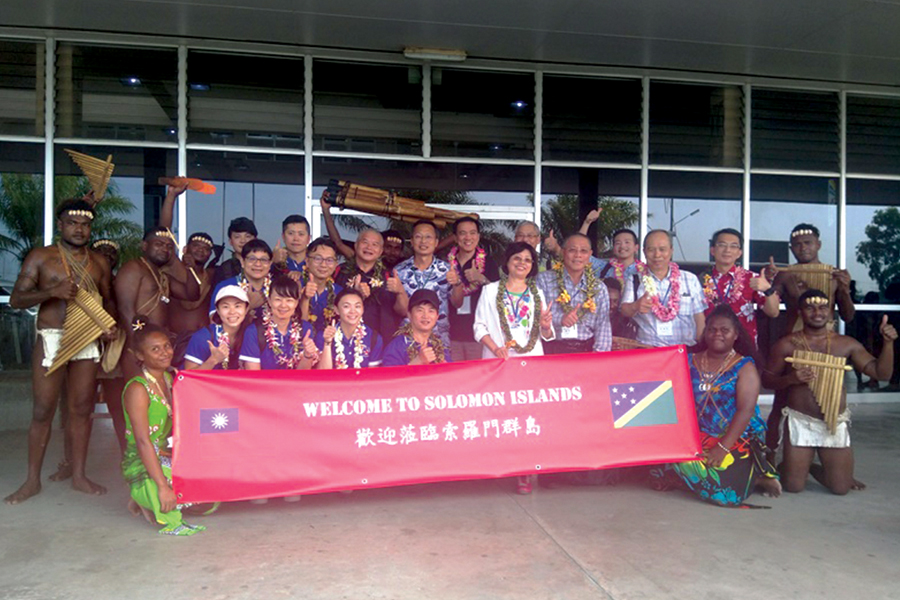
Taiwan Acrobatic Troupe arrives at Henderson Airport.

BY LORETTA BRIGIDIA MANELE

AN eight-member Taiwan Acrobatic Troupe from National Taiwan College of Performing Arts arrived in the country yesterday afternoon.

In an interview with Island Sun, Wang, Hsueh-Yen, team leader and Director Secretary of the college said they have come well prepared, are confident and look forward to giving the audience an exciting array of mind blowing performances.

He expressed that among all the programs they have set out to showcase in the country, one they would like to highlight is “Massive Transformations”.

Hsueh-Yen says it is a trick where they can change faces in less than a second.

He adds that the trick is a secret and only known around in their community.

Hsueh-Yen mentioned that they will also perform the trick for Prime Minister Rick Houenipwela.

In relation, he said another special part of their program will be having some interactions with the crowd or guests.

Taiwan Acrobatic Troupe will be in Solomon Islands from October 31 to November 6. This is their second visit to the country since their first visit 26 years ago.

Taiwan Acrobatic Troupe arrives at Henderson Airport.

Govt promise to invest more in ECD

0

DEAR EDITOR, Radio New Zealand carried a news bulletin today, Wednesday, 31 October 2018, that the Solomon Islands Prime Minister, the Hon, Rick Hou, has said there are huge gaps in local health care, education and protection systems that are holding children back.

Mr Hou was reported to have said the government was introducing one year of pre-primary education, passing welfare legislation and providing better training for health workers.

I am particularly pleased of the promise made and very much hope there will be sustained efforts by the Solomon Islands government to fulfill the undertaking to make more investment in the early years of a child’s life, being crucial for development.

All Solomon Islands children need a better quality of education, a better school infrastructure, improved health care, clean drinking water, hygiene, sanitation facilities, awareness programmes and income sources for their parents.

I feel confident all such concerns were on the mind of the Prime Minister when he reportedly made the promises I have outlined.

Yours sincerely

Frank Short

Financing sustainability and long-term effectiveness of the health sector

0

DEAR EDITOR, last week in the Solomon Islands the Deputy Prime Minister and Finance Minister, the Hon. Manasseh Sogavare spoke at a welcome gathering at the Mendana Hotel where he addressed a party of visiting Asia Development Bank (ADB) Directors.

Mr. Sogavare was reported to have acknowledged the valuable contributions by ADB in the Solomon Islands over several years and he stressed the 45 years of sustained partnership and how much ADB’s financing, technical assistance, policy advice and willingness to respond to the country’s needs had been appreciated.

The Deputy Prime Minister went on to mention, specifically, the many benefits the Solomons had received from the ADB including improvements to the transport infrastructure with development projects in the areas of roads, bridges, wharves as well as susidised shipping routes.

Mr. Sogavare then highlighted the the lack of basic infrastructure and services for the majority of the people, saying Solomon Islands needing investment and growth in the infrastructure, services, social spending, and disaster risk management.

He said, “All these require large amount of concessional financing.”

One aspect of what the deputy Prime Minister picked up on, and was of special interest to me, was his acknowledgement of the technical and capacity support rendered by ADB on the preparatory work for the National Referral Hospital (NRH) relocation project.

I feel sure all will agree with what Mr. Sogavare said about the laudable assistance of the ADB in particular about aiding the country’s infrastructure and the technical and capacity support for the NRH relocation project.

Given the reported poor state of health services particularly in the Western Province, however, as highlighted in an open forum held in Gizo in mid- September this year, I was hoping to be able to learn more of the ADB’s assistance to the Solomon Islands health and medical services during the ADB Directors visit.

I mention this for several reasons and explain why I raise it

Firstly, in the Gizo forum, the Director for Provincial Health Services in the Western Province had said 14 health facilities were now closed as well as health facilities and all health activities were facing big challenges due to drug shortages, storage and delivery services.

Out of the Province’s 63 health facilities 14 were already closed down due to deterioration and land issues.

The closure of many health clinics throughout the Solomon Islands due to deterioration is a major concern that I have cited on previous occasions and I think of the many communities across the length and breadth of the country were the sick and those needing medical attention locally are being deprived of their basic human rights to medical care when needing help.

My second point is the fact that in June this year, the ADB’s Board of Directors approved a total financing package of $195 million to support the delivery of accessible, affordable, and high quality health services in Papua New Guinea (PNG).

The financing package was reported to comprise of two regular loans worth $100 million and $45.10 million and a $49.90 million concessional loan—all sourced from ADB’s ordinary capital resources balance sheet—to help PNG’s efforts in achieving universal health coverage.

Interestingly, ADB’s Health Specialist for the Pacific, Ms Inez Mikkelsen- Lopez, said at the time (quote)

“PNG’s poor health outcomes are the result of deteriorating healthcare services caused by volatile and unpredictable health financing as well as weaknesses in government systems and in health sector capacities.”

“Limited investments in the country’s health infrastructure as well as suboptimal health sector governance also undermine service delivery.”

All of what the ADB’s Health Specialist for the Pacific was quoted as having said about the health sector in PNG sounds all too familiar in respect of the Solomon Islands situation.

It would be my hope, therefore, that the ADB might further aid the Solomon Islands, if requested, to enable the long-term sustainability and effective use of the country’s health sector financing and deficiencies in rural health facilities and patient’s welfare.

Yours sincerely

Frank Short

Private Sector enlightened on new Electoral Act

0
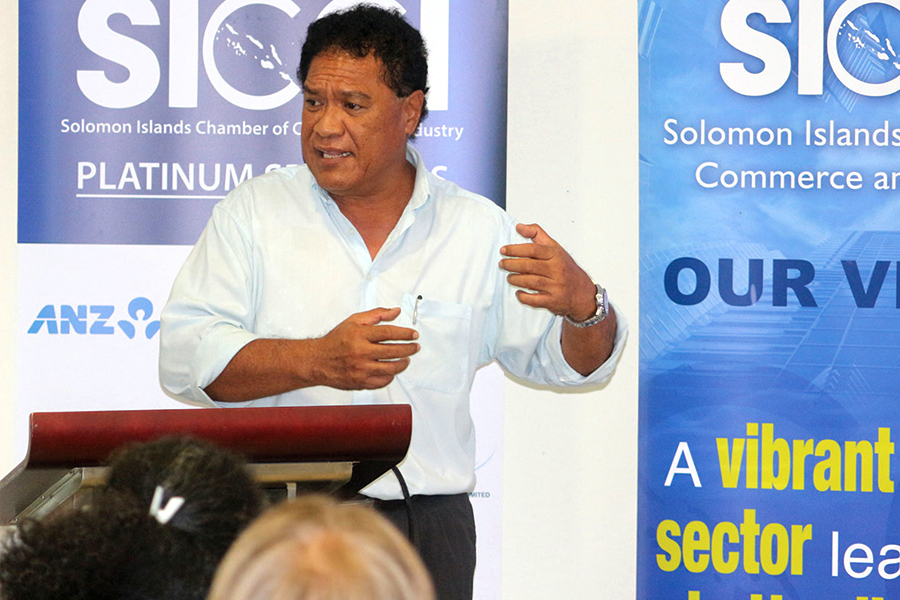
SIEC CEO making his presentation on the new Act.

Warned to respect legal rights of employees to vote & reminded of the public holiday status of Election Day

By Gary Hatigeva

MEMBERS of the Private Sector under the Solomon Islands Chamber of Commerce and Industries (SICCI) were yesterday, engaged in a session with the Solomon Islands Electoral Commission (SIEC) for talks on the Electoral Act 2018.

Organised by the Chamber of Commerce, the session was intended to update its members on the activities involved in the election process, and the responsibility of the Commission, public and the private sector particularly, the business community.

The SIEC team informed the business community about the Electoral Commission Act and its implications as well as important dates for the National General Election next year.

In the session Philotea Paul, the Commission’s Head of Media and Communications Awareness, spoke on the general aspects of the election process, and shared on the status of the activities that are currently underway, and others that are yet to come, including the recently completed registration programme.

Philotea Paul of SIEC speaking to members of SICCI.

The Commission’s Chief Electoral Officer, Mose Saitala on the other hand, spoke on the application and legal aspect of the new act, which he highlighted matters on the involvement of business houses in the process.

He also presented on the changes that were made under the new act from the old one, and the new provisions that have been included, at the same time enlightened the gathering on the particular sections within the act that were enacted for next year’s election.

In his presentation, Saitala revealed and pointed out that the Electoral, which was recently passed by parliament, has made it illegal for businesses particularly, foreign owned or those that have foreign shareholders, to be involved and support any part of individual candidates in their campaign activities.

Under the heading Campaign expenses & donations, the Act warns and made it clear that any candidate who accepts campaign donation from a non-citizen person or a company who has a non-citizen shareholder commit an offence: Penalty – $50,000 or 5 years imprisonment or both.

The gathering was also enlightened on provisions within the Electoral Act, which made it compulsory for business houses to allow for their employees to exercise their constitutional rights to cast a vote during Election Day.

They were however warned that the Act has also made the Election Day a public holiday, which according to the SIEC CEO, businesses and companies within the private sector are ought to recognise the application of the Labour Laws in terms of employee salaries and wages.

The Act has made it lawful that it is the duty of employers to release voters, and warned that any employer, who does not release a voter to cast his or her vote, commits an offence, and can be penalised with a $10,000 fine.

SIEC CEO making his presentation on the new Act.

However, the part in which the act stipulates on the status of voting for all eligible voters did not gone down well with a lot of those from the private sector who expressed concerns over the potential negative impact this decision will have, on their businesses and operations.

The Act has made it legal for all eligible voters to cast their votes, making it compulsory for both the public and private sectors to allow for their employees to exercise this constitutional right.

It was shared that the amount of time required in the back and forth movements by employees for the election, will also affect business operations, stressing that people will need more than a day off to take part in the election activity, where in some cases, people are expected to travel longer distances, and according to those concerned, it will require at least a week to leave for elections.

While he conquered with the concerns, the CEO stressed that with the Act now in place, the onus will go back to the employers and their employees to make arrangements in terms of salary/wage payments, and the issue surrounding days off.

As it is now a legal mandate allowed for by the new electoral act, the SIEC CEO therefore advised all to start their preparations and planning, ahead of the next year’s election.

New Crafts Market Centre to open in Honiara

0
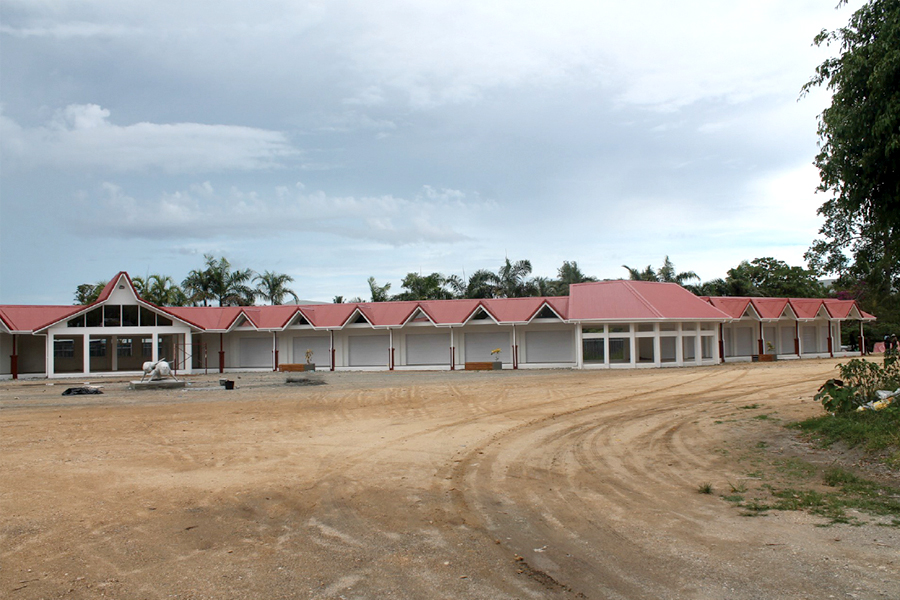
The newly built Crafts Market Centre at Mendana Avenue, next to National Art Gallery, Honiara. Photo from GCU
The newly built Crafts Market Centre at Mendana Avenue, next to National Art Gallery, Honiara. Photo from GCU

THE Ministry of Culture and Tourism will officially open the newly built Crafts Market Centre in Honiara tomorrow.

The Centre is to cater for the exhibitions and sales of local traditional handicrafts by our cultural producers and entrepreneurs.

This is part of strengthening and building the cultural industries sector in Solomon Islands.

Director of Culture and Tourism, Denis Marita said the crafts market centre will basically be used by our local handicrafts producers and entrepreneurs.

“Consideration will be given to arts and cultural associations engaged in the cultural industries sector, whereby their members can benefit through the provision of a conducive environment to market and promote their art and cultural products,” Marita said.

He said the centre will help to contribute to the country’s economy thru the cultural industries and tourism sectors.

“The handicrafts sector is also a niche market for tourism which can also be seen as part of the Culture Tourism Economy.”

Marita added Solomon Islands handicrafts and local artistic work have been rated as some of the best in world and as such, the need for a proper venue to harness the development and growth of this sector is deemed as an urgent priority.

“Currently, our unique handicraft and cultural products are displayed on street pavements and on the ground, subsequently degrading the value and respect for these authentic works of art and culture.

“The country needs a conducive and pleasant environment where our authentic products can be displayed with honour and dignity,” he said.

Marita said the crafts market centre will be run and maintained by the Ministry of Culture and Tourism.

“Local cultural producers and Entrepreneurs will direct benefit from this centre through the sale of their products.

“Users will be paying rent to the government for its usage and as such provides direct revenue income for the government.”

The Crafts Market Centre project was initiated back in 2015 in a partnership approach between two ministries (Ministry of Culture & Tourism & Ministry of Foreign Affairs & External Trade) through the EIF/ EU Programme and co-funded by the Republic of China Taiwan.

In 2016 a concept plan for a Crafts market Centre was acquired through public tender and in late 2017 construction on the New Crafts Market Centre commenced.

The centre took exactly one year to build. The total cost of construction is around $10 million. The building contractor is Ropiko Enterprises Ltd.

–GCU

Invest in ECD now than later: UNICEF

0

BY LORETTA BRIGIDIA MANELE

SOLOMON Islands at 33 percent has the highest childhood stunting rate in the Pacific with significant disparities between rural and urban areas and between rich and poor households.

According to UNICEF (United Nations International Children’s Emergency Fund), increasing access to improved water and sanitation also remains a key challenge in the country, particularly in the rural areas where only 30 percent of households have access to improved sanitation facilities.

Besides stunting, Solomon Islands at 54 percent accounts for the highest rate of open defecation in the Pacific.

As for early childhood education, the net enrolment is also poor, at 39 percent.

UNICEF expressed that local communities mainly run kindergartens but only about 50 percent of early childhood centres are formally registered in the country.

Moreover, as stated, while there are legal provisions, children still suffer from violence, exploitation, abuse and neglect and these are experienced in homes, schools and communities.

“72 percent of parents reported having used violence or physical discipline against children in their households,” said UNICEF.

Also stressed by the United Nations organization is that investments in young children are necessary if Solomon Islands is to secure inclusive and sustainable national development.

UNICEF emphasized that ECD (Early Childhood Development) investments are one of the most cost-effective strategies for healthier and more productive populations with potential returns that outweigh costs.

“It is vital to invest earlier rather than later, because the development of brain architecture in the early years is the foundation of future learning behaviour and health,” said UNICEF.

Gov’t split over TG Bill

Bills Committee recommends for it to be withdrawn

By Gary Hatigeva

IT has been revealed that the government camp was split over the status of the Traditional Governance and Customs Facilitation in parliament.

This was after it was noted in parliament, from the report of the Bills and Legislation Committee, of its strong recommendation for its withdrawal.

Insiders told Island Sun that the matter had got the government bench talking amongst themselves, and sources further revealed that a majority have actually supported the Bills Committee’s recommendation to have the bill withdrawn.

However, a few including two Malaita MPs and one from Guadalcanal, have insisted for it to be tabled and pushed on passing it through parliament.

The Committee had called for the withdrawal to allow for the Government to have a commission that should research into the cultural anthropology of the various traditional governance systems in our country.

At the same time, a thorough research should be made into the growing jurisprudence around customary law, customary rights, customary inheritance, tribes, sub-tribes, clans, and such other pertinent issues, and a special study to be made into the place, role, and voice of youth and women in traditional governance systems in our country.

Meanwhile, the Bills and legislation Committee also noted in its executive summary of its enquiry conducted into the Traditional Governance and Customs Facilitation Bill 2018 from September 19 to October 5, 2018.

“Forty four witnesses appeared before the Committee. Almost all witnesses expressed the desire to have the Bill withdrawn and the policy issues further developed and taken back to the public in a broader and robust consultations process.

“The Committee notes that the consultations methodology culminating in the Bill was shallow. The policy suffered from the lack of a thorough anthropological study of the customs and groups and units that exist under customary law and practice,” the Committee states in its report.

It was also noted that the Committee had come to realise during the course of the hearing that the Judiciary, the Bar Association were never consulted. “This is a serious deliberate omission”.

“As important but marginalised groups, the women and youth were not meaningfully consulted. Nor were the Churches consulted meaningfully.

“The lack of rigorous study on the subject matters has resulted in a superficial consultations process, driven by noble but shallow policy, which in turn, has resulted in a bill that is simplistic,” it adds.

The Committee according to its report had been spending much time deliberating on its recommendations to the House.

“The subject matter of this Bill is neither one to be trifled with, nor is it a candidate for experimentation. Custom is core to our tribal community and identity.

“Legislation dealing with custom must be informed by thorough research, informed policy, rigorous intellectual debate and engagement, and a robust wide and meaningful consultation. None of these exist to support this Bill,” the Committee stressed.

In applauding what they regarded as, the government’s noble intention to give legal recognition to Chiefs, and the various customs, the Committee however highlighted that they are of the considered view that the TG Bill has too many inadequacies to achieve the said noble intention.

“Consequently, The Committee begs the government to withdraw the Bill. Further, the Committee prays that the government consider the recommendations in this report before revising the policy and processes to bring legislation to Parliament on this subject matter,” the group added.

However, despite early rumours of the likely recommendation, the Minister responsible for this bill had insisted for the bill to be tabled, and had put pressure on those involved in its drafting and realisation to ensure that the bill is tabled and passed.

But a good number of MPs from the government side when interviewed have confirmed and also shared similar concerns with that of the Bills and Legislation Committee.

It was also revealed that this bill was never a priority of the current government, but was forced to make its way up through political pressure.

Sources further revealed that this bill came under the interest of one political party group within the Solomon Islands Democratic Coalition Government, but not all including the Prime Minister.

Insiders also told Island Sun that while he doesn’t have the support for it to be included in the priority list, the PM because of political fears, chose to allow for the Bill to go up, knowing it will get the opposition from parliament, so he doesn’t get the direct blame for stopping it.

The Bill was enlisted for Parliament’s deliberation on Friday, pending approval from the Committee of the Whole House, but sources say calls for it to be withdrawn will remain high on the agenda.

DBSI Bill passes second reading, awaits parl debate

0

By Gary Hatigeva

GOVERNMENT’S proposals to re-establish the former Development Bank of Solomon Islands (DBSI) through a DBSI Bill 2018, was amongst four government bills that went through their second reading on the floor of parliament yesterday.

The DBSI Bill was put in for its first reading early this month before parliament was adjourned, where it was later brought before the Bills and Legislation Committee (BLC), for it inquiry.

After its successful scrutiny at the BLC, the Bill was brought back to the floor of parliament where it was put up for its second reading, following its resumption, and got the nod from members, for its debate and proceedings from the Committee of the Whole House.

There is excitement within the government side, with anticipation for its passage, and looks forward to its enactment.

The DBSI Bill 2018 according to the government is the way forward, which aims to give opportunity to the rural masses to contribute directly into the national economy.

It was also reintroduced with hopes to expand access to finance to support rural economies, and support economic advancement throughout the country, ensuring at least 80 percent of the rural population receives the opportunity to participate in various economic activities, at the same time enhance their participation in the rural productive sector.

The re-establishment also comes with a new approach, and that is to prevent Solomon Islanders to become excluded in economic development, while at the same time, look at the existing financial sector in this country, which is dominated by commercial banks.

The government believes that the commercial players were contended with short-term banking activities and were either not willing or not in a position to support national priorities of long-term investment outside of urban centres.

It is also within the government’s proposal that the Development Bank will become a vehicle to promote, stimulate and strengthen economic development in the Solomon Islands.

The government is also looking at expanding productive activities in the rural areas and increase participation of the indigenous population in commercial activities, under the DBSI Bill if it is passed by parliament.

The new DBSI Bill is expected to address what have been outlined as some of the underlying issues, which includes the development of a legal regime for DBSI that is in conformity with good governance and international best banking practices, and to provide transparency and accountability.

It is factored to be pushing for the enhancement of Good Governance, one of the new improvements, with hopes for it to provide an effective governance platform for the prudent running of the new Development Bank.

Objectively, the new Bill is also looking to support financial deepening and serves a place in the market that cannot be reached by other players in the commercial and financial market, and that according to experts, can be achieved through the development of a proper financial system.

The other bills that made their second reading are, the Payment System Bill 2018, the Solomon Islands National Provident Fund (Amendment) Bill 2018, and the ‘2017 Supplementary Appropriation Bill 2018.

Following its resumption, Parliament went through the presentations of reports from both the Speaker, and the BLC Chair, but was unable to go through its Question and Answer session due to the non attendance of responsible members for both questions and answers, and was later adjourned for this morning, after going through the second readings of the four bills.

RSIPF warns communities of bomb blasting in Alligator Creek

0

THE Royal Solomon Islands Police Force (RSIPF) Explosive Ordnance Disposal (EOD) Team will conduct a live demolition of bombs at Hells Point, in the Alligator Creek East of Honiara today.

Officer In-charge (OIC) of EOD, Inspector Clifford Tunuki says, “The Hells Point Demolition Range in Central Guadalcanal area will be active from 8am to 12pm on November 1, 2018.

“Fishermen, farmers, hunters and the general public in the Henderson area, Alligator Creek and Tenaru School areas are kindly warned to keep out from Hells Point while the Operation is in progress.

“This is a normal EOD task aimed to reduce the amount of Unexploded Ordnances stored at the site to a minimum level.

“The Air Traffic Control Tower at Honiara International Airport will coordinate the firing of each serial. No serial is to be fired without specific air clearance and permission from Honiara Air Traffic Control Tower.

“An EOD Operator/Technician from the RSIPF EOD Team will be posted at the control tower during this operation from the actual times of the Demolition and completion time,” says Inspector Tunuki.

–POLICE MEDIA