Home Blog Page 1120

Remembrance Day

0
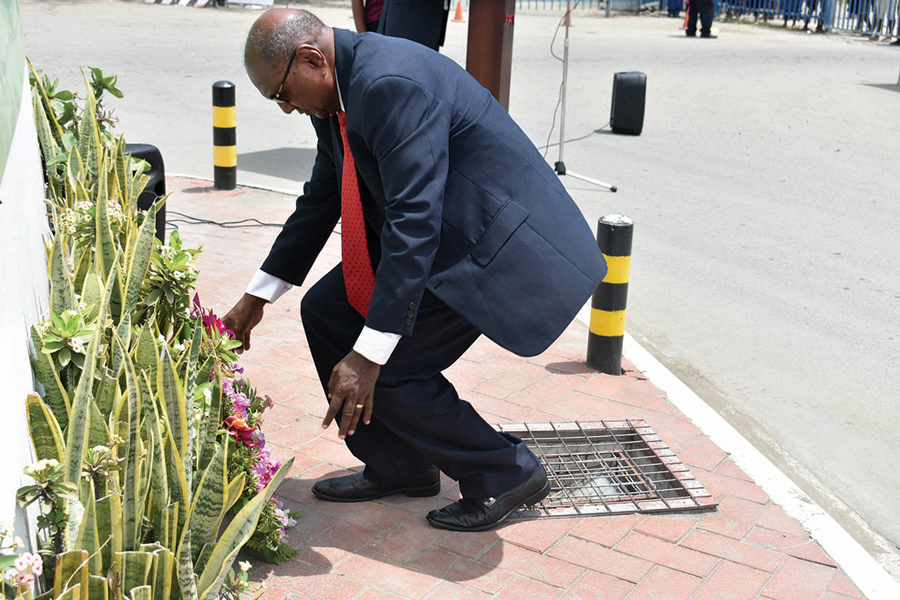
Representing the government, Foreign Affairs Minister, Milner Tozaka.

BY GEORGINA KEKEA

SOLOMON Islands yesterday joined the rest of the Commonwealth countries to commemorate Remembrance Day at the Commonwealth Street in Honiara.

Organized by the British High Commission, the day yesterday was to remember 100 years since a peace agreement was signed by warring parties to end World War I.

With the theme, ‘We will remember them’ the programme started with a Remembrance prayer, offered by the Rt Revd Archbishop George Takeli of the Anglican Church of Melanesia (ACOM).

Joining the Remembrance Service yesterday were students from Woodford International School who also participated by singing a song, ‘When duty calls’.

It was a solemn occasion as dignitaries and mission heads came together for another gathering to honour history.

Remembrance Day was first observed in 1919. It was originally called ‘Armistice Day’ to commemorate the armistice agreement that ended the First World War on Monday, November 11, 1918 at 11am – on the eleventh hour of the eleventh day of the eleventh month.

Yesterday at 11am, the peace bell was also sounded in Honiara to celebrate the end of World War One.

Akapusi Malugulevu of Woodford International School ringing the ‘peace bell’ to celebrate the end of the first world war.
Commander J J Williams on behalf of the men and women of the Australian Defence Forces.
Don Boykin representing the United States of America to lay a wreath to remember those who have died in World War 1
Lt Commander Phil Rowe on behalf of the men and women of the New Zealand Defence Forces.
Miss Lilli Mitchell & Mr Elijah Uacisrael on behalf of the school children.
The students from Woodford International school joins Remembrance day program.
Representing the government, Foreign Affairs Minister, Milner Tozaka.

Widows and single mothers lack economic opportunities: Report

0
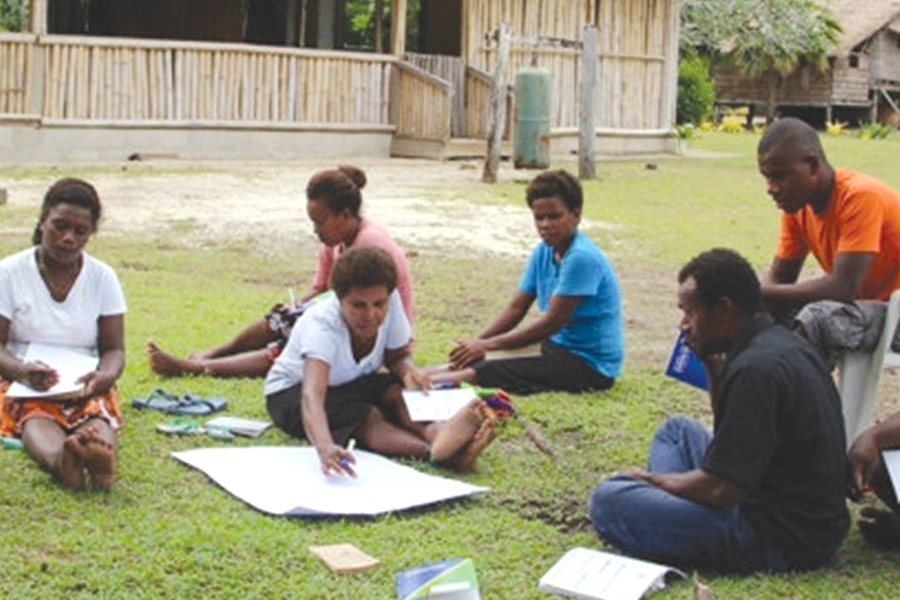
Community participation of both men and women.

BY LYNTON AARON FILIA

Community participation of both men and women.

WIDOWS and single mothers in Solomon Islands are said to be the most disadvantaged people to any economic opportunity, a report shows.

A report compiled by Strongim Bisnis and Oxfam International Solomon Islands found that widows and single mothers in Malaita, Guadalcanal and Western provinces lack economic opportunities.

It said although this group of people receive some support from communities and churches, throughout activities they were identified among those most disadvantaged for any economic opportunity.

This is due to their high care and domestic labour burdens and having less available support from male family members for ‘heavy’ labour required for paid or unpaid work in the gardens or home.

Besides, single mothers from also encountered the similar experiences, according to the report.

Western province single mothers were identified by adult women as experiencing more challenges in the community and economy due to added layers of social stigma, discrimination and gossip.

On such situation single mother is blame either for not marrying well, or for not being a ‘good’ woman, the report said.

Meanwhile, the study carryout identified various power differences based on gender, age, marital status and disability in a range of spheres that are important to economic empowerment.

However, despite their skills and capabilities, young women’s high burden of care works exposure to violence, lack of voice in household and community decisions.

Their apparent exclusion from community information and economic opportunities is critical and needs to be addressed to prevent inter-generational risks and vulnerabilities, especially related to violence.

Tikopian delegation highlights SI in France

0
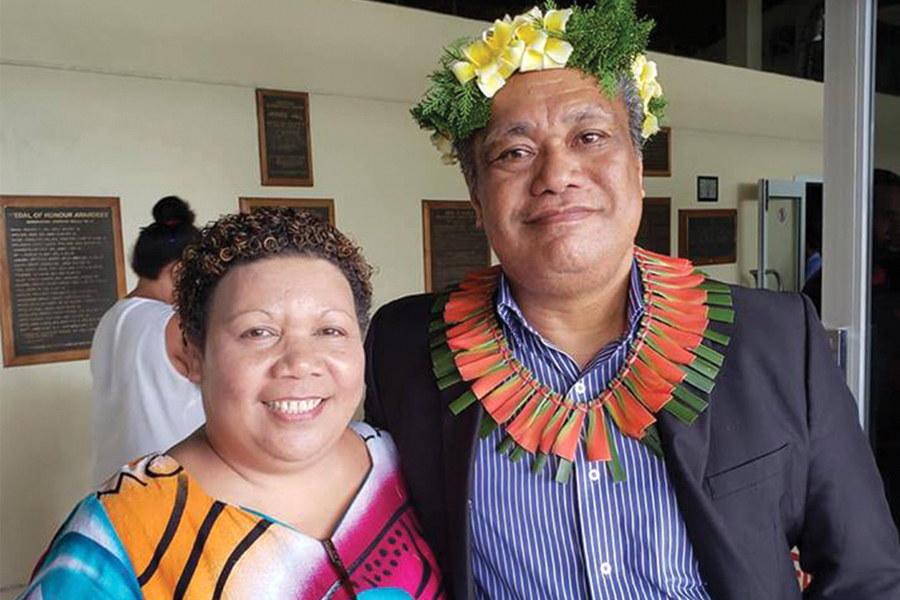
Ms Freda Tuki and other representative of Tikopia tribe who joined the delegation to France.

BY LYNTON AARON FILIA

FRANCE is looking to support Solomon Islands after the film on Tikopia and its way of life was showcased in Paris, France.

Two weeks ago, a high Chief from Tikopia and five elders representing their tribes left Honiara to go to France for the premiere show. In France they met with politicians there after the screening.

With the inspirational stories documented in the film, France is interested to support Tikopia and Solomon Islands in the area of climate change.

During their stay in Paris, Mr Onomarie said they met with French politicians through their visits in cities across France.

He said during the screening and discussions a lot of organisations that attended met with them to talk about climate change and pledging their support to assist in near future.

“Our discussion is based on climate change as it affecting the Tikopia Islands and Solomon Islands as a whole. We did well during our discussion about climate change with the politicians in France,” Onomarie said.

“We manage to secure some support from France as few organizations have shown interest to support Tikopia and Solomon Islands in near future.”

Onomarie said they pledged to support with machines first.

“This is one of the fruitful trips where we did not focus much on ourselves but Solomon Islands as a whole. They recognised Solomon Islands and even the country’s flag put up in every meeting we attended,” he said.

Ms Freda Tuki who was behind the project from the start said she is excited to see the trip is successful along with the new partnership with France.

She said they have been working in this project since 2015.

As a result, they received donations last year from other organizations in France, particularly solar and machine to turn saltwater into fine drinking water.

With the new partnership, Tuki said the organisations are looking forward to work on the water sanitation and other assistant and climate change to extend a sea wall on Tikopia Islands.

She adds not only the Tikopian community but whole of Temotu islands as well.

Meanwhile, the delegation arrived in Honiara on Friday November 9th.

The screening of the documentary tittle in France “Nous Tikopia” and in English “We Tikopia” is at Good Planet Foundation in Paris.

The documentary was captured in Tikopian language with French subtitles, and it was viewed across France and also on TV.

The film director is Corto Fajal.

Representative of Tikopia tribes welcome by Tikopian community at the Honiara International airport.
Ms Freda Tuki and other representative of Tikopia tribe who joined the delegation to France.

Province based CSOs learn good governance

0

BY LORETTA BRIGIDIA MANELE

A capacity needs assessment carried out by DSE (Development Service Exchange) has resulted in “Good Governance” workshops in two provinces this year.

According to the civil society organisation (CSO) which looks after all CSOs in Solomon Islands, the assessment was conducted to identify the training and organisational development needs of its members.

DSE found that some member organisations were lacking the understanding of good governance practices and their importance thus, hindering their ability to perform day to day activities and obtain funding from donors.

This was found particularly in provinces where few opportunities to access training was mentioned as a contributing factor.

Henceforth, DSE rolled out two good governance workshops in Malaita and Western provinces in March 2018 and May 2018 respectively, to help its members understand the importance of good governance within CSO’s and enhance their knowledge of how to govern community based organisations effectively.

Specifically, from the workshops, DSE stated that CSO board members will learn to explain the concept of good governance, principles of good governance, importance of good governance, how the principles of good governance can be applied to the work of their own organisations, reflect on their strengths and areas for improvement in their own governance practices and in their organisations and identify good governance practice models that can be adopted for their organisation’s situation.

The workshops also included two days of context appropriate training with the aim to build the individual capacity of board members, influence the governance systems of their CSOs and strengthen the overall culture or governance among CSOs in the provinces.

DSE mentioned that these two workshops will directly benefit CSO leaders, their organisations, beneficiaries of their CSOs and the communities they operate in.

Together, a total of 14 females and 20 males representing 10 organisations attended the workshops.

DSE lauds members and stakeholders for ACB achievement

0

BY LORETTA BRIGIDIA MANELE

ONE achievement DSE (Development Service Exchange) and its members can sit back and be proud of is their unwavering support for last year’s controversial Anti-Corruption Bill (ACB).

DSE, mandated under its Strategic Plan (2017-2022) is the voice of Civil Society Organisations (CSOs) in Solomon Islands.

With this position and responsibility, from August 2017 to Dec 2017, DSE took the lead in mobilising members of CSOs as well as concerned citizens to put together a work plan and a terms of reference for a working committee (taskforce) comprising of its members to push for the bill’s return to parliament.

Different strategies were used to ensure that the Bill, also termed by then Prime Minister, Manasseh Sogavare as “People’s Bill” be prioritised by parliament.

The committee was formed, the media were involved, petitions were signed and peaceful protest march took pace to the Prime Minister’s office.

Since then, the Anti-Corruption bill has been revisited and submissions to the bills and legislations have been made.

The bill is being discussed nationally through social media, has generated much interest from development partners and donors and returned to Parliament in Nov 2017.

As expressed in DSE’s July 1, 2017 to June 30 Annual report by General Secretary, Jennifer Wate, the campaign to bring the Anti-Corruption Bill to parliament in Nov 2017 is a significant achievement DSE members and stakeholders worked together to achieve.

DSE information sharing session sparks reconciliation

0

BY LORETTA BRIGIDIA MANELE

A Civil Society Organisation (CSO) information sharing session carried out by Development Service Exchange (DSE) has brought about reconciliation among tribal leaders.

According to DSE’s annual report, under its Strategic Priority 4 which is Collaboration; Facilitating Partnerships and Networking, the session was held early this year at KiraKira, Makira province for Makira Conservation Association members.

The session had three aims which were; to share information about sustainable harvest of Makira’s forest and marine life and established protected areas, to establish an environmental conservation network and thirdly, to raise awareness for the Integrated Forestry Management project which will be implemented by the Ministry of Environment (MECDM) Ministry of Agriculture (MAL) and Ministry of Forestry.

DSE expressed that this platform empowered Makira Conservation Association members and gave them the opportunity to interact with the government and other NGOs on issues of importance regarding their organisation and members of the community.

Additionally, the outcome of this workshop as DSE states was the review of the organisation’s constitution, reconciliation between leaders of different tribal groups that formed the association and member’s readiness for the consultation to review the forest resources utilisation Act.

As a national umbrella body for Civil Society Organisations (CSOs) in the country, DSE is a mouthpiece for these CSOs embodied with the mission to strengthen effective CSO coordination through advocacy, information sharing, capacity building and collaboration to ensure a credible, accountable and transparent civil society sector working toward equal and sustainable development in Solomon Islands.

RIPEL workers move on amidst SIPHRAA’s call for fair share

0

BY GEORGINA KEKEA

THE General Secretary of the Indigenous Peoples Human Rights Advocacy Association (SIPHRAA) has called on Mr. Patrick Wong to pay former workers of ICSL RIPEL their legal entitlements of $99,000.

Mr Buddy Wickhams who was also an Agent for the former ICSL RIPEL workers in their high court cases says he is concerned in the way Patrick Wong and Oliver Salopuka dealt with the dividend of ICSL RIPEL.

In a letter to Island Sun, Wickhams say the public needs to be informed about the initial ICSL RIPEL Scheme of arrangement that was made sometime in 2001.

He said the scheme was passed and recognized by the High Court sometimes in October 2002 by respectable lawyers representing five different shareholding groups of RIPEL including workers and staff.

In this scheme, Solomon Islands Government, Central Islands Province and workers of RIPEL should get 20 percent dividend, while Lavukal Trust Board (LTB) should get 24.9 percent and ICSL 15.1 percent.

He said since Patrick Wong had paid the Lavukal Trust Board (LTB) their share he should also pay the non-striking workers their 20 percent share and other legal entitlements due to them as employees of ICSL RIPEL.

“So, why Patrick Wong paid the Lavukal Trust Board and its people their 24.9 percent share without paying the non-striking workers their 20 percent share of due dividends is a matter of concern that raises more questions than answers,” Wickhams said.

He said what Patrick Wong and his former general manager John Whiteside made with the leadership of the defunct SINUW to settle SINUW’s bill from the workers share can only be considered as daylight robbery of the faithful workers of ICSL RIPEL who stood with the company through hard and tough times during the striking period up until the court battle ended in the company’s favor.

He said how Patrick Wong dealt with the issue of RIPEL is a real political cover up.

“If Patrick Wong is truly concerned about RIPEL he should consider and work closely with all the former RIPEL workers first before any other group including the Lavukal Trust Board (LTB),” said Wickhams.

At the same time, Wickhams deplore the manner in which Wong and Salopuka dished out the monies to the people of Russel islands.

“In fact I consider the displaying of hard cash by Wong and Salopuka as cheap and shallow political bait for this coming general election because Oliver Salopuka is amongst the intending candidates for Russell and Savo constituency. How, is this not campaigning outside of time as stipulated in the electoral act? Wickhams questions.

He went onto say that in the last general election of 2014 Oliver Salopuka uses ICSL RIPEL through their General Manager Mr John Whiteside.

“According to Mr. John Whiteside, Oliver Salopuka uses up around $2.5million that belongs to Lavukal people, but yet to retire how the money was used,” Wickhams say.

Furthermore, Wickhams alleged that Salopuka was a pain in the neck to the terminated ICSL RIPEL General Manager, John Whiteside. He said how he convinced Patrick Wong to provide him support would be interesting to find out. He said this new friendship was made after Patrick Wong terminated John Whiteside.

With Wickhams tirade on Salopuka, Island Sun brought to Salopuka’s attention all that was said about him by Wickhams. However, he declined to make a comment, saying everyone is entitled to their opinion.

But to respond to Wickhams, former RIPEL employee spokesperson, Fisher Lulu says the former workers have moved on.

He said they have tried to solve the issue for more than a decade already and have decided that it is time they work together with Mr. Patrick Wong.

“We want to come back and work with Mr. Patrick Wong for any development for us in the future,” Lulu said.

Lulu verified that they have worked with Wickhams, through SIPHRAA in the court issues and have raised a lot of funds but gained nothing from it.

He said from this, the workers decided to organise themselves and do things their own way.

“We think that to resolve this issue is more important and we are supporting what Patrick Wong is doing for us,” Lulu said.

He said through legal process, the workers do not have a share in RIPEL. Only the Lavukal people has shares, Lulu said.

He said if this is the way forward for the workers of RIPEL then they are quite happy to work with Wong to revitalise RIPEL.

He said Russel is their home now as most of the workers in RIPEL are second to third generation Russel islanders whose parents and grandparents have left their home of origin from another province many years ago.

“So we look at Russel as our home too. This is why we are so pleased when the Company and the Lavukal people agreed for us to stay until everything is sorted out so that we can continue with our work,” Lulu said.

SIPHRAA meanwhile is adamant that Patrick Wong pays the workers what is due to them, under the 7th defendants of HCCC No.114 of 2009, and also pay the non-striking workers their legal entitlements as employees of ICSL RIPEL and the dividend of their 20 percent share.

Solomon Islanders paying heavy price for abandoning traditional diet

0

DEAR EDITOR, non-communicable diseases (NCDs) are putting a heavy burden on the country’s health services, as evidenced from reports emanating from the National Referral Hospital (NRH) and especially from the Buala Hospital where it has been reported NCD’s accounted for most deaths during the first half of this year.

According to new data, quoted in the Island Sun newspaper this week, Isabelle Province has a very high rate of NCD illness in areas of Buala, Tatamba, Konide, Bolitei and Kia.

Illnesses attributed to NCD’s include hypertension, obesity, diabetes, heart problems, stroke and anemia, but the sad aspect of this problem is that with a proper nutritional diet and a return to traditional foods NCD disease could be prevented and people live healthier, longer lives.

Education on what to eat is necessary but often health authorities are short of resources in encouraging proper eating habits and the spate of imported food products, often containing too much fat, too much sugar and high in calories has proved to be detrimental in preventing NCD linked disease.

The promotion of traditional foods seems to have fallen by the wayside and more should be done to encourage people to eat a healthier diet of vegetables, fish, fruit and nuts, more in keeping with the Melanesian diet.

Although I understand a start has already been made in the Solomons more needs to be done to reinforce nutrition education in schools by promoting healthy eating practices as part of the school curriculum.

Traditional diets are superior to Western diets in many ways because traditional foods are nutrient-dense, meals are prepared in healthful ways, and oils are used sparingly. The high-fiber, low fat nature of these diets reduces the risk for NCD linked diseases and certain types of cancer.

The habitual avoidance of eating a traditional diet has led to a high level of obesity in the Solomon Islands and when combined with a lack of regular exercise, tobacco smoking and drinking high levels of alcohol, including the consumption of illegal kwaso, or home brew, then the mix can be fatal, but totally avoidable.

Promises have been made in the past about giving attention to the prevention and control of non-communicable diseases but more needs to be done in the Solomon Islands with help from supportive partners like Australia, New Zealand, Taiwan and the United Nations through its various agencies.

As climate change continues to affect the vulnerability of food crops, food supply and food security, time is of the essence for informed decisions, including data collection, on how best to tackle NCD disease, but the bottom line is people really need to take their health more seriously and restrict or cut out the imported food and products they know, or should know, are impairing their health, fitness and longevity.

Yours sincerely

Frank Short

Fashion industry a billion-dollar business

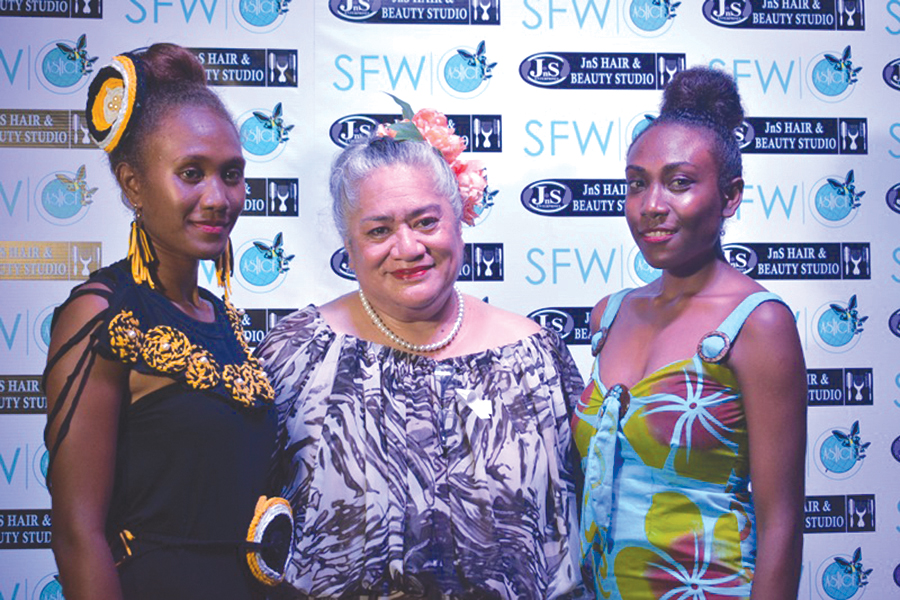
Centre Mrs Failepou Penni with two female models.

BY MAVIS NISHIMURA PODOKOLO

THE Association of Solomon Islands in Creative Fashion (ASICF) has created a platform for local established designers and emerging designers to use to boost the country’s economy.

In its latest initiative, the weeklong Solomon Fashion Week, diverse fashion designs were displayed as the programme culminated in a fashion show over the weekend.

The show was held at the Coral Sea Resort and Casino in Honiara.

Solomon Islands young talented models showcased local established designs and emerging designers’ products.

The different attires unveiled include beachwear, sarong and casual wear to evening wear.

Centre Mrs Failepou Penni with two female models.

Justina Radclyffe president of ASICF said the purpose of hosting the event is to prepare local designers before entering overseas fashion shows.

Speaking in light of the event 2018 Solomon Fashion Week guest speaker Mrs Failepou Penni Director of the Pacific International runway said the fashion industry is a billion-dollar business.

Penni says it is a high time Solomon Islands government and corporate businesses support local designers.

She adds, fashion also plays a huge part in the tourism sector through artefacts and fashion. This is in terms of generating more income in the workforce.

“Therefore we need to embrace fashion and take it seriously,” Penni said.

The theme for this year’s fashion week reads “Paradise Glamour”.

Local designer participants include Wendlyn Wale, Julie Pelomo, Aukeni Mamau, Ellani Maepio, Frances Do’oro and Maylen Bae.

Emerging designers are students from King Georg Sixth School, St John’s school and Mbokona School.

Male model
Model Mynisha Boso (centre) with two staffs from the Australian
Government.
Models show casing local designers products
Six King George Sixth School emerging designs during the 2018 Solomon Fashion Week

Participating models praised

0
Solomon Fashion Week Team with a female model

BY MAVIS NISHIMURA PODOKOLO

Solomon Fashion Week Team with a female model

THE Gold sponsor of the 2018 Solomon Fashion Week, JNS Hair and Beauty Studio, has praised participating models for ‘great teamwork and positive attitude’.

JNS Hair and Beauty Studio Director Salome Kwaiga said she is pleased to witness changes from the participating models in this event.

“We are pleased to witness changes from young people that have participated in this fashion show they have become more confident.

“Let me say our models are confident in their communications, they are always smart and more importantly these models make me very proud.

“With this, we encourage young people to look after them selfies with confidence and always be respectful,” said Kwaiga.

She said the only challenge the models face is how best they become during and after the show.

Kwaiga adds, in terms of discipline the majority of these models do give up on chewing betel nut and other unwanted practices a model should not do when involving in the modeling platform.