BY SAMIE WAIKORI
The Solomon Islands National Infrastructure Investment Plan (SINIP) 2026 emphasises the development of social and economic infrastructure across the nation.
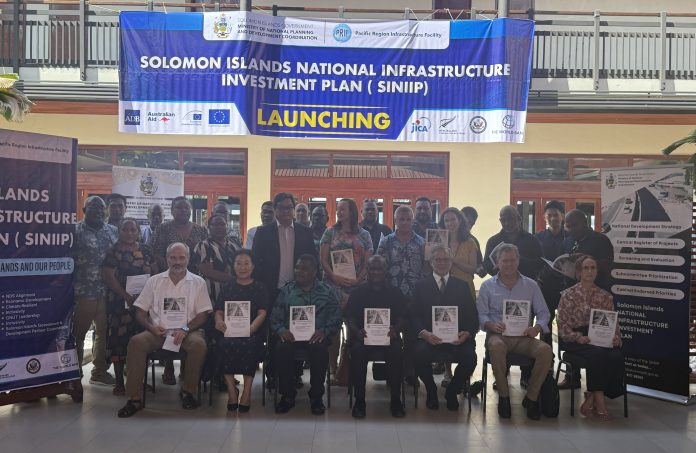
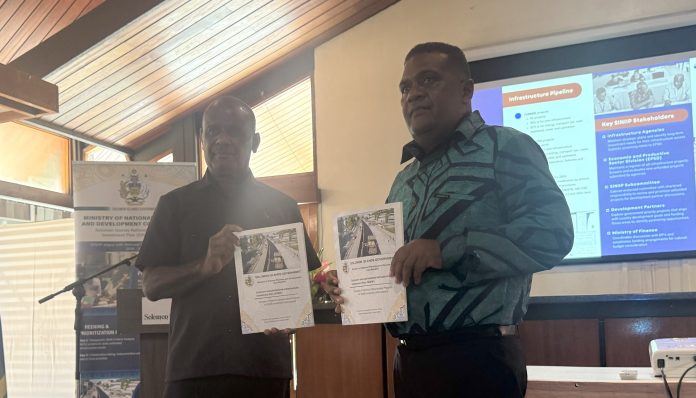
The Ministry of National Planning and Development Coordination (MNPDC) officially launched the plan yesterday, with Prime Minister Jeremiah Manele and MNPDC Minister Trevor Manemahaga presiding over the event.
At the launch, Mr Manele highlighted the plan’s key focus areas:
- Transport: As a highly dispersed island nation, connectivity remains a major development challenge, affecting multiple sectors and service delivery.
- Energy and ICT: Reliable power, particularly through renewable energy, and expanded telecommunications are essential for development, connectivity, and service delivery.
- Water and Sanitation: Protecting public health through improved water supply and wastewater management is critical.
- Health and Education: Our greatest resource is our people. Strengthening schools and health facilities is vital for service delivery and human capital development.
- Fisheries, Agriculture, and Coals: Infrastructure that supports the productive sector and enhances climate resilience is crucial for economic transformation.
Manele emphasised that planning alone is not enough.
“Implementation, discipline, accountability, effective oversight, and strong partnerships are critical to the success of this plan,” he said.
“The government alone cannot achieve this. We value the ongoing support of our development partners and the private sector, and we look forward to deepening these partnerships,” he added.
While SINIP focuses on infrastructure, Manele stressed that it is not just about roads, ports, power systems, or buildings, it is about opportunity.
“It’s about connecting our islands, empowering our people, strengthening our economy, and building resilience for future generations,” he said.
Manele calls on all stakeholders including government ministries, state-owned enterprises, provincial governments, investors, communities, and development partners to view SINIP not merely as a government document, but as a national compact.
“A compact for connectivity, a compact for economic resilience, a compact for inclusive prosperity, and a compact for human capital development,” he said.
For feedback, contact: [email protected]
Editor: [email protected]