Home Blog Page 1118

UN resident coordinator visits SI

0

BY MAVIS NISHIMURA PODOKOLO

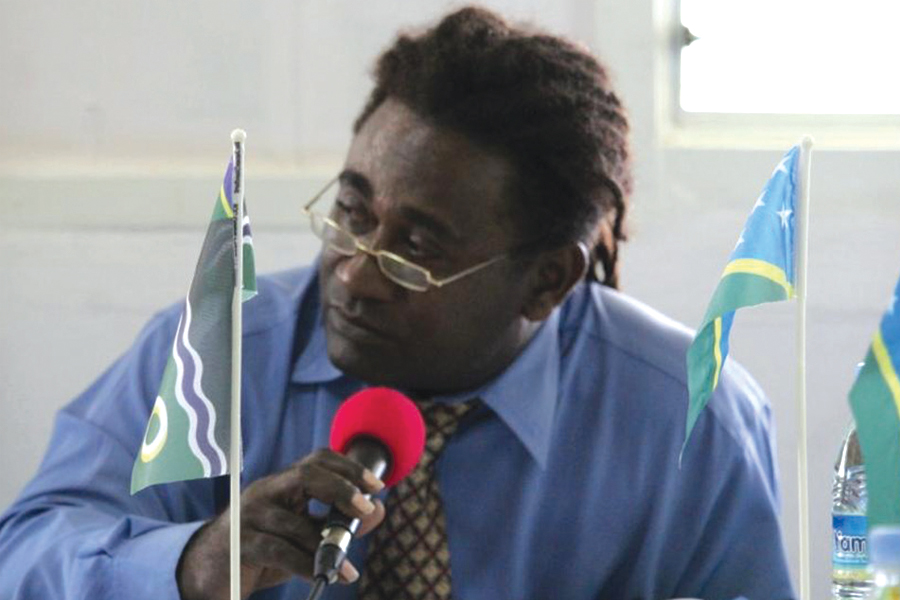
THE United Nations Resident Coordinator is currently here in the country to familiarise himself with some of the burning issues that Solomon Islands is facing.

Mr Sanaka Samarasinha is here for a short visit since he made inclusion and the empowerment of women and girls a high priority when he took on his new role.

In an interview with Samarasinha, he said he is here purposely to familiarise himself with issues affecting Solomon Islands and to identify ways on how UN system can assist to address them (issues).

“I came here purposely to familiarise himself with some of the burning issues that Solomon Islands is facing as country to be able to identify how the UN system can help addressed the priorities of country and your people.

He said in terms of the meeting he had on Thursdays with few women leaders he had gathered information in relation to a lot of good works that have been done in this country – “but need greater collation and coordination”.

Samarasinha said people are doing good work but not necessarily together.

He said this is true for the development partners and structures of the government which is common in other parts of the world.

Samarasinha adds, another thing he came across is there is a must in much more work to be done in terms of connecting provinces and communities with the global, regional and national frame works and plans and so on.

He voiced the above sentiments at the short meeting this week with few women leaders from the existing Non-Governmental Organisations (NGO) in the country.

Samarasinha is UN Coordinator and United Nations Development Programme – UNDP Resident Representative for Fiji and other Pacific Island developing states, including Solomon Islands.

PWDSI former office manager takes up new role in Fiji

0
Savina Nogebatu.

BY MAVIS NISHIMURA PODOKOLO

Savina Nogebatu.

THE former officer manager of People with Disability in Solomon Islands (PWDSI) has taken up a new post in Suva, Fiji.

She is Savina Nongebatu, posted to become the chief deputy executive officer for Pacific disability forum which is based in Suva, Fiji.

In an exclusive interview yesterday Mrs Nongebatu told this paper that her contract is for three years and had already started working in April this year via correspondence (emails and phone calls).

Nongebatu said as a woman with disability, being posted as chief deputy executive officer is such a good feeling – ‘but let’s be clear that women’s work is not only for one particular woman’, she adds.

She said in taking up this new job she pays her respects to all women before her whom have talked and advocated about women empowerment.

“I pay my respects to all women before me who first talked about women empowerment up until now.

“It’s a good feeling to take Solomon Islands to another level of region and as for women with disability I guess this is an example in which it is possible through hard work in terms of doing what you need to do and talking to the right people,” said Nongebatu.

She adds, “creating partnership with the government and other established organisations in the country is another way they will able to realise and recognise your work.

“It’s an exciting emotion but it’s was possible through the hard work of many. I can only take credit from the little things that I do but otherwise big credit will go to the people who behind this , my family, my children and also my PWDSI members and staffs.”

Mrs Nogebatu left for Fiji yesterday.

Manele shows how it’s done

0

DEAR EDITOR, publishing progressive reports in the media on the developments taking shape in the constituency as done by Hon J Manele is an honourable thing to do and needs acknowledgement.

It shows he is a responsible, transparent, trustworthy and honest leader.

If Hon Manele can do it, why not others?

The constituents and public need to know what’s happening with their money.

Maybe other MPs are not doing it because they don’t have anything at all to report on.

If that is the case then all the millions of dollars taken by MPs in the last 4 years must be investigated.

Anyway some leaders are doing good and Hon Manele is one.

Great job, great leader.

John AONIMA

G-Camp

Ballot papers for NGE 2019

1

DEAR EDITOR, the Solomon Islands Electoral Commission (SIEC) should be commended for their work and effort in ensuring that the National General Election (NGE) next year 2019 are fair.

The crackdown on those potential candidates who attempted to take and hold on to the IDs of voters as a sort of insurance is a security move to stem out corruption and ensure the fairness of the Elections.

I wish to point out one of the crucial security measures which the SIEC must take in order to ensure the elections are fair. This concerns the security of the Ballot Papers, especially the Printing of the papers. This is more so given the high level of corruption in the country.

First, the SIEC must ensure that the printing of the Ballot Papers are put on Public Tender.

The SIEC must ensure that the winning bidder is Neutral to the extent of not tampering with the papers.

But ensure that the level of Security regarding the Ballot papers is high and credible the Ballot papers must be printed overseas.

The printing of the Ballot Papers Overseas would be relatively cheaper even matters such as freight and handling charges are taken into account.

This is in view of the inflated mark ups Local Printers charge.

The Overriding consideration is the Security of the Ballot papers, hence the fairness of the elections.

Your Sincerely

John Sivoli

Honiara

Climate change and health & welfare of Solomon Islanders

0

DEAR EDITOR, the Solomon Islands contribution to greenhouse gases in the atmosphere is negligible, but—like it’s neighbouring other Small Island Developing States—it is already suffering disproportionately the effects of global warming.

It was outlined at the Cop23 meeting held in Bonn in November 2017 that the future of human habitation and agricultural production in Solomon Islands depends on its ability to adapt to and mitigate temperature increase, sea-level rise, warming seas, and over-exploitation.

What we know already (quoting from the Bonn meeting)

“There has been an increase in temperatures between 0.12 and 0.18 degrees Centigrade per decade since the 1950s. This increase threatens agricultural production, including the main exports of copra and palm oil. In addition, the increase in temperatures threatens subsistence agriculture production for the local people, endangering food security.

“The sea level has risen an average of 8 mm per year, well above global projections. The rise threatens local communities as the majority of Solomon Islanders live near the coastline at sea level. The higher ground in Solomon Islands is volcanic and mountainous, ill-suited for human habitation and agricultural production. Coastal flooding has increased, with the Western province, the Roviana region, especially at risk due to its population density.

“Coral reefs and the larger surrounding areas are under threat from the rapid increase of acidity levels in sea water. With temperatures and acidification expected to continue increasing, migratory patterns may be altered and local reef populations may die out, negatively impacting the fishing industry and exports.

“The harvesting and logging of timber is past the point of over exploitation. Logging began in the 1930s and has continued at an increasing pace. In 2005, the export of round log reached 1 million cubic metres, four times the sustainable allowable cut limit estimated by the government and outside observers. A national inventory took place in 2006 to assess the timber market. The Inventory predicted a rapid and complete depletion of timber by 2015. A majority of the citizens of Solomon Islands used timber to cook with and heat their homes, an activity that has now been virtually eliminated. The depletion of local forests may alter local watersheds and increase the risk of flooding for local communities. The lack of windbreak provided by forests also exposes cleared land and villages to stronger winds, endangering agriculture and putting settled areas at greater risk in storms.

“Solomon Islands is working with the Australian Government Department of the Environment and Energy to focus on resilience and mitigation under the Roviana Climate Change Resilience Plan 2013-2017. The plan intends to map the vulnerability of marine and coastal habitats to climate change; assess coral reef, seagrass, and mangrove health; survey coral bleaching and disease; measure water quality and flow; document coastal gardens and forests and identify issues affecting the adaptive capacity of the people.”

It was at the same Bonn Conference that Arnold Schwarzenegger famously said (quote)

“I want the United Nations (UN) and the World Health Organization (WHO) to come up with a rule that no one is allowed to talk about climate change without talking about health.”

Following up on what Mr. Schwarzenegger said, in a paper written by Tedros Adhanom Ghebreyesu and published in the Bull World Health Organ in February 2018, it went into much greater detail what I regard as a serious concern for the ongoing health and welfare needs of the Solomon Islanders given the already profound impact of climate change.

I will quote extracts from Mr. Ghebreyesu’s article to underscore my concerns.

“Climate change is much more than an environmental issue. It poses a serious threat to our health and survival. It impacts all of us, no matter where we live.

“The health of humanity is directly related to the health of our environment. We depend on our environment for everything we are and everything we have – the air we breathe, the food we eat and the water we drink.

“Climate change increases the risks of extreme weather events that cause damage to our lives and livelihoods. Climate change fuels the spread of infectious disease such as malaria, dengue and cholera; it also increases the risk of no communicable diseases by polluting the air, food and water that sustain life.

“Climate change is not a futuristic scenario that is unlikely to happen in our lifetime. People are feeling its impact right now in many parts of the

“Sadly, those who contribute least to the causes of climate change bear the most severe brunt of its impact. People living on small islands are on the front line of the impacts of climate change.

“Small island states, where an estimated 65 million people live, have long been recognized as especially vulnerable to the adverse effects of climate change.Their situation is highlighted in the United Nations Framework Convention on Climate Change, by Ministers of Health at the 2008 World Health Assembly and in the 2015 Paris Agreement.

“At the COP23, in partnership with the Fijian Presidency, WHO and the UN Climate Change secretariat launched a special initiative to protect people living in small island developing states from the health impacts of climate change.

“The initiative has four main goals to be achieved by 2030, aligning with the deadline for the sustainable development goals.

“First, to support health leaders in small island developing states in drawing greater attention to the threats these nations face.

“Second, to gather evidence to build the business case for investments that combat the health effects of climate change.

“Third, to prepare for climate risks through preparedness and prevention policies and to build climate-proof health systems.

“Fourth, to triple the current financial support for climate and health in small island developing states.

“Despite years of talk, the international response remains weak. Less than 1.5% of international finance for climate change adaptation is allocated to health projects, and small island developing states receive only a fraction of these resources.

“Unless countries fully implement the Paris Agreement, climate change is going to increasingly threaten the health and well being of people everywhere.”

A large number of reported deaths in the Solomon Islands are attributed to non-communicable diseases brought on by the avoidance of traditional foods to rice and imported processed foods, resulting in Vitamin A deficiency, diabetes, heart disease, hypertension, strokes and obesity.

If food security becomes threatened by climate change, as is predicted to occur, then turning to processed foods will only add to the health issues being occasioned already.

As less than 1.5 % of international finance is said to be being made available for climate change adaption, the optimistic vision that some country’s will be able to withstand climate change and provide adequate health care is not looking good and it is my hope that the Solomon Islands will very soon be able to access substantial funding to protect and care for the health needs of all its people.

Yours sincerely

Frank Short

Aiding healthcare capacity amid lacking resources

0

DEAR EDITOR, the Solomon Islands has a total population, according to the last census, of about 600,000 but the population is estimated to exceed 1 million by 2050.

Against this backdrop, the Solomon Islands is still one of the least developed island states in the Western Pacific with continuing high rates of unemployment, especially amongst youths, and little or no income for rural people struggling to make a living by subsistence farming and increasingly facing the threats brought about by climate change.

According to an article from one visiting doctor from Australia he said (quote)

“The community here face significant health challenges and on multiple fronts. They lack even the basic health infrastructure, and universal access seems an almost impossible health policy goal. Despite this, I found the healthcare teams here work with courage and resolve.

“Persisting social disparities mean they face significant health challenges through what is termed the “triple burden” of disease. The community deals with communicable diseases alongside rising rates of non-communicable diseases combined with the threat of climate change which we know already hits hard too regularly.”

Quoting from the same article, the doctor went on to write:

“It is clear that the underdevelopment of healthcare infrastructure compounds inequalities.

“In Pacific Island countries, including the Solomon Islands, there is a high need for basic critical care resources. Equipment such as oximeters and oxygen concentrators are needed as well as greater access to medications and blood products and laboratory services. [iii]

“A cross-sectional survey study examining critical care resources in the Solomon Islands found that inadequate resources from primary prevention and healthcare contribute to the high degree of critical illness. This study suggested that the solution lies in simple therapies and context-appropriate resources to mitigate the high burden of morbidity and mortality.

“Therefore, the emphasis should be on the development and acquisition of simple and inexpensive tools rather than complicated equipment. This helps to prevent critical care from diverting resources away from other important parts of the health system.

“Empowerment is key to improving health service development in the Solomon Islands. The focus needs to be on strengthening the health system and improving access to services but bringing health care to these areas is no easy task.

“It needs a partnership which filters right down to the community level. The Ministry of Health and Medical Services (MHMS) is really working hard towards enabling these partnerships to ensure a more planned approach to funding health services.

“Australia is the largest provider of Official Development Assistance (ODA) to the Solomon Islands, providing almost two-thirds of overseas aid in 2016-17.

“Since 2008, the MHMS, with their development partners including Australia, has led a sector-wide approach to the delivery of health services in the Solomon Islands.

“The overall program goal is to improve the access and quality of universal health care in the Solomon Islands.

“The current funding supports the Solomon Islands National Health Strategic Plan 2016-2020 and provides direct budget support, performance-linked funding and technical assistance.

“It is clear that Australia is doing its fair share for the Solomon Islands. There is now alignment in terms of ensuring best outcomes from this funding. This will certainly help build health services for this nation. But there is always more to do.”

I am certainly in full agreement that more can be done and why I believe the partnership arrangement with Take My Hands (TMH) my partner charity in New Zealand needs renewing with the second payment (of NZ25,000) being paid to see to the supply of medical equipment and medical supplies being shipped in up to 8 containers per year.

The container due to arrive in Honiara on 19 November contains two portable ultra-sound machines, in addition to 50 hospital beds and wheel chairs – all supplies very much in keeping with the desirability of obtaining the kind of things the medical services are in need of, according to what was mentioned in the visiting doctor’s informative article.

The idea occurs to me that there might be one or more organizations in the Solomons that might agree to share the costs of freighting medical equipment and medical supplies, regularly in need, via TMH on a 50 -50 basis very much in a similar way in which the Solomon Forest Association (SFA) helped out on many past occasions, although the SFA always went the extra mile and donated the full shipping costs.

I mention this thought because after the container arrives on 19 November, to be followed by a second one with 50 more hospital beds, TMH will not be able to continue helping the MOHMS/NRH, or the Hearts of Hope (HOH) charity unless the outstanding payment of NZ$25,000 is met and the terms of the existing MOU are fulfilled.

I would greatly like to hear from any organization willing to help and I can be contacted via the link on my website.

Yours sincerely

Frank Short

Police in Malaita prepare for Kwaso Action Plan roll-out

0

POLICE at Auki in Malaita province conducted a meeting for its heads of divisions yesterday in preparation for the Kwaso Action Plan meeting that will be held with different stakeholders in the Auki township this week.

Provincial Police Commander (PPC) Malaita province, Superintendent, Timothy Apaesi says, “The aim of the meeting is to discuss with my supervisors how we can work with communities and the team from Honiara to roll out the Kwaso Action Plan and the National General Election 2019 Action Plan.

“Other matters discussed during the meeting included the National General Election Action Plan and how that fits within the Royal Solomon Island Police Force (RSIPF) Crime Prevention Strategy.

“During the meeting we discussed who are the possible youths leaders, women’s groups and relevant stakeholders in provincial capital which we should we work together with.

“As part of the preparation for the Kwaso Action Plan we plan to meet with the Provincial Premier, the Malaita National Council of Women, conduct some school visits and meet with some church groups in Auki.”

A team led by the Assistant Commissioner Provincial Joseph Manelugu, officers of the National Community Policing Department and Advisors from the Solomon Islands Police Support Programme (SIPSP) are in Auki this week to talk about the Kwaso Action Plan and how a provincial kwaso action plan could be established as well as police preparations for the 2019 National General Election.

–POLICE MEDIA

Ramrakha slams government over Gizo’s incomplete tourism complex

0
Provincial Member for Nusa Roviana and ward 16, Ramrakha Talasasa

BY ALFRED PAGEPITU

GIZO

WESTERN province MPA Ramrakha Talasasa Jnr has slammed the national government over the incomplete multi-million dollar tourism complex in Gizo. The complex is now widely being described as an eyesore.

The Dunde-Nusa Roviana MPA questions the national Ministry of Culture and Tourism why it is not doing anything about the incomplete national project.

He said that the Democratic Coalition for Change Government (DCCG) and now the Rick Hou government have failed to address this issue, and on the overall have failed Western province’s tourism industry and people.

Talasasa Jnr says the incomplete complex is a perfect mirror of the national government’s effort towards tourism, especially for the province.

“It is the Solomon Islands National Government and Ministry of Culture and Tourism responsibility, to improve infrastructure as their first priority to help complete this project.

“Western Provincial Government now in a situation where an infrastructure and million-dollar project which has been in discussion for six years now and the province will bring back the project to re-allocate for other Ministries to develop the site.”

Meanwhile, Western Province Premier David Gina has announced that the province will reallocate the land on which the complex stands for other ministries or interested business houses keen on developing it.

Malaita hosts Land Summit 2018

0
Women and youth in full swing preparing their presentation for the Malaita Land Summit. Photos by Alfred Sasako

Search on to untangle what keeps Malaita in the development doldrums for years

By Alfred Sasako

ONE of the nation’s founding fathers, Solomon Mamaloni, once said that Solomon Islands was a country “conceived but (was) never born.”

To a certain extent, it is true, but only because the national leadership appeared to have invested in the wrong sector.

Today, youths, women, community chiefs and church leaders have suddenly woken up to the stark reality that unless they work together the future is bleak.

It is no wonder all nine provinces which make up the State of Solomon Islands appear to be running their own race as well in identifying the development model and approach which suit their own environment, before the unborn child and its mother die.

In Malaita, where land disputes have been blamed for lack of development over the years, the race is truly on.

This week a three-day Land Summit opens in the Malaita Capital, Auki today, drawing women, youths, Community Chiefs and Church leaders from all over the Province.

Youth and women prepare their presentation for the Malaita Land Summit which opens in Auki yesterday.

Sustainable Peace and Stability through Equitable Distribution of benefits from Customary Land and Sea Resources has been chosen as the Theme for the Summit which ends on Thursday.

The mission or objective of the Summit is to unearth what has kept Malaita in the development doldrums since the Ma’asina Rule in the 40s. Some of Malaita’s own academic brains will be amongst those attending the $600, 000 event funded by the United Nations Development Programme (UNDP).

They include Dr Welshman Gegeo who will chair the session on Land, Peace and Socio-economic development and others. The new Catholic Bishop of Malaita will also officiate at the opening, providing the sermon and the opening prayer

Malaita Premier Peter Ramohia as well as the UNDP Country Manager, Azusa Kubota will both give key speeches at the three-hour formal opening sessions this morning (Tuesday).

While there have been at least two summits and or Malaita Conferences in the past, there never has been a Land Summit until now.

Women and youth in full swing preparing their presentation for the Malaita Land Summit. Photos by Alfred Sasako

Those Conferences as well as a recent tour of Fiji to observe the land tenure system there were merely used as reference points to the underlying problem of the land tenure system.

Land, some say, is a fundamental pillar to development. Organisers are hoping that the outcome of this Land Summit, to which all 14 National Members of Parliament have been invited, will provide a road map.

It is not clear whether any of them would turn up, given that the last session of the 10th Parliament is on.

Regardless of whether they attend or not, Grassroots from all over Malaita have converged on Auki.

They are being represented in force in the form of youth groups, whose future is at stake, Community Chiefs, Church leaders, women and more.

These groups spent all day yesterday attending prep sessions in preparation for the formal discussions today.

Major worry over sexual exploitation of girls and women in log camps

0
Log pond Uhu, West Are’Are 2016

BY LYNTON AARON FILIA

Log pond Uhu, West Are’Are 2016

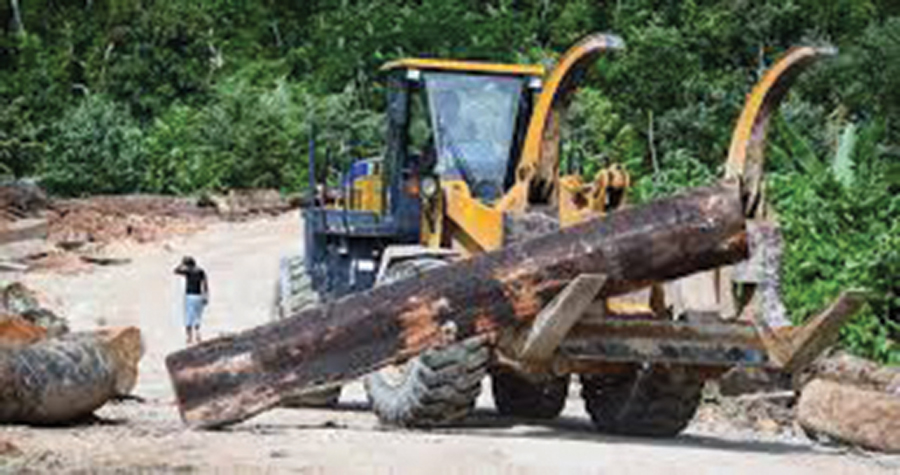
SEXUAL exploitation of girls and women is a major concern voiced by men and women in Malaita province, according to report.

A research conducted in November 2016 – November 2017 by WorldFish reveals that sexual exploitation of girls and women is increasing in Malaita province, particularly in West Are’are.

The survey is based on qualitative interviews conducted with 172 people (84 men and 88 women) in 23 villages in Are’are, Lau and Langalanga.

Thirty-eight informants from all areas visited spontaneously, mentioned this issue.

Many informants brought up the growing number of children born from sexual encounters between local (underage) girls and foreign (predominantly Malaysian) logging staff.

One woman from West Are’are comments, “Here we have around five ‘baby Wakus, but the fathers are already gone. One of my cousins is currently six months pregnant from a Waku too. She is only around 15 years old. She was in class four when she got pregnant.”

Following such concern, the informants consider such issue as highly problematic for several reasons.

First, in almost all cases the logging staff leave the girl with the child after the logging operation is finished and do not take responsibility for either the girl or the child(ren).

Thus, she and her family are left with the burden of looking after the child afterward, and as children grow up without a father, they do not inherit primary land rights.

From the report it highlight that such is a problematic especially for boys, while girls can gain access to land (albeit with secondary rights only) through their future husband.

Another point is girls concerned are often underage. Some have been reported to be as young as 12.

Third, these relationships run very strongly against cultural norms.

No proper bride price is paid, and thus compensation payments are requested for violating rules surrounding marriage and courtship.

The nature of the sexual encounters is considered exploitative, even if the girl has consented to the sex.

Girls are said to be having sexual relationships in exchange for relatively small favours to her and/or her family.

Such favours may constitute money, a few iron sheets for the roof, and a bag of rice, a carton of noodles or operating a logging machine to bring the family’s logs down to the log pond for milling.

While some parents are allegedly stimulating these arrangements, the general sentiment is short-term character of all and the fact that no proper bride price is paid affects the girl’s dignity.

As a result many mothers do not allow their daughters to visit logging camps and log ponds, and in some operations women are discouraged from riding on logging trucks.

Parents say they have a hard time ensuring their daughters’ safety, as they may have to pass by logging camps and log ponds to go to the gardens or even to school.

With the plight of the issue, chiefs and parent are working with security officers on the log pond, but they don’t pay attention to the girls who are roaming around or walking up to the logging camp.

Reason is officers are paid to protect machines, so nobody protects the girls.

Many communities have included in their agreements with the logging companies a prohibition for logging staff to maintain relationships with local girls.

Breaking such agreements will results in sending off of staff members and payment of compensation, but “nobody thinks heavily about it, the report shows.

However, the theory did not work due to chiefs and parents are weak.