Home Blog Page 1118

Province based CSOs learn good governance

0

BY LORETTA BRIGIDIA MANELE

A capacity needs assessment carried out by DSE (Development Service Exchange) has resulted in “Good Governance” workshops in two provinces this year.

According to the civil society organisation (CSO) which looks after all CSOs in Solomon Islands, the assessment was conducted to identify the training and organisational development needs of its members.

DSE found that some member organisations were lacking the understanding of good governance practices and their importance thus, hindering their ability to perform day to day activities and obtain funding from donors.

This was found particularly in provinces where few opportunities to access training was mentioned as a contributing factor.

Henceforth, DSE rolled out two good governance workshops in Malaita and Western provinces in March 2018 and May 2018 respectively, to help its members understand the importance of good governance within CSO’s and enhance their knowledge of how to govern community based organisations effectively.

Specifically, from the workshops, DSE stated that CSO board members will learn to explain the concept of good governance, principles of good governance, importance of good governance, how the principles of good governance can be applied to the work of their own organisations, reflect on their strengths and areas for improvement in their own governance practices and in their organisations and identify good governance practice models that can be adopted for their organisation’s situation.

The workshops also included two days of context appropriate training with the aim to build the individual capacity of board members, influence the governance systems of their CSOs and strengthen the overall culture or governance among CSOs in the provinces.

DSE mentioned that these two workshops will directly benefit CSO leaders, their organisations, beneficiaries of their CSOs and the communities they operate in.

Together, a total of 14 females and 20 males representing 10 organisations attended the workshops.

DSE lauds members and stakeholders for ACB achievement

0

BY LORETTA BRIGIDIA MANELE

ONE achievement DSE (Development Service Exchange) and its members can sit back and be proud of is their unwavering support for last year’s controversial Anti-Corruption Bill (ACB).

DSE, mandated under its Strategic Plan (2017-2022) is the voice of Civil Society Organisations (CSOs) in Solomon Islands.

With this position and responsibility, from August 2017 to Dec 2017, DSE took the lead in mobilising members of CSOs as well as concerned citizens to put together a work plan and a terms of reference for a working committee (taskforce) comprising of its members to push for the bill’s return to parliament.

Different strategies were used to ensure that the Bill, also termed by then Prime Minister, Manasseh Sogavare as “People’s Bill” be prioritised by parliament.

The committee was formed, the media were involved, petitions were signed and peaceful protest march took pace to the Prime Minister’s office.

Since then, the Anti-Corruption bill has been revisited and submissions to the bills and legislations have been made.

The bill is being discussed nationally through social media, has generated much interest from development partners and donors and returned to Parliament in Nov 2017.

As expressed in DSE’s July 1, 2017 to June 30 Annual report by General Secretary, Jennifer Wate, the campaign to bring the Anti-Corruption Bill to parliament in Nov 2017 is a significant achievement DSE members and stakeholders worked together to achieve.

DSE information sharing session sparks reconciliation

0

BY LORETTA BRIGIDIA MANELE

A Civil Society Organisation (CSO) information sharing session carried out by Development Service Exchange (DSE) has brought about reconciliation among tribal leaders.

According to DSE’s annual report, under its Strategic Priority 4 which is Collaboration; Facilitating Partnerships and Networking, the session was held early this year at KiraKira, Makira province for Makira Conservation Association members.

The session had three aims which were; to share information about sustainable harvest of Makira’s forest and marine life and established protected areas, to establish an environmental conservation network and thirdly, to raise awareness for the Integrated Forestry Management project which will be implemented by the Ministry of Environment (MECDM) Ministry of Agriculture (MAL) and Ministry of Forestry.

DSE expressed that this platform empowered Makira Conservation Association members and gave them the opportunity to interact with the government and other NGOs on issues of importance regarding their organisation and members of the community.

Additionally, the outcome of this workshop as DSE states was the review of the organisation’s constitution, reconciliation between leaders of different tribal groups that formed the association and member’s readiness for the consultation to review the forest resources utilisation Act.

As a national umbrella body for Civil Society Organisations (CSOs) in the country, DSE is a mouthpiece for these CSOs embodied with the mission to strengthen effective CSO coordination through advocacy, information sharing, capacity building and collaboration to ensure a credible, accountable and transparent civil society sector working toward equal and sustainable development in Solomon Islands.

RIPEL workers move on amidst SIPHRAA’s call for fair share

0

BY GEORGINA KEKEA

THE General Secretary of the Indigenous Peoples Human Rights Advocacy Association (SIPHRAA) has called on Mr. Patrick Wong to pay former workers of ICSL RIPEL their legal entitlements of $99,000.

Mr Buddy Wickhams who was also an Agent for the former ICSL RIPEL workers in their high court cases says he is concerned in the way Patrick Wong and Oliver Salopuka dealt with the dividend of ICSL RIPEL.

In a letter to Island Sun, Wickhams say the public needs to be informed about the initial ICSL RIPEL Scheme of arrangement that was made sometime in 2001.

He said the scheme was passed and recognized by the High Court sometimes in October 2002 by respectable lawyers representing five different shareholding groups of RIPEL including workers and staff.

In this scheme, Solomon Islands Government, Central Islands Province and workers of RIPEL should get 20 percent dividend, while Lavukal Trust Board (LTB) should get 24.9 percent and ICSL 15.1 percent.

He said since Patrick Wong had paid the Lavukal Trust Board (LTB) their share he should also pay the non-striking workers their 20 percent share and other legal entitlements due to them as employees of ICSL RIPEL.

“So, why Patrick Wong paid the Lavukal Trust Board and its people their 24.9 percent share without paying the non-striking workers their 20 percent share of due dividends is a matter of concern that raises more questions than answers,” Wickhams said.

He said what Patrick Wong and his former general manager John Whiteside made with the leadership of the defunct SINUW to settle SINUW’s bill from the workers share can only be considered as daylight robbery of the faithful workers of ICSL RIPEL who stood with the company through hard and tough times during the striking period up until the court battle ended in the company’s favor.

He said how Patrick Wong dealt with the issue of RIPEL is a real political cover up.

“If Patrick Wong is truly concerned about RIPEL he should consider and work closely with all the former RIPEL workers first before any other group including the Lavukal Trust Board (LTB),” said Wickhams.

At the same time, Wickhams deplore the manner in which Wong and Salopuka dished out the monies to the people of Russel islands.

“In fact I consider the displaying of hard cash by Wong and Salopuka as cheap and shallow political bait for this coming general election because Oliver Salopuka is amongst the intending candidates for Russell and Savo constituency. How, is this not campaigning outside of time as stipulated in the electoral act? Wickhams questions.

He went onto say that in the last general election of 2014 Oliver Salopuka uses ICSL RIPEL through their General Manager Mr John Whiteside.

“According to Mr. John Whiteside, Oliver Salopuka uses up around $2.5million that belongs to Lavukal people, but yet to retire how the money was used,” Wickhams say.

Furthermore, Wickhams alleged that Salopuka was a pain in the neck to the terminated ICSL RIPEL General Manager, John Whiteside. He said how he convinced Patrick Wong to provide him support would be interesting to find out. He said this new friendship was made after Patrick Wong terminated John Whiteside.

With Wickhams tirade on Salopuka, Island Sun brought to Salopuka’s attention all that was said about him by Wickhams. However, he declined to make a comment, saying everyone is entitled to their opinion.

But to respond to Wickhams, former RIPEL employee spokesperson, Fisher Lulu says the former workers have moved on.

He said they have tried to solve the issue for more than a decade already and have decided that it is time they work together with Mr. Patrick Wong.

“We want to come back and work with Mr. Patrick Wong for any development for us in the future,” Lulu said.

Lulu verified that they have worked with Wickhams, through SIPHRAA in the court issues and have raised a lot of funds but gained nothing from it.

He said from this, the workers decided to organise themselves and do things their own way.

“We think that to resolve this issue is more important and we are supporting what Patrick Wong is doing for us,” Lulu said.

He said through legal process, the workers do not have a share in RIPEL. Only the Lavukal people has shares, Lulu said.

He said if this is the way forward for the workers of RIPEL then they are quite happy to work with Wong to revitalise RIPEL.

He said Russel is their home now as most of the workers in RIPEL are second to third generation Russel islanders whose parents and grandparents have left their home of origin from another province many years ago.

“So we look at Russel as our home too. This is why we are so pleased when the Company and the Lavukal people agreed for us to stay until everything is sorted out so that we can continue with our work,” Lulu said.

SIPHRAA meanwhile is adamant that Patrick Wong pays the workers what is due to them, under the 7th defendants of HCCC No.114 of 2009, and also pay the non-striking workers their legal entitlements as employees of ICSL RIPEL and the dividend of their 20 percent share.

Solomon Islanders paying heavy price for abandoning traditional diet

0

DEAR EDITOR, non-communicable diseases (NCDs) are putting a heavy burden on the country’s health services, as evidenced from reports emanating from the National Referral Hospital (NRH) and especially from the Buala Hospital where it has been reported NCD’s accounted for most deaths during the first half of this year.

According to new data, quoted in the Island Sun newspaper this week, Isabelle Province has a very high rate of NCD illness in areas of Buala, Tatamba, Konide, Bolitei and Kia.

Illnesses attributed to NCD’s include hypertension, obesity, diabetes, heart problems, stroke and anemia, but the sad aspect of this problem is that with a proper nutritional diet and a return to traditional foods NCD disease could be prevented and people live healthier, longer lives.

Education on what to eat is necessary but often health authorities are short of resources in encouraging proper eating habits and the spate of imported food products, often containing too much fat, too much sugar and high in calories has proved to be detrimental in preventing NCD linked disease.

The promotion of traditional foods seems to have fallen by the wayside and more should be done to encourage people to eat a healthier diet of vegetables, fish, fruit and nuts, more in keeping with the Melanesian diet.

Although I understand a start has already been made in the Solomons more needs to be done to reinforce nutrition education in schools by promoting healthy eating practices as part of the school curriculum.

Traditional diets are superior to Western diets in many ways because traditional foods are nutrient-dense, meals are prepared in healthful ways, and oils are used sparingly. The high-fiber, low fat nature of these diets reduces the risk for NCD linked diseases and certain types of cancer.

The habitual avoidance of eating a traditional diet has led to a high level of obesity in the Solomon Islands and when combined with a lack of regular exercise, tobacco smoking and drinking high levels of alcohol, including the consumption of illegal kwaso, or home brew, then the mix can be fatal, but totally avoidable.

Promises have been made in the past about giving attention to the prevention and control of non-communicable diseases but more needs to be done in the Solomon Islands with help from supportive partners like Australia, New Zealand, Taiwan and the United Nations through its various agencies.

As climate change continues to affect the vulnerability of food crops, food supply and food security, time is of the essence for informed decisions, including data collection, on how best to tackle NCD disease, but the bottom line is people really need to take their health more seriously and restrict or cut out the imported food and products they know, or should know, are impairing their health, fitness and longevity.

Yours sincerely

Frank Short

Fashion industry a billion-dollar business

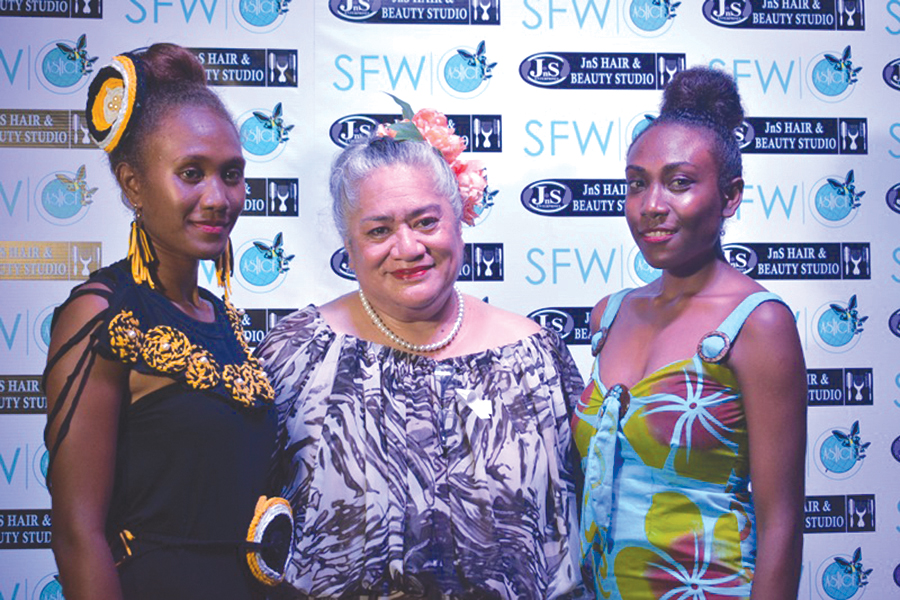
Centre Mrs Failepou Penni with two female models.

BY MAVIS NISHIMURA PODOKOLO

THE Association of Solomon Islands in Creative Fashion (ASICF) has created a platform for local established designers and emerging designers to use to boost the country’s economy.

In its latest initiative, the weeklong Solomon Fashion Week, diverse fashion designs were displayed as the programme culminated in a fashion show over the weekend.

The show was held at the Coral Sea Resort and Casino in Honiara.

Solomon Islands young talented models showcased local established designs and emerging designers’ products.

The different attires unveiled include beachwear, sarong and casual wear to evening wear.

Centre Mrs Failepou Penni with two female models.

Justina Radclyffe president of ASICF said the purpose of hosting the event is to prepare local designers before entering overseas fashion shows.

Speaking in light of the event 2018 Solomon Fashion Week guest speaker Mrs Failepou Penni Director of the Pacific International runway said the fashion industry is a billion-dollar business.

Penni says it is a high time Solomon Islands government and corporate businesses support local designers.

She adds, fashion also plays a huge part in the tourism sector through artefacts and fashion. This is in terms of generating more income in the workforce.

“Therefore we need to embrace fashion and take it seriously,” Penni said.

The theme for this year’s fashion week reads “Paradise Glamour”.

Local designer participants include Wendlyn Wale, Julie Pelomo, Aukeni Mamau, Ellani Maepio, Frances Do’oro and Maylen Bae.

Emerging designers are students from King Georg Sixth School, St John’s school and Mbokona School.

Male model
Model Mynisha Boso (centre) with two staffs from the Australian
Government.
Models show casing local designers products
Six King George Sixth School emerging designs during the 2018 Solomon Fashion Week

Participating models praised

0
Solomon Fashion Week Team with a female model

BY MAVIS NISHIMURA PODOKOLO

Solomon Fashion Week Team with a female model

THE Gold sponsor of the 2018 Solomon Fashion Week, JNS Hair and Beauty Studio, has praised participating models for ‘great teamwork and positive attitude’.

JNS Hair and Beauty Studio Director Salome Kwaiga said she is pleased to witness changes from the participating models in this event.

“We are pleased to witness changes from young people that have participated in this fashion show they have become more confident.

“Let me say our models are confident in their communications, they are always smart and more importantly these models make me very proud.

“With this, we encourage young people to look after them selfies with confidence and always be respectful,” said Kwaiga.

She said the only challenge the models face is how best they become during and after the show.

Kwaiga adds, in terms of discipline the majority of these models do give up on chewing betel nut and other unwanted practices a model should not do when involving in the modeling platform.

Emerging designers participate in 2018 fashion week

0
Vae Tailor with a model showingcasing her product

BY MAVIS NISHIMURA PODOKOLO

THE 2018 fashion show has attracted an unprecedented number of designers who will one day become big names in the business.

These young designers are students from King Georg Sixth School, St John’s school and Mbokona School.

Addressing the event over the weekend, Mrs Failepou Penni, Director of the Pacific International runway, said it is encouraging to see more emerging designers participating in such events.

“It is encouraging to see emerging designers took part in the 2018 fashion week.

“Keep on moving forward and don’t stop till you reach your dreams in the fashion industry in the level of national, regional and international,” Penni said.

She said she was pleased to see the young designers’ products, something she says is an indicator that the Solomon Islands fashion industry is growing.

“It indicates that the country’s fashion industry is developing gradually,” Penni said.

President of the Association of Solomon Islands in Creative Fashion (ASICF) Justina Radclyffe said last week the 2018 Solomon Fashion Week organisers focused on emerging designers because they are the future designers for this nation.

“As we grow old and they grow young and we need to groom them so that they can push and grow the fashion industry in the next level.

“Therefore I encouraged you (emerging designers) to use your experiences and your passion to strive and achieve your dreams,” said Mrs Radclyffe.

Rahela Matanani one of many models showing casing Julie Pelomo’s arty style and design
Vae Tailor with a model showingcasing her product
Particpating model
Julie Pelomo’s collection

Police take on new approach in road safety

0

By Gary Hatigeva

OFFICERS from the Police Traffic Division were out in numbers yesterday to conduct a safety and parking awareness operation for the Fishing Village market area, east of Honiara.

The awareness operation also comes as part of the traffic division’s enforcement of its regulations and safety sections within the traffic act, emphasising mostly on the importance of adhering to proper parking as far as safety is concerned.

For the first time in a long time, yesterday’s traffic along the highway running past the popular Sunday market, experienced a free-flow in the movements of vehicles, with heavy police presence on sight to ensure market goers do not use the market roadside for parking.

On sight, a good number of officers were managing the parking activities in front of the market, ensuring it remained clear, while other officers were out in where the vehicles were allowed to park, handing out pamphlets containing the force’s awareness approach on the venue, and legal implications involved.

Titled “Fishing Village Market Traffic Road Safety, Parking, the Law and your responsibility,’ the information sheet noted that the Royal Solomon Islands Police Force (RSIPF) was taking the initiative to inform the public the legislation for the safe and effective regulation of traffic and parking, was enforceable and the police force takes road safety very seriously.

It also highlighted sections within the Traffic Act, which provides police the powers to require drivers or people in charge of vehicles to display or show traffic item particulars, which includes licenses if suspected or found to be breaching the laws referred to.

The pamphlet also contains impacting factors on traffic safety and people’s responsibility, which warned of drivers’ attitudes to other road users, and how well one maintains his or her vehicle.

Other factors also includes how drivers enter and leave the roadway when starting or finishing their journey, which was a great concern witnessed on those in the public transportation sector, particularly, buses, and the police through its awareness program has also warned against.

“Driving a motor vehicle requires constant attention to your surroundings and also a communal view, especially when parking your vehicle.

“You are required by law to ensure that when you park, you are not in a dangerous position and that you do not adversely impact on other road users,” police warned in its awareness document.

The document also noted the powers police have, that give them the right to deal with those who intend to not take safety issue seriously or may want to show no care attitudes towards this course.

It also notes the offences and penalties that will likely be imposed on those who are found guilty of parking dangerously or for the offence of obstructing and disobeying police, particularly, the traffic laws of this country.

It is revealed that for a first offence upon conviction, those involved are liable to pay a fine of $100, and in the case of a second time offender, if convicted, whoever that is involved will be liable to pay a fine of $150 or three (3) months imprisonment.

However, police through its awareness program, revealed that for those who refuse or disobey the police, if arrested and convicted, those involved could receive a fine of $10,000 fine or 12 months imprisonment, or both.

Meanwhile, police through their awareness pamphlet reminded that those who intend to chose the Fishing village market or other market venues with similar traffic situations to do their shopping, must ensure to think ahead and plan their trips.

“Remember there are other people trying to get home and/or use the road. And also remember to drive and park so you don’t cause a danger to other road users, including pedestrians.

“Park away from the markets and walk to them so that you do not cause a traffic issue. Use a taxi, bus or other public transports.

“And please remember, road safety is everyone’s responsibility so let’s work together,” police reminded in the awareness document.

The new approach was also highly welcomed by market goers who went to shop at the Fishing Village yesterday, many of which commended police particularly, the traffic division for coming up with such initiative.

Island Sun was able to conduct a random interview with a lot of the market goers, and many have described the approach with information contained in the awareness sheet were very clear, and informative.

Police have confirmed that they will continue with the awareness operation (program) throughout this week, with hopes to give more education to the public on these important laws and relevant regulations regarding the importance of safe driving and parking.

Gov’t anticipates passage of DBSI Bill today

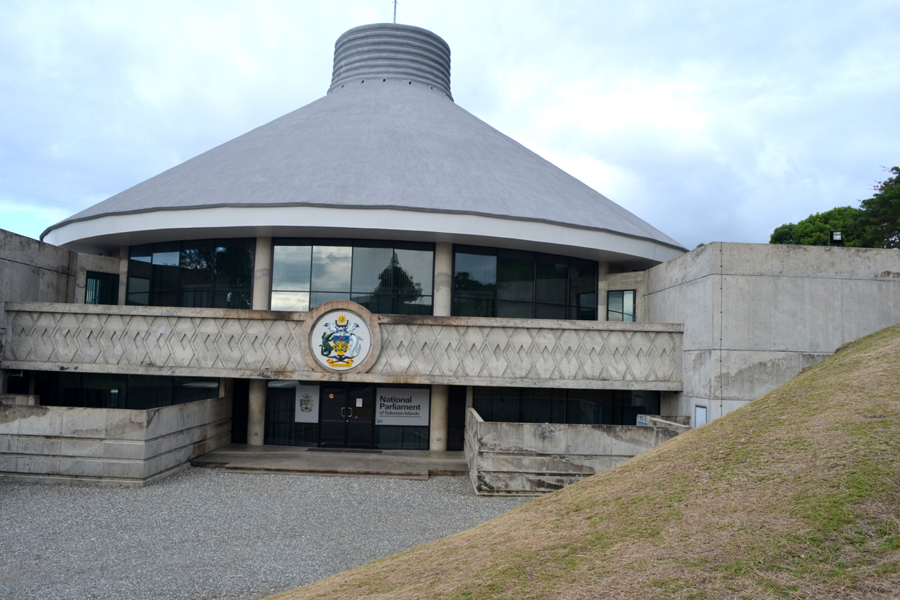
Solomon Islands National Parliament

By Gary Hatigeva

PARLIAMENT will continue with its committee proceedings into the Development Bank of Solomon Islands Bill 2018, from where it left off last Friday, as there is great anticipation for it be voted through today.

On Friday last week, Parliament was resolved into the Committee of the Whole House and started the proceedings of the bill, which looks to re-establish the defunct DBSI, but was adjourned the session covered only six clauses.

The 49 Clause Bill was brought before parliament early this month and was put in for its first reading, but was later brought down to the Bills and Legislation Committee (BLC) for its inquiry.

A thorough inquiry was conducted and many including members of the committee were expressing positive anticipation on the bank’s revitalisation, with hopes for it to be the solution to the ever pressing financial situation, which is seen as a negative factor to the in-activeness of the local population in the development of the country’s economy.

The Bill, according to officials, went through tremendous self scrutiny within the government circle before it was brought up to parliament, and they believe it is ready to become an act.

An act that is people oriented and a solution to the growing need of our informal sector, so as the Small and Medium Enterprises who are also finding themselves isolated in the commercial banking arena.

But with development bank’s re-establishment, it is expected to facilitate the economic and social development of Solomon Islands within the overall development plans and strategies of the government, with emphasis on the participation of Solomon Islanders in economic and rural developments, and any other form of establishments that also intend to contribute to the development sector of this country.

The Finance and Treasury Minister was highly praised for ensuring that the bill saw the light of parliament, and for the initiative to bring back a once popular institute, that had served but only a few lucky ones in its initial establishment.

It is also the current government’s intention, as evident in the bill, which is to revitalise the institute to serve the people of this country especially, those in the rural settings, and so as those who intend to become direct contributors to the fading economy of Solomon Islands.

The Bill if passed will repeal the existing Development Bank of Solomon Islands Act (Cap. 50), while also amending certain sections within the Financial Institution Act 1998.