BY BEN BILUA
Gizo
On a humid Thursday morning in Gizo, I climbed into a small boat with Joseph Tema, a young man whose family has called Nusabaruku home for decades.
My assignment for the week was simple in description but heavy in reality: visit the community and hear firsthand how climate change is shaping their lives.
Finding someone willing to share their story took days. But once contact was made, Tema guided me to Nusabaruku, where the stories of struggle, adaptation and uncertainty began to unfold.
As we approached the settlement, the first impression was striking.
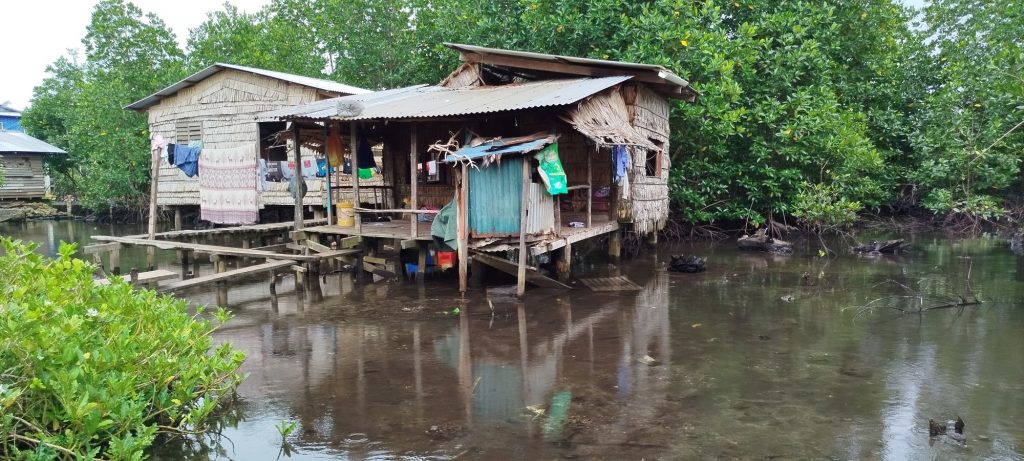
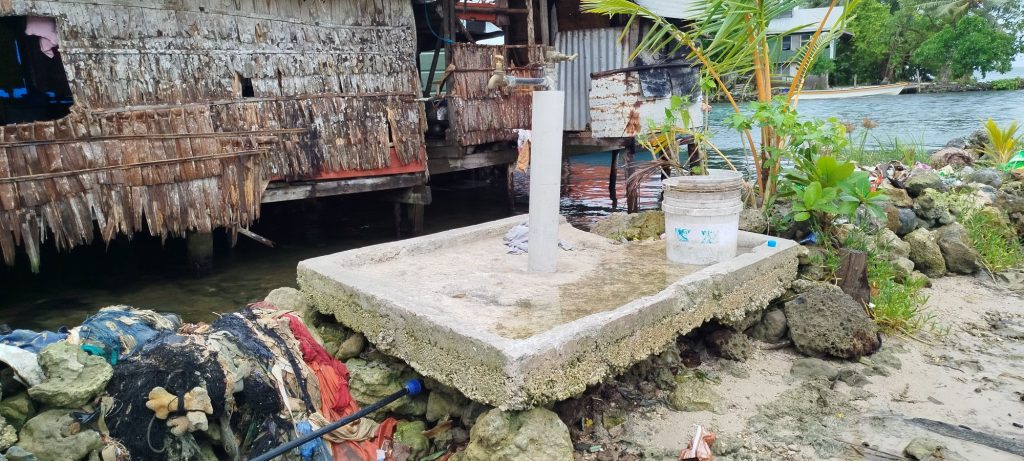
Houses stood close to the shoreline, some perched precariously above the water. Others stretched into the mangroves. The sea seemed uncomfortably close to daily life.
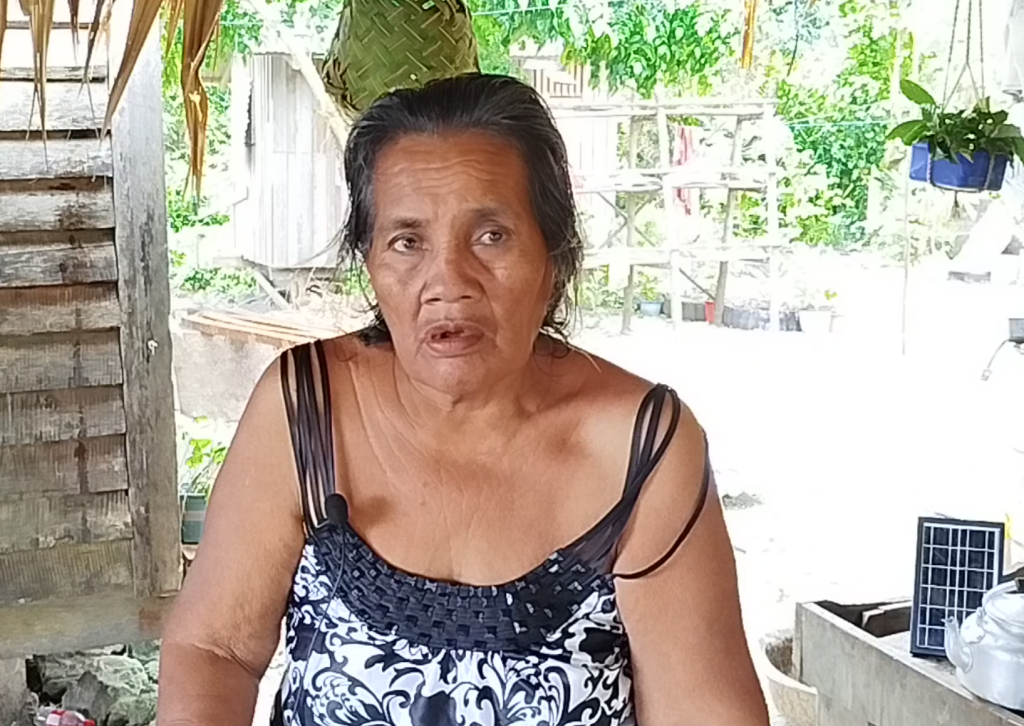
For 65-year-old Teniko Mitema, the changes have been gradual but relentless.
“I came to Nusabaruku in 1980,” she said recalling the early days of the settlement.
“Back then there were only a few houses. Three houses were on the nearby island and four houses on the mainland. Many of these places had no houses at all.
“Today, the picture is very different.
“Houses now stretch from the shoreline right up to the bottom of the hill. The tide has also changed. Sometimes it reaches our doorstep,” Mitema said.
She said population growth has also transformed the small community.
What was once open land is now filled with homes, leaving little space for expansion. As a result, some families have built their houses directly in mangroves.
Mitema said life in Nusabaruku now moves between two worlds.
“When the weather is bad, we move to shelters up in the hills. But when the weather is fine, we come back down to the coast so our children can be close to the school,” she said.
For the community, daily survival depends on small incomes.
Mitema said women sell betel nut and cooked food along the roadside while men dive for fish and sell their catch at the Gizo market.
Food habits have also changed over the years.
“We still make gardens, but not often. Rice is our main food now. Even the children prefer rice more than potato and cassava,” she said.
According to Mitema, Nusabaruku residents are no strangers to natural disasters. During the 2007 tsunami, many villagers fled to higher ground. Former Prime Minister Gordon Darcy Lilo later advised the community to settle permanently on the hills.
But for many families, the pull of the coastline proved too strong.
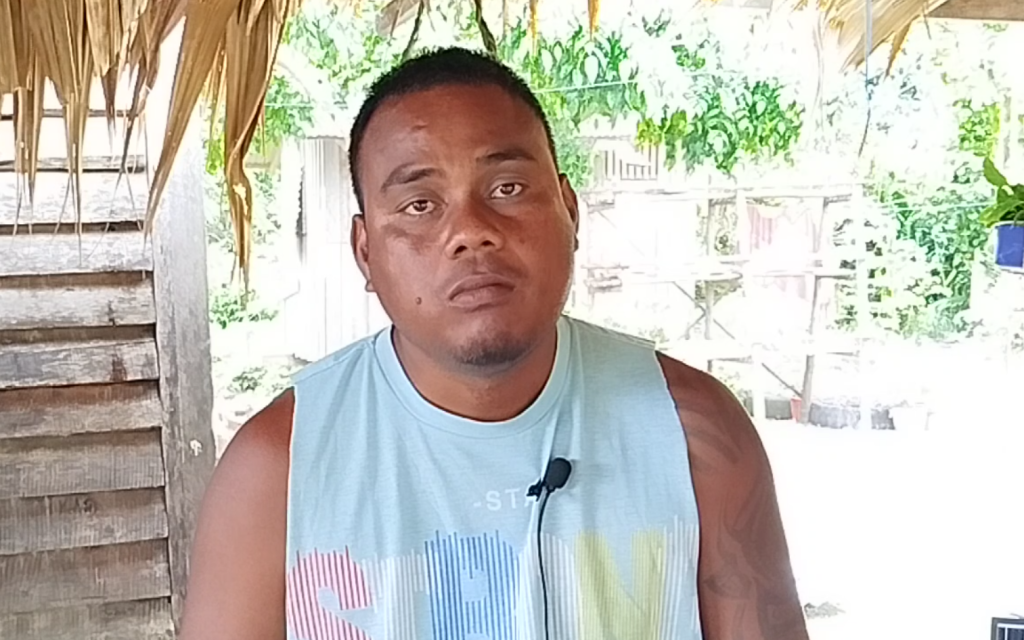
Community chairman Mr. David Tema says the consequences are now becoming more visible.
“Today we are experiencing extreme sea level rise. Most of the places where we built our houses before are now gone. Even areas where we used to play volleyball are under the sea,” he said.
Tema said the rising water has also brought new dangers, especially for children.
“In the past years we have seen children drown,” Tema said quietly. “Recently a child was found floating in the sea after slipping from a house built above the water while the parents were asleep.”
The incident happened during high tide.
“If it had been low tide, the child might have survived,” he said.
Another challenge comes with the tides themselves. When the sea rises, it carries rubbish into the community. When it recedes, the debris is left behind.
“At high tide the sea brings in lots of trash. When the tide goes down, the rubbish becomes a nuisance and it can also be dangerous for our children,” Tema said.
Despite these risks, the community’s connection to the ocean remains strong.
“As Gilbertese people, we love the sea. It gives us food and a place to relax. But today we hardly see fish near our village like before,” he said.
Tema said the geography of Nusabaruku is changing so quickly that even movement within the community has become difficult.
“We used to walk around freely. Now many places are underwater. To visit friends, sometimes we use canoes,” he said.
Tema said residents have attempted their own solutions.
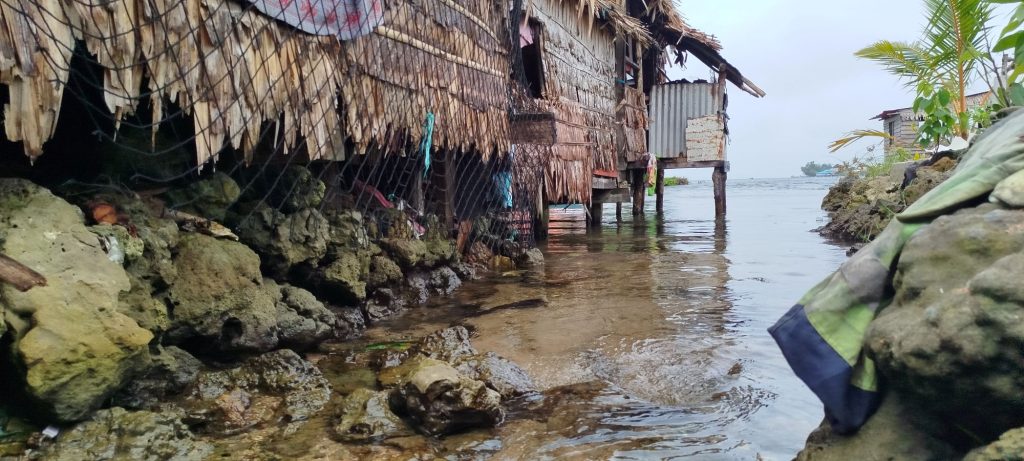
Some have constructed small seawalls using coral rocks in an effort to slow the waves and erosion.
“It helps a little, but not 100 percent,” he said.
Meanwhile the coastline continues to shrink, forcing some families to build their homes deeper into the mangrove areas.
Over the years, experts and authorities have suggested relocation to higher ground, but for many residents the idea feels impossible.
“We have already built permanent homes. It would cost too much to pull them down and rebuild somewhere else. We built these houses over many years. It would take a miracle to move us,” Tema said.
For now, the community hopes for support rather than relocation.
“One option is for the government to help us build a seawall and backfill some areas. At the moment there is no support to help our community adapt to sea level rise,” he said.

For Mr. Joseph Mitema, who was born and raised in Nusabaruku, the changes feel deeply personal.
“Some of the places where we used to play are now underwater. The small island that was once part of the village is now separated by the sea,” he said.
One of the areas that Mitema still remembers is the passage between the small island and the main village.
According to Mitema, the area was a popular playing ground for kids but now it’s a huge passage where boats can take a shortcut to the other side.
He said spaces that once seemed safely distant from the shoreline are even now threatened.
“Our volleyball court is also affected. Sometimes during high tide, the sea even comes into our meeting house,” Mitema said.
Despite the growing challenges, the young man still holds hope for his community.
“We want the government to build a seawall and backfill some areas,” he said. “We just want a safe place where our children can grow and where we can still play the games we love.”
As the boat pulled away from Nusabaruku later that afternoon, the tide slowly crept back towards homes along the shore.
For the families who live there, the rising sea is no longer a distant warning about climate change. It is an everyday reality pressing steadily against their doorsteps.
Photos: Ben Bilua
For feedback, contact: [email protected]
Editor: [email protected]