The Labour Mobility Unit (LMU) has announced that Nolan Meats is in the country for its second recruitment drive from the work-ready pool.
Following the successful intake of 40 workers last year, the company expressed satisfaction with their performance and announced plans to expand its workforce this year, a statement from LMU yesterday said.
“We are impressed with the improvement shown by Solomon Islands workers and are happy to be back to recruit more for our processing plant,” said a Nolan Meats representative.
A highlight of this visit was the inclusion of two Solomon Islands workers from the first cohort, Ekred Posala and Romina Faka, who joined the recruitment team to assist with the process, the statement said.
Their involvement provided valuable support, helping candidates feel more confident and improving communication during interviews.
Over the course of five days, Nolan Meats screened, tested, and interviewed more than 100 candidates, with plans to recruit between 60 and 70 workers, LMU said.
The Labour Mobility Unit (LMU) acknowledged Nolan Meats for its ongoing trust in Solomon Islands workers and encouraged successful candidates to remain committed, save money to achieve their goals, and serve as good ambassadors for the country.
The Magistrate Court since Thursday last week, and Monday and Tuesday this week was filled with a surge of cases involving offenders charged with the illegal selling of betelnut in a betelnut-free zone or public space.
Magistrate, Pauline Smith Taroimae, presided over these matters when it came for mention at the Juvenile Court room yesterday.
Broader issues were discussed, such as a review of warrant and issues of summons.
HCC prosecuting counsel, Mr Harry Bisafo, told the court that his team had already followed up on several warrant executions and summons but had faced issues as to limited capacity.
When asked by the Magistrate as to what the prosecutor meant by ‘’limited capacity’’, Mr Bisafo said, ‘’human resource and logistic support, where enforcement officers were only allocated two vehicles for issuance of summons and executing of warrants’’.
The magistrate further asked what else the law enforcers are doing to mitigate this issue – to which he said, ‘’they are doing the same thing, trying to locate and enquiring about connections with the people who might knew the offenders that would lead the enforcement officers to them.’’
Most of the offenders were charged with the sale of betelnut in a betelnut free zone or public place – which is prohibited under the Betelnut Free Zone Ordinance 2023.
The objective of the Betelnut Free Zone Ordinance 2023 is to regulate the sale and consumption of betelnut and betelnut products within the Honiara City.
The ordinance itself makes it an offence to sale, consume, spit, chew betelnut and litter anywhere in a betelnut-free zone (HCC designated areas).
The Maximum penalty the courts would normally impose is a fine of $10, 000 penalty units or 5 months imprisonment, or both.
Mr Robert Madeo is the HCC Head of the law enforcement unit.
Mr Madeo told Island Sun, that the consumers who chew betelnut on the streets are ‘’hardly prosecuted because they normally evade the HCC Law enforcers patrolling the street, as these are on spot offence, rendering only the sellers left out unaware to be charged for selling betelnut’’.
An illegal betelnut street seller who sells his betelnut by standing outside the Central Magistrate Court, who does not want to be named, told Island Sun: ‘’he illegally sells betelnut as a means of livelihood or with a view to earn profit to sustain himself as he is unemployed’’. His experiences reflect a growing conversation within Solomon Islands betelnut street sellers and market vendors.
Dubbed as the ‘green gold’ of the informal sector, when chewed until one feels a surge of energy, its betelnut shells and spitted red stains are at the heart of this influx of cases before the magistrate’s court.
The Magistrate’s court recently heard and dealt with cases involving gold theft, arising from illegal mining activities at the Gold Ridge mining company site.
Yesterday, there was a continuation of the trial into a matter involving a male and a female person accused of receiving plastics of gold ashes and bottles of gold ashes, knowing that the said property may have been obtained in a way and under circumstances which amounts to stealing. Both pleaded not guilty to the charge.
According to Police Prosecutor who is prosecuting the matter, Mr John Teuila, he confirmed that the principal offender in that case is currently serving his jail term at the Rove Correctional Centre.
Similarly, on 23 February this year, the magistrate court sentenced a 33-year-old man, Aron Loke, of Haimane village, Tina area, Central Guadalcanal in the Guadalcanal Province, to 3 years imprisonment for gaining entry into the Gold ridge mining storage facility and stealing eight bags of carbon gold, worth $28,000.00.
On August last year, the then Minister of Mines, Dereck Manu’ari told parliament that influx of illegal miners and panners who came in thousands are making dirty money of ‘estimated SBD210 million dollars per annum’ as estimated by the company (investor).
The defendant who was imprisoned last month comes from central Guadalcanal and is a member of the land-owning tribes.
The Principal Magistrate Felix Hollison, noted in its sentence ruling at paragraph 31, dated 23 February, 2026, that: ‘’the defendant in that case claimed that the carbon gold that was stolen contained a mixture of minerals, including gold. Which suggests the company may have taken those minerals (apart from the gold) without paying the land-owning groups the appropriate payment they might be entitled to. That is to say that the agreement was only meant for gold but not the other minerals’’.
The complainant in that case, is the Gold Ridge Mining Limited.
The Gold Ridge landowners through their investment arm, Gold ridge Communities Investment Ltd (GCIL), holds a 10 percent stake in shares in the Gold Ridge Mining Limited.
Central Guadalcanal MP Peter Shanel Agovaka, whilst debating the issue of influx of illegal mining in Parliament, alleged that it was the company who created all of these problems. “No royalties, no rental dues, no regular payments. If they had played their part, we wouldn’t see people risking their lives in the pits today,” he told parliament on August last year.
Defence Counsel Mr Wally Hatingongo, during the sentencing hearing for Mr Loke, made mitigating submissions to the effect that the disgruntled landowners disagreed with the Company for breaching agreement signed between them.
The courts would normally take a deterrent approach in safeguarding the interest and safety of investors when conducting their business operations in the country.
Offenders are subject to harsh punishment especially when factors such as economic loss and breach of trust in cases of disgruntle landowners caught up in theft related offenses are weighed in as aggravating features in sentencing as seen in the case of Mr Loke.
The Ministry of Agriculture and Livestock (MAL) is calling for the immediate revocation of the newly introduced management fees on cocoa and copra exports imposed under the Coconut and Cocoa Management Fees Regulations 2026.
The new fee by the Commodities Export Marketing Authority (CEMA) has had an immediate negative impact with reports of buyers shutting down sheds and farmers stranded with their copra produce across country.
Island Sun reported yesterday the situation on Malaita in which copra farmers from East Malaita were forced to stockpile their copra due to buyers having closed down, waiting for prices to improve.
MAL in its statement yesterday highlighted that the main concern regarding the fee increase is the ‘significant reduction in farmer returns’.
MAL said that with current market conditions indicating a copra price of approximately SBD6.00 dollars per kilogramme, the application of a $3.05 management fee effectively reduces farmer earnings to less than half.
MAL raised serious concern over both the process and the potential impact of these fees on the country’s agricultural sector, mainly on smallholder farmers who form the backbone of cocoa and copra production.
The statement said the regulation was introduced without proper consultation with MAL, the lead government authority responsible for agricultural development.
It further adds that any policy decision that directly affects farmers, agricultural productivity, and export performance must involve thorough stakeholder engagement, including the Ministry and the industry players.
The Ministry warn that this could discourage production, reduce export volumes, and negatively affect national revenue.
It also noted that exporters are likely to pass the additional costs on to farmers, placing further financial pressure on rural communities.
While acknowledging the need for revenue and industry support, MAL said such measures must support growth rather than hinder it.
The Ministry said that any fee increases should bring clear benefits to farmers, such as improved infrastructure, value-adding facilities, and better market access.
MAL also voiced concern over the lack of wider government consultation and call for a more coordinated approach to policymaking, urging the Acting Minister for Commerce, Industry, Labour and Immigration to revoke the new fees and conduct proper consultations before making decisions that affect the agriculture export sector.
“Our farmers are the foundation of our agricultural economy. Any decision that affect their livelihoods must be made with careful consideration, proper consultation, and a clear vision for long-term development,” the Ministry said.
The Solomon Islands economic growth for this year is projected to 2.7 percent due to the ongoing crises in the Middle East.
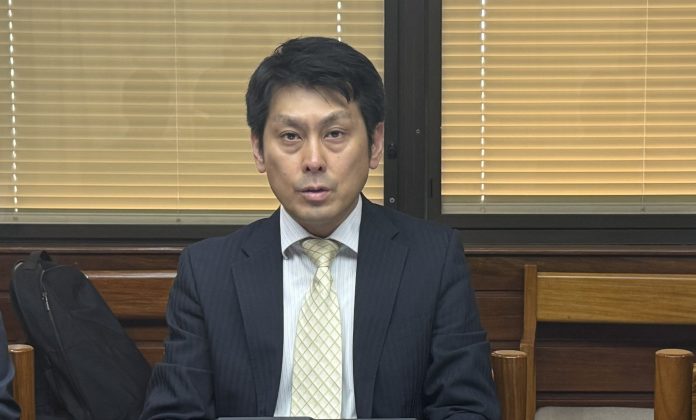
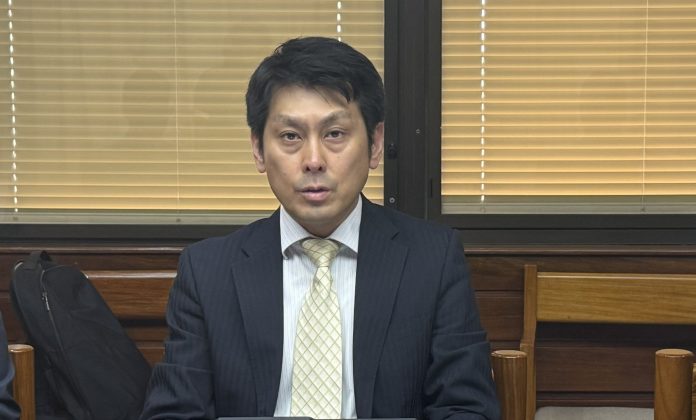
Mission Chief of Solomon Islands for International Monetary Fund (IMF), Masafumi Yabara told local media this in a press conference last week, based on a preliminary report on 2026 Article IV consultation.
Mr Yabara said the Solomon Islands economy grew by 3.5 percent last year, driven by agriculture and gold production.
“And for 2026 this year, the conflict in the Middle East is projected to slow this growth to 2.7 percent. The IMF also expect inflation would go up from 3.4 percent last year to 4.8 percent on average this year,” he said.
He further adds that Solomon Islands is vulnerable to global shocks since its economy is highly dependent on imports.
“Not only for fuels, but also food. We’ve already seen some significant impacts in the Middle East. The oil prices have gone up by more than 50 percent. So, it could eventually impact the import prices of Solomon Islands. If the fuel costs go up, that will impact the wide economic activity,” Mr Yabara said.
He said IMF strongly suggest that rebuilding buffers, anticipating the coming shocks, will be very important at this stage for the country.
“We project that the growth could go down to 2.7 percent this year. But I would like to emphasise that even our projections are subject to high uncertainty,” he said.
He said if the Middle East crises is prolonged it could significantly dampen economic activity in Solomon Islands and raise inflation.
“And on a domestic front, we see a risk that the government could face a cash crunch, forcing a freeze in budget execution. And if it materialises, it will also negatively impact the economic activity in Solomon Islands,” he said.
The Solomon Islands Chamber of Commerce and Industry (SICCI) has stepped in to coordinate private sector concerns over the recent increase in Commodities Export Marketing Authority (CEMA) management fees, positioning itself as a key link between industry and government.
In a statement yesterday SICCI says it recently facilitated a dialogue among its members to consolidate views from businesses affected by the fee adjustment, particularly those in the cocoa and copra sectors.
The Chamber described the engagement as part of its ongoing role to ensure that private sector voices are clearly communicated to policymakers.
Chief Executive Officer James Dolarii said SICCI remains committed to working constructively with both government and industry stakeholders to support a regulatory environment that enables businesses to grow.
“Private sector is the engine of growth and ensuring it functions through policies that support the broader objective of expanding our narrow private sector base is critical to Solomon Islands,” Mr Dolarii said.
SICCI acknowledged the government’s willingness to engage on the issue, saying that open dialogue is essential in addressing concerns raised by businesses and producers.
The Chamber also highlighted that while regulation is necessary, policies must strike a balance to avoid placing undue pressure on farmers and small to medium enterprises (SMEs), which form a significant part of the country’s export economy.
SICCI said cocoa and copra industries remain vital contributors to livelihoods across the Solomon Islands, supporting thousands of rural households.
SICCI also reiterated its call for meaningful consultation, stressing that collaborative discussion between government and stakeholders is key to ensure that policies are both practical and sustainable.
The Chamber said it will continue to engage with all parties as discussions on the CEMA fee increase progress.
The 2026 national budget, while offering projections of key fiscal indicators up to 2029, still faces a significant financing gap.
This has raised concerns about the government’s ability to fully implement planned spending.
Masafumi Yabara, Mission Chief of Solomon Islands for International Monetary Fund (IMF) stressed this during a press conference last week where he presented a preliminary report on the 2026 Article IV consultation made by IMF staff teams after their visit to the country from March 9-20.
He said that the budget provides useful insights for the public, showing projected deficits, public debt, and fiscal trends over the next several years.
He said that this transparency allows citizens and analysts to assess the government’s commitment to its fiscal plans.
“However, the budget estimates indicate that total projected spending for the year exceeds the sum of anticipated revenues, donor support, and borrowing from domestic markets. This shortfall, known as a financing gap, means the government may not have enough resources to fully execute all planned expenditures unless additional funding sources are secured,” he said.
He said similar situations in previous years have forced the government to halt parts of the budget, causing disruptions in public services and delaying projects expected by the community.
He said addressing the financing gap is critical to avoid repeating these cash flow problems and to ensure timely implementation of government programs.
According to Mr Yabara, there is a clear top-down guideline on government spending that would help maintain budget discipline.
“We recommend targeted measures to mitigate the impact of the ongoing Middle East conflict, focusing on the most vulnerable populations and ensuring coordination with international donors are effective,” he said.
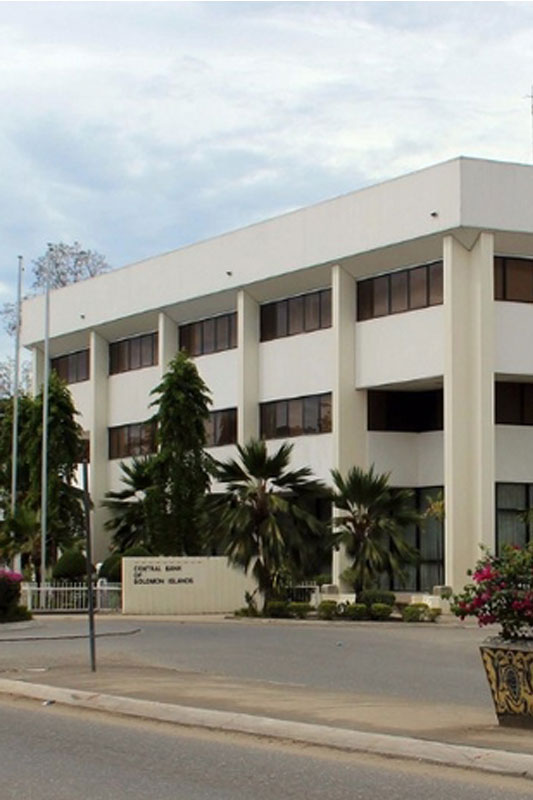
The Central Bank (CBSI) warns that the use of Solomon Islands banknotes in traditional ornaments, decorations and crafts is illegal.
CBSI said the practice of weaving, stitching or incorporating banknotes into cultural items must stop immediately, as it violates existing laws governing the use of national currency.
The Bank said under Section 21(5) of the Central Bank of Solomon Islands Act 2012, any person who deliberately alters the appearance of banknotes or coins commits an offence and may face penalties.
The Bank further highlights that Section 364 of the Penal Code makes it an offence to deface currency without lawful authority, with offenders liable to fines of up to 2,000 penalty units.
CBSI said that banknotes are issued strictly as legal tender for transactions and payments, and any form of misuse—including folding, attaching, or embedding them into ornaments—constitutes unlawful tampering.
The Bank warns that such practices not only break the law but also damage the physical condition of banknotes, reducing their lifespan and increasing replacement costs.
“Banknotes are printed for the purpose of transacting goods and services, not for decorative or cultural use,” CBSI said.
While acknowledging the country’s rich cultural traditions, CBSI said the use of legal tender in ornaments undermines the integrity of the national currency.
CBSI said as the sole authority responsible for issuing and regulating banknotes in Solomon Islands, it has a legal duty to protect currency from misuse and damage.
The Bank calls on community leaders, cultural groups and the general public to comply with the law and promote responsible handling of banknotes.
CBSI also encourages the use of alternative materials for cultural practices that do not involve legal tender.
Failure to comply may result in enforcement action under the relevant laws.
Speaker urges MPs to recommit to parliamentary responsibilities following last week’s mass resignation of committee chairpersons and members
BY NED GAGAHE
The Speaker of Parliament, Patteson Oti, calls on Members of Parliament to rise above political differences and return to constructive dialogue to ensure effective functioning of Parliament.
“It is with deep concern that I address a serious political impasse confronting our Parliament. This past week, the Chairpersons of all the Parliamentary Standing Select Committees and their members resigned from their appointments. This has created a serious impasse that undermines the effective functioning of Parliament. It is an unprecedented situation in our Parliament’s history,” Mr Oti said.
He said while political disagreements are natural in any democracy, deliberate suspension of parliamentary responsibilities undermines both the integrity of the House and trust of citizens.
“Parliament is the cornerstone of our democracy. It is here that the voices of our people are represented, laws are debated, and accountability is upheld,” he said.
Oti reminds all members that their duty to Parliament and to the people of the Solomon Islands is not optional.
“Regardless of economic hardship, social pressures, or political impasse, Parliament must continue to operate. The Constitution requires that this House remain the forum for debate, decision‑making, and oversight.”
He calls on all MPs to recommit themselves to their parliamentary responsibilities.
“The committees of Parliament are vital instruments of scrutiny and accountability, and their work cannot be abandoned or ignored. It is not optional. The people expect us to rise above political impasse and demonstrate leadership in times of challenge.”
“As such, pursuant to Standing Order 68(4), I will continue to offer committee chairpersonship and/or membership to any Members of Parliament willing to perform this vital role. However, if Members decline to perform their parliamentary duties, they are answerable to the people they represent, not the Speaker,” he said.
The Speaker also acknowledged the limits of his authority. “It is regrettable that I am not empowered, either by the Constitution or the Standing Orders, to recall Parliament during situations like this. In the absence of any enabling provisions, either express or implied, Parliament sits in accordance with current practices and rules. Without a sitting calendar or relevant rules to recall Parliament, only the Government, through the Prime Minister, can summon Parliament to convene.”
Oti assured that he will ensure the business of Parliament proceeds in accordance with Standing Orders and the constitutional mandate. “I urge all Members to return to the table of dialogue, engage constructively, and uphold the democratic values that bind us together as a nation.”
“Democracy is resilient only when its institutions remain active. Parliament must continue to function, for the sake of our people and the future of the Solomon Islands.”
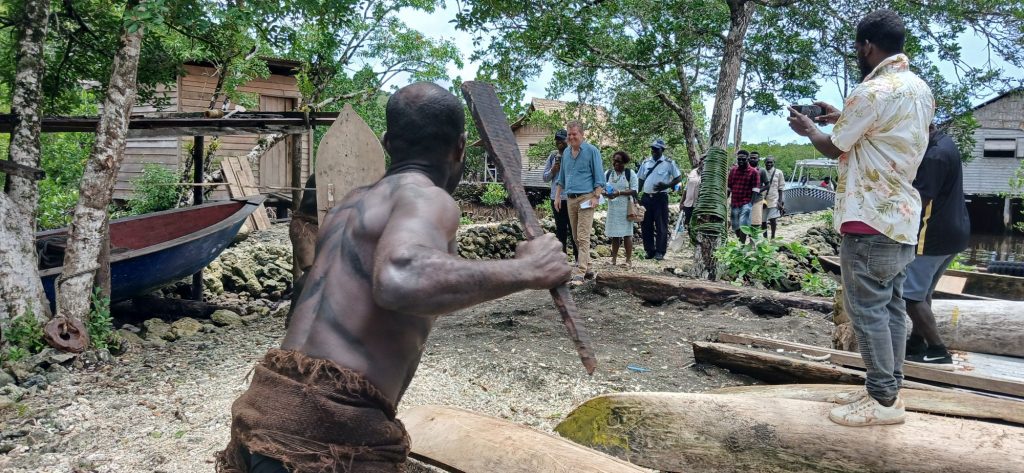
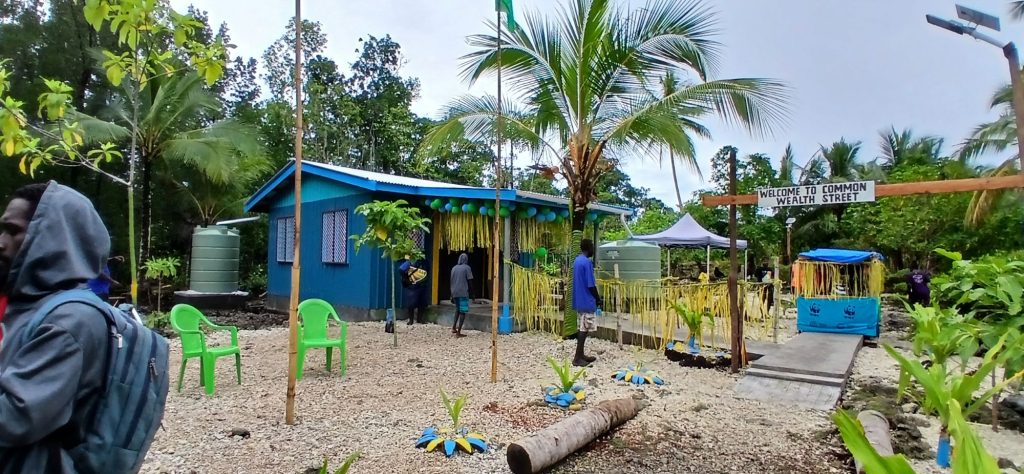
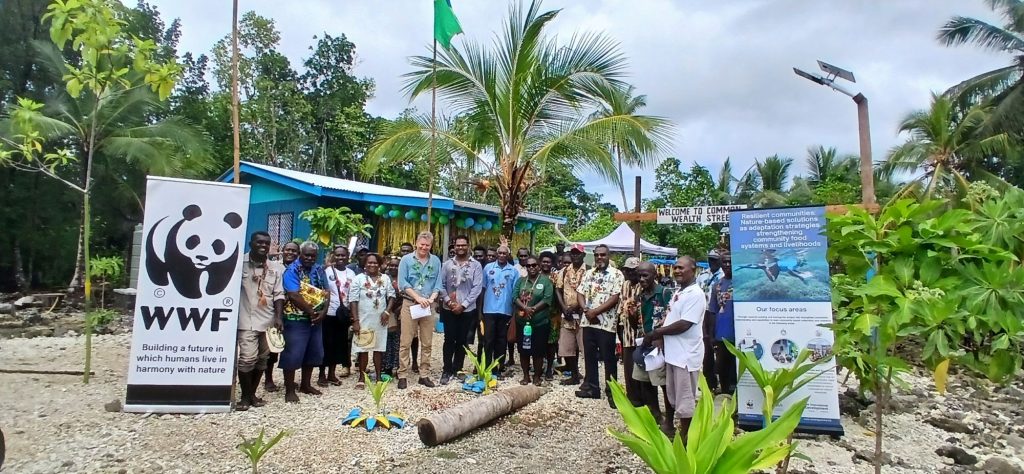
PUSIJU Community in South Vella, Western Province marked a significant milestone with the official opening of its Mini-Solar Fishery Centre, a project funded by the United Kingdom and implemented by WWF Solomon Islands.
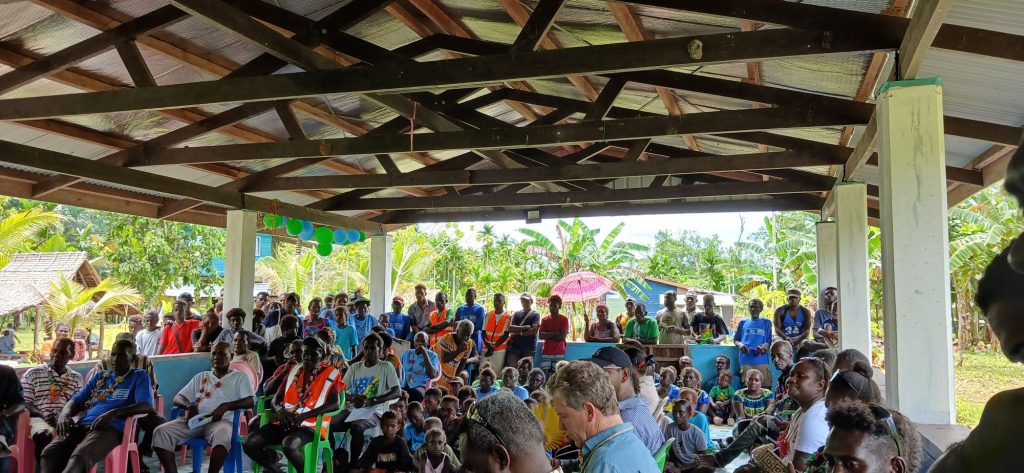
Warriors welcoming the guests, Photo by Ben BiluaMembers of Pusiju and nearby communities who turned up to witness the opening of the Mini-Solar Fishery Centre, Photo by Ben Bilua
The launch brought together community members, leaders, and development partners, with Paul Turner, British Commissioner to Solomon Islands attending on behalf of the United Kingdom.
The Mini-Solar Fishery Centre is part of a Flexible Fund initiative delivered under the Pacific Resilience Communities Nature Based Solution project, implemented by the World Wildlife Fund to strengthen climate resilience at the community level.
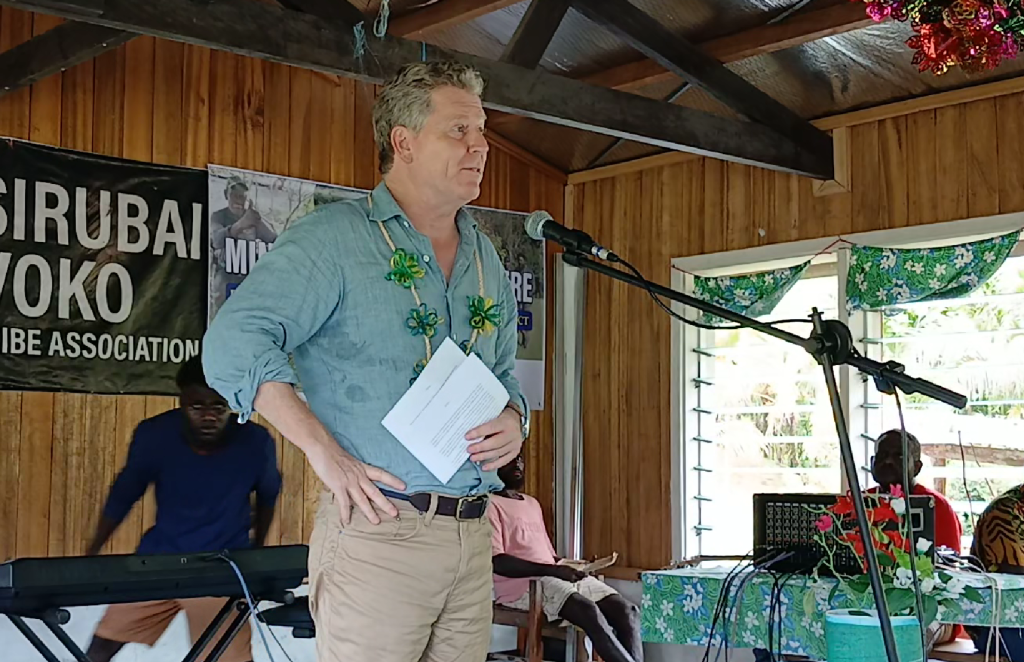
British High Commissioner to SI, H.E Paul Turner delivering his remarks at the event, Photo by Ben Bilua
Speaking at the event, Turner reaffirmed the United Kingdom’s commitment to supporting locally driven climate action across the Pacific, including the Solomon Islands.
He said communities in the country are increasingly facing the impacts of climate change, which are placing pressure on fisheries, food security, infrastructure, and traditional ways of life.
“Our partnership through Climate Action for a Resilience Asia (CARA) and the flexible fund is grounded in a simple belief—that resilience is strongest when it is led by communities, supported by trusted local organisations, and built on solutions that reflect both tradition and innovation,” Turner said.
Pusiju Mini-Solar Fishery Centre, Photo by Ben BiluaOfficials and community members pose for a photo in front of the fishery centre, Photo by Ben Bilua
He said the Mini-Solar Fishery Centre is a strong example of a successful community-led initiative.
Turner said the solar-powered system will reduce reliance on fuel, lower operational costs for families, and promote cleaner, climate-resilient development.
“By pairing renewable energy with sustainable fisheries practices, it provides practical benefits—reducing post-harvest losses, improving storage, and strengthening household livelihoods.
“This is the kind of community-driven innovation that the United Kingdom is proud to support,” he said.
Turner commended the leadership within Pusiju, highlighting the collective effort of chiefs, elders, women, and youth in making the project a reality.
“Your unity is the foundation on which resilience is built,” he said.
He also acknowledged the role of WWF Pacific and WWF Solomon Islands for their technical expertise and longstanding engagement with communities in Western Province, ensuring the project is grounded in science, good governance, and community participation.
Turner also recognised the support of the Western Provincial Government, noting its importance in sustaining the project over the long term.
Community chiefs and women leaders expressed their gratitude to the people and government of the United Kingdom for funding the initiative.
They said the Mini-Solar Fishery Centre will play a key role in income-generating activities, helping to improve the livelihoods of families and the wider community.