Home Blog Page 9

Japan festival ‘Matsuri’ coming to Honiara

0

BY TONY IROGA

On July 11, the Embassy of Japan and JICA Solomon Islands will host a Japanese cultural event titled ‘Japan Festival Matsuri’.

Matsuri means ‘festival’ in Japanese and the event will showcase craft activities and entertainment that will reflect the culture of Japan.

The event is open to the public, and admission is free of charge, a statement by the embassy of Japan said.

Visitors will be able to experience Japanese culture through a variety of booths, including opportunities to try on traditional summer outfit ‘Yuakata’ and take part in craft activities, along with calligraphy and other traditional cultural activities, the statement said.

In addition, Kitano Mendana Hotel will feature a booth introducing Japanese festival food culture.

The programme will also include a performance stage, with opportunities for visitors to enjoy and participate in the traditional Japanese dance, ‘Bon Odori’, the embassy statement said.

The event will be held at the Futsal Court next to the Multipurpose Hall, in Chinatown, Honiara from 11am to 2pm.

All are warmly invited to attend and enjoy this cultural event, the embassy said.

For feedback, contact: [email protected]

Editor: [email protected]

‘NOTHING MISLEADING’

0

Mines Minister Manuari says cancellation of gold dealer licences part of wider transition in reform and strengthening governance of gold sector

BY TONY IROGA

Government has refuted the Opposition leader’s accusation that it has misled the country in announcing that it had cancelled gold dealers’ licences.

Opposition leader Manasseh Sogavare had said over the weekend that despite government’s announcement that it had cancelled gold dealer licences there are still 10 active gold dealer licences.

“No show-cause process has been invoked, no lawful cancellation procedure has been activated, and no evidence has been presented that any of the statutory grounds for cancellation have been established,” Mr Sogavare said.

“The Prime Minister therefore owes the country an explanation. Solomon Islanders deserve facts, not headlines. If the Government intends to reform the gold trading sector, it must do so lawfully, transparently and honestly.

“It is a serious public misrepresentation on a matter affecting miners, dealers, investors, provincial stakeholders and public confidence in the administration of the law.

Sogavare called on the Prime Minister to immediately correct the record and tell the nation:

-Which specific Gold Dealer Licences have been cancelled.

-On what date each cancellation took effect.

-What statutory ground was relied on in each case.

-Whether each licence holder was issued a show-cause notice as required by law.

-Whether any appeal rights have been triggered under the Act.

“If the Prime Minister cannot provide those answers, then he should withdraw his statement and apologise for misleading the public,” Sogavare said.

In response, Mines Minister Derick Manuari said there was nothing misleading about government’s position, adding that ‘Government’s decision regarding Gold Dealer Licences (GDLs) forms part of a broader reform programme’.

Mr Manuari emphasised that due process is being followed and that the cancellation of licences is only one component of a wider transition aimed at reforming and strengthening governance of the gold sector.

“This is not simply about cancelling licences. The Government is implementing a comprehensive transition from the existing Gold Dealer Licensing regime to a new framework that will provide greater transparency, accountability, oversight and national benefit from our gold resources,” Manuari said.

He said Caucus has already endorsed the policy direction to transition away from the current Gold Dealer Licensing framework.

Manuari said necessary reforms also support the establishment of a State-Owned Holding Company (SOHC) that will facilitate Government participation, investment, oversight and strategic management of the sector.

“The cancellation of existing licences is the final step in a process that includes due diligence reviews, legal requirements, transitional arrangements, and the establishment of a stronger regulatory and commercial framework for the sector,” he said.

The Minister further clarified that since taking office, no new Gold Dealer Licences have been issued.

He said of the almost 40 licences previously issued, only 10 remain active.

Manuari said all other licences are currently undergoing compliance reviews and due diligence processes as part of the Government’s reform programme.

“The Mines Division is undertaking comprehensive compliance assessments of all active licence holders. These reviews are necessary to ensure accountability and to address longstanding mismanagement that have undermined effective regulation of the sector,” Manuari said.

“The current licensing framework has exposed Government to potential revenue leakage, under-reporting, illicit trading risks and broader governance concerns. These are issues that this Government is determined to address through meaningful reform.

“Absence of political will by successive governments to reform and strengthen governance in the sector has resulted in a lot of mess that we are now trying to sort out, and of all people, the Opposition Leader should know better.”

For feedback, contact: [email protected]

Editor: [email protected]

DREAM IGNITE

0

OFC vice president John Kapi Nato urges unity, youth development and regional football pathways

BY RICHARD MENANOPO

Newly launched Ghupo Wantoks FC has set its sights on building pathways for young footballers across Melanesia following an official launch at Iron Bottom Sound (IBS) Monarch Bar and Grill in Honiara on Saturday night.

The club’s launch brought together football officials, sponsors, former players, supporters and guests, with speeches centered on youth development, regional partnerships and long-term football ambitions.

Club owner and major sponsor John Kapi Nato — who is also the founder of PNG powerhouse Hekari United FC and current Oceania Football Confederation (OFC) vice president — described the launch as more than just the beginning of a football club.

“Tonight is not just a launching night of Ghupo Wantok FC, but it is a celebration of connection.

“It’s about unity and embracing the power and the beauty of football to bring all of us together,” Nato said.

Nato said the inclusion of the word “Wantok” in the club’s name reflected a broader Melanesian identity that would unite players and communities across the region.

“The club will represent all the Melanesian countries — Solomon Islands, Papua New Guinea, Vanuatu and Fiji,” he said.

Speaking passionately about football development, Nato shared the early beginnings of Hekari FC in Papua New Guinea more than two decades ago, saying the club started with a vision to create opportunities for young people.

“We must go out and start connecting and bringing these young people in so we can give them aspirations and hopes.

“Football is more than a sport. It creates friendships, shared identity and opportunities for our youth,” he said.

Nato stressed that discipline, education and structured football pathways were critical to helping young players reach higher levels of the game.

“Today in world football, clubs are looking at young players aged 20, 22 and 23. That’s the dream every football club must have.

“That’s what Ghupo Wantoks FC must develop — the academy of young people,” he said.

He also highlighted the importance of stronger football cooperation between Solomon Islands and Papua New Guinea, including player exchanges, coaching development and youth tournaments.

“The sea must not be seen as a barrier, but a connection of dreams.

“We must create pathways for our young players so they can reach the next level of football in Europe or America,” Nato said.

Nato further encouraged club officials and stakeholders to remain committed to building the club for the long term.

“You want to build a club? It’s not easy.

“It must be collective work together, shared vision together and shared objectives together,” he said.

Meanwhile, Solomon Islands Football Federation (SIFF) vice president Robert Seni congratulated Ghupo Wantoks FC and acknowledged the work being done by the club’s leadership.

“SIFF is very honored for the invitation received from Ghupo Wantok FC.

“The federation is always here and will always support football and anything to do with football,” Seni said.

Seni paid tribute to club president Mrs Vonnie JK Natto for her commitment and drive in football development.

“I wish everyone in the football family had the same drive that Vonnie has.

“I think if we have 10 of the likes of Vonnie, we should have been in the World Cup,” he said.

Seni also revealed that SIFF has been pursuing discussions with government authorities regarding possible tax rebates for football sponsors in Solomon Islands in an effort to encourage greater corporate support for clubs and football development.

“This time it’s very hard to get sponsors.

“We hope to pursue it with the new government now, at least to give some rebates for sponsors of football in Solomon Islands,” he said.

The launch programme featured entertainment, presentations, fundraising activities and acknowledgements to sponsors and supporters who contributed towards the event and the club’s development.

Special acknowledgements were made to John Kapi Nato and Vonnie Nato, Premier of Rennell and Bellona Province, Eric Sau’eha , MPs namely; Derrick Manuari, Morris Toiraena and Choilyn Yim Douglas, and Ropiko Energy’s Rolland Piko, Honiara City Council, Advance Technology Limited, Mr. John Taupongi, Nine-One field owner Sam, and the Ghupo Wantoks FC officials, managers, coaches and technical team for their support and hard work towards the successful launch.

Ghupo Wantoks FC, which is still in its early years of establishment, aims to develop young football talent while strengthening football links across the Melanesian region through partnerships, exchanges and long-term football programmes.

With support from experienced football figures and regional stakeholders, the club now hopes to build a lasting football legacy for future generations.

Photo credit: Richard Menanopo

For feedback, contact: [email protected]

Editor: [email protected]

Three-day inclusive sports initiative identifies emerging athletes

0

BY RICHARD MENANOPO

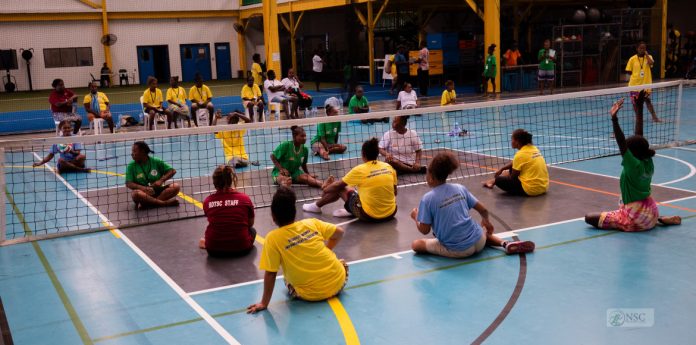
The successful staging of the inaugural “Play for Equity” Para Sport Program has marked another important step forward for disability inclusion and Para sport development in Solomon Islands.

Hosted by the Disability Women Empowerment Association (DWEA) from June 2–4 at the Solomon Islands National Institute of Sport (SINIS), the three-day initiative brought together persons with disabilities from across the country to participate in sporting activities, leadership training and empowerment programs aimed at strengthening inclusion through sport.

The program was organized by DWEA — one of six organisations of Persons with Disabilities (OPDs) under the National Disability Forum Solomon Islands (NDFSI) — with support from development partners and sporting stakeholders.

Speaking to NSC Media, NDFSI volunteer Stephen Maerongo described the event as a milestone achievement for the country’s growing Para sport movement.

“This is the first event of its kind organised by DWEA, bringing together people with disabilities to participate in sporting activities while promoting inclusion, empowerment and unity,” Maerongo said.

The initiative combined sporting participation with educational and personal development sessions, including pre-evaluation and post-evaluation training designed to help participants reflect on their learning experiences throughout the program.

Participants included members of the Bethesda Disability Training and Support Centre (BDTSC) alongside representatives from various disability organisations under the NDFSI umbrella.

Apart from encouraging participation and confidence-building, the program also focused on identifying potential athletes capable of progressing into the Solomon Islands Para sport pathway.

“The program aims to empower people with disabilities, especially women and girls, and to demonstrate the potential that exists within our disability community.

“The program has also provided an opportunity for us to identify potential athletes who could become part of future national Para sport teams and represent Solomon Islands abroad,” Maerongo said.

Maerongo acknowledged the support of development partners including the Pacific Disability Forum (PDF), while also commending the National Sports Council (NSC) for assisting with the hosting of the event and transport arrangements.

“We sincerely thank NSC, which manages SINIS, for its positive response and support in hosting this program,”

“We also thank our partners, volunteers, coaches and participants whose commitment made the event possible. Without their support and willingness to work together, this program would not have been successful,” he said.

He added that the success of the inaugural program demonstrates the importance of stronger collaboration between disability organisations and sporting institutions in creating equal sporting opportunities for all Solomon Islanders.

“We hope to continue working together in the same spirit of unity, cooperation and inclusion as we plan future activities that will further support and empower persons with disabilities through sport and community engagement,” Maerongo said.

The Play for Equity Program also reflects the growing national push to strengthen Para sport structures in Solomon Islands as more organisations work to ensure persons with disabilities are given equal opportunities to participate in sport, develop their talents and pursue higher-level competition.

The National Disability Forum Solomon Islands (NDFSI) serves as the umbrella body representing Organisations of Persons with Disabilities (OPDs) across the country and continues to advocate for inclusion, empowerment and equal participation opportunities through community programs, leadership initiatives and sport development activities.

Photo credit: NSC

For feedback, contact: [email protected]

Editor: [email protected]

Corpus Christi celebration brings massive turnout in Honiara 

0

BY JOHN HOUANIHAU

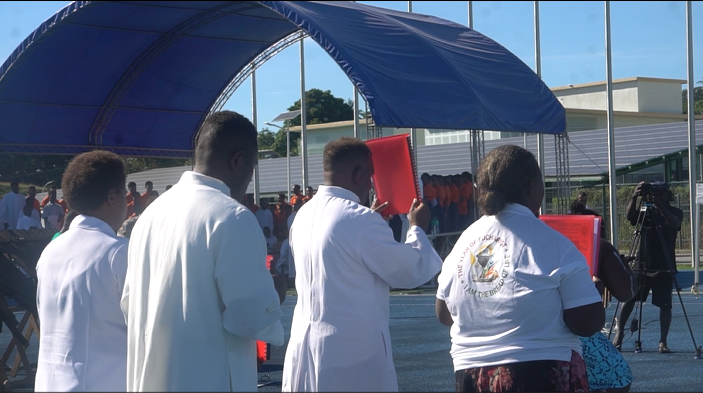
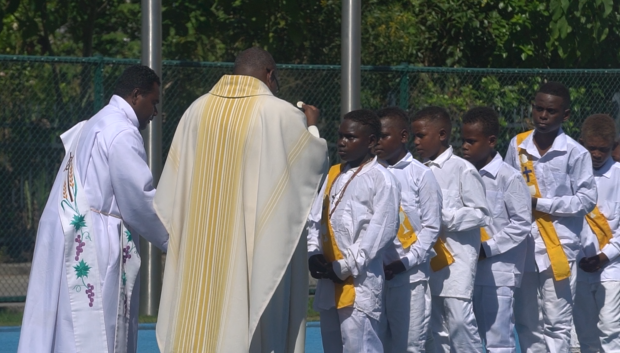
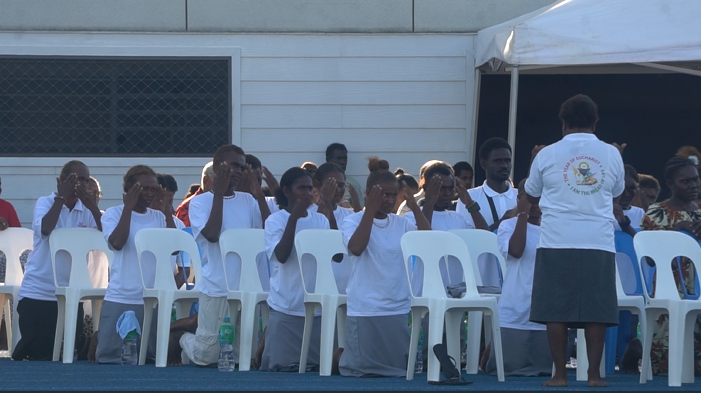
A massive gathering of Catholic faithfuls gathered yesterday for the country’s first-ever national celebration of Corpus Christi, marking the Year of the Eucharist under the theme “I am the bread of life.”

Hosted by the Archdiocese of Honiara, the two-day event began on Saturday, June 6, with the main celebration held yesterday at the National Stadium.

Parishes from Ruavatu to Visale, along with those across the Honiara area, joined in the celebration.

They rested overnight at Holy Cross Parish and Don Bosco Henderson on Saturday, where students, lay people, priests, and deacons led programs of prayer, song, and confession. 

Yesterday, many Catholics gathered at Don Bosco and Holy Cross before processing together in prayer and song towards the National Stadium for the solemn Mass.

The stadium program opened with the Divine Mercy Chaplet, led by the Divine Mercy Group, followed by Taizé songs and reflections.

A Benediction of the Blessed Sacrament preceded the Eucharistic Celebration at 9:00am and the Holy Mass was presided over by Rev. Fr. Peter Chele, with the homily delivered by Fr. James Ereai.

The program concluded later in the afternoon.

Photo credit: John Houanihau

For feedback, contact: [email protected]

Editor: [email protected]

‘Development projects strengthen Solomon Islands’ climate resilience’

0

BY NED GAGAHE

The European Union (EU) says its investments in renewable energy, water supply and sanitation are helping Solomon Islands build resilience against climate change, even when projects are not directly classified as climate initiatives.

Speaking during an exclusive interview with the Island Sun following a three-day visit to Solomon Islands, EU’s Pacific Minister Counsellor and Head of Cooperation, Maurizio Cian, said climate change considerations are integrated across many EU-funded programmes in the Pacific.

“On climate change, we normally have a regional approach.

“We have a number of projects working on this area, including agriculture and nature-based solutions. But even projects that are not directly focused on climate change do take climate change into consideration,” Mr Cian said.

He referred to renewable energy projects as a key example of investments that help reduce greenhouse gas emissions while supporting sustainable development.

“Renewable energy is definitely something which contributes to reducing emissions when done in a proper way,” he said.

Mr Cian also highlighted the EU-supported water project in Honiara, saying it is designed to improve water security while delivering environmental benefits.

“The project tries to supply water to the whole city, which is no longer dependent on rainfall.

“It also seeks to improve wastewater treatment so that the environment benefits from the project as well,” he said.

He revealed that the EU has committed an additional contribution of approximately SBD300 million towards the water project and is awaiting formal approval from the Solomon Islands Government.

“We expect the government to sign very soon. It has been pending for quite a long time with the previous government.

“We hope this government will speed up the signing process and the implementation of the project,” Mr Cian said.

Director for Asia, Central Asia and the Pacific at the European Commission’s Directorate-General for International Partnerships (DG INTPA), Peteris Ustubs, said the EU’s energy investments are also contributing significantly to climate adaptation and resilience efforts in Solomon Islands.

“Energy projects are a contribution to ensuring that climate change is taken into account.

“At the end, it is not only about energy supply, but also about how energy is generated,” Mr Ustubs said.

He said reducing reliance on imported fossil fuels and increasing the use of renewable energy sources will strengthen the country’s resilience while boosting economic independence.

“Making sure that the consumption of traditional fossil fuels in Solomon Islands can decrease and more renewable energy can increase makes the country more resilient to climate change.

“It also makes the country more sovereign, more independent and more prosperous because these are your own resources that you use for producing energy in the country,” he said.

The comments come as the European Union continues to expand its partnership with Solomon Islands through investments in renewable energy, water infrastructure, sanitation, and sustainable development initiatives that aim to support long-term climate resilience across the country.

Photo credit: EU

For feedback, contact: [email protected]

Editor: [email protected]
SIMS issues strong winds number five

0

BY JOHN HOUANIHAU

The Solomon Islands Meteorological Service (SIMS) has issued a strong wind warning for parts of the country.

The warning, issued at 4:00 pm yesterday, remains in effect for the waters of Rennell and Bellona, southern Makira, Western Province, Guadalcanal, Temotu Province, and the Russell Islands.

SIMS is also cautioning sea travellers and communities to take necessary safety precautions.

According to SIMS, a persistent southeasterly wind flow over the country is expected to generate east to southeast winds of between 20 and 25 knots across the affected areas.

Sea conditions are forecasted to be moderate to rough, with southeasterly swells reaching between 2.5 and 3.0 metres. Visibility is also expected to be poor in areas experiencing showers and thunderstorms.

The weather office said that the strong winds have the potential to impact lives and property and urged people living in the affected areas to take precautionary measures.

Sea travelers, particularly operators of small boats, have been advised to exercise extreme caution as the strong winds could produce dangerous wave conditions.

SIMS also calls on the public to share the warning information with people living with disabilities to ensure they are aware of the potential risks.

For feedback, contact: [email protected]

Editor: [email protected]
UNICEF’s work in schools

0

BY JOHN HOUANIHAU

UNICEF Solomon Islands through its WASH Programme over the past 2 years has upgraded WASH infrastructures in 26 schools in Central Islands Province and 39 Schools in Guadalcanal Province.

Erick Hale, UNICEF WASH (Water, Sanitation and Hygiene) Programme officer said these interventions have contributed to creating a healthy and safe school environment for children of Solomon Islands.

He said that access to water, sanitation and hygiene services have improved in these schools.

According to Hale, these school WASH infrastructure upgrades have reached over 12,000 (5,866 females and 6,606 boys) children and their teachers.

“This includes infrastructure design and construction, solar powered water pump and borehole,” he said.

He however said that approximately 64 percent of schools lack basic sanitation services, with only 36 percent with access to basic water services, and merely 17 percent with access to basic hygiene services.

He adds that this impacts negatively on creating safe school environment and consequently on learning outcome.

“Children spend a significant portion of their day at school, requiring adequate drinking water, sanitation and hygiene (WASH) services. Some schools often completely lack WASH facilities or have facilities that are inadequate in both quality and quantity.

“Water scarcity also caused school absenteeism, especially females, directly impacting on their learning and teaching. 

“It resulted in unequal learning opportunities, with particularly girls and children with disabilities being left behind,” he said.

Mr Hale further said that only two-fifths of schools (41 percent) provide a basic level of water service, while nearly half (47 percent) are at a limited level and 12 percent have no service.

“Only 5 percent of schools in the country have access to basic sanitation services and nearly half (49 percent) provide limited sanitation service. Alarmingly, 45 percent of schools reported having no sanitation facilities at all,” he said.

For feedback, contact: [email protected]

Editor: [email protected]
‘Bina Harbour a Game-Changer for Malaita’

0

BY NED GAGAHE

The European Union (EU) believes the proposed Bina Harbour Tuna Processing Plant has the potential to transform Malaita’s economy, create employment opportunities, and strengthen Solomon Islands’ position in regional fisheries development.

Speaking during an exclusive interview with Island Sun, Minister Counsellor and Head of Cooperation Maurizio Cian said the project could replicate the economic and social benefits already seen in Noro, Western Province.

“A month ago, together with a colleague from the European Investment Bank, we visited Noro and we could clearly see the positive impact that a processing plant has on the community in terms of health, education and economic development.

“If you have a similar project in Malaita, in Bina, it could lead to a transformation of the whole island,” Mr Cian said.

He said the development can help create jobs and economic opportunities for local people while reducing outward migration from the province.

“A lot of people have already migrated, and this project could help retain people and provide opportunities there,” he said.

However, Mr Cian said that the success of the project will depend heavily on implementation, quality management and securing suitable commercial partners.

“Like any project, it depends very much on how it will be implemented. Timing and quality are essential in guaranteeing success.

“A lot of details still need to be worked out to guarantee economic sustainability and to find the right private sector partnership for processing and exporting tuna,” he said.

He said the project has significant employment potential but warns that careful planning and strong partnerships will be crucial.

EU Ambassador to the Pacific, Barbara Plinkert, said the Bina Harbour project also aligns closely with the growing trade relationship between Solomon Islands and the European Union.

She said around 30 per cent of tuna processed in Noro is exported to European markets under the Economic Partnership Agreement (EPA) between Solomon Islands and the EU.

“This is only possible because Solomon Islands has been a party to the Economic Partnership Agreement with the European Union since 2020, which provides quota-free and duty-free access to the EU market,” Ambassador Plinkert said.

She said the agreement allows Solomon Islands to export as much eligible tuna product as it can produce to the European market, helping strengthen local value-added processing.

“The Noro facility already demonstrates how processing on the ground in Solomon Islands strengthens the tuna fisheries value chain.

“Solomon Islands stands out as a very effective and successful example of how this can transform an economy and bring us closer together through trade,” she said.

Ambassador Plinkert said expanding processing capacity in Malaita could generate similar economic benefits for the province while increasing export opportunities to the European Union.

Director for Asia, Central Asia and the Pacific at the European Commission’s Directorate-General for International Partnerships (DG INTPA), Peteris Ustubs, said the project should also be viewed from a regional development perspective.

He said the combined development of Bina Harbour and a tuna processing facility can open new opportunities for regional fisheries cooperation.

“The harbour development and processing facility could potentially enlarge opportunities for regional cooperation.

“There may be a specific role for Solomon Islands in bringing together greater cooperation related to fisheries across the wider region,” Mr Ustubs said.

He said the project will not only benefit the Solomon Islands economy but could also contribute to broader economic growth across the Pacific.

“Bina Harbour should be seen from many different angles as an important development project,” he said.

The comments were made during a three-day official EU visit to Solomon Islands, where senior European officials met with government leaders and stakeholders to discuss development cooperation, fisheries, infrastructure, renewable energy and economic growth opportunities.

Photo credit: Ned Gagahe

For feedback, contact: [email protected]

Editor: [email protected]

EU reaffirms commitment to Solomon Islands development

0

BY NED GAGAHE

The European Union (EU) has reaffirmed its long-standing partnership with Solomon Islands through a high-level official visit focused on strengthening cooperation in sustainable development, infrastructure investment, and economic growth.

Ambassador to the Pacific, Barbara Plinkert, and Director for Asia, Central Asia and the Pacific at the European Commission’s Directorate-General for International Partnerships, Peteris Ustubs, concluded a three-day visit to Solomon Islands from June 4 to 6.

During their visit, the delegation held discussions with senior government leaders, including Deputy Prime Minister Francis Sade, Finance Minister Gordon Darcy Lilo, Agriculture and Livestock Minister Franklyn Derek Wasi, Mines, Energy and Rural Electrification Minister Derrick Rawcliff Manu’ari, and Provincial Government Minister, Alfred Lazarus Rimah.

Speaking to Island Sun in an interview, EU Ambassador to the Pacific, Barbara Plinkert said talks focused on shared priorities including climate resilience, green economic growth, infrastructure development, good governance, and strengthening democratic institutions.

The delegation also travelled to the proposed Bina Harbour development site and met with Malaita Premier Elijah Asilaua to discuss future investment opportunities.

Ambassador Plinkert described the EU as a reliable partner committed to supporting Solomon Islands’ development aspirations.

“The EU is a long-standing and reliable partner of the Solomon Islands, with deep experience across the priority areas of the 2050 Strategy for the Blue Pacific Continent,” she said.

Solomon Islands remains the second-largest recipient of EU bilateral assistance in the Pacific, benefiting from programmes focused on climate change adaptation, water infrastructure, renewable energy, governance, and regional development initiatives.

A key focus of the visit was the EU’s Global Gateway strategy, which aims to increase strategic investment across the Pacific region. Under the initiative, the EU is exploring support for the development of port infrastructure and a tuna processing facility at Bina Harbour, a project expected to boost economic activity and employment opportunities in Malaita Province.

The delegation also highlighted the success of the Urban Water Supply and Sanitation Sector Project, which has provided access to clean and reliable water services for more than 79,000 people in Honiara and selected provincial centres.

The EU further acknowledged Solomon Islands’ active role in regional and international affairs, including its chairmanship of the Pacific Islands Forum from 2025 to 2026, its ratification of the Samoa Agreement in September 2025, and its support for key resolutions at the United Nations.

Both sides expressed confidence that cooperation will continue to expand in areas such as climate action, sustainable fisheries, renewable energy, resilient infrastructure, and inclusive economic growth.

The visit underscored the growing relationship between Solomon Islands and the European Union, as both partners seek to advance shared development goals and strengthen regional stability in the Pacific.

Photo credit: EU

For feedback, contact: [email protected]

Editor: [email protected]