Home Blog Page 7

Men’s and women’s 7s hopefuls complete selection trials as capital eyes strong campaign

0

BY RICHARD MENANOPO

HONIARA Rugby Union Association (HRUA) has completed its Rugby Sevens selection trials as preparations intensify for the upcoming Solomon Games.

The three-day trials, which ran from June 15 to 17, brought together players from HRUA-affiliated clubs vying for places in the men’s and women’s teams that will represent Honiara at the national multi-sport event.

HRUA says the selection process was designed to ensure all affiliated clubs have an opportunity to put forward their best talent for consideration.

According to information released by the association, the final squad list will now be submitted to the HRUA and Honiara City Council sports coordinator for endorsement before being forwarded to the Solomon Games Organising Committee.

Leading the team’s preparations is an experienced management group headed by Coach Leslie Puia, trainer Fa’amoana and team manager Barry Pugeva.

In a message of support to the management team, HRUA Acting President Eric Matangi acknowledged the efforts being made to prepare a competitive side for the Games.

“It is encouraging to see experienced people actually involved with the management team as well as players.

“All the best in your preparation and HRUA will always assist in any possible way to support Team Honiara,” Matangi said.

The association also calls on affiliated clubs to continue supporting their players as final selections are made and preparations move into the next phase.

The completion of the trials marks an important step for Honiara rugby as the capital seeks to field strong men’s and women’s Rugby Sevens teams capable of challenging for honours at the Solomon Games.

Rugby Sevens remains one of the most anticipated sports at the Solomon Games, with teams from across the country expected to compete for provincial and city pride.

Honiara has traditionally been one of the stronger rugby centres in the Solomon Islands and will be aiming to make a significant impact when competition gets underway.

Photo: HRUA

For feedback, contact: [email protected]

Editor: [email protected]

Fisheries claim narrow futsal victory over Agriculture in IMHLS 2026 League

0

BY RICHARD MENANOPO

The Ministry of Fisheries and Marine Resources (MFMR) has kicked off its campaign in the Inter-Ministry Healthy Lifestyle and Sport 2026 (IMHLS) League with a hard-fought 1-0 victory over the Ministry of Agriculture and Livestock Development (MALD).

The league, which brings together working men and women from government ministries and corporate organisations to promote healthy lifestyles, fitness and workplace camaraderie through sport, witnessed an entertaining contest as public servants from the two ministries battled for valuable competition points.

According to information released by the Ministry of Fisheries and Marine Resources, MFMR secured the win through a first-half goal from Kenneth Kuni in a match that kept spectators on the edge of their seats until the final whistle.

Both teams came out strongly from the opening whistle, displaying attacking intent and creating chances at either end of the court.

“Kenneth Kuni found the back of the net in the first half with a well-taken goal that ultimately proved to be the difference between the two sides,” MFMR said.

The goal capped off a strong spell of pressure from the MFMR team and handed the side a slender advantage heading into the halftime break.

The MALD side responded positively in the second half and appeared to have found the equaliser after putting the ball into the net. However, celebrations were cut short when the referee ruled the goal out for a handball infringement during the build-up play.

MFMR said the disallowed goal allowed their team to maintain its narrow lead despite facing sustained pressure from the determined MALD team.

The MFMR team also created several opportunities to extend the scoreline but failed to capitalise on promising attacking movements in front of goal.

Goalkeeper Michael Maina proved instrumental in securing the result, producing a series of important saves as the MALD team intensified its search for an equaliser.

“Time and again, Maina produced crucial saves to deny MALD team’s attackers, demonstrating sharp reflexes and composure under pressure,” the ministry stated.

His heroics between the posts ultimately ensured that the MFMR team held on for all three points in a fiercely contested encounter.

The victory gives the MFMR team a positive start to its (IMHLS) League campaign and builds momentum ahead of its second fixture.

For feedback, contact: [email protected]

Editor: [email protected]

New two-story building blessed and opened at Jordan school, Malaita

0

BY RODRICK DESURI 

Auki 

A new two-story building built at Jordan Secondary School in East Kwaio, Malaita Province, was successfully blessed and opened on Tuesday, June 18. 

The new classroom building aims to provide a more comfortable space and learning environment for students in and around Jordan Secondary School. 

The blessing and opening event was witnessed by people from the catchment communities surrounding the school and representatives from the Pacific Baptist Mission, Australia, a private non-profit organisation.

“Our mission at the Pacific Baptist Mission is to spearhead all that Christ has commanded us to observe in the underserved regions of the Pacific,” the founder, Keith Sanga, said. 

Mr Sanga shared important and painful points during the opening event that rural people deserved.

“First, education. Our children deserve more than the ability to read and write. They need the skills that cater to their lives, such as farming, trades, and handling money wisely.

“When there is no school, let the church open its doors. Every child is made in the image of God, and they deserve the chance to learn.

“Second, health. Caring for the body is not separate from caring for the soul. In villages where there are no clinics and little medicine, our churches can partner with health workers, teach families about healthy living, eating good food, and stand beside the sick and the suffering.

“Third, my dream is not for communities that wait forever on outside help. It is for communities that stand on their own feet, led by their own trained sons and daughters, carrying the work forward long after any visitor has gone home,” he said.

The two-story building costs roughly one million dollars, and the support was made possible through a partnership between Pacific Baptist Mission and Jordan Secondary School after almost four years.

Sanga is of Tongan and Malaitan descent, was born in Fiji and has dual citizenship in New Zealand and the Solomon Islands. He moved to Australia in 2014 and now calls Australia his home.

Photos: Supplied

For feedback, contact: [email protected]

Editor: [email protected]
Health professionals for leave for Manaaki NZ scholarship

0

BY DOUGLAS VAHIA

Four health professionals travelled to Auckland, New Zealand over the weekend, to undertake a short-term training scholarship for Public Sector leadership Mid-Level (Public Health Management Courses) funded under the Manaaki New Zealand Scholarship Programme.

The New Zealand Government’s Manaaki New Zealand Scholarship Programme is pleased to offer a Public Sector leadership Mid-Level course (Specializing in Public Health Management) for Pacific scholars, supported by the New Zealand International Development Cooperation Programme, a statement by the NZ high commission yesterday said.

Speaking to the Island Sun at the New Zealand High Commission, Second Secretary New Zealand High Commission, Sammy O’hara said, its objectives are really about supporting the Solomon Islands Developments priorities, and to strengthen the knowledge and skills of the professionals.

“….Moreover, it leads to improve public sector efficiency and effectiveness in participants’ home countries, including in public health management,” he said.

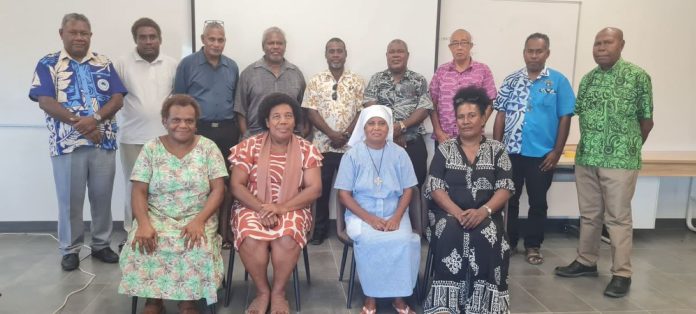
The four health professional scholars are: Abana Abraham Kwalagau (Senior Medical Laboratory Technician), Anica Havimei (Senior Medical Technologist), Nathan Junior Kama (Principle Medical Entomologist) and Nancy Ngarakana (Nutrition Officer).

They will be doing their training studies for three weeks, starting on June 15 and ending at July 3.

On completion each scholar will be awarded a completion certificate from the Manaaki New Zealand Scholarship Programme.

New Zealand is so proud to support leadership Development within Solomon Islands Public Sector through the Manaaki Scholarship programme, the high commission said.

For feedback, contact: [email protected]

Editor: [email protected]

SINU kicks off implementation of five-year strategic plan

0

BY JOSES SAREN

Solomon Islands National University (SINU) has begun rolling out its 2026–2030 Strategic Plan following a two-day implementation workshop for Heads of School and Corporate Support Services held at the Faculty of Education and Humanities, Panatina Campus, on June 16-17.

The workshop marks the first major step in putting into action the university’s strategic blueprint, which was officially launched on May 22 this year, a statement by SINU yesterday said.

Opening the workshop, Pro Vice-Chancellor Corporate Dr William Parairato told senior staff that they have a central role to drive the plan forward across all faculties, departments, and support units.

“You have a critical role to play in implementing the Strategic Plan, cascaded plans, departmental plans, and work plans,” Mr Parairato said.

He noted that participants and their respective offices will serve as focal points to monitor, evaluate, and report on progress, achievements, and challenges in collaboration with the university’s Institutional Planning Division.

Parairato also acknowledged the continued financial support of the Australian Department of Foreign Affairs and Trade (DFAT), which was represented at the workshop, and recognised IPD Advisor Dr Jeannette Baird for her contributions to the development of the strategic plan and its cascaded documents.

“Dr Baird has provided valuable guidance throughout the planning process and will continue to support us in strengthening monitoring, evaluation, learning, and performance measurement,” he said.

During the two days, participants worked through strategic priorities, monitoring and evaluation frameworks, key performance indicators, and approaches to aligning departmental work plans with institutional objectives.

Parairato urges participants to apply the knowledge and tools gained to ensure the university delivers on its long-term vision.

For feedback, contact: [email protected]

Editor: [email protected]

Women in Malaita plan to form labour union 

0

BY RODRICK DESURI 

Auki 

Malaita Province is seeking a way forward to form a labour union that will be responsible to voice issues and challenges faced by the workers in the province. 

At the closing of a two-day workshop in Auki, Malaita Province, on Wednesday, June 17, Freda Kofana said the union will stand as a legal body for workers in the province, and all the workers will be registered under this body. 

“We are thinking of forming a union that can raise issues faced by our workers, but how can we go about forming this union? Is there any possible way forward?” she asked.

In response, the Deputy Permanent Secretary of the Labour Division of the Ministry of Commerce, Labour, and Immigration, Damisulia O’ota, said it must be registered before it can become a legal body. 

He said there is an act under the trade union in place for the registration of any organisation.

He explained that the union must meet the required documents for registration, including a form from the Ministry of Infrastructure Development.

“We currently have an act, a law that comes under the trade union.

“So, before an organisation can be registered, it must meet all required documents, including a form from the Ministry of Infrastructure Development,” he said.

He said that after the union is fully registered, a copy of the registration must be given to the Labour Division, and the union must partner and affiliate with other unions in the country under one common body.

He said when a union is formed and any issues arise between the employers and the union, the Labour Division will remain neutral in the case.

“Reason why I am telling this is that when there is any issue arising between the union and the employer, we will always stay neutral and reluctant because the members are paying fees to the union.

“Also, this is because the union is registered under the Labour Division. So, when any issue arises, we will always be independent in the decision-making,” he said.

For feedback, contact: [email protected]

Editor: [email protected]

‘CEMA is changing 23 years of helplessness’

0

BY TONY IROGA

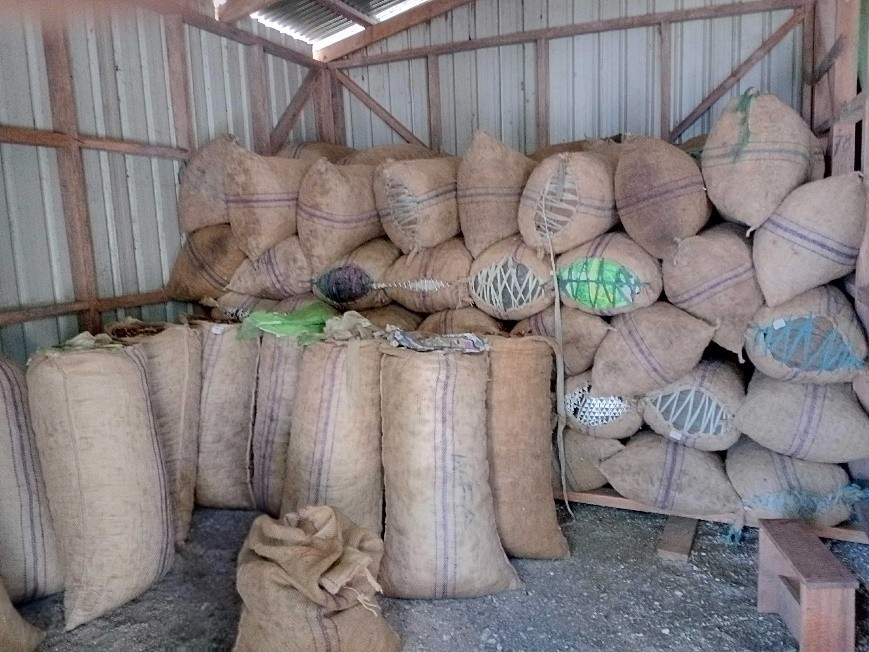
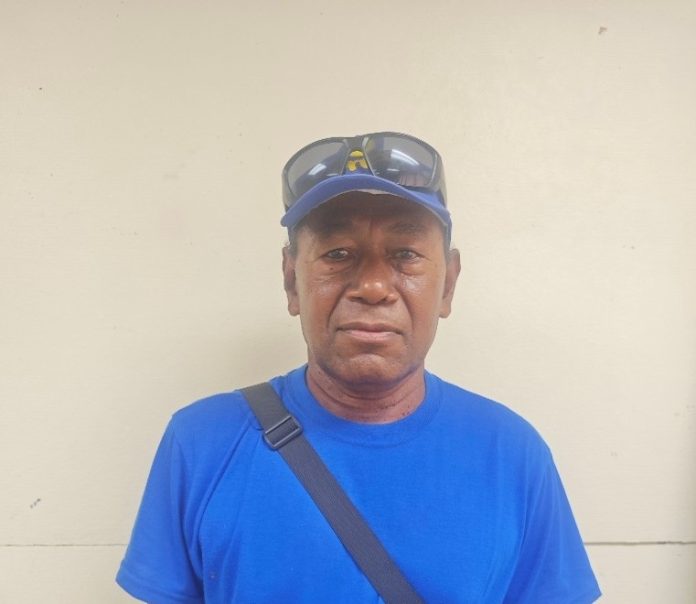
For twenty-three years, Milton Seuparo has bought copra from the farmers around his village on the southern coast of Vella la Vella, carrying it onward to a market he never had any real say in.

The price was always someone else’s decision — set by exporters, almost all of them foreign-owned, who Milton and his neighbours simply had to accept.

“For most of the years I have done this work, the price was never really ours to decide. The exporters set it, and we accepted it, because there was nowhere else to go,” Mr Seuparo, copra farmer and buyer from Lambu Lambu village, South Vellalavella, Western Province said.

Then, on March 30 this year, that price collapsed completely.

Buyers who had been receiving as much as six dollars a kilogram were suddenly offered as little as two dollars — in some cases barely $2.95 — a price that could not cover the labour behind it, let alone the cost of freight to market.

For Seuparo, and for farmers like him across the country, it was the kind of day that threatens to end a livelihood.

“When that price dropped all the way down to two dollars a kilogram, I genuinely did not know how some of the farmers around me were going to manage,” Seuparo said.

Enough was enough – CEMA takes on the exporters

Milton’s story, repeated in villages across Solomon Islands, was exactly the kind of moment CEMA’s leadership had committed to never letting pass unanswered.

Allowing exporters to push farmers to two dollars a kilogram — while CEMA stood by — was the precise opposite of what Farmers First was supposed to mean. So CEMA stepped directly into the fight.

While certain exporters were offering as little as $2.95 a kilogram, CEMA moved to hold a price built around six dollars a kilogramme — a price farmers could actually plan a season, and a life, around.

It was not a comfortable position to take, and it was not without resistance from exporters who had grown used to setting the rules of this market on their own terms. CEMA held the line anyway.

The results arrived quickly. Over the following ninety-nine days, farmers and local buyers who had never once sold to CEMA — people who, for their entire working lives, had known only exporters dictating prices — began bringing their copra to CEMA instead.

They did not need convincing. They came because, for the first time, they knew exactly what price they would be offered, and that it would be fair.

This was the latest chapter in a fight CEMA had been quietly building since 2025, when the Authority held only around six per cent of the national copra market.

That six percent was never the ceiling — it was the foundation CEMA used to prove, transaction by transaction, that a fairer and more competitive copra market was possible, one where exporters no longer held unchecked power to set prices at farmers’ expense.

For Milton, 99 days that finally felt different.

Milton was one of the farmers and buyers who, for the first time in over two decades, discovered there was somewhere else to go after all.

“I had never sold to CEMA before that. None of us in Lambu Lambu really had — we had always gone through the exporters because that was simply how things worked here. When CEMA offered a fair price during those difficult months, it was the first time in twenty-three years I felt like I actually had a choice in this business, instead of just accepting whatever I was given,” Seuparo said.

What happened to Milton was not an isolated stroke of luck. It was the same pattern playing out, village by village, in every part of the country where CEMA chose to hold its price against the exporters — farmers and buyers with decades of experience in this industry discovering, finally, that exporter pricing was not the only option left to them.

“What happened to people like me in those ninety-nine days was real. It was not a promise on paper — it was a fair price actually reaching our hands, at a time when the exporters had walked away from us. That difference is something I will not forget, and it is something I hope CEMA does not forget either, because farmers like me are still here, still hoping it continues,” Seuparo said.

Why CEMA chose to fight for this

CEMA’s reasoning is straightforward. The copra management fee exists to help revitalise Solomon Islands’ rural economy — the economy that the great majority of this country’s people actually live and work inside.

Applying that fee to copra exports allows CEMA to recover revenue that, for years, had stayed almost entirely on the exporters’ side of the ledger, and to return a fair share of it to the farmers whose labour created that value to begin with.

CEMA has never framed this as punishment for exporters, and it is not opposed to a healthy, profitable export trade.

What it will not accept is a trade where one side carries all the risk — the early mornings, the harvest, the drying, the freight — while the other side keeps nearly all the reward.

That imbalance is exactly what Milton lived through for twenty-three years. It is exactly what CEMA picked this fight to correct.

“Milton Seuparo spent twenty-three years accepting whatever price exporters were willing to give him. When that price collapsed to two dollars a kilogram, CEMA refused to look away. We held the line at six dollars, and within ninety-nine days, farmers and buyers from villages like Lambu Lambu were selling to CEMA for the very first time in their lives. That is what Farmers First means in practice — not a slogan, but a price held firm, at the exact moment farmers needed it most,” CEMA said.

Photo: supplied

For feedback, contact: [email protected]

Editor: [email protected]

Banned plastics seized in Honiara enforcement operation

0

BY TONY IROGA

The Waste Management and Pollution Control Unit within Environment and Conservation Division of Ministry of Environment has intensified efforts to enforce the nationwide ban on single-use plastics.

This comes with a two-day operation in Honiara which led to the confiscation of large quantities of banned plastic products from businesses across the city.

The enforcement exercise, carried out on Tuesday and Wednesday this week, targeted shops and business premises from the Korona Market area to White River.

During the operation, officers seized numerous rolls of plastic bags.

Speaking to Island Sun on Wednesday this week, the National Project Officer for the Waste Management and Pollution Control Unit, Joash Tuai, said the government’s ban on specific single-use plastics is now fully operational and actively enforced.

“The Solomon Islands nationwide ban on specific single-use plastic products is fully active and actively enforced,” he said.

The operation was conducted by a joint task force officers from the Environment and Conservation Division, Honiara City Council Law Enforcement Unit, Customs officer, Royal Solomon Islands Police Force, Solomon Islands Maritime Authority, and Solomon Islands Ports Authority.

Tuai said only a small number of businesses have been granted permits to use plastic products under strict conditions. These businesses include Meat Lovers, Bulk Shop and Super Power Company.

He explained that the permits, approved by ECD Director Josef Hurutarau, only allow the use of plastic for packaging and weighing goods.

“The plastic is not for selling purposes. It is only permitted for packaging goods and weighing products,” he said.

Under the Single-Use Plastic Ban Regulations, the importation, manufacture, sale and distribution of five categories of plastic products are prohibited.

 These include plastic shopping bags, plastic straws, polystyrene foam food containers, cups and plates, plastic cutlery and food containers, and PET plastic drinking bottles smaller than 1.5 litres.

Tuai said enforcement of the regulations is the responsibility of several government agencies, including Environment Office under the Environment Act 1998, Customs Office, the Royal Solomon Islands Police Force, Honiara City Council Enforcement Unit, and the Maritime and Ports authorities.

The Ministry of Environment, Climate Change, Disaster Management and Meteorology (MECDM) officially gazetted the regulations on September 1, 2023. Following a six-month grace period that allowed businesses to clear existing stock, full legal enforcement and penalties came into effect on March 2, 2024.

Tuai said the latest confiscation exercise forms part of the Ministry’s ongoing commitment to protect the environment and promote environmentally friendly alternatives.

“The purpose of confiscating these banned plastics is to create a safe, sustainable and resilient environment for all citizens through proactive policies and initiatives aimed at protecting the environment and supporting the development and use of environmentally friendly goods and services,” he said.

He urges businesses, members of the public and other stakeholders to support the regulations and comply with the law.

“We appeal for the support of the public, the private sector and all stakeholders to implement this regulation,” Tuai said.

He said the continued enforcement operations will be carried out to ensure compliance with the plastic ban and to reduce plastic pollution across the country.

Photo: Supplied

For feedback, contact: [email protected]

Editor: [email protected]

HCC demolishes Taliseh betel nut market

0

BY JOHN HOUANIHAU

Honiara City Council (HCC) Law Enforcement officers have demolished the Taliseh betel nut market area on Tuesday, this week.

HCC in a statement said the demolition exercise was carried out following complaints raised by residents living around the West Kola Ridge communities.

According to the HCC, the Director of Law Enforcement, Mr. Robert Madeo, said the market obstructed road access and had become a place associated with criminal activities.

Mr. Madeo explained that the action was undertaken to enhance public safety and security.

The HCC statement further adds that it is also to allow elderly people, women, men, and children to move freely and peacefully.

The statement said HCC is committed to maintain public order and ensure a safe environment for all city residents.

Photo: Supplied

For feedback, contact: [email protected]

Editor: [email protected]

‘Any government asset removal must be approved by relevant authorities’

0

BY RODRICK DESURI 

Auki 

The Malaita Provincial Minister of Fisheries strongly said that for any government asset to be removed, it must go through the proper relevant authorities. 

Jerry Hite, Malaita Provincial Assembly member for Raroisu’u ward, made this call after a group of men targeted the removal of the Fishery’s generator at the Afio Substation on Tuesday night, June 16. 

In his letter sent to the Malaita Provincial Permanent Secretary yesterday for close consideration of the issue, it stated that the generator was procured and commissioned to provide power for the ice-making machine and associated fisheries infrastructure owned and operated by the Malaita Provincial Government.

He said that any removal, transfer, or use of the generator for private fisheries centers, private fish markets, commercial enterprises, or other non-government operations must not be undertaken without proper approval from the relevant provincial authorities.

“As a government asset acquired for a designated public purpose, it is important that the generator remains dedicated to its intended function unless authorised by the government.

“For any removal, transfer, or use of the generator for private fisheries centers, private fish markets, commercial enterprises, or other non-government operations, proper approval from the relevant provincial authorities must be obtained,” the letter said.

He said the protection and responsible management of public assets are essential to ensure that government resources continue to serve the interests of the people of Malaita Province.

He appeals to the Permanent Secretary to safeguard the province’s assets and ensure that any decision to use the assets are made in accordance with established government policies, procedures, and approval processes.

For feedback, contact: [email protected]

Editor: [email protected]