Home Blog Page 61

Premier Sagupari calls for justice for Sosi

0

[Published on Saturday, 18 April 2026]

BY SAMIE WAIKORI

The Premier of Central Islands province, Kenneth Sagupari, is calling for justice following the tragic death of Benjamin Sosi, who was killed in a hit-and-run accident earlier this week at Burns Creek in Honiara.

The late Sosi, believed to be between 10 and 15 years old, was a form one student at Mercy School and hailed from Ngella in Central Islands province.

“I want justice to be served for this young soul. The person responsible must face the maximum penalty for this crime,” Premier Sagupari said.

He condemned the incident in the strongest terms and called on the relevant authorities to thoroughly investigate the matter and ensure those responsible are held accountable.

As the leader of the province the boy came from, Premier Sagupari said he shares the grief and pain of the family and relatives.

“This is a loss for the province. We have lost a young life that could have contributed to the future development of Central Islands province,” he said.

He added that the boy’s future had been cut short, along with the hopes and dreams his family had for him.

While reiterating his condemnation, the Premier also urged parents in Honiara to take extra care of their children.

“There are careless individuals whose actions can lead to tragedies like this,” he said.

He further called on youths from Central Islands province living in Honiara to act responsibly while living among people from diverse cultural backgrounds.

Premier Sagupari urged everyone to take greater care and ensure that such a tragedy is not repeated.

He reiterated his call for justice, stating that those responsible for the young boy’s death must face the full force of the law.

For feedback, contact: [email protected]

Editor: [email protected]

CEMA says ‘farmers first’, exporters say ‘you’re running us out of business’

0

[Published on Saturday, 18 April 2026]

BY IRWIN ANGIKI

A number of copra farmers have come out supporting the new management fee introduced by the Commodities Export and Marketing Authority (CEMA) on buying prices.

The new fees introduced on March 17 this year was initially met with criticism by farmers and small buyers. Major copra and cocoa exporters said it would ‘put them out of business’.

From the market buying price of $6 per kilogramme, the new fee was $3.05 per kg ($3,051 per tonne) for copra exports.

Deputy Prime Minister and acting minister of Commerce, Manasseh Sogavare announced on March 23 a review of the new fees.

CEMA has explained that the new fee was targeted at exporters who were making ‘huge profits’ from the industry at the back of the hardworking farmers, who were earning marginally less.

CEMA also said the fees would go towards its plan to buy a landing craft which it would use to go around the country directly to the cocoa and copra farmers and buy their products where ever they are.

The authority argued that the new fees underscores its motto of ‘Farmers First’ which guides its activities and programmes.

However, exporters in turn dropped their buying price to $2.95 per kg, some as low as $2, to cater for this new fee.

Farmers who are selling their copra to CEMA say this action by the exporters is best described as shirking the obligation to pay the new fee and throwing it on the farmers by reducing their buying prices.

“By reducing their buying prices from $6 to $2.95 or less, the exporters are transferring the burden of the new management fees onto the farmers,” a group of copra farmers told Island Sun on Saturday, April 11.

“The exporters should just shoulder the cost of CEMA’s new management fees and continue buying our copra at $6,” the farmers said.

Turning to CEMA

Ataban Tonezepo, 40, a copra farmer and buyer since 2012, said he was struck at first when the new fees were introduced.

“The exporter I sold my copra to told me their new buying price was $2.95 because of the new fee. I was not aware of the new fee and I negotiated for them to buy my copra for the old $6 per kg rate. To which they agreed. But, the next time I was told I was going to have to sell my copra to them at $2.90 per kg because they were no longer buying at $6 per kg. They blamed CEMA for this price drop.

“I wanted to find out for myself so I went to CEMA for an explanation. CEMA explained to me the truth, and then offered to buy my copra at $6 per kg.

“This is what the exporters should do, like CEMA, buy our copra at $6 and pay CEMA their $3.05 management fee,” Mr Tonezepo said.

He encouraged other copra farmers to sell to CEMA.

Another farmer from West Guadalcanal, Kevin, shared similar experience.

“I sold my copra to the exporters but ran losses and very small profit due to transportation, accommodation and labour costs. But then I came to CEMA and learnt the truth from them, I now make good profit selling my copra to CEMA,” he said.

Downside of exporters CEMA aims to address

CEMA said with the new management fee it was planning to purchase a landing craft to allow it to go to the farmers in the provinces and buy their copra where they are located.

This should help remove costs of transporting copra to the capital, Honiara, meeting accommodations while transiting in the capital, and reduce labour costs.

The new management fee would also go towards purchase of copra bags to distribute free-of-charge to copra farmers, CEMA said.

Exporters sell and make profit from copra bags, CEMA told Island Sun.

Tonezepo said he looks forward to CEMA realising its vision to have a landing craft and also free distribution of copra bags to farmers and buyers.

CEMA also adds it is proposing a minimum fee of $4.50 per kg for copra buyers and exporters, to coax them not to totally transfer the weight of the management fee onto the farmers.

Exporters are important in the industry: CEMA

CEMA says it sees exporters as vital players in the copra industry in Solomon Islands.

“We need exporters. They are very important just as the farmers are. But the gap between profits has to be narrowed.

“And we encourage and tell exporters to come and discuss with us their challenges with the new management fees so that we can come up with a win-win arrangement. But this has to be done on an individual basis because each exporter faces situations different to others,” CEMA said.

CEMA told Island Sun since the new management fees were introduced, no exporter has approached the authority for dialogue.

Exporters hit back

Exporters who spoke with Island Sun describe the new management fee as ‘killing copra’ in Solomon Islands.

A senior worker of one of the major copra exporters of the country, speaking to Island Sun under condition of anonymity due to not having official authority to speak on behalf of the company, dismissed the idea of exporters making huge profits.

“Copra exporters pay a lot of fees and licences. We used to pay $50 per tonne, now it’s $3,051 per tonne thanks to CEMA’s new management fee. We pay an export licence, sampling requests, and Customs declarations. Our operational costs and storage costs are huge, a lot of fees and charges. Then there are the shipping and logistics costs, cost, insurance and freight costs,” the exporter said.

The exporter adds that it is false to say that exporters do not go to the provinces to buy copra from the farmers.

“We do have buying centres in the provincial capitals which are also an expense to operate and manage,” the exporter said.

Solomon Islands Commodities Private Ltd (SICPL) told Island Sun yesterday that due to CEMA’s new management fee, farmers are turning away from them.

“One week we have not bought any copra although we are buying at $3 per kg. No copra. Our price is uncompetitive. CEMA are paying higher so any copra are going for CEMA.

“It’s a going to be a disaster. We cannot offer competition for farmers to get the best price. That’s what we’re worried about, we’re worried about our customers. It’s a bigger problem,” Dave, manager of SI Copra, told Island Sun in an interview yesterday.

John from C-Corp Solomon Islands shared the same sentiments.

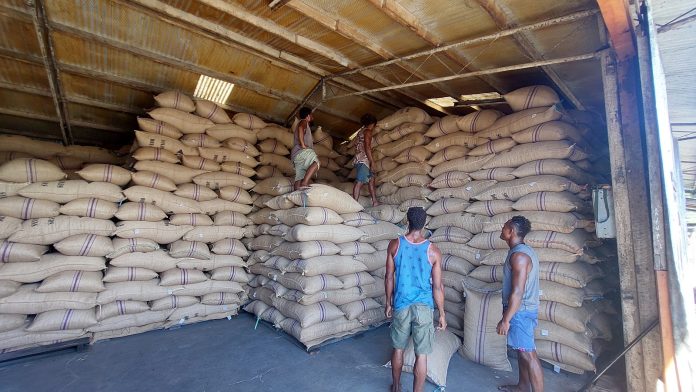
“Our copra warehouse is stacked to the roof with thousands of fully packed copra bags which we cannot export because we are running at a huge loss. So, the commodity is just stocked there awaiting any time when the prices are returned to sensible rates,” John told Island Sun.

He adds that CEMA’s new fee is impacting all stakeholders of the copra industry.

“Farmers are losing money, ship owners are losing money, boat owners are losing money, basically everyone involved in the process of this commodity are losing out, and only CEMA stands to gain.”

A visit to the C-Corp warehouse yesterday saw roof-high stacks of copra, sitting waiting for when they could be sold.

Photo credit: Irwin Angiki

For feedback, contact: [email protected]

Editor: [email protected]

Court of Appeal ‘resentenced’ a man found guilty of ‘compelled rape’ to 24 years imprisonment

0

[Published on Saturday, 18 April 2026]

BY MELVILLE TITIULU

The Court of Appeal on Monday, April 13, resentenced a man found guilty of ‘compelled rape’ to 24 years imprisonment.

The appellant was initially sentenced to 17 years imprisonment by the High Court in 2024 after he was convicted of two counts in relation to compelled rape contrary to section 136 G (a) and (b) of Penal Code (amendment) (Sexual offences) Act 2016.

According to the agreed facts, on the 19th November 2023, the appellant confronted the two complainants, a young couple. The appellant threatened them with a pair of scissors, saying that they must follow what he tells them to do or he would kill them. This threat of violence compelled them to engage in sexual acts as directed. The appellant later ‘degraded and humiliated’ them by recording those acts and later disseminating the videos on social media.

The appeal Justices noted in their judgement that the victim’s humiliation was not confined to the scene of the offence but perpetuated by the public exposure of the recordings through online dissemination.

The respondent pleaded guilty to the charges. He appealed that sentence of 17 years, contending that he should be given a lesser sentence. The hearing into the appeal was heard on 7th April 2025.

The Court of appeal Justices noted that ‘’A lawful, proportionate, and just sentence in the circumstances of this case would be in the range of 20 to 30 years imprisonment’’.

It follows, the Appeal Justices also noted that the further ‘aggravating residual factors’ could uplift the initial sentencing. These included: ‘’the viral dissemination of the video recording of the sexual acts and the identities of the victims clearly depicted the lifelong trauma that the victim have been put through and having to undergo professional counselling’’.

The complainant therefore had to undergo a medical examination at the National Referral Hospital and was further referred for professional counselling at the Family Support Centre.

The appeal justices were of the view that the proper starting point is one of 20 years with a further uplift of 10 years for the mentioned residual aggravating factors. Thus, dismissed the appellant appeal and resentenced him to 24 years imprisonment

The Court of Appeal Justices also recommended the Parliament to pass legislation to criminalise ‘cyber-enabled sexual exploitation’ in Solomon Islands with the need to introduce cybercrime and sexual exploitation legislations to help regulate this sort of offending in the country.

The Court of Appeal Justices include Sir John Baptist Muria, Justice Les Gavara-Nanu and Justice Howard Lowry.

For feedback, contact: [email protected]

Editor: [email protected]

Court of Appeal ‘resentenced’ a man to 9 years imprisonment for Rape

0

[Published on Saturday, 18 April 2026]

BY MELVILLE TITIULU

The Court of Appeal on Monday, April 13, resentenced a 25-year-old man found guilty of raping his 16-year-old cousin to nine (9) years imprisonment.

The uplift of the sentence comes after the Office of the Director of the Public Prosecutions (DPP) appealed against the sentence of 6 years as imposed on the respondent by the High Court. The DPP contends that the initial sentence imposed was inadequate. 

According to the agreed facts, it stated that in the early hours of December, 27, 2024, between 3:00 am and 5:00 am, the complainant was asleep in her bedroom at her family room. The respondent sought to gain entry while she was sleeping. This woke her up. The complainant initially thought it was her mother and unlocked the door. She then returned to her bed and when she realised it was not her mother, she tried to get up. The respondent grabbed her and raped her. The complainant’s father intervened and kicked the respondent who fled naked from the house.

The respondent was later charged with one count of Rape contrary to section 136 F (1) (a) of the Penal Code (Cap 26), as amended by the Penal Code (Amendment) (sexual offences) Act 2016. He was initially found guilty and sentenced to six (6) years’ imprisonment at the High Court.

However, the appeal Justices noted that: ‘’we accept the appellant’s submission that the sentencing judge erred by failing to quantify the uplift for aggravating factors before applying deductions for mitigation’’. Thus, the initial sentence does not reflect the gravity of the offence of rape for it does not adhere to sentencing guidelines.

The three appeal justices noted in their judgment that the offence was aggravated by several significant factors. Firstly, breach of trust where the respondent as the victim’s cousin had a customary duty to protect her.

Secondly, the premeditation involved where the respondent planned the offence, waiting until the victim was asleep before entering the room.

Thirdly, location and timing, in the context where the offence occurred at night in the victim’s home, a place where she was entitled to feel safe.

Fourthly, the psychological harm involved whereby the offence caused significant trauma and humiliation to a vulnerable 16-year-old victim.

Lastly, the age disparity in the sense that the 25-year-old respondent exploited the 16-year-old victim, exacerbating the power imbalance.

The Appeal Justices further deducted 3 years to reflect the respondent’s early guilty plea, his status as a first-time offender, and the customary reconciliation undertaken between the families. Consequently, the appeal by the DPP was allowed with the sentence of 6 years’ imprisonment quashed and substituted with a sentence of 9 years’ imprisonment.

The order of the court also noted that the respondent’s time spent in pretrial custody shall be deducted.

The Court of Appeal Justices include Sir John Baptist Muria, Justice Les Gavara-Nanu and Chief Justice Sir Albert Palmer.

For feedback, contact: [email protected]

Editor: [email protected]

Luxury Cruise visit boosts cultural tourism in Malaita

0

[Published on Saturday, 18 April 2026]

BY JUNELYN KELLY

A luxury expedition cruise ship, Hanseatic Inspiration, visited Langa Langa Lagoon in Malaita Province this week, bringing international tourists to experience local culture firsthand.

Speaking to Island Sun, Mr Bernard Dakero said the vessel carried about 180 passengers, mostly from Germany and Switzerland, as part of a cultural exploration voyage aimed at promoting immersive tourism experiences.

Dakero said during the visit, tourists landed in Busu and nearby coastal communities, where they participated in a range of traditional activities organised by Authentic Malaita Tours.

Activities included demonstrations of shell money making, traditional bridal gift ceremonies, and artificial island building—an indigenous engineering practice unique to parts of Malaita.

Visitors also took part in hands-on food preparation, learning local cooking techniques, while cultural showcases featured baru carving and face tattooing.

Traditional performances such as panpipe, Mao and Afai dances entertained the visitors, highlighting Malaita’s rich storytelling, music and cultural heritage.

Dakero said community leaders welcomed the visit, saying it plays an important role in preserving culture while creating economic opportunities for local people.

The tour marks the revival of cultural cruise visits to Malaita, which were suspended in 2020 due to the COVID-19 pandemic.

The return of such voyages reflects a growing trend in small-scale expedition cruising focused on meaningful, low-impact tourism that connects travelers with remote communities.

Passengers are expected to leave with a deeper appreciation of Malaita’s unique traditions and way of life.

Photo credit: Bernard Dakero

For feedback, contact: [email protected]

Editor: [email protected]

Solomon Water and PISI hand over WASH facilities to 3 Honiara schools

0

[Published on Saturday, 18 April 2026]

BY JUNELYN KELLYN

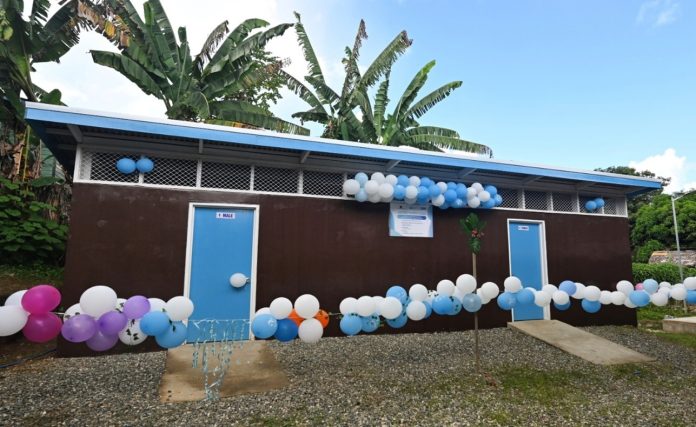
Solomon Water and Plan International Solomon Islands, (PISI) officially handed over Water, Sanitation and Hygiene (WASH) facilities to three schools in Honiara this week.

A press statement from Solomon Water on Thursday, 16 April said the completion of these WASH facilities marks an important milestone in improving WASH services for students and school communities in Honiara and the successful implementation of infrastructures works components under Urban Water Supply and Sanitation Sector Project (UWSSP)-WASH in Schools Project.

The recipient schools are Global Harvest Christian Academy, Mt Horeb School and Emmaus School.

The statement said the schools took ownership of their WASH facilities on Tuesday 14, Wednesday 15 and Thursday 16 April, 2026 respectively.

The handover ceremonies were officiated by WASH in School Project Manager Mr. Henson Makoani, ADB Country Director Mr. Anthony Gill, Honiara City Education Providers Inspector Mr. Elvis Kikolo, World Bank Representatives and Solomon Water National WASH officer, Ms. Georgina Hou.

Solomon Water said infrastructure works included the construction of new ablution blocks, renovation of existing facilities and extension of existing ablution blocks.

“At Global Harvest Christian Academy, the infrastructure components include renovation works on existing WASH facilities, demolition of damaged structures, structural and plumbing repairs, installation of new toilet units, water supply improvements, roofing and ceiling works, and finishing works such as tiling and painting. The upgrades were undertaken to restore sanitation services, improve access to water and handwashing,” said Solomon Water.

Meanwhile, at Mt Horeb School the infrastructure components included extension and renovation of existing ablution blocks, providing improved sanitation facilities for approximately 400 students while infrastructure work components at Emmaus Christian School included newly constructed ablution facilities for boys with additional shower facility for girls.

Alice Hiro, Emmaus School Principal of the Primary Section and Chairperson of the school’s WASH Committee acknowledged the partnership between the Solomon Islands government, ADB, World Bank, Solomon Water and key stakeholders for recognising the need to improve WASH in schools.

In her remarks, she highlighted the importance of maintaining the new facilities and assures that they will utilise the WASH facilities to good use.

“We will work with our children and encourage them to look after the facilities for the benefit of many more students to come,” she said.

Solomon Water said the UWSSSP WASH in Schools component is funded by the Asian Development Bank (ADB) in collaboration with the Government of Solomon Islands, Ministry of Education, Plan International Solomon Islands, Live & Learn, Honiara City Council, and Solomon Water.

The statement said Solomon Water remains committed to supporting initiatives that improve water and sanitation services and contribute to the wellbeing of communities and future generations.

Also noted is that two schools that have already received WASH facilities are St Mary Tanagai School and Naha Community High School.

“The WASH in Schools components covers 11 schools in Honiara: St Mary Tanagai, Norman Palmer, White River, Global Harvest, Zion, Mt Horeb, Emmaus, Sharma, Illia, Lau Valley and Naha Community High School,” Solomon Water said.

Photo credit: SIWA

For feedback, contact: [email protected]

Editor: [email protected]
Education is about nurturing the values

0

[Published on Saturday, 18 April 2026]

BY JOHN HOUANIHAU

Education is not only about systems and structures, it is about shaping perspectives, preserving memory and nurturing the values that sustain a society.

Tozen Leokana, Minister for Education and Human Resources Development (MEHRD) said this when he delivered his speech during the launching of Chancellor of SINU Dr. Nathan Kumamusa Kere ‘Village Boy Knight’ Autobiography.

Speaking during the launch at the SINU Marine school campus in Honiara on Monday this week, Leokana said that there is an increasing need to ensure that the country’s development pathway remains grounded in its own realities, culture, histories and way of understanding the world.

“Education in its fullest sense is not only about systems and structures, it is about shaping perspectives, preserving memory and nurturing the values that sustain a society. In a rapidly changing world, there is an increasing need to ensure that our development pathway remains grounded in our own realities, our culture, our histories and our way of understanding the world,” he said.

He said that Dr Kere’s autobiography speaks on the importance of maintaining continuity between past and present and of ensuring that the country’s progress does not come at the expense of its identity.

“To Sir Dr Nathan Carey, I wish to extend my sincere congratulations. Your story is not only going to record an achievement but it will become a living or national resource for our country. It offers insight, inspiration and guidance, particularly for those who will carry forward the responsibility of leadership in years ahead,” Leokana said.

He also reaffirmed the government’s commitment to strengthen education systems, support research and promote the preservation of the country’s culture and intellectual heritage.

“We will continue to work together or we will continue to work alongside the institutions such as SINU and our international partners to ensure that development in Solomon Islands remains both inclusive and grounded in our values,” Leokana said.

For feedback, contact: [email protected]

Editor: [email protected]

SINU students visit parliament to gain insight into legislative processes

0

[Published on Saturday, 18 April 2026]

BY SAMIE WAIKORI

The National Parliament of Solomon Islands (NPSI) this week hosted final-year students from the Environment Diploma Programme at the Solomon Islands National University (SINU).

The visit formed part of the students’ academic programme which aims to enhance their understanding of parliamentary governance and procedures.

In a statement, NPSI said the visit provided students with a valuable opportunity to observe firsthand how Parliament operates, including the processes through which laws are introduced, debated, and passed.

Acting Civic Education Manager, Mr Young Virivolomo, welcomed the group and delivered an informative presentation outlining the roles and functions of Parliament, as well as the responsibilities of Members of Parliament in representing their constituencies.

During the visit, students toured key areas within Parliament, including the chamber, and were guided through the processes that underpin the country’s democratic system.

For many students, this was their first time to visit Parliament, offering a unique opportunity to gain direct insight into the work of the nation’s highest law-making institution and to reflect on issues of governance and leadership.

Lecturer accompanying the students, Mr Bryan Tata, emphasised the importance of such educational visits in complementing classroom learning.

He noted that exposure to national institutions enables students to develop a broader appreciation of how governance systems operate and the role citizens play in a democracy.

Virivolomo commended the students for their interest and active engagement, encouraging them to continue learning about national institutions and their role in shaping the country’s future.

The students also expressed appreciation for the opportunity to better understand the work of Parliament and its significance in the governance of Solomon Islands.

Meanwhile, the Office of the Parliamentary Opposition Group recently conducted similar public talks in schools across Honiara.

The programme forms part of the Opposition’s civic awareness initiative that aims to enhance public understanding of the role of the Opposition, as well as parliamentary processes.

During recent engagements, Opposition Leader Matthew Wale and his team held sessions with students on the role of the Opposition, key policies of the Solomon Islands Democratic Party (SIDP), an overview of parliamentary processes, and how students can engage with the Opposition Office on national issues affecting them.

For feedback, contact: [email protected]

Editor: [email protected]

Premiers conclude second quarterly meeting for 2026 in Honiara

0

[Published on Saturday, 18 April 2026]

BY SAMIE WAIKORI

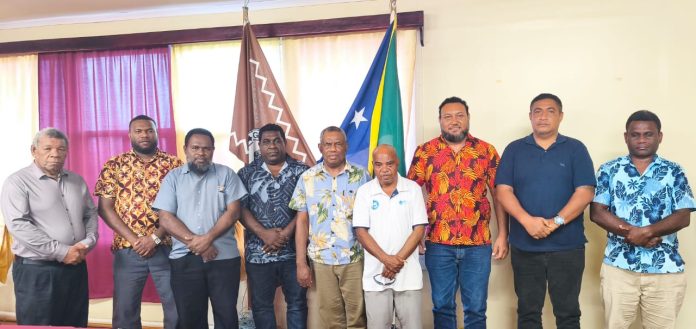
Nine provincial premiers of Solomon Islands successfully concluded their Second Quarterly Meeting for 2026, held on Tuesday and Wednesday this week in Honiara.

The meeting focused on key agenda items, including the review of the Provincial Government Act 1997 (PGA) and the Provincial Assembly Members Salaries and Allowances Determination (PAMSAD).

Other important issues reflecting the collective efforts and priorities of the provinces were also discussed.

In a joint statement, the premiers said their first joint submission for the review of the PGA 1997 and PAMSAD was made in August 2025.

A follow-up to the submission was carried out during their first quarterly meeting in January 2026, when the premiers paid courtesy visits to the Ministry of Provincial Government and Institutional Strengthening (MPGIS) and the Prime Minister’s Office (PMO).

The premiers are advocating for a review of the PGA 1997 to reflect current realities and strengthen provincial governance.

Similarly, they are also seeking improvements to the PAMSAD to enhance its effectiveness and ensure that the roles and responsibilities of provincial assembly members are fully recognised, as mandated leaders working closely with communities and managing resources for the development of all provinces and Solomon Islands as a whole.

As part of this week’s program, the premiers paid courtesy visits to the PMO and MPGIS on Wednesday and Thursday.

A key purpose of these meetings was to seek a formal response to their August 2025 submissions, as they are yet to receive feedback from the national government.

The meetings also provided an opportunity for the premiers to raise other provincial matters requiring the attention of the national government.

“As a second-tier government, we remain committed to working together and with the national government to advance reforms that directly benefit our people.

“We acknowledge the support of our communities, chiefs, churches, and partners as we carry out our mandates,” the premiers said in the statement.

A total of eight provincial premiers and one deputy premier attended the two-day Second Quarterly Meeting for 2026 in Honiara.

Photo credit: Premier Kenneth Sagupari

For feedback, contact: [email protected]

Editor: [email protected]
Dr. Boara leads medical team to Simbo

0

[Published on Saturday, 18 April 2026]

BY BEN BILUA

Gizo

THE Director of Western Province’s Health and Medical Services, Dickson Boara, has led his first medical team deployment to Simbo Island as part of the ongoing disaster response.

In an interview with Island Sun, Dr. Boara said the health sector has developed a response strategy under the Provincial Disaster Operation Committee to address urgent medical needs in cyclone-affected communities.

He said the priority is to assist areas where health clinics were destroyed or severely damaged.

“The first team is now deployed to Simbo, the second team will deploy to Iriqila in North Vella, and the third team will deploy to Ugele in Rendova Island.

“Ranongga is also on the list, but deployment will take place once it is safe for the team to access some of the affected areas,” Boara said.

Boara explained that the teams will be stationed in key locations and conduct outreach visits to surrounding communities, depending on the severity of the damage.

“Our team will be stationed and will visit all communities based on the level of impact,” he said.

Boara said medical services to be provided include general health consultations, antenatal care, and public awareness on potential health risks following the disaster.

He added that Water, Sanitation and Hygiene (WASH) teams will accompany the medical teams to assist communities that have lost access to clean water supplies.

Boara calls on affected communities to cooperate with health teams to ensure the recovery process is carried out effectively and efficiently.

“Communities must work together with our teams so that recovery efforts can run smoothly,” he said.

For feedback, contact: [email protected]

Editor: [email protected]