Home Blog Page 526

CUCUMBER POLICY PENDING

0
Sea cucumber. Photo supplied.

Sea cucumber policy soon to be implemented

BY JOHN HOUANIHAU

The Ministry of Fisheries and Marine Resources (MFMR) has developed a comprehensive sea cucumber fishery management policy to be implemented soon.

Minister Nestor Ghiro said during the three-day Melanesia Sea cucumber dialogue held in Honiara last week.

Ghiro said that the Government, through the Ministry of Fisheries and Marine Resources (MFMR) has committed to the sustainable management of marine resources.

“Our sea cucumber fisheries, a valuable asset to our economy and marine biodiversity, have faced challenges due to overexploitation. Recognizing this, we have implemented several key initiatives to ensure their recovery and long-term sustainability,’’ said Minister Ghiro.

He said that one of the flagship programs has been the restocking of sea cucumbers which involves transferring hatchery-raised juvenile sea cucumbers to open reef systems.

He said that this program aims to replenish depleted wild stocks and provides valuable data for planning large-scale breeding and management efforts across the country.

“In addition to restocking, the Ministry has developed a comprehensive sea cucumber fishery management policy, set to be implemented soon. This policy is designed to address the current overexploitation by introducing measures such as controlled harvest seasons,’’ he said.

“We are also dedicated to enhancing our data collection and monitoring systems to inform better management decisions. The (MFMR) is actively engaging with local communities, stakeholders, and regional partners to ensure that our management practices are both effective and inclusive,’’ said Ghiro.

Minster Ghiro also highlighted the importance of the dialogue as an excellent opportunity to identify opportunities for policy development.

“By sharing data, information, and best practices, we can empower each other to manage sea cucumber fisheries at the community level effectively. I am told that a significant goal of this dialogue is to gather insights that will contribute to revising the MSG Roadmap for Sustainable Inshore Fisheries 2015-2024. This roadmap emphasizes the importance of sea cucumber management and restoration, aiming to maximize long-term economic value and ecological sustainability,’’ he said.

“The (MFMR) is proud to partner with the USAID OurFish OurFuture project and WWF. We recognize the investment made by the United States Government through activities such as this. Together, we can pave the way for a sustainable and prosperous future for our sea cucumber fisheries and our communities,’’ he said.

The goal of the 3-day Melanesia Sea Cucumber Dialogue is to gather information, best practices and potential input to the review of the MSG Roadmap for sustainable inshore fisheries 2015-2024, which is supported by the USAID project.

The objective is to share successes and challenges in managing sea cucumbers in the Pacific region, identify opportunities to develop or expand on regional, national, and local policies, build a Community of Practice to share data, information, and best practices across countries and engaging stakeholders at local, national, and regional levels to identify solutions to improve and empower the management of sea cucumbers at the community scale.

Community governance regime program of MUP questioned

0
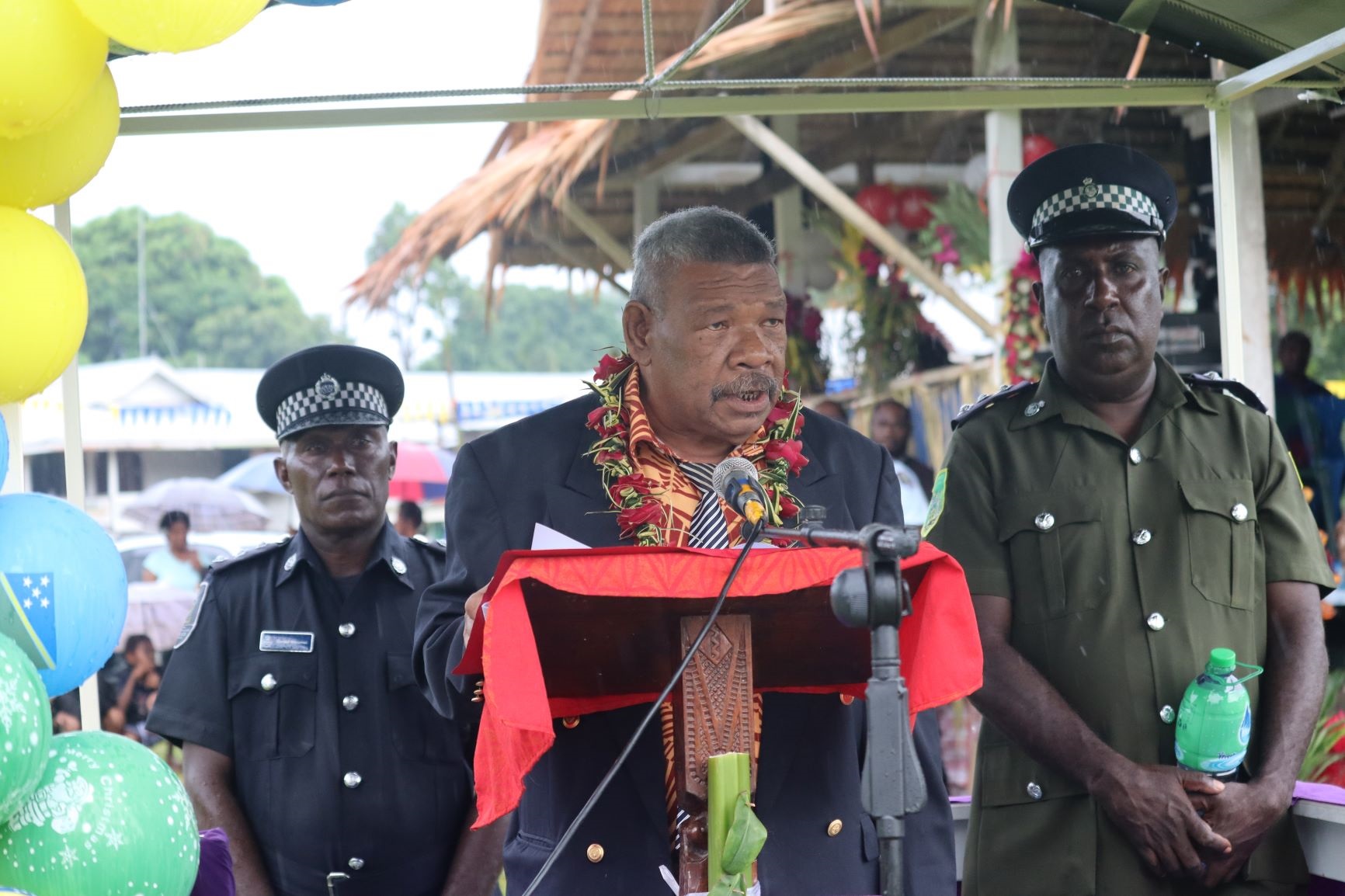
Premier Stanley Siapu delivered his speech during the recent celebrations Makira /Ulawa province second appointed day.Photo supplied.

BY SAMIE WAIKORI

Premier of Makira Ulawa province calls on the GNUT government to update the province on the Community Governance Regime, a program established by the Makira Ulawa province back in 2006.

The program came following a gap identified in the Provincial Government Act that there is a distance between the act and the traditional governance.

Premier of Makira Ulawa province, Hon Stanley Siapu said in 2006, the then government saw a gap in governance linkage with the then Area Council abolished by the PGA 1997, leaving rural people distanced from government immediate attention and focus.

He said in 2006, the formation and introduction of a traditional governance the Community Governance Regime established in all the twenty (20) wards in Makira Ulawa province.

Siapu said it was endorsed by the ministry of provincial government and blessed by the national government by way of the presence of then prime minister Hon Manasseh Sogavare.

However, he said that to this day the national government is yet to support and resource the regime.

“If we care to refer to our national constitution, somewhere there, it provides for and recognizes traditional leadership in governance.

“Now, it is also within the scope of national intentions hence the establishment of the Ministry of Traditional Governance and Ecclesiastical Affairs.

“Somewhere there on the shelves, the Traditional Governance Bill is awaiting and I hope it-re table in Parliament.

“High on the agenda of our much-awaited federal state government, is a community government structure similar to what we have now.

“So, looking at the Kakamora perspective, I think we have not erred nor misled any one on all these doings.

“We can now ask ourselves “what have we achieved, accomplished in the last 41 years?” Siapu asked.

Siapu outlines some of the initiatives his gov’t is pursuing for MUP

0
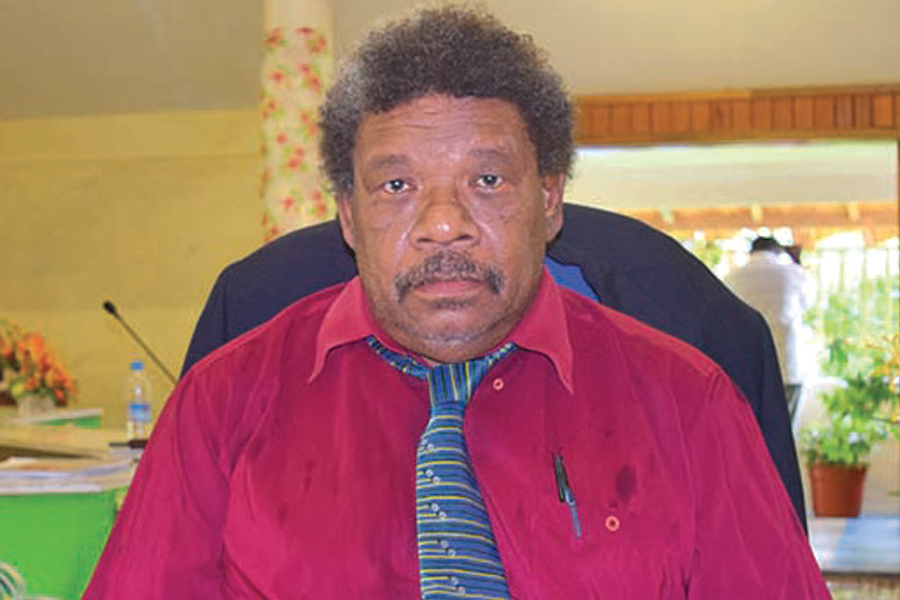
Premier of Makira Ulawa Province Stanley Siapu.

BY SAMIE WAIKORI

The Siapu led People’s Alliance for Change, Reform and Advancement (PACRA) provincial government off Makira Ulawa province outlines some of the initiatives they will undertake for the progress of the province.

Speaking during the province’s 2nd Appointed Day celebration at Kirakira last week, he said his government is working on number of areas to achieve the development aspirations of the people and the province of Makira Ulawa province.

He said one area his government is working on is to re-establish the province’s 3rd tier governance system.

Siapu explained that this is the people’s government that will directly involve people’s participation in the province’s governance, let alone development aspirations.

He said MUPG only owned 2.2% of the provinces land mass, leaving 97.8% in customary ownership, and in a layman’s perspective, development initiatives and projects belongs to and own by the Makira Ulawa people.

Therefore, he said that central to any rural based development are the people and PACRA government to uphold the philosophy.

Siapu said the PACRA government also believe in trying other alternative ways to boost advancement and progress of the province.

He said with that the provincial executive will soon deliberate on sister -sister province relationship as an alternative way to encourage economic and social exchanges and involvement.

Siapu said his government believed in private sector to drive the provinces production sector and is committed to assist.

He said these areas include; fisheries, agriculture, livestock and tourism as the backbone of the province’s economy, sectoral policies and ordinances to support which will address later.

Siapu said that going forward for his government, the PACRA policy document is completed and ready for launching.

He said his executive is now working on aligning it policy with the national GNUT policy direction before they could do so.

Siapu on that appealed to MP Manele, who presented as guest of honour to the celebration for a courtesy call by his government to the national government.

He said this will include; ministers and their respective ministries, diplomatic offices and other appropriate partners and stakeholders hopefully straight after the celebration.

Siapu said high on the agenda will be a mutually agreed communique highlighting the immediate priority program and projects for Makira Ulawa province.

Managing sea cucumber needs collective action

0
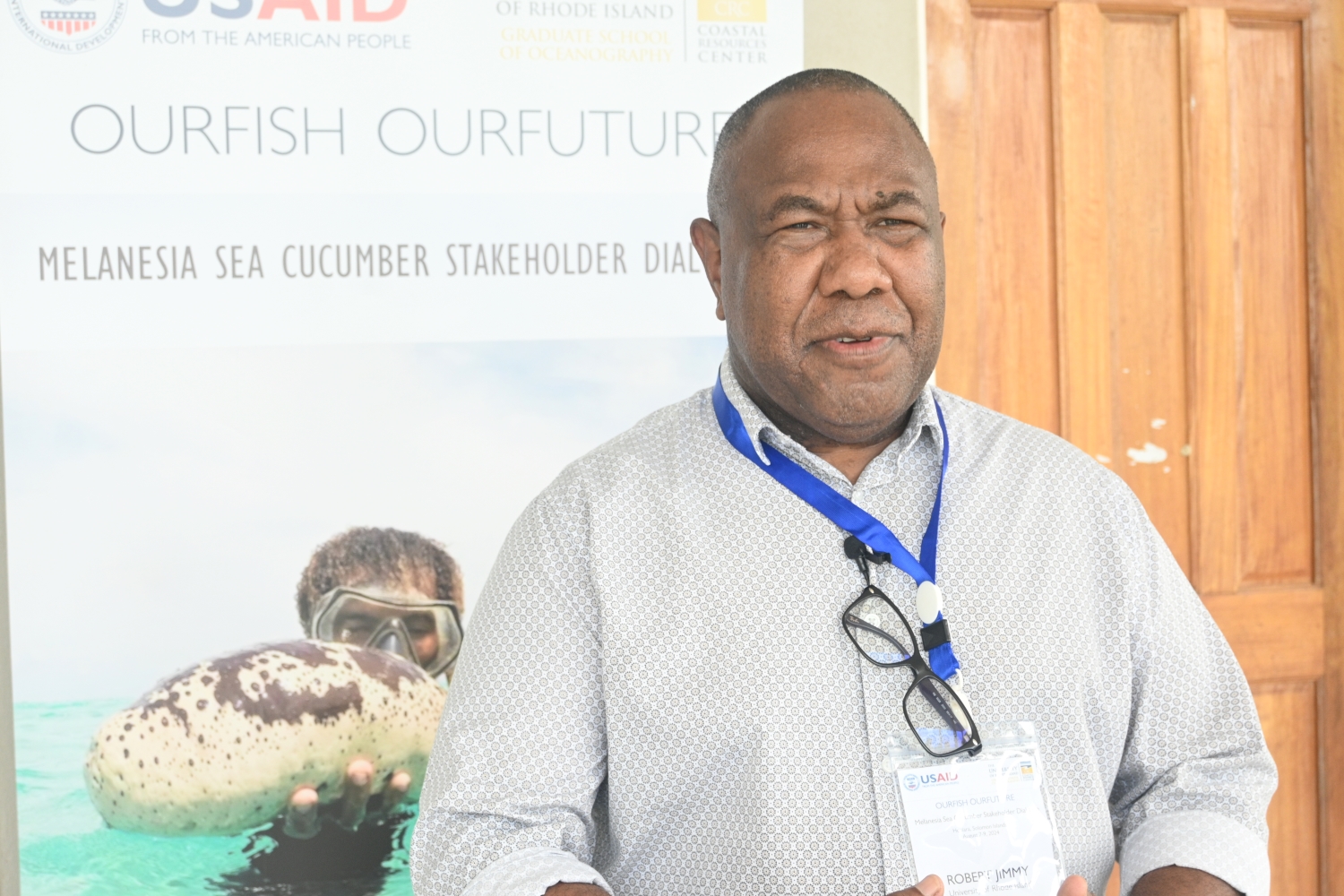
Deputy Chief of Party Senior Regional Fisheries Adviser, Robert Jimmy.

BY JOHN HOUANIHAU

Sea cucumber is the second most important marine resource in the Pacific, especially for Melanesia said Robert Jimmy, Chief of Party for the OurFish OurFuture Project.

He said that while sea cucumber is a significant resource that supports livelihood across the Pacific it is also faced with a lot of challenges in effectively managing it.

“We feel that it is a complicated resource to manage, so I think approaching it from a sub-regional perspective, I think it is perhaps the way to go because sea cucumber resources feature very strongly under the current Melanesian Spearhead Group Indo-Fisheries Roadmap.

“The issue of compliance is another area that is of concern, and the different prices and how much each community and each country gets out of sea cucumber resources varies between the Melanesian countries.

“So, we are looking at a common approach to try and get that dialogue happening and get countries to start sharing information to collectively manage this resource,’’ Jimmy said in an interview during last week’s Melanesia Sea Cucumber Dialogue aimed to help guide the policy directions to better manage sea cucumbers in the Pacific Island countries.

He said that it also requires countries to consult with their governments to get political support.

“It is quite an area that covers a wide range of communities, involvement, and engagements, and an area that is also politically sensitive. Because we feel, at the end of the day, that the communities need to get a better benefit out of the resource,’’ he said.

“In terms of moving forward with any incentive, there is a need for political will, and that political will need to be driven by each of the countries, for the technical people to voice that, to take those mechanisms through the national mechanisms, so that at the end of the day it can help provide regional guidance to regional institutions that would help provide technical support to the countries.

“We have the population, we have the resources, it is the Pacific’s most diverse region, and looking at the way forward for Sea cucumber, we need to address it on a sub-regional level, so that we can perhaps share information and share approaches into how best we could better safeguard these resources for the benefit of our communities,’’ said the chief.

Hongsun Christian School celebrates inaugural cultural day

0
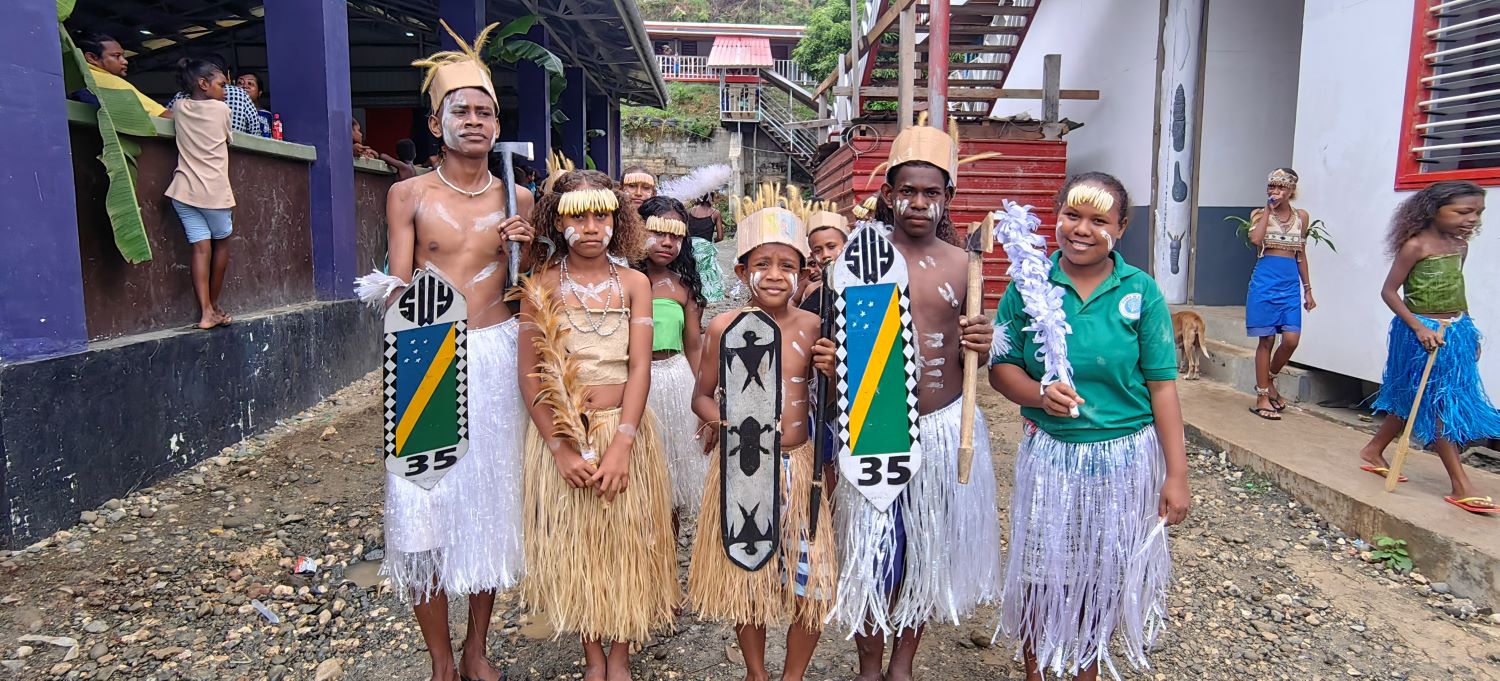
Students from Isabel province showcasing their culture

BY NED GAGAHE

Hongsun Christian School, Koloale, marked a significant milestone in its history by hosting its inaugural Cultural Day.

The event, held on Friday 9th August, 2024, was an opportunity for students, parents, and staff to celebrate and appreciate the diverse cultures that enrich the school community.

Speaking at the event, David Leong, one of the School Directors, emphasized the importance of Cultural Day as a celebration of the vibrant tapestry of cultures within the school.

“On behalf of Hongsun School and its management, principal, teachers, and dear parents, today we gather here to celebrate the rich cultural mosaic that defines our community,” said Leong.

“Cultural Day is not just about celebrating our diverse traditions; it’s an opportunity for us to learn from one another, appreciate our differences, and strengthen our bonds.”

Leong highlighted that each culture brings unique stories, customs, and values, which shape our perspectives and experiences.

“Each culture has its own unique stories, customs and values. These element shapes who we are and how view the world.

He encouraged participants to engage with the various cultural activities offered.

“Today, we have the chance to explore various cultures through food, dances, music and arts. Let us remember that our differences are not the barrier but a bridge that connects us and enriches our lives.” he noted.

School Principal Lucy Tanasimae also spoke about the significance of the event. Reflecting on the students’ educational journey, she emphasized the importance of understanding their cultural origins.

“Today’s event aims to instill a deep sense of pride in our students about their cultural heritage,” Tanasimae explained.

“While many of our students may have grown up in urban centers, it’s crucial to remember our diverse provincial and island backgrounds. Understanding their cultural background is vital for their growth and identity.” She said.

Tanasimae stated that Cultural Day would become an annual tradition, building on the success of the inaugural event.

“This is our first cultural day, and I hope it becomes a significant annual tradition. We plan to build on the success of today’s event and make next year’s celebration even better.” She said.

She extended her gratitude to the parents for their support and involvement, which contributed to the day’s success.

“The positive turnout from parents, teachers, and the entire school community has been incredibly encouraging. I want to extend my sincere gratitude to the parents for their tremendous support in preparing for this event.

“Thank you all for making today such a success. I look forward to celebrating our cultural heritage with you again next year.” She said.

Hongsun Christian School, established in 2016 under the Living Word Education Authority.

The school was founded by David Leong and Peter Chao, currently enrolls 732 students from Early Childhood Education to Grade 6.

The school features five streams in Early Childhood Education and double streams for Prep through Grade 6.

The inaugural Cultural Day was met with enthusiastic participation from the entire school community, promising a strong foundation for future celebrations of cultural diversity.

The event featured participation from all the nine provinces.

Malaita province was represented by six groups within the province.

Playing guitar, more than just a talent

    1
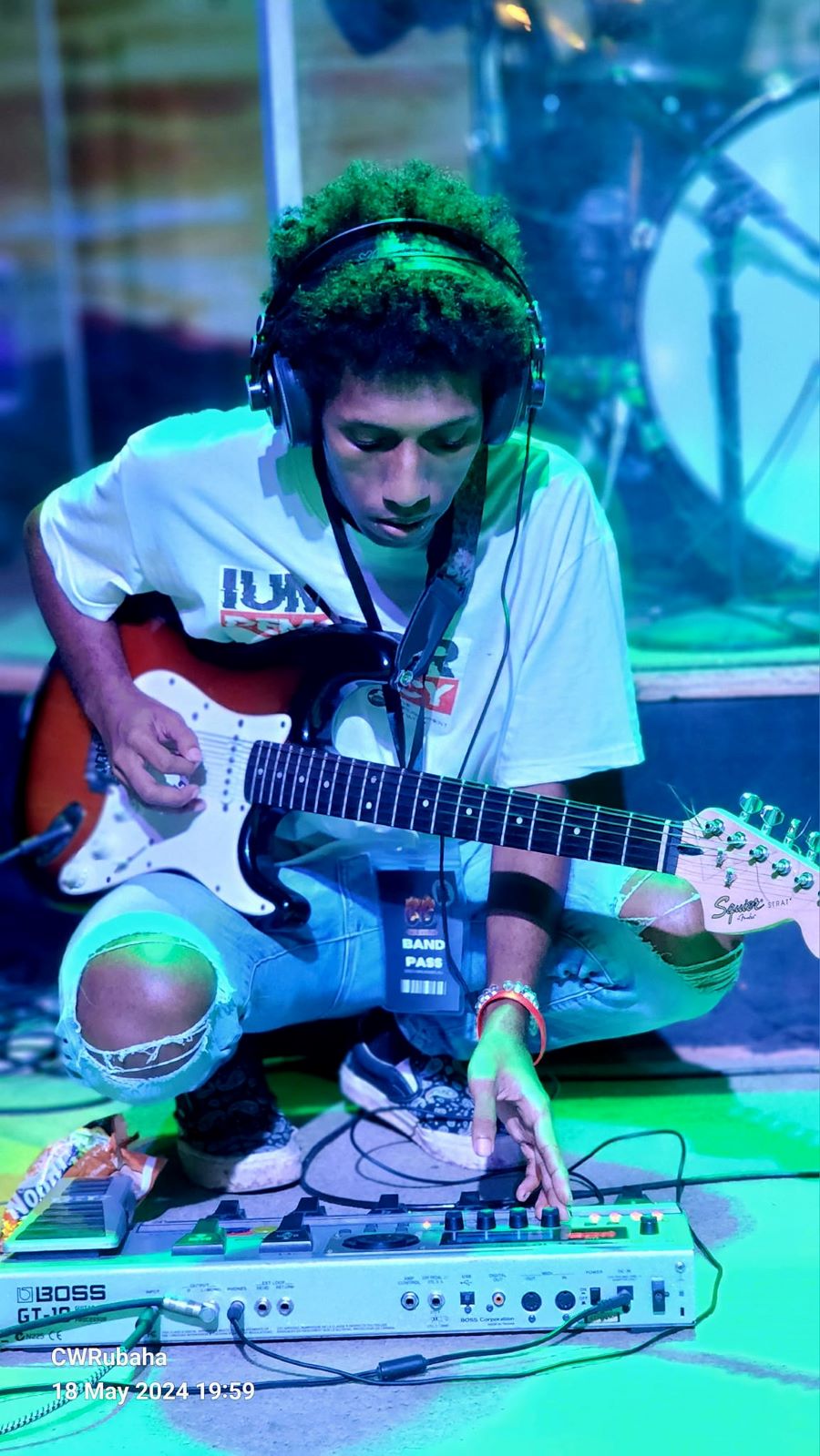
    Jimmy Nicklam doing what he loves. Photo supplied.

    BY JOHN HOUANIHAU

    Jimmy Nicklam Iro started learning to play guitar when he was only five, taking inspiration from influential music figures like Michael Jackson, Bob Marley, Tupac, Elvis Presley, Eddie Van Halen, Marty Friedman and many more.

    “I am motivated to play guitar by my deep love for music and the emotional bond it creates,’’ said Iro from Malaita province.

    Guitar has been a basic part of his life since he was young, starting from the homemade guitar his parents crafted for him at the age of three to the first actual guitar gifted to him by her Aunt Rose.

    “Mastering various genres and expressing my emotions through music has been incredibly fulfilling. Even when I practiced without any amplification or effects, the desire to create music that connects with others motivated me to keep going,’’ explained Iro.

    The 28-years guitarist, stepped in as a session guitarist for the Plug 19 band, filling the role of the band’s original guitarist, Abel Niumaoma, who left to pursue his studies in Papua New Guinea.

    This year, 2024, Iro had the opportunity to perform twice in Vanuatu for the Galaxy FC 10th anniversary alongside top international and Solomon Islands artists such as Jaro Local, Jah Boy, De Van De, and Ismuki.

    His second tour took him to Santo Island, where he performed during the Vanuatu Independence Day celebrations, to help bring people together and support children and those in hospitals.

    Iro gained significant experience by performing and collaborating with local bands such as Plug 19, Unik7, Jambuckz, and The Colleaguez and participating in major music events, including the Bonfire Festival and the Pacific Games 2023 Closing Ceremony.

    “I also contributed guitar work for renowned artists like Young Davie, featuring Vanessa Quai on “Baby Dada,” and several of Davie’s other tracks. My work extends to Ramo’s songs, including “No Sign,” and collaborations with artists like Kayler, Wendy Tia Kealau, and Jammin on songs like “Pretend No More,’’ he said.

    Iro also provided guitar work for SDA gospel artists, collaborating with Solomon Maneoru as a producer.

    “My contributions include working with upcoming artists like SAH and Jammin on tracks like “Mangoku,” and collaborating with Jefina Waleka and on my father’s gospel songs, as well as other Christian musicians in the country,’’ said Iro who has been playing the guitar for nearly 28 years.

    According to Iro, in their family of six, one of his brothers namely Maclean is also a highly skilled guitarist.

    “As a professional guitarist, my music goals include, mastering techniques, songwriting, composing, performing live, recording, expanding knowledge about different genres, and styles, building a Brand, and Networking and connecting with other musicians, industry professionals, and fans to create opportunities and grow professionally,’’ he said.

    “Here’s some advice for upcoming guitar players, practice regularly, consistency is key. Learn Music theory, explore different genres, play with others, record yourself, stay Inspired, take care of your gear, be patient and persistent, seek feedback, and have fun, remember to enjoy the process and have fun with your music. Passion and enjoyment will drive you to keep improving,’’ Iro said.

    From security officer to recycling businessman

      0
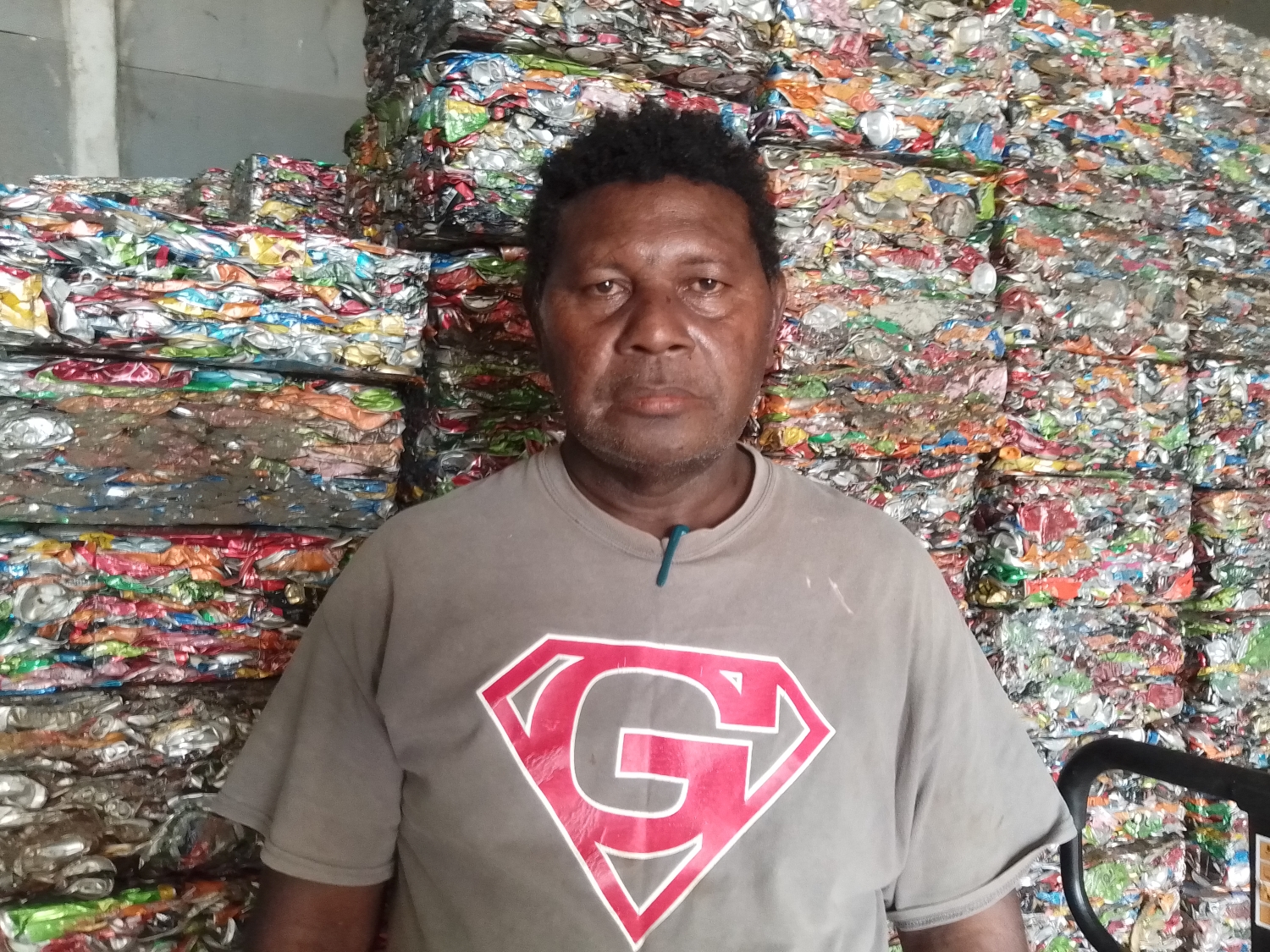
      Sol recycling owner Michael Maefiti.

      BY JOHN HOUANIHAU

      Eleven years ago, Michael Maefiti registered his business and now he exports two 20-foot containers of unused cars and solar batteries as well as aluminum drink cans waste per month to Korea and Australia.

      In her mid-40s, Maefiti previously served as security officer for Ministry of Mines, Energy and Rural Electrification before venturing into recycling business, which he described as turning a dream into reality.

      “I worked for almost 12 years as a security guard at PEMA Security, a private security company. My job was to protect the Ministry of Mines and Energy’s solar project storage facility so, during my time there I began gathering and storing batteries,” Maefiti recounts.

      The Ferasubua Man had never made a plan for the unused batteries, but he holds the belief that his hard work will eventually be rewarded.

      “I didn’t have any specific plans for the batteries. I just gathered and stored them properly. However, I firmly believe that something positive will come from these batteries one day. So, I continued to collect them until they reached nine tons. It’s an unexpected business,” he stated with a smile.

      Michael Maefiti’s recycling business, named Sol Recycling Solution, initially concentrates on unused batteries and later expands to include aluminum drink can wastes. “Initially, my main focus was on batteries. However, a friend from Australia who supported me in starting the business also encouraged me to collect cans. As a result, I began collecting cans in 2023. That’s how I reached this point,” explained the 43-year-old.

      In the early part of 2024, his company shipped two 20-foot battery containers to Korea and one 20-foot container of aluminum can waste to Bangkok, Thailand.

      “I anticipate generating a total of $SBD 400,000,” he mentioned.

      To expand his business, the Ferasubua man aims to set up operations in several provinces throughout the country, with a particular focus on Auki in Malaita province and Gizo in the Western Province.

      “We just gathered seven tons of aluminum drink cans waste from Gizo and one ton of aluminum drink cans waste in Auki, along with five tons of unused batteries in Auki. As a result, I intend to expand the business to other provinces,” he mentioned.

      Mr. Maefiti also received support from the Strongim business in 2022, amounting to a total of $AUD 23,000 to boost his business.

      “I am grateful to receive money from Australia every month as it greatly aids me. I typically receive $SBD 12,000 monthly. I take pleasure in my work and hope it contributes to addressing environmental issues we are currently facing and will continue to face in the future,” Maefiti stated.

      Sol Recycling, located adjacent to the Mokolo building at the Lordhowe Settlement, is buying aluminum drink can waste at a rate of $SBD 4.00 per kilo and unused dry cell batteries at a rate of $SBD 1.00 per kilo.

      TWO BOOKS, TOO GOOD

      1

      Historic launch to empower women in business with Australian support

      BY NED GAGAHE

      The West Are’are Rokotanikeni Association (WARA) celebrated the launch of two new books yesterday thanks to support from Australia’s Civil Society Strengthening Programme.

      One of the books is titled – Sisihora Rete (meaning good stories in the Are’are language) which documents women’s business experiences, and the other is a leadership manual authored by Dr Alice Pollard.

      These resources are set to benefit 6,000 members across Solomon Islands through 13 key stakeholders.

      Sharon Tohaimae, WARA Chairlady – Governance Committee, praised the support from Australia and partners.

      She also acknowledged Mrs Pollard’s vision and dedication.

      She expressed optimism that the books would foster empathy, education, and empowerment within the community.

      “We hope these books will help us connect and foster empathy as we continue to serve our communities.

      “Our goal is for these resources to inspire, educate, and empower, and we are excited to see their impact on our target audiences,” Tohaimae said.

      WARA Volunteer Rebekah Maeniuta highlighted that the leadership book addresses essential aspects of power, leadership, and governance.

      She emphasised the organisation’s commitment to mentoring young women and girls for leadership roles, stating that the book will serve as a vital guide for their future efforts.

      “We believe it is very important that Rural WARA members understand that they have power within themselves to make positive change in our communities and nation

      “As women leaders of Are’Are and Solomon Islands we must serve and empower based on principles of what is right, just and fair.

      “We believe that WARA as an organisation must have mechanisms in place to maintain the oversight and accountability of the organisation.”

      Nicole Smith, DFAT counsellor for Governance and Stability, affirmed Australia’s commitment to supporting local voices, especially women.

      She noted that the Australia’s Civil Society Strengthening Programme, which recently launched, provided crucial support to 29 civil society organisations, including WARA.

      Smith expressed satisfaction with the outcomes of this support, which totals SBD$3 million, marking the beginning of a longer-term investment in Solomon Islands’ civil society.

      “Australia is pleased to support local civil society advocacy groups ranging from all across civil society through our Civil Society Strengthening Programme which was stood out just earlier this year.

      “We really recognised that the 2024 Joint Elections were the prime opportunity to really support civil societies to get their voices out there speak out on their platforms on issues that matters to them and their members.

      “As a result of that we were able to support 29 CSO and WARA was one of those CSOs so we are really pleased to see the result of that work and we are really pleased to launch those outcomes today.

      “The support for those 29 organisations is totaled SBD$3 million. It’s a start of longer-term investment in civil societies in Solomon Islands,” she said.

      The launch was done at the Heritage Park hotel.

      Power outages may end soon,depends on weekend testing

      0

      JOHN HOUANIHAU

      The current electricity load shedding is expected to end soon, depending on the results of testing this weekend, according to Edmond Fiusi, the operating team leader at Lungga Power Station.

      Fiusi told Island Sun on Thursday, July 1st, that spare parts for the transformers arrived on Wednesday, July 31st, after a delay. “After we install the parts, we’ll test the system. Whether power returns to normal depends on how well the test goes,” Fiusi said.

      Patson Kevu from Night Swift also informed Island Sun last night that load shedding will continue today, Friday. “The end of load shedding depends on the test results. If all goes well, we expect the outages to stop by Saturday or Sunday,” Kevu added.

      Miss Guadalcanal advocates for Women’s Rrights, inclusivity

      0
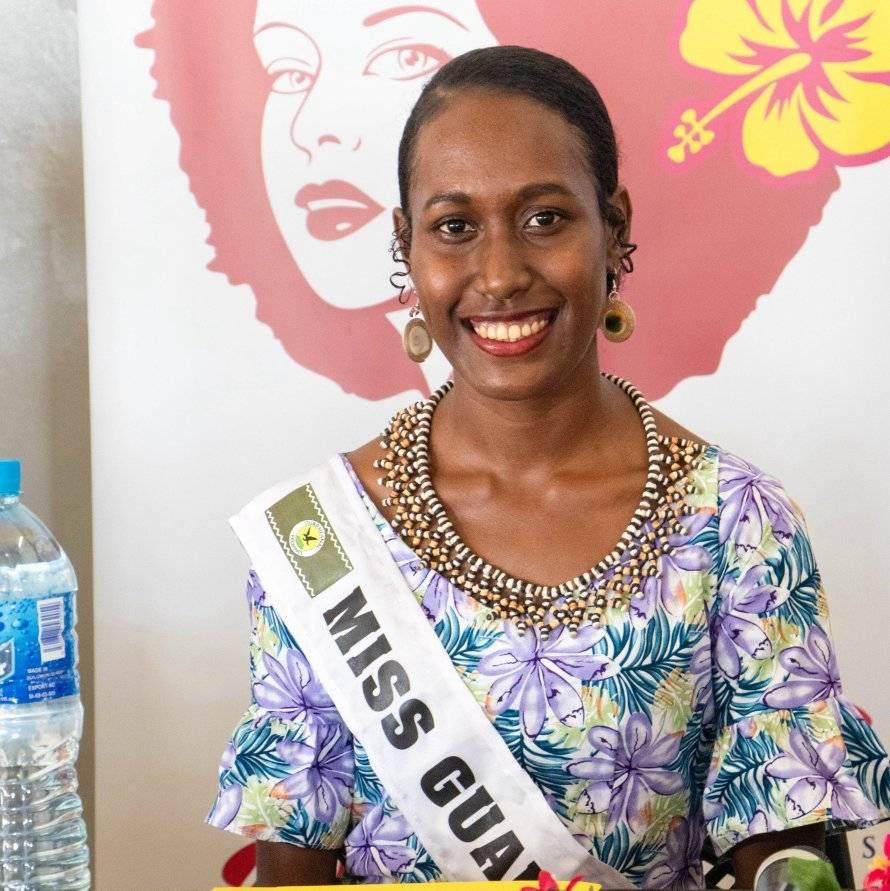
      Miss Guadalcanel.Photo supplied.

      BY INDY MAEALASIA

      Miss Guadalcanal, Ezinma Kausua, has called for increased efforts to safeguard the rights of women and girls and to enhance their inclusivity within Guadalcanal Province.

      While acknowledging the efforts made by the previous provincial government and the Guadalcanal Council of Women with the launch of the Women’s Policy in 2016, Miss Kausua emphasized that there are still instances where women are deprived of their right to participate fully in Guadalcanal society.

      Speaking at the Guadalcanal’s 40th Second Appointed Day celebration yesterday, Miss Kausua highlighted the critical role that women and girls play in society, stressing the importance of their protection. “Women are the backbone of every family and community. They are the glue that holds our families together and the peacemakers who help resolve community conflicts. Our mothers are our first teachers, tailors, nurse aids, chefs, and the closest, most trusted consultants and that’s the truth,” she remarked.

      Miss Kausua continued “Women are skilled farmers who dwell their land in plant crops to sustain our food supplies. They plant and cook our daily meals. They raise livestock which they sell to earn money for school fees. Women now are also becoming bread-winners, they shed tears and sweat as they struggle to support their families. They deserve gratitude” Miss Kausua added.

      Miss Kausua also extended her appreciation to the provincial government for their support in endorsing her to be a part of the Miss Solomon Islands Pageant(MSIP)