BY JOHN HOUANIHAU
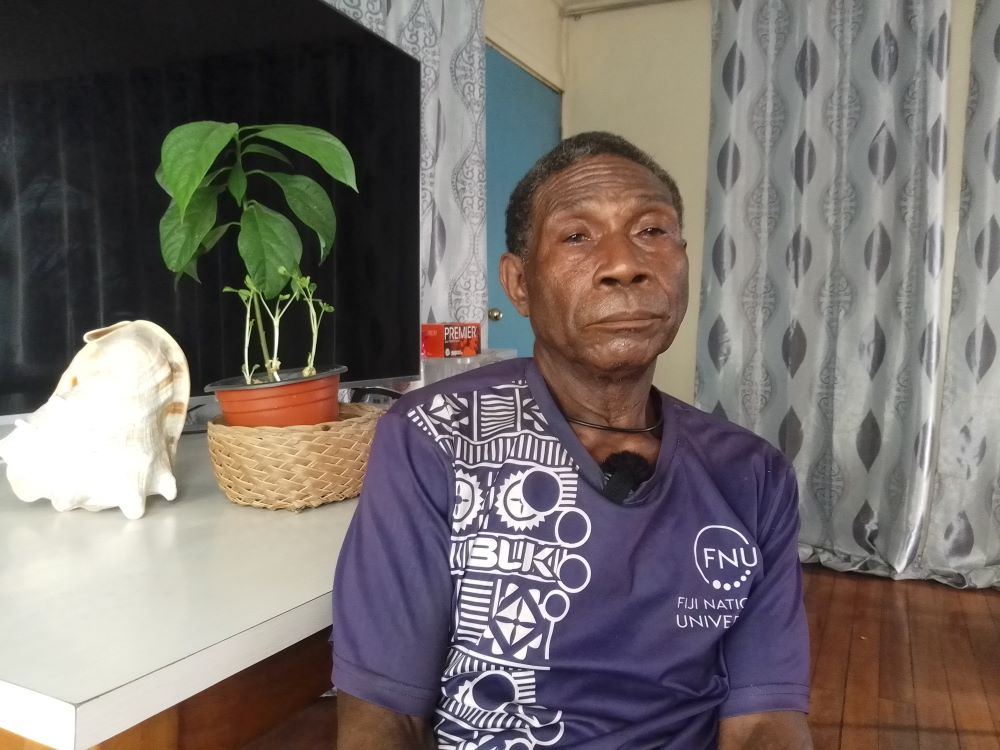
Jimmy Rex, born in 1969, ventured into Cocoa farming at the age of 12, where he learned valuable lessons. Upon completing his education, he was one of 12 students from his school in Kekena village, North East Tasimboko.
Despite considering himself an average student, Rex always strived to achieve good grades. His late father, a hardworking individual who earned his livelihood from a coconut plantation, supported him through his education. Following his departure from school, Rex transformed into a hardworking and determined young man, cherishing the values instilled in him by his late father.
Rex mentioned that his late father always emphasized the importance of hard work and perseverance, especially in plantation work. His father’s constant advice to him was “Don’t give up.” In 1985, to expand his knowledge of cocoa products and farming, Kekena Man decided to participate in a one-week cocoa certificate training. The training, led by the CEMA General Manager, Mr Moses Belomo, and one of his colleagues, took place in Batuna. As a result of this training, Rex shifted his focus towards gardening and cocoa farming.
“Struggling began when I acquired the cocoa seed from the Late Sir Jacob Vusa. During that period, earning money was challenging. I could only manage to make $80-90 for a bag, as the price was $1.50 per kilo back then,” he recounted.
For Rex, the establishment of a cocoa plantation, which now consists of 15 thousand trees, was not accidental but rather stemmed from his late father’s inspiration.
Due to continuous expansion throughout the years, Rex Cocoa farm now spans across ten hectares.
“I ventured into farming after completing that training,” he mentioned.
“Before expanding my Cocoa farm, I took the time to count the plants. I had to pick one leaf from each plant and place it in a bag. After counting each leaf individually, the total count reached 8,000 bottoms. Currently, the count has risen to 15,000 bottoms,” he remarked.
With Rex’s extensive involvement in cocoa planting and production, he possessed considerable knowledge about the peak and off-peak months for cocoa.
“It takes 5-6 years for Cocoa to bear its first fruits. The fruit takes 5-6 months to ripen and become ready for harvest. The peak period is when cocoa plants have flowers before producing their fruit. It differs from coconut and oil palm,” he explained.
Rex, a 65-year-old farmer, is currently dealing with the challenge of ensuring proper air drying for cocoa and seeking support from the relevant ministry to aid local rural farmers.
Rex emphasized the importance of having proper cocoa air driers and fermentation casings for ensuring the quality of cocoa products that are exported, urging the ministry to acknowledge these needs and provide essential materials to support farmers in their work.
Rex noted that the current year has seen an unprecedented rise in cocoa prices, which he views as a significant source of encouragement for local rural cocoa farmers.
“In 1998, the price of cocoa started at $12-20 per kilo, but this year it has risen to $50,54 – $55 per kilo. This reflects the history of the Solomon Islands. I used to earn $100,000 annually, but with the recent increase in cocoa prices, my annual earnings have typically ranged from $300,000 to $500,000.” Said Rex.
Rex primarily used most of the income from his cocoa sales to cover his family’s essential needs, school fees, and the maintenance of his plantation.
“Facing financial challenges in hiring labor for pruning and cleaning the farm is common, along with dealing with pests and rats. The earnings from the farm are primarily meant for the family’s necessities and desires. Despite these challenges, I remain persistent. Now, I can provide support not only for my family but also for my extended family through cocoa farming,’’ said Rex.
Mr. Rex encourages others not to give up in life and to engage in activities that benefit themselves, their families, communities, and countries.