Home Blog Page 493

Vokia election petition adjourned to December 2

0

BY ROMINAH FAKA

The election petition against MP Jammie Lency Vokia for the North East Guadalcanal Constituency was mentioned in court yesterday and has been adjourned to December 2 for further discussion.

During the hearing, which was scheduled as a Pre-Trial Conference (PTC), the petitioner’s lawyer, Gabriel Suri, informed the court that they plan to withdraw the petition and will submit a sworn statement with their application.

The respondent’s lawyer, Jillian Soaika, objected to this withdrawal and requested an adjournment, citing a pending court of appeal judgment that may impact the Vokia case.

The court instructed the Attorney General, representing the second respondent, to file necessary documents, and the respondent to submit a sworn statement.

Previously, the petitioner filed allegations of four instances of bribery and three instances of undue influence against Vokia.

On September 2, 2024, the court dismissed three undue influence claims and two bribery allegations, allowing only two bribery claims to proceed to PTC and trial.

Both parties are preparing for the upcoming mention on December 2.

SIICAC TO MEET OAG

0
SIICAC Director General John Kouni.

Auditor General’s report reveals fraud risks and poor transparency in ESP funds, says Kouni


BY JOHN HOUANIHAU

The Director General of the Solomon Islands Independent Commission Against Corruption (SIICAC), John Kouni, will meet with the Office of the Auditor General (OAG) this week to discuss the findings of the Economic Stimulus Package (ESP) audit report.

SIICAC treated the revelations in the ESP Audit Report as shocking and confirmed that it will conduct an investigation based on the findings of the report.

In an exclusive interview with Island Sun yesterday, Director General Kouni stated, “The report by the Office of the Auditor General’s revealed major fraud and corruption risks, poor administrative controls, and a lack of transparency in the administration and disbursement of ESP funds.”

“We at SIICAC are taking the ESP report and its recommendations seriously and will be taking steps to address it as a matter of urgency. We are prepared to carry out a full investigation under Part 4 of the Anti-Corruption Act 2018, jointly with the RSIPF, the Office of the Auditor-General, the Office of the Ombudsman, the Leadership Code Commission, the IRC, the Financial Intelligence Unit of the Central Bank of Solomon Islands, and other entities listed under Section 91 of the Penal Code, as amended,” said Kouni.

Kouni mentioned that SIICAC has liaised with the Office of the Auditor General (OAG). “I already have a copy of the audit report and am currently reviewing it. I will meet with the Auditor General David Dennis this week to discuss the issues highlighted in the report and will proceed from there,” he stated.

“In terms of conducting the investigation, there are no two ways about it. As soon as we assess the report, we will call upon other integrity, accountability, and enforcement institutions for a joint investigation,” Kouni added.

“I assure the public that an investigation will be conducted, and the best way forward is to have a joint investigation involving all stakeholder government agencies, allowing us to conclude it within a reasonable timeframe,” he said.

Regarding the relationship between the Auditor General’s Office and SIICAC,Kouni confirmed that the Anti-Corruption Act 2018 provides a collaborative framework that allows the two agencies to work together on corruption investigations. Furthermore, SIICAC has already signed a Memorandum of Understanding (MOU) with OAG for effective engagement in their shared effort to combat corruption in the country.

“There is already a collaborative arrangement in the form of an MOU that allows our two institutions to work together. As soon as we finalize the necessary administrative processes, including inter-agency dialogue, we will assemble a team to begin the investigation,” Kouni explained.

In addition to the corruption investigation, Kouni confirmed that the weaknesses in procedures and administrative controls identified in the audit report will also be addressed. Where appropriate, SIICAC will propose policy and legal reforms to strengthen the current system.

In the meantime, Kouni expressed his gratitude to the Auditor General and his team for their commendable work in producing the report. “I understand the challenges and constraints they faced during the audit, but I am grateful they successfully overcame those obstacles to deliver the report,” said Kouni.

Court ruling on MP Bonuga’s petition expected today

0

BY ROMINAH FAKA

The High Court will deliver its ruling today on the election petition case involving James Bonuga from the Temotu Pele Constituency.

On September 27, Bonuga requested to dismiss the petition, arguing that there was insufficient evidence to support the claims made against him.

The court adjourned the matter to this afternoon at 2:30 PM, where Justice Maelyn Bird will announce the decision.

The petitioner, Dudley Kopu, alleges corrupt practices, including bribery, against Bonuga.

Kopu is represented by L&L Lawyers, while Bonuga is represented by Francis Waleanisia.

The boy whose hobby is mathematics

    0
    Damien recieving his academic award from ACOM Archbishop Leonara Dawea.

    BY LORETTA B MANELE

    Damien Makuke Marau, this name was announced on Friday 18th, October at the St Nicholas Anglican College graduation that was packed with families, friends and supporters who gathered under the humid weather to witness the school’s 20th graduation.

    The 18-year-old form 7 Science student humbly made his way to the stage to receive his academic award and later the Dux student award.

    He’d later receive his form 7 certificate along with his class.

    Damien hails from Isabel, Malaita and Makira provinces and is the second eldest in a family of 3 boys.

    His academic journey began when he attended Fiji’s Arya Samaj Primary School from 2011 to 2019 and completed grades 1 to 8 before going to Jai Narayan College to do form 3 and form 4 in 2020 and 2021 respectively.

    He returned to Solomon Islands after completing form 4 and attended Bishop Epalle Catholic School in 2022 where he did his form 5 studies.

    Damien then attended St Nicholas Anglican College to do his form 6 studies in the following year and is currently doing his form 7 science studies at the same college.

    The importance of hard work in school began for him while he was in primary school.

    Thinking back to those days, it was his primary school teachers at Fiji’s Arya Samaj Primary School that always told him that he had to work hard.

    What motivated Damien the most was that he was in another country and so he had to prove that he deserved to be at the school.

    Since then, he worked hard and did his best and at that time, he wasn’t always the best student so he had to adjust.

    It was when he attended Jai Narayan College that he began to be really competitive in his studies especially because this was one of the Indian prestigious schools that focused mainly on academics and things like sports wasn’t really a thing there.

    Competitively, the lowest mark the college accepted was 80 given that it was a well-known school with high expectations from students.

    As Damien recalls, more than 400 to 600 students applied to the school but only 180 were selected.

    In 2021 he came back home and attended Bishop Epalle School where he did his form 5 studies.

    After having attended schools that were really competitive, academically he didn’t see the need to go out and prove himself in other top schools in the country like King George Sixth School or Tenaru.

    He felt that he could attend any school here and still have that same motivation and drive.

    When Damien came back, he also brought with him the same initiatives that he had learned back in Fiji and is still holding on to those initiatives.

    Speaking of future aspirations, Damien has always wanted to be a cardiovascular doctor or a neurologist because he thinks the country needs more doctors in those fields.

    His third option is to be a doctor for cancer patients particularly because he has relatives who died from cancer.

    As a young student when he was in form 3, he always tried to work harder, stayed up late at night but now looking back he kind of regrets that a little.

    At the time, Damien preferred to study alone and later got a low mark which made him feel really bad to the point that it took him a week to get over it.

    He thinks Form 3, 5 and 6 students shouldn’t be pressured too much.

    His advice for them is to reduce the time they spend studying alone and instead study together in groups so they can communicate, share and work together and improve.

    Comparing his school days in Fiji to the current days he sees a difference.

    In Fiji, they were encouraged to only use their books and notes whereas here a lot of students have phones making it easier for them to access information and do research.

    One challenge he came across when returning back home here in the Solomons was getting used to the local Pidgin language and it took Damien a while before he began speaking the language.

    At first, one part of the challenge was understanding new words or slangs while the other challenge was, he found it difficult when he’d ask his teachers to explain something about a particular topic and they’d respond in Pidgin.

    But as time passed, he eventually got the hang of it and now speaks Pidgin fluently.

    When he was a little boy, his parents had always told him that he had to work hard in school because back in their days, getting education was difficult.

    Damien alone was motivated to do the best he could in school because he saw that a number of his family members didn’t make it far in school.

    A lot of people in his village did not even make it to Form 3 and so Damien felt that he had a responsibility as a person with the ability and opportunity to further his education to set an example.

    Damien feels that he has to work hard and show the kids in his village that education is something that matters and is not something to play around with.

    He has two hobbies and the second one is quite interesting.

    The first one is playing rugby and the second one is taking pride in mathematics.

    Damien sees mathematics as a game and for him it’s fun and although it’s not really easy, once he’s able to solve a mathematical question he becomes really happy.

    Interestingly, during his free time, he watches mathematical clips or videos.

    This young, motivated and humble student looks up to his parents as his role models.

    For him, as a little boy, he saw how his parents worked so hard and made it possible for him to study in Fiji where he got the opportunity not only to study in competitive schools but to also have self determination and drive to always work hard.

    “Without them I would not be where I am today”

    Mindset shift essential to attract youth to agriculture: Viulu

    0

    BY INDY MAEALASIA

    To attract the younger generation to the agriculture sector, a transformative shift in mindset is essential. Permanent Secretary of the Ministry of Agriculture and Livestock Dr. Samson Viulu emphasized this during the opening of the Agri-Innovative Competition on Tuesday.

    “We have to shift away from the mindset that agriculture is all about food production, it is not,” he remarked, “It is about making money.”

    He emphasized that the business of agriculture is about “entrepreneurship, youth, and sustainability.”

    Viulu noted that many young people are choosing to work in Australia and New Zealand under the labor mobility scheme, citing a lack of financial opportunities in the local agricultural sector.

    “Why are they attracted to agriculture in Australia and New Zealand? why are they not interested in cultivating the land or going into agribusiness production, One totally clear answer is because there is no money in agriculture in the country,”

    Viulu emphasized that injecting and making a profit in agriculture is a way of reducing the country’s reliance on foreign aid and enabling the country on generating wealth domestically.

    Highlighting the Government for National Unity and Transformation (GNUT) vision for the sector, Viulu emphasized, “We want to make agriculture attractive again, we want it to be business for everyone.”

    MEHRD targets 330 schools under new program

    0
    DS Linda Wate speaking at the launching program.

    BY LORETTA B MANELE

    The Ministry of Education and Human Resource Development (MEHRD) is targeting 330 schools across the provinces under its new program.

    Linda Wate, Deputy Secretary for Teaching Services for MEHRD spoke about this when the ministry launched its five-year System Transformation Education Program on Monday 21st, October.

    This program consists of two GPE (Global Partnership for Education) approved grants which are a US$5 million system transformation grant and a US$1.5 million system capacity grant in which UNICEF will act as the grant agent and New Zealand’s MFAT (Ministry of Foreign Affairs and Trade) will coordinate the efforts.

    Wate said this new program will focus a lot around capacity strengthening for the Ministry of Education to lead and guide implementation of our policies with our partners in the provinces as well as with our schools.

    “We are targeting about 330 schools as part of our PIP program and its extended support”

    She said in these 330 schools, they anticipate to that the support will reach 2,650 teachers although there might be more depending on the number of teachers per school.

    “Earlier next year we will do the baseline study to ensure that we know how many teachers exactly we are working with”

    Wate said they are also looking to work with around 49,000 students across different provinces especially provinces like Malaita, West End and Makira and Central Province to reach out and continue their work from previous projects with schools in these provinces.

    Moreover, she mentioned that they are also planning to increase the accessibility of their curriculum materials to schools and students.

    Wate expressed that they have developed almost 28 new published materials.

    “We now have the copyright to all these materials and we want to increase access to them to our stakeholders in the provinces especially teachers and students in the schools”

    She said that there are plans to have these materials not only in textbooks but also through media, songs and videos.

    Wate stressed that they are especially focusing on improving what teachers are doing and what students can do and learn especially in their classrooms.

    “We are looking forward so much to ensuring that we use those opportunities to get the best outcomes that we are looking for in terms of supporting our students in some way”

    Quality of regulations exceed quality of public services

    0

    BY LORETTA B MANELE

    The quality of regulations exceeds the quality of public services in the Pacific region.

    This is according to Christopher Miller, a Senior Private Sector Specialist for the Pacific region who spoke during the virtual launch of World Bank’s October 2024 Pacific Economic Update “Diminishing Growth amid Global Uncertainty: Ramping up Investment in the Pacific” report early last week.

    Miller said one of the key findings from the World Bank’s new global flagship report called “Be Ready or Business Ready” is that it was true for the Pacific that the quality of regulations exceeded the quality of the public services in almost every indicator. 

    “One nuance that we see in the Pacific is it’s not only the quality of the regulations as they’re written in the books. It’s also the public services, the government to business services that you use to deliver those regulations”

    Miller said you can have a country that has pretty good regulations for a business to enter the market, there’s a lot of transparency in the processes, it’s easy to form a business name, it’s easy to register a company and there’s a little or no paid-in capital requirement.

    However, while this is great, not having digital systems in place is actually where a lot of countries are being held back.

    “If you don’t have digital systems, if I have to go make my payment in person and stand in line to do it, and if there’s no online registry of businesses and no one-stop shop, that’s actually where a lot of countries are being held back. The same applies for utility connections and for trade”

    Miller said we still have a lot of countries where you actually have to go to a customs broker or to a customs agency and make that payment in person.

    He emphasized that reforms around payment systems and digital payments will make a big difference.

    MSG security strategy significant for Melanesian sub-region

    0
    Mason Smith, Chairman of MSG Security Strategy Working Group speaking to the media after the meeting.

    BY LORETTA B MANELE

    The Melanesian Spearhead Group (MSG) Security Strategy is significant for the Melanesian sub-region.

    This was revealed by Mason Smith, Fiji’s Permanent Secretary for the Ministry of Home Affairs and Immigration who represents Fiji as the Chair of the MSG Security Strategy Working Group.

    He spoke with the media after their first meeting yesterday at Mendana Hotel emphasizing that the MSG security strategy is significant for the Melanesian sub-region because we face common threats right across the region and we must have common solutions to deal with those common threats.

    “We must understand that we also have common challenges, challenges so far as funding is concerned, our capabilities and our resources”

    “So, we have to come together as a sub-region, a Melanesian sub-region, to be able to work together to articulate for ourselves how we are going to address these common security challenges”

    Smith said the security landscape is constantly changing and we are now faced with a region that is not only dealing with geopolitical conflicts, but one that is also dealing with non-traditional challenges.

    He mentioned that what is good for Solomon Islands will also be good for Fiji, Vanuatu, Papua New Guinea, Indonesia and New Caledonia.

    “So, it is imperative that we work together as a sub-region, collectively, to come up with common solutions to those common threats”

    According to the chairman, the security strategy is eyeing six key strategic priorities that will be recommended to the ministers for their approval.

    The first strategy is to deal with the security of our borders and maritime space.

    Smith mentioned that we have huge maritime borders but we also have land borders that we have to secure.

    Dealing with cyber space and the threat posed by cyber security by non-state and state actors is the second key strategic priority.

    “Thirdly, we have got to realize the increasing influence of transnational organized crimes”

    Smith said we have increasing drug trade through the Pacific and in the Pacific as well as trafficking of persons and organized crime cartels that are laundering money through the region.

    The next priority is on how to deal with those who may be affected by natural disasters.

    Smith expressed that every year, we have to deal with our cyclone season from November to April thus need to come together as a sub-region to agree on how we are going to respond to our Melanesian brothers and sisters who may be affected by disasters.

    The fifth priority of the security strategy is to understand the growing impact of climate change.

    Smith stated that our leaders have made it very clear in recent statements that climate change is the most pressing threat facing our countries.

    He expressed that with climate changes comes issues like coastal erosion, sea level rise, ocean warming, destruction of corals and migration of fish.

    “It is a challenge to food security and the very livelihood and existence of our Pacific peoples, specifically our Melanesian brothers and sisters”

    The final key priority is health security.

    Smith said these are the six strategic areas that the security strategy has identified to present to our ministers early next year.

    He voiced that MSG members are one people and have to work as one people.

    Smith said the strategy is driven by the police ministers’ meeting and will be presented to them in Indonesia in early 2025.

    BEA aimed to acknowledge successful businesses

    0
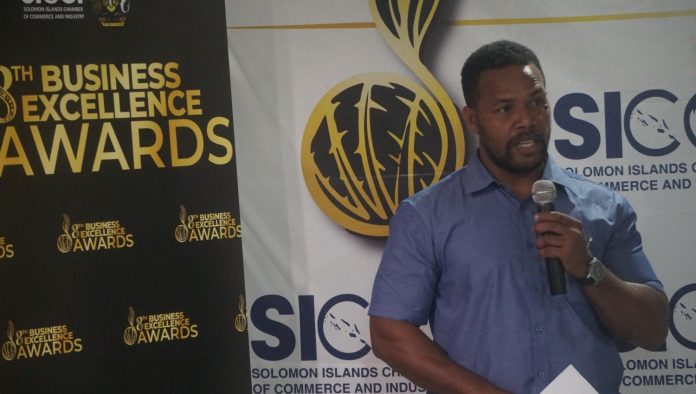
    SICCI's CEO, James Dolarii


    BY JOHN HOUANIHAU

    The Business Excellence Award (BEA) is recognized as the premier corporate business event in the Solomon Islands, according to James Dolarii, CEO of the Solomon Islands Chamber of Commerce.

    Established in 2013, this year marks the eighth Business Excellence Award for the Solomon Islands.

    Dolarii noted, “This year’s award takes into account the numerous challenges faced by our business community over the past two to three years, particularly concerning business activities, exports, and trade goods.” The CEO stressed that the continuation of these awards highlights the progress made by the private sector over the years.

    He commented, “Our business community is at the forefront of these developments.” He further asserted, “It is essential to provide our private sector in the Solomon Islands with a platform to be acknowledged as a key driver of the nation’s economy.”

    CEO Dolarii clarified that commercialization is primarily driven by private enterprises and their activities. He also stated that the Solomon Islands Chamber of Commerce and Industry (SICCI) maintains a strong relationship with the government to ensure that the policies developed align with and support the growth of the private sector through the national development strategy.

    “We advocate for policies that bolster the private sector and create an environment conducive to its expansion. This is one of the motivations behind the Business Excellence Award initiative,” he stated.

    Dolarii highlighted that this platform allows businesses to be recognized for their contributions to fostering business activities in the Solomon Islands.

    “Through these businesses, we create employment opportunities, which in turn strengthens our economy. This initiative symbolizes the unity of the private sector as it collaborates to enhance the business environment,” he concluded.

    Man sentenced to 13 months in prison for unlawful wounding

    0

    BY ROMINAH FAKA

    The Magistrate Court has sentenced Mark Vio to 13 months in prison for the offence of unlawful wounding. The sentence, delivered on Wednesday by Principal Magistrate Emily Z. Vagibule Pakoa, will commence from October 23, 2024.

    Additionally, the court invoked Section 18(2)(a) of the Family Protection Act 2014 in favor of the victim, with Vio retaining the right to appeal within 14 days.

    Vio, 40, was charged under Section 229 of the Penal Code, Cap 26, which carries a maximum penalty of five years’ imprisonment. He pleaded guilty on September 20, 2024, to one count of unlawful wounding involving his wife, the complainant.

    The incident occurred on May 30, 2024, at approximately 3 a.m. Vio, who was intoxicated, returned home with another person. His wife, the complainant, was asleep inside the house with their two children. Vio woke her up and asked for money, which she gave him. After receiving the money, Vio left the house with the other person. When his wife later went outside to use the toilet, the other person approached her and began a conversation in the kitchen.

    Vio became angry when he saw them speaking, throwing rocks onto the kitchen roof. His wife returned inside the house, but when she stepped out again, Vio waited outside the kitchen and confronted her with abusive words. After returning to the house, Vio punched his wife on the forehead. She tried to flee, but Vio blocked the doorway. When she managed to escape, Vio threw a stone at her, hitting her forehead and causing bleeding. He then threw another stone, injuring her left arm. The victim reported the incident to Tetere Police the same day, and a medical examination confirmed her injuries.

    In delivering the sentence, the court emphasized several aggravating factors: the offence was committed at 3 a.m., Vio was intoxicated, he used a stone as a weapon, and he breached the trust within their marriage by harming his wife instead of protecting her. The court also noted the mitigating factors, including Vio’s early guilty plea, his status as a first-time offender, and his faithful attendance at court hearings, which indicated remorse for his actions.

    Starting with a 16-month prison term, the court added six months due to the seriousness of the offence, bringing the total to 22 months. However, nine months were deducted for mitigating factors, reducing the final sentence to 13 months.

    In justifying the sentence, the court underscored the importance of addressing the alarming rise of domestic violence and expressed hope that the punishment would serve as a deterrent. The court also believed this period of incarceration would provide Vio with an opportunity for rehabilitation, helping to prevent similar incidents in the future.

    Ms. Georgina Oroi represented the Crown, while Mr. Eddie Gaza appeared for Mark Vio.