Home Blog Page 493

Continuous cancer support during Christmas

0

BY INDY MAEALASIA

Access to information and medical assistance regarding breast cancer will remain available throughout the festive season, according to Dr. Janella Solomon, medical superintendent at the National Referral Hospital (NRH).

Speaking to the media, Dr. Solomon confirmed that breast cancer awareness, along with other types of cancer, will continue to be provided through the Ministry of Health and Medical Services (MHMS) or with the support of the Miss Solomon Islands team.

With the country’s only mammogram machine now operational, Dr. Solomon mentioned that the oncology team will use all available platforms to raise awareness about how to access these vital services.

“Even though it is Christmas, we are ensuring that we do not turn away any patients,” she noted.

Dr. Solomon also urged women and girls experiencing breast discomfort to seek medical checkups promptly.

“If you have symptoms or feel unwell, please come to the nearest health center or go directly to the oncology unit for advice,” she added.

Effects of wind and current during an oil spill

0

By Loretta B Manele

The wind will blow the water currents and that will affect the movement of oil during an oil spill.

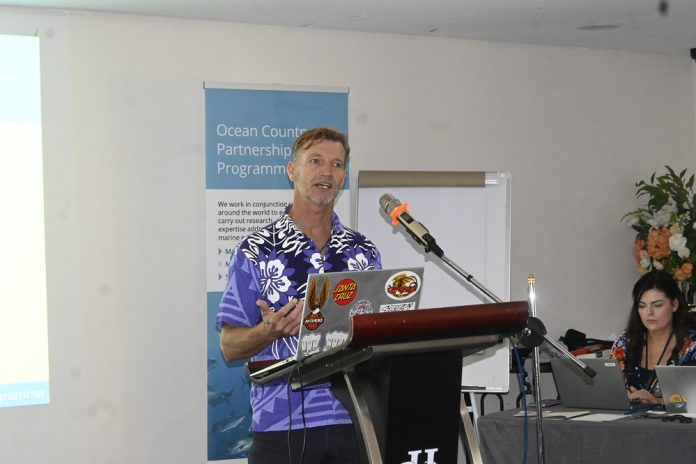
Dayne Maxwell, of Pacific Planning Consulting expressed this at the “Strengthening Marine Pollution Incident Resilience in the Pacific Islands” workshop that was conducted last month by SPREP (Secretariat of the Pacific Regional Environment Programme) at the Heritage Park Hotel.

He said there are two processes that take over when the wind blows the water currents affecting movement of the oil.

Maxwell stated that one of the processes is “oxidation” which is the effects of the sun breaking down oil and making it motionless or “inert”.

He went on to talk about “sedimentation” which he said is not a really good process because it will actually move oil down to the sediment.

“Sedimentation is when, if there’s sediment in the water column, for example, in marine areas where there’s fresh water coming out with rivers and streams that are flooding and causing a lot of sediment to be in the water, oil may attach to the sediment and that will change its buoyancy and will sink to the bottom”

Maxwell mentioned that this will affect any organisms or marine life that are living in the sediment.

On the other hand, in a negative aspect, he said there is also the uptake of violet.

“So, fishes, anything that’s swimming through the water column. Any oil dispersed in the water column, those molecules are available and just by the process of fish and water going through the gills or being swallowed, that will be taken up”

Maxwell said one of the other processes is related to the oil on the surface of the sea.

He referred to this as “persistent oil” particularly heavier fuel oils that may be spilled by larger vessels.

Maxwell pointed out that it is not crude oil that is coming through as crude oil is produced by drilling, gas and offshore oil installations.

He said there is no crude oil coming through only heavy fuel oil or intermediate fuel oils if they’re spilled in rough conditions which is then called a “water and oil emulsion”.

“That’s when oil and water mix together and they’ll create a more voluminous oily substance which, again, floats”

Moreover, Maxwell said you can use the modelling available to predict where oil is likely to move once it’s spilled.

“However, you can also do these calculations on your head or on a map or a chart or something”

Maxwell explained that the piece of information that you need are the wind speed and direction and also the current or the water movement.

He said a very simple calculation is that you just create a couple of vectors where one vector is the current speed and one vector is the wind speed.

“We take 100% of the current. If there’s an oil spilled in a channel and there’s one knot of current, you use a vector representing one knot of current. Then you look at the wind speed, but you take only 3% of the wind speed.

Then you draw another vector on top of the current. If we had, say, 15 knots of wind speed, we take 3% of 15, which is just under half a knot. We’d have a vector showing one knot of current and then whatever the wind speed is and wind direction, do half a knot.

Then you just draw an N and that will be where the oil is going. Typically, if you don’t have information on currents and you want to do a very rough calculation, where’s the wind blowing, that’s where the oil is going to go. 90% of the time you’ll be right”

Maxwell said the wind speed will determine how quickly the oil going to get there.

No contract agreement on ESP

0

BY JOHN HOUANIHAU

The Economic Stimulus Package (ESP) is a grant designed to assist individuals and businesses in generating income, aimed at bolstering the economy of the Solomon Islands in response to the challenges posed by COVID-19.

This initiative was introduced during the pandemic period.

Residents from rural areas have been informed that the fund is intended to support farmers in collaborating with their communities to enhance livelihood activities, including cocoa production, pig farming, poultry, copra, various agricultural projects, fisheries, and tourism. Upon receiving this news, there was considerable excitement, as the funding represented a significant opportunity for change, with a substantial amount of money available.

“I am among the beneficiaries of this grant,” said former cocoa buyer and processor, Cyril Kulisiua. Kulisiua has a vested interest in this initiative, as he continued his cocoa project even before the COVID-19 period. “I purchase cocoa from local farmers, process it by drying, and subsequently sell it in Honiara to cocoa exporters,” he explained. He applied for the ESP funding in 2021.

“The Ministry of Finance and Treasury (MoFT) was responsible for issuing the application forms, which were distributed to the Ministry of Agriculture and Livestock (MAL) field officers. We completed the forms, which included several criteria, such as the necessity of having a registered business, obtaining a business license, and possessing a company Haus certificate. Many of us made determined efforts to meet these requirements,” Kulisiua told Island Sun.

Kulisiua, from Weathercoast in Guadalcanal Province, submitted his application through the Guadalcanal Province for his business, called DB Cocoa Processing & Marketing, which involves purchasing, processing, and marketing cocoa. “I submitted my form to the provincial office after completing the forms,” he said.

“In my proposal, I outlined a budget of $250,000, which was intended for the construction of a drying facility, storage, and labor costs, as well as ongoing cocoa purchases. This was the detailed breakdown of my ESP proposal,” he explained. Unfortunately, he was only awarded $10,000.

“I received a call informing me that my cheque was available at the Ministry of Finance and Treasury (MoFT). This situation did not adhere to the standard procedure of signing a contract agreement. Typically, when funds are allocated, a contract or agreement must be signed with the relevant ministry.

“We have encountered this process when applying for community projects, which usually involves a donor and the community. In my case, the absence of a formal agreement meant we were not bound by the usual stipulations, including the clause that improper use of the funds could lead to legal consequences,” Kulisiua said.

Kulisiua received the cheque in 2022, after submitting his application in 2021. “With the $10,000 I was awarded, I purchased a scale, a few copra bags, and carried out some minor maintenance. However, this amount was insufficient to significantly enhance productivity as I had initially planned. The funds did not align with my project plans, resulting in a loss of potential benefits. If I had the appropriate facilities and equipment, as previously outlined, the $10,000 would have been immensely beneficial, and I would not have encountered any issues,” he added.

“Unfortunately, I lack a proper cocoa drying house, adequate storage, and the necessary funds to cover labor costs, which has hindered my progress. Since that time, I have not engaged in cocoa production up to the present day,” said Kulisiua.

There have been reports suggesting that government officials misappropriate substantial sums of money, yet it remains unclear how these funds are being utilized.

“Although someone collected the cheque on my behalf, it was actually my wife who did so, rather than myself. Ideally, I should have been the one to collect the cheque, as I am the designated recipient responsible for signing for the release of the funds. However, at that time, the process involved my wife being contacted, and she subsequently informed me that my cheque was ready for collection,” shared the concerned farmer.

Japan committed to supporting SI education: Ambassador Miwa

0

BY INDY MAEALASIA

JAPAN Ambassador to the Solomon Islands, Miwa Yoshiaki, has reaffirmed his country’s ongoing commitment to strengthening the Solomon Islands’ education sector.

He emphasized this commitment during the handover of a newly built two-story classroom at Numbu Community High School in North East Guadalcanal last Friday.

“Japan will continue to aid in the education field in terms of infrastructure for all sectors, tertiary assistance, and capacity building in the workplaces…to cultivate a cordial relationship between Japan and Solomon Islands,” he said.

Japan is also providing support to the Solomon Islands National University (SINU) proposed Center of Excellence for Agriculture, Fisheries, and Forestry.

Ambassador Miwa highlighted that the center would play a crucial role in research and gathering essential data for these key sectors.

“This is for the purpose of research and gathering information on our priority sector and feeding our center of excellence hub with the required raw resources to learn,” ambassador Miwa added

He noted that this hub would be a worthwhile initiative as current and future will utilize the resources provided and in turn, contribute to the community and the country.

We expect to deliberate on budget Dec 2: PM

0
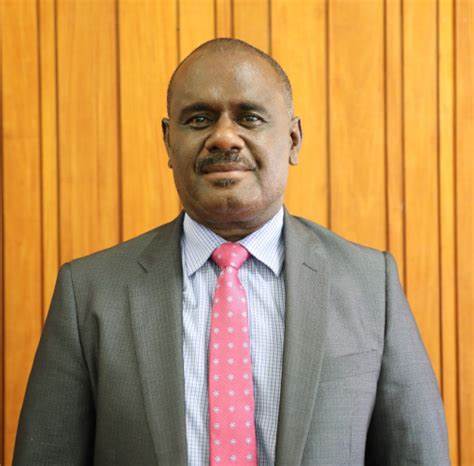
PM Jeremiah Manele. Photo supplied.

By Loretta B Manele

We expect the Public Accounts Committee (PAC) to deliberate on the budget and have its report ready when we resume on 2nd December.

Prime Minister Jeremiah Manele made the statement in parliament on Friday, Nov 15th whilst moving a special adjournment for parliament to resume on December 2nd 2024.

He said the adjournment will give time for PAC to hold its enquiry into the budget, prepare its report and table it in parliament.

Manele added that he understands that the budget documents have been printed and should be in parliament either on Friday, Nov 15th or during the course of the weekend.

He emphasized that PAC should be able to start its enquiry into the budget this week and the enquiry should take two weeks.

Manele also stated that other members of PAC who are also Members of Parliament can also take these two weeks to attend to other important matters including that of their constituencies.

“But we expect the PAC to deliberate on the budget and have its report ready when we resume on December 2nd 2024”

Post spill monitoring essential to evaluate risks of impacts

0

By Loretta B Manele

It is only through post spill monitoring that the risks of impacts on the human food chain, marine ecosystems and commercial marine resources are fully evaluated.

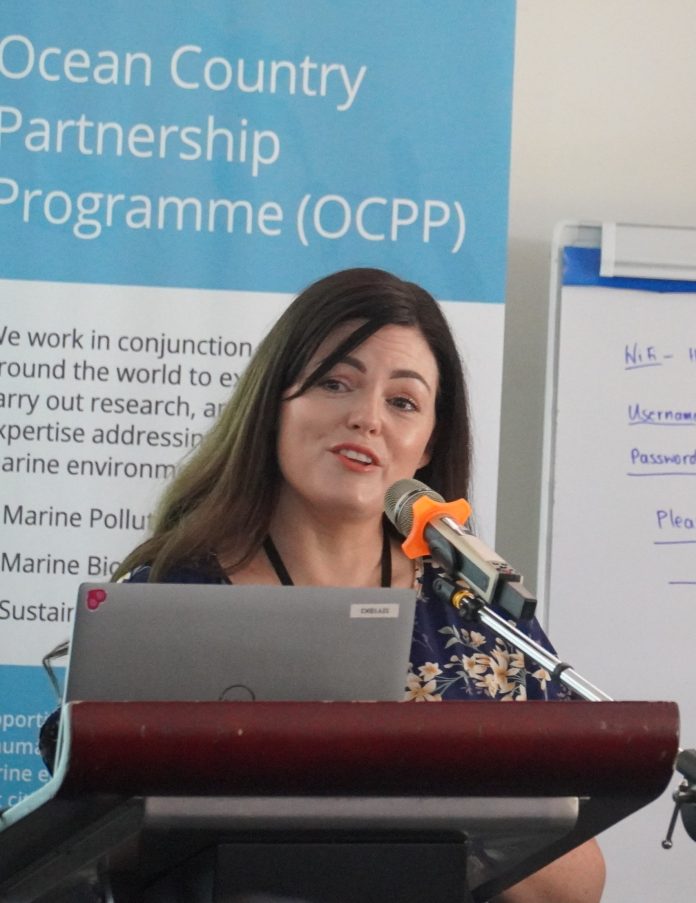
The statement was made by Freya Goodsir, a research scientist from CEFAS (Centre for Environment, Fisheries and Aquaculture Science) when she spoke on “Fundamentals of Post Spill Monitoring” at the Strengthening Marine Pollution Incident Resilience in the Pacific Islands” workshop that was held last month at the Heritage Park Hotel.

Goodsir stressed that for successful and effective monitoring, you will need to include things like being able to understand when to monitor, how frequently do we need to monitor, and also having an understanding of knowing when to stop monitoring.

She said in the context of when to monitor, this should be when an activity is expected to have the potential for environmental or human health impacts.

“You should consider things like the type of pollutant, so this might be oil, chemical, other pollutants.

You should be thinking about its physical chemical properties such as density, solubility, volatility. Its inherent toxicity, so things like diesels, marine diesels are more toxic in short term than oils, things like that”

Goodsir mentioned that you should also have an understanding of the movement and thickness of the oil in relation to the resource and its quantity.

“During the first incidents you might not know what the actual extent of the oil or pollution that’s been spilled.

So having an understanding will help focus those aims in those efforts and also having an understanding of the location and resources at risk”

In terms of how frequently post spill monitoring should be carried out, Goodsir said several drivers affect how frequently we monitor and this is frequently enough to track changes.

Goodsir pointed out that typical levels of contamination will rise rapidly and will then decline over longer periods of time and bioaccumulated contaminants will follow a similar profile to that.

She said this means that the frequency of monitoring will be stepped up quite intensely to start with and then will be scaled back to prioritise efforts to become more cost effective and less resource heavy.

“There’s a balance to be struck there in terms of the frequency of the monitoring, but also the level of funding which we want to undertake it”

Regarding when monitoring should stop, she said monitoring programmes are not generally open ended however in some cases, long term impacts and further rates of recovery may be studied.

Goodsir explained that designing a monitoring programme survey requires considerable planning and decisions need to be made in terms of the value of the study as well as understanding the ability to provide useful conclusions.

She also stated that a typical monitoring programme survey will include things like the selected biological features and key indicators, chosen to their ecological significance, but also their sensitivity.

“Things like essential environmental parameters, such as thinking about the chemical physical characteristics, but also baseline data, and then understanding the characteristics of the pollutant as well, so identifying sources to assess specific impacts on those”

Goodsir said monitoring efforts can also be complex and include factors like weather, climate, currents and all sorts of things in the particular environment aspect that will challenge your efforts.

She added that there are also risks and hazard and with some of these incidents there could be fires around and human health impacts to consider in terms of being able to go out there and being exposed to such risks.

Another factor also highlighted by Goodsir is “accessibility” in the case of thinking how you will be able to access the areas that might have oil spills and how difficult that might be.

BACK IN PARL, DEC  2

0
Prime Minister Jeremiah Manele.

ESP audit report yet to be debated; new related reports tabled

By Loretta B Manele

The much talked about Economic Stimulus Package (ESP) audit report is yet to be debated on and new related reports were brought to parliament on Friday last week.

Parliament’s recent sitting earlier this month on November 4 had Prime Minister Jeremiah Manele move a special adjournment for parliament to resume on Friday Nov 15 purposely to allow Leader of Opposition, Matthew Wale to move motion No 8 which stands in his name and is a motion for parliament to resolve into a committee of the whole house to consider the Audit Report on the Economic Stimulus Package.

On Friday, Nov 15, Manele said this was because the report has generated much public debate and our constituencies were also beneficiaries as well.

He stated that the ESP audit report is one of public interest hence the reason why he moved the motion of special adjournment on Nov 4 for parliament to resume on Friday Nov 15 the day in which the Leader of Opposition can move his motion because it cannot be done on government business days which are Mondays to Thursdays.

“Unfortunately, parliament cannot consider this report today because the Leader of Opposition did not move the motion which stands in his name to enable parliament to debate it.”

Manele said he understands from the Leader of Opposition that the parliamentary house committee decided to defer consideration of the ESP report as well as for PAC to examine the audit report.

Meanwhile, he added a number of reports from the minister of finance and treasury that are related to the ESP report were also presented in parliament so that may also need some time for deliberation.

Manele voiced that as a government, they are keen to look at these reports so our people have the opportunity to hear about it from both sides of the house.

Apart from reports received from the minister of finance and treasury, two reports from the minister for mines, energy and rural electrification were also tabled in parliament on Friday, Nov 15.

Rennell Bellona & Coral Sea forecasted for cyclone formation

0

BY JOHN HOUANIHAU

Outlook for the 2024-2025 Tropical Cyclone season has indicated a potential formation of a Tropical Cyclone in the vicinity of Rennell Bellona province and the Coral Sea.


The official forecast for the Tropical Cyclone (TC) season in the Solomon Islands commence on November 1, 2024, and extend through April 2025, predicting the occurrence of two to three cyclones, with one expected to reach a category between 3 and 5.


David Hiriasia, the Director of the Solomon Islands Meteorological Service, stated, “This forecast pertains specifically to the waters of the Solomon Islands.”


He further said that the current shift of warm water towards the Western Province and Papua New Guinea suggests that most cyclones are likely to develop around the Rennell Bellona or Coral Sea regions.


Hiriasia explained that during El Niño events, cyclones typically form around the Temotu and Makira areas, depending upon the movement of warm water.


“As previously mentioned, during La Niña, warm water is redirected towards the Western Province and Papua New Guinea. Although not immediately visible, variations in sea surface temperatures can significantly impact cyclone formation,” he said during the recent launch of the 2024-2025 TC outlook for Solomon Islands.


He stressed that one of the critical environmental factors for cyclone development is ocean temperature, which must be approximately 26 degrees Celsius or higher.


“In the Solomon Islands, we possess what is referred to as the ‘warm pool,’ indicating that our ocean temperatures are higher than those in most other regions of the world,” Hiriasia explained.


He also pointed out that many cyclones affecting Vanuatu, Australia, Fiji, and other Pacific Island nations originate within the Solomon Sea.


“Cyclones such as Palm and Windstone develop in the Solomon Sea due to the presence of the warmest ocean waters. A warm ocean typically provides the necessary energy for cyclones, and the shifting of warm water as a result of El Niño and La Niña events also determines cyclone formation locations,” he added.


Hiriasia concluded by noting that cyclones generally form south of the equator, as the energy required to sustain or rotate the cyclone is concentrated near the equator.


He said that Cyclones are seldom observed in Kiribati due to its equatorial location, and their formation in Papua New Guinea or the western provincial region is also quite uncommon, although not impossible.


“In contrast, as one moves towards the mid-latitudes, particularly from Western Province or Rennell Bellona to Temotu, which are situated approximately 10 degrees south, the energy levels increase. This trend continues further down to Vanuatu and Fiji. These conditions are conducive for tropical cyclones,” he stated.

Sogavare defends actions on tax exemptions

0
Prime Minister, Manasseh Sogavare

BY INDY MAEALASIA

MANASSEH Sogavare has defended his actions as the finance minister, reaffirming his commitment to the tax exemption reforms he promised on the floor of parliament.

Last week, the opposition accused the minister of being ‘out of control’ and pursuing personal interests in regards to a tax exemption of about $29 million granted to a foreign investor.

 In response, the finance minister rejected these claims, labeling them as ‘very disturbing and insulting’ on his integrity.

 He reassured citizens that he has not “erred one bit” in his commitment to implement reforms.

 “The reforms that I want to pursue in the ministry are progressing very well,” he announced in a press conference Sunday.

One particular reform he is pursuing alongside the Attorney General’s Office involves drafting clauses for renegotiation with the mining companies.

Though the minister did not provide further details on the specific changes being considered, he stated that the mining companies he spoke to have no issues with the proposed amendments to the agreement.

Sogavare stated that unless these agreements are renegotiated and adopted, he is unable to approve or grant any new tax exemptions under the current agreements with mining companies.

The minister is also issuing instructions to the exemptions committee to review current recipients of exemptions to monitor how the exemptions have been used.  

“Any further considerations on their applications for extension of exemption will be decided based on them submitting properly authenticated, projected, provident law statements. To establish how any further government indirect budgetary assistance will impact their operations.” Sogavare said.

Additionally, he mentioned plans to review the non-statutory exemption application form, to ensure applicants for exemptions provide adequate information to the Exemption Committee.

“The content of exemptions should be based on proper assessments of the profitability of the business and not some random figures and percentages, “he noted.

Furthermore, the finance ministry is working on strengthening the exemption committee to effectively evaluate exemption applications.

“There is a need to set up a proper continuous monitoring system on the utilization of the tax exemption,” Sogavare said.

He stressed that this reform is necessary to enable his ministry to properly report to the cabinet on the effects of the government’s indirect assistance to recipients of tax exemptions.

Sogavare said that recent discussion with the chairman of the exemption committee focused on improving government revenue.

He stated, “Cabinet will shortly consider a number of institutional and structural adjustments to improve the collection of non-tax revenue.”

Sogavare added “These will be announced as soon as Cabinet considers my memorandum and also will be announced on the floor of Parliament.”

Fatal traffic case trial set for March 2025

0

BY ROMINAH FAKA  

Trial into the case of 48-year-old man alleged of hitting a pedestrian at Alligator Creek in September this year is set for March 17-28, 2025.

The defendant Devine Ahukela pleaded not guilty yesterday in court.

Prosecution then informed court they are intending to call three witnesses for the trial, two eye witnesses and one medical officer who attended to the victim.

Defence also informed court they are intending to called two witnesses.

Prosecution charged the defendant with one count of causing death by reckless driving.

Allegation said on September 17, 2024 around 7pm at Alligator Creek, the defendant caused the death of a person by driving a motor vehicle recklessly, with a very high speed and hit the victim on the pedestrian road when crossing.

The matter was suspended to November 26 for interim-mention. Remand for the accused was extended.

Myrella Cleven acts for crown and Rochella Pama acts for defendant