By Loretta B Manele
There are five traits that women can embrace to help them manage themselves whether at work, at home or in anything they do.
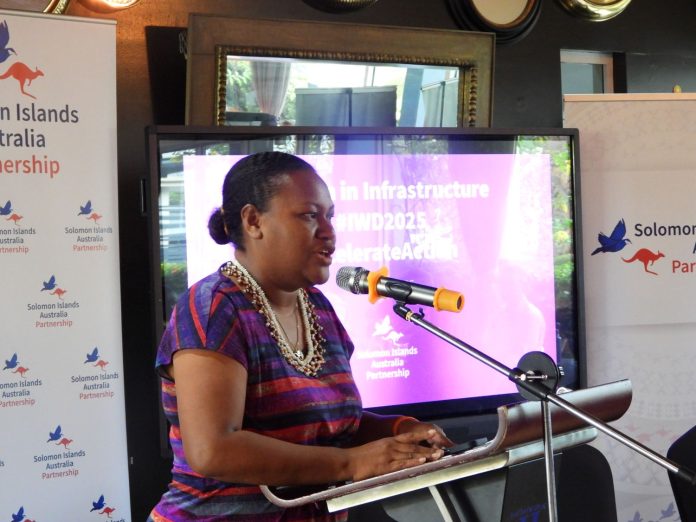
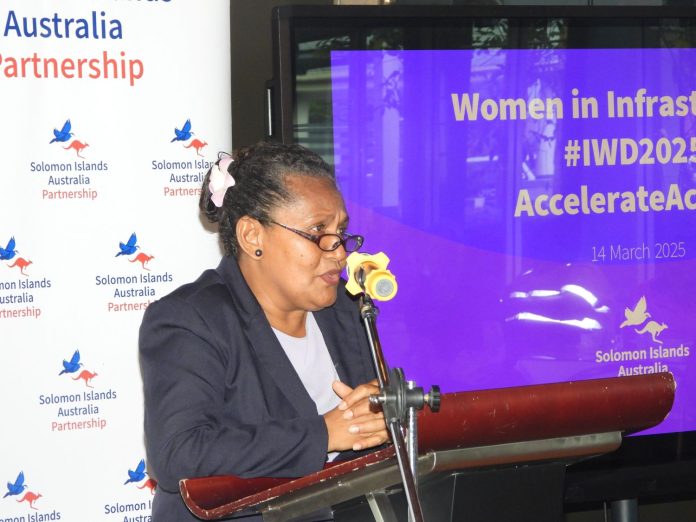
Cathy Nori, member of parliament for Maringe-Kokota constituency and deputy speaker to Parliament dwelled on this when speaking at the “Women in Infrastructure” Breakfast Forum last week at the Heritage Park Hotel.
She said through her own experience working in the infrastructure industry, five traits come to mind and are traits that will go a long way in enhancing and improving how women operate with men in the infrastructure industry.
Nori mentioned that as women are good in administering and managing their families and they are most likely successful in administering and managing projects, institutions, businesses and workplaces too.
She said that the five traits are; attitude to work, education and training, perseverance, leadership and humility.
Nori expressed that on “attitude to work”, it is said that the secret to success is in the attitude we bring to our workplaces.
She said women have consistently proven this time and time again, whether you’re as an engineer or a mechanic, an entrepreneur, a teacher, a scientist, a nurse, or a mother at home or a student.
Nori stated that the way women approach each challenge and opportunity is what sets them apart.
“Women have shown the world that dedication, passion and determination are not just words, they are actions.
No matter what field you enter, your attitude to work will elevate you, inspire those around you and make a difference in your community.”
Nori went on to talk about “education and training”, of which she said is the foundation upon which we build our dreams and is a powerful force for transformation.
She said it is not just about gaining knowledge, but about opening doors to possibilities, breaking barriers and challenging the status quo.
Nori added that the more women are educated, the more empowered they become.
She said education provides women with the tools to create change, to advocate for their rights and to lead with vision and confidence.
“Let us renew our commitment to ensuring that every girl, every child has the opportunity to learn, to grow and to become the woman she aspires to be one day.”
She then stressed on “perseverance”, and what it means to have perseverance.
“Perseverance is the fuel that drives us when the path becomes difficult.”
Nori said when the odds seem insurmountable, the women we celebrate today, whether in history or in our lives right now, have all shown unwavering commitment to pushing forward, no matter the obstacles.
She emphasized that these women have fought against stereotypes, limitations and systems and still they rose.
“The perseverance didn’t just get them to their goals, it inspired generations to come.
So, to every woman facing a challenge today, know that your perseverance will carry you further than you ever imagined.”
Speaking on “leadership”, Nori said leadership is not defined by titles or positions but about inspiring others, making tough decisions and guiding with integrity.
She stated that the world needs more women in leadership roles in infrastructure and other technical male-dominated spaces.
Nori added that women have shown that true leadership isn’t about power but service.
“We call on every woman to step into leadership in their communities, in their business, and in whatever you are doing. Not just for your own future, but for the future of every woman who will come after us.”
Nori finally stressed on “humility” to which she said true strength is never about ego.
She said humility is rather about recognizing our collective humanity.
In this regard, Nori stated that women who lead with humility inspire trust, create unity and foster growth.
She mentioned that humility allows us to learn from others, to acknowledge our shortcomings and to always strive for improvement.
Nori said humility reminds us that no matter how high we rise, we are a part of a greater whole.
She further noted that the most powerful leaders are often the ones who are most humble, who lift others up as they rise and share their success with those who’ve helped them along the way.
For feedback, contact:[email protected]