Police have charged a male person with spreading false information claiming he was nearly abducted at the Kola Ridge cemetery near Talise Market in Honiara.
The said incident occurred at the height of alleged attempted abductions in Honiara in early October this year.
The matter was mentioned in court on Monday this week, where the defendant was instructed to seek a legal representative.
The matter was suspended to December 9 for mention.
Court made directions for prosecution to prepare disclosures and to serve them to defence once the accused obtains a lawyer.
Junior Harry Gereniu was charged with one count of spreading false information likely to cause fear and panic in the community contrary to section 63 of the Penal Code.
It was alleged on October 19 at 9.15pm, the accused posted on Facebook, alleging that a White Toyota Rav 4 without a plate number attempted to abduct him, using a hook to steal his basket containing a passport and visa.
The RSIPF began investigating the alleged kidnapping on October 25 after public panic and temporary school closures.
The accused later admitted to fabricating the story based on exaggerated remorse, police said.
The false information allegedly caused widespread panic, resulting in schools being closed and police intervention, police alleged.
The accused was arrested and charged under section 63 of the Penal Code.
The accused was released on bail.
Able Maelanga of office of Police Prosecution Department acts for the crown.
The journey of Hilda Mungale, Human Rights Defender
BY IRWIN ANGIKI
At 43, Hilda Mungale stands as a beacon of resilience and advocacy in the Solomon Islands, dedicating her life to addressing social injustices and empowering vulnerable communities. Currently serving as the Senior Training and Advocacy Officer at the Family Support Centre, Hilda’s path reflects unwavering commitment to gender equality, human rights, and the fight against gender-based violence (GBV).
Hilda’s journey began in 2003, working as a radio presenter and administrative officer for nearly eight years. Her early career laid the groundwork for her ability to communicate effectively and manage diverse responsibilities.
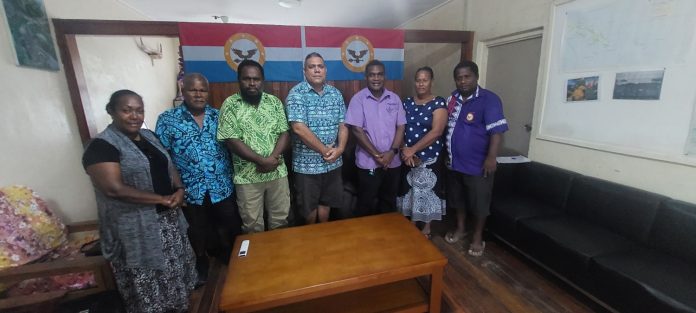
Hilda and her team posed for a photo during a community activity. Photo credit Hilda’s FB page.
In 2012, she transitioned to a role as Assistant Project Officer with an international non-governmental organization (INGO) focused on children’s and youths’ rights and welfare.
Through this project, Hilda contributed to protecting children and youth in conflict with the law by strengthening systems and promoting their rights.
However, her advocacy expanded further when she joined the Family Support Centre in 2014. Here, she became immersed in conducting training and awareness programs on gender inequalities, GBV, and human rights.
“I gained extensive experience in addressing gender inequality, GBV, and the rights we are all entitled to as human beings,” Hilda reflects. “This knowledge has been instrumental in equipping others to stand against harm and abuse.”
Hilda has facilitated countless workshops for stakeholders, government ministries, and community members across rural and urban areas.
Her role has also taken her to regional dialogues and workshops, where she has discussed strategies to address GBV and safeguarding issues, always with a survivor-centered focus.
Recently, Hilda participated as one of the panelists at the Regional Safeguarding in Sports Workshop held in Nadi, Fiji.Photo credit – Hilda M.
Her passion for advocacy stems from a deep concern for vulnerable groups, particularly children and youth.
“My work with communities showed me how powerless some individuals can feel when facing social issues. It fuelled my drive to empower them to exercise their rights responsibly while respecting the rights of others,” she said.
Hilda’s advocacy extends beyond training sessions. She emphasizes the importance of community consultations to engage leaders, identify root causes of social issues, and promote practical solutions.
Armed with data and evidence, she raises awareness about the far-reaching consequences of unaddressed social issues on individuals and the nation as a whole.
Her faith and values underpin her work. “I believe every human being is equally important and deserves respect, regardless of their background, culture, or religion,” Hilda says.
This belief drives her to foster open communication and learning within communities, encouraging inclusive and transformative change.
Hilda and Her Colleagues Celebrated International Women’s Day Earlier This Year.Photo credit – Hilda’s FB page.
The impact of her work is evident. Communities are beginning to adopt gender equality principles, and individuals are making positive changes in their attitudes and behaviors.
Hilda also finds motivation in seeing men join the fight against GBV, acknowledging their role in challenging stereotypes and dismantling harmful social norms.
For Hilda, the journey is ongoing. She believes collaboration among all stakeholders—government, communities, and individuals—is vital to reducing social issues. “Social change isn’t the responsibility of a single person or group. It requires everyone’s participation,” she asserts.
Through her dedication, Hilda Mungale embodies the essence of a human rights defender, inspiring others to create a more equitable and inclusive society in the Solomon Islands.
“This profile of Human Rights Defender in Solomon Islands is made possible with funding support from the Power Up project of The Asia Foundation (TAF) and the Pacific Islands News Association (PINA).”
Afu Billy, leading human rights defender shares lifelong journey to try and make life better for all
BY IRWIN ANGIKI
Wanting fairness for everyone, justice for everyone, people’s rights upheld, selfless – these are some of the many ways used to describe Afu Billy.
Afu is one of Solomon Islands’ human rights defenders, a calling she has devoted most of her life towards.
Hailing from picturesque Kwai Island in the East Malaita region, Afu is seen as a senior leading figure in the push for human rights spectrum both locally and abroad.
Whether its women’s rights, children’s rights, indigenous people’s rights or persons with disability rights, Afu will be there leading the way for people to have their rights recognised and accepted.
She shares with Island Sun her journey as a human rights defender, a profession and passion which is often not an easy task in Solomon Islands and most parts of the world.
What is your earliest memory standing up for the rights of others?
I assisted the President of the Guadalcanal Provincial Council of Women at that time to get the Guadalcanal Provincial Government’s Water and Sanitation Division to pipe clean water to one big rural community on Guadalcanal. Women were able to access water right in their village. Before that they had to walk many miles to get water and to carry heavy containers of water back to the village. With water now available in the village, women and girls do not have to walk many miles anymore to fetch water.
How long have you been involved in this work – as a human rights defender?
May be when I was in my primary school, but not realising that what I was doing was fighting for my own right. E.g. my parents wanted me to select one of the provincial secondary schools to be my first choice. I know at that time that any school I put down as my first choice, will be the school that I will go to as I knew my academic performance was strong.
On what type of social problems do you work?
I work in women’s rights, child rights and the rights of people with disabilities, the vulnerable, the disadvantaged and minority groups.
Afu Billy joins Tok Stori between Australia’s gender ambassador and women’s civil society organisations. (Left-right) Eliza Woolcock – First Secretary, Australian High Commission, Peonie Boso – Women’s Rights Action Movement (WRAM), Afu Billy – Solomon Islands National Council of Women, Ambassador Copus Campbell, Dr Alice Pollard – West ‘Are ‘Are Rokotanikeni Association, Josephine Kama – Vois Blong Mere. Photo credit – Australian High Commission.
Why do you think they are important?
Because they are seen as second class citizens but they are human beings and all human beings have rights. When I see their rights being abused, I step in and try to advocate for their rights. An example, the husband of one woman died without documenting who in his family will take his NPF. As is the case in our culture, the relatives of the husband wanted to take his NPF. His wife came and saw me and was very worried as they had 6 children. I took the woman to a lawyer and we got the NPF to divert the NPF funds to the wife for the future of the children. The money enabled the wife to build a house for her and her children and to pay for the children’s school fees.
Why do you think these problems exist?
In the case of the above example, custom practices are at play as wives are assumed to marry someone else if their husbands die, so the relatives should be the ones taking the NPF funds. In many cases the relatives who are usually the men, will misuse the funds resulting in nothing left for the wife and the children.
How did you become involved in this type of work? What inspired you to continue working for social change?
My mother and father were local missionaries. At an early age I was left with caretakers while my parents toured the provinces to spread the word of God. I had to look after myself at a very early age so became resilient and because I suffered, I could relate to other people’s plights so wanted to help other people whose rights are abused. I did not know at that time that I was actually a human rights defender.
How much time do you spend on your personal life and on your work as a human rights defender?
Defending human rights is part of my life so there is no separation as such. If I see someone’s rights or a group’s rights being abused, I will step in and try to address that person or groups to address the human rights abuse.
Afu Billy. Source – Facebook/Afulia Billy.
Do you talk about religion or politics?
Yes in terms of human rights e.g. the rights of individuals to whatever religion they want to affiliate with or the rights of individuals to participate in political activities including to stand for elections or to affiliate to political parties. This is part of a person’s civil and political rights. I do not talk against any religion or any church because people have their right to join any church they want to. But if a church abuses the rights of women or any group of human beings, then I will step in. For example if a church preaches that violence against women is alright, then I will step in.
What do you like most about your job? What do you like least?
As a human rights defender it is satisfying and fulfilling to see people being helped to claim their rights. Like the woman who was able to access her dead husband’s NPF, she was so grateful.
How would you like to be remembered?
Nothing. People can remember me by the way they know me.
What are you currently doing or are engaged in?
I am the current President of the Solomon Islands National Council of Women, working for the rights of women and girls. I am also working closely with women with disabilities, trying to connect them to resources to support their work; I am also working in women’s political participation, to promote the right of women to leadership including political leadership. I also work part time for an overseas company that supports the government to push for tourism development in some provinces of the country. In half of the provinces, women are the landowners however during these discussions, women are not invited to participate in these. So my role is to ensure that I get women to come and join the meetings and to also voice out their views on the tourism development and to question how women will benefit from these developments.
“This profile of Human Rights Defender in Solomon Islands is made possible with funding support from the Power Up project of The Asia Foundation (TAF) and the Pacific Islands News Association (PINA).”
St. Mary Tanagai Community High School (CHS), located west of Honiara, celebrated its 2024 academic year with a vibrant graduation and prize-giving ceremony, marking a significant milestone for 173 students. The event, attended by parents, teachers, and dignitaries, showcased both academic excellence and student achievements.
The theme for this year’s ceremony, “Excel Through Challenges,” resonated strongly with the graduates, who reflected on the obstacles they had overcome to reach this momentous occasion. The ceremony included speeches, the presentation of academic awards, and the conferring of certificates for Year 9 (Form 3), Year 11 (Form 5), and Year 12 (Form 6) arts students.
A highlight of the ceremony was the attendance of Francis Sade, Member of Parliament for Northwest Guadalcanal and Deputy Speaker of the National Parliament. Sade, who had attended last year’s graduation as well, reaffirmed his commitment to the school’s development.
He made an important announcement during his speech, pledging support for the school’s fencing project and assistance in purchasing a vehicle in 2025, a gesture that would enhance the school’s mobility and resources.
“The future of St. Mary Tanagai is bright, and I am excited to be part of it,” Sade said. “As we look to the future, I want to assure you of my unwavering support for the new initiatives aimed at enhancing our school environment, fostering student learning and success, and improving the well-being of our staff, teachers, and their families.”
The ceremony also marked a special milestone in the school’s history as the first graduation under its new name—St. Mary Tanagai Community High School. The name had recently been changed from the former Marara CHS. The school provides education from Form 1 to Form 6 Arts, and this year saw 68 students graduate from Year 9, 59 from Year 11, and 46 from Year 12.
In his opening remarks, Principal James Mepobu delivered a warm welcome to all attendees, expressing heartfelt gratitude to the parents, teachers, and students for their collective support in making the event a success.
“It is with great pride that we celebrate the achievements of our students, who have worked tirelessly over the past years to reach this significant milestone,” said Principal Mepobu. “Today, we honor not just academic excellence, but the resilience, dedication, and perseverance these young individuals have shown throughout their journey.”
He also appealed to all stakeholders to work together in the spirit of cooperation.
“I humbly call on all important stakeholders to cooperate in achieving our mission for our beloved children,” he said.
John Bosti, the Guadalcanal Provincial Government Minister for Education and former Principal of St. Mary Tanagai, also addressed the graduating class. Bosti, who has a deep connection to the school, offered words of encouragement and praise for the students.
“Fellow graduating students, today’s occasion is your day, marking one of the significant steps in your educational journey. You are the future leaders, innovators, and change-makers of our country,” Bosti said.
The ceremony concluded with a festive atmosphere as students, parents, and teachers gathered to celebrate the graduates’ achievements. Feasting and entertainment added to the joyful mood, marking the end of a memorable day for St. Mary Tanagai Community High School.
Manasseh Sogavare, minister of finance and treasury spoke on how the government manages tax and duty exemption in parliament yesterday.
He said this has been a subject of public of debate within and outside parliament recently.
“I know that the question is noticed by the Leader of the Opposition on this paper, requesting a statistical data on the value of the exemptions granted, whom granted and the dates the exemptions were granted in 2024 up to 31st October”
Sogavare said on the requirement for the government to be transparent and accountable for the administration of the exemption regime, he needs to inform the house that the Regulations 32, 33 and 34 of the Revenue and Customs Exemption Committee in the Non-Statutory Exemption Regulations 2013 made pursuant to Section 81 of the Customs and Excise Act, that require the release of prescribed information, both by the minister, the Exemption Committee and the Control of Customs and Exercise.
“To prescribe the method of such release, which does not include entertaining a question on the floor about that method”
Sogavare said the regulations 32 require the minister to release the precise information or certain elements of the information that is requested by the Leader of Opposition requesting, by way of a quarterly public gazette, contrary to the way the Leader of the Opposition is requesting transparency and accountability by way of a question on the floor about it.
He also stated that he draws attention of the house on standing orders 12-1-K, which makes the following claim and he quotes,
“A question shall not be asked seeking information which can be found in accessible documents or ordinary works of reference”
Sogavare said the Leader of the Opposition and anyone for that matter can access the published gazette to access this information.
“Therefore, the question noticed by the Leader of the Opposition on this matter may be out of order”
Sogavare said the release of information by the Exemption Committee under Regulation 33-1, by way of an annual report to the Public Accounts Committee protects the identity of the recipients, as follows and quotes.
“The Exemption Committee shall provide annual information to the Public Accounts Committee on the nature and cost of all tax and duty exemptions granted in the previous fiscal year”
He stated that under regulation 33-2 it reads as follows.
“In that regard, the information provided by the Exemption Committee will not include names by the means of identifying individual recipients”
Sogavare said the latest report submitted is with the Chairman of the Public Accounts Committee.
He stressed that the reason for this prohibition is in line with international best tax practice and is to protect our taxpayers who enjoy a fiduciary relationship with the Commission of the Inland Revenue and Control of Customs in all matters concerning their tax affairs.
Sogavare added there is also the obligation to protect a fiduciary relationship which functions on mutual trust and confidence and it is clear that we cannot discuss names of taxpayers in this house.
He said the fiduciary relationship between the taxpayers and the tax authority is one thing and importantly, for the simple fact that they cannot defend themselves on the floor of parliament against racist references and other incautious references that may be made against them on the floor of parliament.
Parliament has been adjourned for Wednesday, 4th November, giving 2 more days for the Public Accounts Committee (PAC) and Bills and Legislation Committee (BLC) to conclude their hearings and reports.
Prime Minister Jeremiah Manele moved the special adjournment in parliament yesterday.
“I move that at its adjournment on Monday 2nd December 2024, parliament shall adjourn to Wednesday 4th December 2024”
Manele said the reason for the special adjournment to Wednesday 4th December 2024 is to give additional time for the Public Accounts Committee (PAC) to complete its hearings on the 2025 budget as well as to finalise its report on the budget.
He added that it will also give time for the Bills and Legislation Committee (BLC) to complete its hearing on the Constituent Assembly Amendment Bill 2024.
Manele acknowledged the PAC chairman, Gordon Darcy Lilo and his committee members for the work that has been done so far.
He also took the opportunity to remind ministries and stakeholders that are yet to appear before the committee to stick to the schedule that the chairman and the committee have given.
Manele said this is so that PAC can quickly complete its hearings and ensure that its report is ready as soon as possible and send it to those that will appear before the Bills and Legislation Committee in terms of the Constituent Assembly Amendment Bill 2024.
Sogavare reaffirms commitment to improving tax and duty exemptions
BY LORETTA B. MANELE
Manasseh Sogavare, Minister for Finance and Treasury (MoFT), has reaffirmed his commitment to improving the administration of the tax and duty exemptions regime.
Speaking in parliament yesterday, Sogavare addressed what he described as a “widely debated view” circulating on social media and within political circles on both sides of the house, alleging that he had backtracked on his commitment to granting exemptions.
“I have not erred one bit. I am still committed to improving the administration of the tax and duty exemptions regime,” Sogavare stated firmly.
The minister highlighted that he had already informed parliament of his intention to review tax clauses in all mining agreements, and this review is progressing well.
He explained that the purpose of the review is to align tax incentives with the country’s tax laws and international best practices, ensuring greater clarity and effectiveness in their application.
To this end, Sogavare noted that the Economic Reform Unit within his ministry is collaborating closely with the Attorney General’s Office and the Ministry of Mines to draft proposed standard clauses for negotiation with mining companies.
“I understand that this work is nearing completion,” he added.
Sogavare also indicated that new clauses would be incorporated into existing mining agreements, requiring the government to engage in renegotiations with mining companies to implement the changes.
THE Ministry of Culture and Tourism has set a target to attract 100,000 visitors to the country by the year 2035.
“That is the overarching target we are working on starting next year (2025) until 2035,” Permanent Secretary (PS), Barney Sivoro told the Public Accounts Committee (PAC) in a hearing over the weekend.
Sivoro said that the ministry is confident in meeting this target based on the various ongoing developments,
Some of the developments the PS pointed out include the upgrades of international and domestic airports nationwide, new and unique products, the reciprocal visa on arrival for Chinese nationals, the recent discovery of the biggest coral in Makira province, sports tourism, and many others. that can potentially boost the number of visitors traveling into the country.
Additionally, Sivoro informed the PAC that another positive development for the ministry is the ongoing partnership with the Millennium Challenge Corporation (MCC) Solomon Islands Threshold Program (SITHP)
“With the support of SITHIP, we have already profiled 100 plus tourism investment ready sites in the Western, Guadalcanal, and Central provinces, some of them are already in the market now and we have already engaged a consultant who will be negotiating with potential investors,” he added.
Sivoro stressed that by achieving this target, the tourism sector could potentially become a billionaire sector, contributing immensely to the country’s national GDP.
Human rights defenders work tirelessly to advocate for the rights of all people. Among them is Phillip Subu, a passionate youth and indigenous rights advocate from Malaita and Makira provinces in the Solomon Islands.
Subu, who identifies as both an environmental and indigenous rights defender, dedicates himself to protecting natural resources and advocating for cultural preservation. He also champions youth empowerment and development through his leadership roles, including serving as the President of the Malaita Provincial Youth Council and former Program Manager of the Mala I Tolo Indigenous Guardianship Trust.
Phillip Subu (3rd from right) was Elected as Treasurer of the Pacific Youth Council (PYC).
Subu’s work encompasses a wide range of issues, including economic empowerment, climate resilience, and indigenous education. He introduced IT education training in Malaita and collaborates with organizations like Save the Children and the Pacific Youth Council. His efforts have extended to gender equality initiatives, exemplified by his participation in the Regional Conference on Gendered Climate Policy and Environmental Governance in Fiji earlier this year.
He believes in creating opportunities for young people to develop leadership skills and engage in decision-making processes. Through projects like Youth for Change Solomon Islands, Subu has promoted democratic values, strengthened youth organizations, and given young people a platform in political decision-making.
As a human rights defender, Subu has faced resistance from traditional leaders, a lack of understanding of human rights in communities, and insufficient resources for advocacy. Despite these hurdles, he has successfully raised awareness of issues like land rights violations, youth exclusion, and gender-based violence.
“I believe in the dignity and rights of every individual. My work ensures that vulnerable populations are protected, their voices heard, and opportunities created for all,” Subu said.
President of the Malaita Youth Council, Phillip Subu speaking at this year’s Regional Conference on Gender Responsive Climate Policy and Environmental Governance in Fiji. Photo supplied.
Subu highlights key human rights challenges in the Solomon Islands, including deforestation and mining without proper consent, youth exclusion, and insufficient support for victims of gender-based violence. He calls for stronger legal protections for tribal landowners, mandatory youth councils, and more accessible educational programs to combat discrimination.
He also urges the Solomon Islands to ratify international conventions on indigenous rights, environmental protection, and youth empowerment to enhance accountability and uphold human rights.
Subu believes both national and provincial governments must take action to improve human rights, including enforcing existing laws, providing adequate funding for human rights programs, and integrating human rights frameworks into local governance.
“It is critical to strengthen the justice system, train leaders on human rights, and ensure local policies align with international standards,” he said.
Subu’s work demonstrates the power of advocacy in creating change and advancing the dignity and rights of all individuals.
“This profile of Human Rights Defender in Solomon Islands is made possible with funding support from the Power Up project of The Asia Foundation (TAF) and the Pacific Islands News Association (PINA).”