A 20-year-old male charged with one count of indecent act will face court Monday next week to take his plea.
The defendant was first charged with attempted rape however prosecution substituted it with the new charge of indecent act.
Court moved the matter to December 16 for the defendant to take his plea on the substituted charged.
The complainant in this matter is a juvenile, a 11-year-old girl.
It was alleged on August 20, 2024 the victim, her brother, her aunt and uncle and their children including the defendant where at the victim uncle house having dinner.
After the dinner, they watched a movie on the defendant’s phone.
While watching the movie, the victim fell asleep while the others continued watching the movie.
It was alleged the complainant’s brother came and woke her up and told her to go upstairs in their dwelling.
She left and instead of going upstairs, she went and laid on their hammock under the house.
It was alleged not long after the victim fell asleep on the hammock, the defendant came and laid beside her.
The defendant held her tight and did sexual activity to her.
When the victim tried to wake up the defendant gave a bite on her left side of her neck.
The uncle and aunty later reported the matter to police and the accused was arrested.
Irene Mae of Office of Director of Public Prosecution act for the crown and PSO for the accused.
Government has announced its Coral Reef Rescue programme currently being rolled out in some parts of the country.
This programme is being led by the ministries of fisheries and marine resources (MFMR) and environment and climate change (MECDM).
It is being run in partnership with the Wildlife Conservation Society (WCS) and their stakeholders.
The Coral Reef Rescue (CRR) is funded by the Global Environment Facility’s (GEF) Coral Reef Rescue (CRR): Resilient Coral Reefs, Resilient Communities Project, which aims at bolstering resilience of coral reef ecosystems, ensuring their long-term survival and supporting the blue economies of Solomon Islands.
The project is implemented by the World Wildlife Fund for Nature (WWF-US), with the University of Queensland (UQ) as the Lead Executing Agency and the Wildlife Conservation Society (WCS) as the National Technical Facilitator in Solomon Islands, a media statement by MECDM yesterday explained.
The project is a vital component of the Global Coral Reef Rescue Initiative (CRRI), a global multi-stakeholder partnership dedicated to protecting coral reefs endangered by climate change.
It focuses on capacity building to find nature-based solutions to conserve coral reef biodiversity and support the communities who rely on these ecosystems.
One of the key elements of the project is conducting workshops (tokstori) that aim to enhance community representation in national coral reef conservation strategies.
These workshops will integrate traditional knowledge and community visions while ensuring gender equality, the MECDM statement said.
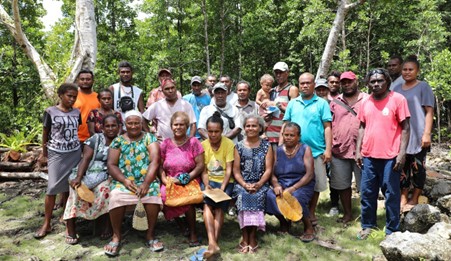
So far three workshops covering three provinces have been conducted. The most recent ones were held in Oibola village in the Langalanga Lagoon, Malaita Province and Khumagha village in Isabel Province.
In both places village elders spoke highly of the initiative and thanked the government, WCS and all stakeholders involved for taking the initiative to protect the country’s fragile coral reef and marine ecosystems.
Chairman of Khumagha Marine Conservation Paul Katoragi told MECDM that since going into conservation his community has already seen a lot of changes to their marine resources.
He said the tokstori has given them insight to take their conservation efforts to the next level with the aim to declare it under the Protected Areas Act administered by MECDM
Through participatory visioning exercises, the workshop aims to empower communities, allowing women, men, and youth to share their perspectives on resilient coral reef conservation and the integration of traditional knowledge, the MECDM statement said.
This announcement by government is timely since the world’s largest standalone coral was found on the Three Sisters island group in Makira-Ulawa province last month.
The finding was made by the National Geographic Pristine project, which studied few areas in the eastern Solomons when its scientists chanced upon the finding.
Solomon Islands is known for its diverse coral reefs including fringing, barrier, patch and atoll reefs that make up the country’s marine biodiversity and is a cornerstone of its economy through fisheries and tourism.
However, these vibrant reefs face severe threats from climate change, overfishing and pollution.
The Leader of the Opposition Matthew Wale has strongly condemned Government’s failure to address the long outstanding issues surrounding bauxite mining in Rennell.
Speaking in Parliament, Wale rebuked Government for its gross mismanagement and incompetence in handling the nation’s strategic resources, a media statement by the Opposition yesterday said.
Wale’s remarks came after the Minister of Mines and Minster of Finance failed to provide substantive answers to his question regarding unpaid duties and taxes on bauxite shipments from Rennell.
“I have put this question on notice for more than a week now. Government has had enough time to find the information regarding the outstanding amounts.
“And the Minister of Finance is only trying to find the answer this morning? This is inexcusable, especially when this matter has been outstanding for eight years,” Wale said.
Wale criticised Government’s lethargic approach, describing it as a reflection of their persistent failure over the years to manage the country’s natural resources responsibly and effectively.
“This is the same Minister of Mines. This is just inexcusable. The Minister cannot in any way defend himself from this gross mismanagement.
“Even if it was only one shipment, the Minister of Mines should be going after the payments. But to let 33 shipments go? Shame on you,” Wale added.
Wale said the issue is exacerbated by Government’s reckless decision to impose zero duty on bauxite and other associated minerals exported from Rennell, the statement adds.
Concluding his remarks, Wale questioned Government’s tolerance of such blatant negligence and called on Government to take full responsibility for their ongoing gross mismanagement.
“We are the only country that mining companies don’t pay the duties and taxes and its okay.
“And Finance Minister says we cannot recover the money? Is that the response we give to our people? We should be ashamed,” Wale concluded.
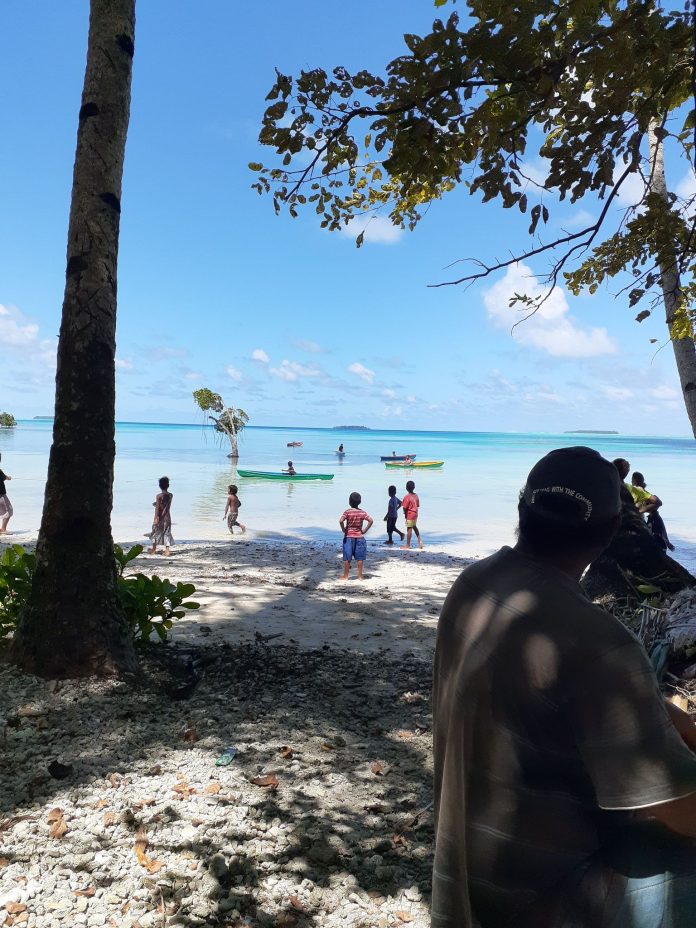
The Sikaiana atolls just could be the world’s top tropical tourist destination. Four islets conjoined by a barrier reef encircling a lush blue lagoon perforated with thriving corals teeming with marine life.
Glistening white sandy beaches outlining each islet with gentle waves lapping their shores. Cool breeze chills the sun’s gaze as children play by the seaside and grown-ups sitting under the shade of a huge Terminalia nut tree having a yarn and cracking jokes.
But, this touching serene scenario hides the grim reality that the people of Sikaiana struggle with.
Children enjoying the white sandy beach which stretches across the village front. Photo credit – Travolta Patau.
Sikaiana is all but forgotten – hardships compounded by geographic isolation, extremely limited government service including poor transportation and worse – being at the forefront against climate change.
It is one of Solomon Islands’ low-lying atolls which sits northeast of the country. Formerly known as Stewart Islands, the atoll has a resident population that fluctuates between 200 and 250 people.
Resilience – but for how long?
“Despite the scales being tipped against us, we Sikaiana people are hardy and resilient in the face of climate change. We are utilising our traditional knowledges which enabled our ancestors to survive the harsh extremes of the environment in the past,” chief Don Teui, 50, said.
Sailing – a casual ride around the lagoon. Photo credit – Travolta Patau.
“But, our resilience to climate change is only buying us time – a commodity which will one day run out. With climate change and sea level rise, it is inevitable that we would have to leave this atoll eventually,” he said with tears.
School teacher Rose Sapivaka, 60, shares some of the many traditional knowledges to help adapt to changes such as low-flying seabirds indicating bad weather, certain changes in wave and current behaviour warning of huge tsunami-like waves, planting and maintaining mangroves helping save much of the village shore from serious wave damage, nurturing corals in the lagoon, observing cycles of edible marine food helping in sustaining fish supplies and avoid over-exploitation.
More raised houses are being built compared to the traditional ground-floor design with certain trees planted to help as wind barrier as well as shade.
Hakatupuna – fenced storage of dry coconuts for food or planting. Photo credit – Don Teui.
Sapivaka said over the last two decades changes have occurred faster compared to the 1980s and 90s.
Locals share stories of new unpredictable weather patterns, rising sea levels, gardens depleted by seawater intrusion deep inland, land lost to the sea, increasing frequency of illness, chores getting harder especially for women, reduced land fertility, and more.
Sikaiana – an ancient highway intersection
The Sikaiana people are of Polynesian descent whose history boasts voyaging ancestors from Tuvalu, Samoa, Kiribati, Tonga and Tokelau.
The atoll stretches nearly 10km in length and six kilometres at its broadest point. Sikaiana is also a breeding ground for transiting migratory birds with each islet having few giant baobab-like trees hosting these huge sea birds.
Sikaiana people live on the largest islet, the highest point of which is merely around four metres above sea level.
Heavy erosion at weather coast, back of Sikaiana, called Tua slowly eating inland. Photo credit – Don Teui.
The village faces the lagoon and the few permanent infrastructure include the Anglican church building, the school and clinic. Homes are built using hard pandanus wood, leaves and coconut wood and leaves.
The staple food is fish, swamp taro, bananas and coconut. Rice and other processed foods from the shop are however becoming prolific in today’s meals.
Land as precious as life
Arable land is at the centre of the island, where the people have dedicated to swamp taro gardens – a mosaic of rows of swamp taro beds surrounded by waist-deep mud which have been kept replenished and reusable for generations by composting leaves and rain water.
A decade ago the first report of brine seeping out of holes inland emerged. During high tide seawater has since been creeping through fissures in the limestone base of Sikaiana atoll causing saltwater to damage crops sensitive to high pH levels.
Today nearly a quarter of arable land has reportedly been lost due to this inland saltwater intrusion.
The next row of coconuts to be taken by the sea at Tua, Sikaiana. Photo credit – Don Teui.
Sea-level rise has nibbled away at the island’s periphery. Sikaiana’s weather coast is a stark picture of this, with the typical cliff-like surfaces exposed along the shore due to wave action.
School teacher Thomas Sapivaka, 65, says traditionally significant landmarks have disappeared.
“Days are hotter and nights colder. With the ongoing difficulty in growing and decreasing fish stock, and endangered fish species, pit against an increasing population, life is harder. Worse, when shipping service to the atolls is very poor, it exacerbates impacts.”
Fr Hugh Blessing Saua, 50, a local priest who did extensive research on Sikaiana’s economics said: “While life in Sikaiana is beautiful, it is not easy in terms of transportation, communication, education and health care services. Sikaiana has severely limited land resources and very poor economic support from Solomon Islands, a developing country that continues to struggle with basic infrastructure.”
New leaders, new hope
The world this month (November, 2024) announced USD$300 billion annually by 2035 in climate finance for developing countries – a trickle of which could help Sikaiana.
Newly elected provincial government representative of Sikaiana, Lemuel Kevianga, 40, is pursuing funding and support for community welfare, infrastructure and service projects for Sikaiana.
“We are facing dire impacts on food security, environment, infrastructure development, Sikaiana’s economics and social aspects, and culture. We’re slowly addressing our goals, one of which is the recent deal to have a telecommunication tower installed on Sikaiana.
Village centre looking out to the lagoon and three islets at the other end. Photo credit – Travolta Patau.
“Transportation improvement is being worked on, so as education, health care, disaster preparedness and response capacity, empowerment of women and marginalised groups, as we continue pressuring our government, hey – please help us in these areas.”
Relocation, which is a contentious topic, is not out of sight for Hon Kevianga.
“We hope that the recent announcement at COP29 will trickle down to us soon enough to help us relocate before it is too late,” Hon Kevianga said.
For chief Don, he is heartened that the world is showing concern for communities at the front against climate change – but.
“Although it is kind of late, do not let it be even more late. World authorities should hurry up so that these huge funds we see on the news can get to us during my lifetime,” says chief Don.
*This is a story grant supported by Earth Journalism Network
Public transport strike erupts in response to HCC tinted window ordinance
BY NED GAGAHE
Public transport owners and drivers in Honiara have gone on strike to protest a new ordinance by the Honiara City Council (HCC) requiring the removal of tinted windows from buses and taxis.
The strike, which began Monday, caused significant disruption mid-afternoon yesterday, leaving many commuters stranded and scrambling for alternative ways to reach their destinations.
The protest escalated near Lawson Tama, where incoming buses were halted, creating large crowds of frustrated passengers. Many were forced to walk to town after being dropped off.
The ordinance, which came into effect on December 2, 2024, aims to improve public safety by increasing visibility in public service vehicles. However, the regulation has angered bus and taxi drivers, resulting in city-wide disruptions.
The strike has heavily impacted workers and daily commuters who rely on public transport.
One eyewitness, George Hiri, livestreamed the chaotic scene from Lawson Tama, describing how stranded passengers were left with no choice but to walk.
“This is chaotic. We’ve been abandoned. Public buses and drivers are joining the strike, leaving us to walk to town. Workers like me are severely affected,” he said.
Other passengers expressed outrage over how the strike was managed, highlighting the plight of women, elderly people, and children.
“This situation is unacceptable. Women and children were dropped off and left to fend for themselves. I saw a terrified child carried by her grandmother, crying. The lack of compassion and organization is appalling,” said one passenger.
Criticism was also directed at authorities for failing to communicate with the public.
“The authorities should have warned us. People were confused and angry because they didn’t know what was happening. This could have been handled far better,” another passenger added.
Meanwhile, the Guadalcanal Provincial Government clarified that the HCC regulation does not apply to public vehicles operating within Guadalcanal Province.
“This regulation affects vehicles only within Honiara City. Public vehicles in Guadalcanal are not required to remove tints,” the provincial government said in a Facebook statement.
The statement also urged drivers to adhere to traffic rules and drive safely during the festive season.
The Minister for Lands, Housing, and Survey, MP Polycarp Paea, has expressed strong confidence in the performance of the Solomon Islands Land Board, highlighting its significant growth and increased effectiveness over the years.
Speaking at a dinner reception held at Heritage Park Hotel to commemorate the Land Board’s 10th anniversary last Friday, Minister Paea praised the Board’s commitment to overseeing land matters with a critical and thorough approach.
“The Board has grown in confidence over the years, and Board members now cast a critical eye over all matters brought before them,” Minister Paea remarked during the event.
He commended the Board for its role in handling various land-related matters in 2024, including the successful allocation of 180 lots at Feraladoa and Fulisango settlements in Honiara.
The Minister also provided an update on ongoing land assessment processes, stating that the Board is currently evaluating tenders for land in Noro, Munda, and a second stage of South Honiara lots.
This follows a public advertising process aimed at promoting transparency and fairness in land distribution.
Minister Paea further revealed that a recent call for tenders for land that had remained unpaid for several years had successfully closed.
He confirmed that the first round of South Honiara allocations had been largely completed, with most grants signed. Only a few remaining grantees are yet to receive their postal addresses before finalizing their land agreements.
“The payment of land titles and annual land rents has contributed to another healthy year of revenue for the Ministry, despite ongoing challenges,” Minister Paea said.
In concluding his remarks, Minister Paea extended his congratulations to the Land Board, its members, and all stakeholders for their contributions.
He reaffirmed the critical role the Board plays as the “gatekeeper” of government land in the Solomon Islands.
“I wish the Land Board well in its continued efforts, and congratulations to all of you for the roles you have all played in this endeavor,” Paea said.
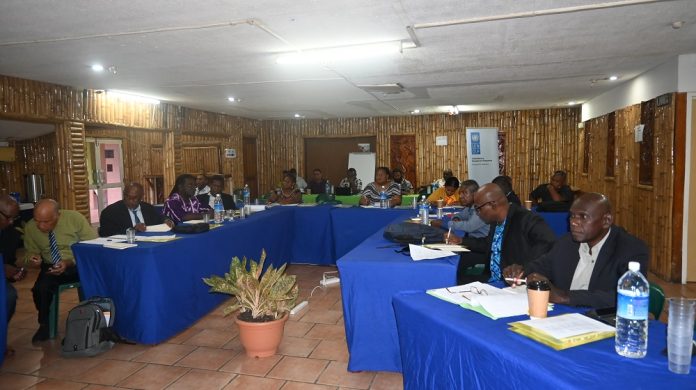
A week-long “Provincial Assemblies, Speakers and Clerks Induction” kicked off on Monday, 2nd Dec at the King Solomon Hotel conference room.
Mozammel Haque, UNDP’s Project Manager for Local governance in Solomon Islands in a brief interview told the paper that the induction is purposely for provincial speakers and clerks to have a clear understanding of their roles and functions aligned related to their work.
“We are inviting all the provincial speakers and the clerks to join us to have a clear understanding about the roles and functions aligning with the policy, procedure and the standing order and financial management ordinance, everything they need to know so that they can function better”
Haque stated that they have also organized a briefing session with parliament, the speaker’s office and the parliament clerk’s office and will also have the provincial speakers and clerks observe the parliamentary session scheduled for today live so they can understand the process, procedure and functions of parliament.
“When they go back with the knowledge they gained at the sessions and practical briefing from the national parliament, it is expected that they will perform better in terms of organizing the committees, particularly the public accounts committee, and organizing and dealing with the different sessions of the provincial assemblies”
Haque added that this is so that they can play an effective role as an impartial person and effectively run their respective provincial assemblies.
He expressed that they have invited all speakers and clerks from all nine provincial governments and are fortunate that they all could manage to attend the week-long program that will end on Friday, 6th Dec.
Haque explained that this program started on Mon, 2nd Dec and while the first two days will be in door sessions of presentations, for the remaining 3 days, the speakers and clerks will go to parliament to observe.
This program is funded by the European Union (EU) and facilitated by UNDP and Ministry of Provincial Government and Institutional Strengthening (MPGIS).
The government is undertaking a comprehensive reform of our tax system and so the situation will certainly be different when the reforms come on stream.
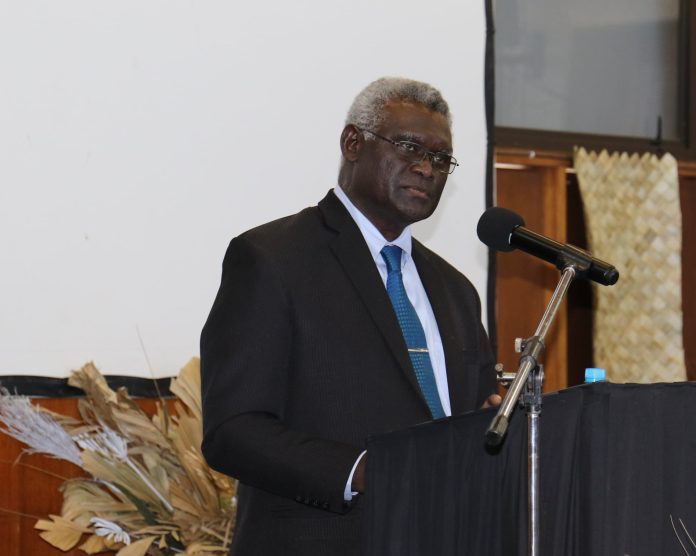
Manasseh Sogavare, Minister for Finance and Treasury stated this when delivering his statement on “Administration of Tax and Duty Exemptions” in parliament on Monday this week.
He said the aim of this reform is to achieve the five attributes of the ideal tax system which are fairness, adequacy, simplicity, transparency and administrative ease.
“So that the very structure of the system itself and how it is administered gives no reason for tax payers to request intervention of tax authority to make the system fair”
Sogavare stressed that the country’s tax failed miserably on all these five attributes of a good tax system.
“The government does not shy away from admitting that our tax system falls drastically short of the required standard of an ideal system”
Sogavare added that the only way to increase revenue is to squeeze every cent out of the existing tax payers.
He said in this regard, tax and duty exemption is the only way under a very constricting tax system like ours of breathing life into the already suffocating tax payers of this country in the formal sector who pay 99 percent of the tax that funds services enjoyed 100 percent by ordinary Solomon Islanders.
“We are looking forward to the implementation of the reform system but in the meantime with all of that, the issue is not granting of tax exemptions per say and I fully appreciate that but the proper administration of the regime
The guidelines provided in the Revenue and Customs Exemptions Committee on Non-Statutory Exemptions Regulation 2013 has that concern as the policy reason for the establishment of the exemption committee”
Sogavare said the exemption committee is entrusted with a very important responsibility to ensure that the revenue requirement of the government does not kill the goose that lays the golden eggs and drivers of sustainable development in the setting of a tax system that is structurally deficient.
An arrest warrant has been issued for a man who is accused of having assaulted a police officer.
This followed the accused’s failure to attend the first mention of his court case on Monday this week.
Junior David Waita is accused of assaulting a police officer, and is being charged with count of assault punishable with two years’ imprisonment contrary to section 247 of the penal code.
Court adjourned to December 16 for review of the warrant. Police are to execute the warrant during the course of adjournment.
Police alleged on August 18 a police patrol heading back to White River Station saw a group of males assaulting a man.
The police officers stopped and approached the group, but they escaped.
Waita who was with the group of boys fled and stood at a distance and pelted one of the police officers with a stone and swore at the police officers.
Police have charged a male person with spreading false information claiming he was nearly abducted at the Kola Ridge cemetery near Talise Market in Honiara.
The said incident occurred at the height of alleged attempted abductions in Honiara in early October this year.
The matter was mentioned in court on Monday this week, where the defendant was instructed to seek a legal representative.
The matter was suspended to December 9 for mention.
Court made directions for prosecution to prepare disclosures and to serve them to defence once the accused obtains a lawyer.
Junior Harry Gereniu was charged with one count of spreading false information likely to cause fear and panic in the community contrary to section 63 of the Penal Code.
It was alleged on October 19 at 9.15pm, the accused posted on Facebook, alleging that a White Toyota Rav 4 without a plate number attempted to abduct him, using a hook to steal his basket containing a passport and visa.
The RSIPF began investigating the alleged kidnapping on October 25 after public panic and temporary school closures.
The accused later admitted to fabricating the story based on exaggerated remorse, police said.
The false information allegedly caused widespread panic, resulting in schools being closed and police intervention, police alleged.
The accused was arrested and charged under section 63 of the Penal Code.
The accused was released on bail.
Able Maelanga of office of Police Prosecution Department acts for the crown.