Home Blog Page 434

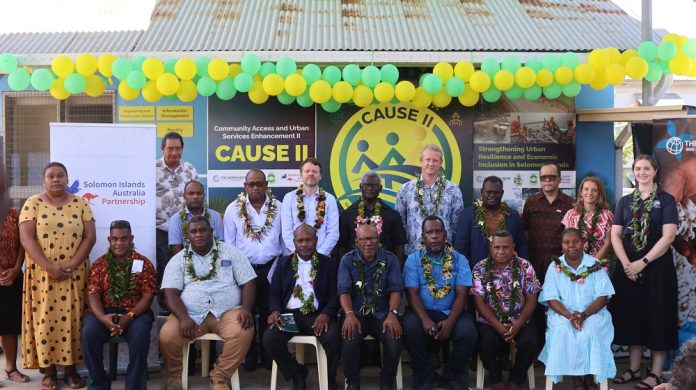
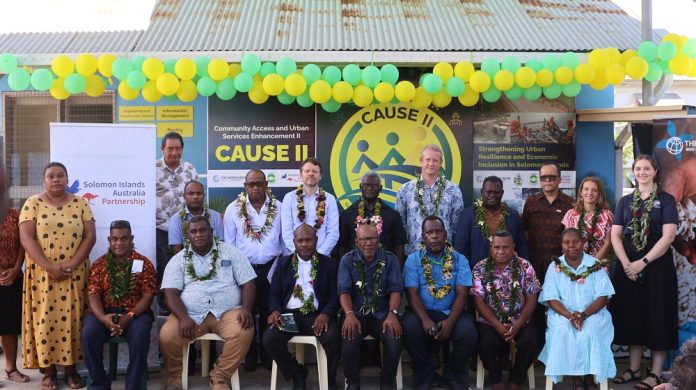
Unlocking urban potential vital for economic growth

0

By Loretta B Manele

Unlocking urban potential is a good and excellent driver for economic growth.

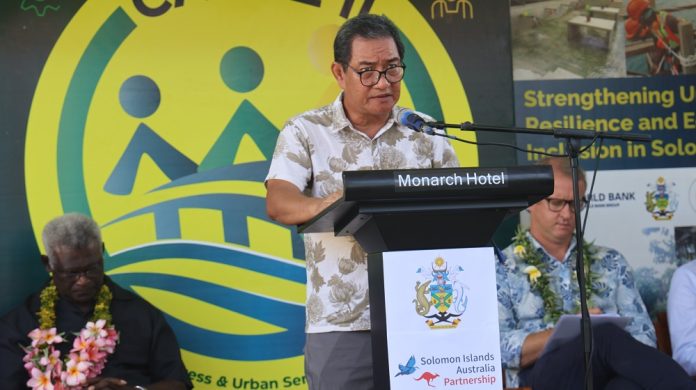
Lodewijk Smets, World Bank’s economist for Solomon Islands made the statement when speaking at the recent launch of Community Access and Urban Services Enhancement 2 (CAUSE 2) project.

He said World Bank has initiated this engagement about 14 years ago with financing of the Rapid Employment Project, continuing with CAUSE 1 in 2018 and now the CAUSE 2 project.

Smets expressed that their partnership under CAUSE 1 and CAUSE 2 has been essential in allowing them to scale up urban efforts in collaboration with the Australian government.

“So, the World Bank is very proud to support CAUSE as a model for positive urban development throughout the whole Solomon Islands, creating job opportunities, improving the resilience of communities and enhancing essential services”

Smets also took the opportunity to highlight a few benefits of the CAUSE project during its first phase.

He said the CAUSE 1 project sustained increase in employment and income potential, which is key for development and livelihoods.

Smets added that from this project, their survey shows a 20-percentage point increase in self-employment among female participants.

“Also, formal employment had increased, among 15 points among male and 6 points among male and female participants”.

Smets pointed out that CAUSE 1 also improved access and safety for urban residents.

He said their surveys indicate that there was a 90 percent drop in injuries reported due to the construction of Jacob’s ladders and footpaths.

Additionally, there was also a 95-percentage point decrease in beneficiaries reporting that their roads were impassable.

“So, these are just a few examples that demonstrate the effectiveness of a project like CAUSE in producing economic benefits for urban populations across this beautiful country”.

Smets moved on to talk about why we need a second phase of the CAUSE project.

He said the population of Honiara city and peri-urban areas of Guadalcanal have nearly doubled in the past 10 years, making Honiara one of the fastest growing capital cities in the whole world.

Smets stated that this rapid urbanization has put an unprecedented pressure on infrastructure and services.

“This is made worse by the increasing frequency and intensity of climate and weather events as experienced in the past weeks that could lead to local flash floods”.

Henceforth, Smets said CAUSE 2 will address the needs for climate resilient infrastructure and urban services by laying the foundations for sustainable urban management and service delivery.

“It will do so through improving land administration, own source revenue and as a country economist I fully support that and also asset management”.

Smets said relying on community labour and national contractors, the project will continue to create local jobs and help communities prepare for climate challenges.

In this regard, he voiced that he is encouraged and inspired by the government’s strong commitment to investing in human capital and the fiscal environment, both urgently needed to unlock the economic potential of urban centers in Solomon Islands.

“I’m not saying this only as the acting resident representative, but also as the country economist for this country. Unlocking urban potential is a good and excellent driver for economic growth”.

In terms of financing, he said the World Bank stands by Solomon Islands to support the country with experience and technical assistance to ensure a successful implementation of Phase 2 of the CAUSE project.

“I wish you all a successful launch of field activities and look forward to witnessing the first infrastructure improvements already this year”.

For feedback, contact: [email protected]

MID has crucial role in delivering infrastructure under CAUSE 2 project

0

By Loretta B Manele

Ministry of Infrastructure and Development (MID) has a crucial role in delivering and sustaining infrastructure investments under the Community Access and Urban Services Enhancement 2, (CAUSE 2) project.

Manasseh Maelanga, MID minister expressed this during the launch of CAUSE 2 project on 7th, Feb, Friday at the CAUSE office compound.

He said the urbanization challenges we face today such as; rapid population growth, climate risks and infrastructure gaps require bold action and strategic investments.

“Through CAUSE 2, MID will lead efforts to upgrade and maintain critical urban infrastructure, ensuring that our city and towns are more accessible, resilient and inclusive”.

He explained that under CAUSE 2 project’s first component, “Resilient township infrastructure”, MID will oversee the implementation of key infrastructure projects aimed at improving urban mobility, flood resilience and public service delivery.

Maelanga said some of the priority projects in the pipeline under the above initiative include; upgrading and rehabilitation of key urban roads, improving drainage systems in Honiara City, development of public facilities and green spaces and rehabilitation of small bridges and coastal protection infrastructure.

He stressed that under “upgrading and rehabilitation of key urban roads”, MID will upgrade over 12.8 kilometres of secondary roads; improving connectivity between urban and peri-urban areas.

Maelanga said the above will include climate resilient road sealing, pedestrian walkways and accessibility improvements in high traffic areas.

Under “improving drainage systems in Honiara City”, he stated that one of the most pressing challenges in Honiara is poor drainage which contributes to severe flooding, road deterioration ad public health risks.

“CAUSE 2 will support stormwater drainage upgrades in flood prone areas including the rehabilitation of critical drainage”.

He added that the ministry will also work closely with Honiara City Council (HCC) and engineering experts to ensure that drainage improvements are integrated into road rehabilitation projects.

As for “Development of public facilities and green spaces”, Maelanga said the CAUSE 2 project will finance the construction and improvement of public open spaces in key urban centres to enhance urban liveability and economic activity.

He mentioned that this will support local vendors, commuters and community gatherings thus creating more inclusive public spaces.

Last but not the least, there is the “Rehabilitation of small bridges and coastal protection infrastructure” initiative.

Through this channel, Maelanga said MID will oversee the replacement and strengthening of small bridges and culverts, ensuring that transport networks remain functional during extreme weather events.

Also noted is that coastal protection projects along pre-identified locations will be implemented to safeguard vulnerable urban communities from erosion and rising sea levels.

The member of parliament for Small Malaita constituency said these projects were carefully selected based on technical assessments, prioritizing cost-effectiveness, population impact and long-term sustainability.

For feedback, contact: [email protected]

LMU DEFENDS PROCESS

0

Labour Mobility explains seasonal work procedure, calls on public to report concerns

BY IRWIN ANGIKI

The Labour Mobility Unit (LMU) has defended its seasonal work application and selection process in response to Opposition MP Derick Manu’ari’s accusations last week.

LMU also called on public to report any ‘irregularities’ within its process.

Opposition MP Manu’ari last week called on LMU to ‘step up in monitoring of applicants’, labelling its application and selection process as having ‘weak and ineffective’ monitoring measures which also lacked ‘fairness and objectivity’.

Mr Manu’ari was concerned that many applicants under the labour scheme used forged documents.

“It is concerning that there are reports of many applicants that have forged documents under the Labour Mobility Scheme.

“Reports of applicants forging school certificates and even police clearance is concerning,” Manu’ari said.

Manu’ari in accusing LMU and relevant authorities of not having proper mechanisms in place to carry out due diligence checks, called on the Ministry of Foreign Affairs (MFAET) as the responsible ministry to investigate.

“It is more concerning that authorities especially the Labour Mobility Unit (LMU) has no proper mechanisms in place to do proper due diligence.

“These issues only proved that the monitoring mechanisms in place are weak and ineffective. There is lack of fairness and objectivity.

“I am calling on the foreign affairs to investigate this matter and to make sure tougher measures are put in place.”

Manu’ari then called for ‘fairness and objectivity with selections of applicants’.

“To date most of the regions around the country are also under-represented,” he said.

In its response, LMU said it has partners in the process, and that each partner is responsible to ensure due diligence when an applicant is using its service.

It is understood LMU partners include offices in Immigration, Ministry of Education, Ministry of Health, National Referral Hospital, Police and some private practices of medical doctors.

The process to acquire seasonal work involves steps in which an applicant gets tested or an endorsement document from each of these LMU partners.

The LMU statement said: “… other government agencies … are in a better position to respond to reports of fraud, documentation of certificates or Police clearance. We encourage those with evidence of wrong-doing to report it to our office or relevant partners within the LMU process.

“We would also like to clarify that selection of workers is done by Approved Employers, each industry with a different list of specific criteria and with that, LMU does not have the final decision on who gets selected to participate in the Labour Mobility Programmes.

“On the current process of selection, all candidates are interviewed and screened into the Solomon Islands Government work ready pool. They are then given equal opportunity to be selected by employers.

“Here, LMU puts forward application profiles to employers, who then makes the final selection of workers based on industry needs.

“Accessing the Labour Mobility Programmes is free, there is no fee paid to licensed agents or any LMU staff. Money is only paid to services providers, passport, police clearance, panel doctors for medical screening.

“The recent comments by Manuari and apparent feedback by the public, reiterates our continuous call for those concerned to report irregularities within our process to assist in improving our systems. If any candidate has submitted questionable documents, please report that and allow us to carry out necessary reviews, verification and investigation,” the LMU statement said.

According to MFAET, from 2008-2024, the Australian Pacific Australia Labour Mobility (PALM) Scheme has seen 8,203 Solomon Islander workers.

New Zealand’s Recognised Seasonal Employer (RSE) Scheme from 2017-2024 has seen 8,501 workers.

For feedback, contact: [email protected]
CAUSE 2 project represents significant milestone to urban development

0

By Loretta B Manele

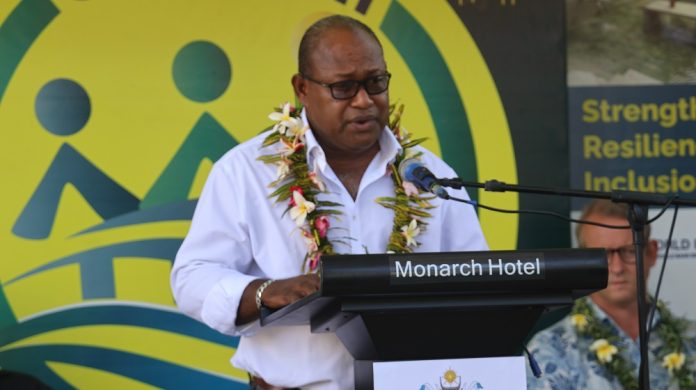
The CAUSE 2 (the Community Access and Urban Services Enhancement) project represents a significant milestone in our ongoing commitment to urban development, job creation and climate resilient infrastructure.

Cris Afable, project manager for CAUSE 2 expressed this whilst speaking at the launch of the CAUSE 2 project at their office compound yesterday.

Initially, acknowledging government officials, donor partners and government representatives, he said it is a great privilege to host them as they officially launch the CAUSE 2 project.

Moreover, Afable stressed that the CAUSE project now in entering its second phase, thus represents a significant milestone in their ongoing commitment to urban development, job creation and climate resilient infrastructure.

Recalling early days of the project when it was in its first phase, he said the journey to CAUSE2 has been one of learning adaptation and expansion.

“This initiative builds upon the Rapid Employment Project which was implemented from 2010 to 2017.

Which first demonstrated the impact of short-term employment, skills training and urban services improvements in Honiara around that time”

He expressed that building on the success CAUSE1 from 2018 to 2024 expanded the model beyond Honiara to the provinces.

Afable said this success included introducing climate resilient infrastructure, waste management improvements and workforce development programs with a strong emphasis on women and youth and of course, the vulnerable groups.

He added that with success of CAUSE 1, the demand for expanded urban services, better infrastructure and sustainable job creation has grown.

Henceforth, Afable said the CAUSE 2 project is designed to address the above needs by scaling up investments, strengthening institutional support and integrating climate resilience into urban infrastructure planning.

He emphasized that he would like to go straight into their initial activities starting this year.

In this regard, Afable said with CAUSE 2 officially underway, their focus now is on operationalising the project framework and ensuring effective implementation.

He said this year will be the first year of implementation for the project so setting up necessary systems, engaging stakeholders and mobilising resources is crucial.

Afable pointed out that this is a priority and they expect to be able to get everyone on board by the end of February.

He mentioned that they are also doing refurbishment of the office and procurement of additional vehicles and equipment on top of what they already have.

“I am proud to say to you that these vehicles, some of those remnants from RAPID and the CAUSE1 vehicles are still in very good condition, so we don’t need too many vehicles to purchase under the second CAUSE”

He stated that they are also enhancing their IT capability and infrastructure to ensure smooth operations and mobility across the implementation side.

“Our IT system has been one of our robust institutions under the CAUSE that enables us to manage our workforce and any type of activity as efficiently as possible”

The CAUSE 2 project manager furthered that they have been doing a lot of work on this in order to enhance this is so that they should be ready to implement these enhancements by March.

This project is funded by the World Bank which has contributed US 20.2 million dollars and the Australian government which has provided US 17.3 million dollars.

For feedback, contact: [email protected]
CAUSE 2 project represents significant milestone to urban development

0

By Loretta B Manele

The CAUSE 2 (the Community Access and Urban Services Enhancement) project represents a significant milestone in our ongoing commitment to urban development, job creation and climate resilient infrastructure.

Cris Afable, project manager for CAUSE 2 expressed this whilst speaking at the launch of the CAUSE 2 project at their office compound yesterday.

Initially, acknowledging government officials, donor partners and government representatives, he said it is a great privilege to host them as they officially launch the CAUSE 2 project.

Moreover, Afable stressed that the CAUSE project now in entering its second phase, thus represents a significant milestone in their ongoing commitment to urban development, job creation and climate resilient infrastructure.

Recalling early days of the project when it was in its first phase, he said the journey to CAUSE2 has been one of learning adaptation and expansion.

“This initiative builds upon the Rapid Employment Project which was implemented from 2010 to 2017.

Which first demonstrated the impact of short-term employment, skills training and urban services improvements in Honiara around that time”

He expressed that building on the success CAUSE1 from 2018 to 2024 expanded the model beyond Honiara to the provinces.

Afable said this success included introducing climate resilient infrastructure, waste management improvements and workforce development programs with a strong emphasis on women and youth and of course, the vulnerable groups.

He added that with success of CAUSE 1, the demand for expanded urban services, better infrastructure and sustainable job creation has grown.

Henceforth, Afable said the CAUSE 2 project is designed to address the above needs by scaling up investments, strengthening institutional support and integrating climate resilience into urban infrastructure planning.

He emphasized that he would like to go straight into their initial activities starting this year.

In this regard, Afable said with CAUSE 2 officially underway, their focus now is on operationalising the project framework and ensuring effective implementation.

He said this year will be the first year of implementation for the project so setting up necessary systems, engaging stakeholders and mobilising resources is crucial.

Afable pointed out that this is a priority and they expect to be able to get everyone on board by the end of February.

He mentioned that they are also doing refurbishment of the office and procurement of additional vehicles and equipment on top of what they already have.

“I am proud to say to you that these vehicles, some of those remnants from RAPID and the CAUSE1 vehicles are still in very good condition, so we don’t need too many vehicles to purchase under the second CAUSE”

He stated that they are also enhancing their IT capability and infrastructure to ensure smooth operations and mobility across the implementation side.

“Our IT system has been one of our robust institutions under the CAUSE that enables us to manage our workforce and any type of activity as efficiently as possible”

The CAUSE 2 project manager furthered that they have been doing a lot of work on this in order to enhance this is so that they should be ready to implement these enhancements by March.

This project is funded by the World Bank which has contributed US 20.2 million dollars and the Australian government which has provided US 17.3 million dollars.

For feedback, contact: [email protected]
Education should be universal

0

BY INDY MAEALASIA

“EDUCATION should not be a privilege determined by geography, gender, or circumstance, it should be a right, one that empowers every child in the Pacific to realize their full potential.”

This was the resounding message Miss Solomon Islands Elsie Polosovai spotlighted on the pre-pageant interviews on Thursday. Polosovai took center stage among seven other contestants of the Miss Pacific Islands Pageant (MPIP), emphasizing inclusivity in education:

“Inclusivity means ensuring that every child, regardless of gender, socioeconomic background, ethnicity, or ability, has the opportunity to learn and thrive,” she emphasized.

However, for many, Polosovai stressed that this remains a distant reality. “Children with disabilities, in particular, are often stigmatized and excluded from quality education,” she explained.

She recounted her experience with a student with a disability, who attended a vocational training school but faced significant barriers due to both physical and social obstacles.

Polosovai highlighted that in rural Solomon Islands, teachers often manage classrooms with as many as 50 students, which greatly reduces the ability to provide individualized support.

This challenge is particularly daunting for students with disabilities, who face even greater hurdles due to financial difficulties and cultural norms that limit their opportunities.

Miss Solomon Islands also pointed to the severe lack of proper school infrastructure, teaching resources, and qualified educators—factors that significantly undermine the quality of education.

Moreover, she expressed concern about the gender imbalance in educational opportunities. Polosovai noted that male education is often prioritized over female education in many communities, which further limits opportunities for young women to succeed and contribute meaningfully to society.

Lastly, Polosovai emphasized that education is not confined to the classroom. “Education takes place in homes, communities, and through life experiences,” she added.

For feedback, contact: [email protected]
48-yo father remanded over domestic violence

0

BY ROMINAH FAKA

A 48-year-old father has been remanded at the Auki correctional for allegedly chasing his family with a bush knife.

Police say the accused was drunk at the time of incident.

Assistant Commissioner National Capital and Crime Prevention Simpson Pogeava told media during a press conference on Thursday, Auki Police applied for remand after two cases were established recently against the 48-year-old father from West Kwaio.

Upon arrest, information received that the suspect was also cultivating Marijuana, at which police uprooted 300-plus marijuana plants, said Pogeava.

Pogeava therefore said the community leaders and people of West Kwaio should stop engaging in activities that are illegal and harmful to people.

“Domestic violence is not accepted in the community and if someone arrested for it the penalty is harsh. Thus, there are other ways to solve problems within our community other then resolved to domestic violence,” said Pogeava.

For feedback, contact: [email protected]

POSITVE PROGRESS

0

52 Applicants from Jan 17th to Feb 7th, 2025

BY SAMIE WAIKORI

The Ministry of Commerce, Industry, Labour, and Immigration has reported a good turnout of applicants at the immigration office in Auki since the beginning of 2025.


This turnout reflects positive progress in the office and the services provided to the people of Malaita.

In a statement from the Immigration office in Auki, it was reported that, from January 17th to February 7th, 2025, the office received a total of 52 applicants.


These 52 applicants also contributed a sum of SBD$52,000, which was paid into the national coffers within a month or less.

This is a milestone and a positive development for the office, which is less than a year into service, according to the officer in charge of the Auki Immigration office, Mr. Selwyn Ramoli.
Ramoli is currently in Honiara to carry out the printing of passports for the 52 applicants.

In addition to that, Mr. Ramoli will also print another 67 passports for those who applied last year.
The 67 applicants are part of three batches collected by the Auki Immigration office from September to December 2024.


These batches contain a total of 187 applicants, of whom 120 passports have already been printed and distributed to passport holders.

According to Ramoli, the remaining passports will be printed soon and are expected to be distributed to holders by Friday next week.


He mentioned that, since the establishment of the Auki Immigration office in August 2024, hundreds of passports have been printed and distributed to Malaitans.
Ramoli also noted that Malaitans are eager to access services in Auki, and additional services like visas are expected to be available at the office soon.

For feedback, contact: [email protected]

Court strikes out petition against MP Tagini

0

BY ROMINAH FAKA

The High Court has struck out the election petition case against Member of Parliament for Baegu/Asifola Makario Tagini.

This is because the petitioner did not comply with the mandatory requirements of the Electoral Rules 6(1) (e) of Electoral Act Petition Rules 2019, according to the High Court.

On Wednesday this week before trial commenced, both parties had to address a preliminary issue, which court had made directions on in the last hearing.

On December 19, 2024 respondent Tagini and his lawyer filed an application to strike out the amended petition to which the petitioner’s lawyer did not oppose.

In addressing the preliminary issue court will determine if it’s in favour of the petitioner, the trial will commence however, if it was in favour of the respondent then court would strike out the petition.

So, the preliminary issue was addressed in favour of Tagini.  

Justice Howard Lawry ruled by striking out the petition because the petitioner failed to comply with the mandatory requirements of the Rule 6(1) (e) of Electoral Act Petition Rules 2019 which states; 6 (1) an election petition shall (e) clearly identify the respondent or respondents to the petition together with their usual or last known address.

The petitioner Celsus Talifilu initially filed 13 grounds of election bribery against Tagini however, on August 13, 2024 the petitioner amended their initial petition eliminating three grounds of their allegations.

Tagini and his lawyer after receiving the petition allegations made an application to strike out the petition.

Court ruled the strike out application by dismissing only three grounds of the election bribery allegations against Tagini however, refused seven grounds and ordered for those seven grounds to proceed to trial.

Lily Ramo from JustLaw firm act for Petitioner Celsus Talifilu and Lloyd Fitz Reggie from Rano and Company represented Makario Tagini.

For feedback, contact: [email protected]

Two men arrested over death of expat in Choiseul

0

BY ROMINAH FAKA

Police have arrested two men in relation to the death of an expat in Choiseul Province.

Assistant Commissioner National Capital and Crime Prevention Mr Simpson Pogeava told media yesterday, police in Taro arrested the two suspects and remanded them following the death of the Australian expat at Kagau Island in Choiseul.

It was alleged that the two men attacked the victim Erick Djokovic who was in his 80s in the early hours of January 21.

The victim was seriously injured after the attack and was transported and referred to the National Referral Hospital (NRH) for medical attention. Unfortunately, he passed away.

“Violence against old people and children are not acceptable in our society and so, we must work together as community to protect our elder people and ensured such incidents like this do not happen in our community,” said Pogeava.

The two suspects were remanded and investigations into the matter is continuing, Pogeava said.

Police are calling on anyone who have relevant information to come forward and assist police to ensure that those involved in this incident face justice for their actions, he said.

For feedback, contact: [email protected]