
Home Blog Page 431

Minister Bosawai impressed with progress on Naha Birthing and Urban Health Centre

0

BY NED GAGAHE

Minister of Health and Medical Services Dr. Paul Bosawai says that the Naha Birthing and Urban Health Centre, once completed, will lessen and ease the burden at the National Referral Hospital.

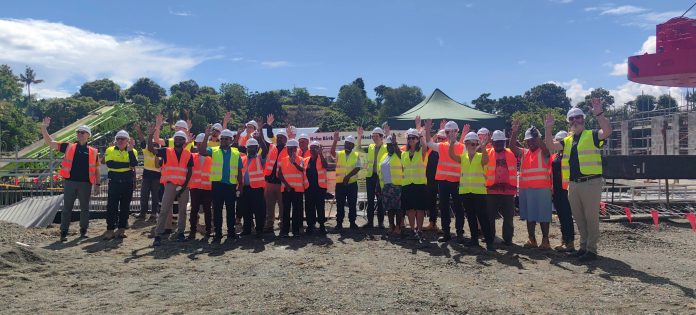
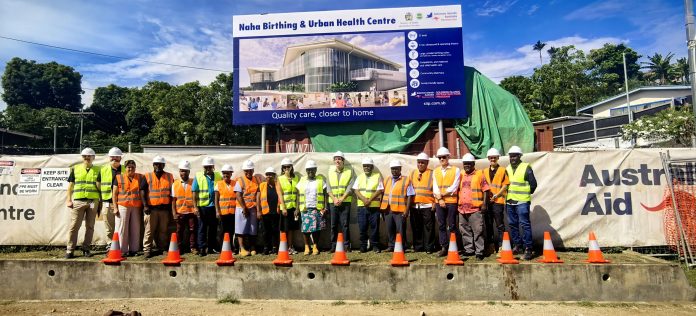
Minister Bosawai, together with Australia’s Ambassador for Global Health Dr. Lucas de Toca, visited the centre yesterday during his official visit to the Solomon Islands. The delegation toured the construction works, which are employing nearly 100 local workers, as the building reaches the milestone of being halfway completed.

Minister Bosawai said he was impressed by the progress being made towards the new SBD 250m/AUD 45m health centre.

“The birthing facility center once completed, will lessen and ease the burden at the National Referral Hospital (NRH). The pressure on beds at the current birthing ward at NRH is always extremely high. There are 10 recovery beds in the labour ward. So, if the labour ward has about 18 deliveries per day on average, bed occupancy would, of course, become a huge challenge.

“In 2023, the bed occupancy rate was 126%. Given such challenging situations, mothers should stay at least 24 hours at the hospital upon delivery, but due to the lack of space, mothers are usually discharged eight hours after giving birth. This is very risky for both mothers and babies, as sometimes either the mothers or babies will develop other illnesses while at home. Space limitations at the NRH are a challenge, especially as the population grows at an annual rate of 2.8%.”

“Given the bigger catchment of population in East Honiara, this state-of-the-art birthing unit will accommodate the high demand for health services and provide high-quality service to the surrounding communities here, and the country as a whole,” said Dr. Bosawai.

He acknowledged and thanked the Australian Government for funding the multi-million-dollar project.

During the tour, the VIPs met with nursing staff and health officials to hear about the intensive health planning underway to ensure the centre is equipped and ready to commence service delivery when the facility opens.

Dr. de Toca, who oversees Australia’s regional and global development assistance in health, said the scale and quality of the building is impressive.

“I’m equally impressed by the level of partnership between Australia and Solomon Islands’ health officials to ensure the centre is fitted out with high-quality, fit-for-purpose equipment, with staff fully trained and ready to see patients when it opens early next year,” Dr. de Toca said.

“There is obviously a lot of hard work, care, and collaboration being undertaken by both governments, which will ultimately save lives and improve health outcomes for Solomon Islanders, particularly mothers and babies.”

Australia’s High Commissioner to Solomon Islands, His Excellency Rod Hilton, said the health centre remained a top priority for the Solomon Islands-Australia Partnership.

“What both our governments want is sustainable, high-quality care delivered every day to the people of Solomon Islands,” High Commissioner Hilton said.

“Australia understands the need to deliver this world-class health facility without cutting corners, to deliver high-quality, locally led, and fully fitted-out infrastructure that is built to last.”

The new facility includes a large urban health clinic and a low-risk birthing centre with five delivery suites, seventeen short-stay beds, an operating theatre, and clinical support services. The centre will provide birthing, ante and post-natal care services for women, as well as dental, pathology, x-ray, ultrasound, and pharmacy services for the community.

For feedback, contact:[email protected]

Minister Bosawai and Australian Ambassador for Global Health visit Naha Birthing Centre

0

BY NED GAGAHE

The Minister for Health and Medical Services, Paul Bosawai, was joined by Australia’s Ambassador for Global Health, Dr. Lucas de Toca, on a visit to the Naha Birthing and Urban Health Centre, East of Honiara, yesterday morning.

The delegation toured the construction works, which are employing nearly 100 local workers as the building reaches the milestone of being halfway completed.

The Naha Birthing & Urban Health Centre, worth SBD250 million (AUD45 million), is still under construction but has already impressed both Minister Bosawai and Ambassador de Toca with its ongoing progress.

Once completed, the facility will not only benefit the residents of Naha but will also serve people from other provinces.

The new centre is set to provide a new benchmark for health care in the Solomon Islands.

The centre will offer new mothers and mothers-to-be access to the very best pre and post-natal care, giving the next generation of Solomon Islanders the very best start possible and easing the pressure on the National Referral Hospital.

Minister Bosawai shared that in Solomon Islands’ culture, many individuals travel to urban centers to live with relatives while seeking access to specialized health care, particularly during labor and delivery.

He expressed his gratitude for the project, acknowledging that the new facility would bring much-needed improvements to maternal and child health services.

“I am confident that once completed, the Naha Birthing Centre will not only serve the residents of Naha but will also support the wider population of Solomon Islands,” Minister Bosawai said.

He also extended his thanks to the people and government of Australia for their support in making this project possible.

“This is a significant physical change in the health infrastructure of Solomon Islands,” he said, referencing the project’s launch with the Australian Deputy Prime Minister.

Minister Bosawai further acknowledged Dr. Lucas de Toca’s visit and praised the contractor, Reeves, for their excellent work in the construction of the centre.

“Today, we have witnessed significant progress. As the Minister for Health, I can confidently say that this facility will continue to save lives, improving health outcomes for many in Solomon Islands,” he concluded.

Dr. de Toca, who oversees Australia’s regional and global health development assistance, expressed admiration for the scale and quality of the building.

“I’m equally impressed by the strong collaboration between Australia and Solomon Islands’ health officials to ensure the centre is equipped with high-quality, purpose-built equipment, and that staff are fully trained and prepared to serve patients when it opens early next year,” Dr. de Toca stated.

“There is clearly a tremendous amount of dedication, effort, and teamwork from both governments, which will ultimately save lives and enhance health outcomes for Solomon Islanders, especially mothers and babies.”

The project is expected to be completed early next year.

For feedback, contact:[email protected]

International Women’s Day kicks off on high note

0

By Loretta B Manele

The International Women’s Day program kicked off on high note at the National Museum Auditorium yesterday.

This year’s theme for the three-day program is “Accelerate Action; For all women and girls. Rights, Equality and Empowerment”.

The program started with a word of prayer, a moment of silence to respect women who paved the way for others through their work and sacrifices and then guests delivered their speeches.

Speeches for the first day of the program were delivered by Kristina Sogavare, Vice President of NCW, Rod Hilton, Australian High Commissioner to Solomon Islands and finally, Freda Tuki, minister for Ministry of Women, Youth, Children and Family Affairs (MWYCFA) who officially opened the program.

There were also a number of stalls set up that either sold local delicious food or beautiful handmade accessories and locally themed clothes.

Women from different organizations and offices turned up to join the celebration.

They represented Rove Correctional Services, Telekom, Tourism Solomons, Public Service, Ports and Solomon Water to name a few.

A live band performing a number of songs was also a highlight of the day.

The event will continue until Thursday this week.

For feedback, contact:[email protected]
Essential perspectives for growth in the community to uplift women

0

By Loretta B Manele

There are certain essential perspectives that are key for growth in the community when it comes to uplifting women.

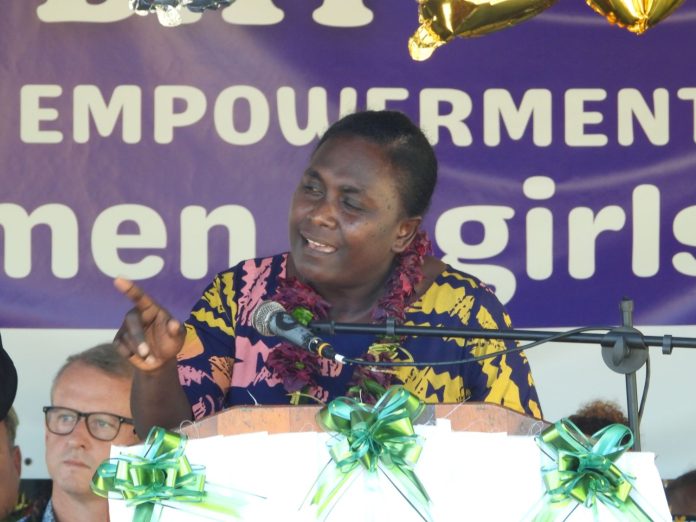
Kristina Sogavare, the Vice President for National Council of Women (NCW) highlighted this when she delivered her speech at the International Women’s Day event at the National Museum Auditorium yesterday.

She stressed that we have to look at actions that will uplift and include women in the community and encouragement for girls in the classroom.

Sogavare pointed out that this involves ensuring that women are given voices inside their communities such as in meetings and as teachers, making sure that girls are encouraged and inspired to pursue non-traditional career paths.

She said these are perspectives that are essential for growth in the community.

Sogavare went on to include policy makers.

“Policy makers and legislators, examine your work. Are your policies just and equitable for women in this nation?

Are you supporting initiatives to ensure gender equality such as reserved seating for women in parliaments and provincial assemblies?”

Sogavare said if we fail to honour and value women, we are failing to respect the very beings that brought us into the world.

In relation, she expressed that as women and girls, each day in every decision we make, we must ask ourselves if we are appreciating, respecting and honouring ourselves.

“To women of Solomon Islands, I say, you are the heartbeat of this nation. You are our strength. You are our resilience. You are our strong community.

You are the very reasons generations continue. Despite the challenges you face, you rise stronger and wiser and more determined than ever. So today we celebrate you.”

She stated that the National Council of Women pledges to work with stakeholders in this country and the government of Solomon Islands to create a world where women and girls are safe, valued and empowered.

Sogavare noted that we must remember that leadership and inclusion go hand in hand.

“By empowering women to lead and ensuring every single voice is heard, we can create a future where equality is not just a dream. It will become a reality.

On this International Women’s Day, let us stand together, united in our commitment to gender equality and empowerment for all women.”

For feedback, contact:[email protected]
SI continues to benefit from PRC Belt, Road cooperation

0

BY SAMIE WAIKORI

The Solomon Islands continues to benefit from the Belt and Road cooperation, it established with China in 2019.

Ambassador of China to Solomon Islands, His Excellency Cai Weiming announced this at the ground breaking for Auki Road tar-sealing project held last Wednesday in Auki, Malaita province. 

“Since our two countries established diplomatic relations and signed the B&R cooperation document in 2019, multiple infrastructure projects have been implemented.

“China actively participates in the infrastructure construction in Solomon Islands under the agreement of aid, loans or contracts.

“Chinese companies also undertook construction works on projects like sports stadium, university campus, dormitory buildings, hospital building, hydro power station, roads, bridges, seaports, airports, communication towers in SI.

“They not only delivered high quality projects, but also helped create jobs and generate incomes for Solomon Islands workers and shared their expertise and technical know-hows with their local partners,” Weiming said.

He added that the PRC aided Auki Road tar-seal project is also part of the Belt and Road cooperation.

Weiming said the Belt and Road (B&R) Initiative was put forward by Chinese President XI Jinping in 2013.

He said the gist of this initiative is to enhance policy coordination, infrastructure connectivity, unimpeded trade, financial integration and people-to-people bonds, thus creating more favorable conditions for win-win cooperation.

The ambassador noted that the initiative has transformed into an open, inclusive, and mutually beneficial global cooperation platform.

For feedback, contact:[email protected]
$SBD 1 million so far

0

By Samie Waikori

Malaita province is reaping the benefits of the historic sister-relationship it forged with Jiangsu province in China.

Since the two established their relationship last year, Malaita province has so far received materials worth more than $SBD 1 million from Jiangsu province.

China’s Ambassador to Solomon Islands, His Excellency Cai Weiming, announced this at the groundbreaking ceremony for the Auki Road sealing project in Auki last Wednesday.
He said that since China’s Jiangsu province signed the friendly cooperation MOU with Malaita Province in April 2024, the relationship between the two provinces has been instrumental.

Weiming highlighted that the cooperation enhances mutual understanding and collaboration, contributing to win-win outcomes in areas such as infrastructure, education, agriculture, and livelihoods.
“Jiangsu has donated livelihood materials worth more than 1 million SBD to Malaita, including tractors, solar street lights, water tanks, pumps, computers, and printers,” he said.

In the meantime, he also announced that Malaita province has the highest number of students who have received Chinese government scholarships to study in China.
“Among the 160 Solomon Islands students who have been offered the Chinese government scholarship to study in China, half are from Malaita province.
“We have spared no effort to support Malaita province in achieving common development,” he said.

Moreover, the ambassador highlighted the important medical support offered by China through its medical team in Auki, Malaita province.
“The Chinese medical team has visited Malaita province three times, treating more than 1,000 Malaita patients,” he said.

According to Weiming, the PRC’s relationship with Malaita province is a vivid example of the broader China-Solomon Islands relationship.
“Our cooperation with Malaita sets a vivid example for China-Solomon Islands cooperation,” Ambassador Weiming emphasized.

For feedback, contact:[email protected]
Women continue to be underrepresented in SI: Tuki

0

By Loretta B Manele

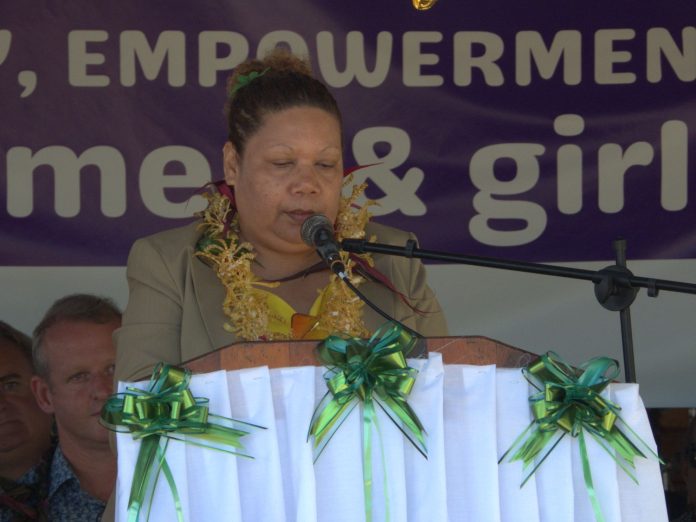
Today, Solomon Islands women continue to be underrepresented in decision-making roles.

Freda Tuki, minister for Women, Youth, Children and Family Affairs (MWYCFA) stressed on this whilst speaking at the first day of the International Women’s Day program at the National Museum Auditorium yesterday.

She said since 1978, only eight women have been elected to parliament and only 17 women have been elected to provincial assemblies since 1981.

Tuki stated that women’s voices are also missing from many decision-making boards and commissions and only 7% of women hold senior management roles like CEOs.

She added that only 23% of women are business owners with most of them being in entertainment and catering sectors.

Tuki mentioned that these issues are not just at the local level but also on the global level.

Moreover, she said the biggest barrier to women’s economic empowerment is their over-representation in unpaid care and domestic care.

“In the Solomon Islands, women work nine hours more than men on unpaid care work.”

She highlighted that Solomon Islands women have proven and played vital roles as peace builders and contributors to peace-building and conflict resolution, however are often unrecognized.

“The changing landscape of how women and girls experience peace and security, particularly in the context of increasing global shocks, such as the COVID-19 pandemic and natural disasters, online harms and climate-induced conflicts disproportionately affect women.

In times of crisis, women, especially those in rural areas, take on additional burdens, including caregiving, managing sanitation and food security and helping their families cope with health challenges, including mental health.”

She emphasized that despite these challenges, women’s resilience and ability to adapt must be acknowledged and supported.

Tuki said to move forward, we need to change the way we have been doing things and that is to now act quickly and focus on making real, meaningful changes.

“We must commit or reaffirm our commitments to accelerate action through supporting policies that give women more opportunities to lead and make decisions, adopt affirmative actions to address the historic barriers women face in decision-making roles, including in earning, accessing and benefiting from natural resources.”

Tuki highlighted that in our homes, workplaces and communities, we can also accelerate action by speaking out against violence and harassment.

She also took the opportunity to thank both past and present governments for taking important steps to promote gender equality.

“Some of our key achievements include rectifying the Convention on the Rights of Persons with Disabilities in 2023 and launching a related policy, conducting the Equality Insights Rabbit Study in 2022 to better understand poverty and inequality, expanding services for victims of gender-based violence to the provinces, the Solomon Islands government being one of the only governments to have both a Women’s Economic Empowerment National Action Plan and a National Women’s Financial Inclusion Strategy in place, and the development of more sectoral policies that support gender equality.”

Whilst officially opening the 3-day program, she announced the Gender Equality and Social Inclusion Policy 2025-2030.

“I have the honour of announcing, on behalf of the Ministry of Public Service and the Ministry of Women, Youth, Children and Family Affairs, the passage of the Ministry of Public Service, Gender Equality and Social Inclusion Policy 2025-2030.”

Tuki furthered that this is a testament to the vision of the government to ensure the principle of non-discrimination, equal treatment and opportunities are practiced for the well-being of women, men and persons with disabilities employed in the public service and essentially a catalyst for people-centred development and gender mainstreaming across the public sector.

For feedback, contact:[email protected]
Australia announces new investment for women and children

0

By Loretta B Manele

Australia as Solomon Islands largest partner in supporting gender equality has announced a new investment for women and children.

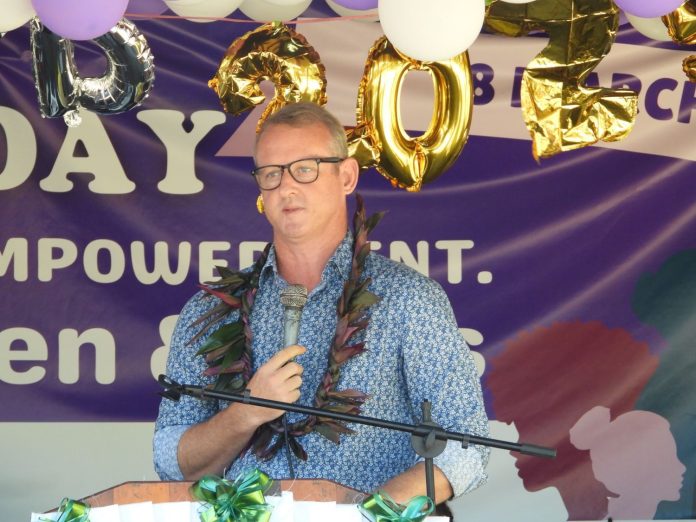
Rod Hilton, Australian High Commissioner made the announcement on the first day of the International Women’s Day program at the National Museum Auditorium yesterday.

He expressed that he is very happy to announce the launch of Australia’s new investment for Solomon Islands which is “Advancing gender equality inside Solomon Islands”, an initiative that will go towards supporting gender equality in the country.

Hilton said Australia will invest 46 million dollars for a three-year period that will go towards fostering strong leaders and economic empowerment of Solomon Islands women and to tackle violence against women and children.

He highlighted that this new investment will help unleash women’s full economic potential, reduce violence against women and remove barriers for women in leadership, particularly in politics.

Hilton stressed that Australia will continue to work with its partners to take action in gender equality within women’s rights action movement such as in efforts to increase women’s political representation in Solomon Islands.

For feedback, contact:[email protected]
DANGER IN THE RURALS

0
_cuva

-Alarming rate of online gender-based violence in Small Malaita and nearby communities of East and West Are’are: AHNRA report

-Nearly 90 percent youths, 63 percent women affected: Report

BY IRWIN ANGIKI

Online gender-based violence is high in Small Malaita and nearby communities of East and West Are’are as digital technology usage increases in the rural areas, a report launched yesterday has shown.

In what is regarded the first of its kind, the Apunepara Haamwaora Natural Resources Association (AHNRA), a community-based organisation in Small Malaita, released its research findings on communities in Small Malaita constituency and neighbouring communities of West and East Are’are constituencies.

As high as 88 percent of youths have experienced online gender-based violence (OGBV). 63 percent of women too have experienced the same.

Men are also exposed to cyber dangers, with 67 percent saying they have experienced OGBV.

In the research, OGBV includes: cyberstalking – verbal harassment, posting abusive information against each other on social media; doxxing – posting of personal information without consent online; sextortion – sharing nude images online which results in divorce, mental disturbance; malicious deep fake – bad and fake videos posted online to cause hate; argument – between social media groups and/or individuals; emotional abuse – something making them angry or sad.

Around 20 percent of youths and 15 percent of women do not know how to deal with OGBV, which researchers have acknowledged is a huge risk.

According to the research, dealing with OGBV include: ignoring perpetrators, refrain from social media platforms, notably facebook, blocking accounts and destroying the Sim card, talk to teachers and family members about OGBV, avoid sharing phones with others passwords to social media accounts, seeking reconciliation from community leaders, pay compensation, seeking advice from experienced mobile and internet users, adhere to community by-laws and guidelines, counselling services, awareness from village leaders and police.

Of the 111 youths interviewed, “most indicated that they chose to ignore the perpetrators entirely, distancing themselves from the negativity”.

“The majority of women opted to take a break from social media, particularly by refraining from using facebook to protect their mental well-being,” the AHNRA report said.

Perpetrators of OGBV according to the research include mostly hackers, followed by chat partners, photographers and mobile users, and internet users, ‘anyone’ and media producers.

On digital media producers, the report explained, “Creators of content that perpetuate harmful narratives or imagery related to gender-based violence”.

The report recommends more education and awareness to be carried out in Small Malaita, East and West Are’are communities on digital technologies and platforms and the risks associated with their usage, along with how to safely engage in these communication tools.

Community and families were highlighted as the ones who need awareness and education most.

“Parents and guardians should be supported in becoming the first teachers and role models for their children, helping to control their access to digital services and ensuring their safety online,” the report said.

Community-based organisations (CBO) and non-government organisations (NGO) also have a role to play towards providing awareness and education on online dangers, the report said.

“There is a need for collaboration between the government and telecommunication providers with NGOs, CBOs and CFBOs [community faith-based organisations] to raise awareness across all provinces about the safe usage of handsets and digital platforms, highlighting their negative impacts and benefits,” the report said.

Government is also being called on to create laws to protect citizens from the harm digital engagements can bring.

“The government through its ICT department should develop legislation related to digital applications and equipment. This includes requirements for the registration of all mobile handsets and SIM cards,” the report said.

It is understood that the nationwide registration of telecommunication sim cards is ongoing, having extended from its initial deadline in November last year to July 2025, following low turn-out and related “customer feedback”.

More than 140 youths took part in AHNRA’s research from the age-range 14-29 years old.

Around 60 women, and more than 20 men took part, from the age-range 30-49 years old.

The research was funded by the European Union, facilitated by the UNDP through its Pacific Digital Democracy Initiative.

The report was launched with a press conference at the SIBC conference room yesterday.

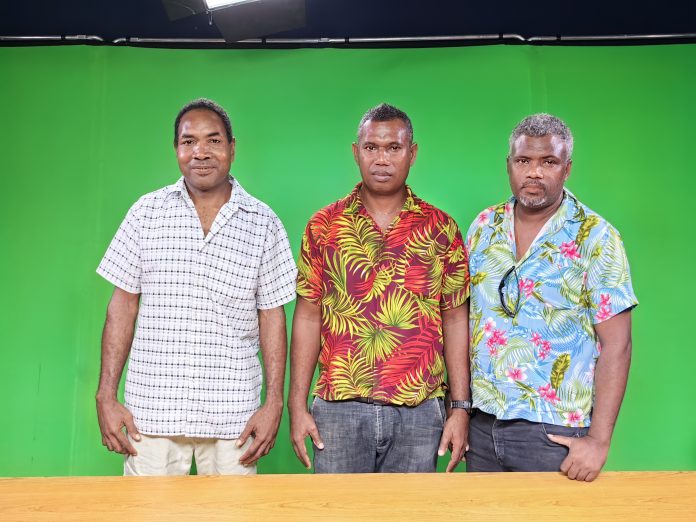
Media personnel met with researchers AHNRA chairman, Gibson Oasanau and board members Amos Oscar Watesau and Desmond Oraiola. The trio are also marine and terrestrial rangers for their organisation in their conservation efforts in the Waitoto community of Small Malaita.

The 2019 national census puts the population of Small Malaita at more than 16,000, with around 50 percent being females, and 22 percent being youths (15-29 years old).

For feedback, contact:[email protected]
UN Women hosts International Women’s Day breakfast event

0

By Loretta B Manele

UN Women through the Markets for Change (M4C) project hosted an International Women’s Day breakfast event on 7th March, Friday at the Heritage Park Hotel.

The theme of the program was “Accelerate Action for all women and girls; Rights, Equality, Empowerment.”

They kicked off the program with opening remarks from Tristan Armstrong, Councillor from the Australian High Commission which was the followed a speech from Vaela Ngai, the Director for Women’s Development Division of MWYCFA.

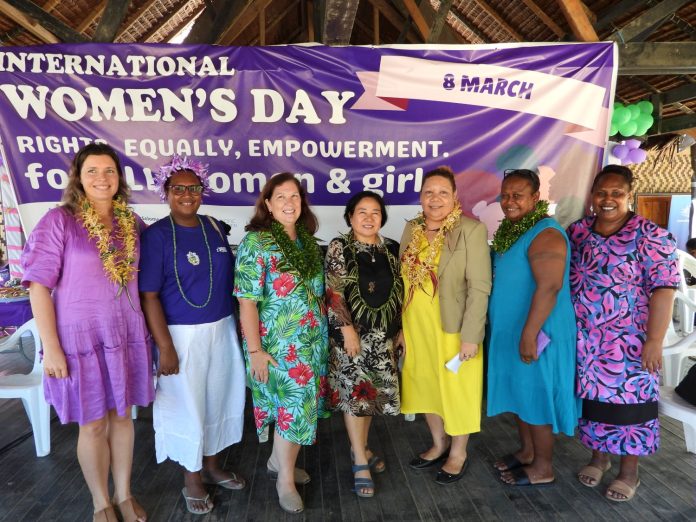
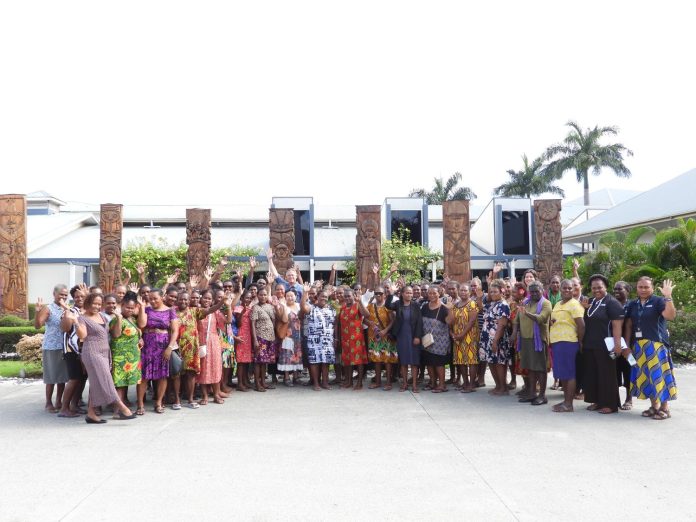
The women then gathered for a group photo session to mark the special day before having their breakfast.

During breakfast, there was a panel discussion.

Patricia Maike, Women’s Economic Empowerment (WEE) officer from MWYCFA (Ministry of Women, Youth, Children & Family Affairs) was one of the panellists who contributed to the discussion.

The question asked to the panel was “How can MWYCFA enhance its collaboration with UN Women to implement more effective and targeted strategies that accelerate gender equality and empower women market vendors in Solomon Islands?”

Maike said the market for change program which market vendors come under is nicely aligned with MWYCFA policy under National Strategy on Economic Empowerment of Women and Girls.

This market for change program is an UN Women project and multi-country initiative with the aim to ensure that marketplaces in Fiji, Solomon Islands, and Vanuatu are safe, inclusive, and non-discriminatory, promoting gender equality and women’s empowerment.

Meanwhile MWYCFA’s has a policy called the Gender Equality and Women’s Development (GEWD) Policy 2016-2020 which aims to promote gender equality and women’s human rights, with a vision of women and men as equal partners in development.

Maike stated that the ministry continues to work with its partners and stakeholders, government and even the private sector to make sure that this policy works.

She mentioned that MWYCFA is also working with financial institutions and CBSI is working closely with the ministry through platforms like YouSave that helps women in the rural areas to save money and other schemes like M-Selen.

Maike said one of the big things the ministry continues to roll out in our provinces through the provincial women development officers, is the Savings Club.

She stressed that UN Women and MWYCFA need to collaborate more on this because not everyone is involved in the Savings Club program.

“We need to make sure that all women come on board on this program.”

She added that MWYCFA and UN Women should also work together in terms of capacity building like training.

Maike expressed that this is important so that women can empowered and move on to take up bigger roles in life such as executive and leadership roles.

According to UN Women, they are implementing the Markets for Change (M4C) project, which is aimed at ensuring marketplaces in rural and urban areas in Solomon Islands are safe, inclusive and non-discriminatory environments, promoting gender equality and women’s empowerment.

The birth of International Women’s Day (IWD) came a long way.

As stated in an IWD website, it was back in 1910 that a second International Conference of Working Women was held in Copenhagen.

It was during this time when a woman by the name of Clara Zetkin, the leader of the ‘Women’s Office’ for the Social Democratic Party in Germany tabled the idea to have an International Women’s Day.

Her proposal was that every year in every country, there should be a celebration on the same day, a Women’s Day to press for their demands.

A conference of over 100 women from 17 countries, representing unions, socialist parties, working women’s clubs and including the first three women elected to the Finnish parliament welcomed Zetkin’s suggestion with unanimous approval which led to the birth of International Women’s Day.

For feedback, contact:[email protected]