
Home Blog Page 423

High court struck out election petition against Namson

0

BY ROMINAH FAKA

The High Court has struck out the election petition case against Member of Parliament for West Honiara Constituency Namson Tran.

The ruling was delivered yesterday at High Court by Chief Justice Sir. Albert Palmer.

Court orders the application for strike out is granted, with costs to be taxed if not agreed.

The petitioner Wilson Mamae ordered to pay the respondent Namson Tran costs of and incidental to the petition, including this application, with certification for King’s Counsel.

The sum of $40,000, deposited by the Petitioner as security for costs, is to be released to the Respondent’s solicitors and credited against any cost’s payable under paragraph (2) above.

A Certificate of this Court’s Order confirming the dismissal of the Petition and affirming that the Respondent is the duty elected Member of Parliament for the West Honiara Constituency shall be issued to: The Electoral Commission, the Governor -General of Solomon Islands, and the Speaker of Parliament.

In delivering the ruling, CJ Palmer ruled the application to strike out the amended election petition in its entirely is granted and dismissed on the basis that, the allegations of the bribery fail to disclose sufficient grounds to warrant a hearing, are frivolous or vexatious, and do not establish a reasonable cause of action. Therefore, the petition is strike out with costs to be taxed if not agreed.

The petitioner Wilson Mamae filed six grounds of bribery allegations against the respondent Hon. Namson Tran contrary to section 126 of the Electoral Act.

The petitioner alleged that respondent and his agents distribute funds in form of monies to the voters, with the intention to influence and hold the people therein to vote for the respondent and to refrain from voting another candidate at the 2024 National General Election.

The respondent and his lawyer in respond filed an application to strike out the petition on the basis that; the six allegations of bribery filed by the petitioner and his lawyer fails to disclose sufficient grounds to justify a hearing and the petition is frivolous or vexatious, and lacks a reasonable cause of action, and should therefore be dismissed or strike out.

John Sullivan KC and Patrick Raerora of Sol- Law Lawyers represent the Respondent Namson Tran and Mark Adam Sina of Honiara Attorney Firm represent Petitioner Wilson Mamae and Edward Waiwaki from Attorney General Chamber (Amicus Curiae).

For feedback, contact: [email protected]

Office of Public Prosecution lacks funds to run trials

0

BY ROMINAH FAKA

The Office of the Director of Public Prosecution (ODPP) in Honiara has been unable to finance trials since last week and this week due to a lack of funds.

Director of Public Prosecutions, Mr. Andrew Kelesi, told the Island Sun that their office simply does not have the money to proceed with trials. He stated that they are still waiting for the Ministry of Finance to process payments, as the issue is related to cash flow constraints.

As a result, the prosecution office does not have sufficient funds from the central budget to cover all outstanding payments, while new payment requests are still pending approval.

Kelesi added that two trials scheduled for last week were vacated because there was no money to cover witness travel expenses from the provinces, including airfare, accommodation in Honiara, and daily allowances.

Similarly, for the current circuit in Gizo this week, the ODPP lacks the funds to bring in witnesses from Western Province and Choiseul Province. However, Kelesi noted that they were fortunate that, in one trial, both the accused and witnesses were already in Gizo.

He also highlighted concerns about upcoming circuits in Lata, Kirakira (High Court), and the Central Islands (Magistrates’ Court) next month, which will depend entirely on fund availability. If the ODPP does not receive funds this week or next week, these trials will be affected.

Without the necessary funds, witnesses from the provinces or even from Honiara cannot attend court hearings, as the office cannot cover travel expenses, accommodation, or daily allowances.

“Trials depend entirely on the availability of funds—no money, no court,” Kelesi said.

For feedback, contact: [email protected]

HUGE SETBACK

0
The Director of the Ministry of Fisheries and Marine Resources Mr Edward Honiwala

Challenges in Monitoring, Control and Surveillance

By Loretta B Manele

A number of challenges in Monitoring, Control and Surveillance (MCS) in Solomon Islands have been highlighted at the Honiara Summit on Sustainable Development Goal SDG 14.4 which focuses on managing sustainable fisheries.

Edward Honiwala, Director of Fisheries from the Ministry of Fisheries and Marine Resources (MFMR) spoke about these challenges at the summit yesterday.

He expressed that MCS is the backbone of fisheries management as it ensures compliance with fisheries management frameworks, resulting in the sustainability of our fisheries resources.

Honiwala however pointed out that MCS work in the region has also gone through a lot of challenges.

In Solomon Islands, he said major challenges include; geographical spread of islands, difficulty in ensuring effective monitoring, challenging enforcement and costly patrols.

Honiwala also outlined a number of initiatives that can be carried out to address these challenges.

These initiatives are as follows; allocating more resources to ensure all fishers comply with fisheries regulations and management measures, that all fleets and fishing gears reach a 100 percent human observer coverage, e-monitoring and capacity building in all aspects and areas of MCS.

“Capacity building in all aspects and areas of MCS is essential. Well trained and experience officers, in all MCS areas, from data collection and analyst to the enforcement and prosecutions.

These officers must be well resourced and well equipped to execute their work effectively.

Effective MCS requires significant investment, in assets like patrol boats, aircrafts, satellite monitoring equipment and well-trained personnel.”

Honiwala emphasized that effective MCS will always be a financial burden for countries and just like any other Pacific Island country, Solomon Islands lacks the financial resources to adequately fund all these assets and equipment to support MCS work in our EEZs.

In this regard, he said Pacific Island countries are fortunate have good partners like Australia, France, New Zealand and others to support regional surveillance through FFA.

While there are challenges present in MCS operation, there is also innovation and technology in MCS.

Honiwala said with the innovations and technology, some of the MSC challenges can be minimised.

“Fishing vessels fishing within our EEZ can be monitored from our fisheries headquarters. This is through the vessel monitoring systems (VMS) or other electronic means.

For the PNA Countries, the vessel days scheme (VDS) is monitored through FIMs, (Fisheries Information Management Systems) which member countries now use as a tool to calculate fishing days within their EEZs.

Other MCS monitoring tools, includes Vessel Monitoring System (VMS), and E-reporting and monitoring tools. These tools now used by MCS Officers and part of their daily routine work.”

Honiwala said for Solomon Islands, the development of an electronic port system for our ports, is a success story and can be replicated across the region.

He explained that supply system supports catch verification and traceability and ensures IUU (Illegal, Unreported and Unregulated) caught fish do not enter the chain.

“This is our digital fish accountancy system.”

He said this development is home grown led by the fisheries ministry with support from FFA.

“It is an achievement to see our e-port system can work hand-in-hand with FFA’s electronic ports state measures (e-PSM) system. This has effectively enhanced our ports entry and exist operations.”

For feedback, contact: [email protected]

Rodie praises MEHRD’s efforts to integrate vernacular languages in schools

0

BY INDY MAEALASIA

DR. Patricia Rodie, Dean of the Faculty of Education and Humanities of the Solomon Islands National University (SINU), has praised the Ministry of Education and Human Resources Development (MEHRD) for developing a policy to allow the use of local vernacular languages in schools.

Speaking at the closing of the International Decade of Indigenous Languages Day last Friday (Feb 14th), Dr. Rodie commended MEHRD’s efforts, noting,

“..I think we are happy that the Minister for Education has assured us that they are current reforms within the Education Act to cater for that,” she said.

The dean emphasized that such efforts must be guided by the “cultural value of boldness”, recalling the courage of Pacific ancestors who navigated the vast ocean and diverse terrains for thousands of years.

“Today, we must embody that same boldness as we navigate a rapidly changing world, ensuring that our indigenous languages remain strong, relevant, and varied, “she said.

Highlighting the crucial role of education, Dr. Rodie stressed that a firm foundation in local languages will empower children, communities, and the nation, “and we are pleased to note that in the Education Act, this has been catered for.”

Education Minister, Tozen Leokana said the Vernacular Education Policy along with the Inclusion Education Policy will ensure students can comfortably learn and understand fundamental concepts in their spoken language/s before transitioning into English and other subjects.

He reiterated the ministry’s belief that language is key to learning, stating, “we, in the ministry, regard language as the vessel through which knowledge is transmitted, culture is preserved and identities are strengthened.”

“The decision to integrate our rich linguistic heritage into the education system is not only a strategic mover for academic success but also a profound affirmation of who we are as a people,” Minister Leokana added.

For feedback, contact: [email protected]
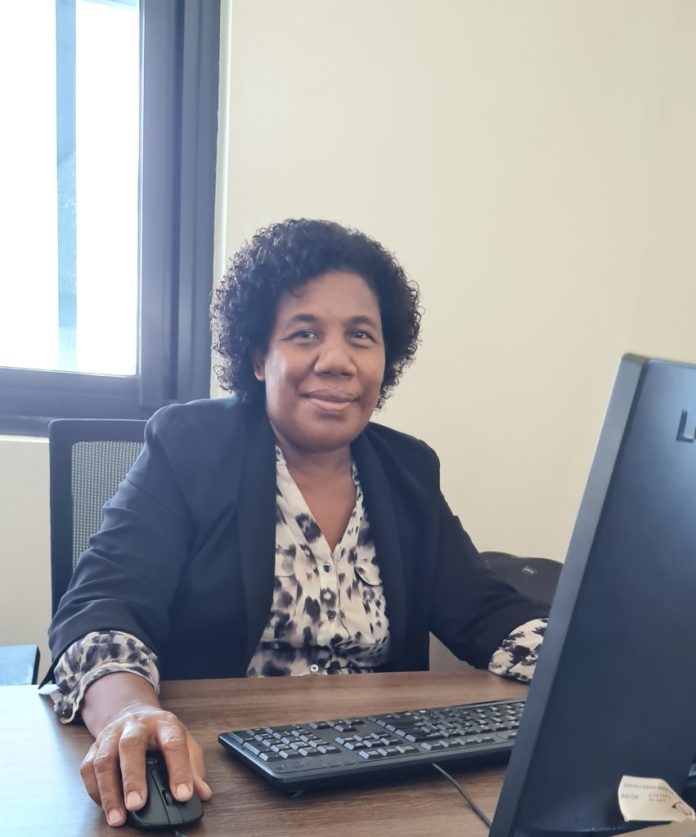
EU FIGHTS IUU

0

European Union committed to sustainable ocean governance

BY JOHN HOUANIHAU

The European Union (EU) has demonstrated strong leadership and an unwavering commitment to sustainable ocean governance, reaffirming its role as a key global player in protecting marine resources.

“This is exactly the message I would like to project today,” said Charlina Vitcheva, Director-General for Maritime Affairs and Fisheries at the European Union.

Delivering her key remarks during the official opening of the Honiara Summit on Tuesday this week, Vitcheva emphasized that the EU will continue to be a reliable partner in advancing sustainable international ocean governance.

“Ocean-related issues have been gaining momentum, and many of the milestones we’ve achieved have already been mentioned. However, I would like to highlight a few key points.

I was particularly impressed when Ambassador Thompson stated that we owe SDG 14.4 to the Pacific Islands. They have been the true defenders of this Sustainable Development Goal, and on behalf of the global community, I extend my gratitude for their dedication to protecting our ocean,” Vitcheva said.

She recalled the 2016 Port State Measures Agreement, established under the auspices of the FAO, which plays a crucial role in combating illegal, unreported, and unregulated (IUU) fishing.

“Fighting IUU fishing is an important milestone, and I can assure you that one of the most committed and coherent fighters against IUU is the European Union,” she stated.

Vitcheva highlighted that the EU has implemented strong legislative measures and has assisted several third countries, including those in the Pacific, in strengthening their capacity to combat IUU fishing.

Vitcheva outlined several significant milestones in ocean conservation efforts, including:

Key milestones in ocean conservation include the Intergovernmental Panel on Climate Change (IPCC) Special Report on the ocean, the 2023 Global Stocktake of the Paris Agreement, which integrated ocean-related concerns for the first time, and two landmark agreements: the Montreal Global Biodiversity Framework and the Biodiversity Beyond National Jurisdiction (BBNJ) Agreement.

“These agreements are exceptionally important for the ocean, and in all these milestones, the European Union has been a leading and coherent advocate for sustainability,” Vitcheva said.

She also acknowledged the EU’s longstanding support for the UN Ocean Conference, co-hosted by three of its member states—Sweden, Portugal, and France—alongside Fiji, Kenya, and Costa Rica.

Vitcheva stressed that the EU will continue to champion multilateral cooperation and uphold a rules-based global system to address global challenges effectively.

“The EU remains committed to valuing global solutions to global problems, upholding international obligations, and ensuring that ocean governance remains a top priority,” she concluded.

For feedback, contact: [email protected]
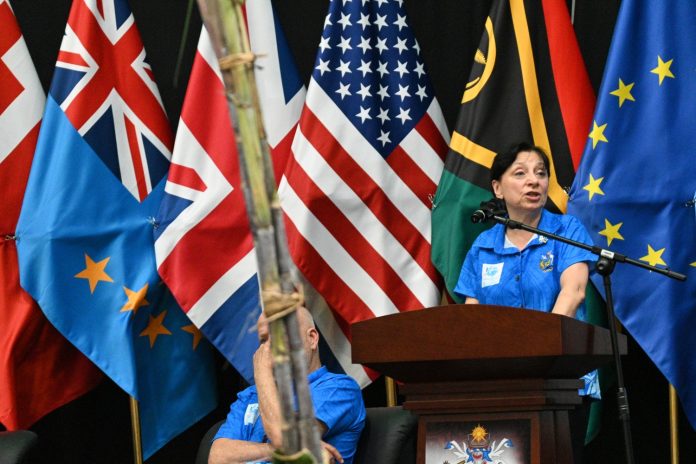
Minister Douglas proposes partnership platform between Solovalu and Tuvalu

0

BY SAMIE WAIKORI

Minister for Culture and Tourism, Choylin Yim Douglas proposes a partnership platform between Tuvaluan descents living in Solomon Islands and Tuvaluan citizens back home.

Ms Douglas, who is a Tuvaluan descent called for this during a visit made by Prime Minister of Tuvalu,Feleti Penitala Teo and his delegation to Solovalu community, a community owned by Tuvaluan descents near Honiara International Airport on Tuesday.

“We would like to proposed a partnership between Solovalu community and Tuvalu citizens.

“A cultural alliance dedicated to the preservation and promotion of our shared heritage.

“This collaboration could include cultural exchange programs facilitating exchanges that allow our artist, story tellers and cultural practitioners to share the knowledge and skills.

“This would encourage both our communities to work together to document our languages, traditional practices and stories to ensure they are preserving for future generation,” she emphasized.

Ms Douglas added that the partnership platform would encourage developing education programs that emphasize the connection between our cultural practise and environmental stewardship.

“Fostering a sense of responsibility toward our land and sea. I urge each of you, to embrace this opportunity.

“Let us not wait until our culture further threaten. Let us take proactive steps to celebrate, protect and pass down the tradition.

“Together we can create a legacy of resilient ensuring that our children and grand children inherit not just our land, but also our rich culture,” she said.

Ms Douglas, on that note, acknowledged Prime Minister Feleti Penitala Teo and his delegation for opportunity to visit and strengthen their connection with the Tuvaluan living in Solomon Islands.

For feedback, contact: [email protected]
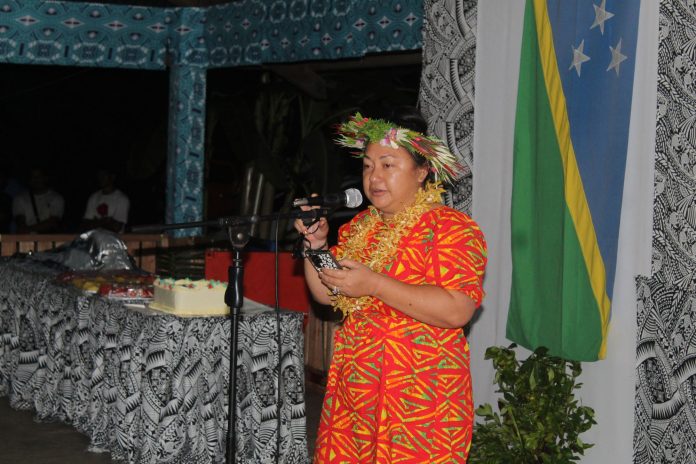
Ministry of Fisheries and Marine focused on increasing tuna catch

0

By Loretta B Manele

The Ministry of Fisheries and Marine Resources (MFMR) is focused in its efforts to increase tuna catch in the country.

Lisa Sugumanu, Assistant Secretary for Project Management from MFMR talked about the ministry’s plans on this initiative at a side event “Sustainable fisheries development initiatives” at the Honiara Summit yesterday.

She said the ministry is now working on implementing the Bina Harbour Tuna Processing Plant project in Bina, Malaita province to process another 30,000 metric tonnes of catch in the country.

Sugumanu mentioned that the fisheries sector contributes to 10% of the Solomon Islands government revenue and in the offshore sector alone, it contributes to around USD 23 million to the country’s national GDP.

She said the annual catch in Solomon Islands is 100,000 metric tonnes of which 30% is processed in the country while 70% is sold to other fish processing countries.

Another 30,000 metric tonnes of tuna or another 30% of processed tuna would mean a total of 60% of tuna being processed in the country and more revenue from tuna processing.

Sugumanu said to carry this project out, they would need 20 hectares of land, USD 232 million, 1600 employees for the plant, locally flagged and crewed fleet of six purse seiners and up to 25 longlines and an investor to name a few.

She expressed that with these inputs and once the plant is operational by 2028, it will enable Solomon Islands to capture the additional economic value of the project at USD 409 million over 15 years and some additional industries to support the processing plant.

Sugumanu also highlighted that the lack of suitable infrastructure for fisheries, lack of capital and limited market share as the challenges in establishing a processing plant in Solomon Islands.

She however voiced that we must not continue to dwell on these challenges but find ways to overcome.

In this regard, Sugumanu said as the responsible ministry for this project, they continued with their efforts and while they are not yet successful, they have seen some results that assures that the initiative is worthwhile.

Some achievements as mentioned are; 170 hectares of land registered with the Bina Talifu Trust Board of 2020, completed studies for water and harbour requirements, ongoing geotechnical investigation works in refining the enabling infrastructure and dedicated teams to support the project are in place with support from Solomon Islands government and New Zealand government.

Sugumanu said tuna is one of the most valuable resources for the Solomon Islands people and while the current generation is enjoying the benefits we must also be mindful to ensure that future generations have the opportunity to access such benefits as well.

“Therefore, we want to add more value to this resource through capturing another 30% of the annual catch for Solomon Islands.

Improving the lives of Solomon Islanders is a priority for any development hence the project is aimed at improving lives both economically and socially for Solomon Islanders.”

Sugumanu stressed that sustainable development cannot happen without partnerships with our stakeholders.

“We need partnerships nationally, regionally and internationally to make Bina Tuna Processing Plant project a reality.

We continue to look at enhancing these partnerships and are very grateful for future ones as well.”

For feedback, contact: [email protected]
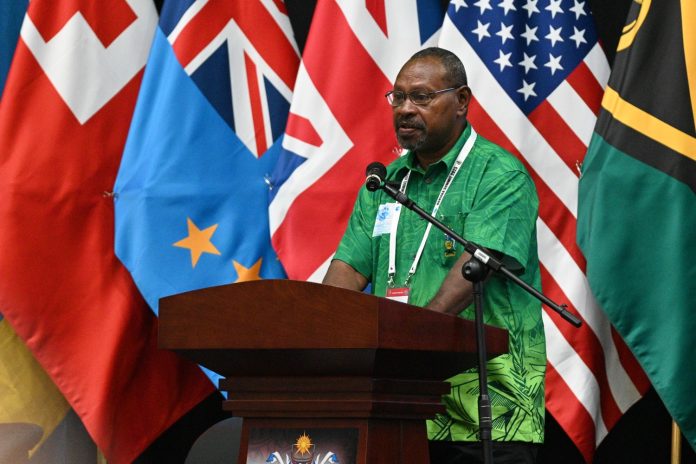
Improving management vital for commercial fisheries in villages

0

By Loretta B Manele

Improving management is vital for commercial fisheries in the villages of Pacific Island countries.

Jeffrey Kinch, Fisheries and Aquaculture officer from FAO (Food and Agriculture Organization) talked about this at a side event called “Sustainable fisheries development initiatives” at the Honiara Summit-“Umi Tugeda Delivering on SDG 14.14: Achieving Sustainable Fisheries” at the Friendship Hall yesterday.

In early remarks, he said while village people have experience with dry marine products and are relatively successful, partly because of their storability only few Pacifica fisheries have constantly supplied fresh, chilled or frozen fish to markets.

Kinch said experience shows that in many places, commercial fisheries based on village fishing are usually not profitable without high external inputs.

He pointed out that unlike high-value, easy-to-store and transport dry marine products, fresh, chilled and frozen fish are low-value to weight and are tricky or difficult to store and transport in good condition.

Kinch added that costs and difficulties involved in transporting fish from rural areas to markets and getting fuel and mechanical repairs in often outweigh the value obtained from the sale of the fish.

He said part of this problem is that when these projects are being developed, consultants come in and assume more of a western sense of working things out.

“So, there is assumptions made about calculating profitability of village fishing efforts and these are often unrealistic.”

He mentioned that weather conditions become increasingly variable across the Pacific thus the reality is that fishers do not fish full time, nor do they sell their whole catch as people make choices concerning where to put their time and labour.

“This has significant impacts, especially where lines are and in my experience, it just resulted in a process of defaulting, repossession, redistribution, defaulting, repossession, redistribution and the cycle continues.”

He stressed that without sound resource management systems in place, enabling commercial levels of fishing in rural areas may actually spread over-fishing problems.

Kinch noted that village capacity in managing resources also varies across the Pacific Islands region.

He emphasized that the role of government is therefore vital and key to improving management.

Kinch voiced that this is in terms of regulating environmental impacts, collecting data so sound decisions are made about a certain resource and working within a range of legislative requirements for management.

He furthered that there is a real need to support fisheries development for Pacifica peoples but also the need to understand the culture of fishing at the local level.

For feedback contact:[email protected]

Regional solidarity for sustainable fisheries: Giro

0

BY JOHN HOUANIHAU

Regional solidarity is fundamental to achieving sustainable fisheries, says Minister for Fisheries and Marine Resources, Nestor Giro.

Speaking yesterday during a session focused on how the Pacific Islands region has responded to SDG 14.4 through the establishment of key fisheries institutions, Giro emphasized the region’s commitment to sustainable fisheries.

He highlighted that regional unity has always been central to addressing the importance of sustainable fisheries.

“The establishment of the regional institutional framework through the Pacific Leaders Forum in the 1970s recognized the sustainable utilisation of marine resources as a matter of common interest among member states,” Giro stated.

He further noted that Pacific leaders were keenly aware of the region’s unique dependence on marine resources and the need to ensure their sustainability.

“The first policy agreement was reached at the Eighth Leaders’ Meeting in Port Moresby in August 1977. During this meeting, leaders adopted the Declaration on the Law of the Sea and established a regional fisheries agency.

Over the years, leaders have adopted several key policies, including the Declaration on Pacific Fisheries (2007), the Regional Roadmap for Sustainable Pacific Fisheries (2015), and the 2050 Strategy for the Blue Pacific Continent.”

Giro emphasised that there is an overarching political framework under the Pacific Islands Forum Secretariat, such as the Pacific Islands Forum Fisheries Agency (FFA), established in 1979, which supports member states in the sustainable management of highly migratory fish stocks.

“In 2004, the Western and Central Pacific Fisheries Commission (WCPFC) was established. This commission is responsible for developing rules and regulations for fishing activities in the high seas areas of the Western and Central Pacific Ocean,” Giro explained.

He acknowledged the significance of the Honiara Summit, as it marked the first occasion where the heads of these regional institutions gathered to discuss their responses to SDG 14.4.

“Comprehensive regional fisheries management arrangements have been in place for over 40 years, and they continue to play a vital role in ensuring the long-term sustainability of fisheries in our region,” he said.

Giro stressed that Small Island Developing States (SIDS) in the region must uphold their sovereignty over national waters and protect their sovereign rights over fishing activities within Exclusive Economic Zones (EEZs).

“With the support of regional institutions, the region continues to emphasise the importance of zone-based fisheries management. Coastal state rights and responsibilities for fishing activities within national jurisdictions must be respected.

Regional approaches include, but are not limited to, the Ecosystem Approach to Fisheries Management, the Precautionary Approach, Biodiversity Protection, and reducing waste in fisheries, he outlined.

Giro underscored that healthy tuna stocks and sustainable fisheries can only be ensured through regional cooperation.

“Without regional unity, we cannot achieve the SDG 14.4 target.

Without the establishment of key institutions by our leaders, we cannot achieve the SDG 14.4 target.

Without leaders endorsing regional policies, treaties, and management tools, we cannot achieve the SDG 14.4 target.

The theme of this Summit, ‘Iumi Tugeda’, is fitting—only by working together can we achieve SDG 14.4 and ensure sustainable fisheries for future generations,” Giro concluded.

For feedback, contact: [email protected]

UN ocean conference turning point for the ocean

0

BY JOHN HOUANIHAU

With the 2030 deadline fast approaching, the UN Ocean Conference in Nice, France, should be seen as a turning point for ocean conservation and sustainability.

These were the words of Charlina Vitcheva, Director-General for Maritime Affairs and Fisheries at the European Union (EU), when she delivered her remarks at the Honiara Summit on Tuesday this week.

Vitcheva emphasized that the Honiara Summit aims to design a European Ocean Pact, which will be presented at the UN Ocean Conference in Nice this June.

She explained that the European Ocean Pact will serve to align all EU ocean-related policies under a comprehensive and coherent framework.

“We all know the state of our ocean. It is time to confirm our political ambition, accelerate action, and deliver real results. We need decisive action, and for that, we need a single reference for the ocean in all our ocean-related policies,” Vitcheva stated.

She added that within this European Ocean Pact, there will be a global agenda and a strong international dimension to support leadership and action for a healthy and productive ocean.

“This must be reflected in the outcome declaration currently being negotiated. I now turn to political leaders, prime ministers, and ministers—please give a bold mandate to your negotiators for this declaration.

This declaration must embody ambition for ocean and climate action, conservation, and the sustainable use of marine resources. It must support the swift ratification of the BBNJ Agreement, the protection of marine biodiversity, and the establishment of a legally binding treaty to combat plastic pollution—everything that concerns the ocean,”* she urged.

Vitcheva reaffirmed the European Union’s commitment to the Pacific, stating that the EU remains a reliable partner with no hidden agenda, dedicated to addressing shared challenges faced by Pacific Island Countries (PICs).

“Our ability to make the UN Ocean Conference in Nice a success depends on us. Partnership is key in this critical time. What we discussed here today is about our lives, well-being, prosperity, and economy. Our security cannot be ensured without a healthy ocean,” she stressed.

She highlighted the Pacific’s vulnerability to climate change, noting that partnerships are at the core of the EU’s action plan.

“We must work together. Strong partnerships will be the key to making SDG 14 a success. And we are walking the talk,” she said.

The Samoa Agreement and Ocean Cooperation

Vitcheva pointed to the Samoa Agreement framework as a clear demonstration of the EU’s commitment to the 2030 Agenda for Sustainable Development Goals (SDGs).

“We represent 1.5 billion people. If we stand united, we will be hard to ignore in multilateral forums. This also applies to ocean protection,” she said.

She further noted that the EU and Pacific states have agreed to join forces on key issues such as ensuring sustainable fisheries, protecting marine biodiversity, and fighting climate change.

“The EU is not just adhering to the Paris Agreement—we have the Green Deal, which ensures that our continent will be carbon neutral by 2050.

Because there was a pledge here to assist you, we remain reliable and committed. In line with this, we are now preparing the second Pacific-European Union Marine Partnership, valued at €20 million, to support the Pacific in achieving its goals under the Pacific Blue Strategy,” she concluded.

For feedback, contact: [email protected]