Home Blog Page 421

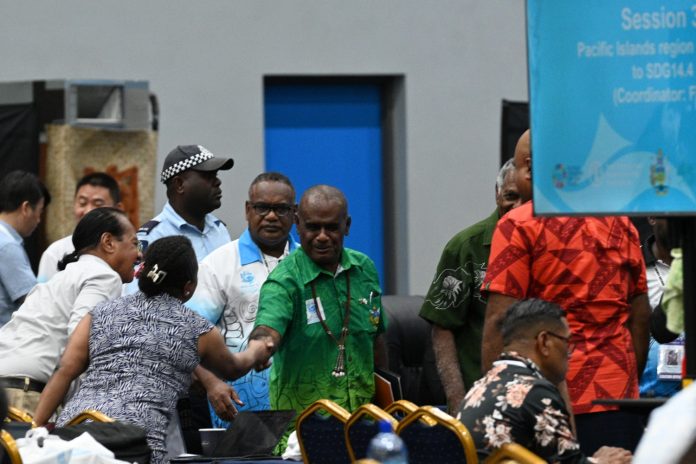
Honiara summit ends on a high note

0

BY JOHN HOUANIHAU

There are two key deliverables from the Honiara Summit: the communiqué and the high-level political declaration document.

Dr. Jimmie Rodgers, Secretary to the Prime Minister (SPM) – Special Duties, highlighted this during the closing of the Honiara Summit 2025: Iumi Tugeda Delivering SDG 14.4 – Achieving Sustainable Fisheries.

He stated that the high-level political declaration is a document endorsed by the Pacific leaders and Ministers of Fisheries who attended the summit.

“Its purpose is to support the outcomes of the communiqué, ensuring that political leadership and political vigor drive its implementation,” he said.

Dr. Rodgers explained that the communiqué serves as a summary of the key points discussed during the three-day summit.

“The communiqué has been published on various websites, including those of the UN, FAO, FFA, SPC, and other partners,” he added.

“The purpose of this publication is to allow the world to review the agreements made at the summit. It also outlines the roadmap leading to the third Oceans Conference in Nice, France, in June this year. The second document, the political declaration, has been reviewed by leaders and serves three primary purposes,” he said.

“Firstly, it demonstrates the support of our political and ministerial leadership in the Pacific for the agreements outlined in the communiqué. Secondly, the political declaration does not introduce new concepts but consolidates previous decisions and declarations by leaders, with a strong focus on fisheries,” Dr. Rodgers explained.

He further emphasized that the documents reaffirm and prioritize the region’s commitment to fisheries in the lead-up to the third Oceans Conference.

“Lastly, the declaration highlights the Pacific’s political leadership in fisheries,” he concluded.

For feedback, contact: [email protected]

Seleso completes community reconciliation and restoration of cultural house in Haliatu

0

BY IRWIN ANGIKI
Member of parliament for South Guadalcanal Rollen Seleso has facilitated the reuniting of communities within his constituency.
The event which took place Wednesday (February 26, 2025) brought together hundreds of people from nearby communities in Haliatu village, one of the largest villages in the constituency.
Traditional material exchanges called Chupu were laid before MP Seleso, community chiefs and elders to signify acceptance by all parties and restoration of their unity.

MP Seleso speaking with a group of women singing traditional chants. Photo credit – Gary Hatigeva

The 2024 elections had sowed division among members of the Haliatu community. Some of them are involved in the cultural movement called Gaena’alu or Moro movement, one which strictly practices pre-Christian ways of Guadalcanal and has followers from various parts of the island.
The Boko cultural house is one in which members of Moro hold their traditional programmes in.
The significance of the Boko is that it symbolises the togetherness, peace and unity of the community.
MP Seleso explains that following the split caused by the 2024 elections, the Boko was left neglected and was allowed to be overgrown with vegetation.
The Boko’s state of neglect was a stark reminder of the problem that existed in the Haliatu community, Seleso said.

One of the chiefs giving his speech. Photo credit – Gary Hatigeva

“So, when I visited earlier I talked with the chiefs and elders who had used to look after the house that I would like to see a restoration to the Boko and the return of unity in this community.
“This set of talks and dialogue between the members of the community, and they all agreed to put away their differences and not allow politics to divide us.
“The event today shows that the parties which had had difference have come together and decided to put away their differences.
“Our culture is one of the vital fabrics that hold our people together. And, the restoration of the Boko will see confidence in our culture returning to these communities,” Seleso said.
“Church and culture go along together in holding our communities together.”

The Chupu being shared to the reconciled parties. Photo credit – Gary Hatigeva

The occasion was graced by MP Seleso, members of his constituency office, elders and chiefs of Haliatu village, members of surrounding villages and Haliatu.
The programme saw the exchange of Chupu, followed by speeches from chiefs, elders and MP Seleso.
A feast concluded the event with singing of traditional chants.
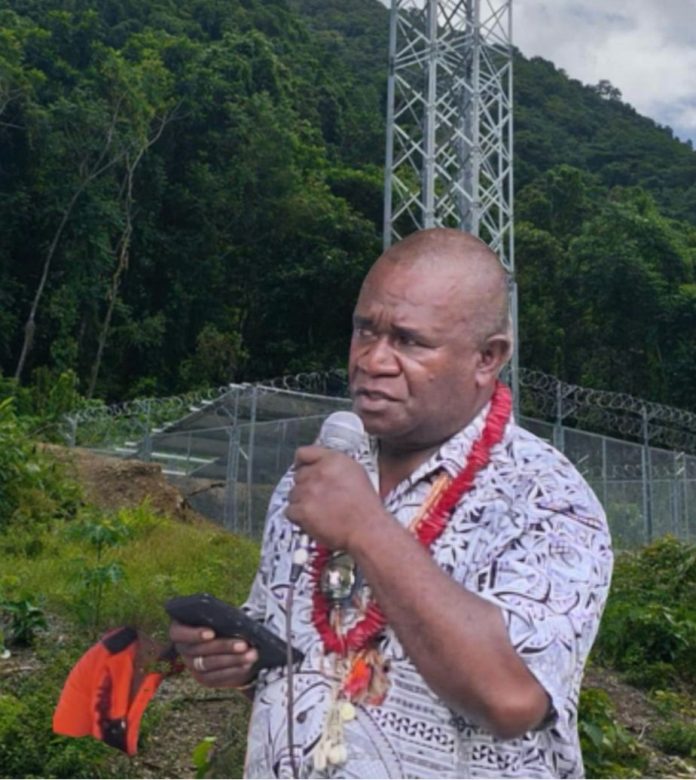
MP Seleso was in the constituency last week to launch South Guadalcanal’s first 4G telecommunication tower at Malaisu village.
This is the first of three towers which have been installed in the constituency.
The other two towers are reportedly being completed with their launching to be carried out in the coming months.

For feedback, contact :[email protected]

CONNECTED TO THE WORLD

0

South Guadalcanal launches 4G telecommunication tower at Malaisu, first of three towers installed in the constituency
-Towers equipped with advanced technology connecting to Our Telecom system and satellite communications: MP Seleso

South Guadalcanal constituency has launched its first 4G telecommunication tower, providing internet services to communities there.
This is the first of three telecommunication towers installed in the constituency, with the other two reported to be ready for launch in a matter of months.
The South Guadalcanal Constituency Office announced the successful mini-launch of the new 4G telecommunications tower at Malaisu, held Friday last week, in a media statement yesterday (Sunday, March 2, 2025).

This significant event was attended by traditional and community leaders, other community representatives, and the Member of Parliament for South Guadalcanal, Rollen Seleso, who also represented the Government for National Unity and Transformation (GNUT) at the occasion.
The community members of Malaisu expressed their heartfelt gratitude to the GNUT, for their continued commitment to bringing transformative development to rural communities across Solomon Islands. They also expressed their thanks to the former Democratic Coalition Government for Advancement (DCGA), for initiating this important project.


The installation of the telecommunications tower is a clear demonstration of the Government’s dedication to improving the lives of those in remote areas, the statement said.
The elders and community leaders described the project as a “historical gift” that will significantly enhance communication and connectivity for the people of Malaisu and surrounding areas.
MP Seleso, who has been at the forefront of this initiative, spoke to the community about the importance of this project, what came out from the national government’s policy on telecommunications, and how it came to fruition through discussions within both the Government Caucus and Cabinet.
He stressed that the support and blessing of the Government were instrumental in making this milestone possible, and Seleso expressed his pride in delivering this essential infrastructure to the people of South Guadalcanal.


In his speech, Seleso urged the community to take ownership of the tower and to protect it for the benefit of current and future generations.
He highlighted the critical role that the tower will play in providing reliable communication services, particularly in emergencies, and called on the people of Malaisu to ensure the tower is maintained and used responsibly.
While the event was relatively small in scale, it carries immense significance for the community, symbolising a huge leap towards improved connectivity and access to essential services.
Seleso said he is hoping that with this breakthrough, his people can now advance their small businesses through easy access to finances via the services provided under Our Telekom’s money services such as m-selen, online banking and others.
He added that ordinary mobile users including teachers and nurses in these rural communities, can also have easy access to finances through these services.


“Malaisu is one of the three communities in South Guadalcanal that will benefit from the installation of telecommunication towers.
“The other two towers are being installed in the Viso and Haliatu communities, with launches expected in the coming months.
“Work is progressing steadily on all three towers, and we are excited for the continued progress,” Seleso said.
In his closing remarks, Seleso explained that what makes these 4G towers unique is that they are equipped with advanced technology that connects both to the Our Telecom system and directly to satellite communications.


This ensures that even if the regular telecommunications network faces disruption, the people in the Weather Coast and surrounding areas can continue to access both online and voice services through the backup satellite system. This added layer of reliability will ensure that the people of South Guadalcanal stay connected, no matter the circumstances.
“The South Guadalcanal Constituency Office is committed to ensuring that these transformative projects continue to benefit all communities in the region, and we look forward to the completion and activation of the remaining towers in Viso and Haliatu,” the statement adds.

MAL thanked Japan’s US$3.4m funding for school nutrition project

0

BY NED GAGAHE

The Ministry of Agriculture and Livestock (MAL) in the Solomon Islands has expressed deep gratitude following the announcement of a significant US$3.4 million (SBD$28.7 million) funding commitment from the Government of Japan for a milestone project aimed at improving school nutrition in Isabel and Western Provinces.

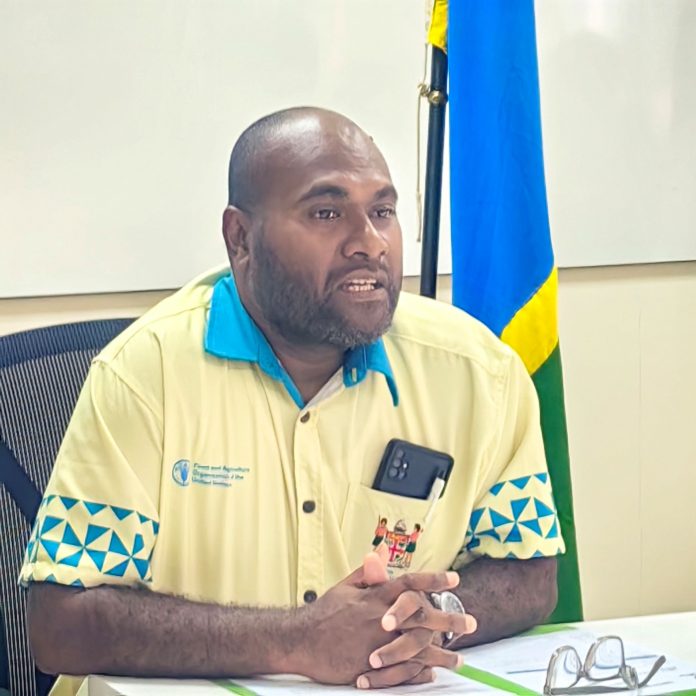
During a ceremony held Friday at the Japanese Embassy in Honiara, Dr. Samson Viulu, MAL Permanent Secretary, took the opportunity to express his sincere thanks to the Government of Japan, as well as the UNICEF for their role in facilitating the project.

Mr Viulu acknowledged the contributions of Ambassador Extraordinary and Plenipotentiary of Japan to the Solomon Islands, His Excellency Keiichi Higuchi, and UNICEF Pacific Representative, Mr. Jonathan Veitch, for their dedication to the project.

“This project is a milestone for us. It will be the first of its kind in the country, and it highlights Japan’s strong commitment to the long-term development of the Solomon Islands.” Dr Viulu said.

He also reflected on the longstanding relationship between the two countries, citing his personal experience as a graduate of a Japanese university.

The project, officially named the Project for Nutrition Improvement through School Meals in Isabel and Western Provinces, will focus on providing sustainable food production support to local communities surrounding four boarding schools in these provinces.

The funding will be used to establish an agricultural distribution system, improve nutrition and hygiene in the schools, and provide essential nutrition education to both students and communities.

Dr. Viulu highlighted the project’s alignment with the ruling Government for National Unity and Transformation (GNUT) policy, which emphasizes food security and the importance of attracting the country’s youth to the agricultural sector.

He stated that the project also directly supports the Food Security, Food Safety, and Nutrition Policy 2024-2029, which was recently adopted by the Cabinet.

“I believe our people, particularly in Isabel and Western Provinces, are eagerly awaiting this project.

 “The project aligns strongly with the current government’s priorities, and we are committed to supporting its successful implementation.” Dr. Viulu said, expressing confidence in its positive impact on local communities.

UNICEF is expected to play a central role in coordinating the project on the ground, ensuring that it aligns with the needs of local communities while delivering lasting benefits. The project is part of broader efforts to address the “triple burden” of malnutrition in the Solomon Islands, which includes undernutrition, micronutrient deficiencies, and overnutrition, largely driven by unhealthy dietary habits and the impacts of climate change.

“The Minister of Agriculture and Livestock has expressed full support for the initiative and reaffirmed the ministry’s commitment to working closely with all partners to ensure the project’s success.

“The project is expected to contribute to improving both the agricultural sector and the overall health of the population, marking a significant step toward sustainable development in the Solomon Islands.” Dr Viulu said.

In conclusion, Dr. Viulu reiterated his gratitude to the Japanese Government and UNICEF for their support, noting that the success of the project would further strengthen the relationship between the two nations while bringing tangible benefits to the people of the Solomon Islands.

For feedback, contact: [email protected]

MEHRD welcomes Japan’s grant for school nutrition enhancement

0

BY NED GAGAHE

The Ministry of Education and Human Resource Development (MEHRD) has expressed strong support for the newly signed agreement between the Government of Japan and UNICEF, aimed at enhancing school nutrition across the Solomon Islands.

The US$3.4 million (SBD$28.7 million) grant, announced Friday during a ceremony at the Japanese Embassy in Honiara, will play a pivotal role in improving the health and well-being of schoolchildren in Isabel and Western Provinces.

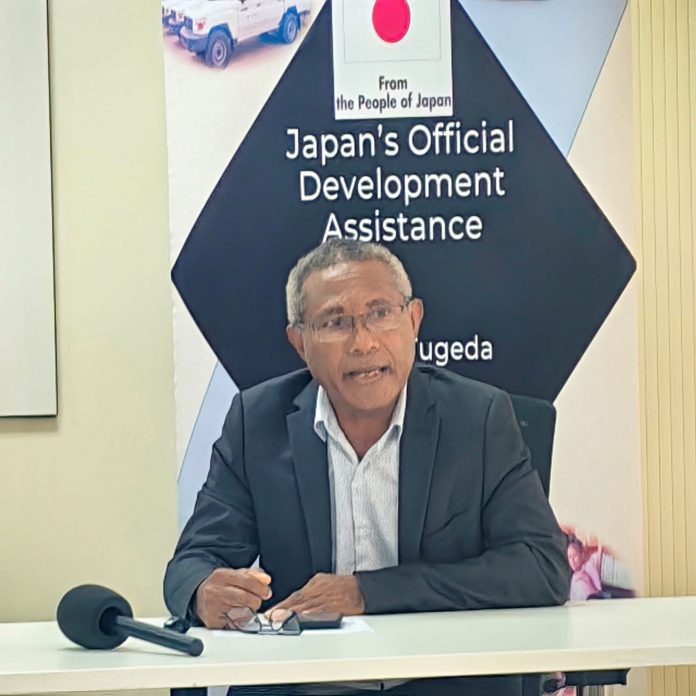
MEHRD Permanent Secretary Dr. Franko Rodie, spoke at the signing ceremony, highlighting the significant impact this initiative will have on the country’s education and health systems.

He began by acknowledging that while hunger is not the central issue in many parts of the country, malnutrition and the lack of essential nutrients are contributing to health issues, particularly among children.

“I wish to say a few remarks on behalf of my ministry, but at the outset I would like to say that no one is dying from hunger in some islands. However, there are young children suffering from illnesses caused by not consuming food that contains the right nutrients to fight tropical diseases.” Dr. Rodie said

He emphasized that the signing of this grant is a critical step toward ensuring the future well-being of the nation, as it will directly address the nutritional needs of schoolchildren.

Dr. Rodie stressed that good nutrition is foundational to a child’s growth, academic success, and long-term health.

“When children have access to healthy and nutritious meals, they perform better in school, stay healthier, and develop into strong and capable leaders of tomorrow,” he said.

Despite the critical importance of nutrition, Dr. Rodie acknowledged the challenges schools face in providing balanced and nutritious meals, particularly in rural areas.

The grant will help alleviate these challenges by enriching school meals with essential nutrients sourced from local farmers and ensuring they are prepared to the highest standards of quality and care.

Dr. Rodie expressed deep gratitude to the Government of Japan and UNICEF for their generous support, noting that this initiative will have a long-lasting and positive impact on the lives of children throughout the Solomon Islands.

He also recognized the efforts of teachers, parents, and school staff who are committed to nurturing the next generation of leaders.

“Let this be the beginning of a healthier and brighter future for our children. Together, we can build strong alliances where no child goes to school hungry, and where every child has the opportunity to thrive,” Dr. Rodie concluded.

For feedback, contact: [email protected]

A BETRAYAL OF TRUST

0

Government and its agencies’ failure to protect workers 

In the Solomon Islands, the government and its agencies have a fundamental responsibility to safeguard the rights and welfare of all workers, ensuring they are treated with dignity, fairness, and respect.

However, there is growing evidence that this responsibility is being neglected, particularly in the context of foreign investors and companies implementing national infrastructure projects.

Ordinary workers and their families are being left at the mercy of their employers, with little to no protection from exploitation, unsafe working conditions, and unfair treatment.

This failure to act represents a profound betrayal of trust and a dereliction of duty by those in power.

Foreign investors and companies involved in infrastructure projects often bring much-needed development to the Solomon Islands.

However, the benefits of these projects are not always shared equitably.

Reports from workers across the country paint a grim picture of exploitation and neglect.

Many workers face low wages, excessive working hours, and unsafe working conditions.

These conditions are not only inhumane but also violate both national labor laws and international standards.

Despite these standout issues, government agencies tasked with enforcing labor laws and protecting workers’ rights have largely turned a blind eye. Inspections are rare, and when violations are reported, they are often ignored or inadequately addressed.

This lack of accountability has created an environment where foreign investors and companies operate with impunity, knowing that they are unlikely to face consequences for their actions.

The government’s failure to protect workers is not merely a matter of oversight but a systemic issue rooted in a lack of political will and prioritization. In many cases, the government appears more focused on attracting foreign investment and maintaining positive relations with investors than on upholding the rights of its citizens.

This prioritization of economic interests over human rights has left workers vulnerable to exploitation and abuse.

Labor laws and regulations designed to protect workers are often poorly enforced, and government agencies lack the resources, capacity, and independence to carry out their mandates effectively. Corruption and conflicts of interest further undermine efforts to hold employers accountable.

As a result, workers are left with little recourse when their rights are violated, and their grievances are often dismissed or ignored.

The failure to protect workers has far-reaching consequences, not only for the workers themselves but also for their families.

Many workers are the sole breadwinners for their households, and their exploitation directly impacts the well-being of their loved ones.

Families are left struggling to make ends meet, with limited access to food, education, and healthcare.

The psychological toll of working in exploitative and unsafe conditions further exacerbates the suffering of workers and their families.

In some cases, workers who speak out against mistreatment face retaliation, including termination, blacklisting, or even physical intimidation.

This culture of fear silences workers and perpetuates a cycle of abuse, leaving them with no choice but to endure unacceptable conditions in silence.

The government must recognize its duty to protect all workers, regardless of their employer or the nature of their work. This requires a commitment to strengthening labor laws, ensuring their enforcement, and holding employers accountable for violations.

Government agencies must be empowered with the resources, training, and independence needed to carry out their mandates effectively.

Government must strengthen and make effective mechanisms for workers to report violations without fear of retaliation and ensure that these reports are investigated promptly and thoroughly. Collaboration with international organizations, civil society, and worker representatives can help build a more robust system of oversight and support.

Foreign investors and companies must also be held to higher standards.

The government should require all investors to adhere to international labor standards and ensure that their operations are regularly monitored.

Contracts with foreign companies should include clear provisions for the protection of workers’ rights, with penalties for non-compliance.

The failure of the government and its agencies to protect workers is a grave injustice that undermines the dignity and well-being of countless individuals and families. Workers in the Solomon Islands deserve to be treated with respect and fairness, and it is the government’s responsibility to ensure that their rights are upheld.

By addressing these failures and implementing meaningful reforms, the government can restore trust, promote social justice, and create a more equitable and prosperous society for all. The time to act is now – before more workers and families are left to suffer in silence.

–WUSI

Japan and UNICEF sign SBD 28.7m partnership to improve school nutrition in Solomon Islands

0

BY NED GAGAHE

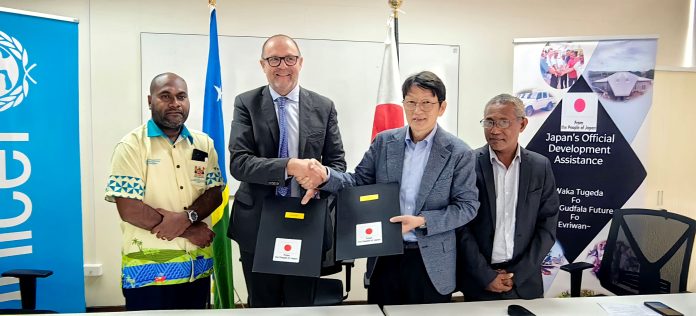
A new partnership aimed at tackling malnutrition in the Solomon Islands was officially launched on Friday, February 28, at the Japanese Embassy in Honiara.

The program, which focuses on improving school nutrition, will begin with a school meals initiative in Isabel and Western Provinces.

The signing ceremony, attended by high-level officials, marked the start of this critical partnership.

The event was attended by Japanese Ambassador to the Solomon Islands, His Excellency Keiichi Higuchi, UNICEF Pacific Representative Mr. Jonathan Veitch, Permanent Secretary of the Ministry of Agriculture and Livestock (MAL), Dr. Samson Viulu, and the Permanent Secretary of the Ministry of Education and Human Resources Development (MEHRD), Dr. Franko Rodie.

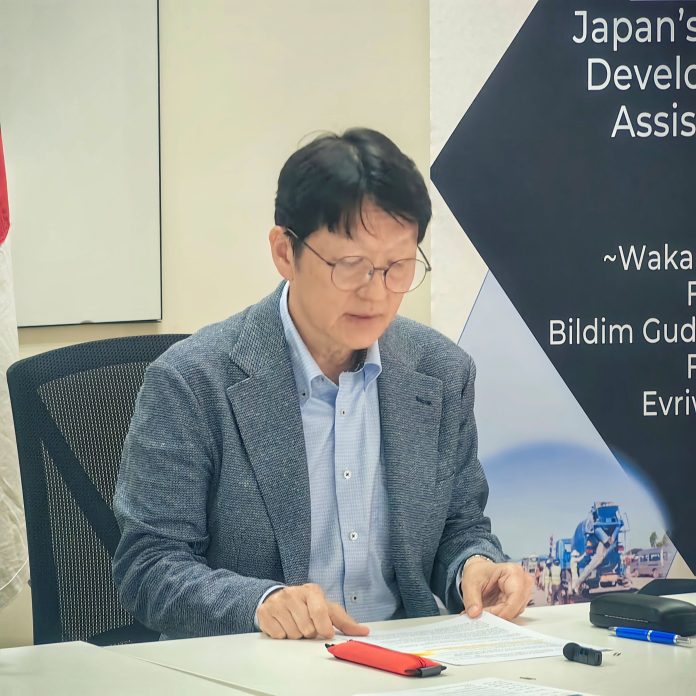
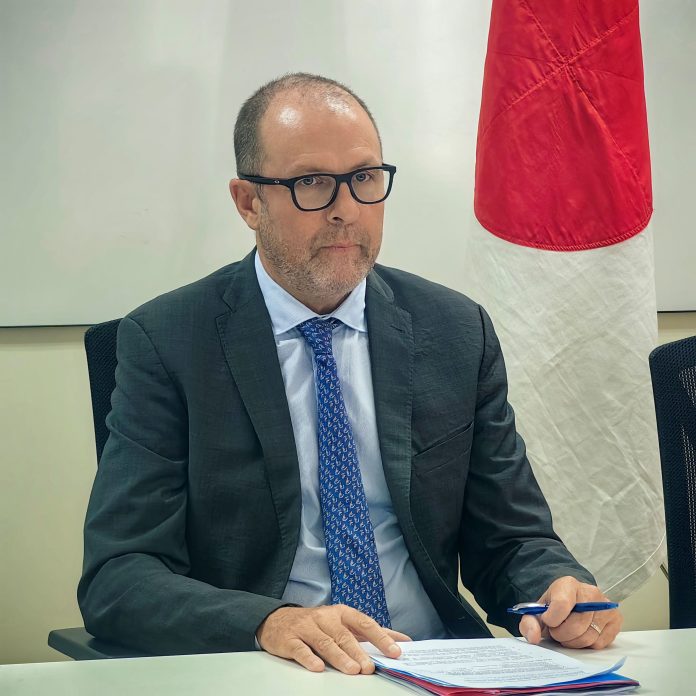
Ambassador Keiichi and Mr. Veitch signed the grant agreement for the nutrition improvement program, which is worth SBD 28.7 million (US$3.4 million), witnessed by senior government officials, UNICEF staff, and representatives from the Japanese embassy.

In his remarks, Mr. Jonathan Veitch, UNICEF Pacific Representative, emphasized the importance of childhood nutrition, noting that poor nutrition can have long-lasting effects, increasing the risk of obesity and non-communicable diseases later in life.

“Good nutrition in childhood is crucial for lifelong health and wellbeing,” he said.

He went on to address the growing issue of malnutrition in the Solomon Islands, where the triple burden of malnutrition—undernutrition, micronutrient deficiencies, and overweight/obesity—currently affects many children.

“With this partnership, we aim to reach over 30,000 children across the Solomon Islands by guiding the future national school meal program,” Mr. Veitch explained.

“More immediately, nearly 3,000 children in Isabel and Western Provinces will benefit directly from healthier, locally grown food and improved water, sanitation, and hygiene (WASH) services.” He said.

Ambassador Keiichi also spoke about the importance of the initiative, explaining how it would support sustainable food production in communities surrounding four boarding schools in the two provinces.

The program will establish an agricultural distribution system for these schools, helping to ensure a steady supply of fresh, nutritious food for school meals.

He also noted that the program would focus on improving nutrition and hygiene standards within these schools, along with providing nutrition education.

“The aim is to create a virtuous cycle that maintains good health in the Solomon Islands,” said Ambassador Keiichi.

“The triple burden of malnutrition in the Solomon Islands is caused by unhealthy dietary habits, such as insufficient consumption of fruits and vegetables and excessive intake of processed foods and sugary drinks,” he added.

“Climate change and environmental degradation are also threatening the country’s biodiversity, making staple foods like root crops and vegetables more vulnerable and leading to soaring food prices.”

The new partnership between Japan, UNICEF, and the Solomon Islands Government aims to improve the nutritional status of the country’s children, providing them with the tools they need to lead healthy lives and contribute to the future wellbeing of their communities.

For feedback, contact: [email protected]

Collaboration needed now to address sustainable fisheries management

0

By Loretta B Manele

Collaboration among Pacific Island states is needed now more than ever to help address sustainable fisheries management.

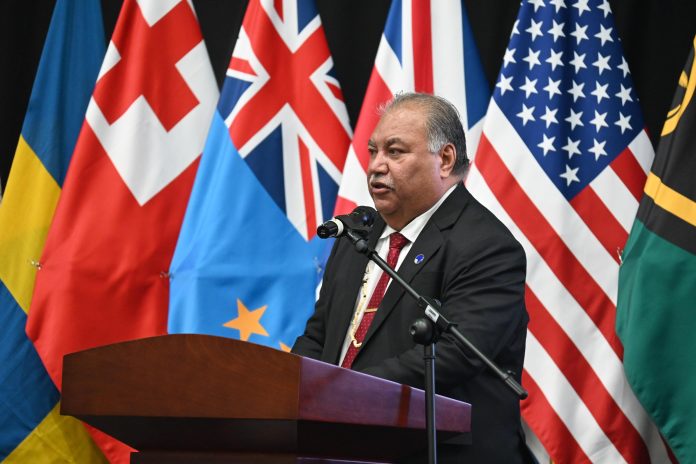
Baron Divavesi Waqa, Secretary General of the Pacific Islands Forum (PIF) stressed on this at the Honiara Summit which hosted Pacific Island leaders and various organizations for discussions on how to effectively manage and sustain fisheries in the Pacific region.

In initial remarks, he told fellow Pacific leaders, regional bodies and heads of organizations that their dependence on fisheries is not merely economic but is deeply cultural and existential as well.

Waqa said Small Island Developing States (SIDS) are surrounded by the vast ocean and its resources hence fisheries is pivotal to their economies and livelihoods.

“Over 80% of government revenue in some of our states is derived from tuna fisheries.

In 2022, the fisheries sector contributed approximately USD 3.2 billion to the GDP of Pacific Island countries.

This dependence underscores the importance of regionally agreed sustainable management practices to ensure the sustainability of these resources for future generations.”

Moreover, he pointed out that the 2050 Strategy for the Blue Pacific is the roadmap for a resilient and sustainable future.

“The 2050 Strategy for the Blue Pacific is our roadmap for a resilient and sustainable future. In the strategy, leaders committed to; deepen our collective responsibility and stewardship of the Blue Pacific Continent, protect our sovereignty and jurisdiction over our maritime zones and resources including in response to climate change induced sea level rise and strengthen our ownership and management of our resources.”

He stressed that collaborative efforts with support of scientific research and policy advice through regional bodies such as the Forum Fisheries Agency (FFA), the Secretariat of the Pacific Community (SPC), the Western and Central Pacific Commission and the Parties to the Nauru Agreement have set global benchmarks for sustainable fisheries management.

Waqa added that Pacific Islands Forum leaders have also played an important role by amplifying the voices of the Pacific to the rest of the world through the communiques and declarations concerning the health of the oceans and sustainable fisheries development initiatives.

He emphasized that regional solidarity and cooperation are the cornerstones of our success.

Waqa furthered that the collective action of member states has enabled Pacific Islands countries to address complex fisheries issues effectively.

“By working together, we have strengthened our negotiating power on the global stage and ensured that the benefits of our fisheries are shared among our people. This solidarity is more crucial than ever as we face the challenges of climate change and illegal, unreported and unregulated fishing (IUU).”

Waqa said Pacific Island countries should strengthen their collaborative efforts, share knowledge and resources and support each other in implementing SDG14.4 and by extension, the 2050 Strategy for the Blue Pacific.

For feedback, contact: [email protected]

Japanese Ambassador highlights key role of new school nutrition project in addressing malnutrition in SI

0

BY NED GAGAHE

Keiichi Higuchi, the Japanese Ambassador to the Solomon Islands, delivered a compelling speech at the signing ceremony of a new grant agreement aimed at improving school nutrition in Isabel and Western Provinces.

The ceremony, held at the Japanese Embassy in Honiara, marked the official launch of the SBD 28.7 million (US$3.4 million) project, which focuses on addressing malnutrition and supporting sustainable agriculture in the Solomon Islands.

Ambassador Higuchi opened his speech by extending a warm welcome to all attendees, including distinguished guests, media representatives, and those who have contributed to the initiative.

He expressed his honor in representing the Japanese government at the signing of the Exchange of Notes for the Project for Nutrition Improvement through School Meals in Isabel and Western Provinces.

“This project will provide sustainable food production support to communities surrounding four boarding schools in Isabel and Western Provinces and establish an agricultural distribution system for these schools,” Ambassador Higuchi explained.

He highlighted that in addition to improving nutrition and hygiene in the schools, the project will also provide nutrition education to create long-term health benefits for the communities.

The Ambassador addressed the pressing issue of malnutrition in the Solomon Islands, noting that the country suffers from the “triple burden” of malnutrition—undernutrition, micronutrient deficiencies, and overnutrition.

He identified unhealthy dietary habits, such as the insufficient consumption of fruits and vegetables and excessive intake of processed foods and sugary soft drinks, as key contributing factors to the nation’s nutrition crisis.

Furthermore, Ambassador Higuchi emphasized the added challenges posed by climate change and environmental degradation, which have impacted biodiversity and caused the loss of essential habitats for root crops and vegetables.

This, he said, has led to rising food prices in domestic markets, exacerbating the nutrition problems.

The Japanese Ambassador also reflected on the Pacific Island Leaders’ Meeting (PALM-10) held in July 2024, where the Prime Minister of the Solomon Islands, Honorable Manasseh Sogavare, requested assistance with agriculture and non-communicable diseases (NCDs) in the country.

“I strongly believe that this project will not only contribute to improving agriculture and nutrition for the people of the Solomon Islands but also respond to Prime Minister Sogavare’s aspirations for his people to be fit, healthy, and vibrant,” Ambassador Higuchi said.

The project is expected to increase the productivity of local farmers, thereby contributing to economic stability in Isabel and Western Provinces, while addressing the complex issue of NCDs in the region.

Ambassador Higuchi expressed hope that the initiative would make a positive and lasting impact on the health and well-being of boarding school students in the provinces.

The Ambassador concluded his speech by referencing the Japan-Pacific Island Forum Leaders Declaration and the PALM-10 Joint Action Plan, which identified climate change as the greatest existential threat to Pacific nations.

He reiterated Japan’s commitment to combating climate change, not just for the Solomon Islands but for all countries in the Pacific region.

“I would like to express my sincere gratitude to everyone involved in this project,” Ambassador Higuchi concluded.

“I strongly hope that this project will progress successfully and contribute to a healthier and more prosperous future for the Solomon Islands.” He said.

For feedback, contact: [email protected]

Solomon Islands faces ‘Triple Burden’ of malnutrition: UNICEF Representative

0

BY NED GAGAHE

UNICEF Pacific Representative Jonathan Veitch has called for urgent intervention to tackle the growing malnutrition crisis in the Solomon Islands, describing the country as facing the “triple burden” of malnutrition.

Speaking at the launch of a new SBD 28.7 million (US$3.4 million) nutrition program at the Japanese Embassy yesterday, Mr. Veitch highlighted the alarming statistics: 32% of children under five are stunted, 8% are wasted (low weight for height), and 39% are anaemic.

He revealed that overweight and obesity affect 23% of children aged 13-17, largely due to unhealthy dietary habits including low consumption of fruits and vegetables and high daily intakes of sugary soft drinks.

“These are the issues we are facing with the triple burden of malnutrition,” Mr. Veitch said.

“But these are also the challenges we will overcome with this program.” He said.

The newly launched partnership, which involves UNICEF and the Government of Japan, aims to address these critical issues by focusing on school nutrition and local food production. The initiative will start in Isabel and Western Provinces, targeting nearly 3,000 children in the pilot schools, with a long-term goal of reaching over 30,000 children across the country.

The project will provide healthier, locally grown food options in schools, replacing unhealthy processed foods, and will also focus on improving water, sanitation, and hygiene (WASH) services. In addition, the program will help schools implement meal guidelines, raise awareness about safe food handling and healthy local foods, and encourage local communities to grow nutritious crops like sweet potatoes, cassava, yam, and pumpkins.

“We will support local communities to produce more nutritious foods and link these communities with nearby schools, ensuring a fresh and steady supply of healthy food for school meals,” said Mr. Veitch.

“This will reduce the reliance on imported and processed foods, boost the local economy, and promote healthier lifestyles for children and adults.”

Ambassador Keiichi Higuchi of Japan also praised the partnership, noting that it would significantly improve nutrition and hygiene in four boarding schools in Isabel and Western Provinces, benefiting the surrounding communities.

The initiative, he said, would provide sustainable food production support and contribute to better health outcomes for the Solomon Islands’ youngest generation.

Mr. Veitch expressed his gratitude to the Government of Japan for its generous financial support and also acknowledged the collaboration of the Solomon Islands Government, particularly the Ministries of Agriculture and Livestock, Education and Human Resources Development, and Health and Medical Services.

“Let’s act to ensure that this program transforms the eating culture and environment at the community level, for our children and their families,” Mr. Veitch said.

“UNICEF remains committed to ensuring that our youngest generation has the healthy future they deserve.”

The program is a vital step toward addressing the country’s nutrition challenges, ensuring that future generations of Solomon Islanders can thrive and fulfill their potential.

For feedback, contact: [email protected]