Home Blog Page 418

Robust scientific outputs essential for fisheries management

0

By Loretta B Manele

Robust scientific outputs have proved to be essential for fisheries management.

Rhea Moss-Christian, executive director for WCPFC (Western & Central Pacific Fisheries Commission) assured this whilst speaking at the recent Honiara Summit’s Session 4: “Supporting fisheries sustainability through science” last month.

She said in almost three decades of experience at the WCPFC, they have seen that robust scientific outputs have been essential in guiding fisheries management.

“We also know, for those who have been involved in negotiating conservation and management measures, that when our decisions are built on reliable and well-analysed data, we see tangible benefits.”

Moss-Christian stated that they have seen healthier fish populations, more resilient ecosystems and communities that continue to thrive.

She explained that these assessments conducted through rigorous data collection and advanced modelling techniques, have allowed fisheries managers to adjust conservation and management measures dynamically.

Moss-Christian said the ability to adapt to new data in real-time have proven invaluable, particularly in face-to-face uncertainties that we’re facing by climate variability and changing ocean conditions.

For feedback, contact: [email protected]

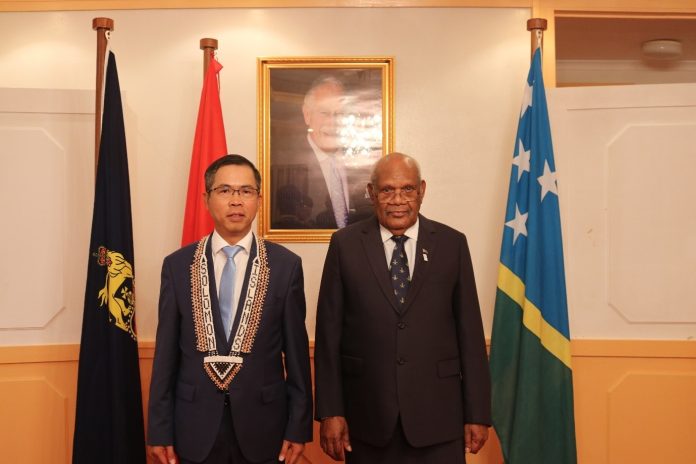
Vietnam’s ambassador presents letter of credence to Acting GG

0

The non-resident Ambassador Extraordinary and Plenipotentiary of the Socialist Republic of Vietnam to Solomon Islands, His Excellency Pham Hung Tam, presented his Letter of Credence to the Acting Governor General, Patterson J Oti, at Government House on Wednesday.

Welcoming Ambassador Pham Hung Tam, the Acting Governor General reaffirmed Solomon Islands’ commitment to strengthening relations with Vietnam for the mutual benefit of both nations, a statement by the Ministry of Foreign Affairs yesterday said.

“Solomon Islands values its relationship with the Socialist Republic of Vietnam, and we look forward to deepening our cooperation for the prosperity of our peoples,” Mr Oti stated.

He highlighted that 29 years ago, both nations established diplomatic ties based on the principles of mutual trust, respect, and benefit.

“Our countries are connected not only by the vast expanse of the Pacific Ocean but also by our shared aspirations for a better future,” he added.

Oti noted the growing trade between the two nations and emphasized the potential for increased collaboration in agriculture, tourism, trade, and investment. He also underscored Solomon Islands’ interest in learning from Vietnam’s development experience.

“I hope that during your tenure, we can finalize a visa waiver arrangement and explore a trade framework that will create more economic opportunities for our people,” he said.

“On behalf of His Majesty King Charles III, King of Solomon Islands and the Commonwealth, I am honored to accept your Letter of Credence from the President of the Socialist Republic of Vietnam, appointing you as Ambassador Extraordinary and Plenipotentiary to Solomon Islands, with residence in Canberra.”

In his remarks, Ambassador Pham Hung Tam expressed Vietnam’s deep appreciation for its relationship with South Pacific nations, including Solomon Islands.

“In recent years, our two countries have made significant strides in strengthening bilateral relations. This progress is a testament to our shared commitment to fostering cooperation for the benefit of our peoples,” he said.

“We have built a strong foundation of trust and mutual respect, which serves as the cornerstone of our partnership,” the Ambassador added.

Solomon Islands and the Socialist Republic of Vietnam established diplomatic relations in 1996.

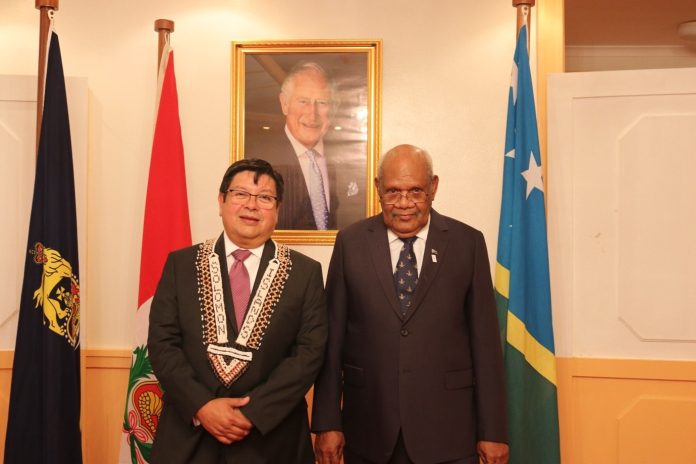
Ambassador of Peru presents credentials to acting GG

0

The non-resident Ambassador of the Republic of Peru to the Solomon Islands, His Excellency Vitaliano Gallardo, has presented his letter of credentials to the Acting Governor General, Patterson J Oti, at the Government House.

Mr Oti commended Ambassador Gallardo’s extensive diplomatic experience and expressed confidence that relations between the Solomon Islands and Peru can be further strengthened through deeper bilateral cooperation in areas of mutual benefit.

“On behalf of His Majesty, King of the Solomon Islands and the Commonwealth, Charles III, it is my great pleasure to accept your letter of credence as the Ambassador of the Republic of Peru to the Solomon Islands,” Oti said.

He highlighted the shared connection between the Solomon Islands and Peru through the vast Pacific Ocean, as well as their rich natural resources, geographic beauty, and unique cultural heritage.

Oti welcomed Peru’s optimism and commitment to enhancing engagement and cooperation in key sectors such as tourism, agriculture, and forestry. He also extended his best wishes to Ambassador Gallardo for a successful tenure as the non-resident Ambassador of Peru to the Solomon Islands.

“May our bilateral relations reach new heights in environmental, economic, social, and developmental collaboration,” he added.

In his remarks, Gallardo emphasised the similarities between Peru and the Solomon Islands, particularly their extraordinary biodiversity.

“Both of our nations are deeply committed to the sustainable and responsible use of our natural resources, acknowledging our role as stewards of the environment,” he stated.

He further underscored the shared commitment of both nations to upholding international law and fostering peaceful coexistence within the Pacific region.

Peru, officially the Republic of Peru, is a country in western South America. It shares borders with Ecuador and Colombia to the north, Brazil to the east, Bolivia to the southeast, Chile to the south, and the Pacific Ocean to the south and west.

UK-supported training set to boost response to pollution incidents in SI and Pacific

0

The capacity building and resilience to respond to pollution incidents in Solomon Islands and the Pacific has been boosted through a UK-supported training programme led by the Ocean Country Partnership Programme (OCPP).

In collaboration with the Secretariat of the Pacific Regional Environment Programme (SPREP) and Ambipar Limited, the training aims to increase the knowledge of pollution responders during an incident, including through witnessing the practical deployment of equipment, a statement from the UK Embassy and partners this week said.

The training programme has been developed to incorporate the country National Plan (NatPlan) to tailor the training modules and scenarios to best prepare participants to manage an incident based on their specific requirements.

The training which began Monday this week will be split where all participants will receive an IMO Level 2 certificate, which supports on-site supervision of a spill event.

There will also the opportunity for more senior staff to complete additional training in the evenings to receive an IMO Level 3 certificate, to increase knowledge on managing media and stakeholder management during spills and how to complete compensation claims.

At the end of the workshop today, Friday, March 7, participants will have a greater understanding of responding to an incident using their NatPlan, the steps to follow during an incident to have a more effective response and knowledge on pollutant types which will improve identification and early management of pollution.

The training has been scoped in collaboration with the Solomon Islands Maritime Association (SIMA), Vanuatu Maritime Safety Authority (VMSA) and Secretariat of the Pacific Regional Environment Programme (SPREP)), with the VMSA holding the same training programme the following week which will increase resilience across the Pacific.

Participants at the week-long workshop includes staff from the Ministry of Environment, Climate Change and Disaster Management’s Conservation division; Ministry of Fisheries and Marine Resource and National Fisheries Development; the Solomon Islands National University.

Others include private shipping company owners; provincial premiers; National Disaster Management Office; Ministry of Health and Medical Services; Solomon Ports; Markworth Oil Company Limited and other private sector organisations.

Healthy fish needs healthy oceans

0

By Loretta B Manele

To be able to thrive in the marine ecosystem, healthy fish need healthy oceans.

Dr Eva Plaganyi, Senior principal research scientist and research group leader based at CSIRO Environment, Australia stressed on the sentiment when contributing to a session at the Honiara Summit late last month.

She voiced that healthy fish will need healthy oceans to sustain and this is related to addressing plastic pollution in the ocean and ensuring a healthy habitat so fish can be conserved and sustained.

Plaganyi said one of the programmes they are rolling out is on the amount of plastic pollution there is in the ocean.

“My organisation is particularly passionate about trying to help with managing, assisting, as well as reducing some of that plastic pollution.”

Plaganyi stated that if we don’t look after the habitat for the fish, we won’t be able to specifically conserve them.

She said this on a broader scope, applies to habitat conservation including things like river inputs and estuaries where a number of fish rely on estuaries for their life cycle and to keep generating those sustainable yields.

Moreover, in this case, Plaganyi stated that we’re increasingly getting squeezed in the marine space by conflict between different sectors.

She said this is because of the need for water for different industries whether it is agriculture or mining.

“We need to improve the way in which we holistically look at how can we manage healthy fish stocks in conjunction with some of these other industries.”

She also stated that there needs to be transformation in our food systems so that collectively, we’re optimising the food security benefits and reducing the carbon footprint and the ecological footprint of those food production systems.

Plaganyi pointed out that this is an area where science can help with reducing the waste and helping ensure we’re protecting the habitats for fish species.

“There’s been a big move to ecosystem approaches to fisheries, which considers multi-species components, as well as ecosystem-based fisheries management, which more broadly considers interactions with other sectors.

Those considerations to frame our fisheries management are also really important, given, as I mentioned, the growing blue economy and the need to balance between conservation and sustainable utilisation.

That’s also an area where our scientific models are able to integrate some of the complexity of all of these different interactions and help make transparent what are the trade-offs in different management strategies, which is really important for us to proactively plan how we go ahead into the future.”

Plaganyi pointed out that to support sustainable fisheries going forward, we need to look after the industries and fisheries themselves and with extreme events increasingly impacting fisheries around the world, we don’t yet have mature marine insurance such as parametric methods that can help support those industries and communities to continue focusing into the future.

For feedback, contact: [email protected]

MCILI holds SI national employment policy workshop

0

By Loretta B Manele

Ministry of Commerce, Industry, Labour and Immigration (MCILI) conducted a two-day “Solomon Islands National Employment Policy” validation workshop from March 4-5 at the Heritage Park Hotel.

Harry Kuma, minister for MCILI officially opened the workshop saying the meeting is not just a consultation process but a crucial step towards ensuring that our employment strategies reflect the needs and aspirations of our people.

Kuma said the policy recognises employment not just as means of economic survival but a foundation for social stability, poverty reduction and inclusive growth.

“With this policy draft, we are reaffirming our government’s commitment to creating an enabling environment for businesses to thrive and for our people to access decent and productive employment.”

He said the labour market faces multiple challenges for instance youth unemployment and skills measurements.

Kuma added that currently, youth unemployment in Solomon Islands stands at approximately 46 percent with many young people struggling to find jobs that match their skills.

Henceforth, he said the policy draft emphasises vocational training and capacity building programmes to bridge this gap.

Kuma also stated that over 80 percent of our workforce engaged in the informal employment lack social protection and job stability, thus they aim to strengthen policies that transition workers into more secure and sustainable jobs.

In regards to inclusivity, he stressed that gender inclusivity and opportunities for marginalised groups and women’s participation in the formal labour force remains low at 38% while persons with disabilities and other marginalised groups face additional barriers to employment.

“This policy draft promotes equal opportunities and supports inclusive workforce participation.”

He said the Solomon Islands government is committed to representing targeted initiatives that will; foster an entrepreneurial culture and support micro-small and medium enterprises as key drivers of employment, enhance collaboration between the public and private sectors to create more job opportunities, strengthen labour policies and enforcement mechanisms to ensure fair wages, safe working conditions and the protection of workers’ rights and to invest in skills development programmes to align workforce and capabilities with labour market demands.

The minister highlighted that the success of this policy draft depends on everyone because the government cannot achieve these goals alone.

Kuma said they need strong partnerships with businesses, educational institutions, development agencies and civil society organizations.

“I extend my sincere gratitude to all those who have contributed to the development of the Solomon Islands National Employment Policy (SINEP) Draft, to our government officials, SICCI (Solomon Islands Chamber of Commerce and Industry), development partners private sector representatives’, civil society organisations and all stakeholders. Thank you for your unwavering commitment and collaboration.”

For feedback, contact: [email protected]

Govt clarifies cancellation of prospecting licence over Koloula catchment

0

Government has come out to explain the actions of the Mines and Energy minister in cancelling the prospecting licence of a company for the mineral rich Koloula catchment in South Guadalcanal.

Responding to a call from the Opposition Leader questioning the cancellation, a Government Communication Unit in a statement this week clarified the air over the matter.

The Ministry of Mines, Energy, and Rural Electrification (MMERE) wishes to address public concerns regarding Minister Bradley Tovosia’s recent decision to revoke the intention to issue a prospecting license to Ni Hao Investment (SI) Ltd over Koloula, the statement said.

After careful consideration and consultation with relevant stakeholders, the intention was decided to be revoked.

The Ministry would like to assure the public that this decision was made in the best interest of the country and its resources.

MMERE remains committed to ensuring transparency and accountability in all matters related to mining and energy in the Solomon Islands.

Minister Tovosia acknowledges the discussions and differing opinions surrounding this decision and seeks clarity, the statement said.

The following key points outline the rationale and legal basis for the Minister’s decision:

i. Due Process and Consideration

The Minerals Board reviewed the renewal application from Ni Hao Investment (SI) Ltd in its meeting on 6th February 2024. Following a comprehensive assessment, the Board recommended rejecting the application. However, in exercising his statutory authority, the Minister conditionally approved the application, emphasizing strict compliance with prospecting requirements.

Minister Tovosia’s decision was based on the principles of due process and fair consideration, considering all relevant factors. By approving the renewal application with conditions, the Minister aimed to balance the interests of both the investor and the state, ensuring that all legal requirements were met. This decision reflects a careful and deliberative approach to governing natural resource investments, prioritizing accountability and transparency in decision-making processes.

ii. Conditions of Approval

As part of the conditional approval, a Letter of Intent was issued on 26th August 2024, explicitly requiring the successful negotiation and conclusion of a Surface Access Agreement (SAA) before formally issuing the prospecting license. This condition is a standard requirement to ensure lawful access and minimize disputes.

The Surface Access Agreement will clarify the terms and conditions for access to the land for prospecting activities. It will outline the responsibilities of both parties and establish guidelines for environmental protection and restoration. By prioritizing legal compliance and cooperation, the government aims to foster positive relationships between resource investors and local communities, promoting sustainable regional development.

iii. Community Concerns and Access Issues

The Ministry received multiple objections from key stakeholders, including local landowners and community representatives, raising serious concerns about accessibility and consent for prospecting activities in the proposed area. These objections highlighted the lack of guarantees that Ni Hao Investment (SI) Ltd would secure full and unhindered access to conduct prospecting operations.

iv. Minister’s Statutory Responsibility

Given the significance of landowner concerns and the potential for operational difficulties, the Minister acted within his legal mandate to ensure that any approved prospecting activity has a reasonable prospect of success. The absence of clear access assurances would have posed significant obstacles to effective mineral exploration. Therefore, the Minister prioritised addressing these objections and working with Ni Hao Investment (SI) Ltd to establish a clear plan for securing access to the proposed area.

The Minister fulfilled his statutory responsibility to promote responsible and successful mineral exploration while respecting landowners’ concerns. This proactive approach ultimately paved the way for a more collaborative and mutually beneficial relationship between all parties involved in the prospecting activities.

v. Final Decision

In light of these developments, the Minister determined that proceeding with the issuance of the prospecting license would not be in the best interest of the stakeholders involved, nor would it align with the ministry’s commitment to responsible and conflict-free resource development.

Consequently, the decision to revoke the intention to issue the prospecting license was made by legal and procedural frameworks. This decision marked a significant turning point in the ministry’s approach to resource development, emphasizing the importance of ethical considerations and responsible decision-making.

MMERE reiterates its commitment to transparency, responsible resource management, and stakeholder engagement.

“We encourage open dialogue and cooperation among all parties to ensure the sustainable development of the nation’s mineral resources.”

WWII OIL RISK

0

War wrecks not covered by international agreements. Largest ship grave in front of Honiara

BY JOHN HOUANIHAU

In front of Honiara lies Solomon Islands’ largest number of World War II wrecks beneath the Iron Bottom Sound sea, posing a huge environmental disaster risk.

But, to date, there is no international agreement to address this risk in the case that the oil products contained in the wrecks start leaking.

Paul Irving, marine pollution officer for the PAC Plan Resilience Project from Secretariat for the Pacific Regional Environment Programme (SPREP), raised the concern to Island Sun in an exclusive interview this week.

“3,500 World War II wrecks in the Pacific still have oil on them, and it’s a big and difficult problem to deal with. Solomon Islands has a lot of them,” said Mr Irving.

He said that the wrecks are now at least 70 to 80 years old since they sank.

“The oil was a cargo because they were a tanker, or whether the oil was fuel.  Some of those ships might start to leak a little bit of the oil inside of them, and the question becomes, is what do we do with that?” he said.

He stressed that international agreements do not cover War wrecks.

“There’s no international agreement like you have with oil tankers or cargo ships now. I think the Solomon government should be engaging in international discussions about whether there could be a new international instrument or a new international organisation to start dealing with the problem of potentially polluting wrecks,” he said.

“It’s a difficult problem. The difficulty comes from the fact that the ships are also war graves. Some still have the original cargos, which might mean ammunition, tanks, bullets or explosives. So, they’re not safe. And so, it’s a real big problem,” he said.

“Any oil inside them held by the steel will start to bubble out when it rusts. That is nasty oil. It’s World War II-quality fuel and World War II-quality crude oil,” said Irving.

He said that most of the wrecks are Japanese, and there’s an issue of who owns them.

“The model that I look at and think is so successful is the organisation that deals with landmines. After a war, the landmines get left behind, and the people who have to face those are the local farmers and the local population. So, several countries have come together and said, we’ll help clean it up.

“It’s not being done fast because it’s a big job. I think the same needs to be done with potentially polluting wrecks, where there’s an international agreement, a coalition of countries that have the expertise and perhaps the history, Japan, the United States, UK, Australia, who have that history associated with these wrecks, could come together and be helpful,” said Irving.

For feedback, contact: [email protected]

URGENT CALL TO ACTION

0

 Opposition Leader Wale says UNICEF report on child abuse ‘alarming’

LEADER of Opposition Matthew Wale says alarming reports of child abuse in the Solomon Islands and the region as a whole is a serious matter.

A statement from the Opposition office yesterday said Wale’s comments followed reports released in the media by UNICEF on the shocking rate of child abuse in the region including Solomon Islands.

The Opposition Leader said addressing child abuse has always been a neglected agenda by successive governments.

Wale said there is a lack of commitment and cooperation across all sectors in all levels of governance to tackle violence and abuses against our children.

“More needs to be done in the enhancement welfare and protection of our children and it is the responsibility of the government to take the lead,” he said.

The Opposition Leader said the Child and Family Welfare Act 2017 should also be reviewed.

Wale said the reports of child abuse in the media and cases before our courts itself are shocking, indicating vulnerability amongst our children even within their own homes.

“These are indicators of failed family systems, social structures and legal protections,” he said.

The Opposition Leader also adds data on the issue at hand is out dated and the government and stakeholders need to strengthen their partnership and collaboration.

Wale said the rights of children should be part of ongoing awareness in schools, churches and our communities.

“Children need to be taught in schools, churches and communities on the issue of child abuse,” he said.

The Opposition Leader said more support is also needed to empower social welfare officers in their role to provide services to children and families.

Wale said the government must take the lead in identifying the problems and put more efforts into mitigation.

“We must not turn a blind eye on this issue,” he said.

‘Solomon Islands is not alone with oil spill crisis’

0

BY JOHN HOUANIHAU

The Solomon Islands is not alone when it comes to oil spill crises and response.

Paul Irving, Marine Pollution Officer for the PACPLAN Resilience Project under the Secretariat of the Pacific Regional Environment Programme (SPREP), spoke to Island Sun yesterday during the Ocean Country Partnership Programme Solomon Islands Oil Response Training Workshop at the Heritage Park Hotel.

“The important thing for the Solomon Islands to know is that they’re not alone. If a small spill occurs in the port or at the terminal, South Pacific Oil or SIMA can handle it,” said Irving.

“If it gets a bit bigger, then it might involve Team Solomon—the Solomon Islands Maritime Authority (SIMA) and other organizations such as the National Disaster Management Office, Fisheries, Health, and others stepping in to assist,” he added.

“If it escalates further, like the Solomon Trader oil spill at Rennell Island in 2019, international assistance is available. Australia is the primary responder, but SPREP, through its PACPLAN framework, also plays a key role,” he said.

Irving explained that the PACPLAN framework outlines how countries collaborate on regional and international responses to marine pollution incidents.

“So, the Solomon Islands is not left to handle these incidents alone. There is a structured system in place—from managing small spills locally to receiving substantial assistance for major disasters,” he emphasized.

For feedback, contact: [email protected]