Home Blog Page 410

SI Met service and Australian bureau of meteorology enter new twinning partnership

0

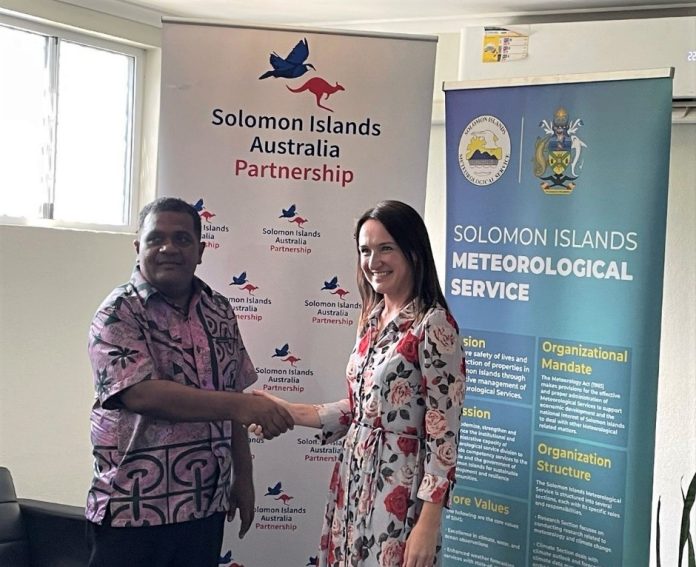
The Solomon Islands Meteorological Service (SIMS) and the Australian Bureau of Meteorology (BOM) have launched a new twinning partnership which builds on decades of close partnership dating back to the 1950s.

The partnership will strengthen the weather observing and forecasting capability of SIMS through training and targeted uplift of their systems and processes, a statement from the Australian high commission yesterday said.

This includes upgrading existing weather stations from manual to semi-automated, to make weather watching more effective and help forecast severe weather events, the statement said.

Improved prediction of extreme weather events, such as cyclones, earthquakes and tsunamis, will give communities more timely warning, helping them prepare and keep safe.

Under the new twinning arrangement, three SIMS staff members are completing a Graduate Diploma in Meteorology in Australia, alongside Australian and Papua New Guinean forecasters.

Minister for Environment, Climate Change, Disaster Management and Meteorology, Trevor Mahaga emphasised the important role of improved weather forecasting capabilities to prepare for and respond to severe weather events.

“By enhancing our meteorological capabilities, we will not only improve our early warning systems, but also develop better strategies for disaster risk reduction,” Minister Mahaga said.

“This partnership will enable us to save lives and minimise economic losses, fostering resilience among our communities.”

Minister-Counsellor from the Australian High Commission, Ms Lindsay Buckingham said Australia is committed to supporting SIMS’ operational resilience.

“The importance of a strong and effective meteorological service is crucial to strengthening resilience to the impacts of climate change,” Buckingham said.

SI needs to embrace the principles of good governance

0

I am fortunate to know and be in speaking terms with the British High Commissioner.  It had been instant rapport the first time I met His Excellency a month ago.  But on Thursday 14th March His Excellency surprised me with his advocacy of the values of Good Governance in SIBC evening news.  He had virtually been saying the very things I had lined up for this article.

Drawing from ‘The Footprint of Error’ article, released to mass media on the 10th and 11th January, this supplementary write up is to assist readers who may be not familiar with key points that had been advanced about the Principles of Good Governance.

There is no denying, we do have good, sincere and hardworking politicians who command respect and strive to steer governance processes in the right direction.  Sadly, these well-meaning individuals are still susceptible to being overshadowed by the more ravenous who have the ability to be outspoken and to exude daring vibes.  Our stand today must therefore be, to cultivate good quality characters and astuteness in leadership, the two essential traits for Good Governance.  They must be relevant to present day challenges and demands.  They must not be averse to changes and they must be champions of the comprehensive twelve commonly accepted principles of Good Governance.  Yes we need to focus on change from past errors if we are to attain sustainable viability moving forward.

Appearing hereunder are the 12 principles of good democratic governance, which represent fundamental values for effective governance:

  1. Participation, Representation, Fair Conduct of Elections:
    • Local elections should be conducted freely and fairly, adhering to international standards and national legislation.
    • Citizens play a central role in public life at the local level.
    • All individuals of discernment age, regardless of gender, have a voice in decision-making, either directly or through legitimate representative bodies.
    • Decision-making considers the interests of all, including persons of special needs the less privileged and the vulnerable.
  2. Responsiveness:
    • Objectives, rules, structures, and procedures should align with citizens’ legitimate expectations and needs.
    • Public services must be delivered promptly, and requests and complaints should receive timely responses.
  3. Efficiency and Effectiveness:
    • Achieving results that meet agreed-upon objectives.
    • Optimal utilization of available resources.
    • Performance management systems to evaluate and enhance service efficiency.
  4. Openness and Transparency:
    • Decisions made and enforced according to rules and regulations.
    • Public access to non-classified information (except for specified reasons like privacy protection or fair procurement procedures).
    • Information on decisions, policy implementation and results made available to the public.
  5. Rule of Law:
    • Adherence to legal principles and norms.
    • Ensuring that laws apply equally to all citizens.
    • Upholding justice and protecting individual rights.
  6. Ethical Conduct:
    • Upholding ethical standards in governance.
    • Avoiding conflicts of interest and corruption.
    • Ensuring integrity and accountability.
  7. Competence and Capacity:
    • Building and maintaining the necessary skills and expertise.
    • Ensuring that public officials are competent and capable of fulfilling their roles.
  8. Innovation and Openness to Change:
    • Embracing innovation and adapting to evolving needs.
    • Willingness to explore new approaches and solutions.
  9. Sustainability and Long-Term Orientation:
    • Considering the long-term impact of decisions.
    • Balancing immediate needs with future consequences.
  10. Sound Financial Management:
    • Responsible handling of public finances.
    • Transparency in financial matters.
  11. Human Rights, Cultural Diversity, and Social Cohesion:
    • Respecting human rights and promoting diversity.
    • Fostering social cohesion within the community.
  12. Accountability:
    • Holding public officials accountable for their actions.
    • Ensuring transparency in decision-making processes.

These principles are essential for democratic governance at all levels.  They are relevant from the highest Governing body of the land through all tiers of governance to village community groupings.

WILLIAM BARILE

HONIARA

The gentle giant politician from Koriokuku – a tribute

0

Today, March 18, 2025, our national government recognised and showed its appreciation is celebrating with the Solomon Islands nation and people, the contributions and achievements of the late Sir Francis Billy Hilly GCMC, with a State Funeral. Indeed, he is worthy of such recognition for what he had un-selfishly used his God given talents during his long life of service for his people in Ranogga and Simbo, Western Region, Solomon Islands and the wider Pacific Region. For he has fought the fight and finished the race and now is at a place that his Lord had prepared for him.

I first came to know Billy, in 1971 at USP Laucala Bay Campus, Fiji. He was at his final years of his Degree studies while I was a first year student doing my one-year Preliminary Science. At USP, we were billeted to the Third Hall where Billy was our Senior Student, trying to keep us in some sort of order. As one of our senior students and a representative on the USP Student Council, all of us from Solomon Islands looked up to him for guidance, leadership and support. He played his role well in our challenges with such multi-national and cultural regional institution.

After that year, we parted company. He continued his studies and graduate with his BA (Administration) in 1973. I left to pursue my interest in Agriculture studies in Papua New Guinea. It was many years later in 1983 to 1986 that we met again, initially in Gizo when I was posted as the Acting Principal Field Officer (PFO) for the then Western Province which included Choiseul. Later, in 1985 I left the Ministry of Agriculture Extension Division to Join the them Solomon Islands Copra Board as its Branch Manager at Noro, where I stayed until I was moved to Honiara as the CEMA’s Commodities Development and Extension Manager.

It was during my period working at Gizo and Noro that I started to know Billy at his best and for me, my best time of learning about government procedures and processes as well as the Provincial Government policies, roles and functions under the mentoring and monitoring of my friend, the Hon. Francis Billy Hilly, who was by then, the Premier of Western Province. He was an excellent teacher and motivator. In fact, his advice to me on Public Services policies and procedures is in the General Orders (GO). Treat it as your bible. It should be always at a corner of your desk. Later, this practical advice proved beneficial for me when I was successful when making a claim to the office of the Ombudsman (Sir Peter Kenilorea, at the time) for my being a Level 6 officer acting for a Level 8 Position for 2 years.

At that time the Provincial Agriculture Extension Division was devolved to the provinces, meaning that the Division was directly answerable to the province through the Provincial Clerk (later Provincial Secretary) for its operational functions. Linkage to the Ministry of Agriculture and Lands was mainly on technical and personnel matters only.

But Hon Francis Billy Hilly, as the Premier has far more important matters to deal with for his Province and the nation than a new public servant bewildered by his new job.

As the Premier of Western Province, Francis was more concerned about the sustainability of the province financially to supplement the grants from the national government To this end he made use of his business acumen and experiences to address it. With his forward looking business related insight, he identified certain resources that were available and accessible to the province that had the potential to be developed to achieve more self-financially. Together with other leaders in his government and resource persons such as Job Dudley Tausinga, in the Province he provided leadership to establish the following initiatives for the province.

  1. Establishment of the Western Province Investment Secretariat (Economic Arm).  Under this body several economic activities undertaken included;
  • The Western Development Corporation Ltd (WDCL) – the first Retail Store was established at Noro and managed by Mr. Takayama, a Japanese friend who was a former manager of the British Solomon Islands Trading Company at Gizo. The Store thrived and convenient for the early residents of Noro.
  • Taking over the Rendova Harbour Plantation – a productive plantation previously owned by an expatriate. It had coconut, Cocoa, coffee and some cattle.
  • Property Real-estate at Noro- where Western Province build housing accommodations for the Solomon Taiyo company to rent for its employees. There were nearly 50 residential houses.
  • Rental of the Bulk Fuel Tank at Noro. This need to be verified.
  • Other Development initiatives

One of the developments that was supported by the Provincial government during the time was

the establishment Agricultural Settlement Schemes. These schemes involved sub-dividing

alienated lands (FTE) and newly registered Customary Land into Land Develop Cooperatives (LDC)

for the purpose of relocation, especially for Simbo Island people who are living on a live volcanic

island. and agricultural development. The schemes are managed by the appropriate Area

Councils. Applicants send their applications to the respective Area Councils for approval. On

approval, they were given Temporary Occupation Licenses (TOL). After they develop

it they are then given Fixed Term Estate (FTE) title over their developed land. Such schemes exist

now in Baeroko, Kolombangara, Vella la Vella, Shortlands, Gizo, Munda, Bunikalo in Marovo and

even on Choiseul at Kolombangara River, South Choiseul.

This initiative enabled the successful applicants to secure land and carried out agricultural

developments.

Much had Sir Francis done during his life time for his people of Ranongga and Simbo Islands, Western region as well as our Nation. The late Sir Francis had contributed much more at the national level when he became an MP for Ranogga and Simbo Island which others had covered well when he was Minister for various Ministries and finally the Prime Minister position. He represented Solomon Islands well and well respected at the regional level for his roles in the cessation of the Bougainville crisis and other duties as team leader for other Pacific countries during their elections and so on.

I continued to relate to him in my work in CEMA, especially, when he was the Minister of Commerce and Industries as CEMA was under his portfolio and his very close relationship with the CEMA Board and Management.

During his retiring period before his illness, he continued his interest in developing his plantation at Koriovuku, where established a Virgin Coconut Oil unit in association with the Kokonut Pacific Solomon Islands (KPSI).

It is most fitting that he is taken back to his home to rest and be close to his family, people and his land.

Good bye my friend. You have done more than enough for us. We will remember you always as our gentle but a political giant from Koriovuku, Ranongga Island, Western Province.

By Moses Pelomo

Road line markings for Kukum highway: MID

0

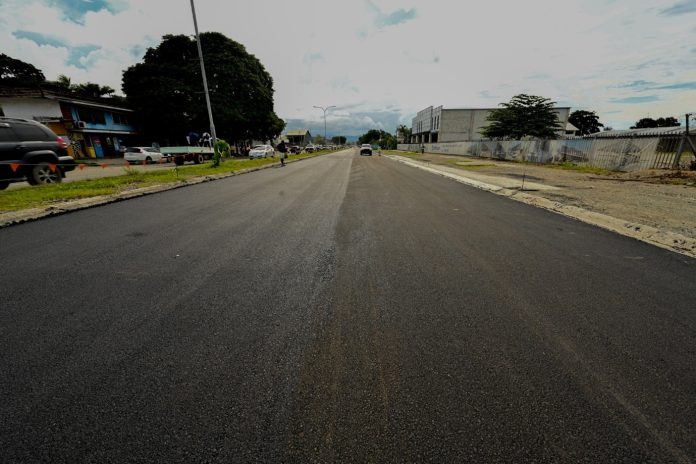
The Kukum Highway has reached an important milestone as the contractor, EMCO Pacific, prepares to paint road line and markings along the recently completed section.

Transport Infrastructure Management Services Division (TIMSD) of the Ministry of Infrastructure Development (MID) in a statement yesterday (Thursday, March 20) said, “The contractor is awaiting materials from overseas for this line marking works.

“Travelling public will expect temporary closures to allow the contractor to do smooth lining works.

“These clear and durable markings are essential for delineating the double traffic lane, ensuring the safety of all motorists.

“So, this lane markings, center line, stop lines and other road symbols and textures marks the final work for this highway section.”

Last week marked the successful completion of the remaining road reinstatement works from Maromaro Betelnut Market to the SINU Kukum entrance associated with the Solomon Water Sewer Line Installation Project.

Upon completion, this road section will be handed back to MID for ongoing maintenance.

The sewer project, executed by McConnell Dowell Construction, is funded by the Solomon Islands Government as part of the Urban Water Supply and Sanitation Sector Project (UWSSP).

This investment plays a vital role in improving sewage disposal, managing wastewater effectively, and advancing overall public health standards in Honiara.

M-Selen commended in rural communities

0

BY JOHN HOUANIHAU

M-SELEN mobile money service offered by Our Telekom in the Solomon Islands offers reliable financial assistance for people in rural communities.

This was according to Our Telekom’s M-Selen Team Manager key accounts Christina Palusi when she visited communities in Makira Ulawa province last week.

Ms Palusi said she had the opportunity to visit a few communities and learnt that most people used the M-Selen for savings and sending money.

“M-Selen is more like looking at financial inclusion. We are trying to ensure our rural people have access to a proper financial savings system. So, I’m happy to hear from people in Makira of the positive feedback,” said Palusi.

She said that the M-Selen service also helped families support their children by sending money through M-Selen when they left the family to attend school.

“Coming to Kirakira I made a couple of testimony interviews and I found out that small business operators in Kirakira used to transfer money to get goods from Honiara via vessels going back to Kirakira. You know our provinces used agencies. So, when agencies max the cash accordingly, you can’t put in any more money. So, people are using M-Selen for different purposes and I’m happy to learn that,” she said.

She also called on the public to walk into their offices or phone shops should they need more information about the M-Selen service.

“If people want to understand and know more about it, we are here. If anyone is interested in being an agent, we are happy to take on new agents. So, feel free to walk in into Telekom shops or offices for more information so we can assist you,” said Palusi.

For feedback, contact:[email protected]

Ilia CHS impressed with fencing project

0

By Loretta B Manele

Ilia Community High School teachers and students were all smiles at the handing over of their fencing project yesterday.

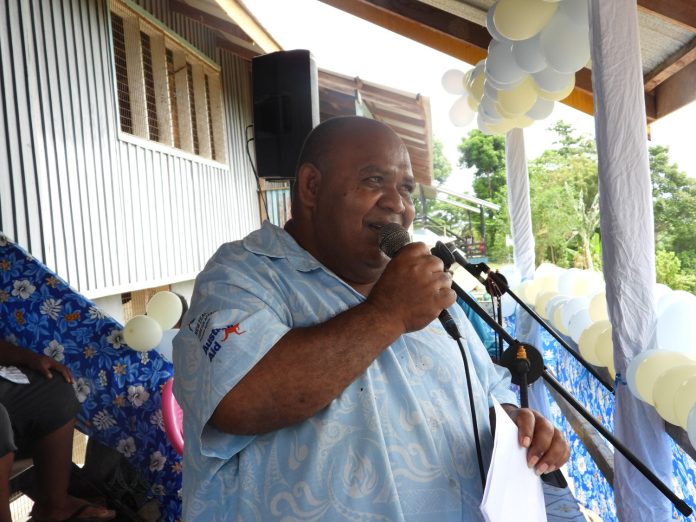
Patrick Ngidua, Ilia CHS Principal prior to the official handover of the project from a representative of the Australian High Commission at the school expressed that they are very much impressed with the project.

Speaking of the fencing project which is funded from the Solomon Islands-Australia Community Partnerships grants program, he said they come together to witness what is a “funding” to a “reality”.

Ngidua voiced that the project has brought about great impacts to their school life.

“It makes us feel secure when we leave the school environment, especially with teaching and learning and with other involvements in extracurricular activities.”

He added that teachers could also easily control and monitor the movement of students within the school compound.

“As an administrator and a teacher at this school for almost five years, I have felt or noticed a great difference immediately after the erection of this fence.”

Addressing teachers and students of the school, he said they should appreciate and be proud of such support which has been very beneficial to all of them and the school community as a whole.

Ngidua went on to express his gratitude to the Australian government for funding the project.

“On behalf of the parents, school board, students and teachers, I would like to highly appreciate the Australian government for their consideration and funding of this project which has been successfully completed.

We really praise your government for your support towards the education sector in Solomon Islands. In doing so, you enable to develop the human resources of this country as well to produce better citizens.”

Ngidua noted that they also look forward and hope to have more support in the future.

For feedback, contact:[email protected]

Ensuring students learn in a safe environment

0

By Loretta B Manele

A fence may seem as simple as it sounds, but it is vital to ensure that students are learning in a safe environment.

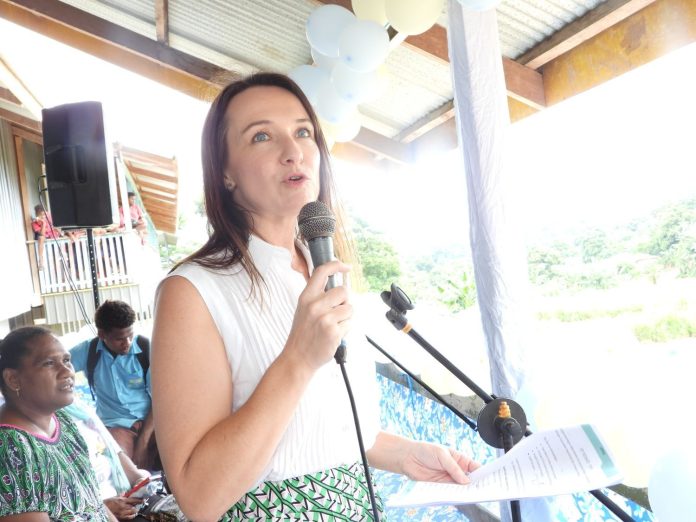
Lindsay Buckingham, Minister Counsellor from the Australian High Commission expressed the sentiment whilst speaking at the handover of the Ilia Community High School (CHS) Fencing project yesterday at the school.

Addressing students and staff of the school, she stressed on why having a fence at their school is important.

Buckingham said the fence, although it may look like a simple thing, is very important and will help them focus on their education.

She added that it also creates boundaries to help keep the school secure so that they don’t worry about distraction from outside.

“The fence also protects school property and make sures that the area in which you are learning in is safe.

That means fewer distractions and more focus on studies.”

She highlighted that education is key for their future and all of them are future leaders, innovators and change makers of Solomon Islands.

Buckingham said the knowledge they gain at their school will help them to shape the community, country and build their dreams.

However, to do that, she pointed out that they will need to be in a safe and secure environment hence the fencing project.

Moreover, Buckingham emphasized that the project is an example of strong partnership between Australia and Solomon Islands.

“Australia recognises that best solutions can come out when local communities are better empowered to take charge of their future growth and this is exactly what we see here today at Ilia Community High School.”

Buckingham said the fence also depicts of how partnerships with communities can make tangible differences.

She also acknowledged the school principal, headmistress and project manager who is the former principal of the school for helping them make the project a success.

“We will continue to work together to improve communities, build futures and to ensure that you have the tools needed for success.”

She mentioned that it was in 2022 when Ilia CHS was awarded funding for the project which was one of 13 projects funded by Australia in that year.

Buckingham said Australia increased it’s funding for this project.

She added that in 2024, Australia funded 100 community projects across every province in Solomon Islands.

Buckingham stated that this year, Australia will fund 100 more projects.

Ilia CHS fencing project comes under Solomon Islands and Australia Community Partnerships program.

For feedback, contact:[email protected]

More help from UK for Western province

0

More assistance from the United Kingdom towards the development and governance of the Western province has been assured.

This includes technical support to build the capacity of the provincial assembly.

This follows a successful and fruitful meeting between the new High Commissioner of UK, HE Paul Turner and Western premier Billy Veo earlier this week.

The Western province has been benefiting heavily from the Community Access and Urban Services Enhancement (CAUSE) Project which this year enters its second phase with a lot of community projects lined up.

CAUSE is funded by the World Bank. And, the UK is one of the major donors of the Bank, providing more than USD $2.6 billion, making around 13 percent of the World Bank’s total funds.

Mr Turner underlined the UK’s continued support to the Western province through its funding of the World Bank CAUSE project, which has provided much needed improvements to the province’s urban roads, and upgraded market places.

Communities in Western province’s towns such as Gizo, Munda and Noro are now enjoying safer and convenient foot paths and Jacob’s ladder walkways, boosting access and connectivity thanks to the CAUSE Project.

Premier Veo deeply welcomed the UK’s assistances through the multilateral partnerships.

Veo also highlighted challenges with his government’s finances, and the need for greater coordination of the CDF with the provincial and ward projects.

HE Turner agreed to premier Veo’s sentiments saying, “While we are happy to see the new CDF Act of 2023 and increased decentralisation, there is still a long way to go in terms of empowering the provinces and giving them the means to respond to the needs of the local population.”

Turner offered UK’s help in technical support to build the capacity of the Western provincial assembly, which premier Veo welcomed.

Meanwhile, the second phase of CAUSE is underway after it was officially signed in November last year.

CAUSE has provided climate-resilient spot improvement work, waste collection and cleaning projects, and road construction in Gizo, constant clean-up and waste management in Noro, and infrastructure in Munda.

The CAUSE initiative has given employment to more than 8,000 people in the Solomon Islands, half being women and youth, since its inception in 2018.

MID highlights asbestos threat in govt houses

0

Asbestos continues to pose a significant health risk in government residential properties across Honiara and provincial centres, underscoring the need for more public health awareness.

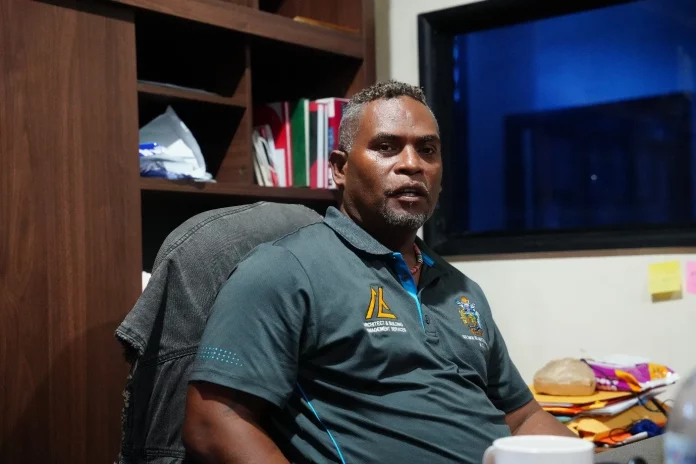
Philip Baura, director of the Architect and Building Management Services Division (ABMSD) at the Ministry of Infrastructure Development (MID), issued the warning about the dangers associated with this hazardous material yesterday.

“We summed up from fieldwork that older government homes, especially those built during the British colonial era, contain asbestos,” Mr Baura said.

“The presence of this substance in building materials presents a serious threat to the health and safety of current inhabitants who are public servants.”

Historically, asbestos was widely utilised in construction from the late 1800s until the 1980s, valued for its fire-resistant properties. However, it has long been known to cause severe health issues, including lung diseases and various forms of cancer.

In the Solomon Islands, asbestos is reportedly present in about 80 percent of residences and non-residences constructed prior to the 1980s.

In response, Baura said “We will no longer endorse the use of building materials containing asbestos in future architecture projects, as outlined in the upcoming National Building Standard Bill.

“Furthermore, our team is actively engaged in the demolition of outdated structures constructed with this hazardous material.”

The destruction of Chinatown during the recent riots and the 2016 Gizo Hospital fire incident serve as stark reminders of the public health risks associated with asbestos exposure in older buildings, which can house toxic materials.

“We actively collaborate with licensed abatement contractors to ensure the safe removal of asbestos from government buildings in Honiara and provincial stations, thereby safeguarding both occupants and public health.”

‘World Bank here to help’

0

BY JOHN HOUANIHAU

World Bank remains committed to working alongside government and the Ministry of Health and Medical Services (MHMS) to build a resilient health system.

Michael Mike World Bank (WB) health finance consultant in the Solomon Islands said this at the handover and launching of the Tulagi hospital last week.

He said Tulagi hospital was made possible through the Ministry of Finance & Treasury (MoFT), and MHMS in collaboration with WB to make the project successful.

“In coming years, people in Tulagi will no longer spend on travelling to Honiara for medical attention. This is your home, protect it well and take ownership of it,” said Mike.

He also acknowledged Government’s commitment to the health sector development when he delivered his remarks during the handover in Tulagi Friday last week.

He said the province not only benefits from the Hospital facility but also from a new out-board motor (OBM) engine to support the logistics of outreach programmes for health workers.

Mike said the Hospital would also have a waste management truck for safe waste disposal and new incinerators which is aligned with the Tourism sector.

“This improvement means more mothers will receive health care, more children will have access to essential services and your people will receive timely care,” he said.

For feedback, contact:[email protected]