Home Blog Page 408

Governor Forau raises concerns over SEZ Bill 2024

0

BY NED GAGAHE

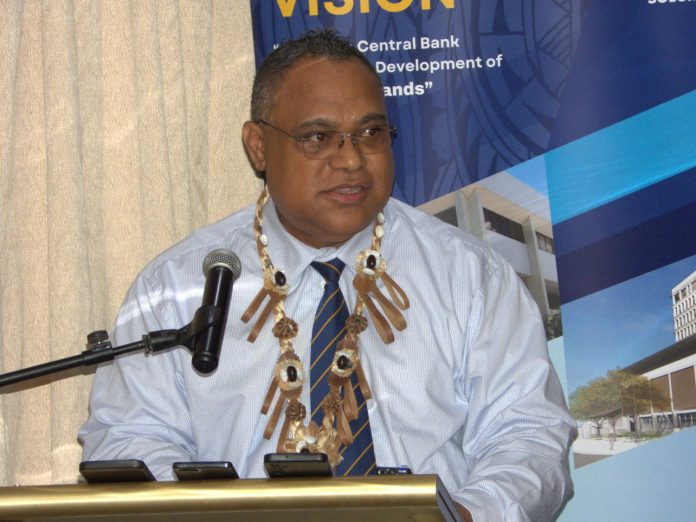
Governor of the Central Bank of Solomon Islands (CBSI), has raised concerns about the potential implications of the Special Economic Zone (SEZ) Bill 2024.

Speaking during the Bills and Legislation Committee (BLC) hearing in Parliament, Dr Luke Forau highlighted an issue with the proposed legislation, which addresses the zone permit required to operate within the SEZ.

The Governor questioned why the zone permit would be treated separately from an operator’s licence, suggesting that if a company or individual already holds an operating licence, there should be no distinction in acquiring the zone permit.

He expressed concerns that the current structure of the SEZ Bill could allow for exploitation, with opportunistic individuals potentially acquiring permits simply to sell them to operators for profit, rather than using the permit to establish genuine operations.

Forau warned that this could result in a situation where individuals profit from obtaining permits without contributing to the economic activities of the SEZ.

He emphasised the need for clarification on the matter to prevent such practices and ensure that the zone permits are used as intended, to facilitate legitimate business operations within the Special Economic Zones.

The CBSI Governor said further discussions is needed on the structure of the SEZ Bill to ensure that it meets its intended goals of fostering economic growth and development in the Solomon Islands.

Forau urged the BLC to address these concerns to ensure that the SEZ framework serves the best interests of the country’s economy and its people.

For feedback, contact:[email protected]

4th China medical team pays courtesy call on health minister

0

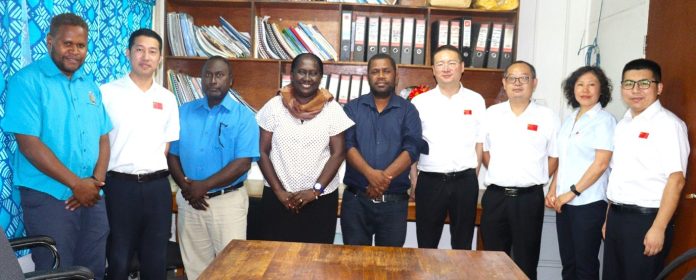
The 4th China Medical Team (CMT) which arrived in the country over the weekend, has paid a courtesy visit to the Minister for Health and Medical Services (MHMS) Dr Paul Popora Bosawai, his Permanent Secretary Mrs Pauline McNeil and members of the Health Senior Executive Management Team.

Minister Popora Bosawai, on behalf of the Solomon Islands Government, the Health Ministry and the National Referral Hospital welcomed the team to Solomon Islands, a statement from the MHMS yesterday said.

“This cooperation shows our deep relationship with the People’s Republic of China and Solomon Islands. It continues to grow since we established our relationship.

“Health is a universal right and we welcome you to our shores. To the departing team we want to sincerely thank you for your huge contribution since your arrival and until today,” said Popora Bosawai.

He further thanked the government and people of China for the new Comprehensive Medical Centre (CMC) which was launched at the beginning of this year, the statement said.

“We anticipate when the building becomes fully operational we look forward to working closely with your team,” said Popora Bosawai.

The 4th China Medical Team Leader Dr Zhao Xueke thanked the Health Minister for welcoming his team and to working closely with the NRH and MHMS.

“We will continue to provide the services of Nephrology, Urology, Cardiology and Acupuncture. Also, we have a Cardiac Nurse with the team who will provide training and support to the doctors and nurses at NRH. For the first time, we have included a cardiac nurse in the 4th CMT,” said Zhao.

He further highlighted that PRC will provide training to 10 local doctors and nurses over a period of three months in China.

It is a cooperation programme in minimally invasive urology surgery between the NRH and the Affiliated Hospital of Guizhou Medical University, the MHMS statement said.

These doctors and nurses from National Referral Hospital will soon travel to China.

Meanwhile, the arrival of the 4th CMT will speed up the preparation for the opening of the new CMC facility.

The 4th CMT consists of a Chief Physician (IDC), Team Leader, a Nephrologist, a Urological Surgeon, a Cardiologist (interventionist), a Cardiac nurse, an Acupuncturist, and an interpreter.

The 4th CMT will be here for a period of 12 months, the MHMS statement said.

CIP invests in economic and social infrastructures

0

BY JOHN HOUANIHAU

The Central Islands Provincial (CIP) Government has been investing in both economic and social infrastructures through the Provincial Development Capacity Development Fund over the years.

Speaking during the handover of the $9.6 million renovated Tulagi Hospital over the weekend, Premier Micheal Salini said that his Government for Change and Advancement has made health one of its priority sectors and will continue to place more development emphasis on the health sector.

“These two cannot function in isolation. They complement each other in development. We need a healthy population to push economic development initiatives and for better and improved health service delivery to the people of Central Province and the nation as a whole,” said Salini.

He said that his government will continue to support the Provincial Health Division and the Minister of Health and the others wherever possible.

He stressed that the province has already earmarked plots of land on Tulagi for health staff housing to cope with the anticipated increase in the number of staff in the revitalisation of various clinical services to ensure the hospital reaches the hospital status following Health’s road delineation policy.

“I can assure everyone here including the Minister and the team from Honiara, that there will be strict rules enforced and security will be provided. I call on all my people to respect the rules and the security measures applied in this facility,” Salini said.

For feedback, contact:[email protected]

CBSI governor wants stricter due diligence measures on special economic zone applicants

0

BY NED GAGAHE

During the hearing on the Special Economic Zone (SEZ) Bill 2024, Governor of the Central Bank of Solomon Islands (CBSI), presented his concerns to the Bills and Legislation Committee last week, specifically addressing issues related to transparency and anti-money laundering protocols in the SEZ framework.

Dr Luke Forau highlighted the importance of including not only the directors but also the beneficial owners, officers, and shareholders in the application for a development zone licence.

Governor Forau said this aims to ensure greater clarity regarding the true ownership of businesses seeking to operate within the Special Economic Zones, a concern he pointed out as crucial in preventing illicit activities such as money laundering.

“Often, businesses are registered with only the directors visible on the public registry, while the actual owners—the beneficial owners—remain obscured.

“This lack of transparency could indicate potential involvement in illicit activities,” said Forau.

“To combat this, we suggest that the Bill include not only the directors’ names, nationalities, and addresses but also the full details of the beneficial owners, officers, and shareholders.”

Forau further stressed the need for due diligence to be carried out on these individuals to prevent the misuse of Special Economic Zones for illegal purposes.

“It is vital that we enforce a rigorous vetting process for anyone applying for or showing interest in operating within these zones.

“This will help safeguard the integrity of our financial system and ensure that these zones are not exploited for illicit financial flows.”

His statement echoed the concerns of anti-money laundering experts who have long warned that opaque ownership structures can facilitate illegal financial activities.

By introducing such provisions into the SEZ Bill, Forau believes the Solomon Islands can strengthen its efforts to prevent financial crimes and ensure that the benefits of Special Economic Zones are not undermined by criminal enterprises.

The Solomon Islands government views the development of SEZs and Economic Growth Centers as key to expanding economic activity throughout the country, aiming to increase industrialization, exports, and employment opportunities.

With the SEZ Bill currently under parliamentary review, the ongoing inquiry into the Bill by the Bills and Legislation Committee is expected to ensure that the legislation aligns with the national interest.

The SEZ Bill, which has been in the making for over a decade, is poised to be a cornerstone of economic growth in the Solomon Islands.

The inquiry process, which began on March 7, 2025, will continue to examine the Bill’s provisions, with a focus on ensuring that the framework supports both economic development and financial integrity.

For feedback, contact:[email protected]

SUIDANI WINS CASE

0
Premier of Malaita province Daniel Suidani

High Court rules that the former Malaita premier was unfairly dismissed by government in 2023

BY SAMIE WAIKORI

Former Malaita premier Daniel Suidani has won his court case against government over his unfair dismissal in 2023.

Mr Suidani, current provincial member (MPA) of Malaita’s ward 5, West Baegu/Fataleka, won his court case against former Minister of Provincial Government and Institutional Strengthening (MPGIS) Rollen Seleso yesterday [Thursday, March 13, 2025].

Suidani was dismissed as MPA for ward 5 in 2023 by then MPGIS Minister Seleso. This move by government was seen as a political response to Suidani’s unwavering stand to continue recognising Taiwan despite Solomon Islands’ diplomatic switch to the People’s Republic of China in 2019.

Following the dismissal, Suidani petitioned Minister Seleso at the High Court for unfair dismissal.

Suidani’s dismissal came by way of a letter from the Minister dated March 20, 2023.

A snippet of the High Court decision issued by High Court Judge, Ms Maelyn Bird, yesterday said:

  • I hereby declare that the Second Respondent has acted ultra vires his powers when he disqualified the Petitioner to be a member for Ward 5, West Baegu/Fataleka, Fataleka constituency, Malaita province by letter dated 20 March 2023. The disqualification of the petitioner is null and void ab initio.
  • Consequent to paragraph (i) above, I further declare that the decision and public notice published by the First Respondent in which he declared vacant the seat of Ward 5, West Baegu/Fataleka Ward of Malaita province, is null and void ab initio.
  • I subsequently declare that the petitioner had remained lawfully elected provincial member of ward 5, West Baegu/Fataleka Ward of Malaita province and that the seat was never vacant.
  • I also declared that the petitioner is entitled to wages, allowances and all other entitlement payable to him or receivable by the members of the Malaita provincial assembly, including all wages, allowances and other entitlements withheld.
  • I award cost for the petitioner on the standard basis

In an interview with Suidani after the High Court decision was issued yesterday, he thanked the traditional leaders of Malaita and all those who stood by his side to ensure justice is prevail on his case.

He also acknowledged the High Court judge for seeing into the reality and upholding the judiciary system of the country.

Suidani stressed that it becomes new normal nowadays that sometimes when decisions come from those in authority, people tend to think it is the right decision.

“The High Court decision on my case had clearly shown that even decision or advice made by people in authority, we can pursue them if we thought it is not right.

“Sometimes, they made advices based on their conveniency, and it doesn’t mean it is the right decision.

“And to prove their decision, challenge it in court. This is the avenue you can know whether any advices or decisions taken against you is right or wrong,” he said.

On that note, he emphasised the need to ensure every decision or advice comes from authority needs to go through checks and balance.

He stressed this is vital for the country to be in order in terms of judiciary and above all the system of democracy that governs Solomon Islands.

“The High Court decision today, to me is lifting up the democracy of Solomon Islands.

“It always expensive to pursue court process, but if we want to get fair and right decisions, we must go to the court of law.

“I welcome the High Court decision issued on my case,” Suidani said.

For feedback, contact:[email protected]

A light that will never dim – Eulogy for Sir David Vunagi

0

Former Governor General the Late Sir David Vunagi GCMG KStJ was given a State Funeral at the St Barnabas Cathedral and was laid to rest yesterday. The following is an excerpt of the Eulogy as told by Vice Chancellor of the University of the Solomon Islands, Prof Dr Transform Aqorau

Today, we come together not only to mourn the passing of Sir David Vunagi but to celebrate a life of unwavering integrity, quiet strength, and extraordinary service.

There are people who pass through this world and leave only shadows behind. Then there are those rare few, like Sir David, who leave behind light—a glow that endures long after they have left us.

Sir David was a teacher, a mentor, a friend, a statesman, and above all, a man of faith. His legacy is etched not in monuments, but in the hearts of those he taught, led, and loved.

The poet Longfellow once wrote:

“Lives of great men all remind us we can make our lives sublime,
And departing, leave behind us footprints on the sands of time.”

Sir David’s footprints are deep and permanent—in the classrooms of KGVI, in the halls of the church, in the corridors of government, and in the fabric of our national identity.

A Humble Beginning, A Towering Legacy

Born in Samasodu Village, Ysabel Province, in 1950, Sir David’s life was shaped by struggle, resilience, and an unshakable belief in education. In his autobiography, Laef Blo Bifoa, he tells of the long distances he walked just to attend school, of the sacrifices his family made, and of the knowledge that education was his key to a future beyond the limitations of his time.

He was a student of Maravovo Senior Primary School and King George VI School (KGVI), where he first demonstrated the intelligence, discipline, and leadership that would define his entire life. Later, his pursuit of knowledge took him to the University of the South Pacific (USP) and the University of Papua New Guinea (UPNG), where he studied science education.

“Education is not the filling of a pail, but the lighting of a fire.” – W.B. Yeats

Sir David did not just seek education for himself—he dedicated his life to lighting the fire of knowledge in others.

A Protector, A Brother, A Moral Compass

For those who studied with him, Sir David was more than a classmate—he was a protector, a moral compass, and a brother to many. He was not just a leader in the formal sense; he embodied leadership in his character, in his discipline, and in the way he treated others.

Ruth Liloqula, his classmate at KGVI, recalls how Sir David shielded her from the struggles of being the only female student in a class full of boys. She remembers that he and the late Hudson Siota ensured she was never bullied, and because of their example, the rest of the class followed. Sir David never sought attention for his leadership, but his actions shaped the culture around him—making others kinder, fairer, and more just.

Another of his lifelong friends and brothers in learning, Daniel Fa’alimae, recalls their years together at King George VI School and the University of the South Pacific. They were classmates in Form 3 in 1971, and both won scholarships to USP, where they studied together for their Diploma in Education. Later, they found themselves once again in the same class at the School of Natural Resources at Laucala Bay. Daniel remembers Sir David as an upright young man, dedicated, kind, honest, and steadfast in his values.

All the years I have known him, I have never seen him smoke a cigarette, drink a beer, or do any of the silly things students of our age usually did. He never entered a Suva nightclub. He was always an upright young man, unwavering in his discipline.”

Daniel and Sir David parted ways in 1975, with Daniel going to Papua New Guinea to study for a Diploma in Agriculture, while Sir David continued at USP, later graduating with a Diploma in Education in Science. Their careers took them down different paths, and they never got the chance to reunite in later years. Yet, as Daniel reflects,

Life olsm na. Only the memories linger on. It has been a privilege to know you during those early years, bro. Rest in peace.”

Sir David’s life was a testament to the idea that true character is not shaped by what one does when the world is watching, but by the choices one makes when no one is looking. He stood apart—not because he sought to be different, but because he remained true to himself and to his values.

He was not only a moral compass for himself but for those around him. And that is the mark of a truly great man.

My First Encounters with Sir David

My first encounter with Sir David Vunagi was in 1977, when he arrived at King George VI School (KGVI) as a practicum teacher from the University of the South Pacific (USP). I was only 13 years old, a young and impressionable Form 2 student, and like my classmates, I held university students in awe. In those days, university graduates were revered figures—their presence on campus was akin to witnessing men who had returned from a higher realm of wisdom. They were the beacon of knowledge and discipline, the embodiment of what we aspired to be, and Sir David was no exception.

He carried himself with a quiet, effortless confidence—never boastful, never seeking attention, yet his presence filled a room. He was a man of measured words, but there was something in his calm demeanour, in his steady, unshakable aura, that commanded deep respect. His discipline was evident not just in his studies, but in the way he moved, the way he stood with quiet authority, and the way he treated everyone with dignity—whether they were teachers, students, or staff.

What fascinated me most, however, was that he was also a martial artist—practicing Karate or Kung Fu. At a time when martial arts were the stuff of legends, when Bruce Lee’s films were making waves across the Pacific, here was a real-life warrior among us. The idea that this stoic, composed university student could also deliver a well-placed strike or execute a graceful but deadly manoeuvre made him all the more intriguing. We young boys would whisper among ourselves, half in awe and half in mischief, imagining what kind of Karate skills he must possess!

At the time, I could never have imagined that this young USP student, whom we admired from a distance, would one day rise to become the head of the Anglican Church in the Solomon Islands and later the representative of the Head of State as Governor-General. But even then, his leadership was apparent—he never needed to assert his authority, yet people naturally followed him. He commanded respect without ever demanding it—a mark of a leader whose strength lay in his integrity, not in his title.

Laughter and Leadership: His Love for Humour

In 1980, he returned to KGVI as a fully qualified teacher. Though he never taught me directly, my respect for him only deepened. His unshakable moral compass, his quiet wisdom, and his natural ability to lead left a lasting impression. He was the kind of teacher who did not need to raise his voice to be heard—his very presence was enough to command attention and respect.

Yet, for all his seriousness and discipline, Sir David had an infectious sense of humour. He understood the power of laughter, how it could bridge divides, ease tensions, and draw people closer together.

One day, as I lay in bed at Mendana House, I heard his distinct laughter echo through the corridors. He was walking past with the late Ezekiel Vave, both of them engaged in boisterous, uncontrollable laughter. There was something unbreakable about their friendship, something pure in the joy they found in each other’s company. It was moments like these that made Sir David unforgettable—not just as a leader, but as a friend.

At UPNG, he had a special way of teasing the younger students, like Don Tolia and Patrick Piro. His teasing was never mean-spirited—it was always playful, always lighthearted, a way of making them feel included. His sense of humour was a gift, something that turned even the most mundane moments into memories worth cherishing.

One of Sir David’s closest and oldest friends, Rex Horoi, who walked alongside him from KGVI to USP and UPNG, captures this balance best when he says:

“Sir David was a serious man, but he was also funny and humorous.”

This was the paradox of Sir David’s personality—a man who carried the weight of leadership, the burden of responsibility, yet never lost his ability to laugh, to tease, and to spread joy among those around him.

Rex, who mourns from Fiji, extends his deepest condolences to Lady Mary, their children, grandchildren, and the extended family, sharing that he has known Sir David for more than 50 years and was shocked and saddened by his passing. He recalls one of the last times they met—after Sir David had been appointed Governor-General, while he and Lady Mary were staying at the Heritage Hotel as their official residence was being renovated.

Even in this formal and prestigious role, Sir David remained the same warm and unpretentious friend. Their meeting, which should have been a diplomatic courtesy call, quickly turned into a reunion of old friends, full of storytelling, laughter, and of course, Sir David’s signature clergy jokes—ones, as Rex recalls, were only reserved for trusted company.

After a sumptuous seafood lunch lovingly prepared by Lady Mary, and over a glass of wine, Rex turned to him and said, “It’s been a long time since I heard a joke from you. Tell me a few of those clergy ones from the top shelf.”

Without hesitation, Sir David cleared his throat and began:

Sunday School Wisdom:

A Sunday School teacher asked her class, “What must you do to go to heaven?”

Emma raised her hand and proudly answered, “I help my mum sweep around the altar and put flowers every Sunday!”

The teacher nodded approvingly.

Peter then added, “I share my pocket money with my friends to buy lollies from the school canteen on Mondays!”

Again, the teacher commended him.

Then, from the back of the class, Little Johnny shot his hand up and yelled, “You got to die first before you go to heaven!”

The class erupted in laughter—and so did Rex and Sir David that day.

The River of Spirits:

On another occasion, in the presence of the late Frank Porara, the late Abraham Baenasia, Mathew Fakaia, and Rex Horoi, He asked Archbishop David if clergy ever tell jokes during a Synod meeting, or if it was always serious business.

Without skipping a beat, Sir David shared the story of an African Bishop who was preaching passionately about the evils of alcohol.

The sermon lasted over 40 minutes, as he quoted scripture after scripture, warning of the dangers of drink.

Finally, sweating from his own conviction, he took out a handkerchief, wiped his forehead, and declared:

“If I had all the beer in the world, I would pour it into the river!”

“If I had all the wine in the world, I would pour it into the river!”

“If I had all the whiskey in the world, I would pour it into the river!”

As the congregation sat in stunned silence, the choir master stood up and announced, “Let us all stand and sing the final hymn: ‘Let us Gather at the Mouth of the River.’”

The entire room, including the Archbishop, roared with laughter.

This was Sir David’s gift—even as a leader of great responsibility, he never lost his warmth, his wit, or his ability to bring joy to those around him. As Mark Twain once said:

“The human race has only one really effective weapon, and that is laughter.”

Sir David understood this well. He used humour to disarm, to connect, and to remind us all that even in positions of great authority, there is always space for joy, for light-heartedness, and for shared moments of laughter.

American author Mark Twain once wrote:

“Against the assault of laughter, nothing can stand.”

Sir David understood this deeply. He knew that humour was not just an escape, but a force—one that could unite people, soften hearts, and remind us of all that even in the most serious moments, there is always room for joy.

His legacy is not just in the wisdom he imparted, the leadership he provided, or the faith he embodied—but also in the laughter he shared, the light-heartedness that made him approachable, and the friendship he so generously gave.

He was a leader, a mentor, a statesman—but he was also, simply, a man who knew how to laugh.

And that, perhaps, is the greatest lesson of all.

Rest well, dear friend, knowing that your laughter, your warmth, and your unwavering spirit will echo in our hearts forever.

A Teacher Who Saw Potential in Every Student

He did not just educate minds—he inspired hearts.

Michell Lam recalls that a single moment changed her life. As her Form Master in Form 1 Green, Sir David once told her, “You have great potential.” She had been an average student, but his words ignited something in her, pushing her to achieve excellence.

C R Maui Hatingongo, who sat in his biology class in 1979, remembers his habit of stroking his beard thoughtfully while teaching. That simple image remains with him to this day, a reminder of a teacher whose lessons went beyond textbooks.

Mason Alatala, remembering Sir David’s teaching practice in 1975, recalls how he gave each student in Form 1 Red a packet of lollies—a small but meaningful act of kindness.

A Final Farewell to a Noble Soul

As we gather here today, we are not merely bidding farewell—we are bearing witness to a life of deep purpose, a life well-lived, a life devoted to service.

To speak of Sir David Vunagi is to speak of wisdom wrapped in humility, of strength clothed in gentleness, of a leader who sought no throne but led with the quiet power of his convictions.

“To live in the hearts of those we leave behind is not to die.” – Thomas Campbell

And Sir David lives on—in the lessons he taught, in the moral compass he provided, and in the enduring love and respect of those whose lives he touched.

His legacy is not measured in titles or accolades. No, his true legacy is seen in the students who once sat in his classroom, who now walk in his footsteps as leaders, educators, and citizens striving to make a difference. It is felt in the unity he fostered, the peace he brokered, and the dignity with which he carried himself in service to God and country.

It is said that a leader is best when people barely know he exists, when his work is done, his aim fulfilled, and they will say: ‘We did it ourselves.'”

Sir David, this is your legacy—not one of command, but of quiet inspiration. Not one of self-promotion, but of selfless service.

His Work Continues Through Us

“What we have done for ourselves alone dies with us; what we have done for others and the world remains and is immortal.” – Albert Pike

Sir David’s mission does not end here. His spirit lives in the institutions he strengthened, in the minds he nurtured, in the faith he deepened, and in the community he held dear.

For those of us who sat in his classroom, who worked alongside him, who followed his example, we must now ask ourselves:

How do we carry forward his light? How do we Honor his memory, not just with words, but with action?

To the educators—may you teach with his patience, his wisdom, and his belief in every student’s potential.

To the leaders—may you serve with his humility, his dignity, and his unwavering integrity.

To the youth—may you remember that greatness is not measured by wealth or status, but by the lives you uplift and the values you uphold.

To Lady Mary Vunagi, and his family—your grief is ours, but so too is your pride. Know that Sir David was a gift to this nation, a light to its people, and a guiding star to its future.

And to every Solomon Islander gathered here today, let us promise to uphold the ideals Sir David embodied: faith, service, kindness, and an unyielding commitment to building a better world.

A Journey Completed, A Legacy That Lives On

As we gather here today, we are not merely bidding farewell—we are bearing witness to a life of deep purpose, a life well-lived, a life devoted to service.

To speak of Sir David Vunagi is to speak of wisdom wrapped in humility, of strength clothed in gentleness, of a leader who sought no throne but led with the quiet power of his convictions.

His journey did not start in palaces or in great halls of learning. It began in a small village in Isabel, beneath the branches of an ‘okete’ tree, where he first learned the values of family, community, and faith. But his impact was never confined by geography—it stretched far beyond our shores, across the Pacific, into the Anglican Communion worldwide, where he was revered not only as a leader of the Church but as a voice of reason, reconciliation, and faith in action.

He was a bridge between cultures, a diplomat in times of tension, and a shepherd of people whose lives were changed by his counsel. His leadership was not bound by titles—it was bound by trust. And that trust was not given to him because he demanded it, but because he earned it, over and over again, through his unwavering commitment to truth, justice, and kindness.

But if there is one role in which Sir David shined the brightest, it was as a mentor and role model.

He did not just lead—he nurtured.
He did not just teach—he inspired.
He did not just preach—he lived his faith.

His mentorship shaped not just students, but leaders. And today, many of those he taught, encouraged, and guided now serve as teachers, pastors, administrators, and policymakers across our nation and beyond. His influence is eternal because it lives in those he empowered.

And yet, for all his achievements, for all the positions he held, and for all the people who looked up to him, Sir David was first and foremost a friend.

For me, he was a teacher, a guide, and an elder brother. He was someone whose quiet presence could command a room without needing to speak, whose laughter could soften even the hardest of hearts, and whose simple words of encouragement could change the course of a life.

Sir David, I will always carry with me the lessons you unknowingly taught me—that humility is the highest form of leadership, that laughter is the greatest healer, and that true service requires no reward. You were, and will always be, my teacher, my elder brother, and my friend.

And so, though the shadows have lengthened, and the evening has come, we take comfort in knowing that Sir David’s light will never go out.

It shines in every student he taught.
It shines in every life he touched.
It shines in the faith he carried so steadfastly.

Rest well, dear friend, beloved teacher, and noble leader. The race is won. The work is complete. And your light will guide us always.

With deepest respect, admiration, and love,

Professor Transform Aqorau

Vice Chancellor, Solomon Islands National University

SICTU raises grave concerns over exploitation of workers by employers

0

The Solomon Islands Council of Trade Unions (SICTU) has said it is deeply concerned about the ongoing exploitation of workers by both foreign and local employers across the country.

SICTU also called on business associations including Solomon Islands Chambers of Commerce Industry (SICCI) and the Chinese association to encourage their members to abide by the country’s labour laws.

“It has come to our attention that many employers are taking advantage of workers’ gratitude for employment opportunities by denying them access to their full work conditions, incentives, and entitlements as required under Solomon Islands labour laws and related regulations,” the SICTU statement yesterday said.

The SICTU statement said this alarming trend is widespread and affects workers in various industries, including but not limited to:

  • Retail and wholesale sectors
  • Auto shop stewards
  • Restaurant and Kai Bar workers
  • House maids
  • Hotel local workers
  • Saw Mill local workers
  • Mining sector local workers
  • Infrastructure and building construction local workers
  • Logging sector local workers
  • Local Fishermen working in high seas
  • Local Maritime workers

These workers, who form the backbone of our economy, are being systematically denied their rightful wages, benefits, and safe working conditions, the statement said.

Such practices are not only unethical but also a clear violation of Solomon Islands labour laws, SICTU said.

Call to employers and business associations
SICTU calls on the Solomon Islands Chamber of Commerce and Industry (SICCI), the Chinese Association, and other employer groupings to urgently guide their member employers to comply with their legal obligations. Employers must respect and uphold the rights of workers as enshrined in national labour laws. Exploitation of workers, whether through underpayment, denial of entitlements, or unsafe working conditions, must cease immediately.

Call to government authorities
we urge the Registrar of Companies and the Registrar of Foreign Investments Division to take immediate action to ensure that all investment applications include a detailed feasibility business proposal outlining the number of employees the project will engage and how their rights and entitlements will be protected. Investment proposals that fail to meet these basic requirements should not be approved.

Local employers must stop exploiting relatives
SICTU also calls on local employers to stop exploiting their relatives by using them as cheap labor in their businesses. Family ties should not be used as an excuse to deny workers their rightful wages and benefits. Such practices perpetuate poverty and inequality within our communities.

Reminder to all Investors
All investors in Solomon Islands—whether local, foreign, or semi-local—must be reminded that when engaging in formal business activities in the country, they are legally obligated to abide by national labor laws and related regulations. Compliance with these laws is not optional; it is a fundamental requirement for operating in Solomon Islands.


SICTU statement said it stands firm in its commitment to protecting the rights and welfare of workers across the country.

“We will continue to monitor the situation closely and take necessary actions, including legal measures, to ensure that workers are treated fairly and with dignity.

“We call on all stakeholders—employers, government authorities, and workers—to work together to create a fair and just working environment in Solomon Islands. Exploitation has no place in our society, and we must all play our part in eradicating it.”

CPI falls by 0.2 percent in January: SINSO

0

The National Consumer Price Index (CPI) fell by 0.2 percent to 130.2 during the month of January 2025.

The latest CPI bulletin released on Tuesday this week showed that throughout the year, compared to the same month in 2024, the National CPI rose by 4.1 percent, a statement from the National Statistics office (SINSO) yesterday said.

The most significant changes by major expenditure groups from the previous month include:

  • Food and Non-Alcoholic Beverages: (+2.0%),
  • Alcoholic beverages, tobacco and narcotics: (-4.5%),
  • Housing, water, electricity, gas & other fuels: (-1.1%)
  • Transport: (+0.9%)
  • Education: (+3.5%)
  • Restaurants & hotels: (+0.2%)

Quoting from the report, the Acting Government Statistician Samson Kanamoli said the Solomon Islands inflation rate calculated on a three-month moving average basis was + 5.0% in January 2025.

“The corresponding inflation rates for imported items was +1.5% while other (domestic) items inflation rate was +6.5% for January 2025.

“The Solomon Islands underlying rates of inflation based on a 3-months moving average was observed between +1.1% and +2.4% in January 2025.”

Kanamoli said the headline inflation rates for the respective provincial towns calculated on a 3-months moving average basis were: Honiara: (+5.5%); Auki: (+4.6%); Gizo: (-0.8%), and Noro: (+0.0%).

Asilaua lauds CCCC for knowledge given to local engineers

0

BY SAMIE WAIKORI

Premier of Malaita province, Elijah Asilaua has lauded the Agency International Economic Cooperation of Ministry of Commerce of PRC through the China Communication Construction Company for engineering knowledge instilled in Malaita province’s engineers.

Speaking at the recent ground breaking for Auki Road tar-seal project, he said the knowledge will add value to the careers of the local engineers.

“We acknowledge the team from Agency for International Economic Cooperation of Ministry of Commerce of the People’s Republic of China for the joint efforts in facilitating the technical requirements to progress with this China-aid Auki Road tar sealing Project.

“Our provincial government, local engineers, and the private sectors have enjoyed and learnt from the team and the designing team of China Communications Construction Company (CCCC).

“Valuable exchange of ideas and learning has been made as well through team work and collaboration with the team of experts from the contractor China Civil Engineering Construction Corporation,” he said.

Asilaua said the knowledge learnt will continue to add value for lifelong learning, career, and employment of MPG’s local employees during the implementation of the Auki tar-seal project.

For feedback, contact:[email protected]

US position on climate change will impact Pacific region: PM Manele

0

By Loretta B Manele

United States’ position on climate change and withdrawal from the Paris agreement is projected to leave a huge impact on Pacific Island countries.

Prime Minister Jeremiah Manele spoke about this when interviewed by ABC Pacific reporter, Chrisnrita Aumanu-Leong.

He said United States’ position on climate change and their withdrawal from the Paris agreement on climate change will impact Solomon Islands.

Manele voiced that there will also be some impacts in terms of global efforts to address climate change.

Meanwhile, he said that along with climate change, there is also biodiversity loss and pollution which together are three planetary issues that are facing us globally.

In this regard, Manele said climate change is a global issue and challenge thus requires global collective action to address it.

He stressed that the withdrawal by the US or the position they have taken in terms of climate change is regrettable.

“It will affect global efforts to reduce greenhouse gas emissions as well as global efforts to mobilise financing.”

He added that this is very unfortunate because it will be countries in the Pacific including Solomon Islands who will suffer disproportionately.

“Very unfortunate because it will be countries in the Pacific including Solomon Islands, we are the ones that will suffer disproportionately. We are the ones least responsible for climate change.

“We, at the end, we face the brunt of climate change so it is unfortunate that the US has taken that position on climate change including its withdrawal from the Paris Agreement.”

Manele noted that Solomon Islands will continue to use its resources working with willing partners going forward to see what we can do in terms of addressing climate change by way of either adaptation or mitigation efforts.

Ms Aumanu-Leong, ABC Pacific reporter is based in Solomon Islands.

For feedback, contact:[email protected]