
Home Blog Page 407

‘RESPECT WORKERS’

0

-SICCI repeats call on private sector to adhere to labour laws

-Zero toleration for exploitation and discrimination: SICCI

BY IRWIN ANGIKI

The Solomon Islands Chamber of Commerce and Industry (SICCI) has repeated its call on the private sector to strictly adhere to the country’s laws and regulations while conducting business operations.

SICCI, the leading representative of the country’s private sector, emphasised the importance of legal compliance, urging businesses to ensure that their activities align with national regulations in a media statement yesterday.

The Chamber’s call comes in light of the Trade Union’s latest call for the protection of workers’ rights.

Solomon Islands Council of Trade Unions (SICTU) in the past months have raised the alarm on the high rate of exploitation of workers in the country.

SICTU blamed gross government negligence, weak monitoring and protection of workers, both in the civil and private sectors.

In one of its statements, SICTU urged the two largest private sector business associations, SICCI and the Chinese association, to encourage their members to abide by the country’s labour laws.

“It has come to our attention that many employers are taking advantage of workers’ gratitude for employment opportunities by denying them access to their full work conditions, incentives, and entitlements as required under Solomon Islands labour laws and related regulations,” the SICTU statement on March 13 said.

Monday this week SICTU lashed out at a common narrative held by businesses and employers alike across the country which blamed workers as the main cause of high expenses whenever they demand for better working conditions.

“This narrative is not only misleading but also unjust. It is time to shift the focus and acknowledge the broader systemic issues that significantly impact business operations and costs. It’s time to shift the blame and focus on real solutions,” said SICTU. 

“Today, we address a critical issue that has long plagued industrial relations: the unfair burden placed on workers when employers and other stakeholders discuss the rising costs of doing business. 

“While workers’ demands for fair wages, safe working environments and improved conditions are legitimate and necessary, they are not the sole drivers of rising operational costs,” SICTU said.

SICCI, meanwhile has been also vocal urging businesses to abide by the country’s labour laws.

“SICCI firmly stands against any practices that exploit employees within our business community,” the Chamber said in its statement on March 13.

“We are committed to promoting fair and level playing field and this applies to ethical labour practices that respect the rights and dignity of all workers.

“Our organisation believes that businesses should operate with integrity, ensuring fair wages, safe working conditions, and opportunities for professional growth.

“We will not tolerate any form of exploitation or discrimination in the workplace, and we urge all businesses in the Solomon Islands to join us in creating a more equitable and just labour market for everyone.”

Yesterday, SICCI reiterated its call for businesses to abide by the law in their treatment of workers.

“Abiding by the law is crucial for maintaining a fair and ethical business environment that fosters economic growth and stability.”

SICCI highlighted the significant contributions of employees to the country’s economy, encouraging businesses to recognise and value their workforce.

It reiterated that a well-treated and motivated workforce is essential for business success and long-term development.

SICCI underscored that all business activities must be conducted legally and ethically.

It reiterated its warning against practices that may compromise business integrity, urging companies to prioritise transparency, fairness, and accountability in their operations.

For feedback, contact:[email protected]

Positive peace and negative peace

0

By Loretta B Manele

There is not just “peace”, because we also have what is called “positive peace” and “negative peace”.

Raki Tuiloma, programmes assistant for Transcend Oceania gave a brief take on this at the “Peacebuilding and Security Dialogue” at King Solomon Hotel yesterday.

He said positive peace aims to create a just and sustainable society where all members can live in harmony and well-being while negative peace focuses on the absence of direct violence and conflict.

In regards to “positive peace”, he expressed that it is peace emphasizing and addressing the root causes of conflict and promoting justice and equality.

Tuiloma mentioned two examples of peace building activities.

The first being “dialogue and mediation” of which is said to involve the facilitation of dialogue and mediation between conflicting parties to find a common ground and bridge agreements.

“So, we have different experiences through this dialogue. We can find very constructive ways of living with conflict in our different communities and the experiences we have.”

The other example as stated is “community-based initiatives”.

Tuiloma said this involves supporting local initiatives that promote peace and reconciliation, such as community dialogues, reconciliation projects and youth programs.

Aside from community-based initiatives, other avenues outlined are; education and awareness, supporting governments and justice and economic development.

Tuiloma went on to talk about “negative peace”.

He stressed that an example of negative peace is when people put on their happy faces and pretend to get along and avoid raising uncomfortable or difficult subjects for fear of angering the other party in situations like disagreements or conflicts.

“It’s like a yes thing. Everything we would say yes to. We would not question the authority or those that hold positions. So, this is an example of negative peace.”

On another note, he stated that in countries recovering from violent conflicts, it is often required to hold reconciliation of differences, apology and forgiveness of past harm.

Tuiloma said this includes the establishment of a cooperative relationship between groups, replacing the adversarial or competitive relationship that used to exist.

He added that there is also the normal process of advancing human rights, normalizing relations and building institutions that manage conflict without resort to violence.

“This can be applied to any sector, such as public health, or creating inclusive access to education and opening up economic opportunity.”

He stated that it is about establishing non-violent modes of resolving conflicts in any sector.

“It also includes conflict prevention and conflict management to prevent the occurrence of violence or managing crisis so that violence does not escalate.”

For feedback, contact:[email protected]

Fundamental aspect of life is being safe and stable

0

By Loretta B Manele

A fundamental component of life is making sure that we are safe and stable in all aspects of our lives.

Justine Maravu, programs manager for Transcend Oceania spoke about this at the two-day “Peacebuilding and Security Dialogue” that commenced yesterday and ends today at the King Solomon Hotel.

Speaking on “security”, she said the primary goal of security is to safeguard individuals and their belongings.

“The fundamental aspect of human life, that’s what we all need every day. Ensuring safety and stability in our personal, professional and public domains.”

She went on to talk about “security” in the sense of what it is and what it means.

Maravu explained that security is protection from or resilience against potential harm.

She also stated that beneficiaries of security may be persons in social groups, objects and institutions, ecosystems or any other entity of phenomenon vulnerable to unwanted change.

Maravu said in the context of peace and security, security encompasses freedom from fear.

“Encompassing protection from violence, ensuring a person’s livelihood and well-being often viewed through the lens of human security.”

Maravu voiced that freedom of fear refers to protection from physical violence, threats and coercion whereas freedom from want addresses the protection of a person’s livelihood, encompassing economic stability, access to resources and social inclusion.

She stated that the concept of peace and security are often seen as intertwined, with peace being a state of tranquillity and security being the absence of threats and the ability to maintain that tranquillity.

“That’s peace and security as a goal. International order is in charge of the quest for peace and security.”

She noted that having looked into the Solomon Islands National Policy, the policy already highlights “security issues” as the main and important objective.

Maravu said what they are bringing is already in the national peacebuilding policy.

In regards to security she stated that we just need to have more understanding and dialogue around “security”.

For feedback, contact:[email protected]
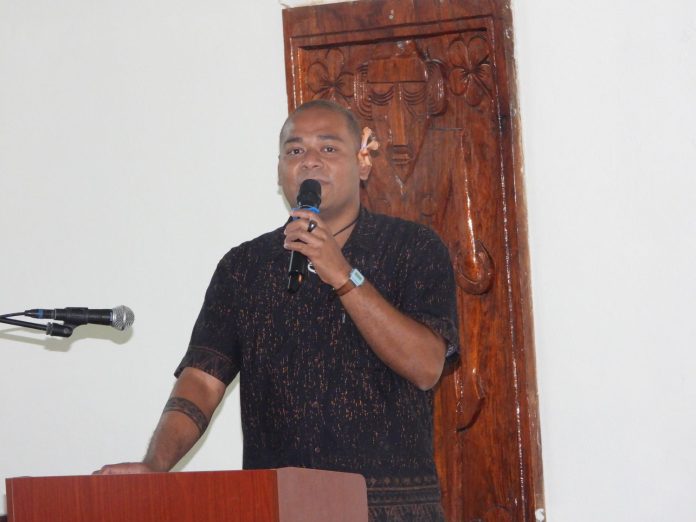
UK-supported security dialogue stresses making peace work today not tomorrow

0

By Loretta B Manele

“We have to make peace work out today and not wait for tomorrow.”

This was the main sentiment echoed in a security dialogue supported by the United Kingdom, held in Honiara yesterday.

Lottie Vaisekavea, permanent secretary for the Ministry of Traditional Governance, Peace and Ecclesiastical Affairs made the statement referring to Solomon Islands’ efforts in peace whilst speaking at the Peacebuilding and Security Dialogue at King Solomon Hotel yesterday.

When it comes to ensuring there is peace in the country, he voiced that “we have to make it work today and not take 10 years to make it happen with the excuse of not having enough funds”.

“There are funds there. It’s sufficient. Convert it into a seed. Make it work for us.”

Vaisekavea added that they may not have perfect peace but they are joining the peace chain where tomorrow will be better and that means giving or allowing people to take possession of their peace capacity.

Moreover, he pointed out that conflicts should not define the people and country of Solomon Islands.

Vaisekavea said Solomon Islands is the only nation in the Pacific and one of the only countries in the world that has a Ministry of Peace and a dedicated national peace building policy.

He said the policy will be changed to a national peace policy called the “National Hearts and Minds Policy”.

Vaisekavea said they are reorganising their ministry because “we cannot be a country if we do not deliver or if we do not facilitate”.

The dialogue, facilitated by Transcend Oceania and Conciliation Resources with funding support from UK-Integrated Security Fund, ends today.

For feedback, contact:[email protected]

MPG eyes rebuilding Auki old wharf

0

BY SAMIE WAIKORI

Malaita’s provincial government is planning to rebuild Auki’s old and now defunct wharf.

Premier of Malaita Elijah Asilaua said this in his original budget speech on Monday.

He said MPG recognises sea, land and communication infrastructure networks play an important role in supporting trade and commence.

Asilaua said consultations are expected with resource owners, communities, Solomon Islands Ports Authority and government.

“This becomes part of creating a greater Auki with safe maritime expansion infrastructure for people to enjoy safe shipping services while entering the domestic port that connects to our sub-regions.

“Consultations are also made with related purchasers of the defunct boat berthing at the old decommissioned wharf to be towed for repair at a safe ship dock to decrease any maritime contaminated pollution and risks,” he said.

For feedback, contact:[email protected]
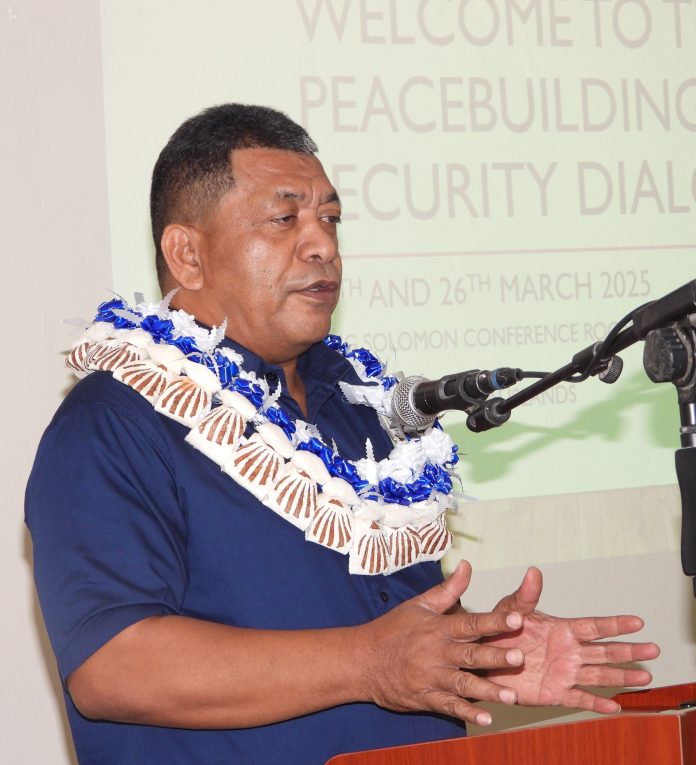
Man accused of house break-in yet to get lawyer

0

BY ROMINAH FAKA

The case of a man charged with breaking into another person’s home earlier this month will return to court on April 8 for mention.

Yesterday in court prosecution said investigations have completed, serving disclosures to the defence.

The defendant Jeremy Saemala, 18, informed the court through the duty defence lawyer that he is yet to seek legal representative.

Court made directions for the appearing defence lawyer to assist the defendant by informing their practice manager for allocation of lawyer for the defendant during the course of adjournment.

Saemala is charged with one count of house breaking.

Police alleged on March 9, 2025at around 4am the defendant went to the complainant’s house with the intention to steal. The defendant peeped through a window which only has louvres and no mesh-wire or screen and saw an Oppo phone and Samsung tablet connected to the power point, beside was a JBL speaker (flip 6) and a power bank.

After locating the items, the defendant loosened the louvres and used a stick curved like a hook to pull the items connected to their charges towards him. The defendant removed the items from their charger and left the chargers.

On the same day at noon, the defendant was brought to the white river police post under suspicious. The defendant then admitted to stealing the properties and then let the police to recover the stolen properties. The Oppo phone and JBL speaker were recovered from his room, whilst the Samsung tablet and the Huawei power bank recovered from his two friends whom he had given to them to sell. The defendant was arrested and placed at Central watch house.

Office of Public Prosecution is prosecuting.

For feedback, contact:[email protected]

FAIRNESS FOR WORKERS

0

Trade union council stands firm against common weapon used by employers to suppress employees’ rights

BY JOHN HOUANIHAU

The Solomon Islands Council of Trade Unions (SICTU) has said it is standing firm in its commitment to advocate for rights and welfare of workers across the nation.

Workers have been singled out as the primary contributors to company expenditures whenever they demand better working conditions for too long, a SICTU statement yesterday said.

“This narrative is not only misleading but also unjust. It is time to shift the focus and acknowledge the broader systemic issues that significantly impact business operations and costs. It’s time to shift the blame and focus on real solutions,” said SICTU.  

“Today, we address a critical issue that has long plagued industrial relations: the unfair burden placed on workers when employers and other stakeholders discuss the rising costs of doing business,’’ the SICTU issued in an official statement. 

“It adds that while workers’ demands for fair wages, safe working environments, and improved conditions are legitimate and necessary, they are not the sole drivers of rising operational costs.

SICTU said other critical factors, often overlooked, contribute substantially to the financial pressures faced by companies, high government service costs and taxation policies that place undue burdens on businesses, exorbitant power and water tariffs, which increase operational overheads, Poor public transport systems, forcing workers to incur high commuting costs and reducing productivity, inadequate road infrastructure, leading to increased logistics and transportation expenses and weak enabling infrastructures, which hinder efficient business operations and increase costs. 

“These systemic challenges must be addressed to create a conducive environment for investment and development. Employers, policymakers, and other stakeholders must share the responsibility for creating sustainable solutions rather than placing the blame solely on workers,” said SICTU. 

SICTU calls for a standard shift in how industrial negotiations are conducted and future discussions to address the root causes of high operational costs must be data statistics-driven and focus on evidence-based solutions.

SICTU said that employers and companies must recognise that workers’ demands for better conditions are not the problem but a reflection of the need for a fair and equitable working environment. 

SICTU urges employers to acknowledge the broader factors contributing to high business costs and work collaboratively with unions and the government to address them through adopting transparent and data-driven approaches in industrial negotiations to ensure fair and informed decision-making, invest in improving workplace conditions as a long-term strategy to boost productivity and employee satisfaction, which ultimately benefits businesses. 

SICTU calls on the government to review and reduce service costs and taxes that excessively affect businesses and workers, invest in critical infrastructure such as roads, public transport, and utilities to create a more enabling environment for businesses and workers alike and engage in meaningful dialogue with unions and employers to develop policies that support sustainable economic growth and fair labour practices. 

“Workers are the backbone of our economy, and their well-being is integral to the nation’s progress. It is time to move beyond the outdated narrative that blames workers for rising costs and instead focus on addressing the systemic issues that hinder our collective growth,” said SICTU. 

“SICTU remains committed to working with all stakeholders to create a fair, equitable, and prosperous future for workers and businesses in the Solomon Islands. Enough is enough. Share the blame. Share the solutions,” said SICTU.

For feedback, contact:[email protected]

Wanesuia furthers work of empowering youths in North Malaita rural community

0

BY IRWIN ANGIKI

Abel Wanesuia is leading the way with empowering youths in his rural community of Besi in the hinterlands of North Malaita, Malaita province.

Mr Wanesuia is the deputy chairman of the USP student association of the Solomon Islands (USPSASI).

Outside of studies, Wanesuia is heavily involved in youth work in the country and his community.

Wanesuia’s youth work at Besi community advocates for education and other activities that support sustainable livelihoods.

His work was awarded recognition and a boost by the Malaita Provincial Youth Council (MPYC) by way of $10,000 sub-grant to fund youth work in the Besi community on March 17.

Wanesuia, receiving the grant thanked the MPYC saying it will go directly to empowering Besi village.

“I extend my heartfelt thanks to you and the Malaita Province Youth Council for partnering with DFAT to unlock the potential of Besi Village, North Malaita.

“This initiative is a powerful step toward transforming the lives of my people and aligns directly with the vision for sustainable development in rural areas.

“This support is not only appreciated but will leave a lasting impact.”

Wanesuia’s work along with his team of dedicated community workers saw the establishment of a school in his village in 2003 called the Besi Accelerated Christian Education (ACE) Christian School.

This year the school witnessed its first tertiary scholars, a boy and a girl both receiving their admissions to start their degree programme with the University of the South Pacific.

Meanwhile, MPYC president Phillip Subu said in a statement that the funding is from the Australian government’s Department of Foreign Affairs and Trade (DFAT).

The fund, totalling SBD$135,250 is aimed at empowering young people in Malaita to lead positive change within their communities.

Wanesuia and his Besi community youth work are among 13 recipients of the fund.

For feedback, contact:[email protected]

USPSI student leader lauds partnership between local campus and PRC embassy

0

BY IRWIN ANGIKI

The agreement between the Solomon Islands USP campus and the PRC embassy has been lauded by the student association.

Through the partnership, China will sponsor self-sponsored students.

A mark of the partnership was held at the USP campus on March 7 in which the university hosted the PRC Ambassador HE Cai Weiming for an educational film show.

Deputy Chair of the USP student association of Solomon Islands (USPSASI), Abel Wanesuia in his statement to acknowledge the filming event, welcomed the partnership saying it will boost access to quality tertiary education at the institution especially for students struggling with sponsorship.

“I expressed my appreciation for the recent agreement between the Chinese Embassy and USPSI, which will provide funding for USPSI self-sponsored students under the China Ambassador Scholarship initiative.

“This scholarship, which covers tuition fees, is a significant step toward enhancing access to education for students at the University of the South Pacific Solomon Islands campus.

“The agreement follows a courtesy visit from the USPSASI executive to the Chinese Embassy last year and marks a major milestone in the ongoing partnership between USPSASI and the Chinese Embassy,” Mr Wanesuia said.

The filming event was attended by a range of dignitaries including Ambassador Cai and Minister for Women Freda Tuki.

The film screening provided a platform to discuss women’s empowerment, gender equality and the importance of community support.

Ambassador Cai and Minister Tuki’s speeches highlighted the need for continued progress in women’s rights and empowerment across the Pacific region, Wanesuia said.

“The event was especially impactful for students at USPSI, as it provided a platform for engaging and creating opportunities related to women’s rights and empowerment.

“USPSASI acknowledges and deeply appreciates the speeches delivered by both Ambassador Cai and Minister Tuki, whose words resonated with the importance of supporting women’s education, leadership and independence.

In his speech, Ambassador Cai acknowledged USPSI for hosting the inaugural Chinese film festival in Solomon Islands.

Cai explained the film, The Wandering Earth II, as representing the possible future of peace, cooperation and innovation with the help of artificial intelligence.

“China, a civilization spanning over 5,000 years, has always been defined by values that deeply resonate with humanity’s shared aspirations, such as the celebration of life, the love for peace, the virtue of diligence, the spirit of innovation, and the cherishing of unity.

“These values are woven into Chinese cultural heritage, flowing in our veins, shaping our identity, and still guiding us for constant progress in this age of satellites and algorithms,” Cai said.

For feedback, contact:[email protected]
TNC committed to SDG14.4

0

By Loretta B Manele

The Nature Conservancy (TNC) is committed to SDG14.4 and are working with its partners on this endeavour.

Dr Elizabeth McLeod, TNC global ocean director discussed the above at the Honiara Summit last month which catered to Pacific Island leaders, regional and international representatives for discussions around “Achieving Sustainable Fisheries.”

She said they have been leading and working in ocean conservation for over five decades, across a hundred countries through their programs and partner networks.

“We work to support the goals of the 30 percent protection of the ocean.

“Our fisheries work focuses on rebuilding wild fisheries, both ending IUU (Illegal, Unreported, and Unregulated fishing) and also ensuring sound management of our coastal fisheries and supporting sustainable growth in regenerative aquaculture.

“We’re building on all of the great work by many of you in this room and our partners across the region and globally to bring transparency, accountability and resilience to fisheries.”

Moreover, she spoke about two initiatives that TNC has been involved in.

McLeod said one of them is their recognition that one in five wild-caught marine fish are landed illegally.

She expressed that the majority of this activity is happening on legally licensed but unmonitored vessels so it is easy for illegally caught fish to enter into the supply chain without being detected.

McLeod pointed out that “electronic monitoring” is a proven solution and through the use of onboard cameras, GPS and sensors, electronic monitoring harnesses cutting-edge technology to support human observer programs.

She mentioned that this is not an intention to replace human observers, but to bring additional support and provide independent and verifiable data on fishing activity to improve transparency and ensure compliance with regulations.

“It allows fisheries managers to develop science-based policies. It allows retailers to trace seafood to legal sources.

It provides assurances for consumers so that they have confidence that the fish that they’re purchasing is caught sustainably, but ethically.”

She said TNC is driving global adoption of electronic monitoring by working with Regional Fisheries Management Organisations (RFMOs) to standardize electronic monitoring protocols whilst ensuring there is consistent and comparable data across vessels and jurisdictions.

The other initiative that TNC has been working on is the Tuna Transparency Pledge.

She explained that they launched the pledge last year and it brought together industry and governments to advance 100% on-water monitoring across all industrial tuna vessels within their supply chains by 2027.

“Since the launch of the pledge, we’ve secured major signatories like Walmart, Albertsons, Thai Union, the government of Belize, and FSM.”

She stated that TNC commits to supporting Pacific communities, countries, and organizations in achieving SDG 14.4.

“Our path forward is clear. Strong policies, strong enforcement and strong collaboration will absolutely define the future of our fisheries.

We at the Nature Conservancy are honoured to work in and alongside the Pacific to build a future where fisheries are not just surviving, but thriving for people, for economies and for our ocean.”

She said they are on the march to UNOC (UN Ocean Conference) where together, they will be reinforcing the importance of these robust partnerships, measurable and actionable commitments that strengthen fisheries management, help close data gaps and secure sustainability.

McLeod noted that the Pacific community has been absolutely leading the charge, creating a robust framework for ocean management.

For feedback, contact:[email protected]