Home Blog Page 396

Remote Tikopia communities celebrate new water supply

0

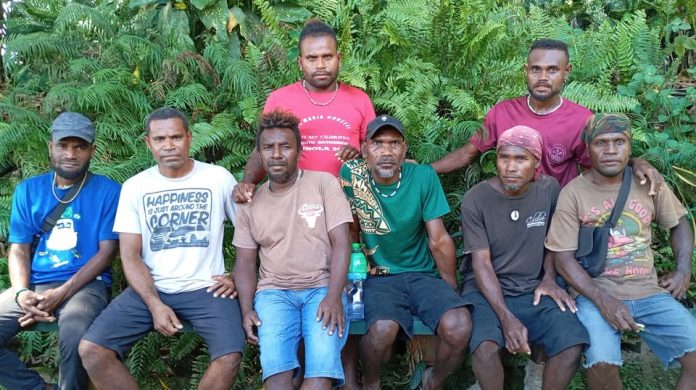
After more than two decades of hardship and limited access to clean water, four communities in the Faea District and one St John Community of Ravenga District of Tikopia Island are finally celebrating a sustainable solution to their water woes, thanks to the Small Grants Programme funded by the Global Environment Fund (GEF) and administered by UNDP in Solomon Islands.

Tikopia is one of the outer islands of Temotu Province, and one of the most remote territories in Solomon Islands.

With a population of around 1,200 people, they live in 20 villages around the coast. Due to its remoteness, service delivery by the Government of Solomon Islands is challenging, a UNDP statement this week said.

Despite its modest size, Tikopia is renowned for its rich cultural heritage and strong communal traditions.

Its lush environment supports a subsistence lifestyle based largely on fishing, gardening, and the cultivation of crops such as taro, bananas, and coconuts, the statement said.

For over 20 years, these communities had relied on rainwater collection and a damaged water system built in the early 1980s. With its continuous use, it deteriorated down to a single standpipe which in addition it is dry most of the time.

Periods of drought, intensified by climate change, often left families scrambling for water, compounding the social and economic vulnerabilities of this cyclone-prone and geographically isolated island, the statement said.

The newly completed St Luke Community Faea Water Project, started in June 2023, marks a transformative moment for the five beneficiary communities on the remote Polynesian outer island.

Through the construction of two water dams and a network of 31 standpipes, families comprising 576 people now enjoy reliable access to clean water for drinking, cooking, and washing—right at their houses’ doorsteps, the UNDP statement said.

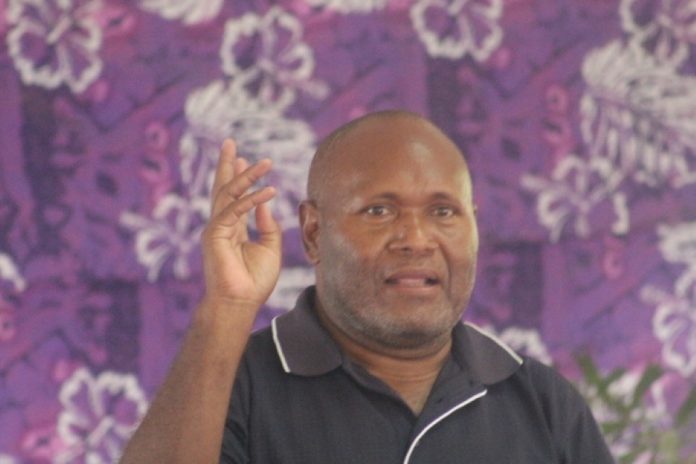
“This project has relieved one of our longest-standing burdens,” said Pae Seivaea, chairman of the St Luke Community.

“For years, we had to carry water long distances—mothers, children, everyone. Now, clean water is right in front of our homes. It is truly changing our daily lives.”

The completion of this project reflects UNDP’s commitment to community-driven development in Solomon Islands and the Pacific region and the project will directly contribute to improving the resilience and wellbeing of local populations, the statement said.

Barnabas Bago, UNDP team leader for Resilience and Climate Change, applauded the dedication of the local community in completing the project. “This is your success,” he said. “Water is life. It is a vital resource for human survival, and too many communities in Solomon Islands still live without reliable access to clean and safe drinking water. You are fortunate, and you’ve earned it through your hard work and partnership with relevant stakeholders.”

Mr Bago emphasised how the project aligns with both national and global development goals with Solomon Islands National Development Strategy Objective 2: Poverty alleviated, basic needs addressed, and food security improved across the country; and the UN Sustainable Development Goal 6: Ensure availability and sustainable management of water and sanitation for all.

The project is funded by the Global Environment Facility (GEF) through the Small Grants Programme (SGP), which supports community-based initiatives across the world. It empowers local organizations to implement practical solutions for climate change adaptation and disaster risk reduction, contributing to sustainable development and improved quality of life.

Ports overhead exit gate commissioned

0

BY JOHN HOUANIHAU

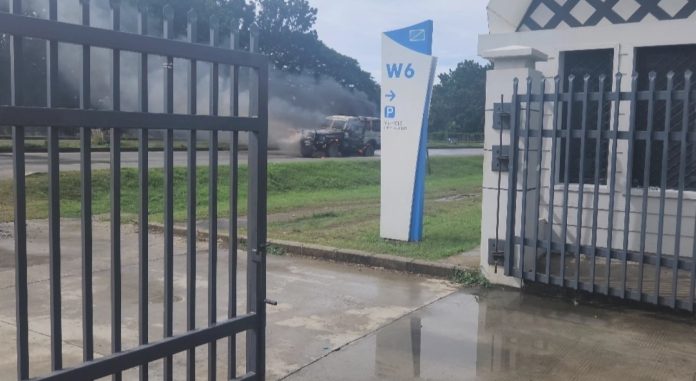
The Solomon Island Ports Authority (SIPA) has opened its new international Port terminal overhead exit gatehouse.

SIPPA’s new Chief Executive Officer (CEO), George Rausi, officially commissioned the Terminal overhead exit gate at the Ports Area yesterday.

Speaking during the official opening, Mr Rausi said the completion of the project marks yet another milestone in the modernisation of the country’s port infrastructure.

Rausi said that the project is an important achievement, not only for Solomon Ports but for the rest of the people of Honiara and Solomon Islands.

“Today, we officially are here to open our second Overhead Gatehouse, a testament to our commitment to innovation and pursuit of excellence in Port Operations. This is more than just an infrastructure upgrade; it is a symbol of progress and efficiency and a bold step towards improving our future operations.

“This state-of-the-art overhead exit gate is a critical part of our ongoing Port Modernization Plan. It represents a major facelift for our facilities, ensuring that Solomon Ports remains a competitive and reliable gateway for trade. With this new system, we are enhancing security, efficiency, and traffic management, ultimately improving the experience for port users and stakeholders,” he said.

He said that through implementing this overhead exit gate, SIPA aims to reduce congestion and improve the flow of cargo and vehicles, enhancing security with better monitoring and automated processing, speeding up operations, and cutting down waiting times for importers, exporters, and transport operators and improves the turnaround of trucks in and out of the Port Yard.

“Improving safety for our workers and customers, as this design optimizes the movement of people and cargo within the port,” said the new CEO.

He said that the achievement is part of a larger vision to make Solomon Ports a world-class port that supports economic growth, trade facilitation, and national development and reflects SIPA’s commitment to aligning with international port standards, adopting modern technology, and continuously improving its services.

“I want to extend my acknowledgment to all our staff and contractors who made this possible. I would like to commend all your hard work in making this structure a success. Lastly, I want to encourage all of us SIPA staff to make good use of this new structure and look after it with respect and pride. This is to ensure it will last long to serve the future growth and success of the port,” Rausi said.

For feedback, contact: [email protected]

SYSTEMATIC PROBLEM

0

-Opposition visit to Gizo hospital uncovers a lot of problems challenging services there

-Ministry of Health says it is flying someone over today

BY IRWIN ANGIKI

A visit by the Opposition group has uncovered an array of problems facing Gizo hospital, Western province, which are being blamed on a ‘systematic problem’ with the country’s health system.

Problems with bed space, availability of medicines, patients forced to share bed linens, forced to travel kilometres by boat to the next hospital because the x-ray machine is buggered, and more.

The ministry of health (MHMS) has responded saying it is sending someone over to Gizo today to fix the x-ray problem.

The Opposition group is in Gizo as part of its civic awareness outreach programme.

A visit to the laboratory department saw doctors and nurses sharing of struggles encountered dealing with frequent lab machine breakdowns and having to do tests manually, a statement by the Opposition group yesterday said.

“The x-ray machine in Gizo Hospital is currently out of order despite requests for a new one and patients needing one must travel to Munda.

“Bed space, lack of basic clinical support and equipment’s remained an ongoing problem.

“However, doctors and nurses have attested to improvements in the availability of medical drugs compared to past years although it still remains an issue.

“The immediate need for primary health care and basic health services have also been highlighted.

“Lack of linen for bed covers forcing patients to bring their own and at most time’s more than one patient had to use same bed covers just because requests to Honiara fell on deaf ears.

“Doctors and nurses have highlighted that the business as usual way of doing things need to be changed and it is a systematic problem,” Opposition said.

“Five years down the line Gizo Hospital will be facing bottlenecks like the NRH if there is no priority in improving services in hospitals not only in Gizo but elsewhere around the country,” Dr Michael Belande Buin told the Opposition group.

MHMS yesterday released a statement clarifying only the situation with the broke-down x-ray machine. The ministry’s statement was silent on the other problems hounding Gizo hospital.

“The main floor-mounted X-ray Unit in Gizo Hospital … uses computed radiography (CR), became faulty in October 2023. This Xray Unit comprises of two components: the Xray machine hardware (Xray table and Xray tube) and a computed Radiography (CR) reader for scanning the images on to a computer,” the MHMS statement said.

“However, the CR reader component of the Xray unit became faulty in October 2023, affecting X-ray services in Gizo.  Attempts to fix the reader were unsuccessful, due to the fact that the CR reader and its parts are now obsolete and no longer manufactured.  This is due to the fact that most Xray units worldwide are now using digital technology to capture and process Xray images.

“Shortly after, in mid-2024, a digital mobile X-ray machine was sent to Gizo from NRH Medical Imaging Department to alleviate the issue. X-ray services were restored until the mobile machine became faulty again towards the end of 2024.

“A second mobile Xray unit was then sent down from NRH Medical Imaging department in February of this year, 2025,” MHMS said.

The ministry said consultations between ‘Shimadzu engineers and NRH biomedical engineers’ have been ongoing.

And, coincidentally, following Opposition’s report yesterday, MHMS announced that an officer is heading to Gizo today to fix the faulty mobile x-ray machine and install the one which was sent in February this year.

“Mobile Xray machines are made for light work, such as bedside x-rays in the ward, and not for intense daily use. Also, mobile Xray machines use batteries which can get depleted faster with frequent use,” MHMS said.

“Unfortunately, this is one of the faults that was initially found with the mobile machine that was sent down to Gizo in 2024.Consequently, over time, mobile Xray machines are prone to wear and tear.

“Learning from these lessons and going forward, the best option for the MHMS would be to purchase a digital floor mounted Xray unit for Gizo Hospital as well other Provincial Hospitals because it serves a large population but more so in keeping up with the global practices and standards.”

Meanwhile, after the visit, Opposition leader Matthew Wale acknowledged the doctors and nurses at the Gizo hospital for their commitment to serving the people of the province despite ongoing challenges.

“We are grateful for the opportunity to be here to see and listen to the challenges and also the recommendations shared by doctors and nurses at Gizo Hospital. This will help us to advocate on your behalf to the Government also to recommend policy that will try to address these issues,” Mr Wale said.

Other Opposition MPs who accompanied Wale include MP for West New Georgia/Vona Vona Constituency George Temahua, MP for South New Georgia Rendova & Tetepare David Gina, MP for North Malaita Daniel Waneoroa, MP for Small Malaita Rick Hou and MP for West Makira Derick Manuari.

For feedback, contact: [email protected]

‘Urban agriculture could address poor diet’

0

BY INDY MAEALASIA

URBAN agriculture could provide a practical solution to address poor dietary habits and the growing prevalence of Non-Communicable Diseases (NCDs) in urban centres like Honiara, according to a researcher from the Solomon Islands National University (SINU).

Speaking at the FALA seminar, Alex Makini presented his research titled “Building Health and Resilience: Improving Food Security and Reducing NCDs through Urban Agriculture.”

Mr Makini highlighted the challenges brought by urbanisation, such as reliance on processed foods, reduced physical activity, and the rising rates of NCDs like diabetes, hypertension, and obesity.

He proposed urban agriculture as a sustainable and impactful solution for urban families, emphasising the benefits of accessible fresh and nutritious food.

Makini also pointed out that initiatives like backyard gardening, locally known as supsup gaden, can significantly reduce dependence on processed food while improving overall health.

“It provides families in urban areas access to fresh and nutritious food and reduces reliance on processed options,” he added

Acknowledging space constraints faced by many urban households, Makini suggested vertical farming, an approach that involves growing vegetables upward rather than outward, using vertical spaces like walls, fences, or trellises to maximize space.

Makini also stressed the importance of policy support to ensure the success of urban agriculture.

“We need policies to advocate for agriculture, including incentives such as tax breaks for urban farmers, the allocation of open lands, and the integration of agriculture into city planning and health strategies,” he explained.

Additionally, he underscored the need for collaboration between the government, NGOs, local communities, and health institutions to create healthier and more resilient urban areas.

For feedback, contact: [email protected]

New SI-NZ education partnership to be launched this year

0

By Loretta B Manele

New Zealand is set to launch a new education partnership with Solomon Islands this year.

Rebecca Williams, acting New Zealand high commissioner made the announcement while speaking at a function marking the end of ESSP (Education Sector Support Programme) at Mendana Hotel on Wednesday last week.

ESSP was a partnership between Solomon Islands, Australia and New Zealand.

She expressed that their support for ESSP in the country has come to an end, however as a committed partner to Solomon Islands in the education sector, they intend to launch a new Solomon Islands and New Zealand education partnership this year.

Williams said that through this partnership, they will provide an on-system budget to support the ministry of education on agreed areas.

She said they will support work for the implementation of the Education Act 2023 and ensure that education providers and schools have the resources and capacity they need to fulfill their role in delivering high quality education.

“This involves strengthening teacher management and welfare of teachers so they can improve their work and be ready to share their knowledge with the next generation.”

Another objective of this partnership as stated is to support the work of the education ministry in terms of data management to understand the needs of students and teachers in every village so as to make good allocation of resources.

Williams emphasized that strengthening sector coordination to make investments with development partners and agencies across Solomon Islands must also involve work collaboration.

She voiced that this is very important and it is not just about the opening of a new classroom or delivering new school books but about delivering effective education that will remain for a long time in Solomon Islands.

Williams stressed that it is also to ensure that we have foundation; a place where a child is able to access quality basic education.

She said today, Solomon Island students are achieving above average rates in the region for literacy and numeracy.

“This achievement is something that the education ministry, teachers, parents and every student in Solomon Islands must be proud of.”

However, Williams also pointed out that there is still a long way to go and that it is involves work to remove barries to ensure that children in Solomon Islands complete their education, teachers have the tools they need inside the classroom and that schools are provided with the resources they need.

She also took the opportunity to thank everyone who was involved in ESSP.

“To the minister, congratulations for your astonishing achievements under this partnership and thank you very much for your excellent working relationship we have fostered over the years.

To Australian colleagues, thank you for the opportunity to collaborate and for your commitment to best practice development principles.”

“To the ESSP programme management team, thank you for your hard work and unwavering dedication for supporting the programme over the last five years.

To partner organisations, thank you for the contribution you have made to the programme and sharing your expertise across a range of activities.”

For feedback, contact: [email protected]

Australia ahead with new partnership with SI for education

0

By Loretta B Manele

Australia has commenced on a new partnership with Solomon Islands in the education sector.

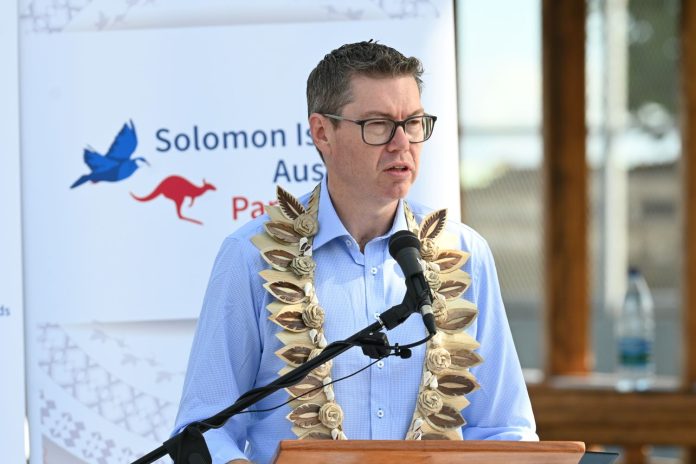
Rod Hilton, Australian High Commissioner to Solomon Islands revealed this at a function held to mark the end of Solomon Islands partnership with both Australia and New Zealand through Education Sector Support Program (ESSP) on Wednesday last week at Mendana Hotel.

Prior to making the announcement, he said in regards to the Education Act 2023, Australia stands with the Ministry of Education and Human Resources Development (MEHRD) and other friends to prioritise and provide access to education for every child in Solomon Islands.

“Regardless of where they come from and what kind of disability they have.”

He stated that education is key to unlock potential and to empower children, to shape their lives, their families, communities and the nation.

Hilton said they have recently kicked off the brand-new Solomon Islands Australian partnership “Stronger Education Together”.

Under this partnership, he expressed that in the coming years they will tackle a lot of key challenges faced in the education sector.

Hilton said they will also continue to build school facilities across every province and comprehensively, will upgrade teacher training at SINU.

“We will provide teachers of the next generation with a modern state of the art training environment and with a curriculum and tools to perfect their teaching skills before they transition to classrooms around the country.”

Hilton noted that they are very proud of the many ways ESSP has directly benefited thousands of students and teachers from remote areas to Honiara.

“I would like to acknowledge the ESSP team. We know the significant role you play to support three partners and for providing your expertise.

Thank you so much for helping to make the work of ESSP successful.”

Hilton stated that we can look back with pride and look forward with anticipation and excitement of a new chapter ahead.

For feedback, contact: [email protected]

ESSP a remarkable milestone that deserves recognition and celebration: Leokana

0

By Loretta B Manele

The Solomon Islands Education Sector Support Programme (ESSP), a partnership with Australian and New Zealand governments has been hailed as a remarkable milestone and one worthy of recognition and celebration.

Tozen Leokana, the minister for Education and Human Resources Development (MEHRD) expressed this at a function marking the end of the ESSP partnership on Wednesday last week at Mendana Hotel.

He outlined a number of achievements of the programme since its implementation five years ago.

Leokana said “Through ESSP, we have strengthened early childhood education, ensuring that our young learners receive the strong foundations they need to succeed.”

He added that primary and secondary schools have benefited immensely with enhanced infrastructure, improved learning materials and teacher training programs have also been strengthened.

Leokana highlighted that one of the most inspiring achievements of ESSP was its contribution to enhance gender equality and inclusivity in education.

In this regard, he said “we have more girls in secondary schools than ever before and children from remote and rural communities are being given a fairer chance to education”.

Leokana went on to state that these are not just statistics but lives that they’ve seen been transformed, barriers being broken and futures being reached.

“This is a success. A story where we must not only celebrate, but we must build upon as we work together on an education system that truly serves every soul.”

Leokana stated that ESSP has also been supportive of Solomon Islands crucial education policy reforms that align with our national priorities.

He stressed that “by enhancing our curriculum and strengthening education governance, we are also crafting an education system that is more responsive to the demands of our evolving economy and workforce”.

Leokana mentioned that “this is not just about today but about securing our future where every child has the tools and knowledge to contribute meaningfully to our nation’s prosperity and stability”.

He emphasised that “going forward as we celebrate these successes, we must also acknowledge that that our journey in education is far from over”.

Leokana said “whilst we have made significant progress we must not rest or stop here as there is still more that needs to be done”.

For feedback, contact: [email protected]

Consumer and price control urges public to report price complaints

0

BY JOHN HOUANIHAU

The Director of Consumer Affairs and the Price Control Division, Geoffrey Dan Hou’ua, has strongly called on customers to report any price inconsistency or influx they come across in shops.

He made the call in light of ongoing price discrepancies experienced by customers buying goods from shops in Honiara.

Many social media commentators said this has been happening now and then for many shops in Honiara, where prices on the shelves differ from what is in the cashier system.

Speaking in an exclusive interview with Island Sun, Mr Hou’ua said that no one has reported such cases to them when they come across the issue.

“Most of the times we do our follow up on such issue depends very much on when our officers’ heard stories that the price they displayed was different from their cash register or system,” said Hou’ua.

He further stressed that such matter usually comes under the Consumer Protection Act, and they have approached a few businesses in the past to address the issue.

“We called it misleading. Whether it is intentional or a mistake, it is an error, and even though they aren’t aware, we still take it as misleading. If it is intentional, we call it deception. This means that they try to lie to customers,” explained Hou’ua.

He said that under the price control Act, prices displayed by businesses on the shelves must be the same with the prices in their system.

“Businesses must display prices. So, it can be a mistake or intentional to mislead customers. But to solve it, it is either the customers to sort out with cashier or business in concern, otherwise if unaddressed customers can come to us and report it so we can deal with it,” he said.

He stressed that in such incidences, the Division’s inspectors can consult with affected customers and investigate the matter.

He also mentioned that the division does not have the power to impose spot fines on businesses but has the authority to bring the case to court.

“Businesses usually use prices we give them under the Price Control Act. They can go below, but they cannot go above,” he said.

For feedback, contact: [email protected]

Discussions held to address butane gas can pollution

0

BY JOHN HOUANIHAU

The Ministry of Mines and Rural Electrification has discussed a regulation to help address the increasing number of empty butane gas cylinders causing pollution around the country.

Wendi Beti of the Conservation Division within the Ministry of Environment, Climate Change, Disaster Management and Meteorology (MECCDMM) said that this comes under the Petroleum Act.

“At the moment, in terms of Butane Gas canes, the MME under the petroleum Act, I believe there was some discussion on how they would address and regulate the butane Gas,” said Beti.

She said that to address proper waste disposal and promote recycling, the Ministry of Environment is currently reviewing the draft environment bill 2023.

“We hope it will go into parliament this year. And during our consultation, we also received similar issues raised on how the bill will be taking into consideration butane gas,” she said.

She said that there is a provision for the minister to make regulations if he sees a need to address specific types of wastes under the current environment act.

“So similar to the plastic ban, because of the issue of single use plastic, the minister has the power and this is how this regulation come into place and similarly if we have the data and the information at hand to provide to the minister to make regulation in place to ban this butane gas, he has can make it,” said Beti.

She said that GEO Gas usually collect back the butane gas they imported into the country.

“I don’t know for other importer of butane gas. But if the product stewardship is in place, and butane gas is identified as one of the wastes under the system, then it can help to manage this butane gas canes,” she said.

For feedback, contact: [email protected]

GIVING BACK TO COUNTRY

0

Seasonal workers donate wheelchairs to National Referral Hospital

A group of Solomon Islands workers under the Pacific Australia Labour Mobility (PALM) scheme have generously donated wheelchairs to the National Referral Hospital (NRH) and Kilu’ufi Hospital in Malaita.

The workers, employed at a farm in North Queensland, Australia, raised funds through Sunday fellowships and volunteer work, enabling them to purchase a total of 15 wheelchairs.

Nine were officially handed over to the NRH yesterday, while the remaining six will be shipped to Kilu’ufi Hospital, a statement by Foreign Affairs (MFAET) yesterday said.

The workers are part of Top of the Crop Labour Hire and are employed at Pirrone Brothers Zucchini Farm in North Queensland, the statement said.

Team leader Vincent Isa described the donation as a gesture of gratitude to the Solomon Islands Government for the opportunity to work in Australia under the PALM scheme.

“Our team consists of 95 workers, including Solomon Islanders, as well as colleagues from Vanuatu and Timor-Leste.

“I would like to acknowledge and thank the workers from Vanuatu and Timor-Leste for also contributing to this initiative,” Mr Isa said.

He expressed hope that their contribution would inspire other seasonal workers to give back to their communities, the statement said.

The wheelchairs were presented to NRH Acting Director of Nursing, Hellen Orihao.

Director of the Labour Mobility Unit (LMU) within MFAET, Christina Marau commended the workers’ efforts, stating that their generosity highlights the positive impact of the Labour Mobility Programme.

“The LMU is proud of these workers’ initiative, and we hope their actions will inspire others to contribute to their communities,” Mrs Marau said.

In 2024 alone, Solomon Islands workers participating in labour mobility schemes in Australia and New Zealand have contributed an estimated SBD $431 million in remittances to the local economy.