Home Blog Page 330

HPV a silent serial killer: Health official warns

0

BY BEN BILUA
GIZO

Human Papillomavirus (HPV) continues to claim lives across Solomon Islands despite limited public awareness, says a health official.

Speaking during the Church Leaders Workshop at Kukudu Adventist College, Health Promotion Officer for Western Province, Alrence Oscar, described HPV as a “silent serial killer”.

Now widespread and often underestimated, the virus is responsible for a growing number of cancer-related deaths in the country.

Oscar said HPV is a common sexually transmitted infection (STI) globally and poses a serious threat to public health.

“If left unchecked, HPV can cause cervical, anal, penile, and throat cancers. What makes it particularly dangerous is that many people are unaware they are infected, and by the time symptoms show, it may be too late,” he explained.

Oscar added that rising HPV cases are particularly alarming for women and girls, as cervical cancer remains one of the most severe outcomes of the virus.

He stressed the vital role church leaders can play in raising awareness and supporting community education.

“The Ministry of Health and Medical Services is now conducting HPV immunisation for girls aged nine to 14. This is the most effective way to prevent the virus from spreading and causing long-term harm,” Oscar said.

He urges parents to support the campaign by ensuring their daughters receive the HPV vaccine.

“The only way to reduce the risk of HPV is through vaccination. We must protect our future generation by acting now,” Oscar said.

The workshop, supported by ADRA and UNICEF, aims to equip church leaders with accurate health information to help drive community-based prevention efforts.

For feedback, contact:[email protected]

Tsunami alert following mega-earthquake off Russia’s east coast

0

BY JOHN HOUANIHAU

A tsunami alert was sounded across Solomon Islands yesterday following a 8.7 mega-earthquake off Russia’s east coast, 10:25am Solomon time.

The tsunami alert was later cancelled at 10.50pm.

It started off as a yellow coded tsunami watch alert, but was then upgraded to an orange coded tsunami advisory alert by late afternoon for Western and Choiseul provinces. Isabel province was later included in the orange alert.

In parts of Choiseul fluctuating high and low tides at approximately 20–30-minute intervals were reported by villagers to Island Sun.

At Patubelo village, just few kilometres from the main village of Paqoe, villagers told Island Sun that they observed the sea rise higher than it normally does and then it receded back after nearly half an hour to levels lower than the usual low tide.

Villagers evacuated to high ground in the afternoon following instructions from community leaders. They told Island Sun last night that they will spend the night there and return in the morning when it is safe to do so.

In Choiseul’s provincial capital, Taro, a resident spoken to said most of the people had crossed over to the mainland in the late afternoon following alert notices by authorities.

The residents said they will return to Taro in the morning when it is safe.

Gizo town in the Western province was also evacuated with residents told to move to high ground.

By 10pm, reports from Gizo said no tsunami wave was reported.

The earthquake which triggered the tsunami struck just off Russia’s eastern coast at 10:25am Solomon time.

Tsunami waves reported between 3-4 metres struck along parts of Russia’s east coast. Several videos were circulated on social media showing flooded coastal towns.

A tsunami alert was sounded across most of the Pacific, including Solomon Islands.

No damage was reported in Solomon Islands before this report went to print last night.

For feedback, contact:[email protected]

IUU, a threat to maritime security

0

BY JOHN HOUANIHAU

Maritime security in the Pacific region is confronted by a daunting array of challenges, some age-old, others new and emerging.

Professor Transform Aqorau, SINU Vice Chancellor, highlighted this during a two-day maritime workshop held from July 23-24 in Honiara.

Charting the key threats that demand a Pacific coordinating response, Professor Aqorau said the most obvious one that most are familiar with is (IUU) Illegal, Unreported, and Unregulated fishing.

He expressed that while fisheries is the lifeblood of Pacific economies and diets, it is under siege from illegal fishing fleets and unscrupulous operators.

“Every year, billions of dollars’ worth of tuna and other fish are harvested from our waters. When foreign vessels evade licensing or under-report their catch, they are stealing from our tables and revenue from our treasuries,” he said.

Aqorau said Pacific nations have become heavily alarmed by IUU fishing, which has devastated ecosystems and livelihoods, costing up to an estimated half a billion dollars in lost revenue in recent years.

“Beyond the economic loss, illegal fishing undermines the sustainability of our stocks and the rights of our people to benefit from the resources in their exclusive economic zones.

“It is, in essence, an assault on our sovereignty. This is why regional surveillance operations and enforcement initiatives, like the Forum Fisheries Agency’s Operation Kuru Kuru and the use of satellite vessel monitoring systems, are so crucial,” he said.

The Vice Chancellor stated that we need to share data seamlessly, prosecute offenders vigorously, and leave no dark corner in our ocean where plunderers can hide.

For feedback, contact:[email protected]

Japan, SI sign agreement for human resource development scholarships

0

BY NED GAGAHE

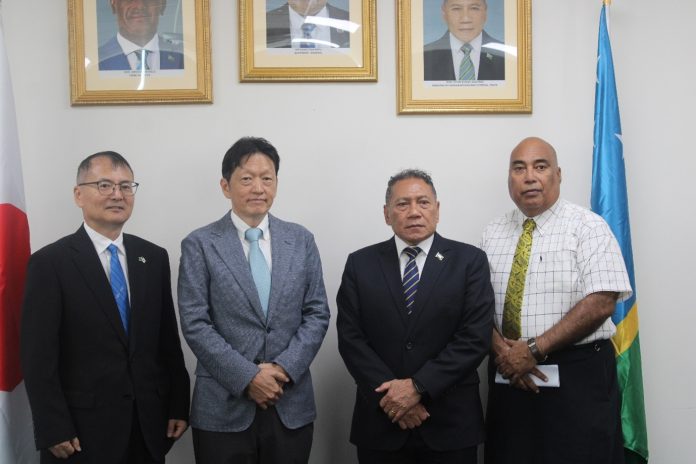
Governments of Japan and Solomon Islands have signed exchange notes for the second batch of the Human Resource Development Scholarship (JDS), reaffirming Japan’s ongoing commitment to supporting Solomon Islands’ development through education and capacity building.

Under the agreement, Japan will provide a total of ¥178 million (SBD $10.1) million, in grant aid assistance through its bilateral aid program.

The signing ceremony was held on Tuesday, July 29, 2025 at the Ministry of Foreign Affairs and External Trade (MFAET) office.

In attendance at the ceremony were Minister of MFAET, Peter Shanel Agovaka, Japanese Ambassador to Solomon Islands, Keiichi Higuchi, MFAET Permanent Secretary, Colin Beck, a representative from the Ministry of National Planning and Development Coordination (MNPDC) and resident representative of the Japan International Cooperation Agency (JICA), Mitsuyoshi Kawasaki.

The ceremony marks the second batch of scholarships under the JDS program, a flagship initiative designed to build the capacity of future leaders in developing countries. The program offers full scholarships for postgraduate studies in leading Japanese universities.

The first batch of JDS fellows are scheduled to depart Solomon Islands on July 31, 2025, to begin their two-year studies in Japan.

Japanese Ambassador to Solomon Islands, Keiichi Higuchi, said it was an honour to represent the Government of Japan at the signing ceremony.

He described JDS as a vital initiative, noting that like many developing nations, Solomon Islands faces a complex set of development challenges that require strong institutions and technically skilled leaders.

“That is where this JDS comes in.

“The JDS supports human resource development by providing talented young leaders with full scholarships for graduate degrees in Japan. This is a powerful investment that Japan and Solomon Islands collectively make,” he said.

Ambassador Higuchi hopes that returning scholars will make meaningful contributions to the country’s socio-economic development.

“This project embodies Japan’s commitment made at the Tenth Pacific Islands Leaders Meeting (PALM10) last year, where Japan pledged support for ‘People-centered Development’ — the JDS project is a direct reflection of that vision,” he added.

The Ambassador shared that he had the opportunity to meet the first batch of recipients at a recent farewell lunch and was encouraged by their excitement and motivation.

“I would like to express my sincere gratitude to the Solomon Islands Government, especially MFAET, MNPDC, and JICA, for their valuable facilitation during the initial discussions and documentation stages of this important project,” he said.

MFAET Minister, Peter Shanel Agovaka acknowledged the long-standing relationship between Solomon Islands and Japan, which spans 47 years, and thanked the Government of Japan for its continued support, particularly in infrastructure development, a national priority for Solomon Islands.

He said the SBD $10.1 million grant will benefit Solomon Islands recipients of the scholarship, who will have the opportunity to pursue postgraduate studies in Japan and immerse themselves in Japanese culture and society.

JICA’s Resident Representative in Solomon Islands, Kawasaki Mitsuyoshi, confirmed that the first batch of three JDS fellows will depart for Japan at the end of this month.

He said the second batch of scholars will be selected following signing ceremony that took place on Tuesday, July 29, 2025.

Over the course of four years, a total of 20 government officials are expected to pursue master’s degrees in fields like public policy, public financial management, international relations, and climate change policy.

Since JICA began its cooperation with Solomon Islands in 1978, more than 1,300 Solomon Islanders have participated in its short-term training programs, known as Knowledge Co-Creation Programs, across various disciplines.

In addition to these training opportunities, more than 20 Solomon Islanders have undertaken postgraduate studies mainly at the master’s and doctoral levels at Japanese universities since 2016, through JICA’s scholarship schemes such as P-Leads, SDGs Global Leaders, and Agri-Net.

For feedback, contact:[email protected]

Agovaka welcomes Japan’s ongoing support

0

BY NED GAGAHE

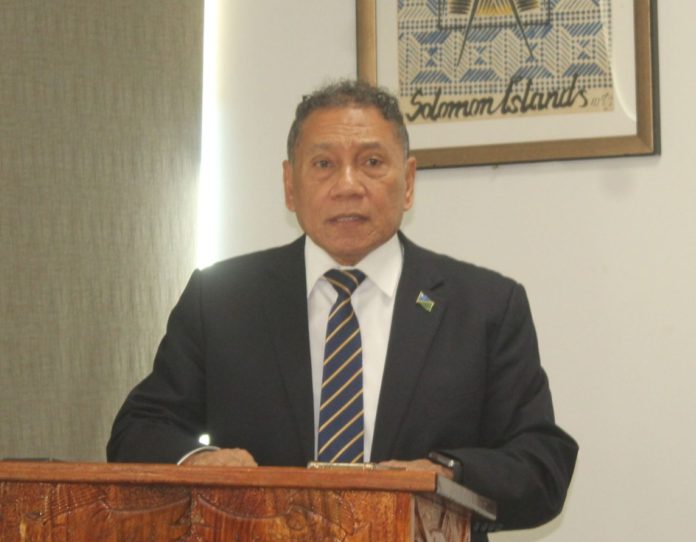
Minister for Foreign Affairs and External Trade (MFAET), Peter Shanel Agovaka, has welcomed Japan’s continued support to the Solomon Islands through its ongoing human resource development and infrastructure assistance.

Speaking at the Exchange of Notes and Signing Ceremony on Tuesday morning, July 29, 2025, at MFAET office in Honiara, he said the SBD $10.1 million grant aid from Japan will greatly benefit Solomon Islanders selected for the Japan Development Scholarship (JDS) program.

The grant, worth ¥178 million Japanese Yen, will fund the second batch of JDS scholarships under Japan’s Bilateral Aid Program.

“Excellency, this morning I am privileged to once again join you in signing the note and grant agreement on the Project for Human Resource Development Scholarship worth one hundred and seventy-eight million Japanese Yen,” said Agovaka.

He highlighted that Solomon Islands’ national development priorities remain focused on infrastructure, and took the opportunity to acknowledge Japan’s longstanding assistance in this area.

He cited key infrastructure support including:

-The international airport terminal, Auki Wharf, and the main highway in Honiara running from the Central Market to Henderson Airport

-The Solar Street Light Project, geological laboratory, and other health and education facilities spread across the country under Japan’s Grassroots Program

-Japan’s ongoing commitment to the Kilu’ufi Hospital Expansion Project and the SINU Fisheries Research Centre, signed in 2024

He also acknowledged Japan’s financial assistance through soft loan facilities, support for unexploded ordnance (UXO) clearance through equipment and training for the RSIPF, Japan’s Volunteer Program, and the continued provision of tertiary scholarships for Solomon Islanders.

“Ambassador, Solomon Islands has a young population, hence building a knowledge-based society is critical for sustainable development,” said Agovaka.

He expressed the government’s profound gratitude to the Government and people of Japan for their enduring support, not only bilaterally, but also through the Pacific Islands Leaders Meeting (PALM) partnership.

“At the regional level, we are united under the PALM partnership striving forward together,” the Minister said.

Agovaka extended his well wishes to Japanese Ambassador His Excellency, Keiichi Higuchi and expressed hope for stronger collaboration between the two countries during the Ambassador’s term in Solomon Islands.

For feedback, contact:[email protected]

Church leaders join HPV immunisation drive

0

BY BEN BILUA
GIZO

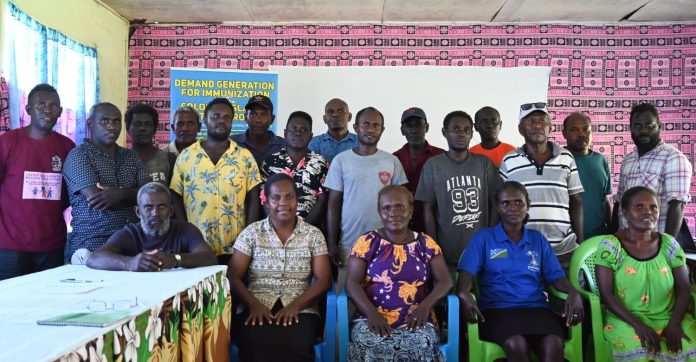
Church leaders from across Western Province are currently participating in a workshop that aims to strengthen awareness and support for the Human Papillomavirus (HPV) Immunisation programme.

The workshop is organised by the Adventist Development and Relief Agency (ADRA) with support from UNICEF.

It brings together representatives from major Christian denominations including the United Church, Destiny Church, Methodist Church, SSEC, Anglican Church, Seventh-day Adventist, CFC, and the Catholic Church at Kukudu School.

ADRA Project Manager, Sharon Kele, highlighted the importance of involving churches in the health awareness campaign, saying religious institutions are among the most influential and organised groups in the Solomon Islands.

“Churches can reach entire communities in a single event.

“This is why it’s important to engage church leaders in promoting the HPV vaccine — their voices carry weight, and they can help change lives,” she said.

Sharon urged churches to shift their focus from merely conducting funerals to actively saving lives.

“Stop burying people — rise up and help save lives from preventable diseases like cervical cancer caused by HPV,” she said.

Sharon said the workshop comes with community-level efforts, with ADRA and local health authorities running similar awareness campaigns at Gizo Hospital.

She said twelve trained community champions are now conducting outreach in three wards after completing their training with support of ADRA and the Ministry of Health and Medical Services (MHMS).

Sharon said the HPV vaccination program is a life-saving initiative and calls for stronger collaboration between churches and health authorities to ensure a healthier future for young girls and women.

For feedback, contact:[email protected]

Consultation on for new FAD

0

BY RODRICK DESURI

AUKI

The Ministry of Fisheries and Marine Resources (MFMR) is in its consultation phase to get feedback, gaps and suggestions on a new type of Fish Aggregating Device (FAD) as part of its five-year FAD draft plan for 2025-2030. 

The new type of Fish Aggregating Device (FAD) or raft is different from the existing one.

Principal Fisheries Officer, Aldrin Pezabule said while both have guidelines, the new type has stronger regulations that will govern it. 

“Yes, we can say that the existing one and the new type have guidelines, but the new type has regulations that guides it. Unlike before, if somebody cuts the rope of the FAD, they could walk freely. So, the new type has addressed those areas,” he said. 

Chief Fisheries Officer Sophia Natu said the new type will cover some aspects like socio-economic factors and biology of the fish.

“So, you could say it’s a brand-new type of plan that the Ministry of Fisheries is trying to implement,” she said.

The Fish Aggregating Device is like a management tool that helps support communities that depend heavily on fishing grounds for food.

“So, the FAD is built mainly to lessen the pressure that communities put on the fishing grounds,” she added.

For feedback, contact:[email protected]
International partners applauded for SI strengthening maritime security

0

BY INDY MAEALASIA

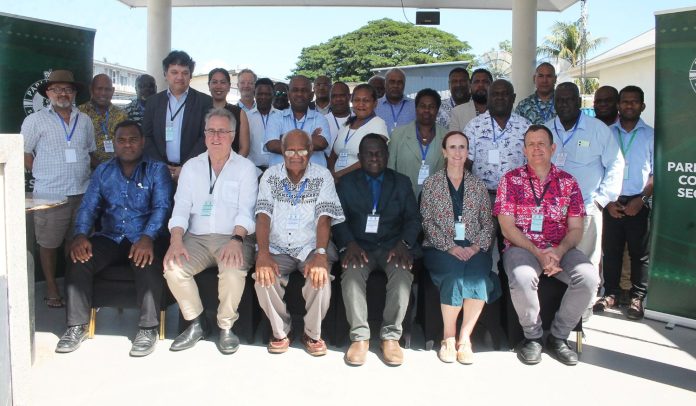
International partners have been praised for their ongoing support towards enhancing maritime security in Solomon Islands by Solomon Islands National University (SINU) Vice Chancellor, Transform Aqorau.

At a recent maritime workshop, he said they acknowledge with gratitude the donors and friends who respect our priorities and work within our framework.

“The tapestry of Pacific maritime security coordination is growing richer and stronger,” he said.

Aqorau also highlighted Solomon Islands commitment to encouraging inclusive cooperation in the region.

“We are all partners, old and new plugging into Pacific-led initiatives rather than creating parallel efforts,” he said.

Aqorau pointed out several examples of international support, noting that European nations and UNESCO have contributed significantly to maritime security and climate resilience programs.

One such initiative is the Pacific-European Union Maritime Partnership, which helps combat illegal practices such as tide-reef fishing.

Japan, he noted, has also played a vital role by providing coastal radar systems and training to various Pacific Island countries, in addition to supporting tsunami warning systems and maritime safety protocols.

Multilateral development banks like the Asian Development Bank (ADB) and the World Bank have invested in port infrastructure and maritime transport safety, indirectly bolstering security efforts in the region.

Meanwhile Aqorau stressed that the International Maritime Organization (IMO) assists countries in meeting global ship and port security standards, including those in key zones like the East-East Coast, helping to safeguard against sabotage and improve tourism safety.

The Vice Chancellor also acknowledged the contributions of United Nations agencies such as the UN Office on Drugs and Crime (UNODC) and the United Nations Drug Centre, which help strengthen legal and judicial systems to combat maritime crime.

“Each of these contributions whether a new patrol craft, training program, or technology transfer—is another sturdy fiber in the rope of Pacific security,” Aqorau said.

He added that Solomon Islands already has many of the right institutions, partnerships, and plans in place, including national strategies and regional collaborations through agencies like the Forum Fisheries Agency and other multilateral efforts.

“The challenge now is to weave these strands together, fill the gaps, and ensure long-term sustainability,” he said. “We must avoid duplication, ensure effective information sharing, and remain vigilant. Threats continue to evolve—so must we,” said Aqorau.

Despite these challenges, he expressed hopefulness about the region’s progress.

“When I look at the initiatives already underway, I am encouraged. The Pacific is not starting from scratch—we’re building on decades of cooperative mechanisms that have delivered real results. The task ahead is to elevate this cooperation to a new level, one that matches the rapidly changing environment in which we operate,” the SINU Vice Chancellor noted.

For feedback, contact:[email protected]
Restoration awareness for Ofana and Ofi descendants

0

By RODRICK DESURI

AUKI

A restoration awareness programme is set for the Ofana and Ofi descendants in East Kwaio, Malaita Province, next week.

The programme will take place from August 7-8 at Obona’eru, East Kwaio.

The main idea behind this restoration awareness is to settle the differences and misunderstandings between the descendants of Ofana and Ofi during their dark times, and to address these issues before development knocks on their doors.

According to the chairman of the Ofana and Ofi descendants, John Paul, it is the right time for them to settle their differences and prepare for development.

He mentioned that many writers and filmmakers around the world have written about the place, and it is important for the real people of the place to settle their issues and be ready for the developments that may come afterward.

“Many writers and filmmakers in the world today are talking about the Ofi in their scripts and films, but what part do we, the real owners and descendants of these places, play? Should we settle our differences and misunderstandings and stand firm for any developments coming?” Paul said.

He said the aim of restoration awareness is not to segregate anyone from the two tribes of Ofana and Ofi, but to address and resolve the common misunderstandings among their people.

Paul explained that Ofana and Ofi are like two brothers, and everything between them should be done for the good of their descendants.

He said a mass and reconciliation will also take place after the restoration awareness during the two-day programme.

For feedback, contact:[email protected]
Professional development programme for MPs underway

0

BY CHRIS ALEX

Parliament officially launched its professional development programme for Members of Parliament (MPs) on Tuesday, July 29, 2025 at the Heritage Park Hotel.

This initiative is designed to enhance MPs’ understanding of the parliamentary committee system and aims to improve the legislative capacity of the country.

The opening ceremony was officiated by Wilson Orisi, Director of the Parliamentary Committees Secretariat.

He highlighted the importance of strengthening parliamentary practices in the face of an ever-evolving political landscape.

Orisi said such programmes are crucial for building a more informed and effective legislative body.

Key attendees were; Speaker of the National Parliament, Patteson Oti, Clerk to the National Parliament, Jefferson Hallu, UNDP Programme Specialist, Solomon Kalu, and Acting New Zealand High Commissioner, Rebecca Williams, all of whom shared their support for the initiative.

A standout feature of the event was participation of senior officials from the Parliament of New South Wales (NSW), Australia, who offered valuable insights from their experiences with a well-established parliamentary committee system.

Their contributions highlighted the significance of regional cooperation and the importance of peer learning in the development of democratic institutions across the Pacific region.

The first day of the three-day programme featured four interactive sessions that provided MPs with a comprehensive overview of the committee system.

The topics covered included:

-Overview of Parliamentary Committee Systems in the Solomon Islands and New South Wales

-Roles of Chairs, Secretaries, Members, and Staff

-Conducting Effective Inquiries

-Common Challenges Faced by Committees in Both Regions

The programme aims to improve MPs’ understanding of the vital role committees play in legislative scrutiny, oversight, and policy review. Through case studies, workshops, and peer discussions, MPs will gain practical knowledge and learn about best practices in fostering transparency and accountability within government operations.

Orisi said the initiative will empower MPs to engage more substantively with complex policy issues, ultimately fostering a responsive and informed legislative body.

“This programme reflects our growing recognition of the need to strengthen our institutional capacity to meet the challenges of governance,” he said.

The professional development programme, part of a broader initiative supported by international partners, including the United Nations Development Programme (UNDP) and the New Zealand Government aims to build institutional capacity within Pacific parliaments.

The program’s long-term impact is expected to strengthen parliamentary practices and contribute to more robust democratic processes in the region.

For feedback, contact:[email protected]