Home Blog Page 311

Northwest Guadalcanal plans to plant 1 million cocoa trees

0

BY SAMIE WAIKORI
The Northwest Guadalcanal constituency is proposing to plant one million cocoa trees under its Economic Zone initiative recently launched at Mamara in west Guadalcanal.
The proposal formed an integral aspect of the EZ that gears at strategic crop expansion – a vision for growth to enhance the initiative.
Member of Parliament for Northwest Guadalcanal constituency, who is also Minister for Public Service, Francis Sade said his office and people are looking forward to pursue the milestone initiative.
He said to drive this productivity revolution; the Northwest Guadalcanal Constituency is launching a bold initiative to scale up high-value crop production:
1, Cocoa expansion: planting one-million trees
• We aim to plant one-million cocoa trees across the constituency, revitalizing our cocoa sector and positioning Northwest Guadalcanal as a leading producer in the Solomon Islands.
• This initiative will include nursery development, farmer training, and cooperative-led processing and marketing, ensuring that value is retained locally.

  1. Coconut plantation revitalization
    • Many of our coconut plantations are aging and underutilized. We will rehabilitate and replant these areas with high-yielding varieties.
    • We will also support value-added processing—such as virgin coconut oil, desiccated coconut, and coconut-based handicrafts—to increase income and create jobs.
  2. Diversifying into fruits, vegetables and high-value crops
    • We will expand the production of bananas, pineapples, taro, cassava, leafy greens, spices, and medicinal plants.
    • These crops will not only improve household nutrition and food security, but also open up new market and export opportunities.
    The Minister said the proposal will elevate local incomes, especially for women and youth engaged in farming and processing.
    Adding it will strengthen food security and reduce reliance on imports and contribute directly to national GDP growth, demonstrating the vital link between rural productivity and national prosperity.
    He said the Northwest Guadalcanal constituency cannot carry out this development along, and they will be working together with national government and development partners.
    • Development partners to support seed distribution, training and infrastructure.
    • Private investors to co-finance processing facilities and export logistics.
    • Government agencies to align policies and provide technical support.
    MP Sade strongly believe that through the EZ initiative, they can transform the constituency into a model of agricultural excellence, where every tree planted and every crop harvested brings them closer to a future of shared prosperity.

Manele yet to receive letter from Marape on PIF issue

0

BY NED GAGAHE
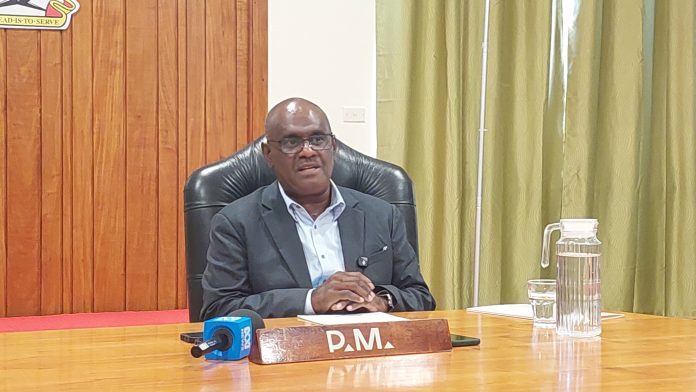
Prime Minister Jeremiah Manele says he has not received any official letter from Papua New Guinea Prime Minister James Marape or any other Pacific Islands Forum (PIF) leaders regarding Solomon Islands’ decision to defer the Post-Forum Dialogue with development partners.
Speaking to local media on Friday, August 8, in response to recent comments attributed to Prime Minister Marape, Manele clarified that no formal correspondence has been received by his office.
“I have not received that letter, not from him or from the others,” Manele said. “Of course, I respect the views of other Forum leaders. They have their own views and opinions.”
He added that he hopes regional leaders will understand Solomon Islands’ position once they have reviewed the government’s formal communication outlining the reasons behind the deferment.
“I hope after receiving my letter and the justifications that I stated in the letter in terms of the deferment, I believe colleague leaders in the region, like the President of Palau, will come on board and understand and accept the decision that we have taken,” he said.
Prime Minister Manele explained that the decision to defer the Post-Forum Dialogue, which involves 21 development partners was made in the spirit of sovereignty and respect for the “Pacific Way.”
He said the decision aligns with discussions and resolutions made during the 53rd Pacific Islands Forum Leaders Meeting (PIFLM) held in Tonga last year.
He further noted that the move has the backing of the Forum’s Troika Plus, a high-level political consultative body made up of the current Forum chair (Tonga), the immediate past chair (Cook Islands), the incoming chair (Solomon Islands), and the next chair (Palau).
The core reason behind the deferment, according to Manele, is that the new criteria and mechanism for partnership and engagement with development partners agreed upon at the 53rd PIFLM, have not yet been finalized.
“These mechanisms were expected to be ready by December last year and piloted during the 54th PIFLM in Honiara,” Manele said.
“However, as they are not yet in place, we have decided to defer the Post-Forum Dialogue to a later date.”
The deferment has stirred debate among some regional leaders, but Manele maintains that the decision is grounded in established regional processes and a desire to ensure meaningful engagement with partners based on updated and agreed-upon criteria.

Aussie & SI artists unite for cultural exchange

0
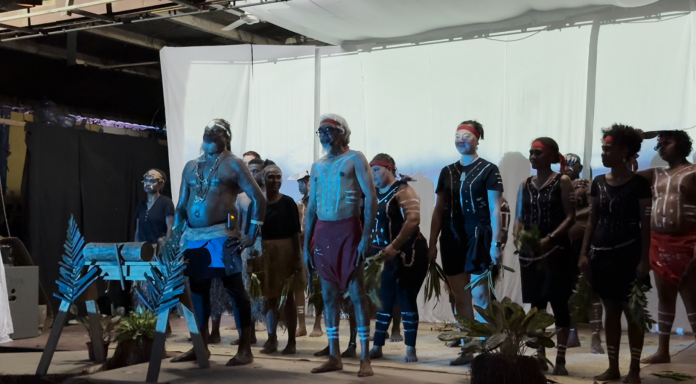
Dreamcast crew and the Ngarluma cultural group from the Pilbara region of Australia

BY CHRIS ALEX
An evening of storytelling, music, and cultural exchange lit up the capital over the weekend as Ngarluma artists from Australia’s Pilbara region joined forces with local Dreamcast artists in a celebration of tradition, creativity, and unity.

Held on Saturday, August 9, the event brought together the two group to share songs, dances, carvings, and centuries-old stories, blending the heritage of Australia’s First Nations peoples with the vibrant cultures of the Solomon Islands.

The cultural event, supported by Big HART and the Australian High Commission to the Solomon Islands, was designed to highlight the enduring bonds between the two peoples and promote mutual understanding.

Speaking on behalf of the Australian High Commissioner, Samuel Cox said the event was a rare and powerful opportunity to see two rich cultural traditions meet on equal ground.

“It is an opportunity to show how this shared culture around story, song, dance, carving the dreamtime stories and the custom stories here in Solomon Islands as well. I think we’re going to see a really beautiful conversation between these two cultures that’s based on respect and a long-standing, deep connection. We’re proud to be the major sponsor of this activity,” Cox stated.

Ngarluma cultural leader Patrick Churnside said the visit was more than just a performance it was a deep cultural exchange that allowed both groups to learn from each other.

“We’ve come all this way to the Solomon Islands for cultural exchange, making art both traditional and digital and creating space to exchange culture among First Peoples,” Churnside said.

As part of the collaboration, Ngarluma and Dreamcast artists co-designed a program that blended modern and traditional elements. This included fusion dance band practices, digital art workshops for local youth, and immersive sessions exploring each other’s heritage, stories, and customs.

HIGH NO-JOB RATE

0

Council of trade unions calls on government to address unemployment crisis

BY CHRIS ALEX
The Council of Trade Unions (SICTU) has sounded the alarm over what it calls a “unemployment crisis” urging Government to take swift action to address soaring unemployment particularly among the nation’s youth.

Citing the latest International Labour Organization (ILO) Labour Report and data from the Solomon Islands Government’s 2020 Population Census (based on 2019 figures), SICTU revealed that total unemployment has reached 7.9 percent representing more than 23,000 people nearly doubling the natural unemployment rate of 4 percent.

The situation is even more severe for those under the age of 24, where the unemployment rate stands at 14–16 percent meaning roughly one in six young Solomon Islanders is without work, SICTU said.
“This is not just a statistic; it’s a crisis that is robbing our young people of their future,” SICTU National Secretary Adrian Tuhanuku said.

“The data confirms that our economy is failing to absorb new entrants to the workforce. If this trend continues, we risk long-term damage to both youth prospects and national stability.”
The findings also highlight that only 55.4 percent of working-age adults are engaged in the labour force primarily in urban centres while over half of all jobs are in the services sector.

Agriculture, once the backbone of the economy, accounts for just 27 percent of employment and is in decline. Compounding the problem, GDP growth remains stuck below three percent.
Tuhanuku warned that the figures likely understate the true scale of the crisis, as ILO methodology does not account for underemployment or discouraged workers who have given up looking for jobs.
In response, SICTU is calling on the Ministry of Commerce, Industry, Labour and Immigration (MCILI) and the Ministry of Finance and Treasury to:
Publicly outline their plan to address the ILO’s findings;
Prioritise job creation in agriculture, fisheries, and sustainable industries to diversify the economy;
Offer incentives to the private sector for local hiring and training;
Improve labour data collection to capture hidden unemployment; and launch an emergency youth employment plan to tackle the 14–16 percent youth jobless rate.
“The time for solutions is now,” Tuhanuku stressed. “We need policies that create real jobs not more guesswork. SICTU and its affiliates are ready to work alongside the Government and the Solomon Islands Chamber of Commerce and Industry (SICCI) to deliver results through genuine tripartite cooperation.

Government prioritises Bina Harbour project: PM Manele

0

BY NED GAGAHE
Prime Minister Jeremiah Manele confirmed last Friday that the Solomon Islands government prioritises the Bina Harbour project and actively pushes its progress.
At his fortnightly press conference, Prime Minister Manele detailed ongoing consultations with landowners and community engagement efforts.
“We operate the Bina Harbour office under the Ministry of Fisheries and Marine Resources. I appointed a government backbencher to chair a cabinet subcommittee dedicated to Bina Harbour,” he said.
The subcommittee works closely with the ministry and landowners to address key issues and raise community awareness.
While acknowledging progress in landowner understanding, Manele emphasized that the project still requires significant effort.
“This is a massive project that we will implement in phases. Clearing the land comes first and is essential,” he said.
Manele stressed the need for international funding and partnerships to move the project forward.
“We need support from European partners through a mix of soft loans, borrowing, and grants from our development partners,” he explained.
The government plans to build essential infrastructure including electricity, water, and port facilities before constructing the fish processing cannery.
“We engage actively with our partners. Some have already reviewed the initial business case for Bina Harbour,” said the Prime Minister. He expects to complete a revised business case by October, which will open doors for deeper discussions and collaboration.
During his recent visit to New Zealand, Manele praised New Zealand’s long-term support for the Solomon Islands’ fisheries sector.
He highlighted their backing of the Aruligo Tilapia hatchery and funding for the Bina Harbour office within the Ministry.
“I expressed our strong interest in New Zealand continuing to partner with us, especially in coordinating other development partners and advocating for the Bina Harbour project,” he said.
The government drives the Bina Harbour project as a critical initiative to strengthen fisheries and stimulate economic growth in the Solomon Islands.

Premier Veo challenges government ministries

0

BY BEN BILUA
Gizo

PREMIER of Western Province has challenged government ministries to decentralise their services in the provinces.
Billy Veo made the statement during the opening of the Ministry of Finance and Treasury office in Noro last week.
“I would like to challenge other ministries and government agencies to also follow suit and start investing your infrastructures and related facility to support yourselves in delivering your mandate in the provinces.
“I would also like to inform the government that in order for equitable economic and infrastructure development to take place, we need to start investing in our provinces,” he said.
Veo said there are serious gaps that need to be addressed in order to achieve meaningful development and service delivery across the country.
“It is disheartening when citizens, even visitors, often have to go to Honiara to access services, make it costly, time consuming and insufficient to say the least,” he said.
Veo said the new MoFT office at Noro is the best example of resource distribution, decentralization, expansions of service.
He highly recommends the government to start investing in economical development at the provincial and rural levels.
In the meantime, Veo acknowledges the government and donor partners for the continual support toward development at Noro.
He said Noro town itself hosts number of key investments, the National fishery, the international Seaport and the International Airport which requires regulatory mandates available to improve operations.
“There’s a significant need for support services like customs and exercise, biosecurity, bio securities and immigrations.
“We need a lot more investment in terms of value added and dancing processing initiative, as well as in the service sector.
“I hope with this new facility; the Ministry of Finance team can have safe and comfortable environment where they can be able to do their work effectively and efficiently,” he said.
Veo congratulates the Ministry of Finance and Treasury for prioritising and successfully completed the stunning office to support its services.

Noro generates $500m in revenue

0

BY BEN BILUA
Gizo

Noro has generated more than $500 million in revenue over the past three years, says the Minister of Finance and Treasury Harry Kuma.
Speaking during the opening of the Ministry of Finance and Treasury (MoFT) office in Noro, Kuma said the township has facilitated more than $4 billion in exports, contributing significantly to the country’s economy.
“In imports alone, we recorded over SBD1.4 billion, generating more than SBD250 million in import duties. The Treasury Division has also collected more than SBD2.5 million over the same period,” Kuma said.
He described the pace of development in Noro as “extraordinary,” highlighting increasing trade activities at its international seaport, the commencement of Munda International Airport operations, expansion of the major tuna processing plant, and growth in wholesale and retail businesses.
Kuma said Noro has become a thriving hub for both social and business activities, providing opportunities for commodity exports and tourism, supported by nearby destinations such as Gizo and Munda.
He stressed that the establishment of the MoFT office in Noro is not just about infrastructure, but about empowering people and businesses to expand their ambitions.
“Currently, Noro hosts more than 100 businesses, including major industries such as Soltuna, National Fisheries Development (NFD), Marina Investment, as well as tourism enterprises and expanded state-owned enterprises (SOEs) like Solomon Ports, Solomon Power, and Solomon Telekom.
“These businesses provide more than 3,000 formal and informal employment opportunities, not just in Noro but across the country,” Kuma said.
He added that bringing government services closer to communities will increase local participation and at the same time strengthen regulatory oversight and promote inclusive decision-making.
Kuma said there is a growing demand for government services in nearby centres such as Munda, Gizo, the Shortland Islands border agency, and Taro in Choiseul Province.

Forum dialogue partners will not be attending 54th PIFLM

0

BY IRWIN ANGIKI
The Pacific Islands Forum dialogue partners will not be attending the 54th Pacific Islands Forum Leaders Meeting in Honiara this September – because they have not been invited.
Prime Minister Jeremiah Manele told a press conference Friday last week (August 8) that his government has decided to defer the post-forum dialogue, which would involve these 21 partner countries.
Mr Manele said this decision was done in the spirit of sovereignty and respect of the Pacific Way, and the decisions made in 53rd PIFLM held in Tonga last year.
He said this decision has the support of the Forum’s Troika Plus, a high-level regional political consultative sub-group which consists of the current chair (Tonga), past chair (Cook Islands), incoming chair (Solomon Islands) and the future chair (Palau).
The reason for the deferment is the criteria for partnership and engagement mechanism not yet being ready, Manele said.
In the 53rd PIFLM in Tonga last year, it was decided that criteria for partnership and engagement be refined. This was to be ready by December last year, and tried out in the 54th PIFLM in Honiara.
However, this mechanism is not yet ready.
Thus, PM Manele said they are deferring the post-Forum Dialogue for ‘a later date’.
“…Solomon Islands’ decision to defer the partners’ dialogue meeting to 2026, when Palau will host the 55th Forum for full implementation of the dialogue mechanism, the new dialogue mechanism,” Manele told media.
He adds that the deferment will meanwhile benefit Forum member countries by allowing them to adjust to the new tiering system.
“It is the Pacific’s collective interest that this deferment will provide Forum officials and members additional time to refine the tiering criteria by December 2025 and enable its adoption by Foreign Ministers in early 2026.
“This deferment will also allow our partners adequate time to understand, respond to, and adapt to the reformed engagement process for genuine and effective collaboration,” Manele said.
This is not the first time for the partners’ dialogue to be deferred.
“In 2022, Fiji also deferred the partners’ dialogue with the sole purpose of focusing on building regional unity and solidarity. In the same light, the collective interest of the region takes precedence to reform the partnership and engagement mechanism of the Forum,” Manele said.
PM Manele elaborated on the timeline of his deferment decision.
“Based on the leaders’ collective decision, in June this year, I sent a letter of invitation to all leaders to attend the Honiara Pacific Islands Forum Leaders’ Meeting in September. My June letter informed all leaders that Honiara will provisionally apply the reformed partnership mechanism.
“However, I have been told that the partnership engagement mechanism will not be ready (6:20) for the Honiara Pacific Islands Forum Leaders’ Meeting. Hence, the proposed deferment of the partners’ dialogue to 2026.
“It is also important to note that the spirit of the decision in Tonga is such that we cannot revert to the previous arrangement. For partners’ dialogue, as such, the deferment of the partners’ dialogue to 2026, I believe, is the most appropriate one to be taken.
“In the spirit of the Pacific Way, I have, as incoming chair of the Pacific Islands Forum, on 31st of July, [2025] wrote to the Pacific Islands Forum Tracker Plus.
“So I wrote to the Forum Troika Plus, which consists of the Prime Ministers of the Kingdom of Tonga, who is the current chair, the Prime Minister of Cook Islands, the past chair, and the President of Palau, future chair, 2026, on the deferment of the partners’ dialogue to 2026.
“On the 3rd of August, I discussed this further with Tracker Plus via Zoom and got their endorsement. On the 6th of August, I wrote to all Pacific Islands Forum leaders on the matter. All partners will also be informed on the decision.”
According to the Forum website, the 21 dialogue partners are:
Canada (1989), France (1989), Japan (1989), United Kingdom (1989), United States of America (1989), People’s Republic of China (1990), European Union (1991), Republic of Korea (1995), Malaysia (1996), Philippines (1999), Indonesia (2001), India (2002), Thailand (2004), Italy (2007), Cuba (2013), Spain (2014), Türkiye (2014), Germany (2016), Chile (2021), Norway (2021) and Singapore (2021).

War legacy issues resurface as Government considers WWII compensation claims

0

BY NED GAGAHE
The Solomon Islands government has acknowledged growing public calls for compensation related to the impacts of World War II, including concerns over unexploded ordnance.
Prime Minister Jeremiah Manele confirmed that the government plans to re-engage with U.S. authorities to explore viable solutions to these long-standing issues, more than eight decades after the war ended.
Speaking at a recent press conference, Prime Minister Manele recognized the emotional and historical weight these claims carry for affected communities.
“I understand some years ago, I think there was a group, an association, spearheading this. We’ll pick that up again. We have not been quite active in raising that issue, apart from the issue of unexploded ordnance.
“We’ll also raise this with the U.S. authorities. What’s the best way going forward 83 years after World War II.
The government intends to revive discussions with relevant partners to seek appropriate measures that acknowledge the legacy of the conflict and support affected individuals and communities.
This move comes amid renewed public interest in addressing the lasting impacts of WWII in the country, particularly in areas still dealing with unexploded bombs and other remnants of the war.

Solomon Islands pushes for more scholarships and youth opportunities with New Zealand

0

BY NED GAGAHE
The Solomon Islands government is advocating for increased educational scholarships and expanded youth employment opportunities with New Zealand, Prime Minister Jeremiah Manele announced during a recent press conference.
Following discussions during his official visit to New Zealand, Prime Minister Manele highlighted the strong partnership between the two countries, particularly in the areas of education and youth empowerment.
“We shared the idea of increasing the number of scholarships available to Solomon Islands students,” Manele said.
“There are many outstanding young people eager to pursue higher education, and we hope New Zealand will consider expanding its scholarship programs to support them.”
In addition to education, the Prime Minister addressed the need for greater employment opportunities for Solomon Islands youth under New Zealand’s Recognised Seasonal Employer (RSE) scheme, which currently allows workers to take up short-term contracts in horticulture and viticulture.
“Our youth workers have expressed that the current seven-month contract period is too short. We are requesting that New Zealand extend these contracts to nine months to better suit seasonal work needs,” he explained.
Prime Minister Manele also proposed broadening the scope of work sectors available under the RSE scheme.
“We are looking to explore opportunities in other sectors such as forestry, fish processing, and caregiving,” he said, noting that while caregiver roles already exist with Australia, similar options could be developed with New Zealand.
The Solomon Islands government views these initiatives as vital to empowering its young population and providing sustainable employment pathways that contribute to the country’s economic growth.
Prime Minister Jeremiah Manele also acknowledged New Zealand’s ongoing support for education and youth programs under the Pacific Community (SPC) and encouraged continued collaboration to nurture the potential of Solomon Islands youth.
He said the government remains optimistic about strengthening its bilateral relations with New Zealand to open more doors for its young people.