Home Blog Page 302

Youth campaign for ICJ’s advisory opinion on climate change acknowledged

0
Permanent Secretary for MFAET Collin Beck.

BY JOHN HOUANIHAU

Collin Beck, Pacific Islands Forum (PIF) National Committee co-chair, has thanked Solomons students, together with Pacific Island Students Fighting Climate Change, for bringing the issue of climate change to the International Court of Justice (ICJ).

The Pacific Islands Students Fighting Climate Change (PISFC) is a youth-led organisation whose members are students from Pacific Island countries, including Solomon Islands.

In March 2019, 27 USP Law students from 8 Pacific Island countries came together and campaigned to convince the Pacific Island Forum leaders to seek an Advisory Opinion from the ICJ on climate change and human rights.

“We have this year, the ICJ issued an advisory opinion on the issue of climate change. We need to unpack that and consider the responsibility of the state as far as climate change is concerned.

“On this note, I want to acknowledge the youths, especially our youths from Solomon, who participate in terms of helping and facilitating to work with the Vanuatu government to push the issue to the ICJ in Hague, to make an advisory opinion on it.

“So, to the youth, thank you so much for doing something for humanity, but also doing something that the region identified as the number one threat,” said Mr Beck.

Earlier this year, the International Court of Justice (ICJ) in Hague, Netherlands, issued its advisory opinion on the obligations of states in respect of climate change.

The ICJ ruled that States have an obligation to protect the environment from greenhouse gas (GHG) emissions and act with due diligence and cooperation to fulfil this obligation. 

The Court further ruled that if states breach these obligations, they incur legal responsibility and may be required to cease the wrongful conduct, offer guarantees of non-repetition and make full reparation depending on the circumstances.

For feedback, contact:[email protected]

Franchise shipping enhances connectivity for remote communities

0

BY CHRIS ALEX

The Government of the Solomon Islands has successfully launched three new routes under its Franchise Shipping Scheme (FSS), marking a significant milestone in the country’s efforts to boost maritime connectivity and foster economic development in remote island communities.

This initiative aims to improve access to essential goods, services, and opportunities, with a focus on island regions that have long struggled with inadequate transport options.

The newly operational routes include:

Route 3: Servicing Sikaiana Island, which is currently running.

Route 5: Connecting to Rennell Bellona Province, with the first trip scheduled soon.

Route 6: Covering the Makira Island Weather Coast, which began its first trip two weeks ago.

These routes are part of a broader initiative that includes seven routes in total, designed to service some of the most isolated and underserved areas of the country.  

The remaining routes serving Temotu, Ontong Java, Ndai, Shortland Islands, and Guadalcanal’s weather coast are still under deliberation by the Ministerial and Central Tender Board.

The Franchise Shipping Scheme, originally launched in 2009 and co-funded by the Asian Development Bank (ADB) and the European Union (EU), is now fully funded by the Solomon Islands Government.  

This strategic shift aims to ensure long-term sustainability and operational success as the government allocates grants through the Ministry of Infrastructure Development (MID) budget to subsidize shipping services on these crucial island routes.

Chris Resana, FSS administration officer, outlined the rigorous requirements for shipping operators applying for the scheme, which include minimum vessel capacity, a proven track record of over 12 months of operational experience, and compliance with safety regulations.

These standards ensure that the scheme will provide reliable and safe shipping services to outer island communities.

“We are focusing on both near-coastal and in-shore services. Near-coastal services cover the more distant outer islands such as Temotu and Shortland Islands, while in-shore services are designed for coastal regions like Makira and Guadalcanal’s weather coast,” Mr Resana explained.

The FSS aims to improve vital transport links for islands with insufficient maritime infrastructure, which have often faced irregular shipping schedules.

These challenges have hindered economic growth by limiting access to markets, goods, and services. Through the scheme, the government is working to ensure that communities in these remote areas can access essential resources, boosting both local economies and social well-being.

The latest development in the FSS highlights the ongoing commitment of the Government for National Unity and Transformation (GNUT) to support the productive sector, with a clear recognition of the critical role that reliable and efficient shipping services play in driving economic development in the Solomon Islands’ more isolated regions.

“We are conducting a comprehensive review of the scheme to ensure operational efficiency, service reliability, and its continued alignment with our goals of economic growth and social development.

 “The new routes will have a significant impact on local economies, improving access to critical services, and facilitating trade and communication across the islands,” said Resana.

As the FSS continues to expand, the government remains committed to addressing the challenges faced by island communities, ensuring that all regions benefit from the national push toward improved infrastructure and connectivity.

The scheme’s success marks a critical step in reducing isolation and fostering greater national unity through enhanced transportation networks.

For feedback, contact:[email protected]

Solomon Islands outlines key priorities as Forum Chair

0
Permanent Secretary for MFAET Collin Beck.

BY NED GAGAHE

Co-Chair of the National Organizing Committee for the Pacific Islands Forum Leaders’ Meeting Colin Beck has outlined key priorities such as political leadership, peace and security, economic development, and climate change as central to the region’s future.

Mr Beck was responding to questions raised by a member of the public during the SIBC Radio Talk Back Show on Sunday August 24, 2025.

The questions centred on what priority issues are currently on the table, what to expect following the Forum Leaders Meeting, and the role of Solomon Islands in the regional and global context.

Mr Beck who is also the Permanent Secretary of the Ministry of Foreign Affairs and External Trade (MFAET) highlighted the need for strong political leadership from both Solomon Islands as Chair and the wider region.

He said cooperation will be critical on peace, security, resources, and economic development.

He drew particular attention to the Pacific’s nuclear legacy. The region, once used for nuclear testing and waste dumping, continues to face challenges today with nuclear waste storage in the Marshall Islands and the discharge of treated nuclear water into the ocean.

“This poses long-term risks, lasting up to 30 years,” Mr Beck said, stressing the need to strengthen scientific capacity to monitor and interpret international data to ensure ocean health and safeguard tourism, food security, and the livelihoods of Pacific peoples.

Beck also highlighted political developments in New Caledonia, where issues of decolonisation and recent violence demand close regional attention.

He said efforts are underway to build a political accord that ensures stability.

Mr Beck further stated the concept of an “Ocean of Peace”, a declaration designed to prevent militarisation and coercion in the Pacific.

For the first time, such a declaration will be pursued under Solomon Islands’ chairmanship, extending beyond Honiara to the next Forum meeting in Palau.

On economic priorities, Mr Beck pointed to labour mobility and fisheries as central to regional development.

He said Pacific nations are working under the PACER Plus framework to establish common principles for labour mobility.

On fisheries, he stated that Solomon Islands hosts the Forum Fisheries Agency (FFA), which generates significant regional revenue.

“The Pacific earns about USD 500 million annually from licensing and access fees, with Solomon Islands benefiting both financially and through employment for more than 2,000 people in fisheries,” Mr Beck said.

He said Climate change remains the number one threat to the Pacific, Mr Beck said.

He highlighted the International Court of Justice (ICJ) advisory opinion process, an initiative Solomon Islands is supporting alongside Vanuatu to hold states accountable for their climate responsibilities.

He thanked Solomon Islands’ youth for their leadership in this effort, describing it as “a contribution not only to humanity but to the Pacific region as a whole.”

Mr Beck also referenced the recent UN Ocean Conference in Nice, France, where Pacific leaders renewed commitments to safeguard the ocean.

Looking ahead, Mr Beck said education and health remain important issues for the Forum agenda.

More critically, he stressed the need to reform the Pacific Islands regional architecture to make it “fit for purpose.” With more than nine organisations currently involved, he said better coordination and restructuring are essential.

“Solomon Islands, together with its regional neighbours, is committed to driving this reform forward during its leadership,” Mr Beck affirmed.

For feedback, contact:[email protected]
Noro roads upgrade nears completion

0

BY MORRIS NAFU

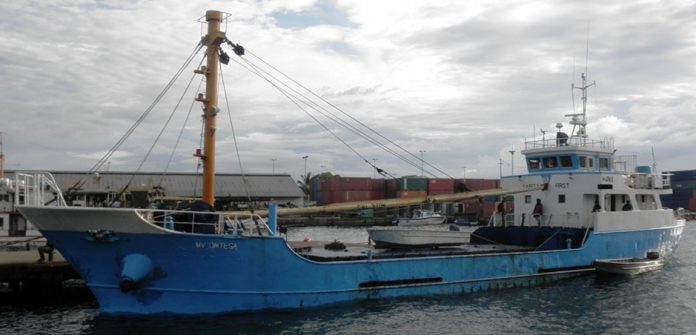
The Noro Roads Improvement project, a key initiative under the Second Solomon Islands Roads and Aviation Project (SIRAP2), is making impressive strides, with completion now at 85 percent.

Backed by the World Bank and executed by the Ministry of Infrastructure Development (MID), this project is set to significantly enhance connectivity, safety, and economic prospects for communities in Noro and neighboring areas in Western Province.

A press statement from MID confirms the key achievements to date which include the sealing of approximately 5.3 km of vital roadways with asphalt concrete, installation of concrete pavement on Port Exit Road, and the construction of concrete-lined drainage systems along with a new box culvert.

Many of these tasks have been conducted simultaneously across various road sections, with contractor, China Civil Engineering Construction Corporation (CCECC), increasing its workforce to accommodate the expanded scope of work.

The statement also mentioned that current activities involve; repairing selected sections of the Noro–Munda Road to restore pavement integrity, laying concrete pavement on Port Entry Road for enhanced durability under heavy traffic, and installing curb and gutter systems on Mobil Road and Bonito Drive to improve drainage and edge stability.

All operations are being carried out with strict adherence to quality assurance and environmental standards, in line with project milestones and donor expectations.

Allan Lilia, Permanent Secretary of MID, said the improvement of Noro Road reflects our dedication to enhancing infrastructure nationwide.

“These upgrades not only improve connectivity for local communities by making roads more climate-resilient and safer but also foster economic growth and regional development.

“I applaud all stakeholders, including our project team, the contractor, and the supervision consultant, for their commitment to delivering quality work,” he said.

In addition to the Noro Roads Improvement, the statement notes that SIRAP2 is also facilitating upgrades at Santa Cruz Airfield, constructing four new bridges in Malaita, enhancing Honiara and Munda Airports, and upgrading Santa Cruz and Suavanao Airfields.

The project also includes investments in air navigation systems in Makira-Ulawa and Temotu Provinces, maintenance of regional airports, rehabilitation of 21 km of East Road between Baratolo and Atori, and sealing of 12 km of North Road between Auki Gwaunaru’u Airfield Junction and Kwaisuliniu Road Junction.

For feedback, contact:[email protected]
MAL holds dialogue on disability inclusion

0

BY MORRIS NAFU

Officers from the Ministry of Agriculture and Livestock (MAL) took part in a disability inclusive development dialogue that aims to bolster disability mainstreaming within the agriculture sector.

This event marks the culmination of a series of discussions initiated in August 2024, involving various government ministries last week Friday, August 15.

Facilitated by the National Rehabilitation and Disability Division (NRDD) of the Ministry of Health and Medical Services (MHMS) and supported by the World Health Organization (WHO), this dialogue represents the final engagement under the ongoing initiative.

In a press statement, participants from MAL expressed gratitude for the enlightening presentation, which expanded their understanding of disability-inclusive development.

The session highlighted the practical application of the Solomon Islands National Disability Inclusive Development Policy 2023–2031 (SINDID Policy) and the United Nations Convention on the Rights of Persons with Disabilities (UNCRPD) in their work.

“The Disability Inclusive Development agenda emphasizes that true development entails ensuring access to essential needs and services, while lack of access perpetuates poverty—a reality evident across various ministries.

“The dialogue aims to foster inclusivity in national development by addressing the attitudinal, institutional, environmental, and communication barriers that impede equitable service delivery,” the statement said.

For feedback, contact:[email protected]
SECURITY, HUMAN RIGHT

0

9th Pacific Water and Wastewater Ministerial Forum highlights role of water and sanitation

BY LORETTA B MANELE

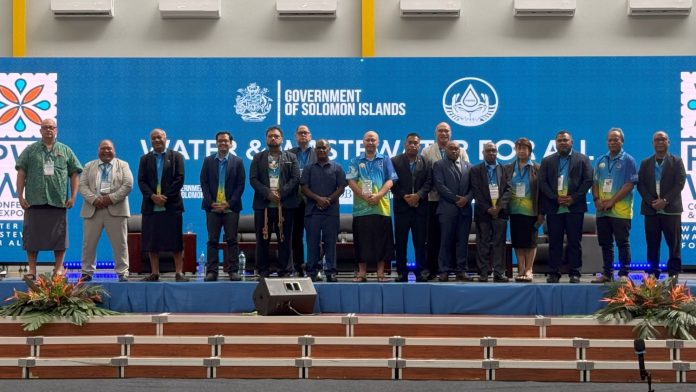
The Ninth Pacific Water and Wastewater Ministerial (PWWM) Forum held in Honiara from August 25-26 highlights the role of water and sanitation in pacific communities.

In their communique or statement, ministers and Ministerial representatives of the 9th PWWM Forum expressed deep gratitude to the Government and people of Solomon Islands for the warm hospitality and excellent arrangements extended to all delegations during their stay in Honiara.

Ministers reaffirm that access to safe and sustainable water and sanitation is fundamental to the wellbeing of people in the Pacific region, to the resilience of communities and to achieve sustainable development.

They strongly expressed that water security and wastewater management are vital to climate adaptation, disaster risk reduction, human health, food and energy security, prosperity and the protection of Pacific ecosystems hence call for increased development partner support.

Also raised is the urgent need to bring water and wastewater priorities to a higher level within the regional agenda through strengthened links to Pacific Islands Forum (PIF) processes to ensure sustained political commitment and action.

“Ministers agreed that water is not only an economic issue but a matter of security and a fundamental human right,” said the statement.

In relation, ministers also emphasised the role of PWWM Forum in informing PIF (Pacific Islands Forum) Leaders on water and wastewater priorities, challenges, and needs.

This echoes the ministers further support of the importance of raising water visibility at the highest political levels, including systematic reporting to the PIF Leaders.

As noted in the 9th PWWM Forum statement, ministers recognise the need for all Pacific Island Leaders to champion water security at national, regional, and global levels.

Ministers were also encouraged to work with their Heads of Government to ensure water is prioritised in PIF Leaders’ deliberations, commencing at the PIFLM in Honiara.

Going forward, ministers laid emphasis on commitment, collaboration and championing water issues through the channel of urgent action to advance Water Security and SDG 6 in PIF Leaders processes.

“Ministers reaffirmed shared commitment to working with Pacific communities, CROP organisations, and development partners to ensure safe, reliable, and resilient water and sanitation services.

“Ministers called for stronger commitment of partner support to national and regional frameworks to maximise impact and deliver coordinated support that meets the priorities of Pacific Islands on water security,” said the statement.

Ministers have also agreed for the 2026 PWWM Forum to include regional preparations for the UN Water Conference in Abu Dhabi, United Arab Emirates (UAE).

The Pacific Community (SPC) and the Pacific Water and Wastewater Association (PWWA) have been acknowledged by the ministers of the 9th PWWM Forum for their supporting coordination, technical expertise, and regional engagement.

Further noted is that ministers have agreed that the tenth PWWM Forum in 2026 will be held in French Polynesia and request that the Secretariat work closely with members and partners to progress the outcomes of this Forum, and to prepare a comprehensive update for consideration at the next meeting.

For feedback, contact:[email protected]
PWWA conference highlights water crisis in the Pacific

0

BY JOHN HOUANIHAU

The 9th Pacific Water and Wastewater Ministers Forum and the 16th Pacific Water and Wastewater conference in Honiara is focused on elevating and recognising the critical importance of water.

Pitolau Lusia Seto Leau, Pacific Water and Wastewater Association (PWWA) Chief Executive Officer (CEO), said this in a radio talkback show on Sunday, August 24, ahead of this week’s conference.

“This conference is bringing water to be elevated so that leaders would pay attention and say we do have a crisis in the Pacific,” said Seto-Leau.

She said that in terms of other regions of the world, the Pacific Islands are far behind in universal access to water.

“And there’s an often-forgotten sustainable development goal 17, which is to do with collaboration, and I think when you have that coming from the top and coming from the bottom by people pushing for it to be elevated, you have a solution,” said Seto-Leau.

She said many people do not have access to water in the Pacific.

“And how do you get water to them at an affordable rate, and be able to have your utilities or operators that can provide that water to you 24-7 and with quality that is good for you, safe for you. That’s the dilemma that governments face,” she said.

Seto-Leau stressed that it should be a priority for governments to ensure that every family has universal access to water.

“It has to be the top priority of any government to say that and to provide the means for those who deliver that service, provided with the means for it, and I mean financial resources, of course, because you can’t do it without financial resources.

“If it takes that, I think it is important enough because water is life. Without water, you cannot live,” she said.

For feedback, contact:[email protected]

‘It’s a RSIPF-led operation for PIF’

0

BY JOHN HOUANIHAU

The Royal Solomon Islands Police Force (RSIPF) will lead the security operation for the upcoming 54th Pacific Forum leaders meeting (PIFLM) here in Honiara.

More than 800 officers of RSIPF will take part the security operation.

It is scheduled to take place from September 8-12.

RSIPF Supervising Assistant Commissioner (AC) National Operation, Francis Ramoni emphasises that it is a RSIPF-led security operation.

Speaking on a Radio Talkback show on Sunday, August 24, Ramoni said that the operation includes RSIPF officers from Honiara, Guadalcanal province, Taro in Choiseul and Western province.

“We call a significant number of police officers to form part of the operation. It is an RSIPF-led operation. For this PIFLM operation, we are expecting 800 to 1000 officers from Honiara, Guadalcanal police resources, as well as Western province and Taro,” he said.

In terms of the leaders’ retreat dialogue in Noro, Western Province, Mr Ramoni said that operations will include around 100 personnel.

“We will have elements from Honiara, Western-based police and small elements from Taro-Choisual. This will form part of the security operation for the retreat event down in Noro,” said Ramoni.

He said that contingent plans are also in place should there be any forseen events leading up to and during the PIFLM.

“We will liaise with the National Disaster Management Office (NDMO) during the PIFLM event. In the event of public disorder, man-made disorder, a contingent plan is also in place where our tactical team will be responsible for, with the resources that are supporting us,” he said.

For the ongoing 16th Pacific Water Conference & EXPO and 9th Pacific Water Ministrial Forum, Ramoni said they have small elements that are currently participating in the security operations.

For feedback, contact:[email protected]

ISIA strengthens role in promoting transparency and financial integrity

0

BY NED GAGAHE

The Institute of Solomon Islands Accountants (ISIA) has reaffirmed its commitment to championing good governance, sound financial management, and accountability across both the public and private sectors.

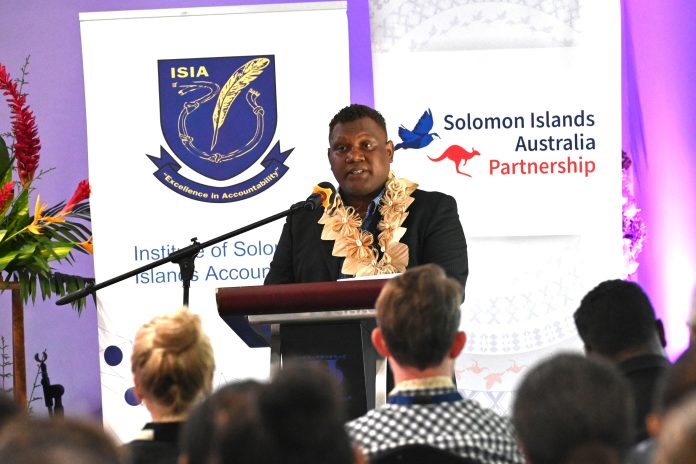
In his keynote speech during the recent ISIA Gala Dinner and Inaugural Accounting Awards, ISIA President Johnson Lobo outlined the Institute’s vision to become a stronger advocate for transparency and financial integrity in the Solomon Islands.

Speaking to a packed room of professionals, stakeholders, and government representatives, Lobo said the accounting profession plays a vital role in the country’s economic and social sustainability.

“It is not just about the technical expertise of accountants. It’s about how we use that expertise to make necessary changes in our communities and in society. That is where real impact lies,” Lobo said.

He expressed that ISIA will continue to push for higher standards and accountability mechanisms, particularly in a time when financial mismanagement and weak governance systems remain key challenges in national development.

Lobo described the 2025 ISIA Congress as a timely platform for dialogue, reflection, and learning, and urged members to carry forward the insights gained to drive change in their workplaces and communities.

“We must move from our comfort zones, challenge ourselves, and think outside the box. The principles of accounting are not just for businesses — they are essential tools for nation-building,” he added.

During the event, Lobo highlighted ISIA’s next steps, which include a greater focus on policy advocacy, continued professional development, and stronger collaborations with development partners and key institutions.

The announcement comes as ISIA launched its Inaugural Accounting Awards 2025, a milestone event aimed at recognising leadership, integrity, and service within the profession. The awards, proudly sponsored by the Development Bank of Solomon Islands (DBSI), puts the spotlight on individuals who have made significant contributions to the accounting sector.

President Lobo acknowledged the growing importance of ethical leadership in financial practices and said that ISIA is committed to cultivating a culture of responsibility and transparency at all levels.

“By ensuring transparency and accuracy in financial records and promoting accountability, we restore faith in leadership and build public trust,” he said.

The event also saw appreciation extended to long-time development partners, particularly the Government of Australia, for their continued support in strengthening ISIA’s institutional capacity and professional programs.

Lobo reminded members that the work of nation-building continues — and the accounting profession must lead by example.

For feedback, contact:[email protected]
‘Accessing water comes with a cost’

0

BY JOHN HOUANIHAU

Accessing water in homes or into a system to secure safe and clean water is not free.

Pacific Water and Wastewater Association (PWWA) Board Member and Secretary Ministry of Infrastructure, Cook Islands, Elisabeth Wright said this while acknowledging that the Pacific Islands have the blessing of getting water from the sky, streams and groundwater.

Wright said accessing it in homes is another thing.

“In my context in the Cook Islands, and I’m pretty sure this also applies to our other Pacific brothers and sisters.

“In the Pacific, we often hear that water is free; it comes from the sky. That is true, we are very blessed in that we do get our water from the sky, and it comes through streams as well as groundwater that we can access.

“Unfortunately, getting that water from the source into your home or into a system that you can go and turn the tap on and get that water is not free.

“So, this is one of the challenges our governments and utilities face. The taking of that water from the source into our homes or into places where our people can access the water. That comes at a cost,” said Wright.

She said that this is one of the reasons why the ongoing 9th Pacific Water and Wastewater Ministers Forum and the 16th Pacific Water and Wastewater are important.

 “I guess this is one of the reasons why this conference places such emphasis on elevating the status of water in our countries. With all the competing priorities that we have, sometimes, as a person who manages access to water in my country, we are not as highly prioritised as other sectors.

“But I tell you what, when there is no water, we suddenly become a priority,” she said.

For feedback, contact:[email protected]