Home Blog Page 299

History in the making – Finance opens office in Noro

0

BY BEN BILUA
GIZO

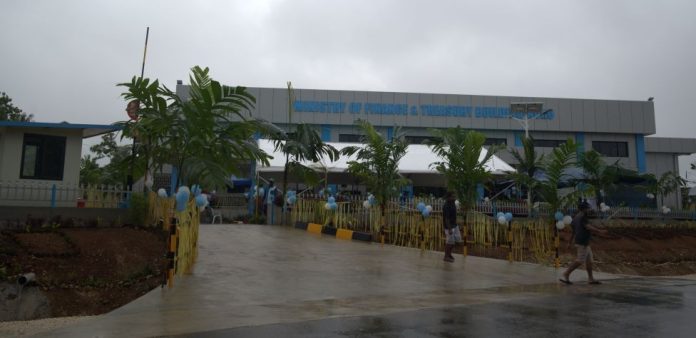
The Ministry of Finance and Treasury (MoFT) officially opened its office in Noro, Western Province on Friday, August 9, 2025.

Making history, this is the first ever MoFT office established in the provinces since Solomon Islands gained independence.

Minister of Finance and Treasury, Harry Kuma and Premier of Western Province, Billy Veo were given the honour to declare the stunning office building open.

Delivering his keynote address, Kuma described the office complex as significant milestone which reflects the government’s commitment to expand and bring services closer to the people.

He said MoFT is one of the essential agencies of government which provides strategic fiscal and economic advice to ensure the government implements its mandatory obligations and to drive economic development and growth forward.

“Today marks a remarkable day in history as a government province, the ministry and communities and business houses here in Noro and nearby centres. It is indeed a great pride and deep sense of responsibility that I stand before you today to officially open the new Minister of Finance and Treasury office here in Noro,” Kuma said.

He explained that the decision to build and establish MoFT office at Noro is to cater for the growing economic activities happening with Western Province.

Kuma said Noro commercial hub is crucial and that the establishment will support other sectors such as agriculture, fisheries and tourism to grow.

“Today you witness that government services have long been centralized in Honiara, creating obstacles for citizens in our provinces to participate in any forms of business activities in some of our provinces, like in our situation here in Noro, we have growing demand of government services, but our presence is very minimal.

“This is why, under the ministry’s corporate plan, we have committed to embrace this need by prioritizing targeted investment in service delivery closer to where the needs are.

“This new office is not just about infrastructure; it’s about empowering people and empowering our businesses to meet their plans.

“By bringing services closer to communities, we will enhance local participation, enhance regulatory responsibilities and promote inclusive decision making,” he said.

Kuma said, the completion and handing over of the MoFT office demonstrates that the government listens to and meets the needs of every citizen and business.

Veo acknowledged MoFT and Solomon Islands Government for recognising the need for the project and prioritising it.

“It is indeed another facelift to Noro, the country’s second industrial hub and very fittingly so,” he said.

Veo said, the facility is a significant investment that contributes in the development of Western Province and the country.

He strongly believes that the investment is wise as Noro hosts numbers of key investments and infrastructures with the growing need of customs and exercise, biosecurity, immigration and other services.

Veo said MoFT has led the way in infrastructure development to support its services in the provinces.

He calls on other government ministries to follow MoFT’s footsteps.

For feedback, contact:[email protected]

GP prioritises tourism industry

0

BY SAMIE WAIKORI

The Guadalcanal provincial government prioritises the promotion of tourism industry in the province.

This is one of the key sectors the provincial government encourages and is working on to benefit people in the province.

Premier of Guadalcanal province, William Atu recently highlighted the progress Guadalcanal province is making to promote the industry.     

“The Guadalcanal provincial government has made progress in promoting tourism by participating in regional events, supporting rural tour operators and developing a new tourism destination like nature and cultural tours.

“It has also begun community awareness programmes and is working to revive the Guadalcanal Tour Association and partner on projects such as the Bloody Ridge Peace Park,” he said.

However, the premier stated that key challenges such as; poor infrastructure, high transport costs, limited funding, understaffing and others still remain.

He admitted that these issues continue to hinder tourism growth and investment across the province.

Looking into the future, the Atu government plans to finalize tourism development plans by 2026-2027.

This will pave way for the establishment of Guadalcanal Tourism Council and strengthen partnership with stakeholders.

On the same note, the premier highlighted the need to increase funding and staffing to the province and improve access to remote areas to fully realise Guadalcanal’s tourism potentials.

He mentioned that Guadalcanal province still houses some of the most endangered and endemic species in the country.

“And they are still open to explore by tourists of different categories or people who are interested to see what the province has and can offer,” Atu said.

For feedback, contact:[email protected]

Solomon Islands needs its own bank: Wale urges government

0

By Irwin Angiki

The Leader of Opposition has called for the government to create a national bank for the country.

Matthew Wale made the statement in parliament on Monday concluding deliberations on the impact of the Bank of South Pacific’s (BSP) controversial policy which charged 1 percent on customers doing cash transactions $20,000 and above.

The policy, which took effect on June 28 this year, has since been revoked by BSP under directions by the Central Bank (CBSI), finance minister Harry Kuma told parliament.

BSP’s ‘greedy’ action to burden its own customers with such as costly fee is being seen as – going against the interest of Solomon Islanders and businesses, and a threat to banking in the Solomon Islands.

Solomon Islands is one of the lowest in the Pacific in terms of banking – only 30 percent of its population do banking, Minister Kuma told parliament, and cash handling is the main form of transaction.

Member of parliament for Small Malaita, Rick Hou told parliament he was concerned that BSP’s action will discourage people from engaging in banking, jeopardising “[all the efforts that Central Bank has done to educate and encourage the populace to bank their money]”.

Mr Wale said the lesson that can be taken from the BSP fee saga is that Solomon Islands needs its own local bank.

“This matter raises the need for this country to have its own national bank. Where we Solomon Islanders work in it, we run it, we are the biggest shareholders in it. BSP is majority owned by PNG.

“We must own a bank. Maybe DBSI to administer it. We must make it accessible in every province. We do need a national bank.

“The loss of a national bank has tied our hands as a government and our public policy responses. Of course, we must learn from the lessons of DBSI in the past.

“But that is not an argument to say we cannot have our own national bank. We must have our own national bank. It is very important, if we are going to be taking decisions to really grow this economy and make our ordinary people commit,” Wale told parliament.

Wale urged government to make a ‘legislative response’ to ensure such issues as BSP’s fee saga do not happen again.

“It does call for some legislative response. What will be government’s legislative response so that we don’t end up with the same situation.

“In the bank, they deal with money, and greed is the number one thing, they will charge you anything to erode your money that you put in the bank. We need to guard against that greed. Already it’s frustrating, just opening an account is so difficult. It has become so difficult to do banking now. And then they just charge you an arm and a leg,” Wale said.

“The level of profits of the bank is very high, has been for all these years, there is no justification whatsoever for these increases,” he added.

Of two locally owned banks which used to operate in the Solomon Islands – the National Bank of the Solomon Islands (NBSI) and the Development Bank of the Solomon Islands (DBSI) – only DBSI remains.

The retail bank NBSI, founded in 1951, underwent changes of ownership before it was wholly owned by Solomon Islanders after the Bank of Hawaii gave its 51 percent shares to the government in 2002. However, in 2007, NBSI was taken over by BSP. Before the BSP-takeover, NBSI was owned by – NPF (49 percent), NBSI Health and Welfare Trust (17 percent), NBSI Education Trust (17 percent) and NBSI Employees Trust (17 percent). BSP later expanded by acquiring the Westpac operations in the country.

The DBSI was established in 1977, and by 2003 it was insolvent due to ‘institutional and governance weakness’. Also, ‘development bank loans and credit repayment were plummeted by the ethnic tension’, a CBSI national financial timeline said. In 2020, following the DBSI Act of 2018, DBSI was relaunched.

Background to the BSP fee issue:

On June 28, 2025, BSP began charging one percent on cash deposits and withdrawals $20,000 or more, per day, per account.

The bank did not give any reason for this hefty fee. A notice on its website on May 28, 2025, simply told customers to expect this new rate along with other changes to take effect June 28.

Opposition Leader Wale criticised this move by BSP in a media statement on July 3.

The following week, several businesses reported feeling the pinch on their profits, with many complaining that they were not aware of BSP’s new fees.

One major local Honiara-based business told Island Sun that BSP’s new fee was eating away around $4,000 per day via cash deposits.

This was nearly half of their profit per day, the business owner told Island on condition of anonymity.

The company told Island Sun that it was considering laying off workers in response to BSP’s fee.

Other businesses also reportedly made similar ‘inconvenient’ adjustments to counter BSP’s new fee.

Some businesses reportedly responded by factoring the cost of BSP’s fee into their service and goods prices.

“We have marked up our prices for our products and service to cover this new BSP fee,” one business owner, who requested anonymity, told Island Sun.

Another business owner said they had begun depositing below the $20,000 minimum mark to escape the ‘one-percent penalty’.

“We now deposit below $20,000 to avoid BSP’s one-percent penalty. But, this is inconvenient since we have left-over cash takings and this accumulation will soon force us to consider a second account or bank,” the business owner told Island Sun, also on condition of anonymity.

In the Solomon Islands, transaction using hard cash is the norm. Digital exchanges is still far behind.

BSP’s new fee was projected to hit hard on people and businesses.

Wale, in his July-3 statement, described the increase as an unreasonable charge that will penalise legitimate economic activity of everyday Solomon Islanders.

“This is an unjustifiable fee on people simply trying to access or manage their own money. Many Solomon Islanders, particularly those in the villages, those running small businesses, schools, or churches, are forced to operate in cash. This fee punishes them for circumstances they did not choose.

“Many customers of DBSI are ordinary Solomon Islanders who repay their loans in cash. DBSI, who banks with BSP, will then be charged one percent for its deposits. If DBSI deposits $300,000 per day, it will be charged $3,000 per day. It is not hard to imagine how this will then affect DBSI interest rates. CBSI must clamp down on this,” Wale said.

For feedback, contact:[email protected]

PM Manele strengthens SI–NZ ties, advances Bina Harbour project

0

BY NED GAGAHE

Prime Minister Jeremiah Manele has strengthened Solomon Islands’ bilateral ties with New Zealand during his recent official visit where he held high-level talks and advanced key development priorities, including accelerating progress on the Bina Harbour Tuna Processing Project.

Speaking to local media during a press conference in Honiara on Friday, August 9, 2025, PM Manele described the visit as productive and encouraging, emphasizing New Zealand’s role as a “trusted development partner”.

He held bilateral discussions with New Zealand Prime Minister Christopher Luxon, Foreign Minister Winston Peters, and Oceans and Fisheries Minister Shane Jones.

The Prime Minister outlined several key areas of strengthened cooperation between the two countries, including fisheries and marine resource management, labour mobility expansion and support for RSE workers, education and youth development, climate resilience and security, as well as infrastructure and trade, particularly under the PACER Plus framework.

A major focus of the Prime Minister’s update was the Bina Harbour Tuna Processing Project, which he described as a “flagship initiative” under the Government for National Unity and Transformation (GNUT).

He said with donor backing including support from New Zealand, the project is expected to create over 1,600 jobs and inject an estimated USD 400 million into the national economy over the next 15 years.

“This will be a game-changer for Malaita Province and for the broader Solomon Islands economy,” PM Manele said.

Acknowledging growing public concern about the lack of visible progress on the ground, PM Manele said these concerns are valid.

“People have every right to ask questions, particularly when a project is continually referenced as a national priority,” Manele said.

However, he urges the public to appreciate the complexity of such large-scale infrastructure projects, citing challenges related to foreign investment, environmental safeguards, landowner agreements, and donor coordination.

He confirmed that the project is currently in a critical preparatory phase, which includes land identification, environmental and social impact assessments, stakeholder consultations, and the securing of credible investment partners.

The estimated cost of development stands at USD 202 million, covering infrastructure, utilities, and port connectivity. Financing is being pursued through highly concessional loans with terms of 30 plus years, interest rates under 1%, and 10-year grace periods.

PM Manele also confirmed that resources will be allocated for the project in the 2026 national development budget.

While in Auckland, the Prime Minister visited Sanford Limited, New Zealand’s oldest seafood company, to explore investment in fisheries and aquaculture.

He also toured the Port of Auckland to assess opportunities for maritime infrastructure cooperation and training partnerships with Solomon Ports.

He met with over 100 members of the Solomon Islands diaspora in Auckland, acknowledging their contributions and assuring them that their voices remain important to national development.

In Wellington, he met with private sector representatives and development agencies, where he expressed gratitude for New Zealand’s continued support in key areas such as climate change adaptation, early warning systems, infrastructure, education, and capacity building.

PM Manele concluded his address by reaffirming the government’s commitment to strategic partnerships that drive real, inclusive development.

“Whether through bilateral diplomacy, regional cooperation, or investment in infrastructure like Bina Harbour, our goal is to create opportunity, resilience, and unity in our nation,” he said.

For feedback, contact:[email protected]
Pacific must own its agenda: PM Manele

0

BY NED GAGAHE

Prime Minister Jeremiah Manele says the Pacific Islands Forum (PIF) remains the cornerstone of regional unity, cooperation, and collective action for Pacific peoples.

Speaking to local media on Friday, August 9, 2025 during a press conference, Prime Minister Manele said the Pacific region must always lead, drive and own their own agenda and not be distracted by divisive issues pushed by external media.

He said the world has changed, since the Forum was established more than five decades ago.

“We needed a fit-for -purpose regional structure that is aligned to today’s new realities, enhancing the region’s effectiveness, legitimacy to deliver on the region’s 2050 strategy,” said Manele.

He explained that the Pacific Islands Forum began the review of its regional architecture in four phases, beginning in 2024 by mapping out its regional architecture, its structures and processes.

He said phase two, looks at supporting a more coordinated collaborative, and coherent regional system; identifying systematic changes to strengthen the regional system.

Whereas Phase three is the rationalisation of the regional system and finalisation of the development of the Partnership and Engagement Mechanism with to support a fit for purpose regional architecture.

The Prime Minister said this is complimented by a High-Level Talanoa Group made up of the three sub region’s representatives, Samoa, Marshall Islands and Solomon Islands.

“Report will be delivered at the 54th PIFLM Phase 4 and will have the transition phase to implement reforms in 2026.” Prime Minister Manele said.

The 54th PIF Leaders Meeting will convene in Honiara from September 8 to 12, 2025.

This will be only the third time the Solomon Islands has hosted the Pacific Islands Forum Leaders Meeting, with the last occasion dating back to 1992.

While the event is primarily regional in nature, it also doubles as a major international gathering, with the country expecting to welcome up to 1,500 participants.

These will include high-level delegations from across the Pacific, as well as representatives from various international and regional organizations.

For feedback, contact:[email protected]

Noro to host PIF Leaders retreat

0

BY LORETTA B MANELE

Noro, popularly known as the “tuna town” in Western Province will host Pacific Islands Forum (PIF) leaders who will travel to Honiara in September for the 54th PIF Leaders Meeting.

Prime Minister, Jeremiah Manele gave a brief take on this during his press conference with local media representatives on Friday, August 8, 2025.

He expressed that it is good for the country to host leaders of such meetings in the capital but on the other hand, when they come to attend meetings like this, it is also a chance to bring them to see other parts of the country.

Manele said the PIF leaders will go to Noro for a retreat and during that time, they will also discuss issues in relation to the 54th Pacific Islands Forum (PIF) Meeting.

For feedback, contact:[email protected]

Come with a realistic timeframe: Lilo

0

BY LORETTA B MANELE

Central Honiara Member of Parliament, Gordon Darcy Lilo has urged the Prime Minister, Minister of Finance and Minister of Fisheries to come up with a realistic timeframe.

He made the call whilst speaking on the Bina Harbour project in parliament this week.

Initially, he stressed on the construction of a wharf, a project from the Fisheries ministry with an allocation of 30 million under the “2025 Supplementary Appropriation Bill 2025”.

According to the Minister of Fisheries and Marine Resources (MFMR), Bradley Tovosia said this project is one on its own, apart from the Bina Harbour project however both projects will compliment each other.

He stressed that the ministry’s allocation of 30million will go towards the construction of a wharf and jetties.

In relation to this, Lilo questioned when the construction of the wharf and jetties will take place.

“So, Prime Minister, Minister of Finance, Minister of Fisheries, can you come up with some kind of a realistic timeframe?” said Lilo.

Fisheries Minister, Tovosia in his response said the timeframe for the complete construction of the wharf and jetties lies between 2027 to 2028.

For feedback, contact:[email protected]
Wale supports mines ministry new lab initiative

0
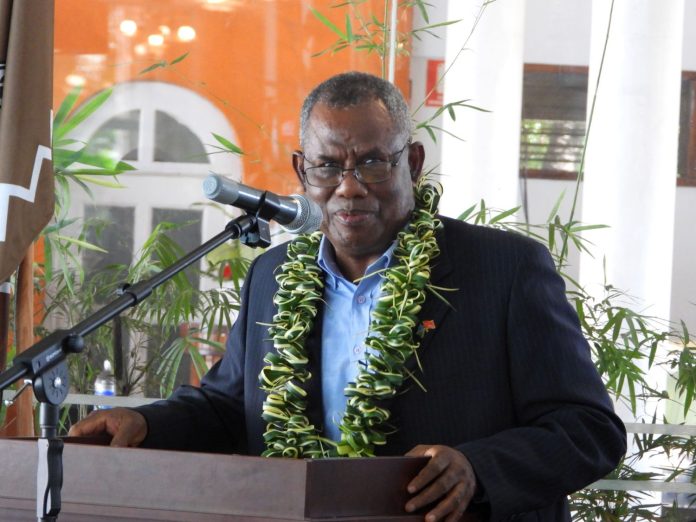
Leader of Opposition, Matthew Wale

BY LORETTA B MANELE

Opposition Leader, Mathew Wale has voiced his support of Ministry of Mines goal of having a fully operational lab.

Speaking in parliament on Thursday, August 7, 2025, he acknowledged the Minister of Mines and the government for allocating a serious amount of money under the 2025 Supplementary Appropriation Bill 2025 for what he referred to as a “very important” facility.

“Mining is, of course, on the cusp of taking off. We hope there’s more to come,” Wale said.

The Member of Parliament for Aoke/Langalanga pointed out that there are of course issues that still need to be addressed such as long-term governance, economic rent, issues with taxation and so forth.

He emphasized that these are issues that they must address otherwise mining will be worse than logging.

Wale said with a lab, it will help let them know what is being mined and taken out of the country.

“Last time when we had that discussion, I think end of last year or early this year, about bauxite at Rennell, they talked about what other minerals were being taken out, but we had very little idea.

“And we knew for sure, none of them were paid for.”

Wale then asked in regards to the lab operating at optimum levels, how they would ascertain the volume that is going out, the percentage or grade that is going out in associated minerals and any claims by the exporters or whether it’s economical or not economical in terms of values of the associated minerals.

Minister for Mines, Energy and Rural Electrification, Derrick Manu’ari stressed that having a lab is very important and a critical project.

He explained that at the moment, they don’t have the full capability of running a lab and the country is currently using a lab in Australia at a cost of $26,000 per annum.

“We don’t really have the full capacity at the moment,” said Manu’ari.

He noted that having a lab that is fully functional will help us to determine the value or components of minerals and will also give us more control over those minerals.

For feedback, contact:[email protected]

GP shows commitment to pay outstanding debt to SINU

0

BY SAMIE WAIKORI 

The Atu-led government of Guadalcanal province is making progress in paying the remaining $2.2 million outstanding debt to the Solomon Islands National University (SINU).

The debt accumulated since 2019, and so far $400,000 has been paid with another $1.4 million allocated to settle part of the remaining $2.2 million this year.

Premier William Atu mentioned this in a recent statement, in which he highlights the commitment of his government to address the matter.

“We are actively addressing our outstanding debt to the Solomon Island National University.

“Since 2019, under the Sade government’s leadership, $400,000 has been paid and this year we have allocated 1.4 million to settle the remaining $2.2 million.

“We start to pay it off. Our education division is working closely with SINU to verify the list of authorised sponsored students,” he said.

The premier also conveyed a sincere apology on behalf of the province to students who were affected from the delay of the in settling debt and thanks them for their patience.

He also encourages them and those studying at USP campus to remain committed to their studies as his government deals with the matter.

In the statement, the Premier also sheds light on the achievements and challenges the province is facing in terms of education.

“Education is a very strategic priority and Guadalcanal province has signed a milestone agreement with the Ministry of Education and Human Resource Development (MEHRD).

“I have the pleasure to also inform you that Guadalcanal province is the first to implement the Education Act 2023, through an agency agreement with the Ministry of Education and Human Resource Development, last month.

“The agreement gives us control over early childhood, primary and secondary education and other services for our teachers, with the provincial secretary, as the ultimate education provider for the province,” he said.

However, Atu urges the province to continue to do more. The current number of teachers in Guadalcanal province is 180 with almost 38,000 students.

“This means that the current teacher-student ratio is unsustainable. One teacher to every 210 students. While the ratio should be one teacher is to 35 students,” he said.

Atu added that another issue of concern is that only 25 percent of Guadalcanal province’s population under the age of 25 are in the education system.

He stated that his government has set a goal to increase this to 50% in the next five to 10 years.

Atu said to achieve this, the province must build more classrooms, train more teachers, prioritise science, technology, engineering and mathematics in education to prepare its children for the future.

For feedback, contact:[email protected]
GP eyes provincial hospital

0

BY SAMIE WAIKORI

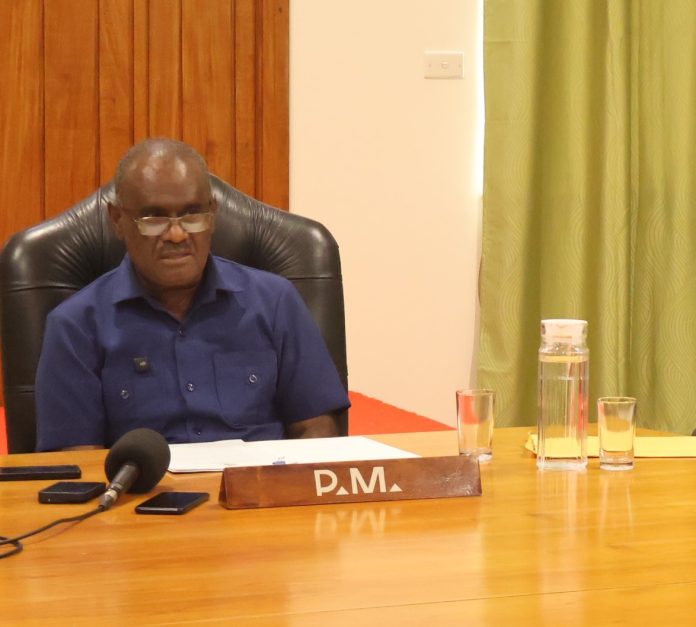
The Guadalcanal provincial government is planning to establish a provincial hospital.

In pursuit of the plan, the province has identified five hectares of land for the proposed hospital project.

According to William Atu, Premier of Guadalcanal, this demonstrates the commitment of his government to partner with the national government on the proposal.

“We will be working closely with key government stakeholders to establish a Guadalcanal provincial hospital,” he said.

Atu stated the province has a growing population and needs to establish a provincial hospital in the province, apart from National Referral hospital in Honiara.

He said the plan was shared with the delegation from the Opposition group during their recent visit to Guadalcanal provincial government, and they voiced supported behind it.

“We made an appeal when a delegation from the opposition group visited the provincial government.

“And I thanked the Leader of the Opposition for taking the matter to parliament,” Atu said.

He said populated provinces such as Malaita and Western provinces have their own hospitals and Guadalcanal, as one of the populated provinces must also have one.  

“My government is liaising with responsible government to explore potentials for the province to have a provincial hospital.

“Having in place the hospital will help a lot to ease the pressure on the national referral hospital,” Atu said.

In the meantime, Guadalcanal province recognises the challenges faced in delivering primary healthcare in the remote inland areas in the province.

He said the province is grateful that the challenge has been addressed though the Provincial Capacity Development Fund (PCDF) supported projects.

“Thanks to the PCDF programme and World Bank through the IEDRC for supporting a completion of a rural health centre in Tasimboko, benefiting over 10,000 people in the area.

“We also successfully reopened three of the nine closed clinics in the province to which many were closed due to land dispute and vandalism,” Atu said.

He mentioned that to address land dispute, his government is working to secure land titles of where the health facilities are located in the province.

Premier Atu also appeals to people in Guadalcanal province to respect clinics, schools and other public infrastructure which are established to help develop the province.

For feedback, contact:[email protected]