Home Blog Page 293

Pacific leaders to endorse labour mobility principles

0

BY BEN BILUA

Pacific leaders are preparing to endorse the Pacific Regional Labor Mobility Principles – a new framework that aims to protect the rights and wellbeing of seasonal workers across the region.

Pacific Islands Forum Secretariat’s Team Leader of Trade, Natalia Patternot, told journalists on Saturday, September 6, 2025 that the initiative marks a critical step forward in safeguarding Pacific islanders engaged in overseas labour programs.

“Now, as we all know, labour mobility—our Pacific people—they are not commodities. So there lies the critical development of these principles.

“It’s to ensure that labour mobility continues to contribute to meaningful and sustainable economic development, social protection, as well as regional cooperation,” she said.

Patternot explained that the principles are designed as a collective approach, agreed upon by leaders, to improve conditions and experiences for Pacific workers.

She highlighted how labour mobility in the Pacific has evolved over the years—from unskilled seasonal work to opportunities in semi-skilled and certified sectors such as meat processing and aged care.

Patternot also highlighted that employment terms have also shifted from a few months to medium-term contracts lasting up to four years.

She expressed that some countries in the Pacific are now shifting from being the sending countries to being the receiving countries.

“The conversation on labour mobility has evolved quite significantly over the past decade. It’s an important opportunity, but with opportunity also comes challenges.

“Those challenges include risks of discrimination, exploitation, forced labour, and unfair recruitment practices,” she said.

Patternot said the principles are grounded in Pacific values and provide a foundation for stronger worker protections.

The final decision, however, now rests with Forum leaders.

For feedback, contact:[email protected]

Australia boosts support for Solomon Islands climate action network

0

BY MORRIS NAFU

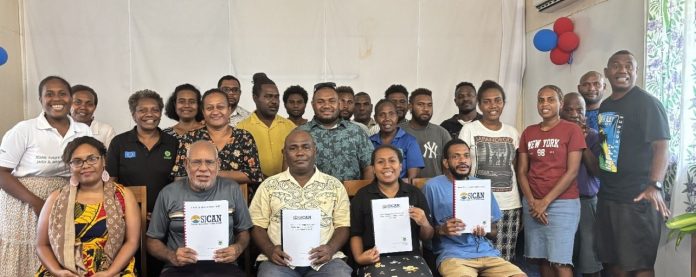
The Australian Government, through the Australian High Commission (AHC) to the Solomon Islands reaffirms its support for the Solomon Islands Climate Action Network (SICAN).

In a statement released on Friday, September 5, 2024, the AHC confirmed its commitment to strengthen SICAN’s programmes.

“Recently, SICAN members endorsed new organisational and governance policies, backed by Australian Government funding that aim to enhance transparency and good governance.

“These policies cover financial and assessment management, fraud and corruption controls, and human resources, ensuring SICAN can effectively amplify the voices of Solomon Islanders on climate change and build a resilient community,” the statement said.

Also noted is that Rod Hilton, Australian High Commissioner, highlighted SICAN’s vital role in addressing climate change impacts in the Solomon Islands.

“Australia is committed to supporting local climate action.

“It’s encouraging to see inclusive leadership and collaboration driving climate resilience here,” he said,” he said.

SICAN Coordinator Rodrick Holness expressed gratitude for Australia’s ongoing support, noting that the new policies create a strong framework for accountability, safeguarding, and operational excellence to guide SICAN’s future.

This support builds on Australia’s backing of SICAN’s participation in last year’s United Nations climate negotiations (COP29) in Azerbaijan, ensuring Solomon Islander voices are heard on the global stage.

Looking ahead, Australia and Pacific Island nations are jointly bidding to host COP31 next year.

If successful, it will mark the first time the annual climate talks are held in the Pacific, spotlighting the region’s unique climate challenges and bringing a Pacific perspective to the world.

For feedback, contact:[email protected]

US policy shifts put pressure on Tuna Treaty

0

BY BEN BILUA

Changes in the United States’ foreign policy have placed renewed pressure on the long-standing Tuna Treaty between the US and Pacific Island countries.

Pacific Islands Forum Secretariat’s Acting Director of Governance and Engagement, Salome Taufa, revealed this during her presentation at the Pre-Forum Media Training yesterday.

Taufa said the US Tuna Treaty remains a critical source of revenue for many Pacific nations, and disruptions to the agreement could have long-term consequences for small island states.

She said the Pacific region has been directly and indirectly affected when the US changed its policy.

Taufa said the issue had been raised during the Fisheries Ministers’ meeting, where members agreed to escalate the matter to the highest level for further deliberation.

She also highlighted efforts earlier this year to repair and strengthen relations with Washington.

“Early this year, there was a mission led by the Forum Chair, supported by the Secretary General, to the US. They had good meetings there. It was trying to reestablish and just trying to strengthen the relationship with the US. Of course, the U.S. Treaty was one that was on the agenda in trying to improve the relationship,” Taufa said.

She stressed that the Tuna Treaty is likely to feature on the agenda at the 54th Pacific Islands Forum Leaders’ Meeting next week.

The South Pacific Tuna Treaty, which was signed in 1987 and entered into force in June 1988, allows U.S.-flagged purse seine vessels to fish within the exclusive economic zones (EEZs) of Pacific Island parties in return for access fees and U.S. government assistance.

The treaty is seen as an effort to balance U.S. commercial fishing interests with Pacific nations’ sovereignty over their marine resources.

Sixteen Pacific Island nations are parties to the treaty, alongside the United States. These include Australia, Cook Islands, Federated States of Micronesia, Fiji, Kiribati, Marshall Islands, Nauru, New Zealand, Niue, Palau, Papua New Guinea, Samoa, Solomon Islands, Tonga, Tuvalu, and Vanuatu.

Over the years, the treaty has undergone several reviews. A major change came in 2016, shifting the framework to provide U.S. vessels with a set number of fishing days while allowing the U.S. to purchase additional access directly from Pacific states.

In March 2024, the U.S. and the Pacific Islands Forum Fisheries Agency (FFA) signed a new 10-year financial package following the expiry of the previous arrangement in June 2023. The agreement includes an annual $60 million contribution from the U.S. government, supplemented by industry fees, along with an additional $10 million in 2023 for economic development and climate change-related projects. The deal is set to run until 2033.

Despite this renewal, concerns remain over how shifts in U.S. policy may affect the stability and future of the treaty.

For feedback, contact:[email protected]

Sea ambulance to service Savo island handed over by China

0

BY IRWIN ANGIKI

More than 4,000 people on Savo island are set to benefit from a sea-ambulance donated by China to the Savo-Russell constituency.

The constituency received a fibreglass boat fitted with a 40 horsepower Yamaha engine and fuel tank yesterday during a lowkey handover at the constituency office at Ngossi, West Honiara.

This boat is to be used as an ambulance at the Panueli clinic on Savo island, transporting patients from communities, and also referral cases to the national referral hospital (NRH) in Honiara. With no roads on the island, the only mode of transport is by sea.

Constituency development officer of Savo-Russell, George Hassar said they had requested assistance from the Chinese embassy early this year to have a sea ambulance.

“The PRC Embassy responded immediately with $100,000 funds, but engines were out of stock thus the delay. But, when the engines were available this week, we purchased it yesterday, and today the handover,” Mr Hassar said.

Hasser says this is the first sea ambulance to be given to a clinic in the constituency, and they are looking forward to having each clinic in Savo-Russell own a sea ambulance.

“With this ideal, we are looking forward to more assistance from the PRC embassy through our partnership – to donate more sea ambulances to other clinics throughout the Savo-Russell constituency,” Hassar said.

Director Gu from the Chinese embassy in his keynote address said the Embassy is happy to give the donation which will help improve the daily life of the people and communities on Savo.

“I wish to express my special thanks to Hon Oliver Salopuka and his team, who helped our embassy’s communication with the local community, worked hard during the past few weeks and making today’s event happen in such as sooner, smooth and thoughtful manner,” Gu said.

Gu reiterated China’s willingness to help Solomon Islands modernise, adding that the embassy helped establish sister relations between the Central province, in which the Savo-Russell constituency is located, and Hubei province in China to further cooperation and development opportunities.

“Looking ahead, China is ready to work with you and all Solomon Islands people to further advance our friendship and cooperation between the two countries and bring more benefit to our two peoples,” Gu said.

CDO Hassar in his keynote conveyed the gratitude of MP Oliver Salopuka, the constituency and people of Savo-Russell islands to the people and government of China for the donation.

“We really appreciate your assistance for the purpose of the sea ambulance. A common medium of transport in our constituency is the sea transport. So, this assistance is more than we expect that will really help the livelihoods of our people.

“For so long, we don’t have any mini-hospital like other constituencies, we find it so hard to help sick people. We have to move them to Honiara in search of further treatment. That’s why we are so grateful for this help,” Hassar said.

CDO Hassar said one of the constituency’s long-term plans is for Savo-Russell to have a mini-hospital.

He adds that this can be possible through help from friends like China.

More sea ambulances will be distributed to other clinics in the constituency later, Hassar said.

Hassar explained that in the Savo-Russell constituency, there are only two main clinics – Panueli being the only one on Savo, and Yandina clinic on Russell islands.

The main challenge is transporting patients to these clinics via sea transport, which often are delayed and costly for the rural populace.

Furthermore, seriously ill patients requiring treatment not available at the clinic are referred to the NRH and require transport.

Hassar said with the donation, these challenges will be addressed on Savo island.

Operation of the sea ambulance is catered for by the clinic’s budget, which is supported by the Central province and the constituency.

For feedback, contact:[email protected]

Minerals bill to boost SI’s macroeconomic: CBSI

0

BY SAMIE WAIKORI

The Central Bank of Solomon Islands (CBSI) has projected that the Minerals and Resources Bill 2025 will have significant impact on the macroeconomic of the country.

Speaking before the Bills & Legislative Committee (BLC) on the Minerals and Resources Bill 2025 this week, Advisor Policy at CBSI Michael Fifiolo said the bill is important in terms of potentials it has on export proceeds.

Fifiolo said the bill will also boost balance of payment position of the country, trade position even the strength of local exchange rate.

“We need a lot of export proceeds back to the country, build-up of external reserves and fiscal revenues.

“The cap that export proceeds may not be repatriated back because of some factors have been understated by the industry, the country stands to lose because of deficiencies in our processes or inadequate capacity,” he said.

He stated that CBSI also acknowledges the need to look at its own exchange control processes by collaborating with responsible and appropriate government stakeholders.

“This is to ensure potential benefits which will be derived from mining industry are fully realized,” Fifiolo said.

On the same note, he said his team has looked through the bill and did not seem to see any mentioned of a Sovereign Well Fund except a mention of a Mineral Resources Special Fund.

“Given the fact that mineral is a non-renewable resource, its presence and opportunities for us to look outside of the box and come up with a facility that could generate inter-generational benefits is crucial.

“This is to ensure that income that flows from this resource can benefit our future generations.

“I’m not sure whether it can be accommodated in the bill or mentioned somewhere in the bill,” Fifiolo noted.

He said CBSI is not only looking at contributions from the mineral resources, but also from other resources the country has.

Fifiolo said nothing is too late and he hopes the idea to create facility that will benefit future generations will be looked into.

For feedback, contact:[email protected]

Mineral bill to establish basis for sustainable development of resources

0

BY SAMIE WAIKORI

The Minerals and Resources Bill 2025 is projected to establish a basis for sustainable development of the country’s resources.

Speaking before the Bills & Legislative Committee (BLC) this week, Deputy Secretary for Economics at the Ministry of Finance and Treasury, Mr Selwyn Takana said the bill has the potential to determine which resources can be managed and to ensure how resources are used without compromising the need of future generation.

“I believe that the mining sector is heading towards a much-needed sustainable path with the mineral resources bill.

“We want to see a sector moving forward from an outdated ad hoc system to a modern transparent and a competitive framework that sets to maximise national revenue, job creation, ensures environmental and social sustainability and most importantly supports the resource owners,” he said.

Takana also stated that the economic difficulty registered by logging and the slow recovery of service sector after the pandemic reminds us of the necessity to diversify our economy.

He added that this should be an economy that does not only take place in Honiara but creates jobs and opportunities all across the country.

“Also, an economy that represents resource owners, values the environment and is committed to a development process that does not leave anyone behind,” said Takana.

He mentioned that the new bill will allow us to shift the paradigm towards a mining sector that benefits many.

Moreover, Takana stressed that country needs to learn from its past and from the experiences of its neighbours to create a modern framework that sensifies investment job creation and growth.

At the same time, he said the country must also not give up its role as stewards of the land it inherited for future generations.

“Thanks to this bill, we will have stronger safeguard against mismanagement, stricter fiscal management of mining resources and more severe punishment against rule breakers.

“The public sector will have better tools to monitor mining activities to ensure transparency to reap their benefits.

“Also, investors will receive a stable framework, allowing them to plan ahead and contribute to reinvigorate our country’s private sector,” he said.

Takana said his team at the ministry has examined the new bill and have come up with list of suggestions, considerations and recommendations for BLC and parliament to take it into consideration.

“And with these modifications, I believe the bill will be more complete from the fiscal point of view, strengthening our ability to identify and avoid irregularities.

“Ultimately, our goal is to transform the resources that sit below our feet into healthcare, education and infrastructure improvement for all Solomon Islanders,” he said.

For feedback, contact:[email protected]

Last push for SARA

0

BY BEN BILUA

Far East Mining Company has injected more than SBD$40,000 in a final bid to convince landowners of San Jorge Island to sign the long-pending Surface Access Right Agreement (SARA).

The company met with members of the San Jorge Landowners Association yesterday with one key objective – to secure signatures for the SARA before the scheduled signing date on September 18.

Following the meeting, each Land Trustee reportedly received SBD$3,000 to facilitate consultations with their respective groups. The consultations are expected to take place next week in preparation for the official signing.

However, questions remain as to whether the SARA signing will proceed as planned, as tension continues to grow among landowners.

Some have expressed dissatisfaction with the level of support provided by Far East, claiming the funds fall short of what is needed to effectively conduct consultations.

“To facilitate consultation, we need to bring all our members to a designated meeting venue.

“This requires fuel, boats, engines, and meals to cater for participants. Our members are scattered across different areas, so bringing them together is very expensive.

“The amount given is simply not enough,” one landowner said.

Another landowner criticized the company’s handling of previous financial requests, accusing Far East of undermining landowner proposals and ignoring legitimate concerns.

“Our people have been fooled by this company, yet they fail to see the truth. It is sad to see that landowners are acting cheaply while the mining company enjoys the ride,” he said.

He also raised doubts about the company’s financial and technical capacity to carry out mining operations on San Jorge Island.

With just weeks before the proposed signing, uncertainty lingers over whether the agreement will materialize or collapse under mounting mistrust and division among resource owners.

Island Sun understands that Far East have been trying to sign the SARA since it set foot on San Jorge Islands in 2024.

For feedback, contact:[email protected]
‘Geopolitics brings benefits and challenges’

0

BY JOHN HOUANIHAU

Geopolitical influence is an ongoing topic of discussion for Pacific Islands Forum Leaders going forward.

Prime Minister Jeremiah Manele told local media on Wednesday this week that geopolitical influence is at play everywhere.

“In terms of geopolitics, geopolitical influence or competition is everywhere in the world, in all regions, it’s in Africa, in Europe, in the Pacific, and we are well aware of this; it’s not only this time around, it’s been there,” said PM Manele.

He said that there are both opportunities and challenges relating to geopolitics.

“Of course, as a region, we try our best. There are both opportunities and challenges relating to geopolitical competition for influence in the region, so as a region, we’ll navigate as leaders, the region will navigate to maximise the benefits that we can draw for the region and of course minimise or address the challenges,” he said.

He said that the issue of geopolitics is not an easy undertaking and needs a proper approach in terms of regional and national interests.

“It’s not that easy. It’s not that easy because sometimes we have to navigate and balance between regional interests and national interests, but as leaders within the region, we continue to discuss those issues and see where the region can benefit and see where the region can work together to minimise the risks going forward,” he said.

For feedback, contact:[email protected]

Minerals contribute $1.5 billion to economy

0

BY SAMIE WAIKORI

The Central Bank of Solomon Islands (CBSI) has reported $1.5 billion in proceeds from Minerals export from January to July 2025.

In terms of the country’s overall export, minerals scooped almost a quarter of the country’s export for this year.

Speaking before the Bills & Legislative Committee (BLC) on the Minerals and Resources Bill 2025 this week, Advisor Policy at CBSI, Mr Michael Fifiolo highlighted the critical situation faced by the country in terms of economic growth.

“Ideally, I would like to see economic growth sustain above the country’s population growth rate of around 2.4% to ensure sustain improvement in people’s living standard.

“With the anticipated decline in the forestry sector activities, the country is in the position where it has to look for alternative sources of growth,” Fifiolo said.

He noted that faced with the situation, the Minerals and Resources Bill 2025 is very important, as the mineral sector is considered to be one of the alternative industries to support and drive the country’s economy.

Fifiolo mentioned that over recent years, the mineral sector has offered numerous benefits like creation of job opportunities and increase of mineral export.

He added that this also includes taxes and royalties to landowners and provincial governments and spill of benefits to other sectors of the economy.

“Also, record up to July this year shows mineral export stands at 1.5 billion – an increase of 1.36 billion from last year.

“In terms of the overall export of the country, mineral export stands at almost a quarter of total export for the country.

“That comes mainly from gold, bauxite and nickel. Unfortunately, there’s also associate minerals we are not able to capture,” Fifiolo said.

Moreover, he highlighted some of the areas CBSI plays in terms of exports and why they see the bill as important.

Fifiolo said CBSI has close collaborations with the Mines Division and Customs & Exercise in terms of assessment of export applications.

However, he revealed that the challenges CBSI faced was their inability to verify the type and volume of mineral resources that been declared for export.

“From our stand point, we solely relied on Mines Division to do the verification to which they have the appropriate technical capacity.

“CBSI doesn’t do verification and that leaves us in a position that we can only accept what has been declared as the real export value.

“And on our side, the export will proceed and expect what will come back into the country under the exchange control act.

“Given the challenges, we hope the Minerals and Resource Bill 2025 would fill-in the gaps and address the issue,” he said.

For feedback, contact:[email protected]
‘PIF members need to align efforts’

0

BY LORETTA B MANELE

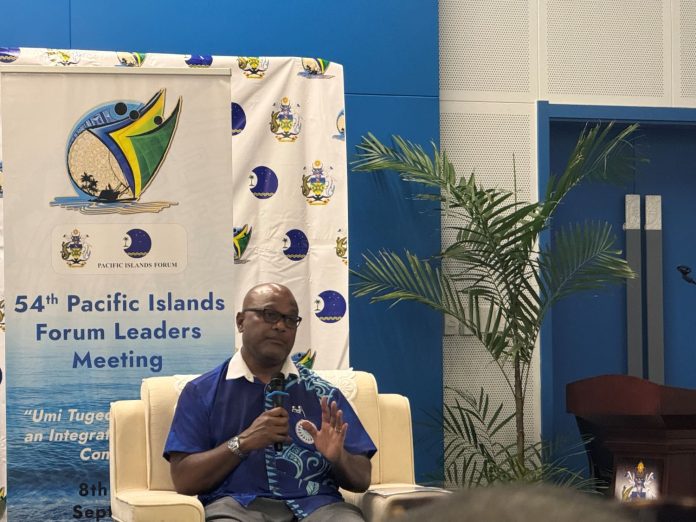
The Pacific Island Forum (PIF) has hinted at the need for member countries to align their efforts towards achieving collective goals.

If PIF members do not see alignment in their efforts at different levels, be it at the community, national, regional or global level, then it will always be difficult to work together more so, to achieve a common goal as a region.

PIF Deputy Secretary General, Esala Nayasi raised this when he spoke to regional and local media representatives at the three-day PIF Workshop which commenced on Friday, September 5, 2025 at the Forum Media Centre, Sports Stadium.

“If we do not see alignment in all our efforts at different levels, at community, at sub-national, to national, to sub-regional, to regional, to global, if these efforts are not aligned, it is always difficult to not only work together, but achieve a common goal as a region,” he said.

In relation, Nayasi said that in the last two years, they have gone through a review of the regional architecture in which leaders have set four pillars.

He explained that they are also looking at all the institutions in the region.

“So, we have regional organizations, we have international organizations, we have national initiatives, programs in the region, and also different stakeholders with different priorities. And you’ll understand how complicated it can be to align all these different efforts,” Nayasi said.

He added that it is obvious that in this case, you need to manage interest and expectations of each stakeholder.

Nayasi said there are four pillars that have guided their work in the review of the regional architecture.

He explained that the first one is the “political mandate of our leaders”.

“Political mandate of our leaders in relation to membership of regional organizations, membership of all different stakeholders that we have,” said Nayasi.

He mentioned that this also speaks to the importance of political governing bodies that govern each organisation.

“Likewise, multilateral organizations like the UN. Likewise, all the different organizations which were even part of the sub-national, national, sub-regional to regional level. And obviously, the global level,” said Nayasi.

He stated that the second pillar is to do with regional governance and pointed out that in terms of regional organisations, there are different governance mechanisms.

“There are different governing bodies that govern each organization,” said Nayasi.

The third pillar as stated is “institutional arrangements”.

Nayasi went on to say that the final pillar is “partnerships” and raised that PIF member countries cannot achieve goals, aspirations, national development plans and regional plans without effective and sustainable partnerships.

For feedback, contact:[email protected]