Home Blog Page 281

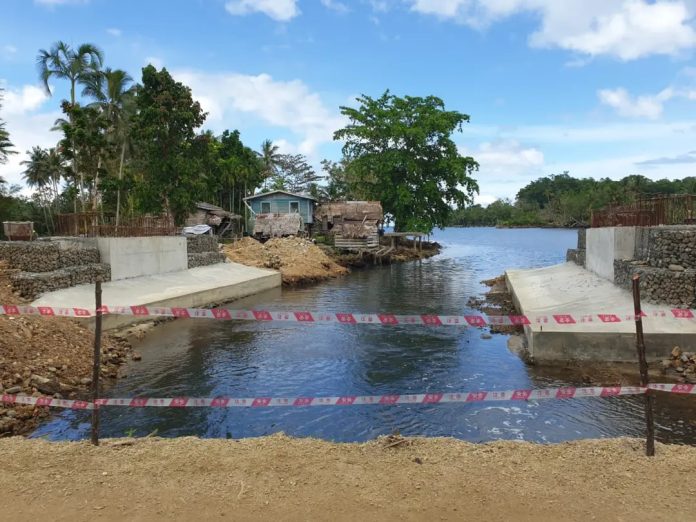
‘Passengers and market producers need permanent bridges’

0

By RODRICK DESURI 

AUKI 

Passengers and market producers of West Are’are and West Kwaio are yet to enjoy a smooth ride on their roads due to the broken Heo Bridge in West Kwaio, Malaita Province.

Bira Community Elder, Michael Larui, said that this has denied passengers, farmers, and producers the ability to travel and transport their produce to the Auki Central Market.

He said the broken Heo Bridge has also created a new shortcut road into the community, posing a danger to the children. 

“The Heo Bridge was broken, and a new road was created into the community. This has caused danger for the children and women in the community,” he said.

He added that the Fulo Bridge needs proper engineering as well to be fixed and the Kwari’ekwa River is also in need of a permanent bridge.

“Fulo Bridge in Ward 27 was built a few years ago but wasn’t used because of an opening on the side due to poor engineering by the contractor.

“Kwari’ekwa River in Ward 26, on the other hand, also requires a new bridge to be constructed and connected,” he said.

In the meantime, a media report stated that the construction work on the Su’u Harbour and Bira Bridges, which were constructed under the Second Solomon Islands Roads and Aviation Project (SIRAP2) and implemented by the Ministry of Infrastructure Development (MID), has been completed. 

Larui also mentioned that the completion of the Su’u and Bira Bridges isn’t solving the transportation issues there, as there are other bridges that still need urgent fixing.

For feedback, contact:[email protected]

‘Healthy foods lessen non-communicable disease cases’ 

0

By RODRICK DESURI 

AUKI 

Focusing on and engaging rural people in the agricultural sector is what can help to lessen and slow the rise of non-communicable disease cases in the country. 

The Member of Parliament for Kiritimati and Kanton in Kiribati, Teriba Tabe, stated in an interview with Island Sun Auki on Monday, September 15 that a greater focus on the agricultural sector can bring and provide many essential benefits to the lives of people and create a healthy environment. 

“Agriculture provides not only for our food security but also a source of income for rural communities and a source of healthy foods. 

“We have come to depend on imported foodstuffs, which have become the causes of many NCDs and are a major cause of diabetes and high blood pressure,” he said.

He stressed that the more people get engaged and put more focus on agricultural sectors, the healthier the population will be, leading to a healthier lifestyle.

“A healthy lifestyle contributes to a healthy population. A healthy population contributes to development, and any positive development will ensure there is economic growth,” he said.

According to a report by WHO last year, cardiovascular diseases account for most NCD deaths, with at least 19 million deaths in 2021, followed by cancers (10 million), chronic respiratory diseases (4 million), and diabetes (over 2 million, including kidney disease deaths caused by diabetes).

In the meantime, Hon Tabe said that in addressing the rise of social issues among youth in the country, it would be better to send them home and engage them in agricultural sectors.

He calls on the government to add value and set policies for the agricultural sector that suit and attract unemployed youth in the town back into the rural communities.

“Moving the youth back from town can address the current increasing social issues now seen in our towns,” he added.

For feedback, contact:[email protected]
‘Agriculture sector provides job opportunities’

0

By RODRICK DESURI 

AUKI 

The agricultural sector can create employment opportunities, provide food, and serve as a source of income for grassroots-level youth in the country. 

Member of Parliament for Kiritimati and Kanton in Kiribati, Teriba Tabe, said that the Solomon Islands is rich in agricultural products and needs to engage unemployed youth in agricultural activities. 

He stated that by doing this, the country can address the current surge in unemployment, food security, and economic growth. 

“Smaller Island States like Kiribati, Nauru, Tuvalu, and the Marshall Islands need a fresh abundance of agricultural produce like that of the Solomon Islands,” he said. 

He stressed that by adding and providing the right policies, the national government can attract unemployed youth into the country’s agricultural sector and address the increasing social issues in urban areas.

In spite of that, agriculture provides not only food security, but it also provides a source of income to rural communities and a source of healthy foods.

Tabe also emphasised that agriculture can slow the widespread dependence of people on imported foodstuff consumption, which has caused a high rise in non-communicable diseases in the country.

“The more focus engaged in agricultural sectors, the healthier foodstuff produced for the population, leading to a healthier lifestyle for people,” he said.

For feedback, contact:[email protected]

More meat workers off to Australia

0

BY NED GAGAHE

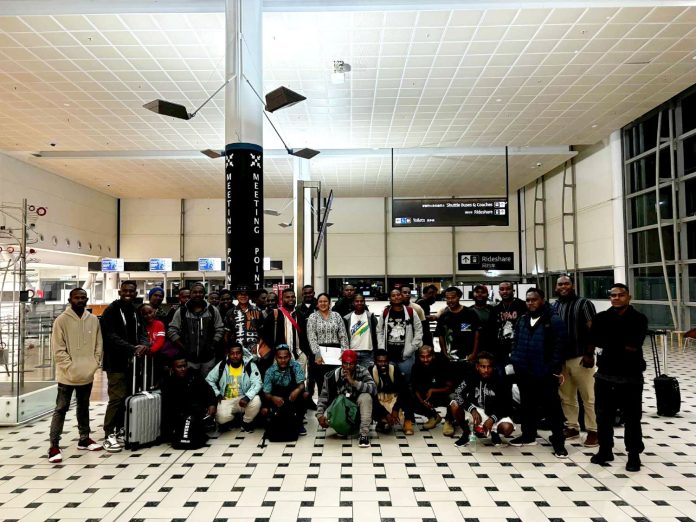
A fresh batch of local workers have jetted off to Australia this week, as labour mobility continues to change lives across the country.

Thirty Solomon Islanders have been mobilized under Nolan Meats and left the country on Monday for Queensland, Australia, where they will work at East Deep Creek on a four-year contract through the Pacific Australia Labour Mobility (PALM) scheme.

The Labour Mobility Unit (LMU) confirmed their departure and said the workers were officially welcomed on arrival at Brisbane Airport by Robert Sisilo, Solomon Islands High Commissioner to Australia, along with Consular General George Tuti.

“LMU through the Ministry of Foreign Affairs and External Trade would like to wish the workers well and success as they embark on a new chapter of their lives,” LMU said in a statement.

These meat workers are part of a growing wave of Solomon Islanders heading overseas for employment opportunities under the PALM scheme.

Earlier this year on June 26, Australia’s Minister for Pacific Islands Affairs, Pat Conroy MP, announced in Honiara that more than 10,000 Solomon Islanders have now worked in Australia through the PALM scheme.

“This is a huge milestone for Solomon Islands. The scheme is transforming lives – helping families build homes, send kids to school, and even start small businesses,” Minister Conroy said.

According to the Central Bank of Solomon Islands, local workers under the scheme sent home SBD475 million in remittances in 2024 alone, boosting family incomes and the national economy.

Minister Conroy acknowledged the deep partnership between Solomon Islands and Australia, saying the PALM scheme continues to bring positive change to rural and urban communities alike.

“The impact is real and far-reaching,” he said.

As more Solomon Islanders leave for Australia in search of opportunity, the Labour Mobility Unit continues to play a key role in preparing, mobilizing and supporting workers for the journey ahead.

For feedback, contact:[email protected]

Strong wind warning issued for Temotu, Makira and Renbel

0

BY NED GAGAHE

A Strong Wind Warning Number Four was issued by the Solomon Islands Meteorological Service (SIMS) yesterday morning, with the warning currently in effect for the waters of Temotu, Makira, and Rennell/Bellona Provinces.

SIMS has confirmed that a general easterly trade wind flow continues over the Solomon Islands, resulting in southeast winds reaching 20 to 25 knots in the affected regions.

Seas are expected to be moderate to rough, with moderate swells reaching up to 2.5 meters.

Authorities have urged residents and travellers in the warned areas to take precautionary measures, as these strong winds pose potential risks to lives, properties, and maritime travel.

Sea travellers are especially advised to take safety precautions, as hazardous wave conditions could be dangerous to small boats navigating in these waters.

SIMS has issued a reminder to share this warning with people, including those with disabilities, to ensure their safety is prioritized during this period of rough weather.

The next Strong Wind Warning will be issued at 4:00pm today, with updated information regarding the weather conditions.

In the meantime, all residents and travellers in the affected provinces are encouraged to stay informed and take necessary actions to stay safe.

For feedback, contact:[email protected]

Far East questioned

0

BY BEN BILUA
GIZO

FAR East Resource Company Limited has come under heavy criticisms for failing to meet some of the landowners demands.

This was following a meeting held early this month at Binaboli in Honiara.

Report reaching Island Sun states that the Far East Mining Company continues to downplay landowners demand for land negotiations and other required process.

According to the report, Far East administration is only interested in fast tracking the process to mine nickel at San Jorge Island.

Report states landowners are not convinced and unable to trust the company to make a good investment and good return for both the landowners and the country.

“This is a question that my tribe continues to ask. We have seen mining investors come and go in our land but from observation, Far East is not the suitable company that we want to partner with in the development.

“This company not only downplay our proposals but double down on series of attempts trying to obtain our consent without regarding our interest.

“I’m happy that my tribe have determined that we will not sign the Surface Access Right Agreement,” one of the landowners who wants to remain anonymous for his safety said.

At the Binaboli meeting, one of the landowners expressed his frustration accusing the San Jorge Island landowners Association of trying to sell the people’s resources at a very cheap price.

Allan Tavake, who owns part of the land at San Jorge was disappointed when Far East gave his tribe only SBD3,000.00 for consultation and negotiation before signing of the SARA.

According to Tavake, SBD3,000.00 is not enough for the job given that expenses to bring the tribes together and to feed the people supersedes the amount.

Tavake alleged that this is not the first time that the company has put less priority on landowners demands above their interest.

For feedback, contact:[email protected]
‘Australia proud to support RSIPF in Prosecutors qualifying course’

0

BY LORETTA B MANELE

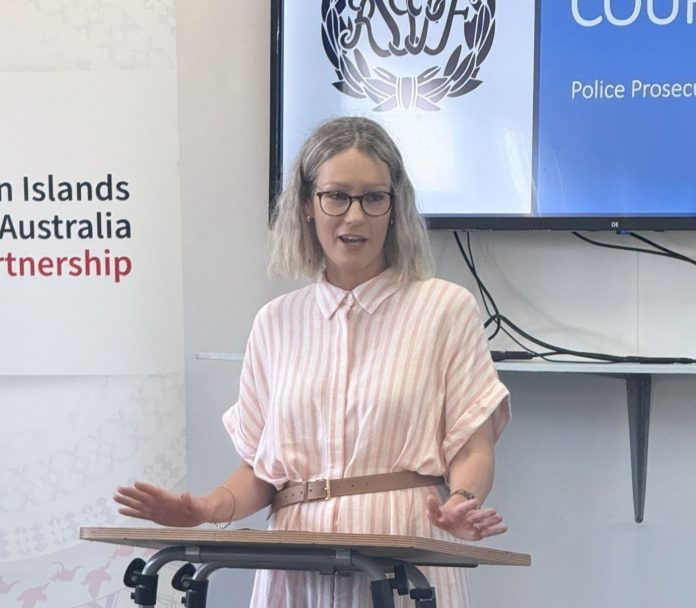
Australia is incredibly proud to support the Royal Solomon Islands Police Force (RSIPF) Prosecutors Qualifying Course says Councillor Nicole Smith of the Australian High Commission.

She was speaking at a ceremony held at Rove Police Headquater on Monday, September 15, 2025 to mark not only the reopening of the Prosecutors Qualifying Course but it’s first day, catering to 22 police officers.

This course was last conducted in 2018 and now it is being carried out again with funding support from Australia’s Department of Foreign Affairs and Trade (DFAT).

Smith expressed that Australis is incredibly proud to support the RSIPF with this course as part of the broader partnership between Solomon Islands and Australia.

She said they understand the important role prosecutors play in upholding the rule of the law and access of justice for all Solomon Islanders.

Moreover, Smith stressed that through their conversation with Rodney Wheatney, Director of Police Prosecution Department, they understand how challenging it is to build up a strong prosecution team.

“We talked a lot about a lot coming through. So, on the one part, that’s really positive.

“Because skills are built up and they are going through other parts of RSIPF. But I also appreciate the challenges of keeping and retaining staff,” she said.

Smith went on to stress that they also understand the challenges of supporting prosecutions across Solomon Islands and out into the provinces.

On this note, she highlighted that it is really fantastic that of the 22 police officers participating in the course, 12 of them came from the provinces.

“It’s really fantastic. And again, just demonstrates that Australia’s law and justice system really touches and is supporting across all nine provinces,” said Smith.

She stated that this is why Australia is committed to working alongside Solomon Islands police and it is not just in terms of training but in their ongoing efforts across law and the justice sector in Solomon Islands.

For feedback, contact:[email protected]
SARA signing tomorrow amid growing concerns over transparency and consultation

0

BY NED GAGAHE

The highly anticipated signing of the Surface Access Right Agreement (SARA) is set to take place tomorrow, September 18, 3pm at Bungusule Camp, with Far East Resources Company ready to formalize its agreement with the landowners of San Jorge Island.

However, as the clock ticks down to the signing, local community members are raising alarms over a lack of adequate consultation and awareness, calling for greater transparency before they commit to the agreement.

“I’m asking, why wasn’t there more awareness about this SARA? Why wasn’t it explained properly to our landowners, trustees, and communities before these formalities? The company seems only interested in securing the mining lease,” one concerned landowner commented, echoing growing frustration within the community.

Another local said, “This is wrong, why the rush to sign? We should have had a broader consultation and a real awareness session about what this SARA means for us.”

The signing ceremony will be attended by key stakeholders, including trustees, company representatives, landowners and government officials from the Ministry of Mines and Energy.

The event will begin with informal networking and an awareness session on topics such as Surface Access Rights, legal implications, and the roles of stakeholders.

Despite these efforts to inform the community, many residents remain unconvinced, with some questioning the company’s true intentions and capacity.

In a last-ditch attempt to secure signatures before the ceremony, Far East Resources has injected over SBD$40,000 to encourage landowners to sign the agreement.

The company met with the San Jorge Landowners Association in recent days, offering each Land Trustee SBD$3,000 to facilitate consultations with their groups, which will take place today.

However, the amount provided has sparked further discontent, with some landowners stating that the funds are insufficient to cover the high costs of bringing scattered members together for consultations.

Tensions have only escalated as community members accuse Far East Resources of disregarding their concerns.

There are also growing questions about the company’s ability to deliver on its promises. Some landowners have raised concerns about Far East’s financial and technical capacity to effectively carry out mining operations on San Jorge Island.

Despite the company’s best efforts to secure the agreement since its arrival on San Jorge Island in 2024, growing mistrust among the landowners casts doubt on the future of the project.

For feedback, contact:[email protected]
FAR EAST PLANS

0

Mining company trying to combine 2 prospecting licences under new proposed agreement

BY BEN BILUA

FAR East Mining Company is trying to consolidate two prospecting licences, PL-06/22 and PL-04/24, into a single project, according to document obtained by Island Sun.

These tenements are located in San Jorge Island, Isabel Province.

Under the new proposed deal, the previous rental fee of $50,000 per prospecting license will now be replaced with a single annual payment of $100,000 for the mining lease.

In addition, the company has agreed to pay a one-time sum of $40,000.00 as support and Association establishment fee upon signing of the agreement.

According to the proposed Surface Access Right Agreement [SARA] for a Mining Lease, landowners are set to benefit through quarterly surface rental and access fees.

The company promised to pay SBD100,000.00 every three months, with the first instalment due within 30 days of the agreement’s commencement.

Subsequent payments will follow every 90 days, deposited directly into a landowners’ trust account.

The SARA also outlines revenue-sharing measures in line with the country’s Mining Act. Three percent of the gross sales revenue from mining operations will be distributed between the government and landowners.

The specific breakdown will follow legislation or be determined through separate arrangements.

Furthermore, the company is required to make payments for ore shipments based on grade and tonnage.

According to the SARA, high-grade nickel ore (1.5 percent) will be priced at USD2.00 per wet metric ton, while low-grade nickel ore (greater than 1.5 percent) will be priced at USD0.50 per wet metric ton.

The proposed agreement clarifies that all relevant tax obligations tied to shipment payments will be borne by the landowners.

To further support local communities, the company will also pay a fee of SBD7,000.00 for each shipment.

This charge will cover the use of local anchorage facilities, ensuring safety standards and regulated vessel operations.

For feedback, contact:[email protected]

Bethesda DTSC calls for equity and inclusion in education funding, policy

2

BY CHRIS ALEX

The Bethesda Disability Training and Support Centre (DTSC), a special school in the Solomon Islands dedicated to educating and supporting children with disabilities, has made a strong appeal to the government and key education stakeholders to address long-standing inequalities in funding, training, and infrastructure for special education.

Bethesda DTSC provides critical services to students with physical, intellectual, and developmental challenges.

Despite their essential role in promoting inclusiveness and empowerment, special schools like Bethesda face significant disparities in government support compared to formal schools.

While formal schools benefit from larger student populations and greater autonomy in income-generating programmes, special schools often rely heavily on teachers to take on multiple roles, including fundraising and gardening.

Formal schools also receive significantly higher grants from the Ministry of Education and Human Resource Development (MEHRD), due to a funding model that prioritises student numbers and perceived capacity over actual need.

“Special schools are doing more with less. Our students face greater challenges, and our teachers carry heavier responsibilities with far fewer resources,” said Mr Baddley Kimmy Keretau, Deputy Principal of Bethesda DTSC.

He raised this during a recent Solomon Islands National Teachers Association (SINTA) Annual General Meeting at Honiara High School Hall.

Keretau expressed concern that disability education was overlooked during the AGM discussions. He called on MEHRD to:

-Recognize the unique contributions of special education teachers

-Clearly categorize their professional roles within the national education system

-Include special schools in national education policy discussions and advocacy

He thanked both SINTA and the Government (GNUT) for acknowledging his concerns and incorporating disability-related issues into their seven-point advocacy agenda.

Keretau also highlighted the lack of training and professional development opportunities for special education teachers. Unlike their counterparts in formal schools, special school teachers have limited access to government-funded scholarships and tertiary education programs. Currently, there are no special education programs offered by the Solomon Islands National University (SINU) or the University of the South Pacific (USP), leaving special educators under-supported and under-qualified despite the complexity of their roles.

In addition to education concerns, the health and safety of students in special schools remain at risk. Many students lack access to necessary health services, medications, and assistive devices. Health workers often lack the training to address disability-specific needs, leading to mistreatment or neglect.

Bethesda DTSC recommends that government health teams conduct annual visits to special schools to provide:

-General health check-ups

-Health education sessions

-Distribution of medications

-Assessments for assistive devices

“Annual health visits can prevent secondary complications and ensure the well-being of our students,” Keretau emphasized.

The physical environment of special schools is also a pressing concern. At Bethesda DTSC, dormitories are often threatened by flooding during the rainy season due to poor location and infrastructure. Emergency evacuations to school halls are becoming a frequent occurrence, highlighting the urgent need for safer, more accessible facilities.

Bethesda DTSC calls on MEHRD, SINTA, GNUT, and all relevant stakeholders to urgently:

-Review and reform the education funding model to ensure fairness and equity

-Support inclusive policy development that reflects the needs of students with disabilities

-Invest in infrastructure upgrades and staff training for special schools

“Let us move forward together, recognizing the unique needs and contributions of special schools, their students, and the passionate teachers who serve them,” Keretau urged.

For feedback, contact:[email protected]