
Home Blog Page 280

Director of Environment cautious but optimistic with draft mining bill

0

BY MORRIS NAFU

Joseph Hurutarau, Director of Environment and Conservation Division, from Ministry of Environment, Climate Change, Disaster Management and Meteorology (MECDM), is optimistic about the Mineral Resource Bill 2025, highlighting its potential to promote sustainable mining and environmental protection in the Solomon Islands.

Speaking at the Bills and Legislation hearing on Tuesday, September 2, 2025, he stressed that the bill’s success hinges on addressing its key weaknesses and risks.

“Theoretically, the bill supports sustainable and responsible mining practices in Solomon Islands.

“However, enforcement remains a challenge for all of us,” Hurutarau said.

He pointed to specific sections of the bill – Part 3 on mining prohibited and restricted areas, Part 9 on mine closure, and Part 10 on environmental protection – as central to its focus on safeguarding the environment.

Hurutarau also reminded lawmakers that exploration, prospecting and mining activities are classified as prescribed developments under the Environment Act 1998, requiring approval and consent through established processes.

With the Environment Act set to be repealed and replaced to strengthen safeguards, the bill must ensure alignment with environmental protection goals, including technical and scientific reviews, monitoring, and enforcement.

He also raised concerns about terminology in Part 3, suggesting that “mining protected areas” could be misleading and recommended clearer language such as “areas protected from mining”.

Hurutarau also calls for independent reporting and disclosure of mining operations, including tailings management and structural integrity, to ensure accountability.

The bill’s effectiveness, he noted, depends on several assumptions: clear identification and enforcement of protected areas, strong cooperation among government, communities, and private sectors, robust monitoring and oversight, and sufficient financial resources for implementation.

Hurutarau concluded by highlighting ongoing challenges namely; limited enforcement capacity due to financial and human resource constraints, low community awareness and technical knowledge hindering meaningful engagement, inadequate financial assurances from mining companies for rehabilitation, and a shortage of technical expertise to apply best practices.

As Solomon Islands moves forward with the Mineral Resource Bill 2025, these reflections from the Environment Division underscore the need for a strong, well-resourced framework to ensure mining benefits do not come at the expense of the nation’s precious environment.

For feedback, contact:[email protected]

US, Japan Honiara embassies echo ‘disappointment’ over deferment decision

0

BY IRWIN ANGIKI

Embassies of Japan and the United States have echoed shared disappointment over Solomon Islands’ decision to exclude dialogue and development partners from this year’s Forum Leaders meeting.

Solomon Islands, as chair for the 54th Pacific Islands Forum leaders meeting (PIFLM), had decided to defer the post-Forum dialogue which necessitates the attendance of the 21 Forum dialogue and development partners, which include China, Japan, the US and Taiwan.

Prime Minister Jeremiah Manele announced this deferment decision in parliament on August 6, drawing push backs reported by international and regional media from some of the partners including the US and Taiwan.

Notably, China has not, with its embassies in New Zealand, Tonga and Solomon Islands reiterating China’s respect and support for Pacific Island countries’ efforts for better development.

Some Forum member countries were also reported to voice disagreement, few threatening to pull out of the one-week meeting.

Palau’s President Surangel Whipps Jr said while he respected Solomon Islands’ position and accepted the deferment decision, he was not happy about it, Radio New Zealand (RNZ) reported on August 19.

Samoa’s caretaker Prime Minister Fiamē Naomi Mataʻafa told ABC Pacific on August 7 that Samoa would likely boycott the meeting.

The Guardian reported August 16 that Tuvalu’s PM Feletei Teo said his country may pull out, adding that he ‘would wait to see how other Pacific leaders respond before deciding whether or not to attend the forum’.

PNG PM James Marape told PMN he had advised PM Manele in a letter to ‘stick to the spirit of the regional architecture isolating personal bilateral preferences. Manele denied this at a local press conference on August 8.

New Zealand’s Prime Minister Christopher Luxon told RNZ he would rather there were no changes to the status quo.

A US state department spokesperson said the US was ‘disappointed’ by the exclusion and supported ‘continued attendance of all PIF partners, including Taiwan, at the annual PIF Leaders Meeting’, Reuters reported on August 7.

In Island Sun’s combined interview with the US and Japan embassies on August 28, US Chargé d’affaires to Solomon Islands Dan O’Hara reiterated this:

“The United States was very disappointed by this, this decision to exclude dialogue and development partners from the PIF leaders meeting this year. We support the continued attendance of all PIF partners, including Taiwan, at the annual PIF leaders meeting as previously agreed by PIF leaders in 1992, here in Honiara.

“And all those partners, development partners and dialogue partners, Taiwan included, in line with that 1992 consensus, should be invited to participate regardless of where the PIF is hosted.

“Now, that said, as a PIF dialogue partner, the United States appreciates the important role PIF plays in setting the region’s priorities and engaging with external partners on issues of shared concern. We remain committed to engagement with the Pacific Islands and deepening our partnerships with the Pacific Islands Forum and bilaterally with the countries in the Pacific to support a free and open Indo-Pacific region. And we remain honoured to be a founding PIF dialogue partner.

“Changing status quo on partner participation in PIF raises questions about possible influences of outside partners.”

Japan’s Ambassador to Solomon Islands, His Excellency Keiichi Higuchi, echoed the sentiments, saying:

“We were also disappointed to hear that we would not be invited to the Honiara Summit. In fact, we had hotel reservation and all that. So when I reported to Tokyo that you’re not invited, they were very disappointed.

“We also believe that Taiwan should be invited, as has been done before. I’m not going to talk too much into geopolitical side of it, but we do appreciate the fact that PIF has invited Taiwan all along since 1992 communique. So that’s a disappointment.

“That said, we do respect the collective will of PIF members. So once that collective will was made to defer this dialogue meeting with dialogue partners or development partners, we respect that and we hope that unity among the PIF is not broken.

“And we look forward to contributing in the future, not in September, during the September meeting, but after the September meeting. So whatever deferred meeting, we look forward to participating in that meeting at a later stage.”

China rejects allegations

The root of the deferment saga has been blamed on geopolitics, with some commentators associating it with China’s continued attempt to isolate Taiwan diplomatically. China refers to Taiwan as its province.

Opposition MP Peter Kenilorea Jnr told parliament last month ‘this issue is all about China and Taiwan’.

Other Pacific leaders have also weighed in on this with indirect remarks blaming ‘outsiders’ for this rift.

China has refuted these allegations.

Global Times reported on August 14 that the Chinese embassy in New Zealand rejected these ‘groundless accusations’ and that ‘as a dialogue partner of PIF, China respects the Forum’s role in regional cooperation, values its relations with the PIF, and welcomes opportunities to work with PIF members and other dialogue partners how to support the development of Pacific Island developing countries under the Forum dialogue mechanism’.

Looking forward to a successful PIFLM

As of this week, all 18 PIF member countries are confirmed to participate in the PIFLM, which begins Monday next week, Sept 8-12.

Chairman of the Local Organising Committee for the PIFLM, Sir Dr Jimmie Rogers made the confirmation at a talkback show on SIBC Monday this week.

Rogers said that 17 leaders have confirmed attendance, with the exception of Samoa which has just held its elections on Friday last week.

He said they are expecting feedback from Samoa this week.

Rogers however reiterated that Samoa will attend.

The Pacific Islands Forum leaders meeting is the region’s peak political gathering.

The members of PIF are Australia, Cook Islands, Federated States of Micronesia, Fiji, Kiribati, Marshall Islands, Nauru, New Caledonia, New Zealand, Niue, Palau, Papua New Guinea, Samoa, Solomon Islands, Tokelau, Tonga, Tuvalu, and Vanuatu.

According to the Forum website, the 21 dialogue partners are:

Canada (1989), France (1989), Japan (1989), United Kingdom (1989), United States of America (1989), People’s Republic of China (1990), European Union (1991), Republic of Korea (1995), Malaysia (1996), Philippines (1999), Indonesia (2001), India (2002), Thailand (2004), Italy (2007), Cuba (2013), Spain (2014), Türkiye (2014), Germany (2016), Chile (2021), Norway (2021) and Singapore (2021).

The five founding Dialogue Partners were Canada, France, Japan, United Kingdom and the US.

Taiwan although missing from PIF’s official list of dialogue partners is considered one especially by its three remaining diplomatic partners – Tuvalu, Palau and the Republic of Marshal Islands.

Palau is set to host next year’s 55th PIFLM.

For feedback, contact:[email protected]

A historic run through the heart of Solomon Islands’ WWII legacy

0

BY CHRIS ALEX

The Fly Solomons Peace Marathon 2025 successfully combined sport, history, and culture, offering participants a truly unique experience.

This year’s marathon was significant as it allowed participants to explore not just the stunning landscape of the islands, but also deep historical World War II sites that have shaped the nation’s legacy.

Managed by Travel Solomons, the event offered runners a range of distances suited to all levels, from the challenging 42 km Marathon to shorter, but equally scenic, distances including the 21 km, 10 km, 5 km, and 2 km races. However, what made the 2025 edition of the marathon truly special was its integration of historical and cultural landmarks along the route, providing a poignant and enriching experience for all participants.

As the runners took to the courses, they traversed some of the most iconic sites from World War II, including the Tenaru Field Hospital, Alligator Creek, and Henderson Field.

According to Travel Solomons, the marathon reached its emotional climax at Bloody Ridge Hill 1, a significant battleground during the Battle of Guadalcanal, where the runners paused at the Holy Grounds, a solemn reminder of the sacrifices made during the war.

This year’s event was graced by a group of 10 international guests, nine of whom were runners, from the Globe Trotters Running Club. Their participation not only elevated the event’s international profile but also underscored the global appeal of the marathon.

The international runners were treated to a Pre-event Historical Highlight Tour, which took them on an immersive journey through the course’s historic landmarks. This tour allowed the participants to better appreciate the significance of each site, bringing a deeper sense of meaning to the marathon route.

The event’s focus was not just on physical endurance but also on commemorating the peace and unity that the islands have embraced in the years following the war.

The marathon has become an annual symbol of healing, and drawing attention to the incredible resilience of the Solomon Islands’ people.

It also plays an essential role in supporting the country’s tourism sector by highlighting its rich history, stunning natural beauty, and vibrant culture.

Locals and expatriates alike were thrilled by the diversity that the event fostered. The race served as a celebration of the nation’s enduring peace and a reminder of the international support and solidarity that helped shape the island’s future.

As the event’s organizer, Travel Solomons continues to play a key role in promoting Solomon Islands as a premier destination for cultural and historical tourism.

By integrating World War II historical sites into the marathon route, the company has helped raise awareness about the importance of preserving these sites while also making them accessible to visitors worldwide.

For feedback, contact:[email protected]
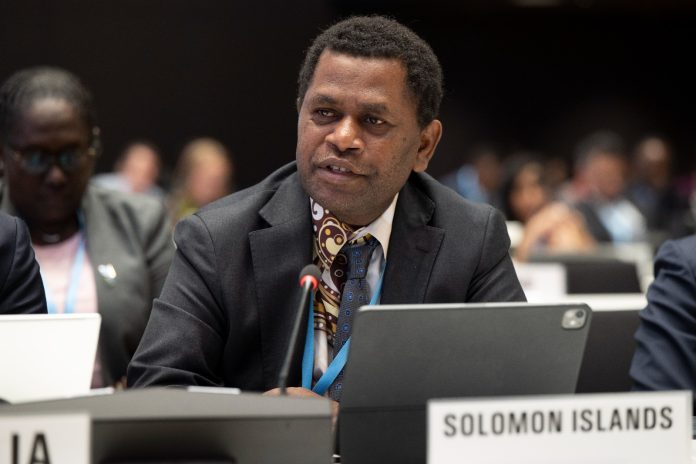
Wale urges stronger heritage safeguards in mineral resources bill

0

BY NED GAGAHE

Opposition Leader Matthew Wale calls for stronger safeguards to protect Solomon Islands’ cultural and world heritage sites under the proposed Mineral Resources Bill 2025, warning that economic development must not come at the cost of the nation’s identity.

Speaking during the Bills and Legislation Committee Hearing on Tuesday, September 2, 2025, Wale questioned officials from the Ministry of Culture and Tourism on whether their submission to Parliament included measures to address the protection of cultural heritage sites from mining-related risks.

He advised the ministry to draw on lessons from Papua New Guinea, noting that in East Rennell, heritage site listings had slowed down or complicated the granting of bauxite mining licenses.

“If we have a cultural heritage site, or even a world heritage site like Lake Tegano, will this Bill give the level of protection needed so that no activity puts it at risk?” Wale asked.

In response, a ministry official acknowledged that East Rennell lacked national legislation to protect Tambu sites, with reliance instead on provincial ordinances.

Despite these efforts, sites still sustained damage due to weak legal frameworks.

He said this highlights the urgency of passing a National Heritage Bill, which is currently before the Attorney General, and stressed that heritage protection should be integrated into the new Minerals Bill as an “umbrella framework” to regulate destructive industries such as mining.

“There was no national legislation. That is why I am pushing for a National Heritage Bill. This is an opportunity to put that component into this Bill so that development, especially mining, does not destroy what is important to us,” the official said.

Wale welcomed the ministry’s input but pressed for a detailed written submission that sets out policy goals and, where possible, draft wording for amendments to the Bill.

He said Parliament must ensure that communities and heritage sites are safeguarded, stressing that cultural identity cannot be traded away for resource exploitation.

“We do need to understand the social and cultural impacts. We don’t want to gain the whole world and lose our soul. Our culture is part of who we are, and this Bill must reflect that,” Wale told the hearing.

The Committee will continue its hearings on the Mineral Resources Bill 2025, with submissions from stakeholders expected to shape in its final recommendations to Parliament.

For feedback, contact:[email protected]
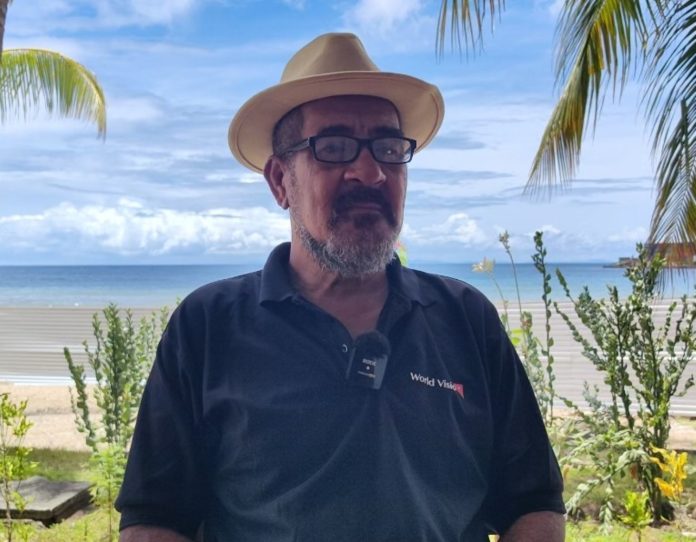
It comes back to the Gov’t: Tuki

0

BY JOHN HOUANIHAU

Member of Parliament for Temotu Vatud, Freda Tuki, said that the success or failure impacting people’s resources is dependent on the decisions made by the Government.

She expressed this viewpoint while discussing the government’s ‘below six feet’ mining policy, which was brought up by Opposition Leader Matthew Wale.

Mr Wale introduced the ‘below six feet’ mining policy during the recent hearing of the Bills & Legislation Committee (BLC), where representatives from the Ministry of Mines, Energy & Rural Electrification (MMERE) and the Legal Draftsperson were present.

Wale said that this legislation is an outdated and unbalanced monarch law that continues to disadvantage indigenous landowners, especially those residing in the Gold Ridge area.

Expressing her concerns, Ms Tuki said that it has become evident that landowners have consistently voiced concerns regarding their benefits from the resources they possess.

She emphasised that the Government, along with the responsible board, should establish specific and clear conditions under which benefits are to be shared, ensuring that all parties involved in resource extraction for economic purposes can gain.

“The resources are owned by the state, but the land on which these resources are located belongs to the landowners. Currently, we are aware that the landowners are unhappy,” she said.

She said that there is a necessity to either amend existing laws or to consider and provide conditions that the government or the board should deliberate upon.

“Instead of stating that it is dictated by colonial law, it is we, the Government, who have the authority to amend the laws for the improvement of our people. This means changing the law to acknowledge our landowners due to the resources found on their lands,” Tuki said.

“For instance, in the logging sector, the government receives 25%, while landowners receive only 10%, which is not reasonable,” she added.

She said Solomon Islanders are the rightful owners of the resources, and there exists a need to modify these colonial laws to better align with the needs of Solomon Islanders.

For feedback, contact:[email protected]
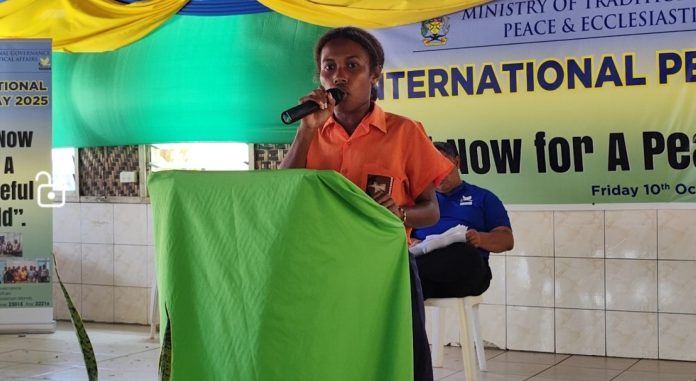
Japan’s response to WWII remnant ongoing

0

BY JOHN HOUANIHAU

Japan’s Ambassador to Solomon Islands Keiichi Higuchi has reassured that Japan’s commitment to assist in monitoring and clearing unexploded ordnance (UXO) in the Solomon Islands is ongoing.

He explained that Japan responds to the Solomons’ requests based on local needs.

“When it comes to economic assistance, including how to handle UXO, it’s not our style to impose something on the recipient country, but we first listen to what’s really necessary or what’s needed for whatever purpose of the economic assistance. And that same thing goes for the UXO,” he said.

Under the UXO effort, Japan provided a Landing Craft to the Ministry of Police, costing 120 million Japanese Yen (around SBD6.6million), after it was signed by then-foreign affairs minister Jeremiah Manele and the former Japanese Ambassador, HE Miwa Yoshiaki on May 17, 2023 in Honiara.

Japan also allocated SBD6,239,500 for Unexploded Ordnance Disposal in Central and Western Solomon Islands under the Grant Assistance for Grass-Roots Human Security Projects (GGP) programme.

In terms of collaborating with international organisations under the Programme in the fiscal year 2024, UNDP, expiring on March 31, 2026, Japan will enhance the National Unexploded Ordnance (UXO) Programme in the Solomon Islands.

Under this programme, Japan also conducted an environmental assessment for the establishment of a coordination office for the disposal of UXOs costing 79,107,000JPY (around SBD4.4million).

Five staff members of the Ministry of Defence of Japan conducted training for the staff of the EOD Team of RSIPF for capacity building and raised awareness among the public from January 23-31, 2024.

From February 3-14, 2025 under the programme, six staff members of Japan’s Ministry of Defence conducted training to the staff of the EOD Team on the knowledge on UXOs produced by the military forces of Japan and Allied nations, and training of public awareness for the staff of the Ministry of Culture and Tourism.

Among the assistance Japan has provided for effective work relating to UXOs;

– 1 Pneumatic shovel (CAT) costing SBD$2,630,000

– 2 all-terrain cart (KAWASAKI) SBD$298,000

– 1 station wagon (Land Cruiser- Toyota) SBD$358,000

– 2 Pickup truck, single cabin (Toyota) costing SBD$746,000

– 2 Boat (Y-SATO MARINE) costing SBD$418,000

– 2 Storage boxes for explosives (Port shipping containers) costing SBD$47,700

– 1 Fire extinguisher (Busfire store) costing SBD$29,800

The list of items that are yet to be provided includes various attachments for pneumatic shovels (CAT) costing SBD$364,000, storage containers for explosive materials (Port shipping containers) SBD$239,000 and storage for explosive materials costing SBD$567,000.

For feedback, contact:[email protected]
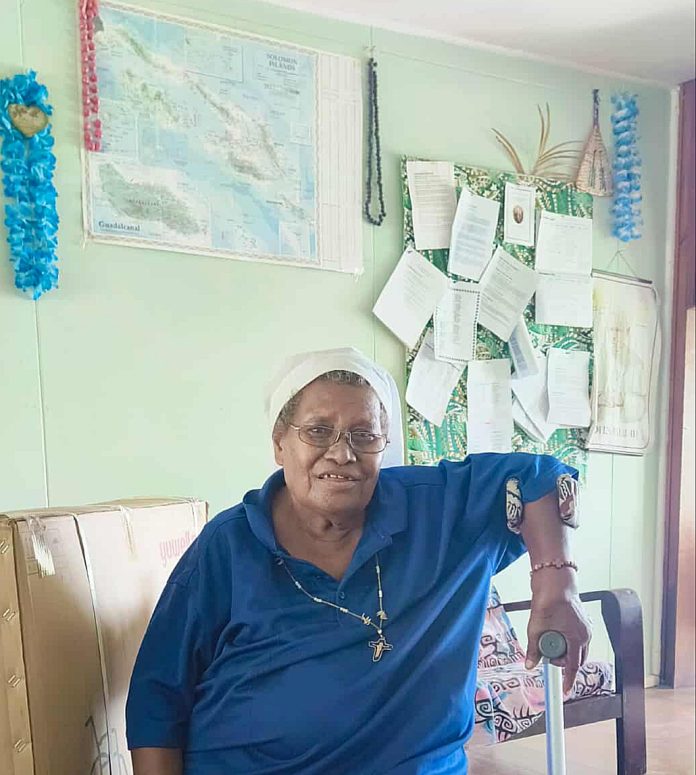
War legacies critical component of SI and US bilateral relationship

0

BY JOHN HOUANIHAU

War legacies, more broadly, are a critical component of the Solomon Islands and United States bilateral relationship.

US Embassy Chargé d’affaires in Honiara, Dan O’Hara, said this when responding to the question of repatriation of families of Solomon Islanders who have died from World War II UXO, or the victims who have survived.

Speaking in an exclusive interview, Mr O’Hara said that the US has been and remains committed to identifying and remediating UXO here in Solomon Islands and other countries.

“We have to work together with any receiving country. And we call it receiving and sending countries under the Vienna Convention. So here in Solomon Islands, the United States is the sending country, and Solomon Islands is the receiving country,” he explained.

Known as the “treaty on treaties”, the VCLT establishes comprehensive, operational guidelines, rules and procedures for how treaties are drafted, defined, amended and interpreted.

According to O’Hara, the US has to work with receiving countries on war legacy cooperation around the world.

“And here, at a specific request from the Solomon Islands government a little over a decade ago, we’ve been prioritising the UXO.

“In the past decade, it’s an example of true partnership between our countries on this UXO priority, and it’s the foundation of future cooperation on a range of UXO or war legacy issues.

“And that UXO contamination, again, is a big, big, big piece of that. That’s why the United States is the single largest funder of humanitarian UXO clearance work worldwide, globally, across the world. Nobody funds UXO work around the world more than the United States does. We are the largest donor to humanitarian mine action globally, full stop,” O’Hara said.

He emphasised that the US has been working with governments to make progress on their priorities.

For feedback, contact:[email protected]
Australia signs local company to build Malu’u market

0

BY MORRIS NAFU

Market vendors in and around Malu’u, North Malaita, are set to benefit from a brand-new market house following the signing of the project in Auki last week.

At the signing ceremony held on Friday at the Malaita Provincial Government Assembly Chambers, Australia engaged local contractor Exodus Trade Development to build the new Malu’u Market.

This move is expected to create more local jobs and deliver a high-quality, welcoming space for the community, a statement by the Australian high commission yesterday said.

Australian High Commissioner His Excellency Rod Hilton praised the rapid growth of the Solomon Islands construction sector and its increasing ability to deliver Australia’s extensive infrastructure support across the country.

Designed in close consultation with local communities and the provincial government, the new market will accommodate up to 140 vendors, the high commission statement said.

It features 40,000 litres of water storage, solar lighting, improved waste management and sanitation, and is built to be climate-resilient.

Mr Hilton highlighted that all provincial markets funded by the Australian-backed Solomon Islands Infrastructure Program are designed with vendors and community needs at heart.

The new Malu’u Market, like the Seghe and Buala markets currently under construction, will be inclusive and accessible — with wheelchair-friendly toilets and showers, low-height benches for selling produce, separate facilities for men and women, and a parent’s room for nursing mothers.

“Markets are vital community hubs where people come together to buy and sell produce, helping families cover school fees and other expenses,” he said.

Malaita’s Provincial Minister for Finance and Administration, Lemuel Kevianga expressed gratitude for Australia’s ongoing support, describing the contract signing as a symbol of the strong partnership and shared vision between Australia, Solomon Islands, and the people of Malaita.

“Australia’s approach empowers our people and strengthens our economic foundation.

“The new market will provide a safe space for women and children, boost food security, and encourage local economic activity,” Kevianga said.

Australia has already funded a temporary market nearby, with the old market house demolished to make way for the new permanent facility.

Photo: Australian High Commission (AHC)

For feedback, contact:[email protected]

Urgent repairs underway on Mbokona Bridge

0

BY MORRIS NAFU

The Ministry of Infrastructure Development’s Transport Infrastructure Division has deployed local contractors to carry out urgent repairs on the lower bridge at Mbokona.

This bridge, a longstanding fixture in the community, has aged and requires immediate attention, said a MID Facebook post on Tuesday, September 2, 2025.

To ensure traffic can resume safely, MID deployed local contractors to the site to reinforce the structure ensuring safe passage of vehicles yesterday.

The repair team is currently on-site, working swiftly to reopen the bridge and restore normal traffic flow as soon as possible.

The Ministry apologises for the sudden closure and any inconvenience caused to residents and road users in Mbokona.

Meanwhile, routine maintenance on this road section is ongoing, with AP & S Construction handling works to maintain safety and durability, the MID statement said.

Earlier, the Community Access and Urban Services Enhancement (CAUSE II) Project identified this bridge among several critical infrastructure sites in Honiara City slated for rehabilitation. Construction is expected to begin in later this year.

Other key projects include repairs to Kobito Road Bridge and drainage improvements at Tasahe Road, Mbokona Road, Central Market (near Holy Cross Cathedral Church in the Fijian Quarter), Vura/Aola Road (from Kukum Hot Bread Roundabout through Vura), and two drainage sites on Ngaliraugha Road.

These efforts aim to enhance the safety and resilience of Honiara’s transport network for the benefit of all residents.

For feedback, contact:[email protected]

‘A STEP BACKWARDS’

0

Lands commissioner criticises draft mining bill for weak landowner protection, ignored recommendations

BY NED GAGAHE

Commissioner of Lands Allan McNeil has strongly criticised the draft Mineral Resources Bill 2025, warning that it fails to address long-standing problems over land registration and risks leaving customary landowners vulnerable.

Speaking before the Bills and Legislation Committee, McNeil expressed disappointment that despite repeated consultations with the Ministry of Mines and legal drafters, none of his recommendations were incorporated into the Bill.

“Instead of strengthening the link between the Land and Titles Act and the mining regime, the Bill has actually removed the requirement for mining companies to register leases with the Registrar of Titles altogether. That is a step backward,” McNeil told the hearing.

McNeil noted that the Bill makes only a reference to registered customary land, which he described as “very rare” in Solomon Islands.

He cited the example of Tanagai, where a perpetual estate is recorded simply as “customary land” without naming the rightful owners.

This, he said, this creates confusion about who should receive lease payments.

He stressed that such limited recognition does little to resolve the more serious issue of ensuring landowners are properly identified and recognised through transparent, government-supervised processes.

McNeil further warned that the draft Bill effectively leaves the responsibility of identifying landowners to mining companies themselves, a process he argued was deeply flawed and potentially unjust.

He questioned whether private companies could ever replicate the transparent and public processes required under the Customary Land Records Act, which include public notices, village consultations, and genealogy-based hearings overseen by government recording officers.

“Leaving it to the mining companies risks undermining fairness and legitimacy. This is something government must oversee from the very start of mining applications,” McNeil said.

McNeil urges the committee to reconsider the omissions in the draft Bill, stressing the importance of integrating customary land recording into the mining process to protect both landowners and investors.

He concluded that without such measures, the Bill risks creating further disputes and confusion over land ownership in mining areas.

For feedback, contact:[email protected]