Home Blog Page 28

Illegal gold trading case adjourned awaiting interpreter

0

BY MELVILLE TITIULU

The Magistrate Court has further adjourned a criminal case involving a foreigner accused of illegal gold trading after defence requested time to secure an interpreter to properly assist the accused to have his plea entered.

Xiao Yulin, 39, a Chinese national, was charged under sections 53(a) and 63 of the Mines and Minerals Act for allegedly engaging in illegal gold dealing and for allegedly obtaining a Business Certificate by False Pretense under section 311 and section 41 of the Penal Code.

He was scheduled to enter his plea to that amended charge before Chief Magistrate Ricky Lomea yesterday.

Prosecution informed court yesterday that it intends to proceed with the two charges.

Defence told the court that the accused would not be in a better position to enter his plea at this stage, as he would need a Chinese translator or interpreter that would assist him with his arraignment. This had prompted an adjournment.

Prosecution made objections in court, suggesting that issues as to securing a translator or transcriber should have been made at the preliminary mentions.

Prosecution told court yesterday that in previous cases involving an accused person of Chinese nationality, they normally would have sought a Chinese interpreter from Chung Wah School.

Thus, he suggested that he would liaise with a possible translator and inform both the Defence and the court of proposed arrangement in due course.

Chief Magistrate Lomea subsequently granted an adjournment to Friday, May 15, at 9am, when the accused is expected to enter his plea.

The court further directed that the agreed bail considerations should be submitted by close of business on Friday.

In the meantime, the police bail for Mr Xiao was further extended till Friday.

Steward Tonowane is prosecuting the case, and he represents the Office of the Director of Public Prosecutions, while Private Defence lawyer Mark Sina from Honiara Attorney at Law represents the accused.

For feedback, contact: [email protected]

Editor: [email protected]

SI loss and damage media training – a call to action

0

BY LORETTA B MANELE

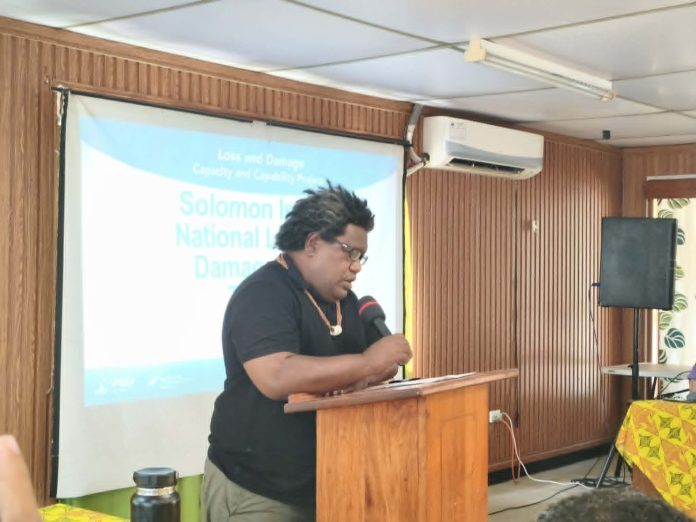
The Solomon Islands Loss and Damage Media Training is not just another workshop but a “call to action”, says David Hiba Hiriasia, permanent secretary for Ministry of Environment, Climate Change, Disaster Management & Meteorology (MECDM).

He made the remark when he spoke on the first day of the three-day training at Rock Haven on Monday.

The training is being facilitated by Secretariat of the Pacific Regional Environment Programme (SPREP) with support of the New Zealand Government through the Loss and Damage Capability and Capacity (LDCC) Project.

Addressing representatives of different media organisations in the country, Hiriasia told them that it is a moment for them to recognise the power of storytelling, the influence of communication and the responsibility of the media in shaping how the world understands the lived realities of climate change.

He said for us in Solomon Islands and across the Pacific, climate change is not a theory but a lived reality.

“We see it in stronger cyclones, rising seas, flooding, drought, coral bleaching, and the gradual loss of the natural systems upon which our communities depend,” he said.

Hiriasia said the recent Tropical Cyclone Maila is a stark reminder of this reality and one which brought devastation to Western and Choiseul provinces; two provinces that usually don’t experience cyclones of such intensity.

He said this demonstrates how climate change is altering patterns, expanding risks, and exposing new vulnerabilities.

“And it is your role, as media professionals, to ensure these stories are told, heard, and understood,” he said.

The Permanent Secretary said loss and damage is a new and emerging issue in the global climate agenda.

He said it is distinct from mitigation and adaptation, and it has its own separate funding modality.

“This recognition is critical for countries like ours, where the impacts are already severe and where the costs both economic and non-economic continue to grow,” he said.

For feedback, contact: [email protected]

Editor: [email protected]

More policies needed to address loss and damage: Tufah

0

BY NED GAGAHE

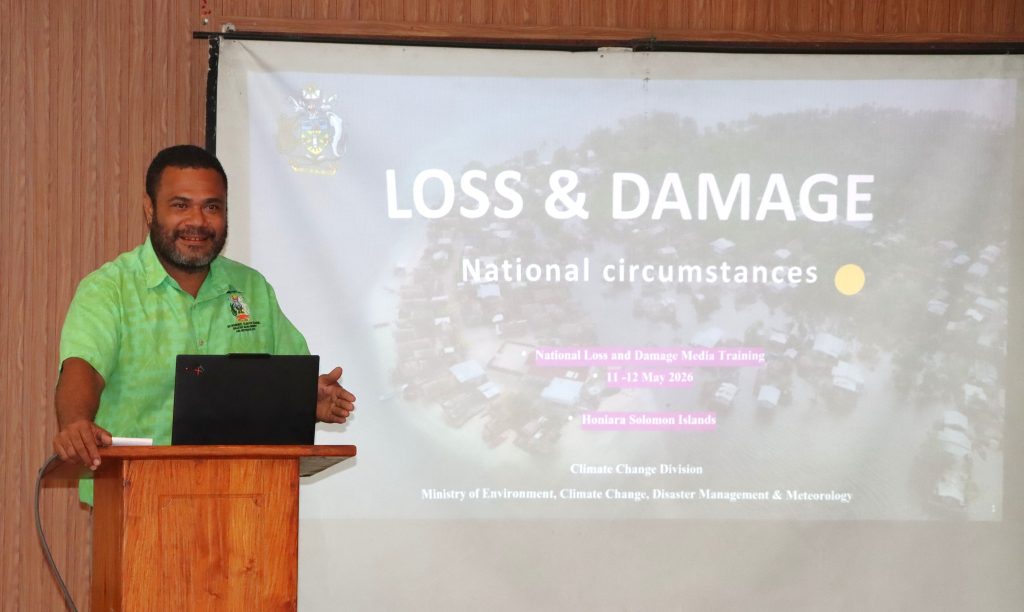
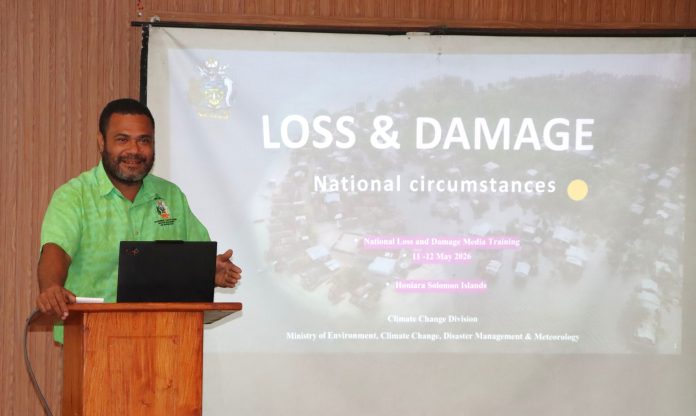
The Deputy Director of the Climate Change Division at the Ministry of Environment, Climate Change, Disaster Management and Meteorology (MECDM), Henry Tufah, says there is a growing need for stronger policies and reliable data systems to address climate-related loss and damage in Solomon Islands.

Speaking during a three-day media training on loss and damage, Mr Tufah highlighted several ongoing and upcoming government initiatives aimed at strengthening the country’s response to climate impacts.

He said the country’s Nationally Determined Contribution (NDC), developed and submitted in 2025, already identifies loss and damage as a major challenge facing Solomon Islands.

Tufah said the NDC is supported by a Nationally Determined Contribution Investment Plan, which identifies priority areas the government must focus on in addressing loss and damage.

“We have the National Loss and Damage Dialogue that was held last year, and now we have the media training. The next step is to implement a pilot project on loss and damage,” he said.

He added that work is also progressing on a national loss and damage policy, which will be informed by discussions from recent consultations and training workshops.

“Everything that we discussed last week and also this week will be documented and help inform the loss and damage policy which will be developed later,” Tufah said.

He said an investment roadmap will also be developed to support implementation of the policy.

Tufah further revealed that another major initiative, known as the Satellite Observation for Loss Assessment and Climate Data Evaluation project, is in its final stages before implementation.

According to him, the project will help strengthen climate data collection and provide evidence needed to support claims and responses relating to climate loss and damage.

“We can describe loss and damage and express it in every way we can, but there is only one way we can support it, and that is by showing that loss and damage is real and having data to prove that,” he said.

Tufah said that reliable data will play a key role in helping Solomon Islands address climate-induced loss and damage in the future.

The three-day workshop, held at Rock Haven Inn from May 11 to 13, brought together journalists and media practitioners to strengthen reporting on one of the country’s growing challenges — climate-induced loss and damage.

The training is facilitated by the Secretariat of the Pacific Regional Environment Programme (SPREP) in partnership with the Media Association of Solomon Islands, with funding support from the Government of New Zealand through the Loss and Damage Capability and Capacity Project.

The training concludes today with a field visit to Koa Hill and April Valley, where participants will meet communities affected by climate impacts and put their reporting and storytelling skills into practice.

Photo credit: Ned Gagahe

For feedback, contact: [email protected]

Editor: [email protected]
GONE FOREVER

0

Five islands already submerged by climate change in the Solomon Islands, more under threat

BY NED GAGAHE

Five small islands in Solomon Islands have already disappeared beneath the sea due to rising sea levels linked to climate change, according to Henry Tufah of the Ministry of Environment, Climate Change, Disaster Management and Meteorology (MECDM).

Speaking during a three-day media training on loss and damage at Rock Haven Inn, Mr Tufah presented scientific data and satellite imagery showing the steady disappearance of several low-lying islands over recent decades.

He said islands including Kale, Rapita, Rehana, Kakatina and Zollies were completely submerged by 2014.

“These are islands that existed before, but over time the land continued to reduce until they disappeared completely beneath the sea,” Mr Tufah said.

According to data presented during the training, Kale Island measured about 14,890 square metres in 1947 but had completely disappeared by 2014.

Mr Tufah said the findings were based on studies comparing aerial photographs and satellite images taken over many years.

He explained that sea level rise remains one of the biggest slow-onset impacts of climate change affecting Solomon Islands.

“Slow-onset events happen gradually over time, like sea level rise, coastal erosion and saltwater intrusion,” he said.

Mr Tufah also highlighted the case of Walande in South Malaita, where the settlement gradually disappeared due to coastal erosion and rising seas.

He said aerial images showed that around 85 buildings existed on the island settlement during the 1940s, but by 2024 no part of the island remained above sea level during high tide.

Tufah said communities were eventually forced to relocate inland, losing homes, cultural sites, burial grounds and parts of their traditional way of life.

“When you lose your home, you lose your identity, your culture and your connection to the land,” he said.

Meanwhile, Permanent Secretary of the Ministry of Environment, Climate Change, Disaster Management and Meteorology, David Hiba Hiriasia, said climate-related loss and damage is becoming a major national challenge for Solomon Islands.

He said the draft Solomon Islands Climate Loss and Damage Evidence Base Report 2026 estimates that the country loses around USD79 million annually due to climate-related loss and damage, equivalent to 8.69 percent of the country’s Gross Domestic Product each year.

“This is not just an environmental concern; it is a national development challenge, a growing economic burden, and a human crisis,” Mr Hiriasia said.

“We saw this clearly in the 2014 Honiara floods. The Post-Disaster Needs Assessment conducted by the World Bank documented that in just a matter of days, the event caused USD107.8 million in damages, equivalent to 9.2 percent of GDP.

“Twenty-two lives were lost, more than 50,000 people were affected, and beyond the economic losses, some impacts cannot be measured in dollars,” he added.

Tufah warned that many coastal and low-lying communities across the country remain vulnerable as sea levels continue to rise.

He said scientific projections show temperatures and sea levels will continue increasing under all greenhouse gas emission scenarios.

The training brought together journalists and media practitioners to strengthen reporting on climate-induced loss and damage in Solomon Islands.

The workshop was facilitated by the Secretariat of the Pacific Regional Environment Programme (SPREP) in partnership with the Media Association of Solomon Islands through the Loss and Damage Capability and Capacity Project funded by the Government of New Zealand.

Photo credit: SPREP

For feedback, contact: [email protected]

Editor: [email protected]
PHYSICAL EDUCATION LEVEL-UP

0

OSEP, NSC host 2- day coaching workshop training for HCC school sports masters

BY TONY IROGA UFUNONI

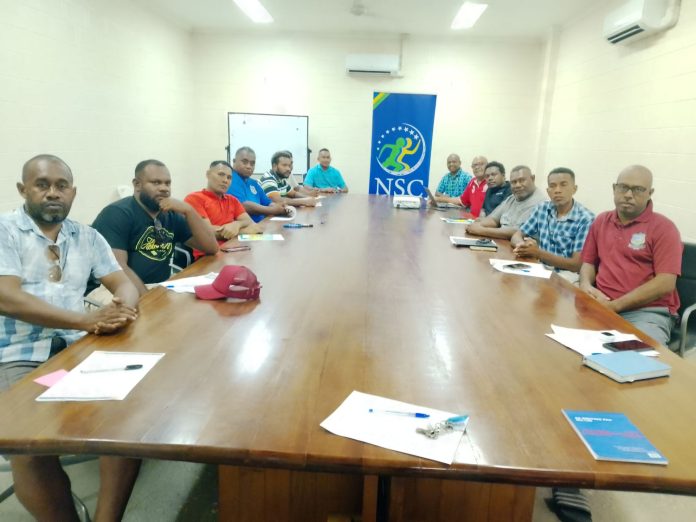
The Oceania Sport Education Program OSEP and the Solomon Islands National Sports Council (SINSC) are currently hosting a two-day workshop training that started yesterday for sports masters from Honiara City Council schools at the Multi-Purpose Hall in Honiara.

The workshop course is being facilitated by OSEP and NSC course facilitator, Atu Balekana and it focuses on strengthening the knowledge and skills of sports masters in areas such as sports leadership, athlete development, event coordination, and the promotion of healthy lifestyles through school sports program.

Gabriel Riotarau, director of Youth, Women and Sport Division in his opening remarks said the training aims to improve sports development and management within schools and encourage more students to actively participate in sporting activities across Honiara.

“As the director, I would like to see more training like this continue in the future. I want teachers in schools to have better parental access and engagement in schools, and we understand there is a big challenge with the growing population, especially among youths in Honiara.

“If you want to train and influence more people, you must go further. So today, the call is upon us. We would like to thank you all so much and wish you the very best during these days of the workshop.

“I believe sport is one of the avenues you can use to start capturing, accommodating, or intervening to address what you see. The more we keep them engaged in sports at their school courts and at home, the better,” Riotarau said.

He thanked facilitator Balekana Atu and his team for hosting the two-day training and the teachers who participated.

Speaking to Island Sun yesterday, Sport Development Officer Mr Chris Bakeua said the workshop is mainly designed for school sports masters, focusing on athlete development, inter-school sports, and physical education activities.

He said sports teachers are the main contact points in schools and play an important role in carrying out physical activities with students to promote active and healthy lifestyles.

“We are planning for a two-month HCC school sports event scheduled to start on June 22. Before the competition begins, we believe it is important to conduct workshops for teachers so they can have the right tools and knowledge to help develop and support our students,” Bakeua said.

Participants will receive their certificates after the training concludes today.

Photo credit: Tony Iroga

For feedback, contact: [email protected]

Editor: [email protected]
SICF two days coaching camp underway at SINIS

0

BY TONY IROGA UFUNONI

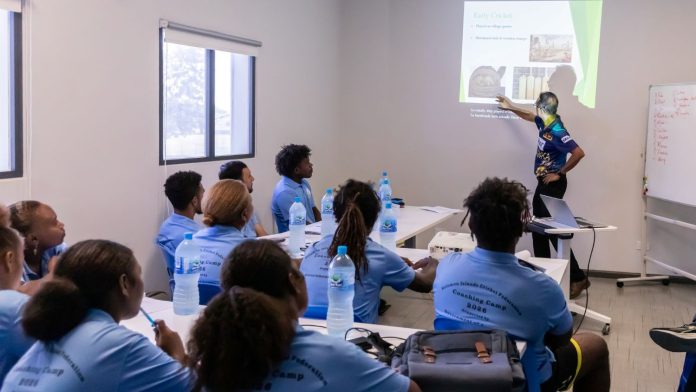
Solomon Islands Cricket Federation (SICF) officially commenced its two-day Cricket Coaching Camp at the Solomon Islands National Institute of Sport (SINIS) yesterday.

According to National Sport Council (NSC), the coaching camp aims to strengthen the skills and understanding of SICF athletes through both classroom learning and practical field sessions focused on the fundamentals of cricket and athlete development.

“Day one of the programme covered an introduction to the Solomon Islands Cricket Federation, the basics of cricket, rules and structure of the game, bowling fundamentals, discussions and question-and-answer sessions, followed by practical ground training,” a NSC statement said.

NSC said the second and final day (today) is expected to focus on SICF’s future plans, inclusivity in cricket and safeguarding, wicket keeping and fielding fundamentals, coaching and session planning, net practice and match preparation.

“The coaching will conclude with a practical coaching session, mini match, evaluation, feedback and certificate presentation,” the statement said.

The programme was officially opened yesterday by SICF President Sajeewa Liyanage and the coaching camp is being led and facilitated by Solomon Islands Cricket Federation National Coach Saman Madalakanda and Consultant Janaka Ranatunga.

Photo Credit: NSC

For feedback, contact: [email protected]

Editor: [email protected]
Lauru gears up for Solomon Games

0

BY TONY IROGA UFUNONI

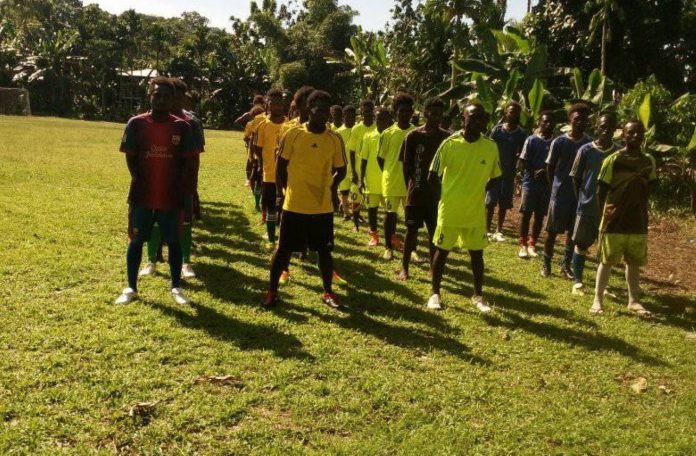
Choiseul Province has officially kicked off preparations for the upcoming Solomon Islands Games scheduled to take place in Honiara next month.

According to Mr Brian Koveke Choiseul Provincial Sports and Recreation Development Officer, Netball and Athletics competitions will be held at the provincial headquarter either at the end of May or in the first week of June.

Koveke confirmed that volleyball and rugby competitions will be hosted in Wagina as part of its wider preparations for the upcoming Solomon Islands Games scheduled for June.

He said these events will provide an opportunity for officials to select the best athletes to represent Team Lauru at the upcoming Solomon Games 2026, while also preparing our athletes for the South Pacific Games.

Koveke also called on sports representative to try and identify their Netball representative from their constituency to represent their constituency during this tournament.

He said Lauru has confirmed that its sporting disciplines for the upcoming Solomon Islands Games scheduled for late June to July 2026 are Netball, Volleyball (both beach and indoor) Athletics, and Rugby 7s.

“The Taekwondo will be included, but only athletes who successfully complete grading and meet qualification standards will be eligible to represent the province,” he said.

He said boxing will not be in the upcoming provincial games and the 2026 Solomon Islands Games after the Solomon Islands Amateur Boxing Association (SIABA) was reportedly not registered under the National Sports Council of Solomon Islands.

Photo: Supplied

For feedback, contact: [email protected]

Editor: [email protected]
Kilcoy global foods recruit Solomon Islanders for queensland plant

0

BY ALICE T CAMPBELL

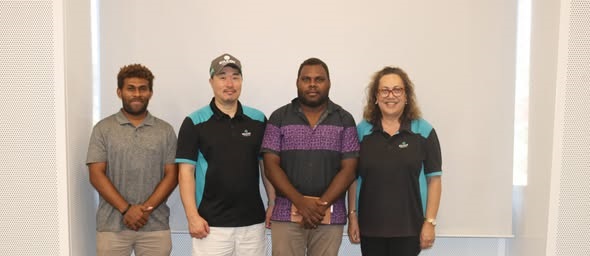
The Labour Mobility Unit (LMU) has announced that Kilcoy Global Foods, one of the world’s leading food solutions producers, has carried out its first direct recruitment drive in the Solomon Islands.

The company, established in 1953 as a family-owned meat wholesaler, now operates in Australia, North America, and China, and is recognised internationally for quality and innovation, a statement from the LMU yesterday said.

Kilcoy first recruited Solomon Islanders in 2020 through a labour hire company, but as an Approved Employer under the PALM scheme, it now conducts its own in-country recruitments.

This marks the first time the company has directly recruited workers from the Solomons, LMU said.

Representatives Leah Swane and Young Kang said they were impressed with the interviews and indicated plans to increase recruitment numbers in future.

More than 100 candidates were interviewed last week from the work-ready pool, with around 50 workers to be selected for employment in Australia, the statement said.

Successful candidates will work at Kilcoy’s meat processing plant located at 4830 D’Aguilar Highway, Winya, Queensland—about an hour’s drive from Brisbane.

The Labour Mobility Unit (LMU) welcomed Kilcoy’s first in-country recruitment and expressed hope for continued collaboration with the Solomon Islands in the future.

Photo credit: LMU

For feedback, contact: [email protected]

Editor: [email protected]
RSIPF welcomes 105 new recruits for intensive training

0

BY ALICE T CAMPBELL

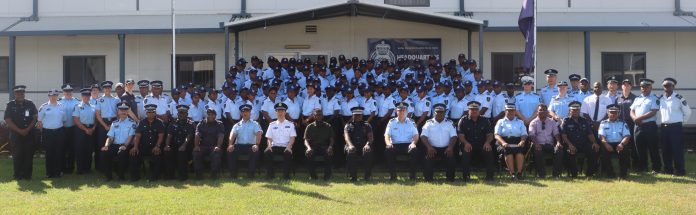
The Royal Solomon Islands Police Force (RSIPF) officially welcomed 105 new recruits who will begin a 20‑week intensive training programme at the Rove Police Headquarters.

Minister of Police, National Security and Correctional Services (MPNSCS) Jimson Tanaganda, addressed the recruits, comprising of 70 males and 35 females from across all provinces including Honiara, a statement from MPNSCS yesterday said.

Mr Tanangada emphasised that the programme is designed to produce constables with integrity, honesty, and professionalism to strengthen community safety and public confidence in the RSIPF.

Over the next 20 weeks, recruits will undergo comprehensive training delivered by RSIPF academy staff, specialist instructors, and guest presenters from partner agencies such as the Chinese Police Liaison Team (CPLT) and the New Zealand‑supported SIPSP programme, the statement said.

The updated curriculum covers Solomon Islands laws, ethical policing, community engagement, and practical skills to meet modern policing challenges.

Minister Tanangada urges the recruits to show commitment, perseverance, and teamwork, reminding them that they are “guardians of peace and justice”.

He congratulated them on their achievement and wishes them success, reinforcing RSIPF’s dedication to building a safe and peaceful Solomon Islands.

Photo credit: MPNSCS

For feedback, contact: [email protected]

Editor: [email protected]
Media urged to lead climate loss and damage reporting

0

BY NED GAGAHE

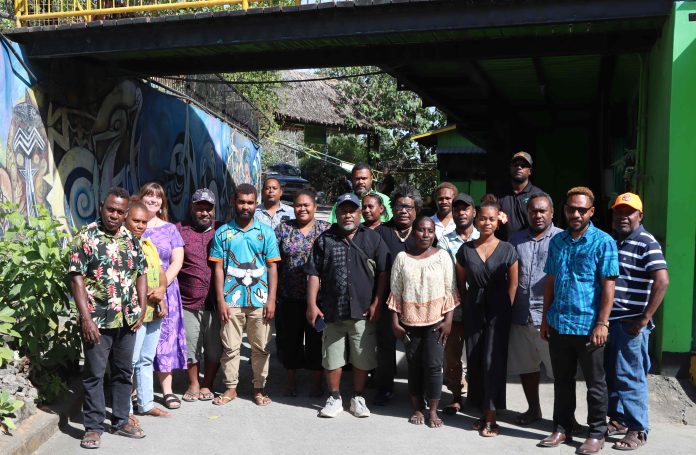
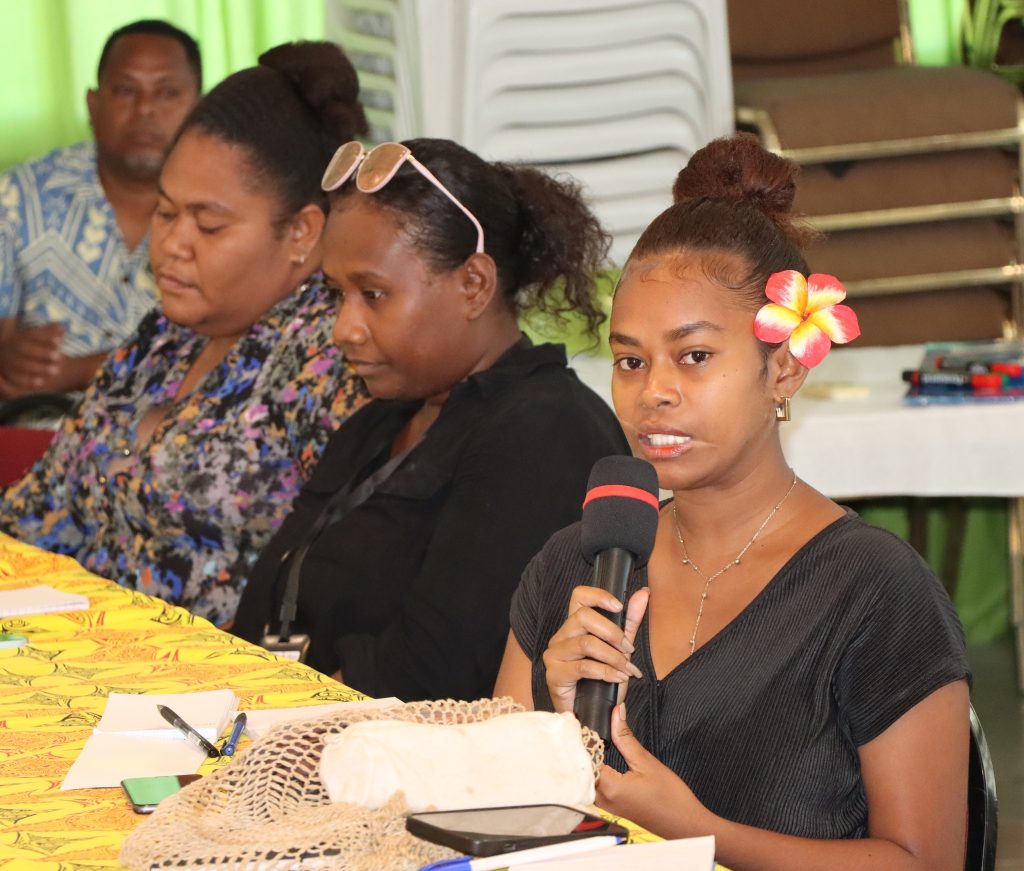
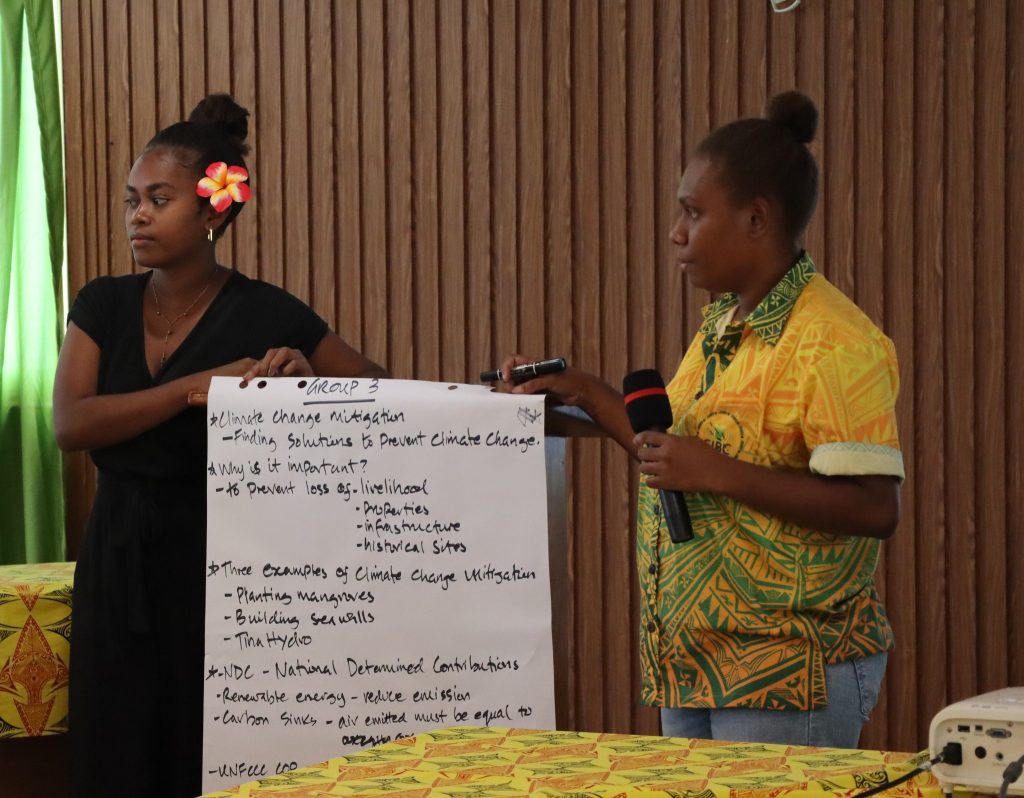
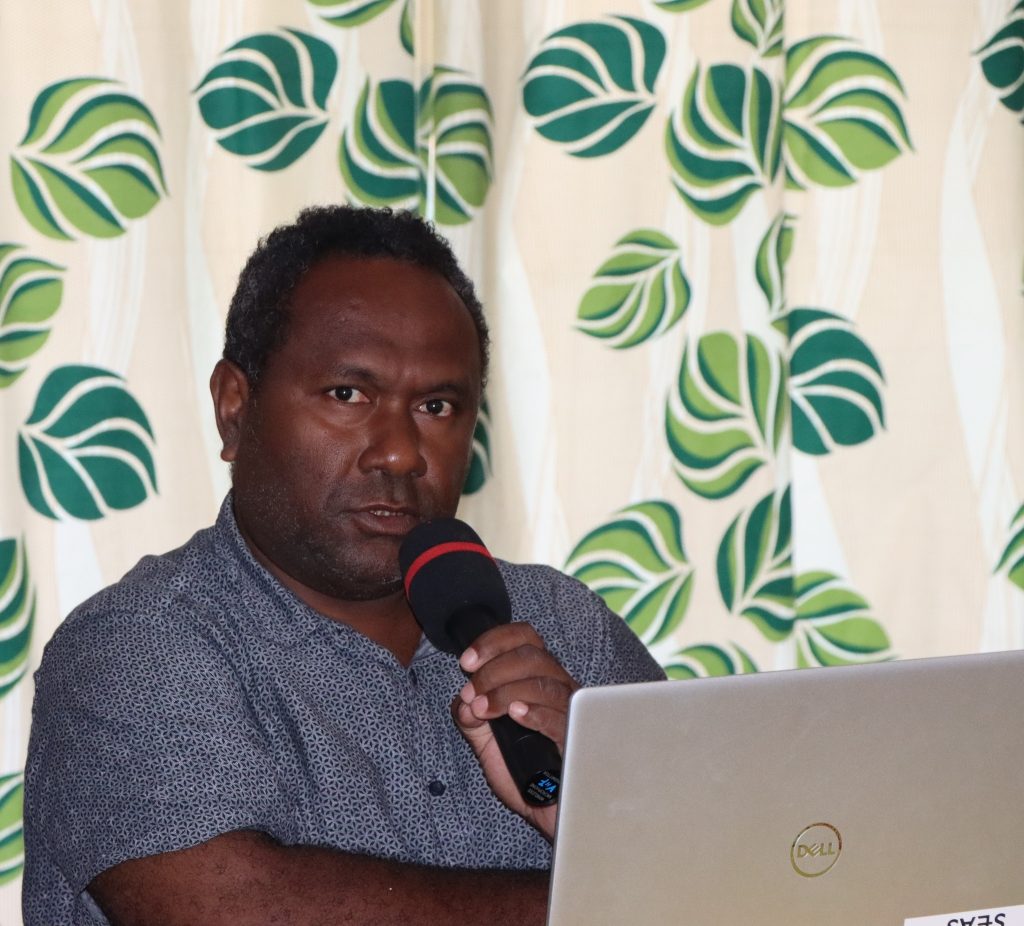
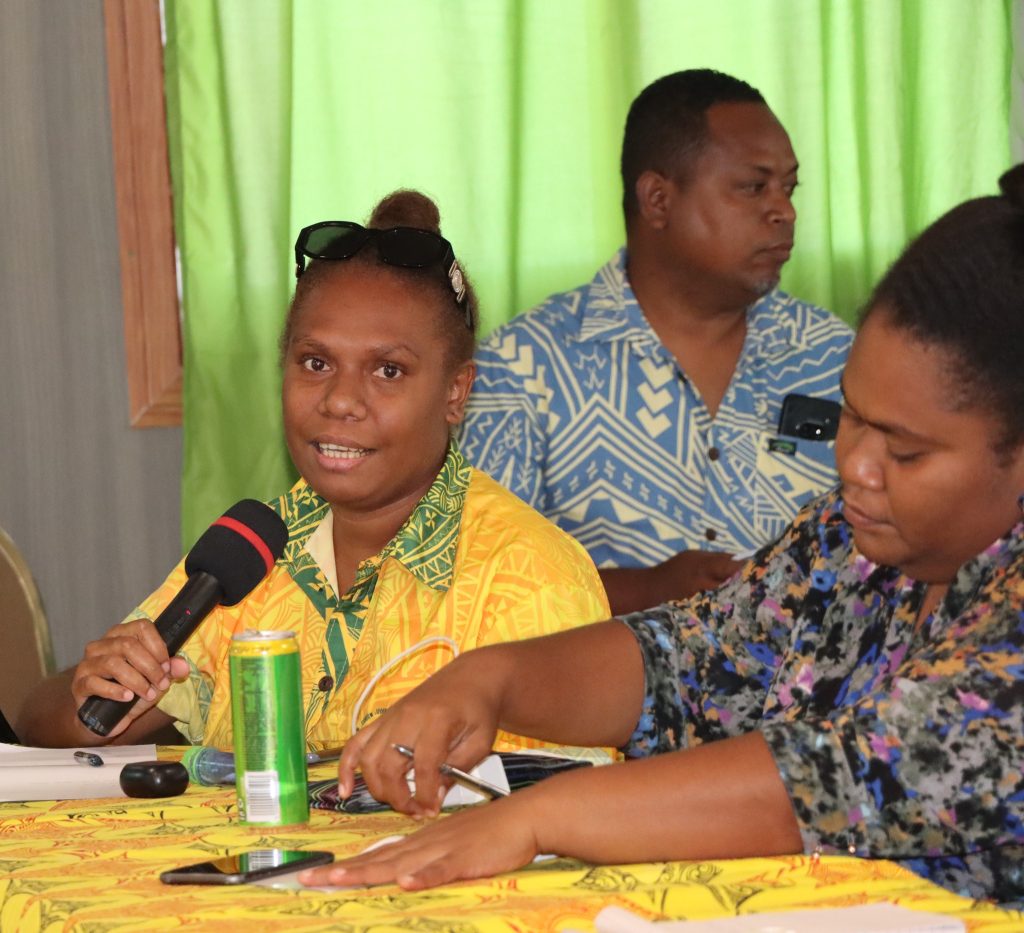
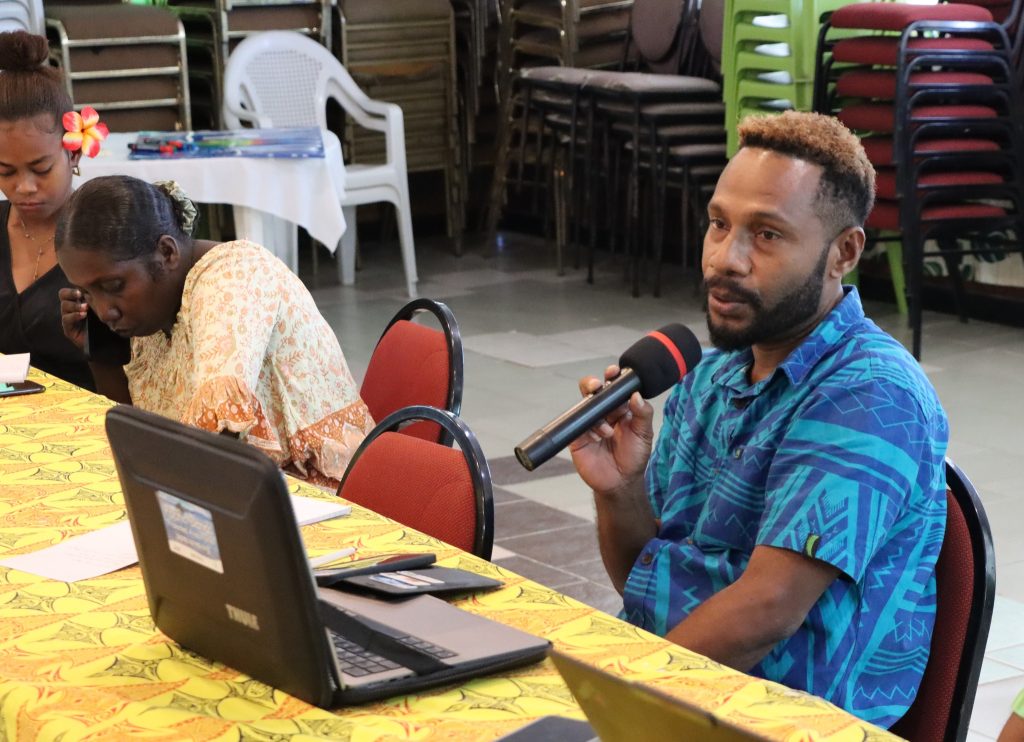
The media has been challenged to take a leading role in elevating stories on climate change loss and damage in Solomon Islands as journalists gather in Honiara for the inaugural Loss and Damage Media Training.

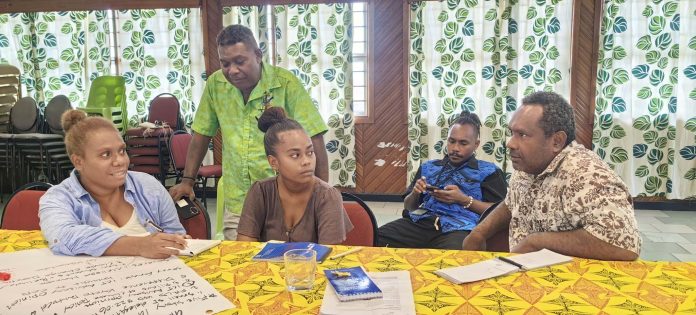
The three-day workshop, held at Rock Haven Inn from May 11-13, 2026 brings together journalists and media practitioners to strengthen reporting on one of the country’s growing challenges — climate-induced loss and damage.

The training is facilitated by the Secretariat of the Pacific Regional Environment Programme (SPREP) in partnership with the Media Association of Solomon Islands with funding support from the Government of New Zealand through the Loss and Damage Capability and Capacity (LDCC) Project.

Speaking to Island Sun, Henry Tufah, Deputy Director of the Climate Change Division at the Ministry of Environment, Climate Change, Disaster Management and Meteorology (MECDM), said climate change adaptation and mitigation discussions have existed for years, but progress remains slow.

“Media plays a key role in solving many of these challenges. People may not clearly see how media works, but in today’s world, especially with social media, progress can happen through strong media reporting.”

Mr Tufah said although funding and support for climate-related programs are available internationally, Solomon Islands still faces challenges in accessing those resources due to weak institutional arrangements and limited capacity.

“There is a lot of funding and resources both in terms of economic support, capacity support, training and financial resources.

“Our problem within the country is institutional arrangements and capacity to ensure we tap into these fundings,” he said.

He said taking climate discussions into the media space is critical to push for accountability and encourage stronger action from government and stakeholders.

The workshop will cover key topics including climate adaptation and mitigation, climate finance, the role of climate finance and linkages, the Loss and Damage Funding Mechanism, media ethics, storytelling techniques and the role of traditional knowledge in responding to climate impacts.

The training will conclude with a field visit to Koa Hill and April Valley, where participants will meet with communities affected and put their reporting and storytelling skills into practice.

Sub-Editor of the Solomon Star Newspaper, Eddie Osifelo, said the training is helping journalists understand the wider impacts of climate change, particularly the economic cost of loss and damage.

“We now realise the importance of relocation, the impact of climate change and the economic cost of damage and loss.

“Before, we only reported on seawalls being broken or graves being washed away, but now we need to focus on the economic costs and put figures to these issues,” Mr Osifelo said.

He said climate loss and damage is a major national issue that the media must take seriously.

“This is not a small issue. It is a big issue that the media needs to focus on and take the lead in reporting.”

Agnes Menanopo, a television journalist with the Solomon Islands Broadcasting Corporation (SIBC), said the workshop has given participants a better understanding of climate concepts including mitigation, adaptation and loss and damage.

“For me this is the first time attending such training.

“It is important for the media to be equipped with knowledge so when we report stories on climate change, we report accurately,” Ms Menanopo said.

She said she is looking forward to the field visit to apply the knowledge and skills gained during the workshop.

The training builds on previous regional loss and damage media workshops held in Samoa in 2025, where In-depth Solomons journalist Ednal Palmer represented Solomon Islands during regional climate reporting programs.

Photo credit: SPREP

For feedback, contact: [email protected]

Editor: [email protected]