
Home Blog Page 277

Diabetes management workshop empowers nurses

0

BY CHRIS ALEX

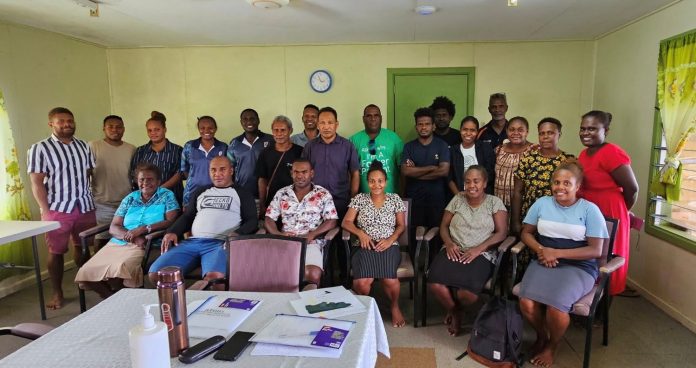
A three-week diabetes management workshop held at Atoifi Adventist Hospital has successfully concluded, equipping 54 nurses from across the Eastern Region of Malaita with vital skills and knowledge to strengthen diabetes care in local clinics and hospitals.

The training, funded by the World Health Organization (WHO), was structured into three separate sessions to allow full participation by nurses from regional health facilities, including Manawai Clinic (East Are’are), East Kwaio, East Kwaara’ae, and Gwarata Clinic (East Fataleka).

The workshop focused on four critical areas of diabetes care:

-Diabetic Screening

-Diabetic Management

-Diabetic Foot Screening

-Diabetic Foot Management

Facilitated by experienced nurses who previously completed national diabetes training in Honiara, the sessions emphasized practical, hands-on clinical coaching.

Their mentorship played a key role in ensuring participants gained both theoretical knowledge and real-world application skills.

Alwin Muse, one of the participating nurses, highlighted the importance of the training.

“Diabetes is one of the leading non-communicable diseases (NCDs) that has become a major health crisis in the Solomon Islands. Most clinics and hospitals in the provinces see patients with this condition on a daily basis,” she said.

The workshop forms part of a broader clinical coaching initiative that aims to standardise diabetes treatment protocols and strengthen diabetic foot care across the Solomon Islands’ health system.

By empowering frontline health workers, the initiative seeks to improve early detection, prevent complications, and enhance patient outcomes.

Organizers say the successful completion of the training marks a significant step forward in building local capacity to combat NCDs and improve healthcare delivery in Malaita’s rural and remote communities.

With diabetes continuing to place a heavy burden on the nation’s health system, programs like this serve as crucial investments in both workforce development and community health resilience.

Photo : Alwin Muse

For feedback, contact:[email protected]

CPTOA executive meeting in Honiara

0

BY CHRIS ALEX

The Central Province Tourism Operators Association (CPTOA) held its executive committee meeting yesterday in Honiara, marking a significant step forward since the revitalisation of the Association in February 2025.

The meeting serves as an update for executive members on the progress made over the past months, including the growth in membership.

So far, the Association has nine registered members, with more tourism operators expected to join in the coming months.

CPTOA was established to represent tourism operators in Central Province and drive forward the collective goals of its members.

During the meeting, the executive committee finalised the development of the Association’s Work Plan for 2026, identifying key priority areas for the upcoming year.

“These priorities reflect our commitment to building a stronger tourism industry in Central Province.

“We want to ensure our members are supported through capacity building and that our tourism products meet industry standards,” said Central Province Tourism Operators Association Treasurer- Richard Sapia

The key priority areas for 2026 include:

-Training programs for members

-Tourism product development

-Hosting and supporting events

-Fundraising drives

-Stakeholder and partner engagement

The 2026 Work Plan will be formally endorsed by the executive committee before being presented to stakeholders for consultation and alignment.

As a registered body, CPTOA remains committed to working closely with stakeholders and partners to enhance the tourism industry in Central Province.

The Association also encourages more tourism operators in the province to register and become members.

“This is an opportunity to work together to grow our industry. Through collaboration and shared goals, we can achieve more for our communities and our economy,” Sapia added.

Meetings with key stakeholders and partners are being planned for the coming months to share the Association’s 2026 priorities and ensure alignment across the tourism sector.

Photo: Richard Sapia

For feedback, contact:[email protected]

Investigation on missing medicines continues

0

By RODRICK DESURI 

AUKI 

An investigation by police in Malaita Province in the matter of missing life-saving medicines from Kilu’ufi Hospital medical store is still ongoing. 

Malaita Provincial Police Commander Superintendent Michael Ramosaea said the police are not taking the investigation lightly as it is a life-saving matter. 

He said new evidence has been found and a few packs of medicine were also discovered so this will help their investigation.

“The investigation is still ongoing.

“There are some new pieces of evidence that we have gathered, which will help our investigation,” he said.

Superintendent Ramosaea mentioned that they will continue their investigation until they have arrested those involved in the alleged theft of the medicines.

He calls on rural community members to work together with the police to report anyone selling stolen medicine.

Superintendent Ramosaea said some of the medicines they have collected are from drunken people in Auki Town.

“I call on the people, especially the people from the rural communities, to come forward and report areas in our communities where you can buy medicines when you are sick.

“We know that some people don’t want to report leads to those missing medicines because they are afraid that they may get suspended,” he said.

For feedback, contact:[email protected]
MHMS wraps up mental health corporate plan consultation

0

BY MORRIS NAFU

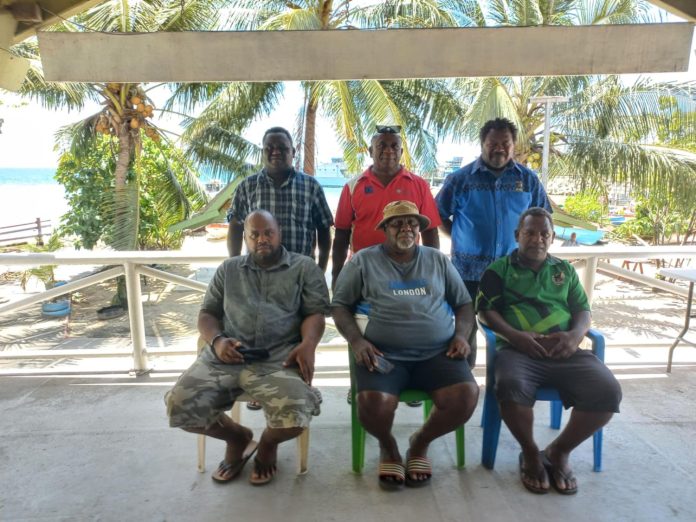
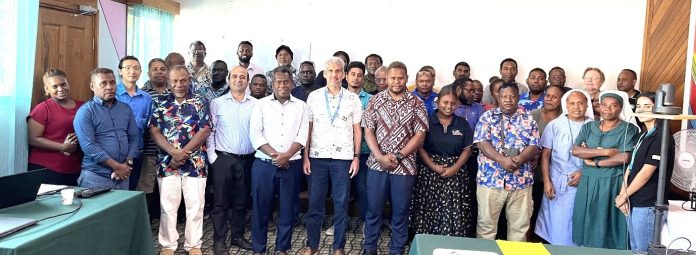
The Ministry of Health and Medical Service (MHMS) has successfully completed its corporate plan consultation focused on Mental Health issues, from September 15-16, 2025.

The event brought together key partners, including government ministries, Non-Government Organizations, faith-based organisations, Solomon Islands National University (SINU), and international donors such as WHO, DFAT, and UNICEF.

Provincial Mental Health Coordinators and carers with lived experience also played a vital role in the discussions.

According to an MHMS statement, the consultation aims to unpack the National Mental Health Policy, foster collaboration among government, provincial health teams, partners, and communities, identify challenges in implementation, and draft a preliminary action roadmap linking the policy to the corporate plan and Annual Operational Plans (AOPs).

The theme “Unpacking the National Mental Health Policy for Action” highlighted the next crucial step in turning policy into practical action.

Director of Planning and Policy Brian Idufanoa said the consultation was about translating the policy into a National Mental Health Corporate Plan to guide priorities, resources, and actions in the coming years.

He acknowledged progress in legislation, infrastructure, human resources, capacity building, service delivery, and health information systems but noted ongoing challenges.

“We still see many psychiatric cases on the streets, showing gaps in service reach and rehabilitation. Many people cannot access mental health services due to stigma, distance, or lack of resources,” Idufanoa said.

He cited WHO reports revealing that in many developing countries, only 15 percent or fewer of those with mental illness receive treatment—a stark reminder of the work ahead.

The consultation provides a platform to seek practical strategies and strengthen collaboration to close this treatment gap.

Idufanoa also highlighted the Government’s commitment to rights and inclusion following Solomon Islands’ ratification of the Convention on the Rights of Persons with Disabilities (CRPD).

This calls for a whole-of-government and whole-of-society approach to support people with psychosocial disabilities.

He urged all participants to align efforts under the National Mental Health Policy by investing in human resources, infrastructure, community outreach, and data systems, fostering collaboration across sectors to build a responsive and inclusive mental health system.

Dr Rex Maukera, Head of Mental Health Services, shared his personal experiences witnessing the challenges faced by families affected by mental illness.

He calls on all partners to work together to build a system that supports mental health at every level—from community care to specialised services.

“I especially want to recognise our clients and carers. Their voices and experiences are central to this process, ensuring the services we develop are practical, inclusive, and people-centred,” Maukera said.

He highlights that the corporate plan become a voice for those silently suffering from psychosocial problems.

The MHMS consultation marks a significant step forward to address mental health needs across Solomon Islands with the aim to build a stronger, more inclusive system for all.

Photo: MHMS Media

For feedback, contact:[email protected]
Disaster preparedness ramps up ahead of cyclone season 2025–26

0

BY CHRIS ALEX

Solomon Islands Meteorological Service (SIMS), in partnership with World Vision Solomon Islands and other key stakeholders, has intensified its community outreach and preparedness initiatives under the Disaster Ready Programme.

Over the past week, SIMS conducted a series of information-sharing and early warning awareness sessions across eight communities in Makira Province, supported by the Makira World Vision/AHP Disaster Risk Reduction (DRR) Project. The targeted communities include:

-Mwanibena (Makira Mainland, Ward 10)

-Tawangisi, Tawapuna, and Masidonia (Ward 9)

-Manipua and Hunuta (Ugi Island)

-Tawaroga (Star Harbour)

-Nafinuatogo (Santa Anna)

These community forums aim to strengthen local resilience by improving understanding and readiness for potential weather-related hazards, especially tropical cyclones.

Officers from the Meteorological Service led the sessions, which covered a wide range of topics crucial for disaster preparedness such as;

-The role and structure of Early Warning Systems (EWS)

-Warning types and alert levels for various weather hazards

-Impact-based forecasting and color-coded warnings

-How to interpret tropical cyclone tracking maps

-Use of the flag-based Early Warning System for small crafts and boats

-Integrating traditional weather and climate knowledge

-Information on tsunami warnings

-Use of modern communication methods, including the Cell Broadcast System, to disseminate urgent alerts

“This initiative is vital in ensuring communities are well-prepared and can act early to reduce disaster risks.

“The feedback and participation from these communities have been encouraging, and it demonstrates a growing awareness and proactive attitude toward disaster risk management,” said SIMS.

As climate-related events become increasingly frequent and severe, these community-led efforts play a crucial role in safeguarding lives and livelihoods across the Solomon Islands.

The outreach forms part of ongoing nationwide efforts to enhance local disaster preparedness, reduce vulnerability, and build climate resilience ahead of what is expected to be another active cyclone season.

Photo : Solomon Islands Meteorological Services (SIMS)

For feedback, contact:[email protected]
‘We need roads’ – Ugi farmers demand urgent infrastructure support

0

BY CHRIS ALEX

A key copra-buying agent from Ugi has raised serious concerns over the continued neglect of vital infrastructure in the region, calling on the national government and responsible ministries to prioritize road access and provide necessary tools like tractors to support farmers.

In an interview with Island Sun News, Jerry Wala, a dedicated buying agent for the Commodity Export and Marketing Authority (CEMA), highlighted the struggles farmers face in transporting copra due to poor roads and a lack of support from relevant ministries.

“What we urgently need is a proper road so we can move our products to a central point easily.

“Ships can still ramp at Marou port for now, that’s manageable. But without road access, everything becomes harder,” said Wala.

Wala revealed that Ugi Island produced more than 5,000 bags of copra in the last harvest season each averaging 85 kilogrammes but received no infrastructure support in return.

The current government allocation only supports 16 tons of copra, an amount he says only his village can produce, equivalent to around 200 bags.

Despite this, CEMA continues to rely on Ugi buying agents to drive export volumes.

“We are loyal and active agents.

“Yet we watch dishonest agents bring down production with no accountability. If the government wants real results, they should focus on those of us doing the work,” Wala emphasised.

Frustrated by continued delays and unfinished projects, Wala expressed disappointment in the performance of Ugi’s current MP, who has reportedly spent long periods away receiving medical treatment overseas.

“Our MP should now be resigned.

“I’m calling on the responsible authority to summon him and initiate a by-election. While he receives treatment in Australia and Fiji, we suffer back home with no roads and no support,” said Wala.

The ongoing hardship has even led local chiefs to welcome logging operations, a move traditionally opposed by many communities, simply to get road access a sign of growing desperation on the island.

Wala is now calling on international donors and aid agencies to intervene.

“We need quality roads, not half-done construction projects. We don’t want temporary fixes we want long-lasting solutions for our future. Now is the time for donors to step in,” he said.

With strong potential to expand copra supply to neighboring islands like the Three Sisters, Wala believes that proper infrastructure could transform Ugi into a key export hub.

“The economy of the Solomon Islands still stands on the shoulders of rural farmers. It’s time that our voices are heard, and our needs are met,” he said.

Photo: Jerry Wala

For feedback, contact:[email protected]
‘Clause 13 of public service bill is vague on SOEs’

0

BY SAMIE WAIKORI

The Chief Executive Officer (CEO) of Solomon Post, Caroline Kanoko says Clause 13 of Public Service Bill 2025 doesn’t provide clear understanding on the operation of the bill with regard to State Own Enterprise (SOE).

Speaking before the Bills and Legislative Committee (BLC) yesterday, she said the clause states the bill doesn’t cover SOEs, but in 13.4. a.b.c of the bill, there is a provision that the minister is allow to come to the operation of SOEs.

Ms Kanoko said upon looking through the bill, she concluded in the perspective of SOEs that the bill is a staff manual, and a more kind of operational policy to them.

“I’m trying to see that staff manual or internal policies are operational policies and they come under hierarchy that from the board we develop staff manual.

“Now, I see this clause a little vague – vague in a sense that it can be silent and it can be active.

“The silent of it is, it gives the owner of SOEs the right to just watch and they can come in under (4. a.b.c) of clause 13.4 when its necessary.

“I’m also trying to apply the condition of employment or the environment in which employment is conducted under SOEs

“So, if I’m seeing it in that lens, then it will only touch the CEOs and the general working office,” she said.

The CEO said on that perspective, the bill is purely operation and it doesn’t touch the board. Maybe in the worse situation of SOEs or situations they couldn’t help themselves, government through the bill can salvage SOEs

In the meantime, she added that if the bill is active, there is more power to the minister to come into the operation of a commercial entity.

Kanoko recalled that Solomon Post hasn’t had any experience in the situation, so they will see if it touches employment.

She also said if the bill is active for SOEs, would it mean only the condition of employment the Minister come into?

Kanako reiterated that clause 13 of the bill is vague as she is trying to understand how can it be operationalized in commercial setting, where it touches employment.

For feedback, contact:[email protected]
Pushes for climate action requires engagement: PM

0

 BY JOHN HOUANIHAU

Climate change is a pressing issue, and the Pacific Islands Forum (PIF) leaders’ push to address its impacts requires stakeholders’ engagement and involvement.

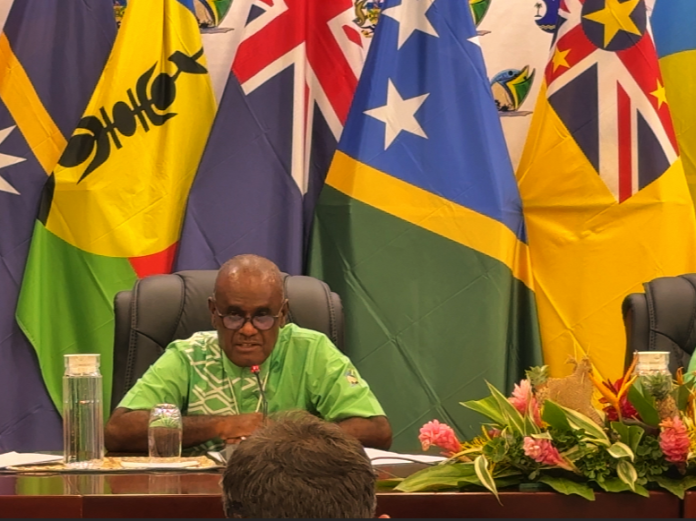
Speaking at the Troika conference during this year’s 54th PIF Leaders Meeting, Forum Chair Prime Minister Jeremiah Manele said climate change remains the single greatest threat facing Pacific Island countries.

“People are talking about not only taking additional measures, but also mitigation. It is a matter that will continue to require the engagement and involvement of every stakeholder,” PM assured the local and regional journalists.

He also congratulated Pacific Islands Youth Students Fighting Climate Change (PISFCC) on seeking the highest degree of advisory opinion from the International Court of Justice (ICJ-AO).

“That shows that when you work together, as a region, including our youth, our civil society and governments, you will be much more effective, not only in terms of advocacy,” he said.

PM Manele said that he understands there is also ongoing work in terms of programs undertaken by agencies, partners in terms of renewable energy.

“That is a mitigation approach. Or in terms of addressing a coastline or building climate-resilient facilities. That’s our vision. Those activities continue to be important for us in terms of addressing climate change. We have a very small blueprint in terms of carbon emissions,” he said.

He said that it is vital for the Pacific Islands to continue to work with partners, urging them of the responsibility to assist smaller countries in managing and adapting to the impacts of climate change.

For feedback, contact:[email protected]
PIF agendas have an impact on rural communities in SI

0

BY JOHN HOUANIHAU

A question that arose with the successful completion of the 54th Pacific Islands Forum Leaders Meeting (PIF) in Honiara was: Who and how will rural communities in the Solomon Islands benefit?

Ended successfully in Honiara on Friday, September 12, 2025 the weeklong event brought together regional leaders to discuss pressing issues and opportunities on peace, security and economic development in the region under the theme “Iumi Tugeda: Act Now for an Integrated Blue Pacific Continent”.

Responding to the question during the Troika press conference on Friday Forum Chair Prime Minister Jeremiah Manele said that there is a lot in the forum agenda that directly links and impacts the lives of people in rural areas.

“Oceans, fisheries. In the Pacific, including all people in the rural areas, rely on the oceans, rely on the seas, rely on the fisheries,” PM Manele said.

He said that a healthy ocean and a healthy marine environment are critical in terms of fishing for people in the village.

He also said that one of the agendas discussed during the leaders’ event is Unexploded Ordnance (UXO).

“Similarly, we talk about UXOs. Over the years, UXOs have been a major impediment to the development of Solomon Islands, and several people have lost their lives. So, these are the real issues that we have in the country,” he said.

He said that it is important that UXOs are dealt with effectively to not remain as an obstacle to development.

“We also discuss health and education issues. And then these are issues that directly impact the sources, the life of all people in the region, including Solomon Islands and rural parts of Solomon Islands,” Manele said.

For feedback, contact:[email protected]

PM defends terminology used to host 54th PIF without partners

0

BY JOHN HOUANIHAU

Prime Minister Jeremiah Manele Chair of the 54th Pacific Islands Forum defended the terminology used to host the 54th Pacific Islands Forum Leaders meeting in Honiara without the region’s dialogue partners.

He was responding to a journalist during the Troika press conference on Friday, September 12, 2025 who asked for clarity about what it was like to meet without the region’s dialogue partners.

According to the journalist, prior to the PIF meeting, the exclusion of the region’s dialogue partners has brought headlines, which was also the first time in history.

“Thank you, thank you, but you used the wrong terminology, ‘exclusion’. The terminology that I use is ‘defer’.  Our partners are very important. We recognise their contributions in terms of implementation, cooperation of programs and projects.

“It is also very important for this part of the region to be prepared. We need to be ready in order to effectively engage with our partners going forward. So that was the basis for that issue,” PM Manele said.

He said that different people will have their own assessment in terms of how to define the PIF meeting successfully concluded last week, without the partners dialogue.

“Several leaders told me that it has given them a bit more opportunity to talk with each other, especially attending the dialogue sessions in the private sector, with the agencies, as well as with civil society. A bit more time for us to interact and engage among ourselves. So that’s important as well,” he said.

Manele said that the leaders hoped the partnership policy that would be worked on this year and be ready before Palau going forward.

“So that comes to Palau, we can re-engage with our partners. But it’s not only through the forum process that our partners are engaged. We also engage with our partners on the Palau avenues and on forums. So that engagement continues. We will follow the engagement with our partners and on the forum, but also through ongoing arrangements and international regional arrangements,” PM Manele said.

For feedback, contact:[email protected]