Home Blog Page 255

Lau Mbaelelea constituency office continues with community projects 

0

By RODRICK DESURI 

AUKI 

The Lau Mbaelelea Constituency office continues to deliver community and individual projects funded through the Rural Constituency Development Fund (RCDF).

In an interview with the Island Sun Auki yesterday, Constituency Development Officer, Moses Lugitau, said canoes, school materials and water supply materials are ready to be shipped to Auki.

He said all of the materials and canoes were requested by Lau Mbaelelea constituents. 

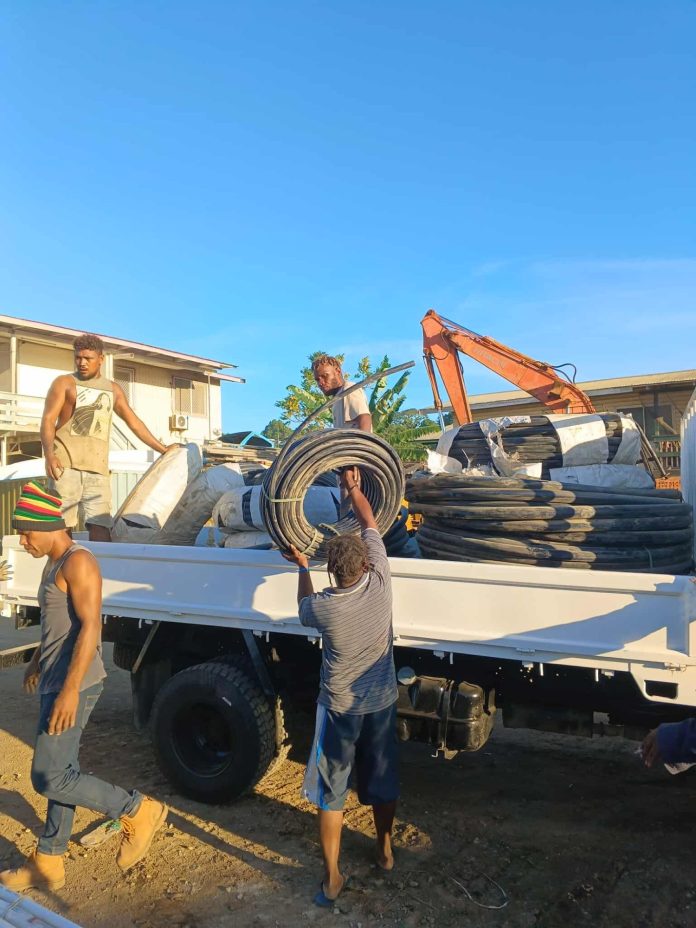
“A total of 28 fiberglass paddle canoes, other school materials, and water supply materials are ready to ship this evening to Auki. All of these materials and fiberglass paddle canoes are requested by the constituents.

“When the materials arrive in Auki, they will be transported to Lau Mbaelelea by truck,” he said.

Lugitau said the Gou’ulu community water materials were among the materials with a cost of $80,000.

Secretary of the Lau Mbaelelea Constituency Development Committee, Eddie Kairi mentioned that the coastal farming projects will come after they have completed the materials for the church, school and clinic.

“Projects for coastal communities will come very soon after we complete these projects,” he said.

For feedback, contact:[email protected]

Forau reappointed to lead Central Bank

0

BY CHRIS ALEX

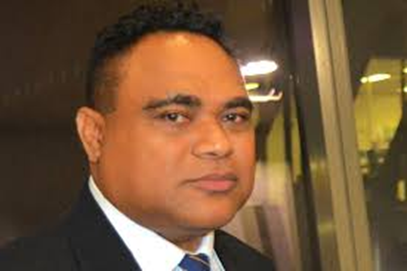
Dr Luke Forau has been reappointed as the Governor of Central Bank for another six years.

This decision was made by the board and management of the Central Bank (CBSI) and the Finance Ministry (MoFT) and is effective October 1, 2025, a statement by CBSI yesterday said.

As stated, this decision reflects the Government’s continued confidence in Governor Forau’s leadership, integrity, and commitment to maintain monetary stability, promote financial sector development, and support inclusive economic growth in the Solomon Islands.

Minister of Finance and Treasury, Trevor Manemahaga, said Governor Forau has demonstrated exceptional stewardship of the Central Bank during a period of global and domestic economic challenges.

“His re-appointment ensures continuity in our financial governance and supports our shared vision for a resilient and prosperous Solomon Islands,” he added.

Forau expressed his gratitude for the trust placed in him.

“I am honoured to continue serving the people of Solomon Islands in this capacity. CBSI remains committed to its mandate of maintaining price stability, promoting financial inclusion, and supporting sustainable economic development,” he said.

During his previous term, Forau led key reforms in financial regulation, digital payments, and macroeconomic policy coordination, the CBSI statement said.

His leadership has been instrumental in strengthening the country’s economic resilience and enhancing transparency in the banking sector.

The Board and Management of the Central Bank reaffirm their commitment to working collaboratively with the Government to advance the nation’s economic priorities and ensure sound financial management.

Photo: Supplied

For feedback, contact:[email protected]

Historic meeting between Hubei and Central Islands provinces

0

BY SAMIE WAIKORI

Central Islands Premier, Kenneth Sagupari and officials from the province welcomed a delegation from China’s Hubei Province to Tulagi on Sunday, September 28, 2025.

The delegation was led by Zhu Ziaobin and this visit marks the first official meeting between the two provinces.

A statement published in the Central Island Province Forum stated that a historic Letter of Intent (LOI) was signed between the two provinces during the meeting.

The LOI outlines plans for future partnership between the two provinces.

In addition to the LOI, work is underway on a more detailed Memorandum of Understanding (MoU), to be signed at a later date.

“This visit is an important step in building a strong relationship between our provinces,” Sagupari said during the welcome ceremony.

Zhu responded by expressing Hubei Province’s interest in strengthening ties through cooperation in development, culture, and other areas.

During the meeting the two leaders exchanged gifts which were;

  • Hubei Province donated sewing machines and cloth valued at SBD 100,000.
  • Central Province presented traditional Bina artifacts, Solomon Islands flags, and lavalava.

According to the statement, the two provinces also shared official documents. Hubei provided an information booklet about its region, while Central Province handed over policy documents highlighting its development goals.

The delegation also visited the National Museum in Tulagi and the Hakama Research Centre in small Ngella to learn more about the province’s history and cultural heritage.

Premier Sagupari thanked the delegation and expressed appreciation for China’s ongoing support in the Solomon Islands.

He also extended warm greetings to the government and people of China on the occasion of the 76th anniversary of the founding of the People’s Republic of China and the sixth anniversary of diplomatic relations between Solomon Islands and China.

“This visit has opened a new chapter of cooperation and friendship between Hubei and Central Province,” Premier Sagupari said.

For feedback, contact:[email protected]

Call for SIPPA to offer more cervical screening

0

By RODRICK DESURI 

AUKI 

Mothers in rural communities of West Kwaio, Malaita Province, call on the Solomon Islands Planned Parenthood Association (SIPPA) Auki Office to revisit Sinamuari Clinic to provide another cervical screening that spans for a longer period of time.

This request comes after a visit by a two-member team from SIPPA to Sinamuari Clinic last week, where they conducted cervical screenings for women ages 25 to 40.

The screening lasted three days at the Sinamuari Clinic and while many mothers accessed the service, many also missed out.

A concerned mother, Cecilia Sangoala observed that many women rushed to participate in the screening during those three days, but many were unable to get the service due to limited time.

She emphasised the importance of cervical screening, stating that it shows what is happening in the bodies of mothers and the health status of each mother, whether they have cervical issues or not.

“This cervical screening is very important for us mothers, especially for us rural mothers who don’t have access to such screening.

“With this program, we will be able to know our health status as women, whether we have cervical cancer or not.

“As a mother, I feel sorry for many mothers who come with the hope of undergoing the screening, but were not able to,” she stressed.

Nester Suinao, the nurse in charge of the screening, said they will work together with the Sinamuari Clinic and send application forms to the clinic initially.

“We will work closely with the clinic and send the applications for the missing mothers to fill in at first. Once they have done it, we’ll find spare time and come again to do screening for the missing mothers,” she said.

Suinao mentioned that purpose of the application forms is for the Ministry of Health and Medical Services’ data entry.

Cervical cancer is a major killer of women in the world, and SIPPA’s cervical screening programme is the first of its kind to be accessed by women who live near Sinamuari Clinic and further away.

For feedback, contact:[email protected]

Lunga community takes initiative to clean and care for local clinic

0

BY CHRIS ALEX

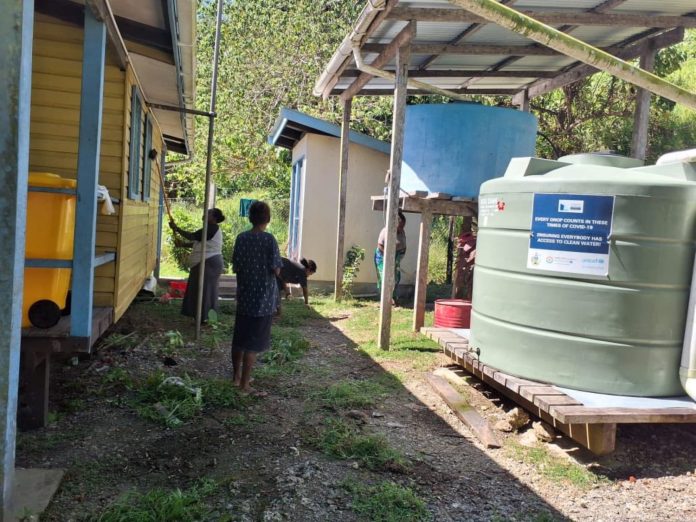
Lunga community in Central Guadalcanal Constituency’s Belaha ward gathered yesterday to clean and maintain their local clinic.

Armed with brushes, scrubbing tools, and determination, community members dedicated their day to ensuring the health facility remains a safe and welcoming space for all.

Ray Seleso, the Health Director for Guadalcanal province commended the community for their efforts, emphasizing the importance of regular clean-ups.

“This community clean-up happens every Wednesday, and it’s heartening to see so many people come together for the sake of their health services,” Seleso stated.

The Health Director expressed gratitude to the Lunga community for their commitment to maintaining health facilities throughout Guadalcanal Province.

He also acknowledges the ongoing support from communities surrounding the Balolava clinic in East Guadalcanal, praising their consistent dedication to similar initiatives.

Seleso passionately advocates for community participation in health services, underlining its critical role in fostering resilience within the healthcare system.

“Communities are the backbone of strong, resilient health services. That’s why I embedded them at the heart of the Corporate Plan for Guadalcanal,” he explained.

He believes that when communities take ownership of their health facilities, the benefits extend far beyond what individual efforts can achieve.

“If there’s one legacy I hope to leave in Guadalcanal Province, it is a culture of genuine partnership with communities, where together, we nurture and sustain the very facilities that sustain us,” Seleso added.

The successful clean-up not only promotes a healthier environment but also strengthens the bond between community members and their local healthcare providers, showcasing the power of collective action in safeguarding public health.

Photo: Ray Seleso

For feedback, contact:[email protected]

Duo highlights importance of ‘Good touch & Bad touch’ concept

0

BY JOHN HOUANIHAU

Two local facilitators of the Just Play Programme have commended the importance of the ‘Good Touch & Bad Touch’ awareness activity.

UNICEF Mental Health and Psychosocial Support (MHPSS) Consultant and Child Psychologist, Dr Koen Sevenants, conducted the ‘Good Touch & Bad Touch’ concept yesterday at the Solomon Islands Football Federation (SIFF) Academy in East Honiara.

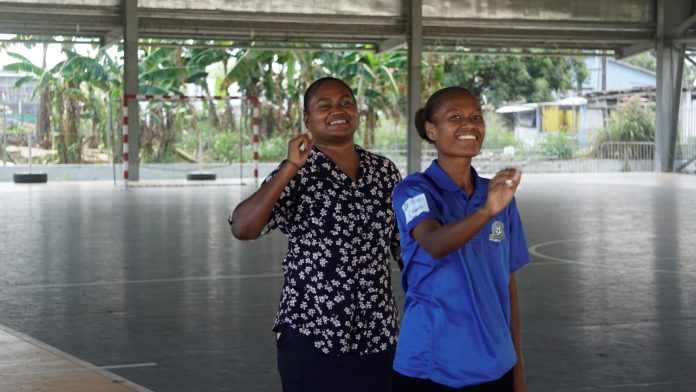
Just Play Programme Instructor, Vanessa Kausimae, said the session was vital in promoting child protection and safeguarding.

She explained that the Just Play Programme, which targets children aged 6 to 18, works closely with in-country partners, including UNICEF.

“This strong partnership helps us protect children and uphold their rights. The activity demonstrates to children the difference between good touch and bad touch, which is a critical step in preventing abuse,” she said.

Sexual abuse is when a person uses their authority or power over a child to engage in sexual activities and it often goes unnoticed, especially among younger children. Many children between the ages of 4 and 12 may not even realise they are being abused. This makes simple, child-friendly awareness activities like ‘Good Touch & Bad Touch’ all the more important.

Ms Kausimae stressed that awareness of the issue is still lacking in the country, and many harmful behaviours have become normalised.

“Breaking it down to the basics, like teaching children what is a good touch and what is a bad touch, helps them understand the impact and empowers them to report or say no,” she said.

Just Play Programme Facilitator, Claudia Votu, also highlighted that the exercise aligns well with the programme’s work in both rural communities and Honiara.

She said the small but powerful demonstration will not only benefit children, but also parents and caregivers.

“This activity allows parents to guide children when situations arise, enabling them to recognise what is right and wrong. If such programmes continue, they will be successful in building children’s confidence to stand up for themselves,” she said.

Miss Votu added that integrating the awareness into schools and communities will help reduce abuse and violence.

“When children learn about good and bad touch at a young age, they grow up strong in their choices,” she said.

The facilitators encourages every parent, teacher, caregiver, and community leader to do this exercise with their children and students.

“For children, it is important to know they can report to a trusted person when they feel unsafe. For adults, if you come across a case of abuse, you must report it immediately to the police, the Social Welfare Division (20569), or by calling the toll-free hotline 132,” said Dr Sevenants.

For feedback, contact:[email protected]

GOOD & BAD TOUCH

0

Special awareness exercise aims to empower children to recognise inappropriate physical contact

BY JOHN HOUANIHAU

UNICEF has introduced a tool to help children differentiate between safe, affectionate contact and harmful or exploitative touching.

UNICEF Mental Health and Psychosocial Support (MHPSS) Consultant and Child Psychologist Dr Koen Sevenants conducted a special awareness exercise on child protection, focusing on the concept of ‘Good and Bad Touch’ at the Solomon Islands Football Federation (SIFF) Academy in East Honiara.

The exercise, facilitated yesterday, aims to empower children to recognise inappropriate physical contact, to respond effectively, and to seek help.

Sevenants stressed that child sexual abuse remains a widespread and alarming issue across the world, including Solomon Islands, and often goes unnoticed at early stages.

“Everywhere in the world, we face the problem of children being sexually abused. What is most disturbing is that in many cases, the perpetrators are not strangers, but individuals known to the child and family,” he said.

He explained that children between ages 4 and 12 years often do not realise when they are being abused because the abuser manipulates them by offering gifts, compliments, and encouraging secrecy.

Many victims, he added, only come to terms with the abuse years later, which makes legal intervention difficult and leaves long-lasting emotional scars.

“As they grow older, many of these children develop depression, anxiety, and emotional difficulties. This often results in behavioural challenges in school, dropping out, or turning to harmful coping mechanisms such as smoking or drinking,” Dr Sevenants said.

The UNICEF consultant emphasised that while Solomon Islands has laws in place to protect children, prevention must begin with education at the earliest stages of childhood.

The “Good and Bad Touch” exercise, he said, is a critical tool to help children differentiate between safe, affectionate contact and harmful or exploitative touching.

“Children must learn to recognise when a touch is not right. They need to understand that they can say ‘stop,’ run away, and report the incident to a trusted person. Suppose this knowledge can reach children across the Solomon Islands. In that case, we will not only reduce cases of sexual abuse but also decrease depression, anxiety, and behavioural problems among adolescents,” he said.

Dr Sevenants concluded that raising awareness and strengthening protective measures at the community and family levels is vital to safeguard children and build a safer future for young people in the Solomon Islands.

For feedback, contact:[email protected]
Trainee at Bethesda disability centre calls for support for special schools

0

BY CHRIS ALEX

Pinalita Kabokera, a dedicated trainee at the Bethesda Disability Training and Support Centre (DTSC) from Western Province, has issued a heartfelt call for authorities to recognize and address the pressing needs of special schools.

Kabokera, who began her training at the DTSC this year, has faced numerous challenges that have raised critical questions about the inclusion of individuals with disabilities in society.

During her time at the DTSC, Kabokera experienced firsthand the difficulties that students with disabilities encounter.

“Why are people with disabilities always left out in our societies?” she asked, emphasizing the urgent need for greater support and recognition from community leaders and responsible authorities.

 “We are part of the communities, and we really need support from everyone to push us forward to achieve our goals,” she stressed.

One of the most pressing issues Kabokera highlighted is the inadequate physical environment of special schools.

At Bethesda DTSC, dormitories are frequently threatened by flooding during the rainy season due to poor location and infrastructure.

Emergency evacuations to school halls have become a distressing norm, highlighting the urgent need for safer, more accessible facilities.

“In rainy seasons, our dormitories are overrun with floodwaters, forcing students to flee to higher grounds,”

“It’s the saddest thing; sometimes, not all of us can make it quickly enough, which puts us at greater risk and burdens our staff with the responsibility of managing such crises,” Kabokera said.

Her remarks call for immediate attention to the poor infrastructure and health conditions at the Bethesda Disability Training and Support Centre.

Her experiences shed light on the broader issues faced by individuals with disabilities in the Solomon Islands, where systemic barriers often hinder access to education and support.

As Kabokera continues her training, her advocacy serves as a reminder of the critical need for investment in special education facilities.

Photo: Supplied

For feedback, contact:[email protected]

Developments underway at Toroiwango school

0

BY CHRIS ALEX

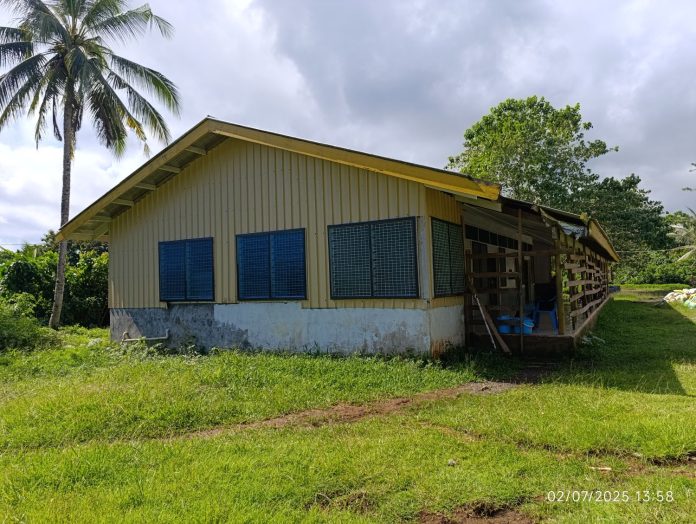
School Principal of Toroiwango, Karl Manira is pleased to share several exciting updates on infrastructure developments and future plans that aim to enhance student welfare and educational quality.

“We are happy to report that the new Girls’ Toilet Block, funded by the United Nations Development Program (UNDP), is nearing completion.

“Once finalized, this essential facility will significantly improve hygiene and sanitation for our female students. A formal handover ceremony is expected to be held in the coming months,” he said.

In a major co-funded initiative, construction has begun on two new three-bedroom staff houses. This project is a partnership between the Solomon Islands-Australia Partnership, WMC, and the school.

Building materials have already arrived on-site, and initial work is well underway. The project is targeting a completion date of March 2026, with an official handover planned for June 2026. This effort aims to improve staff accommodation and support long-term teacher retention.

The school is also making significant strides in finalizing its Whole School Development Plan (WSDP) for the years 2026 to 2034.

Scheduled for submission in November 2025, the WSDP sets a bold vision to transform Toroiwango into a leading junior secondary institution in the East Arosi Region West Makira Constituency.

Based on a recent school census, the plan outlines strategic priorities in three critical areas.

-Infrastructure: Expansion of classrooms and development of specialized facilities such as a science laboratory and technical workshops.

-Technology: Introduction of a reliable solar power system and the creation of a fully equipped computer lab.

-Welfare: Upgrading staff housing and launching a boarding program to support students from remote communities and ensure equitable access to education.

Photo: IslandTech Solomons

For feedback, contact:[email protected]

Communities in Kolombangara strengthen water and sanitation plans

0

BY JOHN HOUANIHAU

The Wildlife Conservation Society (WCS) Solomon Islands and the Kolombangara Island Biodiversity Conservation Association (KIBCA) have partnered with seven local communities in Kolombangara to strengthen efforts to secure clean water and safe sanitation.

The Varu, Nusamahiri, Korare, Kaza, Hapi, Vancouver and Ludoghoroma communities took part in a review of their Water and Sanitation Safety Plans (WSSPs) last week, coinciding with the National Health Conference held in Gizo.

In a statement, WCS Solomon Islands said the WSSPs are “community-owned plans” that provide practical steps to protect local water sources, improve sanitation facilities, and ensure access to safe drinking water.

The plans also serve as a reference point for government agencies and partners to better align their support for community Water, Sanitation and Hygiene (WASH) projects.

According to WCS, the initiative complements calls made during the national health conference to strengthen rural health services, expand access to safe drinking water, and build healthier and more resilient communities across the country.

“This work demonstrates the power of local leadership and planning in improving health, well-being and long-term resilience for Solomon Islands communities,” WCS said.

The effort is supported by the Kiwa WISH+ initiative, a regional program that aims to improve water security and climate resilience in Pacific Island nations.

Community leaders expressed their appreciation for the collaboration, noting that access to clean and safe water is vital for sustaining livelihoods and reducing the spread of waterborne diseases.

The review marks another step forward in community-driven conservation and public health efforts, with Kolombangara Island once again playing a leading role in safeguarding both people and the environment.

For feedback, contact:[email protected]