
Home Blog Page 249

TCSI addresses public concern over data service changes

0

BY MORRIS NAFU

The Telecommunications Commission of Solomon Islands (TCSI) has stepped up in response to Leader of Opposition Matthew Wale and the public about rising mobile data costs, after talks with Our Telekom, B-Mobile and other stakeholders.

In a recent statement, TCSI recognised the outcry sparked by the Opposition Leader Matthew Wale and the general public.

The commission stressed that these complaints are being taken seriously under its watch.

Wale had pushed hard for TCSI to scrutinise the latest data bundle tweaks rolled out by Our Telekom.

“Telecoms are a must-have for growing our economy, so the services and prices on offer to customers should stay fair and low-cost.

“I’m urging the commission to take a close look at these new changes,” he said.

Wale argued that TCSI needs to probe Our Telekom’s selling tactics to stop the market giant from squeezing customers and the wider community.

He highlighted how real rivalry in the sector could drive down costs and boost reliable services – not jack them up.

Wale also pointed out that while it’s great news Our Telekom handed over $45 million to the National Provident Fund (NPF), that windfall shouldn’t hit ordinary users in the pocket.

He warned that letting a big operator rake in fat profits amid low service, without any regulatory push, just encourages more of the same old story.

In response to the pressure, TCSI steps into action as laid out in the Telecommunications Act 2009. The body pointed to Sections 69 and 70, which steer its grip on pricing matters.

“Section 69 demands that companies spell out prices clearly and upfront, and Section 70 sets up a fair way to regulate based on solid proof, weighing social needs, economic realities, and even remote area challenges,” TCSI explained.

To set things straight, the commission noted that data bundles are like seasonal specials – shaped by each provider’s strategy, expenses, and what’s hot in the market.

Even though many feel Our Telekom’s updates are a rip-off, the per-unit data cost still stacks up pretty even with B-Mobile and the rest.

For feedback, contact:[email protected]

Solomon Islands strengthens bilateral ties with Indonesia

0

 BY LORETTA B MANELE

Solomon Islands is strengthening its bilateral ties with Indonesia.

According to a press statement from the Office of the Prime Minister and Cabinet (OPMC), Acting Prime Minister, Bradley Tovosia received a courtesy call last week from His Excellency Andriana Supandy, the non- resident ambassador of Indonesia at OPMC.

During the visit, Ambassador Supandy conveyed congratulations from the President of Indonesia to the Government and people of Solomon Islands for the successfully hosting the 54th Pacific Islands Forum Leaders Meeting.

Moreover, as stated, he highlighted the growing friendship between the two countries saying that more Solomon Islanders are now pursuing studies in Indonesia, particularly in agriculture and technology, which remain areas of strength in Indonesia’s leading universities.

Ambassador Supandy encourages more Solomon Islanders to take advantage of the educational opportunities that are available in Indonesia.

He also outlined several areas of cooperation which include a scoping mission to explore new opportunities as well as the possibility of expanding the visa exemption arrangement to cover ordinary passport holders.

The press statement also mentioned that the ambassador extended an invitation to Prime Minister Jeremiah Manele to deliver a keynote address at the Indonesia Sustainability Forum in October this year.

Acting Prime Minister Tovosia in response, conveyed the Solomon Islands Government’s appreciation for Indonesia’s support which includes construction of the Friendship Hall a key venue during the 2023 Pacific Games and host to recent conferences and for Indonesia’s provision of uniforms for the recent 54th Pacific Islands Forum (PIF) Meeting.

He further expressed interest in the two countries strengthening cooperation in the fisheries sector for tilapia farming and seaweed development and welcomes the prospect of Indonesian telecommunications companies investing in Solomon Islands.

Ambassador Supandy also informed the Acting Prime Minister that three Memorandum of Understanding (MOUs) are currently under discussion for signing in the future and they cover education and health, policing and security, and women and youth empowerment.

Photo: OPMC

For feedback, contact:[email protected]

‘Diplomats need to have additional code of conduct’

0

BY SAMIE WAIKORI

The country’s diplomats may need additional requirements under the Pubic Service code of conduct for employees, for they carry heavier burden than public officers working locally.

Leader of Opposition and member of the Bills and Legislative Committee (BLC), Matthew Wale raised the matter for consideration under the Public Service Bill 2025, which is under consultation. 

He said the foreign service should have additional conducts under the Public Service code of conduct for employees because they represent the country and government and their behaviour and conducts become very important, both during and after working hours.

Wale also asked a team from the Ministry of Public Service during the hearing, if the Ministry and other relevant government institutions like IPAM provide training on diplomacy and etiquette for the country’s foreign service officers.

The team responded that at the moment both foreign service officers and public service officers are guided by the same code of conduct.

They said there is no special or additional conducts for foreign service officers or diplomats yet, but the ministry acknowledges the concern and will see if they can work on it when they review the current code of conduct. 

On the same note, the team said the Ministry of Public Service and the Ministry of Foreign Affairs and External Trade also offers training on diplomacy for foreign service officers, but it is very basic training.

They added that most of them only took courses at IPAM, which is generally on ethics for public service, but it has helped them make their way up the ladder. Most senior officers, who were sent out are with level 12 and 13, and should be well-versed with the public service code of conducts.

The team furthered that the code of conduct should influence the behaviour or performance of the person. For instance, when a diplomat goes to a country, this is the ethics he or she must abide by. 

They also said the code of ethics should be part of a person’s daily living.

The team from the Public Service said this is what they try to preach at IPAM, but assured that they will take onboard the concerns raised to strengthen the public service code of ethics for all public officers.

For feedback, contact:[email protected]
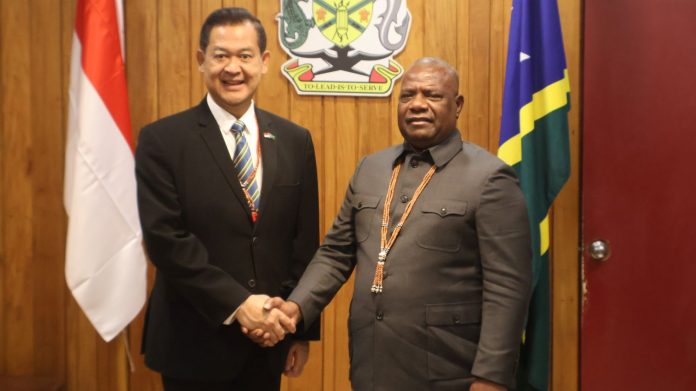
Strengthening animal health with Australia

0

BY CHRIS ALEX

Animal and plant health systems in Solomon Islands are set to improve with the help of Australia.

This was discussed among animal health experts at the “Livestock and Biosecurity Partnership Dialogue” last week at SINU in Honiara.

Permanent Secretary for the Ministry of Agriculture and Livestock (MAL), Dr Samson Viulu, expressed heartfelt gratitude to the Australian Government for its partnership in holding this dialogue.

Spanning for a period of two weeks, the dialogue funded by the Australian Government through the Department of Foreign Affairs and Trade (DFAT), brought together animal health experts from both national and regional backgrounds to explore innovative solutions tailored for resource-constrained communities.

The aim of this programme is to equip local agricultural officers with vital tools and knowledge to bolster food security and safeguard rural livelihoods.

Additionally, the dialogue featured a national stakeholder consultation, a regional workshop, and a national training workshop focused on portable diagnostic tools.

PS Viulu expressed that resilient animal and plant systems are vital to safeguard food security and livelihoods of people.

He stated that strengthening these systems is crucial for timely diagnosis and reporting of transboundary animal diseases and emerging risks.

Australia’s High Commissioner to the Solomon Islands, His Excellency Rod Hilton, said Australia is truly proud to share its world-class expertise in agriculture and biosecurity.

“This partnership reflects our commitment to building and protecting rural industries, supporting the livelihoods and food security of the vast majority of Solomon Islanders who live in rural areas,” he said.

This dialogue set the stage for experts from Agriculture Victoria to present their findings as well as updates on ongoing animal health surveillance by veterinarians and livestock officers.

It also facilitated knowledge exchange among animal health officers from Pacific Island Countries who shared their experiences and strategies on how to combat exotic diseases like the African Swine Fever.

Photo: SINU

For feedback, contact:[email protected]
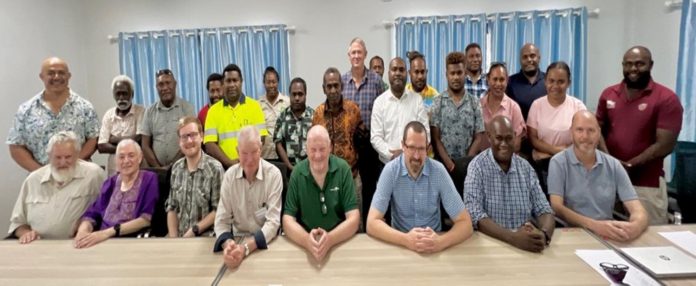
Plans to revamp of NRH patient square

0

BY MORRIS NAFU

The Ministry of Health and Medical Services (MHMS) plans to give the patient square at the National Referral Hospital (NRH) a makeover to create a peaceful outdoor haven that supports patient recovery and eases the burden on busy wards.

In line with NRH’s dedication to improving patient care and family support during tough times, hospital leaders are calling on designers to revamp the square inside the hospital grounds.

The focus is to build a secure, soothing spot that draws relatives away from crowded indoor areas, allowing better airflow and more space for those receiving treatment.

According to an MHMS press statement, the upgrade seeks to turn the square into a calming, eye-catching retreat that aids healing and downtime.

The key aims are; to craft cozy outdoor zones for families to relax outside the wards, boost safety and ease of access for everyone, especially those with mobility issues, reduce ward overcrowding, and to weave natural and cultural elements to build a feeling of home and serenity.

The proposed facility includes a healing zone opt for soothing hues, eco-friendly materials, and plenty of plants to nurture both mind and body health.

In plan are also the following;

-To prioritize a lush mix of shade-giving trees, ferns, and local bushes – steering clear of pollen-heavy flowers like roses to dodge allergies and craft a relaxing, nature-filled vibe.

-To build broad, brightly lit walkways that cater to wheelchairs and walking aids.

-To add comfy benches and covered shelters to beat the tropical heat and spark chats among visitors.

-To feature native flora and subtle water elements to ramp up the peaceful feel.

-To weave in Solomon Islands traditions via art, garden layouts, and patterns that spark local pride and ease.

-To roll out clear signs, quick emergency paths, and solid lighting to keep everyone protected.

-To carve out a dedicated area in the square for health talks, workshops, and campaigns.

-Outfit it with adaptable seats, a simple platform, and tools like screens or boards, all under natural cover with clear sound for group events – keeping things open and friendly.

MHMS also mentioned that the patient square refresh at NRH is a golden chance to reshape the hospital into a true sanctuary of recovery, peace, and togetherness.

Also noted is that by luring families outdoors to a smartly planned area, it could lift health results, visitor vibes, and raise the bar for well-rounded medical care across the Solomon Islands.

For feedback, contact:[email protected]

A RURAL CHALLENGE

0
Fish sales by local fisherman at the Central Market.

350 rural coastal communities in Malaita show interest in fisheries but lack support

By RODRICK DESURI

AUKI

About 350 rural coastal communities around Malaita Province are interested to venture into farming fisheries resources but the challenge is the lack of financial support.

Auki-based Senior Fisheries Officer Mathew Isihanua said many coastal communities and entrepreneurs have shown interest and are requesting training, but there is no available funding to meet these requests.

He stressed that activities such as the deployment of FADs, tilapia farming, and value-adding to fish products have also been requested by other coastal communities.

On his part, due to the lack of financial support, reaching out to coastal communities has become a problem for him.

“We have 350 coastal communities that have requested training, but logistics are costly to reach them.

“My latest training was at Waimarau and Harumou in post-harvest and fish bottling, for which I had to fund my trip and the initiative,” he explained.

Isihanua mentioned that he has knowledge and skills and even has his own kits to use during any fisheries training.

He appeals to the provincial and national governments to seek and allocate funds for activities such as seaweed farming, aquaculture farming, post-harvesting, and fish bottling.

“I think, both provincial and national government should allocate more funds to these activities. These are their felt needs faced in their daily lives,” he said.

Fisheries supports food security through nutritious, accessible protein and drives economic growth, provides employment, generates income, and fosters social well-being by sustaining coastal and rural communities.

Additionally, it contributes to economic development through revenue collection for the province and national government.

For feedback, contact:[email protected]
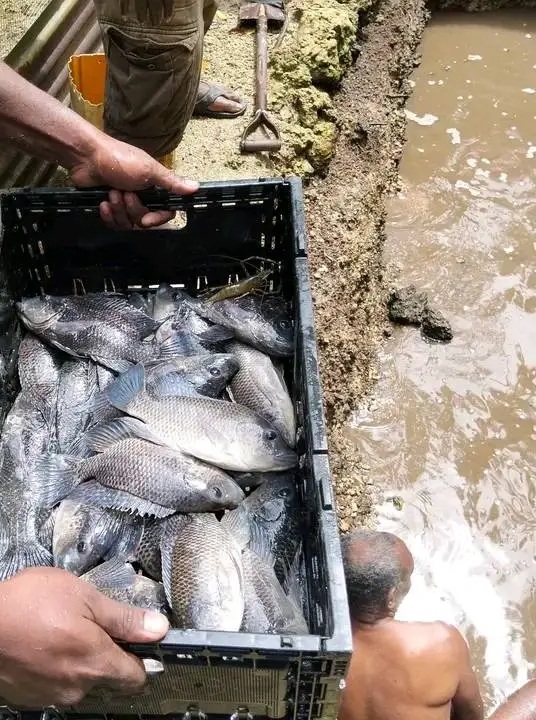
Successful Tilapia harvest inspires Usunione farmers to expand aquaculture efforts

0

BY RODRICK DESURI

AUKI

The Usunione tilapia farmers in southern Malaita are celebrating a major win after harvesting from their one-year-old tilapia pond on Wednesday, September 24, 2025.

This milestone has sparked strong motivation among farmers to expand their tilapia farming efforts, with many nearby communities and villages also showing keen interest in starting their own ponds.

Senior Fisheries Officer, Mathew Isihanua shared the excitement, saying the farmers are proud to see their hard work pay off with bigger, healthier fish and a productive harvest.

“They are very happy and grateful to see their pond producing more tilapia, which are bigger in size and healthier.

“This success has encouraged them to build more ponds and continue farming, which is a promising way to generate income and provide nutritious food for their families,” he said.

After harvesting, the farmers transfer the smaller tilapia fingerlings into newly prepared ponds while selling the larger fish to the local market.

The Usunione group, formed last year by 20 young men with support from the former Ministry of Finance and Treasury IT Officer, started farming Mozambique tilapia after receiving fingerlings from a farmer in Small Malaita.

Looking ahead, Isihanua noted that the farmers are eager to gain more skills and knowledge in tilapia farming, especially when the country will import a new species, Nile Tilapia.

“Their goal is to have many ponds in the future and improve their farming techniques while preparing for the arrival of Nile Tilapia,” he said.

For feedback, contact:[email protected]
Tilapia farmers in South Malaita call for more training

0

BY RODRICK DESURI

AUKI

Tilapia farmers in the south region of Malaita province call for more training and support to overcome challenges they faced during their recent Mozambique tilapia harvest on September 24, 2025.

The Usunione farmers, who began their tilapia farming journey last year in September, say they need more skills and knowledge to improve their operations and ensure future success.

Senior Fisheries Officer Mathew Isihanua said the Ministry of Fisheries and Marine Resources has a key role to play in providing training that will help farmers boost their expertise.

“Training is greatly needed by these tilapia farmers. This can help and support them to broaden their knowledge and farming skills,” he said.

He explained that after harvesting the bigger fish, farmers transfer smaller fingerlings into new ponds to continue the cycle.

The recent harvest at Usunione has drawn attention from surrounding communities, with many expressing interest in starting their own tilapia farms.

“The harvesting has attracted many community members nearby, and they have shown great interest in tilapia farming,” said Isihanua.

Looking forward, he confirmed that Usunione farmers will be recommended to receive Nile Tilapia fingerlings when the new species is imported to Solomon Islands soon.

Isihanua encourages more rural farmers to venture into tilapia farming and promises to offer support whenever resources allow.

“I encourage more rural farmers to start tilapia farming. We will try our best to visit and support you when funds are available,” he said.

For feedback, contact:[email protected]

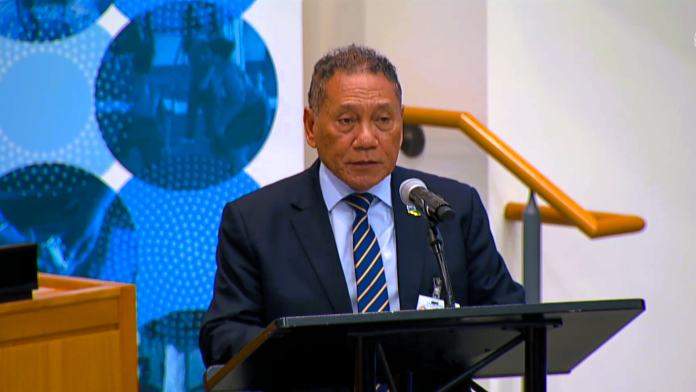
PIF calls for stronger global action on NCDs and mental health

0

BY NED GAGAHE

The Pacific Islands Forum (PIF) has made a powerful call for renewed global commitment to tackle Non-Communicable Diseases (NCDs) and mental health challenges in the region.

Delivering the Forum’s statement at the Fourth High-Level Meeting on the Prevention and Control of NCDs and Promotion of Mental Health and Well-being, held during the 80th United Nations General Assembly in New York last Thursday, Peter Shanel Agovaka, Minister of Foreign Affairs and External Trade of Solomon Islands, addressed world leaders on behalf of the Forum member states.

Minister Agovaka told the Assembly that NCDs are the leading cause of death across the Pacific, accounting for 75 percent of all deaths in the region.

He also highlighted the growing crisis of mental health, particularly among young people.

“These are the new realities our member states and people are dealing with on a daily basis,” Agovaka said.

He said NCDs are putting immense pressure on health systems, and that mental health challenges are being amplified by substance abuse, climate change, and urbanisation.

The Minister outlined progress made by Pacific countries under the Pacific NCD Roadmap of which are;

  • Taxes on sugary drinks, tobacco, and alcohol
  • Strengthened primary health care
  • Regional tracking tools and data systems
  • Training for frontline health workers

Despite these gains, Agovaka warns that corporate interests continue to promote products that worsen health outcomes, and that low awareness, late screening, and poor access to care are leaving too many to suffer in silence.

He also announced that the Forum is updating its Healthy Islands Vision, first developed in 1995, and is embedding it across the 2050 Strategy for the Blue Pacific Continent to ensure health becomes a cross-cutting development issue.

“To truly move forward, we must invest in care and rebuild the health systems matched with resources,” he said.

Minister Agovaka used the high-level meeting to issue a clear set of calls to the international community and they are as follows;

  • A new country-led financing partnership and regional procurement options
  • A platform for SIDS and WHO to share policy and financing solutions
  • Assistance to design and implement health taxes on harmful products
  • Financing to climate-proof health infrastructure
  • Elevation of NCDs and mental health within the Western Pacific Regional Office
  • Development of a Health Financing Scorecard to track progress

He voiced that together, they can build a healthier Pacific.

Minister Agovaka concluded with a message of regional solidarity and hope, calling for systems that will serve future generations.

“Together, we can build a healthier, more resilient Pacific region by building systems that serve our people – now and into the future,” he said.

The address was met with strong support from Small Island Developing States (SIDS) and development partners present at the UN General Assembly.

Photo: Supplied

For feedback, contact:[email protected]

PM Manele urges urgent climate action at UNGA

0

BY MORRIS NAFU

Prime Minister Jeremiah Manele speaking at United Nations General Assembly last week, sounded the alarm on climate change as an unrelenting danger hammering the Pacific region.

In his address Manele painted the crisis as a “multiplier” that’s reshaping destinies worldwide.

Drawing on stark data, PM Manele highlighted the World Meteorological Organization’s report naming 2024 as the hottest year ever recorded – a grim milestone that’s derailing the 1.5°C warming limit set in the Paris Agreement.

For the Solomon Islands, a nation with one of the smallest carbon footprints on the planet, the PM proudly noted the country’s bold “Net Positive” third Nationally Determined Contribution (NDC). Yet, he stressed that more can be achieved through global teamwork, including funding for reforestation, forest protection, and shifting to renewable energy sources.

“We need bold, immediate steps to steer us back to that 1.5°C path,” PM Manele declared.

He called out major polluters and nations with deep historical emissions to step up and slash their outputs decisively.

PM Manele also pushed back against recent skepticism aired at the UN.

“The science is crystal clear on climate change, and my people are living the painful reality of it every day,” he stressed.

Manele also highlighted that strong endorsement of the International Court of Justice’s (ICJ) groundbreaking Advisory Opinion on climate change, delivered on July 23, 2025.

Prompted by a UN General Assembly resolution (77/276), the ruling tackled two key issues.

One is on states’ legal duties under international law to shield the climate from damaging greenhouse gases, with a focus on fairness across generation and the other issue is the fallout for countries whose neglect harms the planet, especially vulnerable spots like Small Island Developing States (SIDS).

These SIDS including the Solomons, bear the brunt of rising seas and extreme weather despite their tiny emissions.

The opinion also covers duties to affected people, communities, and future generations whose rights to life and livelihoods hang in the balance.

“Solomon Islands warmly welcomes this historic ICJ decision and backs the push for a follow-up UN resolution,” PM Manele told the UN assembly.

He emphasized that nations now face ironclad responsibilities to avert damage, work together, and safeguard rights for today and tomorrow.

These aren’t just ethical calls – they’re enforceable laws holding countries accountable for ending destructive habits, avoiding repeats, and making amends for the harm done.

The PM also stressed on the growing crisis of climate-induced displacement, where whole villages face losing their ancestral lands.

The ICJ’s ruling reinforces the non-refoulement principle, barring any nation from sending people back to zones where climate threats make life untenable.

“This is a vital shield for rights to life, food, water, and livable homes,” he said.

For SIDS, it’s a matter of survival, underscoring that climate duties are “erga omnes”– owed to everyone, everywhere, calling for shared global action.

Dismissing attempts to confine these obligations to the Paris Agreement alone, the ICJ affirmed broader legal grounds like human rights, maritime law, and customary international rules.

It declared the 1.5°C goal legally binding which insists big emitters can’t dodge blame (even non-Paris signatories), and warns of repercussions for violations – from reparations for damages to scrutiny over fossil fuel reliance, handouts, and use.

For Pacific atolls on the front lines, the opinion offers real hope and validation. It guarantees that even if oceans swallow shorelines, island nations’ sovereignty and sea boundaries will persist.

“This isn’t just legalese, it’s a rallying cry for the world to unite in upholding 1.5°C, shielding the weakest, and forging a fair, enduring tomorrow for all,” PM Manele stated.

In closing, the Prime Minister tipped his hat to Vanuatu’s trailblazing role and the relentless drive of Pacific youth in championing this cause.

“Their passion has amplified our plight globally, proving the Pacific’s power is in our solidarity,” he said.

For feedback, contact:[email protected]