
Home Blog Page 245

SINTA meets with Malaita province teachers 

0

By RODRICK DESURI 

Auki 

Members of the Solomon Islands National Teachers’ Association (SINTA) from Honiara met with its member-teachers from Malaita Province last week.

Robert Lafisi, SINTA’s General Secretary spoke about the meeting in an interview with Island Sun Auki on Monday.

He said the meeting aims to inform and update every teacher in the Malaita Province about the latest information regarding their central association, SINTA.

“The meeting took place on Friday last week at the Auki Community High School. It is just to inform and update our teachers in Malaita Province about SINTA,” he said.

Lafisi said the meeting was successful and at the end, the teachers were all happy and grateful.

“We are all very grateful and happy about SINTA,” he added.

The government and SINTA signed a Master Agreement in August this year, which brought an industrial action notice to an end and promoted their ongoing cooperation.

Permanent Secretary of the Ministry of Education and Human Resources Development (MEHRD), Dr Franco Rodie, Chair of the SIG Negotiation Team, Dr Melchior Mataki, and Mr Lafisi signed the Master Agreement.

Witnessing the official signing were Luke Cheka, permanent secretary of the Public Service; McKinnie Dentana, permanent secretary of the Ministry of Finance and Treasury; and Frank Roboliteé, acting president of SINTA.

The terms of the agreement include:

1) Job Security for Teachers

2) Recognition of Teachers’ Experience

3) Teachers’ Salary backdating to January 1st, 2024

4) Early Childhood, Technical and Vocational Education, Training, and Special Needs Education Teachers’ Salary and Classification 

5) Long and Dedicated Service Benefit 

6) Establishment of the Teachers’ Housing Taskforce 

7) Teachers’ Annual Leave Package 

8) Balancing Employment Benefits with Professionalism, Conduct, and Performance

For feedback, contact: [email protected]

Restoration ceremony to be held in East Kwaio 

0

By RODRICK DESURI 

AUKI 

A restoration ceremony for descendants of the Ophir Tribes will be held at Obona’eru, East Kwaio, Malaita Province on October 24 and 25. 

This counts as the second restoration ceremony that will be held and it aims to bring back all descendants of the Ophir Tribes together, to settle differences, and move forward for any possible development in the future. 

In an interview with Island Sun Auki, Chief John Paul from the Ophir descendants said the restoration ceremony is a prayer and not meant to segregate anyone. 

He stated that everyone, near and far, is most welcome to the event, as during the ceremony, there will be a clearance of the affiliations and connections of their tribes. 

“This event welcomes everybody and does not segregate anyone, whether you are connected or not.

“This is a prayer event, and the first thing to know is prayer, which is purposely intended to create true affiliations and connections,” he said. 

Meanwhile, Chief Paul emphasised that more information relating to the restoration event will be shared during the two-day programme. 

He mentioned that transportation will be provided for everyone who wishes to attend the program. 

“Transportation will be provided in Auki for anyone who wants to attend the programme,” he said. 

Island Sun newspaper understands that the Member of Parliament for West Kwaio Constituency, Claudius Tei’ifi, is supporting the event with transportation and food.

For feedback, contact: [email protected]

Environment bond policy to be brought before cabinet

0

BY JOHN HOUANIHAU

The matter of environment bonds in mining operations will be brought to cabinet.

There are no specific provisions requiring payment of an environmental bond in the current Solomon Islands Mines and Minerals and the Environmental Act.

Minister of Mines, Derrick Manuari recently voiced this in parliament.

He was responding to the question of whether an environmental rehabilitation bond deposit was made by the license holder and contractor in the now-closed Rennell bauxite mining lease.

In his response to the question from Opposition Leader, Mathew Wale, the Member of Parliament for West Makira said no environmental bond was paid in this sort of case.

He went on to say that the government, however, recognizes this gap in this sector and his ministry with the Ministry of Environment are working on this through the Legislative Reform Programme to transform the sector.

Manuari said that there’s a reference to financial assurances, that require companies to pay, under Part 3, Section 2 of the financial assurances under the current reforms of the new Minerals Act.

“It requires companies to make a bond payment to the government when incur environmental damages to the mining sites. The money can be used for environment rehabilitation, even if the operation is finished,” he said.

He said that as part of the Legislative Reforms under the proposed environmental bill, it explicitly provides for environmental bonds under the relevant sections of the environmental bill, Clause 86.

He said that there is ongoing work on a policy to be brought before Cabinet that will pave way for the calculation of an environmental bond.

“It will also be outlining the framework on which the bond can be implemented. Under the policy, Mr Speaker, it will be integrated into the Mining Amendment Regulations and will be linked to the Environmental Act 1998 and the Mines and Minerals Act 1990,” Manuari said.

He assured that House that the GNUT will be the first government to come up with an environmental bond policy.

“It is already finalised. We will ensure that policy, by putting into place an environmental bond, which will be applied to the best practice in this regard. We are working seriously on this to ensure that the situation does not continue,” he said.

For feedback, contact: [email protected]
Consistency and fairness are crucial in public service: Wale

0

BY SAMIE WAIKORI

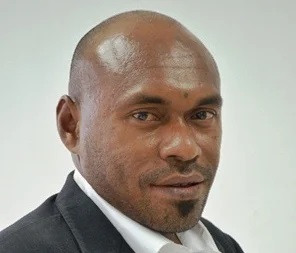
The Leader of the Official Opposition Group in Parliament and Member of Parliament for Aoke/Langalanga, Matthew Wale, says consistency and fairness is crucial for a healthy functioning public service bureaucracy.

Wale emphasised this whilst speaking on debate of the Public Service Bill 2025, introduced by Minister for Public Service and Member of Parliament for Northwest Guadalcanal, Francis Sade, last week.

He said by operating under a predefined system of rules, regulations, and standardized procedures, a bureaucracy ensures that cases are treated similarly.

Wale stressed this reduces the risk of arbitrary decisions and helps maintain legality and order.

The Leader added that under impersonality, decisions are made based on established criteria rather than personal favoritism, political connections, or bias.

“Rules are applied universally, without favoritism toward individuals or personalities. All citizens are treated equally under the law and standard operating procedures.

“This impersonality promotes fairness and helps eliminate corruption. Here we struggle with cultural obligations and the pressures of the wantok system.

“We have to acknowledge that we have a particular cultural context, but we must ensure that obligations arising out of culture does not erode or compromise the trusteeship principle,” he said.

The MP furthered that public officials must also execute policy impartially, remaining separate from political motivations or partisan bias.

“I suppose this is the reason why public officials wanting to contest elections must first resign their positions.

“It is in everybody’s interests to ensure the political neutrality of the public service. Once compromised, it will lead to decay in the public service.

“It is incumbent upon both public officers and politicians to protect the political neutrality of the public service,” he stressed.

Wale voiced that it is important the public service implement policies of the government of the day.

“The public service must not assume upon itself any discretion as to whether or not government policy should or should not be implemented.

“It must implement. Further, when being directed by a minister, a public official is duty bound to give advice that is politically neutral, guided only by legality, ethics, and best practice,” he said.

For feedback, contact: [email protected]

Accountability and transparency are key features of good public service: Wale

0

BY SAMIE WAIKORI

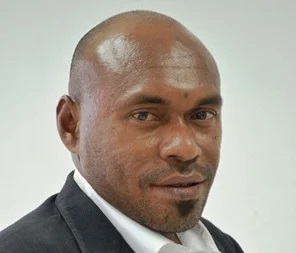
The Leader of the Official Opposition Group in Parliament and Member of Parliament for Aoke/Langalanga, Matthew Wale, says accountability and transparency are key features of a good public service.

He highlighted this during the debate on the Public Service Bill 2025 last week.

Wale said openness and accountability in public service means the administration’s processes, rules, and decisions are open to scrutiny by oversight bodies like the legislature or ombudsmen, auditor general, and the public.

Wale emphasized that it is important that public officials in exercising public offices and powers, do so deliberately under the knowledge that their decisions and actions are subject to oversight and regular inspection.

He said public records are important and all official acts, decisions, and rules are recorded in writing, providing a basis for continuity, audit, and legal accountability.

“Public officials must never act on verbal instructions or directives, especially from ministers or politicians.

“A public official who is given a verbal political directive must demand that the directive be put in writing. This has been an area of corrupt decision making over so long,” he said.

Wale also said that under rule of law, actions must be taken in strict accordance with the law, policies, and established good practice, respecting the rights of those concerned, and recognizing that an appellate body may inquire into any matter, if appealed by an aggrieved party.

He added that decision making under the knowledge of the right of appeal is helpful in moderating such decisions and ensuring they are within the bounds of law.

Moreover, the MP stressed that in terms of responsiveness and continuous improvement in public service, the administration should design and deliver services with citizens’ needs in mind, ensuring ease of access, clear communication, and timely, sensitive responses.

“There are clear, accessible mechanisms for addressing complaints and correcting mistakes or poor decisions.

“The bureaucracy must actively seek to improve its efficiency, quality of service, and administrative procedures, by simplifying processes and utilizing up-to-date knowledge and technology,” he said.

Wale said there seems to be current fascination with the collection of personal data by various administrative bodies like application forms, arrival departure forms and so on.

He noted the public service must seek to discipline this urge for private personal data to the bare minimum needed for decision making requirements.

This fascination often merely adds to the paperwork, rather than any real administrative benefit.

Wale said integrity is who a person is when they are alone, when they’re not being watched. When faced with a grey area or a silence in the law, a person with integrity will err on the side of the spirit of the law, good precedent, good practice, common sense and what is right.

The Leader emphasized that this is why it is important that laws are clear, and administrative mechanisms are put in place to protect all who exercise public offices and powers, against their own worst instincts and the temptations from others.

For feedback, contact: [email protected]
Individual project implementation for Central Kwara’ae to commence next year

0

By RODRICK DESURI 

AUKI 

The implementation of individual projects for the constituents of Central Kwara’ae Constituency will commence next year. 

This was agreed upon by the Constituency Development Committee (CDC) during their meeting on Saturday, October 18, 2025.

A statement from CDC says they will be focusing only on church and community projects this year. 

The constituency also mentions that the delay was due to insufficient funds obtained by the constituency to support and provide for all the requested projects. 

“After reviewing numerous individual project applications, it was noted that available funds are insufficient to support all requests.

“The CDC hopes to resume individual project support next year, subject to funding availability,” the statement said.

CDC also said that this year, available resources will be directed towards initiatives that benefit larger groups and the wider community and their focus is on community and church projects.

The committee appreciates the continued support and cooperation of all residents, as efforts to enhance development will continue within the Central Kwara’ae Constituency.

Island Sun understands that these projects are funded through the Rural Constituency Development Fund with a fixed allocation.

A few other constituencies in Malaita Province have already distributed projects for their constituents.

For feedback, contact: [email protected]
Professionalism is crucial for public service: Wale

0

BY SAMIE WAIKORI

Opposition Leader, Matthew Wale says professionalism is the key cornerstone in the public service bureaucracy.

He said among areas a healthy public service must have policy execution and bureaucracy is responsible for the doing—taking the laws and policies enacted by the legislative and executive branches and turning them into actionable programs.

“Examples include running schools, managing hospitals, maintaining infrastructure, and collecting taxes and so on,” Wale said.

He pointed out that public servants should also be career professionals and experts in their field as specialisation ensures that complex policy details are handled with technical competence and professional knowledge.

The Member of Parliament for Aoke/Langalanga said this is to ensure tasks are clearly broken down and assigned to specialized expert officials, leading to greater competence and efficiency.

On the same note, he highlighted that a clear hierarchical structure and division of labor streamline operations define who is responsible for which decisions and tasks.

“This structure, maximizes efficiency and allows for better coordination and control. There is a clear, fixed chain of command and control, ensuring accountability and coordination.

“The buck has to stop somewhere. Someone must bear responsibility for decisions and actions taken within the structure of the public service,” Wale said.

He also stressed the need for organizational memory, through which extensive record-keeping, where the bureaucracy maintains continuity and organizational memory.

“This allows government operations to follow precedent, learn from past experience, and function seamlessly, even as elected political leaders change.

“This also ensures precedence is respected and provides certainty and predictability of decision making,” Wale said.

He stressed that well-functioning bureaucracy uses a merit-based system for hiring and promotion, where civil servants are selected based on qualifications and job performance rather than political patronage or wantok relationships.

“This commitment to professionalism is key to effective and non-partisan public service,” he said.

For feedback, contact: [email protected]
Rehabilitating environmental damage a legal requirement: Manuari

0

BY JOHN HOUANIHAU

Mining companies have an obligation to rehabilitate the environment from damages under the mining agreement.

Minister for Mines, Energy, and Rural Electrification, Derrick Manuari highlighted this when responding to Opposition Leader, Matthew Wale about the non-payment of the environmental bond in Rennbell Bauxite mining issue.

Wale described the Rennbell issue as a terrible state of affairs and negligence of the worst kind given the fact that both companies and the contractor are no longer registered and in the country.

“In the case of the Renbel, where the environmental degradation and destruction is very large and obvious, who picks up that liability? Who will meet that? I’m not sure what the legal status is of that company,” Wale questioned.

In response, Manuari said that despite the non-payment of the environmental bond under the mining agreement, there is an obligation for the company to rehabilitate the environment from damages.

“That obligation is a legal requirement for the companies to do. Under Part 3, Section 2 of the financial assurances, under the current reforms, under the new Minerals Act it require companies to make a bond payment to the government when incur environmental damages. That money will be there for environmental rehabilitation,” he said.

He also noted that with the establishment of the Commission of Inquiry, a lot of these issues about the Renbel issue will be answered.

“Their liquidation only added up to the challenges that are supposed to us, as a government, people, and as a country on what the gaps are within the sector where, as we go along, we must find ways to ensure that that doesn’t happen again. The legislative framework, the legal framework that we are working on, have a lot of gaps.

“If we don’t patch them up, we’ll continue to face challenges like this. We all learn from the experiences that we meet as a country, a government, as people through these various operations. The best we can do is to identify, through the establishment of a Commission of Inquiry, but also ongoing legislative reforms to fill out those gaps,” Manuari said.

For feedback, contact: [email protected]

‘PROTECTING LIVES’

0

Government and HALO Trust renew partnership to continue addressing UXO threat

BY JOHN HOUANIHAU

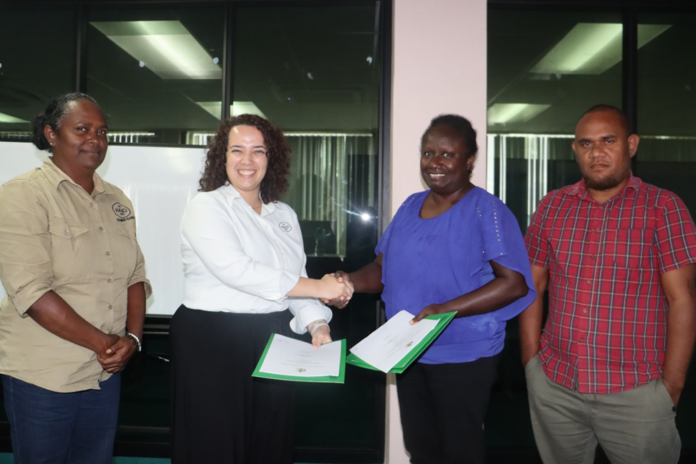
The government, through the Ministry of Police, National Security & Correctional Services (MPNSCS), has renewed a vital Memorandum of Understanding (MoU) with The HALO Trust to continue nationwide efforts to address the legacy threat of unexploded ordnance (UXO) from World War II.

The renewed agreement, signed on Tuesday, extends collaboration through June 2026, reinforcing commitments to public safety, national security, and sustainable community development, a statement by MPNSCS yesterday said.

MPNSCS said this MoU renewal builds on the original partnership established in June 2023, which facilitated a comprehensive Non-Technical Survey (NTS) identifying contaminated areas and established a national UXO coordination mechanism.

The ongoing collaboration enables further surveying, enhanced capacity building for the Royal Solomon Islands Police Force’s Explosive Ordnance Disposal Team, and strengthened national oversight with transparency and respect for Solomon Islands laws and cultural protocols.

MPNSCS Permanent Secretary Karen Galokale expressed deep appreciation for The HALO Trust’s professionalism and technical expertise, and the generous financial backing from the United States Government, supporting HALO’s work with a USD 3.6 million grant.

“This renewed MoU is not just about clearing remnants of conflict but about protecting lives and enabling national progress,” Galokale said.

Emily Davis, Programme Manager of The HALO Trust Solomon Islands, voiced enthusiasm for continuing the partnership.

“We are proud to support Solomon Islands communities through non-technical surveys and risk education to reduce the threat of unexploded ordnance.

“We thank the Ministry of Police, National Security & Correctional Services for their ongoing collaboration,” Davies said.

The MPNSCS statement said UXO contamination remains a serious hazard to life and development, particularly in former World War II operational zones.

The statement said that the partnership supports the National Security Strategy 2025–2028, prioritizing the safety and security of all Solomon Islanders and enabling safer land use for agriculture, infrastructure, tourism, and economic investment.

The MPNSCS said that the Solomon Islands Government and its partners reaffirm their shared commitment toward a UXO-free Solomon Islands, fostering safer communities and a resilient future for generations to come.

Photo: Supplied

For feedback, contact: [email protected]

NIPS empowers communities in Isabel province

0

BY BEN BILUA
Gizo

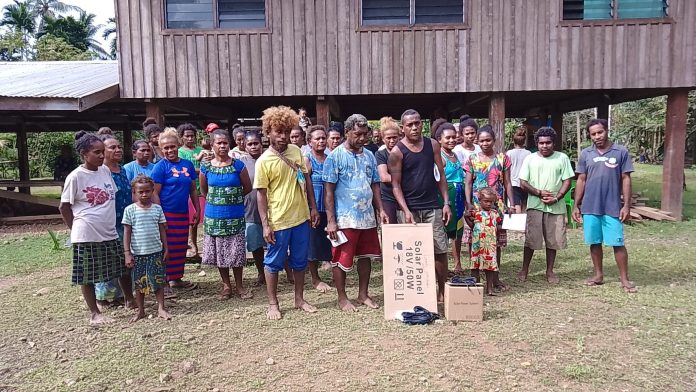
The Network for the Indigenous Peoples Solomons (NIPS) extended its support to three communities in Isabel province through the delivery of solar systems to promote clean and sustainable energy.

Over the weekend, NIPS handed over the solar systems to community leaders of Koisisi, Lelegia, and Talise villages under the initiative “Empowering Isabel: Harnessing Solar Energy for a Sustainable Future.”

According to NIPS, the support forms part of the 2025 Inter-generational Climate Microgrant – Illuminates Solomon Islands’ Future project, which seeks to transition rural communities from conventional energy sources to renewable solar power.

“The initiative stands as a beacon of hope and progress, aiming to replace conventional energy reliance with clean, solar-powered solutions,” the statement from NIPS said.

The project focuses on equipping community halls that play crucial roles during gatherings and important events. NIPS said the move promotes both environmental awareness and cost-saving measures while advancing community energy independence.

Chief Wilson Doedoke of Talise Village, speaking on behalf of the three communities, expressed gratitude for the timely support.

“We are thankful that NIPS reached out to us. Our communities will have many activities this Christmas, and these solar systems will help us lighten up the community halls,” he said.

NIPS Coordinator and project recipient, Aydah Gwaen Akao, said the initiative marks the start of a long-term partnership.

“This is not just an immediate solution; it’s a commitment to a sustainable future, underscoring the enduring collaboration between local communities and international partners,” she stated.

Through this initiative, the communities of Koisisi, Lelegia, and Talise are poised to lead by example, demonstrating how clean energy can drive resilience, empowerment, and self-sufficiency across rural Solomon Islands.

Photos: NIPS

For feedback, contact: [email protected]