Home Blog Page 21

33 SHIPMENTS

0

PROBE BEGINS

-Mines Minister Manuari announces start of investigation into missing bauxite exports in Rennell mining

-Missing ores estimated value at $288 million, tax loss estimated at $4.3 million

BY IRWIN ANGIKI

The GREAT government has announced the beginning of investigations into the controversial missing 33 shipments of bauxite from Rennell island, Renbel province.

Minister for Mines, Energy & Rural Electrification (MMERE), Derick Manuari said the Attorney General’s Chambers with support from the Mines Division are leading the process, a statement by the PM Press Secretariat yesterday said.

Attorney General Gabriel Suri, on Monday, June 1, wrote to the Director of Mines to initiate investigation into the 33 shipments of bauxite (minerals) by Asia Pacific Investment Development Ltd and Bintan Mining SI Ltd, the statement said.

The scandal involved 33 shipments of bauxite which companies, Asia Pacific Investment Development (APID) company and its subcontractor Bintan Mining Solomon Islands Ltd (BMSI), had not paid government taxes, landowner royalties and payments to the Renbel province for.

The missing shipments represented estimated unpaid tax of $4.3 million, unpaid royalty of $3.4 million, unpaid fees to the Renbel province of $864,558, and unpaid fees towards community development estimated at $2 million.

Current minister of Foreign Affairs, Rick Hou, was prime minister at the time when the 33 shipments went missing – from November 28, 2017 and January 22, 2019.

And, the new Attorney General, Gabriel Suri’s law firm represented APID.

The announced investigation into the 33-shipment saga is a step forward following the commission of inquiry (COI) launched by Minister Manuari on May 13 last year when he was Mines Minister under the former government, the Government for National Unity and Transformation (GNUT).

Minister Manuari in making the announcement yesterday said this signals a decisive move by the GREAT coalition to restore integrity in the mineral sector.

Manuari said that the Government’s actions are grounded in law and reform, the statement from the PM Press Secretariat said.

Manuari said the GREAT Coalition is taking firm and necessary steps to overhaul a sector long plagued by weak oversight and lack of accountability.

“These reforms are about safeguarding national interests, strengthening transparency, and ensuring Solomon Islanders receive the full benefits from their natural resources,” he said.

Manuari said many of the current challenges stem from years of inaction and lack of political will by previous governments to implement meaningful reforms.

“We are now doing the hard work that should have been done long ago and putting in place strong systems, tightening oversight and building a modern, accountable framework for managing our mineral resources,” he added.

For feedback, contact: [email protected]

Editor: [email protected]

DEVELOPING SOCCER

0

Hekari FC president Vonnie Puia Nato unveils ambitious academy and elite football vision for Solomon Islands

BY RICHARD MENANOPO

GHUPO Wantoks FC has declared its intention to help transform football development in Solomon Islands after officially launching its programme on Saturday night at the Monarch Bar and Grill in Honiara.

The newly established club, backed by Papua New Guinea football powerhouse Hekari FC, aims to compete in the Telekom S-League while also building football academies and pathways for young players across the country.

Club president Vonnie Puia Nato, who also serves as president and manager of Hekari FC, said the club’s vision goes beyond simply competing in local football.

“We are here to be part of developing football in our country.

“At the end, this is for our country. We are helping to develop more players for our national team,” Mrs Nato said.

Speaking during the launch, Nato shared her experience helping build Hekari FC into one of Oceania’s most successful football clubs.

She said discipline, commitment and hard work will become the foundation of Ghupo Wantoks FC.

“Discipline is paramount.

“There is no way you and I can succeed with bad habits while expecting success to come,” she stressed.

Nato revealed that Hekari FC, which competed at the FIFA Club World Cup in 2010, will help guide the new club’s development.

“Ghupo FC is owned by Hekari,” she explained during a one-on-one interview after the launch.

“Now we call it Ghupo Wantoks FC so that we can have every part of the province to be part of it.”

She also outlined plans to establish football academies in Honiara and Renbel Province.

“I want to establish six academies in Renbel — two in West Rennell, two in East Rennell, and two in Bellona.

“We have to start somewhere,” Nato said.

Nato said her long-term goal is to create opportunities for local footballers to progress into elite competitions, including the professional environment at Hekari FC in PNG.

“PNG Hekari is now competing in the professional league, and I would love to see some of our people eventually become part of Hekari FC in PNG,” she said.

The club has already assembled a 25-player squad for the upcoming season, including PNG professional league player Nathaniel Eddy from Hekari FC.

Meanwhile, newly appointed head coach Joel Moffat Konofilia confirmed the club intends to compete in the Telekom S-League.

“I intend to participate in the S-League, which is the highest competition in the country.

“We’ve prepared for more than 14 years now. We are ready to go,” Konofilia said.

Konofilia added that the club intends to introduce its own football identity and philosophy.

“Omega football philosophy is our football.

“We are ready to display at Lawson Tama,” he said.

He also confirmed plans for football academies through future partnerships with Hekari FC and Solomon Kings.

Nato used the launch to call for unity and support from football stakeholders, stressing that Ghupo Wantoks FC is not only for Rennell and Bellona people, but for the entire country.

“Ghupo Wantoks is not only a Bellona or Rennell team.

“It is a team for the country,” she said.

Ghupo Wantoks FC is a newly established football club linked with PNG football powerhouse Hekari FC. The club plans to field senior men’s, women’s and Under-18 teams this season while targeting long-term football development through academies and elite competition pathways in Solomon Islands.

Photo credit: Richard Menanopo

For feedback, contact: [email protected]

Editor: [email protected]

Provincial teams expected as SICF pushes nationwide growth of chess

0

BY RICHARD MENANOPO

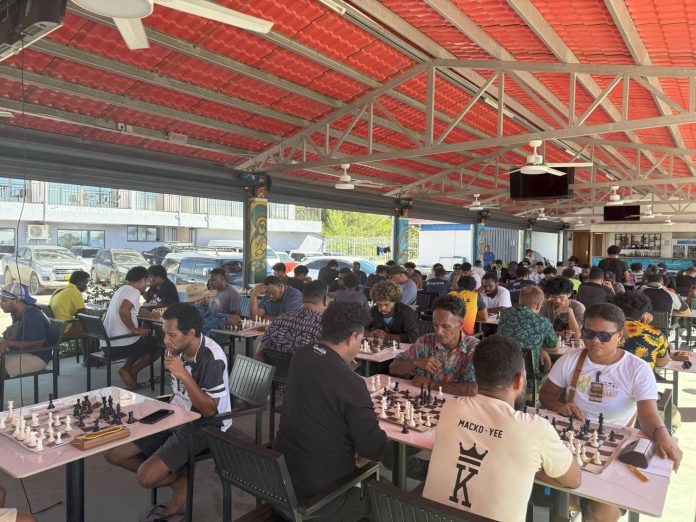
The Solomon Islands Chess Federation (SICF) is expecting more than 100 players to participate in this year’s Sir Peter Kenilorea Championship following the official opening of registrations for the annual Independence tournament.

The championship, which will be held on July 7 as part of Solomon Islands’ 48th Independence celebrations, is expected to attract up to 20 teams from across the country.

SICF President Simon Chottu told Island Sun that early interest in the competition has already been encouraging.

“We are expecting up to 20 teams from across the Solomon Islands. With each team consisting of four players plus one reserve, we anticipate more than 100 players participating in this year’s championship,” Chottu said.

He said teams from Western Province and Rennell and Bellona have already shown interest, with SICF hoping more provinces will join the tournament.

“Registration officially opened today and we have already received strong interest from chess clubs, teams and individual players forming teams for the event,” he said.

The annual championship honors the legacy of Solomon Islands’ founding Prime Minister, Sir Peter Kenilorea, while promoting strategic thinking, sportsmanship and youth development through chess.

Chottu said the tournament also serves as a platform for national unity and intellectual competition during the country’s Independence celebrations.

“The championship honors the legacy of the late Sir Peter Kenilorea, who brought our country to independence. Hosting this event during the Independence celebrations promotes national unity, intellectual competition and the development of strategic thinking among our people and young talented youths,” he said.

He added that local interest in chess has grown significantly since the appointment of the federation’s new executive earlier this year.

“Since the establishment of the new SICF Executive in March 2026, federation membership has increased from around 22 members to more than 100 active members.

“Our recent national rapid tournament attracted 94 registered players, demonstrating growing public interest in the sport,” Chottu said.

The competition will be played in a team format featuring four players and one reserve per side across four rounds under a one hour and 30 minutes time control.

Winning teams will receive cash prizes, trophies, medals and certificates, while special awards are also expected for outstanding individual performances.

Chottu encourages spectators and supporters to attend the championship once the official venue is confirmed.

“Chess is a spectator-friendly sport that allows people to observe strategic competition and learn from experienced players. We want to make chess competitive and an entertaining sport,” he said.

The Sir Peter Kenilorea Championship is one of SICF’s major annual tournaments and forms part of Solomon Islands Independence celebrations each year.

The event honors the country’s founding Prime Minister while supporting the continued development of chess throughout the Solomon Islands.

Photo credit: Richard Menanopo

For feedback, contact: [email protected]

Editor: [email protected]

Acting Vice Chancellor says SINU league could help uncover future national football talents

0

BY RICHARD MENANOPO

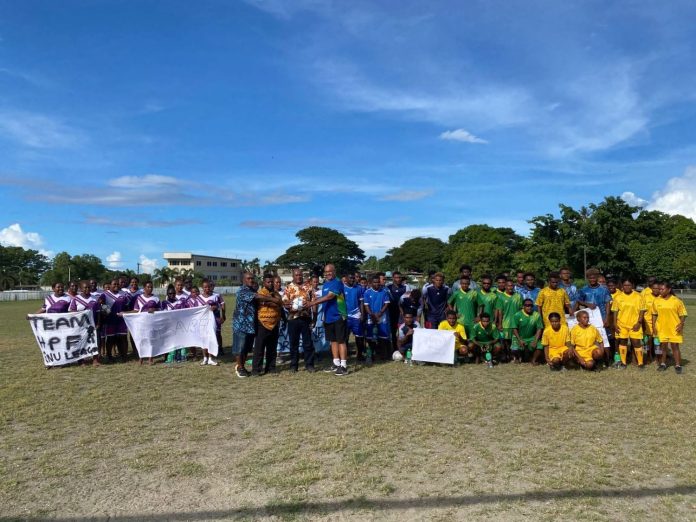
The Solomon Islands National University (SINU) Soccer League 2026 was officially launched on Friday at the SINU Kukum Campus, with university leaders describing the competition as a platform to nurture sporting talent, student wellbeing and campus unity.

The launch ceremony featured a colorful parade by participating teams representing SINU’s five faculties ahead of the start of competition matches this week.

Speaking during the official opening, SINU Acting Vice Chancellor Associate Professor Eric Katovai acknowledged the university’s Campus Life, Welfare and Sports Department for organising the tournament and promoting active sporting participation among students and staff.

Katovai said the competition could become an important pathway for students with sporting potential to progress further in their football careers.

“For some of you participating in this league, this may be the beginning of something much greater.

“You may discover talents that could take you to provincial, national, regional or even international levels,” he said.

He encouraged young players and staff members participating in the competition to take the opportunity seriously and use the league to develop their abilities both on and off the field.

“Many successful sporting careers begin on fields just like this one. I encourage our students and young staff members to give their very best and see where their abilities may lead them in the future,” Katovai said.

While stressing the competitive aspect of the tournament, the Acting Vice Chancellor said the wider purpose of the league is to strengthen relationships within the university community.

“The SINU Soccer League is an opportunity to foster teamwork, discipline, leadership, friendship and a strong sense of community across our university.

“Sport is not only about winning. It is also about the relationships we build, the respect we show one another and the lessons we learn both on and off the field,” he said.

Katovai also reminded participants to uphold good sportsmanship throughout the competition by respecting teammates, opponents, match officials and supporters.

The SINU Soccer League will feature both men’s and women’s divisions and is expected to run throughout June before concluding with prize presentations for the winning teams at the end of the month.

Competition matches are scheduled to begin on Monday, June 8, at the SINU Kukum Campus.

The launch ceremony was attended by Pro Vice Chancellor Corporate Dr William Parairato, BICS Manager Samson Bisafo, National Sports Council representative Mr. Atu, SINUSA President, as well as SINU staff and students.

The revival of organised sports competitions at SINU comes as the university continues efforts to rebuild campus sporting culture following its transition from the former Solomon Islands College of Higher Education (SICHE). Organisers say the league also aims to promote student health, social interaction and participation in structured sporting activities across the university community.

Photo credit: SINU Fb page

For feedback, contact: [email protected]

Editor: [email protected]

Socialisation workshop held in Auki 

0

BY RODRICK DESURI 

Auki 

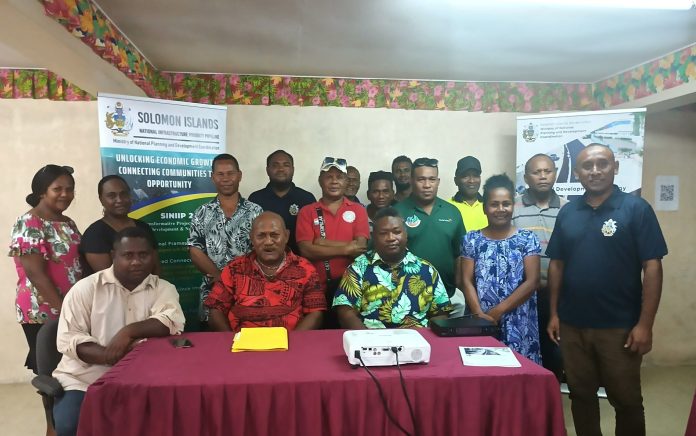
The Ministry of National Planning and Development Coordination successfully held their one-day socialisation consultation in Auki, Malaita Province, on Monday, June 8. 

The workshop will help the ministry identify possible ways forward for integration of feedback into the Solomon Islands National Infrastructure Investment Pipeline (SINIIP), coordination mechanisms between national and provincial levels, and upcoming processes and timelines. 

The workshop aims to facilitate effective socialisation, consultation, and awareness of the Solomon Islands National Infrastructure Investment Pipeline (SINIIP) Dossier in Malaita Province by engaging key stakeholders, including provincial authorities, community leaders, development partners, NGOs, and the private sector.

It will also enhance understanding of priority infrastructure projects, gather local insights and feedback, strengthen coordination, and promote inclusive participation in the planning and implementation process.

One of the participants during the consultation, Frank Samo, appreciated the consultation, saying the initiative is a better option that the ministry should carry out.

He also said that the national aid coordination funds shouldn’t be included in the Rural Constituency Development Fund (RCDF) since tangible developments haven’t been seen from it.

“Once the Ministry of National Planning and Development Coordination sends through the Provincial Capacity Development Fund (PCDF), there will be tangible developments that can be managed in the wards in terms of infrastructure and utilities.

“This is because before the implementation, we can go down to the communities and find out what their real projects are that benefit them,” he said.

For feedback, contact: [email protected]

Editor: [email protected]

CEMA continues with its ‘farmers first’ commitment

0

BY TONY IROGA

The Commodities Export Marketing Authority (CEMA) has again reiterated how it is helping copra farmers throughout the country, especially with its Management Fee which the former government had removed.

CEMA CEO Colin Yow in a statement last week explained that the levy of $3.05 which it had introduced March 19, 2026 on copra exporters had aimed to help farmers, enable CEMA do its mandated work of helping farmers better, and target exporters who he said was making exorbitant profits from the trade.

The copra exporters have declined to comment, when sought by this paper through their spokesperson Bob Pollard last week.

In their response to CEMA on May 25, 2026, the exporters had denied CEMA’s claim that they were making huge profits. They challenged CEMA to publish its audited financial results for public to better understand the real situation.

What CEMA is and who it serves

CEMA is the Commodity Export Marketing Authority — an Authority established with one core responsibility: to promote, develop and protect the commodity industries that rural Solomon Islands depends upon. At the heart of that responsibility is a mandate that CEMA takes seriously every day: to ensure that producers receive the best possible returns for the commodities they work so hard to produce.

Copra farming is the backbone of rural livelihoods across this country. It is the income that puts children through school, pays for medicine, and sustains communities in provinces far from Honiara. CEMA exists to serve the men and women who do that work — to be the institution that stands firmly in their corner, speaks clearly on their behalf, and acts without hesitation when their interests are at stake.

“CEMA does not exist to serve the market. CEMA exists to serve the farmers who make the market possible,” the CEMA statement said.

The copra management fee — built for farmers

The copra management fee of SBD $3.05 per kilogramme is a legal instrument established under the CEMA Act. Every dollar it collects is required to be returned directly to the copra sector — not to administration, not to any other fund, but back into the industry and the farming communities that generated it. The management fee is, in every meaningful sense, a farmers’ fund.

This fee has existed for more than 20 years. CEMA first gazetted it at SBD 2 cents per kg in August 2004, raised it to SBD 3 cents in January 2005, and increased it to SBD 5 cents in April 2012. From that point, the fee was not reviewed for 14 years. During those 14 years, the costs that farmers face — fuel, transport, basic goods — all rose. But the fund meant to support them remained too small to make a real difference. The reset to SBD $3.05 per kg in March 2026 was CEMA’s long-overdue acknowledgement that farmers deserved more — and that the fund created in their name needed to be strong enough to actually serve them.

What the management fee delivers for farmers

The management fee gives CEMA the financial means to do the work that farmers have needed for a very long time. It funds regular transport access by landing craft to all nine provinces — reaching farming communities in even the most remote locations on schedules that farmers can rely upon. It funds CEMA’s direct buying presence, so that every farmer has a genuine choice and is never left dependent on a single buyer or a single price. It funds copra bags and quality control — practical support that lowers what farmers spend and raises the value of what they sell. It funds coconut replanting, because CEMA understands that without investment in the trees today, farming families face a diminished future tomorrow. And it builds a price stability reserve, so that CEMA can step into the market and protect farmer incomes when buying activity falls away and prices come under pressure.

For the farming families of Malaita, Makira, Choiseul, Isabel, Temotu, the Weather-coast and the outer islands, these services are not abstractions. They are the practical difference between a system that works for them and one that does not. CEMA designed the management fee with those families in mind — and every dollar it collected was a dollar committed to changing their conditions for the better.

How CEMA stood beside farmers — the record

From the day the management fee took effect on March 19, 2026, CEMA monitored the market closely and kept its attention firmly on farmers. When buying prices fell sharply in parts of the market — with some farmers receiving as little as SBD $1 to SBD $1.50 per kg after facilitation costs – CEMA acted without delay.

CEMA entered the market immediately. CEMA bought copra from local buyers at SBD $6 per kg and paid farmers SBD $4 per kg – the same fair price they had received before the management fee came into effect. In the first 39 days alone, CEMA purchased 901 metric tonnes of copra. Farmers across the country had a real, fairly priced option. They were not abandoned to the market. They were not left to accept whatever was offered. CEMA was there — present, buying, and paying a price that reflected what farmers’ work was worth.

Throughout that period, CEMA’s message to every farming community was clear – the reduced prices that had appeared in some parts of the market were not something farmers had to accept. CEMA’s commitment to a fair farmgate price was not a position held when it was easy. It was a commitment held when it mattered most — and CEMA delivered on it.

901 metric tonnes purchased at a fair price for farmers in 39 days. That is what Farmers First looks like — not in words, but in action.

CEMA’S COMMITMENT CONTINUES

The copra management fee was repealed on 28 April 2026. CEMA notes this and has continued to monitor the market with the same care and the same commitment to farmer welfare that has guided CEMA from the beginning.

Since the repeal, CEMA has continued to buy copra at SBD $6 per kilogram. That has not changed — because CEMA’s commitment to farmers does not begin and end with any single policy instrument. CEMA is in the market today. CEMA is buying today. And CEMA’s price remains the highest available to farmers. CEMA will welcome any development in the market that sees farmers earning more — because more for farmers is the only outcome that matters to this Authority.

What the period since 19 March has demonstrated clearly is that CEMA’s presence as an active, credible buyer with a fair price is the most direct protection available to copra farmers. When CEMA is in the market, farmers have a genuine choice. When farmers have a genuine choice, their bargaining position is stronger and their returns are better. That is the practical value of what the management fee funded — and it is the value CEMA is determined to provide, in every form available to it, for as long as farmers need it.

CEMA’s answer to every copra farmer in Solomon Islands is the same today as it was on 19 March, and the same as it will be tomorrow: we are here, we are buying, and we will not leave you without a fair price.

CEMA is here for farmers

CEMA’s door is open to every copra farmer and every rural community that depends on this industry. CEMA listens to farmers. CEMA’s decisions are shaped by what farmers experience, what farmers need, and what will genuinely improve their lives and livelihoods. That is not a principle CEMA applies selectively. It is the foundation on which this Authority operates.

Any farmer, local buyer or rural community with questions about copra pricing, CEMA’s buying programme, or the services the management fee is designed to fund is encouraged to reach out to CEMA directly. This Authority exists to serve you — and serving you means being accessible, transparent and honest about what CEMA is doing and why.

For feedback, contact: [email protected]

Editor: [email protected]

56 students graduate from Papapi Technical School

0

BY BEN BILUA
Gizo

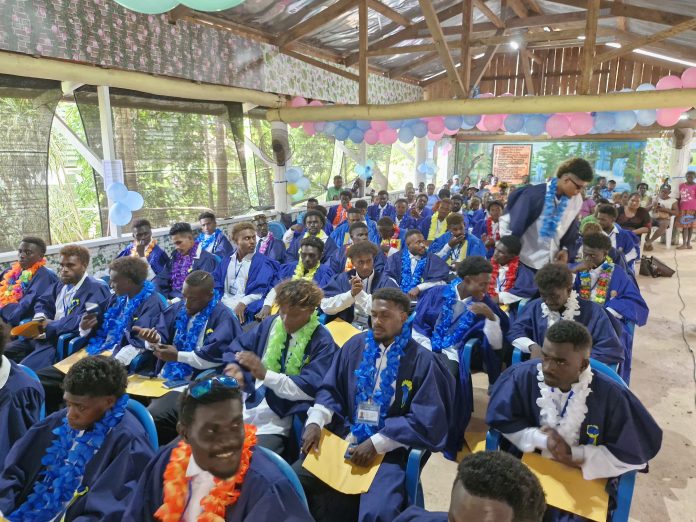
A total of 56 students have successfully completed their training at Papapi Technical School, marking an important milestone in their educational journey.

The school yesterday hosted a graduation ceremony attended by students, parents, relatives, and invited guests to celebrate the achievement of the graduates.

Speaking at the ceremony, Inspector of Western Province Education Services, Willie Etupio, highlighted the importance of education in shaping a successful future and helping young people reach their full potential.

“Education is the key to a successful future and an important element in helping young people develop to their fullest potential,” he said.

Etupio told those present that education is a lifelong process of learning that opens doors of opportunity for those who are willing to dedicate themselves to acquiring knowledge and skills.

“Through education, people are exposed to new knowledge, skills, talents and experiences that help them discover who they are and what they are best suited for,” he said.

Etupio said the formal academic education system in Solomon Islands has not always been able to provide sufficient practical skills and knowledge needed by ordinary citizens to adapt to an increasingly competitive world driven by market forces, science and technology.

He said there remains a significant gap between the country’s labour market demands and the outcomes of the formal education system.

“The young generation cannot effectively enter the labour market with only the knowledge and skills obtained through the formal education system,” Etupio said.

He said the high number of students dropping out of the formal education system and facing limited employment opportunities has contributed to growing social issues within communities.

Etupio said there is a need for more technical and vocational institutions across the country to provide alternative pathways for young people who leave formal schooling.

“We need more technical schools to provide opportunities for those who drop out of our formal education system. Technical schools are the best way forward to address the missing link between our formal education system and the labour market,” he said.

Etupio congratulated the graduates for their hard work and dedication throughout their training.

He also acknowledged the support and commitment of parents and guardians who helped them reach this important milestone.

The graduation ceremony concluded with the presentation of certificates to the 56 graduates as families and friends joined to celebrate their success and future aspirations.

For feedback, contact: [email protected]

Editor: [email protected]

Onelafa CHS thanks Save The Children 

0

BY RODRICK DESURI 

Auki 

Staff of Onelafa Community High School in East Fataleka, Malaita Province, acknowledges Save the Children through the Solomon Islands Knowledge-Action-Sustainable for Resilient Villages (SOLKAS) project for reaching out to their school on Wednesday, June 3. 

The outreach aims to equip the community with the necessary knowledge and skills to build resilience at the school and community levels to support sustainable development in a changing climate. 

During the three-day event at the school, the school staff had the opportunity to identify natural hazards that impact the school, students, and staff. 

One of the staff members said they identified many natural hazards affecting the school that need to be addressed for the benefit of the school. 

“On the second day of the program, we were grouped into teams. From the groups, we were asked to identify and write down the hazards that affected the school.

“We also dramatised some of the hazards to give a real picture of it,” the staff said. 

Meanwhile, school principal, Alex Soloi, also thanked the Save the Children team for their support through the SOLKAS project.

He said they thank the team for showing them the green light in terms of providing water for the school.

“Once they support us, we will benefit from that, especially since water is our main problem here,” he said. 

The Solomon Islands Knowledge-Action-Sustainable for Resilient Villages (SOLKAS) project is building the climate resilience of children, young people, and communities in vulnerable rural areas. 

SOLKAS partners with the Ministry of Environment, Climate Change, Disaster Management, and Meteorology (MECDM) and is primarily funded by the Green Climate Fund with the support of Australia, New Zealand, and the Solomon Islands Government.

For feedback, contact: [email protected]

Editor: [email protected]

Be productive citizens: Etupio

0

BY BEN BILUA
Gizo

GRADUATES of Papapi Technical School have been encouraged to become productive citizens and contribute meaningfully to the development of their communities, Western Province and the country.

The call was made by Western Province Education Authority Inspector, Willie Etupio, during the school’s graduation ceremony yesterday at Outback Living in Gizo.

Speaking to the graduates, Etupio said completing technical training was a significant achievement, but securing employment and building a successful career will require determination, commitment and hard work.

“Congratulations for your achievement. You have made the right decision to further your education through technical training.

“Graduating means joining the labour market, especially in the fields of technology and industry.

“Furthermore, graduating from a technical school is the beginning of further studies at tertiary institutions such as Solomon Islands National University,” he said.

Etupio reminded the graduates that the knowledge and skills they have acquired will not only help them support themselves, but also their families and communities.

“I encourage you to use the knowledge and skills you obtained from the institution. You have become a pool of trained human resources for Western Province and we are proud of you.

“Be part of the productive citizens who contribute to the development of Western Province and the country,” he said.

A representative of Papapi Technical School, Gibson Buka, expressed satisfaction at seeing another group of students successfully complete their studies and prepare to enter the labour market.

He said the graduates successfully completed six months of training despite the challenges faced by the institution.

“I’m confident that you have obtained the knowledge and skills from the core courses. It is now your time to make use of those skills and knowledge to help yourself, your family, your communities, our province and our country,” Buka said.

Buka said Papapi Technical School was established in 2006 with the objective of providing vocational and technical skills training to school dropouts and young people seeking practical career pathways.

“Since the establishment of the school in 2006, more than 300 students have graduated from the institution by 2026.

“Some of our graduates are now working on ships as engineers, while others are employed as mechanics in vehicle repair workshops,” he said.

Buka said the achievements of former students demonstrate the importance of technical and vocational education in creating employment opportunities and developing a skilled workforce for the country.

The graduation ceremony marked another milestone for the institution as it continues to equip young people with practical skills needed to meet the demands of the labour market.

For feedback, contact: [email protected]

Editor: [email protected]

Malaita youth division continues to support and promote members

0

BY RODRICK DESURI 

Auki 

The Youth Division within the Malaita Provincial Government continues to support and promote the youths of Malaita Province through their internship programme.

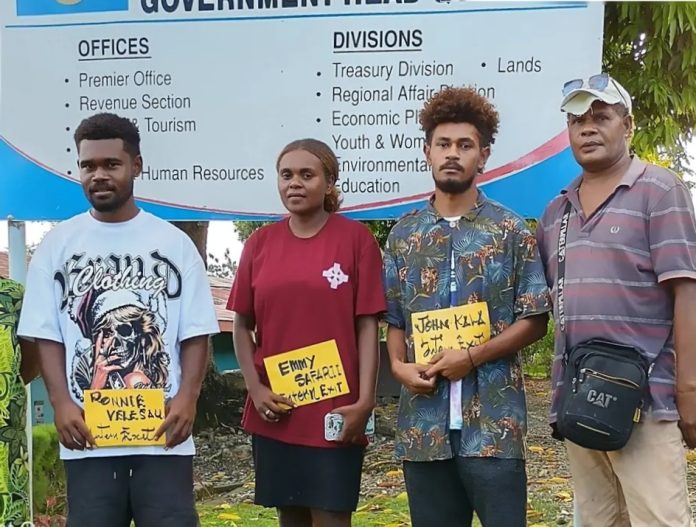
Over the weekend the Malaita Provincial Government farewelled another three internship students from the Asian Pacific Sustainable Development (APSD) programme at the provincial area. 

The internship programme provides an opportunity for youths to feel, experience, and broaden their knowledge as their practicum in various areas of provincial government divisions.

According to the Malaita Provincial Youth Coordinator, Frank Samo Sari, the initiative first started in 2019 to support youths after they finish their education at Rural Training Centres (RTC).

He said that it is a nine-month work programme that initially began with students from Don Bosco School.

“It was established in 2019 with two students from Don Bosco.They came to experience the areas of work of business and administration.

“We have farewelled three students from the Asian Pacific Sustainable Development (APSD) for the successful completion of their nine months,” he said. 

He said the three students included one female and two males, who had the opportunity to gain experience in business and administration. 

“The three had the opportunity to practice in areas of Business and Administration and general office management. Not only that, but they also attended workshops and training from government ministries and NGOs,” he said. 

To mark the completion of the internship programme for the three students, the Malaita Provincial Government as organised light refreshments and handed tokens of appreciation to the three internship students.

For feedback, contact: [email protected]

Editor: [email protected]