Home Blog Page 207

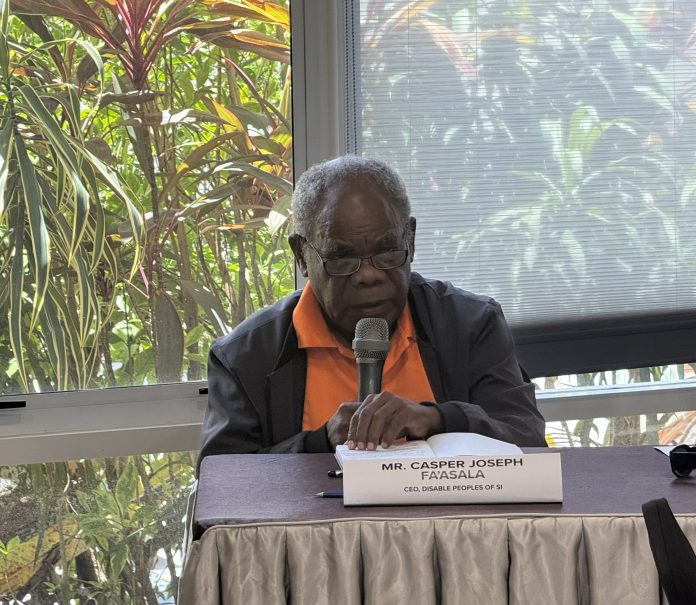
We want to see power in the villages: Fa’asala

0

 BY LORETTA B MANELE

We want to see more hydro power in the villages says Casper Fa’asala, CEO of Disabled Peoples Association of Solomon Islands (DPASI).

He raised this whilst speaking as one of the panel members at UNDP and Ministry of Mines Panel Discussion on “Pathways towards better electric power availability, affordability, and sustainability” at the Heritage Park Hotel this month.

Fa’asala said having hydro power in the informal sector can help people with disabilities to be able to create innovations.

“Woodwork, furniture, those are things that disabilities can, again, utilise those powers for. But there is increasing technology devices. The blind can also use their job programmes, which is now available. Having power will be an accessibility for them,” he explained.

Fa’asala also said women with disabilities in the village with access to hydro power can also use electrical sewing machines to help them upgrade their sewing skills as means of raising their income at the community level.

For feedback, contact: [email protected]

Australia is SI’s largest development partner

0

BY SAMIE WAIKORI

Australia remains as Solomon Islands’ largest development partner and Solomon Islands ranks third globally—after Papua New Guinea and Indonesia—in the scale of development support it receives from Canberra.

As one of Solomon Islands’ longstanding partners, Australia continues to demonstrate resilience and consistency in its commitment to the country’s development.

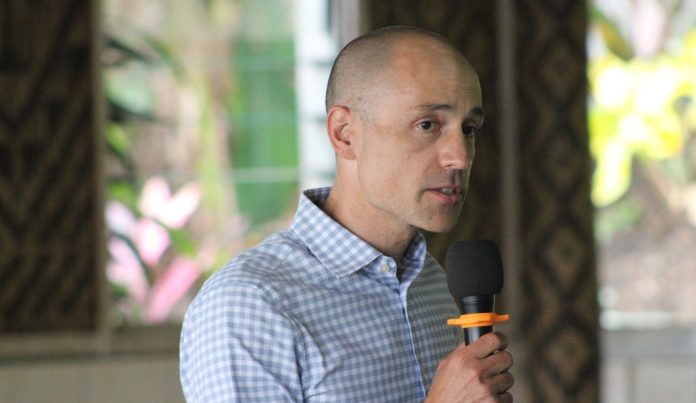
Appearing before the Public Accounts Committee (PAC) last week, Australian Acting High Commissioner His Excellency Andrew Schloeffel expressed his appreciation for the opportunity to engage with PAC members and stakeholders across government, parliament, civil society, and the private sector.

He described these engagements as fundamental to ensuring Australia understands the best ways to support Solomon Islands’ development.

“We are talking about a substantial commitment, and we want to make sure it is a commitment that is being led and driven by the priorities of the government and the people of Solomon Islands,” Schloeffel said.

For the current financial year, Australia’s development assistance to Solomon Islands stands at approximately AUD 170 million.

Schloeffel emphasized that Australia aligns its development programs with the priorities of the Solomon Islands Government, delivering support in what it sees as the most effective and responsive manner.

He noted that in June this year, Australia launched its Development Partnership Plan—a public document outlining how Australia intends to work and what it will prioritise in its support to Solomon Islands.

The Acting High Commissioner added that Australia continues to respond to key recommendations raised by successive Solomon Islands governments, particularly in areas such as infrastructure, job creation, and economic growth. These priorities, he said, have become major features of Australia’s support.

In addition, Schloeffel highlighted ongoing cooperation in health, education, public financial management, and gender equality.

For feedback, contact: [email protected]

Education is key for development

0

BY JOHN HOUANIHAU

The Japanese Ambassador to Solomon Islands, His Excellency, Keiichi Higuchi said education plays a key role in the development of society and the country.

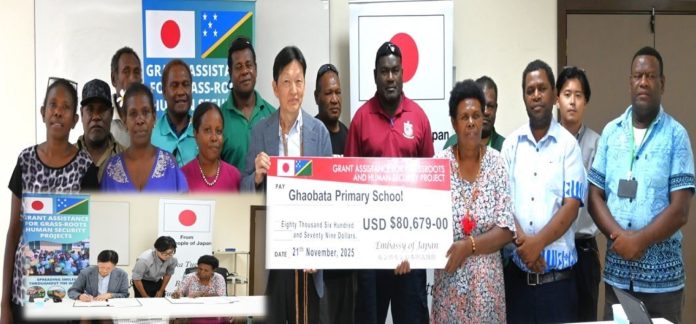
He made the statement during a signing ceremony of a grant worth 80,679 USD from the government and people of Japan to Ghaobata Primary School in North West Guadalcanal.

Ambassador Higuchi and Ghaobata Primary School Headmistress Ms Emillian Papasa signed the contract at the Japanese Embassy in Honiara on Friday last week.

The Japanese Ambassador said on behalf of the government and people of Japan, he is honoured to sign the contract between the Embassy of Japan and Ghaobata Primary School.

“We will support the construction of a classroom building for Ghaobata Primary School. This assistance will provide access to a proper educational environment for people in Ghaobata Primary School,” he said.

He said that supporting basic education is one of the priority areas of Japan’s assistance under the Grassroots and Human Security Scheme.

He also stressed that education plays a key role in the development of society and the country.

“We believe that this project will have positive impacts on the socio-economic development of Solomon Islands.  Hopefully, it will strengthen the cordial relationship between Solomon Islands and Japan.

“With a strong sense of ownership and collective will to improve the lives of children in this community of Ghaobata, I am confident that the project will be successfully and smoothly carried out and reach the goal,” he said.

He said that this project will be remembered as a symbol of the friendship between the people of Japan and the Solomon Islands in the years to come.

The Ambassador said it is a great honour to contribute to the development of the people of Solomon Islands.

“On behalf of the Government and people of Japan, I would like to reaffirm our continuous commitment to the people and the prosperity of our two countries,” he said.

For feedback, contact: [email protected]

Australia injects AUD $227 million into Solomon Islands budget for 2024-2025

0

BY SAMIE WAIKORI

The Australian Government has provided AUD $227 million to support the Solomon Islands Government’s priorities from July 2024 to June 2025.

The funding is being channelled through Solomon Islands government systems to ensure alignment with the country’s development objectives. The funds are distributed as follows:

  • AUD $22 million for general budget support
  • AUD $19 million to the Ministry of Education, Human Resource Development (MEHRD) to support provincial classroom upgrades
  • AUD $17 million to the Ministry of Health and Medical Services (MHMS)
  • AUD $152 million for infrastructure development

The announcement was made by Australia’s Acting High Commissioner to Solomon Islands, His Excellency Andrew Schloeffel, who addressed the Public Accounts Committee (PAC) last week.

Schloeffel reiterated Australia’s strong commitment to supporting the development of the Solomon Islands.

In his remarks, Schloeffel explained that Australia’s assistance program is a mix of on-system and off-system support, designed in close consultation with the Solomon Islands government.

He said on-system support flows directly through the government’s financial systems, ensuring transparency and alignment with national priorities.

However, Schloeffel added some projects are managed off-system due to their complexity or because the Solomon Islands government has requested Australia to directly oversee the project’s delivery.

A key example of off-system support, Schloeffel noted, is the AUD $250 million Naha Urban and Birthing Health Centre, which is being constructed by Australia.

He said given the scale and complexity of the project, it was agreed with the Ministry of Health and the Ministry of Infrastructure and Development (MID) that Australia would take the lead in managing the project for greater efficiency.

“These examples illustrate how we balance locally-led development with on-system support,” Schloeffel said.

Schloeffel further highlighted the off-system programs that provide broader benefits. One notable initiative is the National Transport Fund, which supports infrastructure development over the past years.

In addition, he also said Australia has funded technical advisors who work directly with various ministries to strengthen Solomon Islands’ institutional capacity.

In particular, Schloeffel pointed to the Ministry of Finance and Treasury, where Australian advisors are working on revenue collection, public financial management, budget development, and other key tasks.

“A good example of this is our work in the Ministry of Finance, where we have experts supporting vital functions that strengthen the country’s financial systems,” Schloeffel explained.

In the meantime, the Acting High Commissioner also stressed Australia’s close partnership with the Ministry of National Planning and Aid Coordination, emphasized that all support—whether on-system or off-system would be captured in the Solomon Islands government’s budget documents, ensuring full transparency and accountability.

Photo: Supplied

For feedback, contact: [email protected]

Marine biodiversity hotspot under threat from mining, expert warns

0

BY BEN BILUA
Gizo

A leading marine scientist has raised the alarm over the future of one of Solomon Islands’ richest marine biodiversity hotspots, warning that unchecked mining activities could permanently damage Thousand Ships Bay in Isabel Province.

Dr. Lindon Havimana sounded the warning after sharing his scientific findings on the popular Isabel Province Youth Forum Facebook page.

He described Thousand Ships Bay — the strait separating the mainland and San Jorge Island as an ecological treasure that supports some of the country’s most productive marine ecosystems.

According to Havimana, the bay’s unique geography, ideal water quality, and high levels of nutrients delivered by several rivers make it an exceptionally fertile environment for marine life.

He explained that the mixing of nutrient-rich freshwater and the bay’s oceanic waters creates a highly productive environment that sustains a variety of marine species, for instance the planktons.

Havimana said both phytoplankton and zooplankton form the foundation of the marine food web, supporting fish, invertebrates and countless other sea creatures that depend on these organisms for survival.

He said the bay also hosts interconnected ecosystems — mangroves, seagrass beds, and coral reefs — which serve as crucial nursery grounds.

Havimana said mangroves and seagrass offer breeding habitats and shelter for juvenile fish, crabs and other marine species, while coral reefs provide key structures for spawning and feeding.

He highlighted several unique underwater locations within the bay where strong currents and steep coral reef cliffs create ideal spawning sites, particularly for pelagic species and damselfish.

“These conditions create a perfect natural setting for male and female fish to meet up for reproductive purposes.

“During high tide, the fish gather in these areas as the strong currents and steep drop-off provide a safe and dynamic space for the spawning process,” Havimana said.

He added that fertilised eggs are swept into deeper waters by strong currents, reducing the risk of predation and increasing the likelihood of survival.

Havimana said the combination of powerful currents and steep coral cliffs ensures wide dispersal of eggs into safer parts of the ocean.

He also pointed to research showing that schools of bonito (Katsuwonus pelamis) entering Thousand Ships Bay follow a unique migratory route, navigating through deep channels before edging close to the San Jorge side, where food availability and favourable environmental conditions draw them into unusually shallow waters.

“There are areas within the bay where bonito can be found at depths of just 3 to 6 metres and as close as 50 to 100 metres from the shoreline — a rare occurrence for a species typically found far offshore.

“This makes Thousand Ships Bay an exceptional location for bonito fishing,” Havimana said.

Local communities have long relied on this migration pattern, using traditional Gria fishing techniques — a system, Havimana says perfectly demonstrates that human practices and natural ecosystems can co-exist in harmony.

He warned that this delicate balance is now under threat.

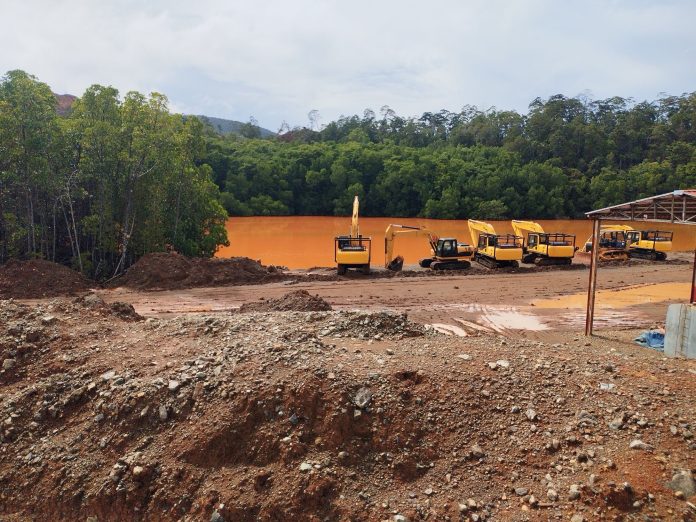
Havimana said the introduction of excessive sediment from mining, he said, could smother coral reefs, destroy spawning grounds, and severely degrade water quality — impacts that would ripple through the entire food chain and disrupt the livelihoods of nearby communities.

“The situation requires immediate attention to ensure that the ecological treasures of the bay are protected for future generations,” he stressed.

“We must ensure that any future developments, particularly mining, are conducted transparently and with full consideration of their environmental impacts on these vital ecosystems. Be mindful with developments that are extractive, given our heavy reliance on ecosystem services that exist in the bay.”

For feedback, contact: [email protected]

Queen of the shallows

    0

    BY BEN BILUA
    Gizo

    BEFORE the first rays of sunlight touched the calm waters of Saeragi in Western Province, long before the morning birds stirred from their mangrove shelters, Maeva Kuse was already awake.

    For decades, this was her rhythm. An unbroken ritual anchored in devotion, resilience, and the quiet pride of a woman who mastered one of Western Province’s most treasured livelihoods: sea grape harvesting.

    Kuse, known today by many as the Sea Grape Master, never imagined her childhood fascination with the ocean would one day define her legacy.

    Growing up in Saeragi village, where turquoise shallows hug the shoreline and corals glow beneath the surface, she found comfort in the sea. At 17, she turned that comfort into her calling.

    Each morning, Kuse woke before dawn. She stepped into the cool sand, grasped her wooden paddle, and pushed her dug-out canoe across the glassy water.

    The 15-minute paddle to her diving grounds was a quiet journey, her only companion, the sound of her canoe gliding through the sea and the seagull singing above.

    Upon reaching the shallow reefs, she prepared her diving glass, took a deep breath, and slipped off the side of the canoe. Below her lay carpets of sea grapes, small green bubbles clustered along corals and sand. With skilled hands, she harvested the fragile strands, careful not to disturb the young shoots. It took an hour, sometimes more, to fill her basket.

    “It’s always a stunning scene for me to the carpets of sea grape. Unlike others, I also have a sense of care for this resource. I picked the ones that are ready. You can differentiate the ready ones and the young one by looking at the colors,” Kuse said.

    When her canoe was finally heavy with the day’s harvest, she paddled home. Evenings were spent sorting and preparing the grapes; washing, cleaning, and packing them for market.

    Before sunrise the next morning, Kuse was already on her way to the Gizo Market, where her bright green sea grapes were always a favourite among customers.

    The effort earned her a few hundred dollars—modest, but enough to support her family. Over time, her technique sharpened. Kuse’s speed, precision, and ability to locate the healthiest clusters earned her a reputation: she was the woman who could harvest sea grapes better than anyone else in Saeragi.

    “During our time, the sea grape was not popular. Few people eat sea grapes. Today this seafood is getting popular everywhere even beyond Western Province,” she said.

    Years of diving strengthened not only Kuse’s lungs but her knowledge of the ocean. She learned to read tides, identify healthy coral patches, and understand the seasonal rhythms of sea grapes. Fellow harvesters respected her for her experience; buyers trusted the quality of her product.

    Her mastery was not declared—it was earned, one dive at a time. But at 55, the sea that had always been her sanctuary became a blurred world. Maeva’s eyesight began to fail, making diving difficult and dangerous.

    The corals she once saw with perfect clarity became shadows. The sea grapes she loved became patches of green she could no longer distinguish.

    The Queen of the Shallows, as her community fondly called her, had to leave the world beneath the waves.

    “It was painful. “The ocean raised me. It fed my children. Letting go was like saying goodbye to a part of myself. But my health is more important right now. I have my two daughters who are now growing the passion,” Kuse said.

    Though she no longer dives, her story continues through her two daughters. They watched her paddle out every morning, saw the dedication she carried, and admired the pride she took in providing for her family.

    Today, they follow in her footsteps, paddling the same route, harvesting from the same reefs, and carrying the same commitment their mother embodied.

    Kuse may no longer be underwater, but her legacy lives in every strand of sea grapes brought to Gizo Market by the Kuse family.

    To the people of Saeragi, she remains the Sea Grape Master—a woman who turned a simple village livelihood into a lifelong journey of strength, love, and purpose.

    This is the story of Maeva Kuse, daughter of Saeragi, Queen of the Shallows, and the woman who mastered the art of sea grape harvesting.

    For feedback, contact: [email protected]

    People of West Are’are call for urgent fixing of Heo Bridge 

    0

    By RODRICK DESURI 

    Auki 

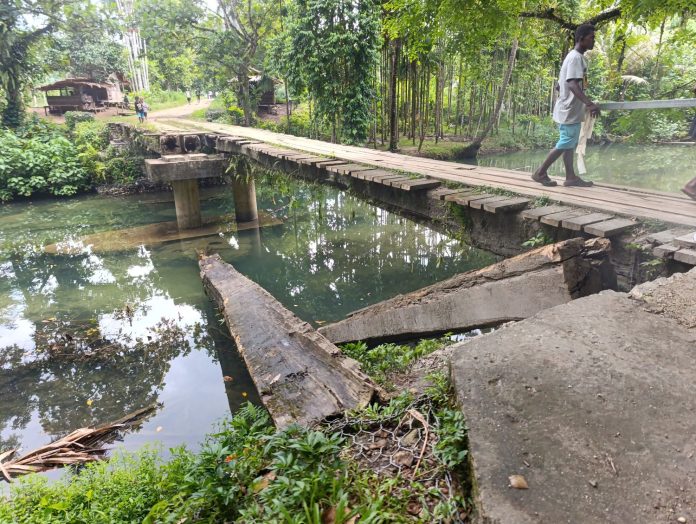
    The people of Hauhui in West Are’are, are calling on responsible authorities, Malaita Province, and the Ministry of Infrastructure Development (MID) to fix the Heo Bridge in West Are’are. 

    The wooden bridge has been broken since 2024, cutting off road access for passengers traveling from Hauhui to West Are’are. 

    Concerned community elder, Michael Lauri recently says responsible authorities should fix the bridge as soon as possible, as it is the only route connecting the people of Hauhui and all of West Are’are. 

    Saverio Sinah of Hauhui also expressed the same sentiment, saying that the broken bridge has caused many problems for them, such as losing their belongings, the extra burden of carrying their belongings over long distances, and the need to walk to Heo Bridge every evening to wait for transportation to Auki.

    He appeals to MID, especially the Trades Transformation Company (TTC), to fix the bridge once they reach Hauhui.

    A media report from MID stated that the Trades Transformation Company (TTC) has reached the halfway point of its contract to rehabilitate and maintain the road from Maoa in West Kwaio to Hauhui in West Are’are.

    As stated, progress of their road maintenance includes cleaning, grubbing, earthworks, and drainage works, completing 16 km of the unsealed road stretch.

    TTC’s scope also covers repairing wooden bridge structures along this route.

    “As of last week, they performed urgent repairs on Fulo Bridge, collecting stones and river materials for gabions and structural repairs,” the report said.

    For feedback, contact: [email protected]
    National youth congress workshop underway in Auki 

    0

    By RODRICK DESURI 

    AUKI 

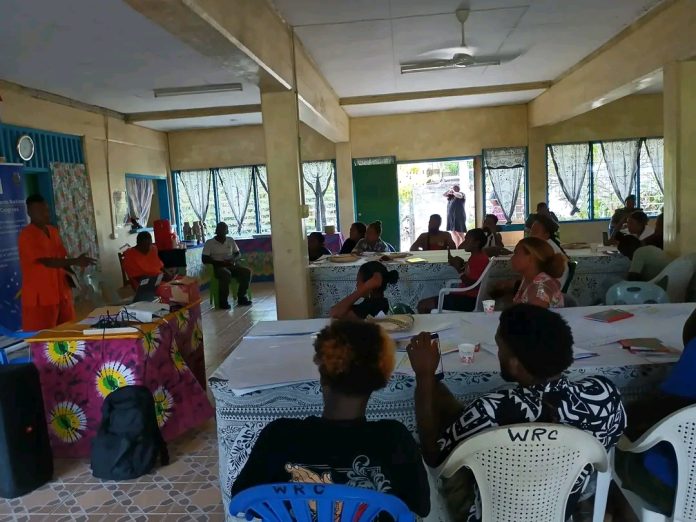
    Sixty youth members from Guadalcanal and Malaita provinces are attending a National Youth Congress currently underway at the Women’s Resource Center in Auki, Malaita Province. 

    The two-week program started on Monday, November 17, and aims to bring peace and unity among the young people of the two provinces. 

    According to Frank Samo Sari, the youth gathering has reflected and shown ways forward for the youth to uphold peace, unity, and work together to build Solomon Islands as a peaceful nation. 

    He said the topics covered this week have included: 

    -Business management training 

    -Leadership and governance 

    -Proposal writing 

    -Mindset transformation 

    “Many activities were done within the past four days, during which the youths have discussed and mingled with each other during the presentations,” he said.

    He stated that a young correctional inmate also shared his life experience in a correctional center with the youths.

    He said the young inmate admitted to the youths that his convictions have caused him to spend most of his time in prison without any freedom.

    “I admit to you that because of my convictions, I have been locked away in a dark place, and this has occurred because of my past ignorance and behavior in the community,” the inmate stressed.

    The young inmate also urged the young people to make good decisions and choose a life between good and bad.

    “Only God can help you before anything can happen for good or worse,” the inmate said.

    For feedback, contact: [email protected]

    MAL kicks off work for cocoa program

    0

    BY LORETTA B MANELE

    The Ministry of Agriculture and Livestock (MAL) has started work for their cocoa breed improvement program.

    Samson Viulu, Permanent Secretary for MAL discussed this before PAC’s (Public Accounts Committee) Hearing into the 2026 Appropriation Bill 2025 this week.

    He told the committee that for cocoa, their target is to reach 12,000 metric tons by 2028.

    Viulu said right now they are working closely with private partners and SINU to carry out their cocoa breed improvement program.

    He stated that they have already repaired their PQ, (Post Entry Quarantine) facility in Henderson after 20 years and it is working.

    Viulu explained that whatever imported plants there are, these plants have to stay at the facility for two to three months and get treated before being certified as “pest free”.

    “So, we have our cocoa seedlings there that are ready for cloning,” he added.

    Viulu also said early next year, they will have 37 improved cocoa bud varieties from University of Reading in UK for them to do cloning and grafting of cocoa.

    He mentioned that they have also taken into consideration the EU deforestation regulation which will come into effect July next year.

    “And so, we are not allowed to cut down any existing trees, especially forest trees. For cocoa we cannot plant new trees, but we can cut down the existing cocoa tree, keep the bottom and do the grafting,” Viulu explained.

    Cocoa grafting is a technique used to reproduce cocoa trees by joining a stem (scion) from one tree onto the root system of another (rootstock).

    Viulu mentioned that their estimate of 12,000 metric tons of cocoa is because of the assumption that one tree can produce one kilo of dried cocoa in one year.

    He informed the PAC that, in fact, with improved variety of cocoa seeds, they can reach a maximum of six kilos per tree.

    For feedback, contact: [email protected]

    SI Rangers Empowers Women Rangers in Conservation

    0

    BY JOHN HOUANIHAU

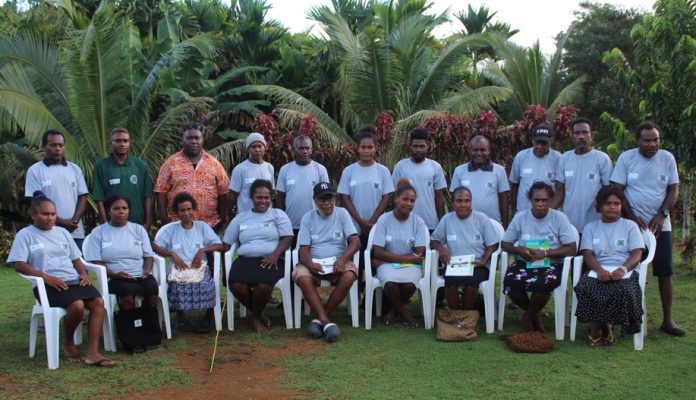
    The Solomon Islands Rangers Association have concluded a three-day ranger training session at the Apunepara Ha’amwaora Natural Resources Association (AHNRA) office in Waitoto village, Maramasike Passage, Small Malaita.

    This training, held from November 10th to 12th is a component of the SI Rangers initiative carrying the slogan “Gender Inclusivity in Conservation and Environmental Management” with the aim to empower female rangers to become citizen scientists.

    SI-Ranger Program Manager and Key Facilitator, Mr Edward Huitarau, said the theme signifies the creation of an environment where individuals of all genders can participate fully, equally, and meaningfully in the management of natural resources and ecosystems while benefiting from it.

    “It extends beyond merely including women to actively addressing and transforming social norms, power disparities, and systemic inequalities that have historically barred women and other marginalised genders from decision-making roles and access to resources,” Mr Huitarau said.

    The ranger training saw participation from ten tribal conservation groups: Mamara’o’orou, Raunimamu, Pautaiwmane, Sulu’oa’oa, Hurunilou, Apunepara, Waware, Aluhe’ala’ala, Araunaonao, and Paua.

    These tribal conservation groups are situated within the mangrove ecosystem of the Maramasike passage.

    Several of these tribal conservation groups are currently engaged in developing a Protected Area (PA) management plan, mapping the PA region, and formulating a land use plan, which will eventually lead to the creation of a designated protected area.

    The training covered; Understanding Ranger Work, Leadership in Protected Areas, Effective Communication & Awareness for Protected Areas (PAs) and Field Survey, Monitoring and Data Collection Guide for Protected Area Rangers (including GPS Basic Mapping).

    The third day involved a Field Practical Session, where participants were trained to operate GPS devices and engaged in hands-on activities related to coordinate marking and waypoint creation.

    The training was proudly supported by SPC-PPAC (Pacific People Advancing Change) (PPAC), in partnership with the SI Rangers, who serve as the primary implementers of this funding initiative.

    “Ultimately, achieving gender inclusivity in conservation and environmental management with rangers’ work is crucial for building a more resilient, inclusive, and effective conservation sector that can successfully protect our natural world for current and future generations,” Mr Huitarau said.

    Photo: Supplied

    For feedback, contact: [email protected]