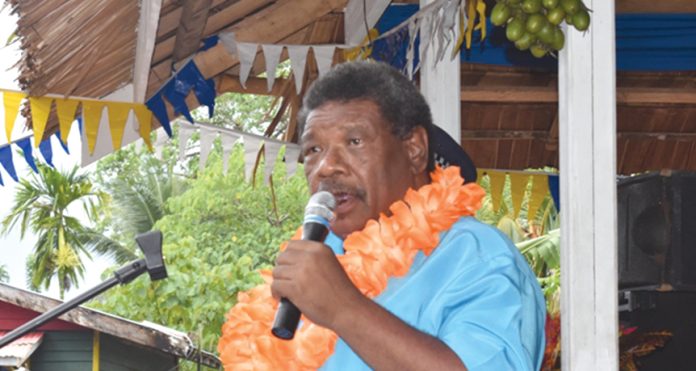
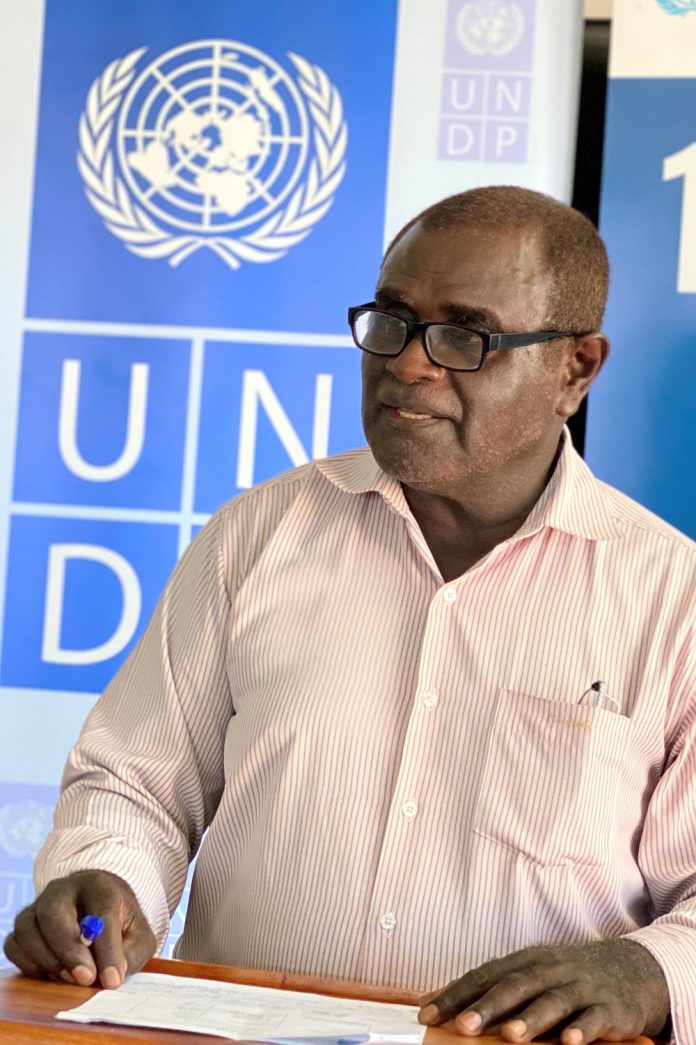
Premier of MakiraUlawa province, Hon Stanley Siapu.
PACRA Government says they are ‘United and Stable’ as Motion set for December 9
BY NED GAGAHE
Premier of Makira-Ulawa Province, Stanley Siapu, says his government remains “unshaken, united and fully intact” as the province heads toward a Motion of No Confidence (MoNC) scheduled for tabling on 9 December.
The motion, filed by Member for East Arosi Ward, Hon. Douglas Kuper, was put on notice earlier this week.
It cites three grounds: gross misuse or neglect of powers, misappropriation of public funds, and conduct bringing the Office of the Speaker into disrepute.
The notice became effective on 26 November and lapses on 4 December — providing the required seven clear days.
Despite the political pressure, the People’s Alliance for Change, Reform and Advancement (PACRA) Government has declared its full confidence as the countdown begins.
In a statement issued on Friday November 28, the PACRA administration, led by Premier Siapu, said it “welcomes” the motion and views it as a healthy part of democratic leadership.
“The PACRA administration welcomes the motion which is scheduled to be tabled when the Assembly meets on 9th December,” the statement read.
Premier Siapu, speaking through the Office of the Premier, described the move as “a defining moment of accountability” and an opportunity to prove his government’s stability and cohesion.
“…This Government is not shaken. We remain loyal to the mandate given to us by our people and ready to face the Assembly with integrity. The allegations raised are weak, unsubstantiated, and cannot distract us from the work we continue to deliver,” Siapu said.
He further emphasised that the executive remains solid, with no signs of internal division or wavering support.
The Motion of No Confidence will be brought before the Assembly after deliberations on the revised appropriation bill, which begin on 1 December.
Island Sun understands that political attention is now sharply focused on whether the PACRA government will maintain its numerical strength when members take the floor next week.
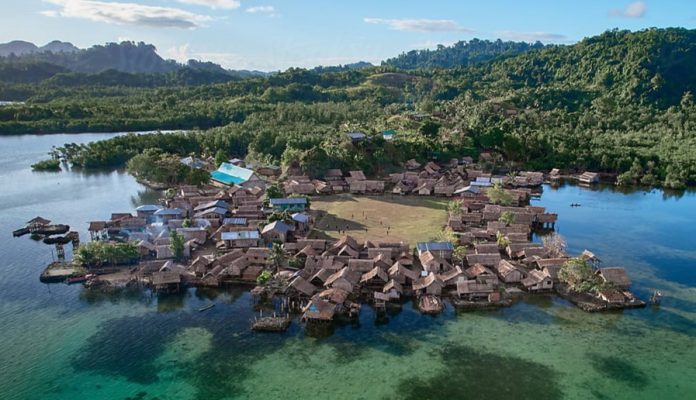
IN the remote Hagalu community of Big Ngella, Central Islands Province, looking after people with special needs isn’t just a family duty, it’s a shared responsibility woven into the fabric of everyday life.
Nestled among swaying mangroves trees in the coastal mainland with the rhythmic crash of ocean waves, this village of about 600 people grapples with a reality that mirrors the nation’s broader challenges.
Hagalu village-PHOTO STOCKSY
With roughly 15 people in Hagalu living with disabilities, the community has mourned the loss of 10, leaving just five who depend on the tireless support of relatives and neighbours.
Their stories highlighted the invisible burdens of isolation, poverty, and inadequate resources in a country where disability touches nearly one in seven lives.
Esmie Fane, 26, is at the heart of this narrative. Born with a disability, she is the second of four children in a family where steady employment remains elusive.
26 year old Esmie Fane.
Her father, John Sade, a vocal and active community member, speaks with quiet pride and exhaustion about his daughter’s place in their world.
“Fane is the second born in the family, and she was born disabled,” he explains.
Now a grandfather after his eldest son married and started a family, Sade and his wife Roselyn Loku, have dedicated their lives to ensuring Fane’s comfort.
“Whatever we get in a day must prioritize her in terms of food, clothes, and other welfare matters,” Sade says.
To make her life more manageable, the family relocated her to a modest home by the seashore this year, away from their mainland residence.
“We built her home to stay beside the seashore to ensure other basic human needs like sanitation and access to the sea for relaxation can be addressed.
The couple’s days are filled with casual labor like constructing stone foundations for houses built on stilts over the water, a common job in coastal communities.
“We live by doing this casual job for money to survive and make ends meet,” Sade shares.
When opportunities arise in nearby Tulagi, they travel there for similar work, earning just enough to cover essentials. Yet, Fane’s needs often stretch their resources thin.
Sade recounts spending nights at her side, assisting with baths, entertainment, and comfort.
“Sometimes we spend the night with her just to offer the best treatment she always wanted,” he says.
But the emotional toll is palpable. Sade admits to moments of stress when life overwhelms her wife.
“When life gets tough, her stressful mother used to go hard on her sometimes, which also makes me sad,” Sade confides.
Financial struggles compound the challenges; they frequently take Fane to Tulagi Hospital by boat or canoe, carrying her medical cards.
“We took her to Tulaghi Hospital whenever she needs medical attention since she was a child,” Sade adds.
Despite past visits from outsiders, perhaps aid workers or officials, no tangible support has followed.
“Till now, we haven’t heard anything from those people visiting us,” he laments.
Loku, Fane’s primary caregiver, echoes the depth of their journey.
“It’s a tough journey for me with my only daughter,” she says.
“Her welfare is one of the greatest challenges I have ever faced in my life. Fane is not able to walk, which adds an extra layer to the challenges we face daily.”
She continues to dreams of a better future.
“I’m praying for one day she has a proper home and better welfare support.”
In a family of three boys, Fane’s disability has reshaped their dynamics, forcing sacrifices that highlight the broader inequities in rural Solomon Islands, where access to education, healthcare, and employment is limited.
Reginald Peripeki, 64, offers another poignant chapter in Hagalu’s story.
Stricken with an overdose illness as a child, likely due to inadequate medical care at the Taroniara clinic, the province’s only facility at the time, he has lived with deafness and muteness ever since.
Reginald Peripeki, 64
His brother, Mathew Duvele, and Duvele’s wife have shouldered the responsibility since their parents’ deaths.
Their mother passed on in 1983 and father in 2000.
“He was born as a normal person when he was a child, but not for long enough,” Duvele recalls.
“He got sick, and my parents took him over to Taroniara clinic. However, medical workers there were not qualified enough to handle his situation, resulting in an overdose illness which leads to his current deaf state today.”
As the fourth of eight siblings, Peripeki once contributed to the family through fishing and gardening, despite his condition.
“When he was still moving around and active, he used to go fishing, gardening, and do things to make ends meet, although he’s deaf,” Duvele explains.
But now, with Peripeki inactive and battling asthma that developed last year, the burden has intensified.
“Now that he’s totally inactive, the struggle to provide all essential needs for him has become the toughest,” Duvele says.
The couple has grown self-reliant, rejecting outside assistance.
“We have come to the stage where we don’t want any assistance outside since we get used to fighting the challenge to look after him,” he notes.
This independence stems from necessity, as outside support remains sporadic in such remote areas.
Charles Tadaiga, 49, adds another layer of tragedy. Not born blind, he lost his sight in childhood due to a heartbreaking accident, where his mother accidentally infected him with limestone powder while carrying him and chewing betel nut.
Charles Tadaiga, 49.
The response was delayed by the distance to Taroniara clinic, with no medical services in Tulagi at the time and transportation limited to paddling canoes.
“The challenge to quickly respond to what happened to him was the distance to Taroniara clinic,” recalls his uncle, Thomas Gue, who, along with other relatives, provides support.
“We never receive support from outside, but we do what we can to support him,” Gue says.
“We just do anything to make him feel comfortable and stay alive and healthy. Welfare support is one of the big challenges in his life.”
His story underscores the risks of rural life, where everyday activities can turn perilous without proper healthcare infrastructure.
District Vice Chairman Ben Lilia provides a community-wide perspective.
“A proper home for people with special needs is highly recommended in the community,” he asserts.
“We have five people with special needs looked after by members of the community. If only they had a proper home to address some of the challenges, the people in the community are willing enough to monitor their lives.” Lilia said.
“We use to organize initiatives to support people with special needs in the community, through foods, clothes, and little financial support.”
Disability in the Solomon Islands is a pervasive issue, not confined to Hagalu.
The 2009 Census reported that approximately 14% of the total population lived with a disability.
The 2015 Demographic and Health Survey estimated around 16% of women and 15% of men had a disability, revealing gender disparities. The 2019 Census found about 11% of the population aged 5 years and over reported at least one functional form of disability, such as mobility, vision, or hearing impairments. A preliminary national disability survey indicated a prevalence of around 7.2%, though this figure might be lower due to underreporting and survey limitations. Prevalence is higher in rural areas (17%) compared to urban areas (15%), and it increases with age, reflecting the cumulative effects of limited healthcare and environmental hazards.
With about 80% of the Solomon Islands’ population residing in rural zones, disability is a national characteristic rather than an isolated phenomenon. Factors like poor road infrastructure, limited medical facilities, and economic dependence on subsistence activities exacerbate the challenges. In provinces like Central Islands, where Hagalu is located, access to specialized care is often a distant dream, forcing families to rely on traditional remedies or long, arduous journeys.
Government efforts, including disability policies and aid from organizations like the World Health Organization, aim to improve inclusion, but implementation lags in remote areas.
Stigma and lack of awareness further compound the issue, leaving many like Fane, Peripeki, and Tadaiga in a cycle of dependency.
In Hagalu, the care for the vulnerable is a testament to human endurance and community spirit. Families like the Sades, Duveles, and Gues demonstrate profound love and sacrifice, yet their stories reveal systemic gaps.
*Reporting for this story was supported by Pacific Media Assistance Scheme (PACMAS)
suspension revoked as Lands Commissioner returns to office
BY NED GAGAHE
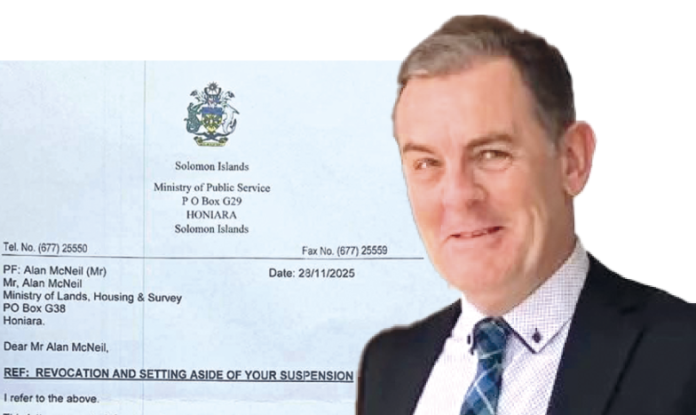
Suspended Commissioner of Lands Alan McNeil has got his job back after the Ministry of Public Service revoked and set aside his suspension just weeks after he was suspended over allegations linked to land dealings at the Kongulai water source.
McNeil was suspended on 13 November 2025. A letter from Permanent Secretary of the Ministry of Public Service Luke Cheka, alleged misconduct relating to:
Fraudulent execution of lease documents in November 2023;
Breach of a 2009 High Court order;
Misrepresenting a “Good Will” payment from a former Prime Minister as a final lease payment.
McNeil immediately denied all accusations, branding the suspension “unprocedural” and insisting he was never given the chance to respond before disciplinary action was taken.
He vowed to challenge the matter legally.
However, in a turn of events, PS Cheka who initially signed the suspension issued another letter dated 28 November 2025 informing McNeil that the suspension had been revoked and set aside.
“This letter serves to inform you that your suspension has now been revoked and set aside, commencing the date of this notice.
“On the same note, your suspension conditions are also withdrawn.
“You are therefore required to resume your normal duties immediately,” the letter stated.
No explanation was given for the reversal of the decision.
McNeil confirmed to the media following the development on Friday that his suspension was revoked.
McNeil has continually rejected the allegations and says he has “solid grounds and good evidence” proving they are false.
He added that if he had been given the opportunity earlier, he would have explained himself.
Over recent years, McNeil has been at the centre of several major land litigations that resulted in unlawfully allocated government land being returned to the state.
One of the biggest cases he is currently pursuing supported by Cabinet is the government’s move to resume Levers Solomons Ltd land in the Lungga–Henderson–Tenaru corridor.
Levers has challenged the government’s action, and the matter remains before the High Court.
McNeil is now expected to return to work immediately while preparing to publicly address the issue in a press conference.
A former educationist now serving as a consultant at the Ministry of Education and Human Resources says the long-term solution to unemployment in the country lies in technical skills development rather than academic qualifications alone.
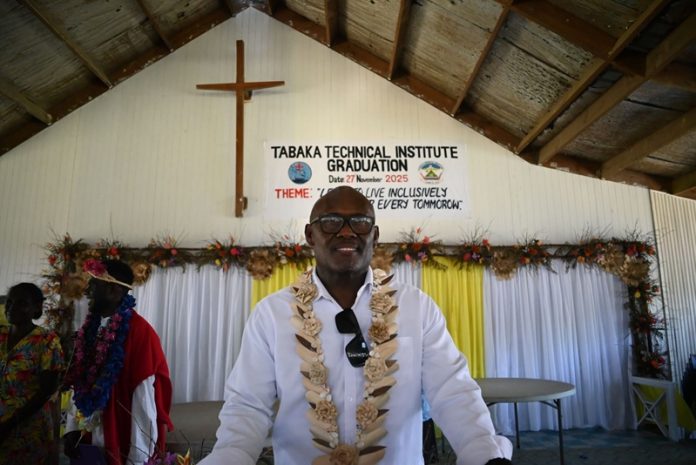
Clement Tito made the statement while delivering his keynote address during a graduation ceremony at Tabaka Technical Institute on Thursday November 27, 2025.
He said there is a growing disparity between the number of young people seeking employment and the limited availability of job opportunities, calling for urgent strategies to better prepare the younger generation for decent work.
“As we celebrate today, we must face the realities of our national situation. If we look at the statistics, 91.7 percent of Solomon Islanders are currently unemployed, leaving only 9.3 percent in formal employment,” Tito said.
He added that the national school dropout rate now stands at 53.7 percent, meaning more than half of the country’s young people do not complete their basic or secondary education.
“Our economic growth remains modest and vulnerable. These are numbers of a wake-up call,” Tito said.
According to Tito, these figures clearly show the urgent need for the country to redirect its education priorities away from a purely academic focus towards technical and vocational training.
He stressed that technical education and skills development offer immediate pathways to employment, small business creation, community service and participation in national development projects.
“The solution to unemployment is not office jobs.
“Today we celebrate more than certificates and completed courses – we celebrate skills, competence and the ability to contribute meaningfully to national development. Technical education is not just another pathway. It is the engine room of productivity, innovation and employment creation,” Tito said.
He said strengthening technical training institutions across Solomon Islands is critical if the nation is to address unemployment and empower young people with practical, market-driven skills.
The Ministry of Women Youth, Children and Family Affairs have for the first time received a budget of nearly SBD$20 million.
Permanent Secretary of the Ministry of Women, Youth, Children and Family Affairs (MWYCFA) Dr. Cedric Alependava revealed this during the Ministry’s appearance before the Public Accounts Committee (PAC), on Thursday November 20,, 2025.
Dr Alependava told PAC during the 2026 Appropriation Bill 2025 that with the recurrent budget of 14,709,492 and development budget of 4,725,000 it gives a total of 19,434,492.
He said that the increase is due to the fact that his team had made several Cabinet papers.
“First one is we did Cabinet paper for Family Affairs Division, particularly asking our government to provide funding purposely to do awareness and educational program throughout the country to reduce violence against women and girls, and simultaneously violence against children and all forms of abuses,” he said.
He said that the Ministry were happy to be given one million instead of three million they have asked for.
He stressed that this would help the Ministry to collaborate with churches to be able to try and reduce the high incidence of violence against women and girls and children in the country.
He also told PAC that the Ministry is currently conducting a study survey supported by DFAT, and the Ministry of National Statistics Division to able to track the investments and whether they’re having a direct impact in the reduction in violence, gender-based violence or domestic violence.
“We are now doing a study survey. This will be supported by DFAT, and my ministry, including the Ministry of National Statistics Division. We are doing our research to find out the current status of violence against women and girls. The previous study was done in the year 2009, health and family survey. That was the old figure we are using up until now,” Dr Alependava said.
He said that similar survey has also done with children division through Government support together with UNICEF.
With the current budget, Dr Alependava said his Ministry is hopeful to follow up and complete unfinished projects in the country.
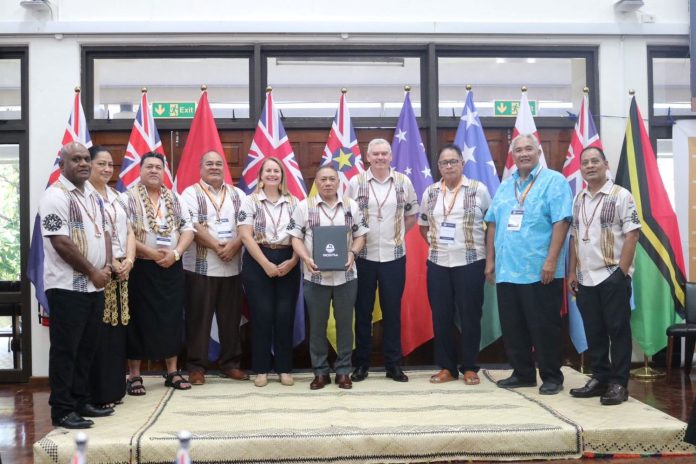
Australia and New Zealand will together contribute $170 million over the next five years to support Pacific Island members of the Pacific Agreement on Closer Economic Relations (PACER) Plus.
The contribution was announced at the 2025 PACER Plus Ministerial Meeting, held on Thursday November 27 in Honiara, a joint statement from the governments of Australia and New Zealand said.
Australia was represented by Assistant Minister for Pacific Island Affairs, Nita Green, while Minister of Commerce and Consumer Affairs Scott Simpson represented New Zealand.
Announcing the new contribution, Assistant Minister Green said Australia wanted to deepen regional economic integration in the Pacific.
““In a time of rapid change in the global trade environment, our region can be a source of reliability and prosperity,” said Assistant Minister Green.
“As the primary vehicle driving regional economic integration, PACER Plus delivers both.”
New Zealand’s Minister Simpson, in making the announcement, highlighted New Zealand’s commitment to supporting economic growth across the region.
“In signing the PACER Plus Implementing Arrangement, we are demonstrating our ongoing commitment to trade growth, prosperity, and Pacific regional economic integration through trade.”
PACER Plus is a regional trade and development agreement that aims to make it easier for Pacific countries to trade, attract investment and grow their economies. The agreement entered into force in 2020.
The new investment of $170m is an increase to the support provided during the first five years of the agreement, following calls from Pacific ministers to sustainably resource popular labour mobility programs such as Australia’s PALM Scheme and New Zealand’s Recognised Seasonal Employer (RSE) scheme.
The contribution will support the agreement’s Development and Economic Cooperation Work Program and the PACER Plus Implementation Unit. Under the Work Program, Pacific PACER Plus members can access support to strengthen their trade and investment environments, including in areas such as customs, e-commerce and labour mobility.
Australia and New Zealand both grant 100% tariff-free access to PACER Plus members, allowing Pacific countries to take advantage of their consumer markets.
The agreement has ten members: Australia, Cook Islands, Kiribati, New Zealand, Niue, Samoa, Solomon Islands, Tonga, Tuvalu, and Vanuatu.
SI faces urgent deadline to meet tough EU anti-deforestation rules
BY NED GAGAHE
SOLOMON ISLANDS is racing against time as the European Union’s new anti-deforestation law moves toward full enforcement in December 2025—putting the country’s premium cocoa and palm oil exports at serious risk unless strict new conditions are met.
James Kana, the EU Deforestation Regulation (EUDR) Consultant and Chair of the Cocoa Working Group, shared this on Wednesday November 27, 2025 during the country’s first-ever forum on the EUDR regulation at the Art Gallery.
Kana told stakeholders that the regulation will fundamentally change how Solomon Islands trades with Europe, stressing that exporters must now prove that cocoa and other commodities do not come from land deforested after 31 December 2020.
“The European Union is one of the biggest markets in the world. Once they enforce this regulation, any country that does not comply will simply lose access,” he said.
Moses Pelomo, SICCI Cocoa Working Group Advisor, said the regulation affects all EUDR-listed commodities, and for Solomon Islands the most relevant are palm oil and cocoa.
He said the cocoa industry, in particular, will face extensive new requirements related to traceability, geolocation data, legal documentation, and supply-chain transparency.
“This includes all cocoa derivatives such as beans, cocoa paste, cocoa powder, cocoa butter/fat, and even leaves and shells,” Pelomo added.
Cocoa—one of the country’s most important rural income sources—is among the commodities directly covered by the EUDR.
Kana explained that farmers, exporters, traders, and even shipping companies will now be required to meet strict traceability standards, including:
• GPS or satellite mapping of all cocoa farms
• Full supply-chain traceability from producer to EU importer
• Digital submission of geolocation data to the EU information system
• Legal proof of land ownership and production legitimacy
“All cocoa products—beans, paste, powder, fat, even leaves and shells—must meet these requirements,” Kana said.
He warned that the Solomon Islands could lose its long-standing access to the premium European cocoa market if systems are not set up soon.
Historically, Solomon Islands cocoa has earned premium prices in Europe because of its high quality.
Kana stressed that compliance cannot be carried by farmers alone, saying government involvement is essential in establishing legal frameworks and supporting data collection.
“This is not only about farmers and exporters. It involves regulators, data collectors, importers, and everyone in the logistics chain,” he said.
The EU had initially expected proof-of-concept readiness by 2024 but extended the timeline. However, Kana reminded the forum that extensions will not continue indefinitely, and full enforcement begins this December.
The historic forum was jointly organised by the Solomon Islands Chamber of Commerce and Industry (SICCI) and the Media Association of Solomon Islands (MASI).
Although the EUDR officially came into force in June 2023, full implementation was postponed to 31 December 2025.
Cocoa remains a lifeline for thousands of rural households who rely on small but consistent earnings for school fees and daily needs. Any disruption to EU access, Kana warned, would have direct consequences on family livelihoods and the national economy.
“We must not see this only as a threat,” he said. “If we adapt, we can continue to access one of the world’s most valuable markets.”
Diana Yates, owner of Cathliro Commodities—a local exporter of cocoa to the EU—reinforced the importance of maintaining access to the European market, which remains a major buyer of profitable cocoa products.
She said exporters urgently need government support to secure funding and work with the right partners to develop EUDR-compliant mapping and traceability systems.
Yates called on government representatives at the forum to understand the challenges exporters face and to help secure the essential resources required for compliance.
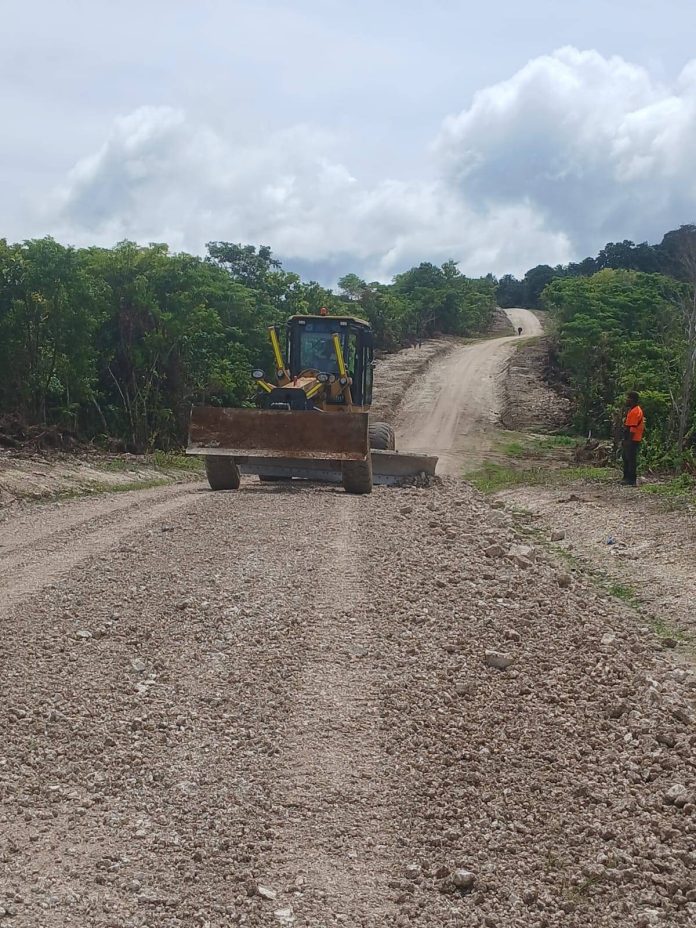
Road maintenance works along the Busurata Road in Central Kwara’ae, Malaita Province, are progressing well, with contractor Exodus Trade Development advancing regravelling and drainage improvements on the vital highlands route.
In a statement Ministry of Infrastructure Development (MID) said as of last week, the company had completed five kilometres of regravelling heading towards Ngadefiu Village.
Works are expected to reach the halfway point of the 15-kilometre stretch by next week.
The statement said for drainage improvements, steel components are currently being fabricated at the contractor’s Kunu site, while excavation of 500 metres of drainage channels is already underway.
Concrete pouring is scheduled to begin in the coming days to help improve water runoff in this high-rainfall region.
Managing Director of Exodus Trade Development, Jeremiah Fo’onota, acknowledged the cooperation of local landowners, which has enabled easier access to gravel sites. He confirmed that the crew remains on schedule and plans to continue progressing towards the Okwala area.
Busurata Road runs through one of Malaita’s key agricultural zones in the highlands of Kwara’ae, serving farmers, market vendors and surrounding communities.
The project is funded by the Australian Government through the National Transport Fund (NTF) as part of ongoing efforts to improve market access, service delivery and safer travel for rural road users.
The Transport Infrastructure Management Services Division (TIMSD) within the Ministry of Infrastructure Development (MID) continues to supervise the works to ensure compliance with quality standards at all stages.
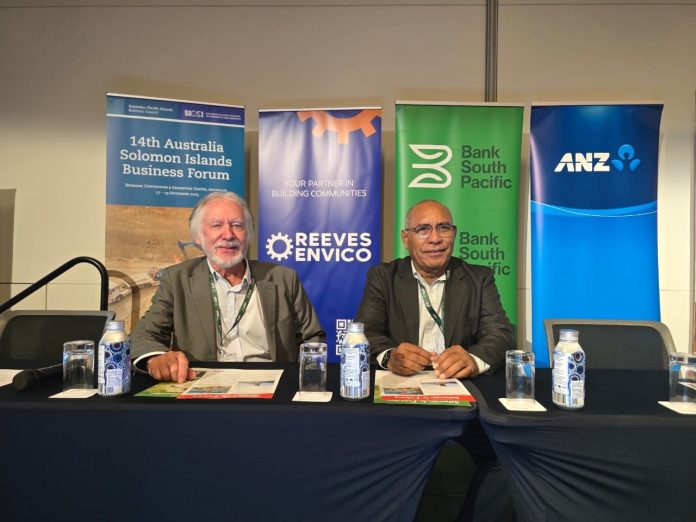
Plans for a major investment in a tuna processing operation and international port at Bina Harbour, Malaita, were presented at the 14th Australia–Solomon Islands Business Forum held in Brisbane last week.
A statement from the Ministry of Fisheries and Marine Resources (MFMR) said the Bina Harbour Tuna Processing Plant Project Team from the ministry updated contractors and development partners on the successful completion of the 30 percent Concept Design for the port and landside facilities that will support the processing plant.
The team also outlined progress on the cost plan and the broader business case.
During the Forum, the delegation highlighted significant opportunities for both Solomon Islands and Australian companies to partner in construction, engineering, services, and other areas linked to the project.
Once operational, the Bina Harbour project is expected to generate up to 1,600 direct jobs and unlock new commercial activity through the construction and servicing of the plant, port, and surrounding community infrastructure.
The MFMR delegation was led by the Minister for Fisheries and Marine Resources, Hon Bradley Tovosia.
He was accompanied by Permanent Secretary Dr Christain Ramofafia, Deputy Secretary (Projects) Lisa Sugumanu, and Tuna Industry Adviser Peter Cusack from the Bina Harbour Project Office (BHPO).
The BHPO is funded by New Zealand’s Ministry of Foreign Affairs and Trade (MFAT), which continues to support MFMR in planning, coordination, and preparation for what is expected to be one of the country’s largest fisheries sector investments.
Prime Minister Jeremiah Manele has reaffirmed the commitment of Solomon Islands government to the One-China Principle.
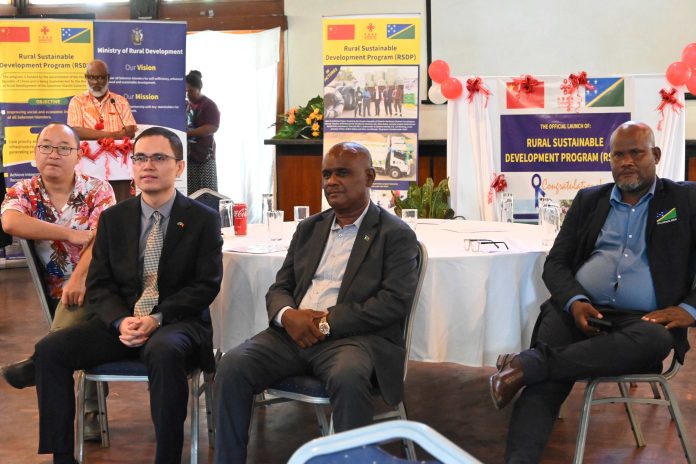
Speaking at the launching of the second phase of the Rural Sustainable Development Program yesterday in Honiara, Manele expressed the steadfast commitment of GNUT to continue collaborate with PRC on the basis of the principle.
“I wish to assure of our commitment to that important principle and we look forward to the basis of the principle, as well as other UN Chartered Principles, to continue the collaboration that we have developed over the last six or seven years.
“Going forward, I assure you that recognition in terms of that important principle underpins our bilateral and diplomatic relations,” he said.
Charge d Affairs of PRC Embassy office in Honiara, Yang Jie emphasized that the one-China principle is the political China’s bilateral relations with 183 countries in the world, including Solomon lslands.
He explained the connotation of the one-China principle as;
There is only one China in the world
Taiwan is an inalienable part of China’s territory
And the government of the People’s Republic of China is the sole legal government representing the whole of China.
Jie added the one-China principle is a universal consensus of the international community and a basic norm in international relations enshrined in UNGA Resolution 2758.
“To uphold the one-China principle means resolute opposition to any form of so-called “Taiwan independence”, and support for China’s efforts to achieve national reunification.
“Looking ahead, on the basis of the one-China principle, China stands ready to enhance alignment between the B&R Initiative with SIG’s development strategy.
“Prioritize the welfare of the people of the SI and expand practical cooperation in a wide range of areas to create more benefits for the people, thus jointly build a community with a shared future for our two countries,” he said.