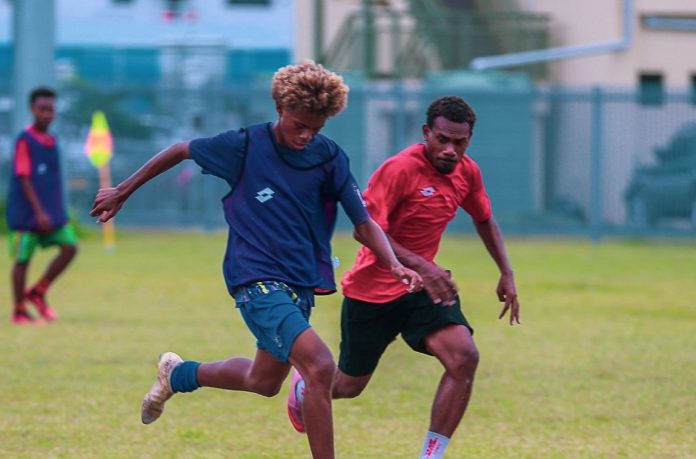
The Solomon Islands Football Federation (SIFF) has shortlisted more than 40 young footballers following a competitive round of open Under-19 men’s trials held this week at the SIFF Academy.
The selected players were announced by SIFF after Tuesday’s assessment matches, with successful players invited to return for another trial session on Thursday as the federation continues its search for the country’s next generation of football talent.
SIFF said the open trials attracted strong interest from eligible footballers born in 2007, with players given the opportunity to showcase their skills, pace and determination in front of the federation’s technical selectors.
“After a fantastic turnout and some very competitive matches on Tuesday, we’re excited to announce the list of players selected from the open U-19 men’s trial,” SIFF stated in a public announcement.
The federation also thanked all players who participated in the trials, describing the sessions as highly competitive.
Among players selected for the next phase are Alexander Katsese, Michael Samani, Zach Legai, Ronnie Bobby, Mike Motea, George Gray, Jimmy Molea and Gerald Kegu.
The open trials form part of SIFF’s ongoing youth development programme that aims to identify talented young footballers capable of progressing into future national squads and international competitions.
Prior to the trials, SIFF called on aspiring footballers to attend the sessions with birth certificates, proper sports gear and “their best attitude and energy.”
“The SIFF Technical Team is looking for the next generation of talent, and it could be you,” the federation stated in its earlier callout to players.
Trial sessions were held in two time slots at the SIFF Academy grounds at KG on Tuesday and Thursday this week.
SIFF is expected to continue monitoring players as the selection process progresses.
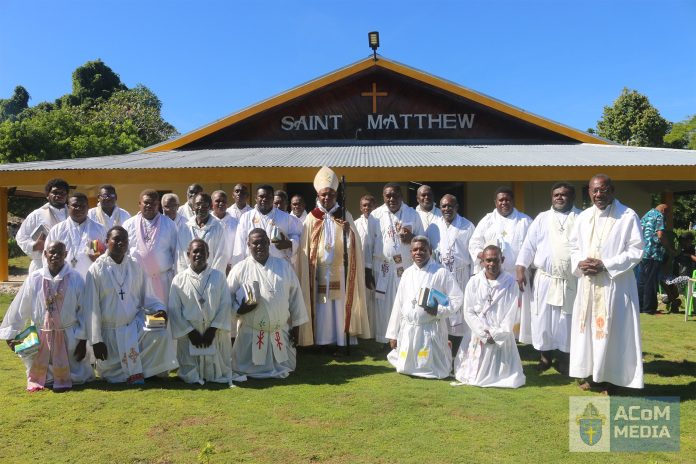
The 11th Diocesan Synod of the Diocese of Central Solomons (DoCS) has opened with a strong call for Christians to take active roles in God’s mission while remaining resilient amid modern-day challenges.
The synod is being held under the theme: “Empowering Christians to Recognise Themselves as Participants of God’s Mission in Order to be Resilient to the Challenges of Today”.
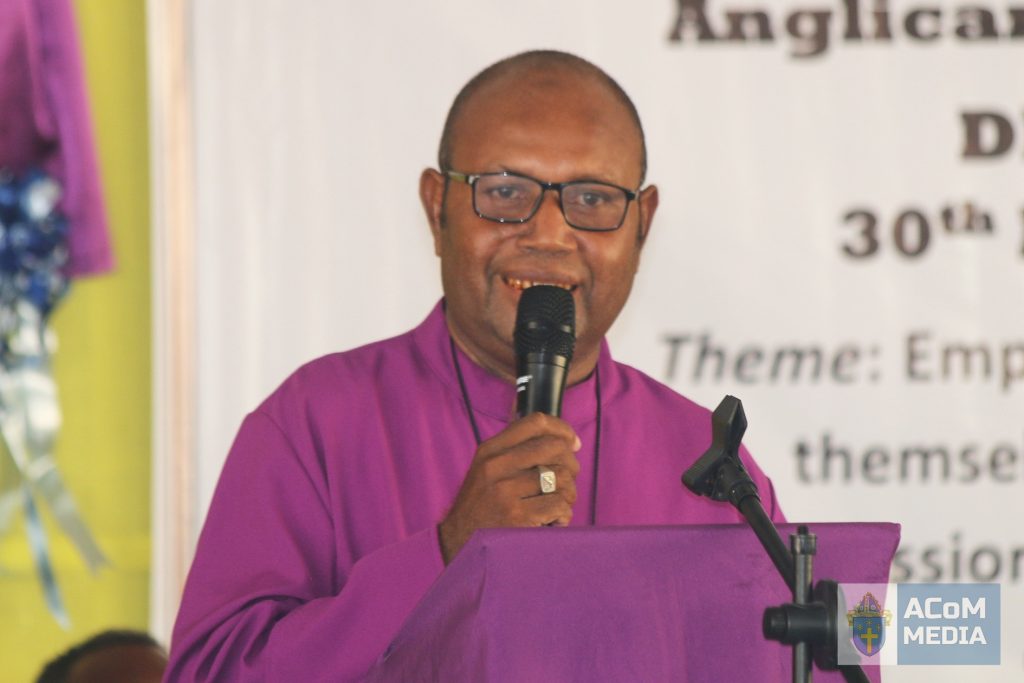
Rt Rev. Bishop Stephen Koete giving his remarks, Photo by ACOM
Delivering his remarks during the opening, the Rt Rev. Stephen Koete said the theme reflects the realities currently facing Christians in the Central Solomons, including changing social values, economic pressures and cultural shifts, a statement from Anglican Church of Melanesia on their Facebook page said.
Bishop Koete said the Church, government and customary leadership remain the three important pillars of island communities, adding that Christians must strengthen their faith while continuing to serve their communities in practical ways.
He said the Diocese must work towards building resilient Christian communities capable of responding to today’s social and spiritual challenges.
The keynote address of the synod by the Most Rev. Leonard Dawea, Archbishop of the Anglican Church of Melanesia, was delivered on his behalf by ACoM Chief Operations Officer Peter Pitia.
In the address, Archbishop Dawea described the synod theme as more than just a ceremonial statement, saying it will serve as a guiding framework for the Diocese over the next three years.
“The Church exists for mission as fire exists by burning,” the Archbishop said.
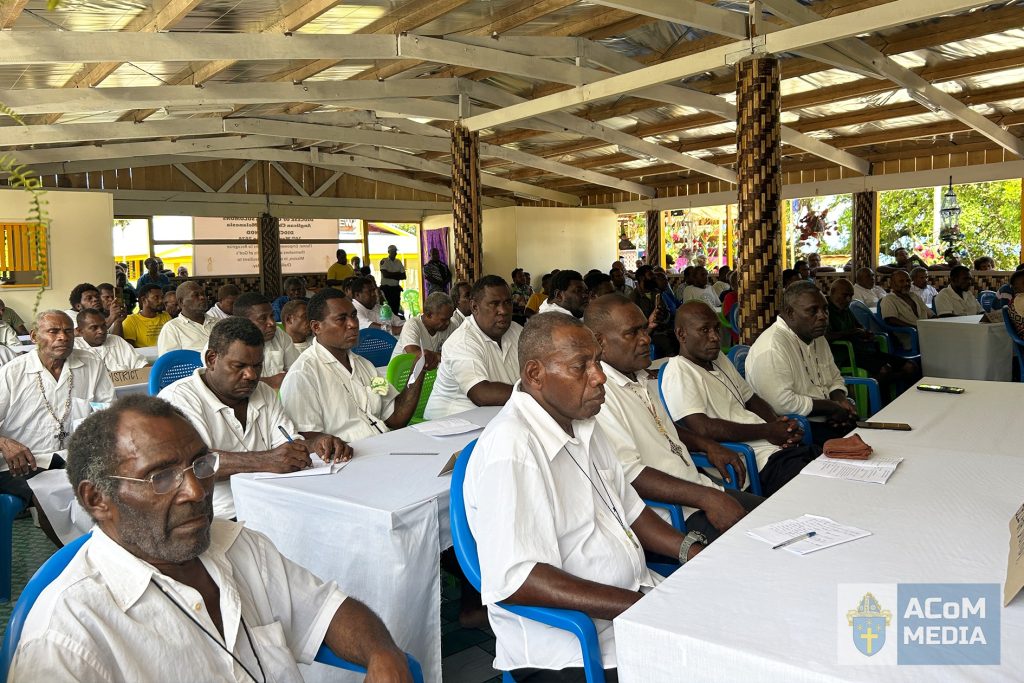
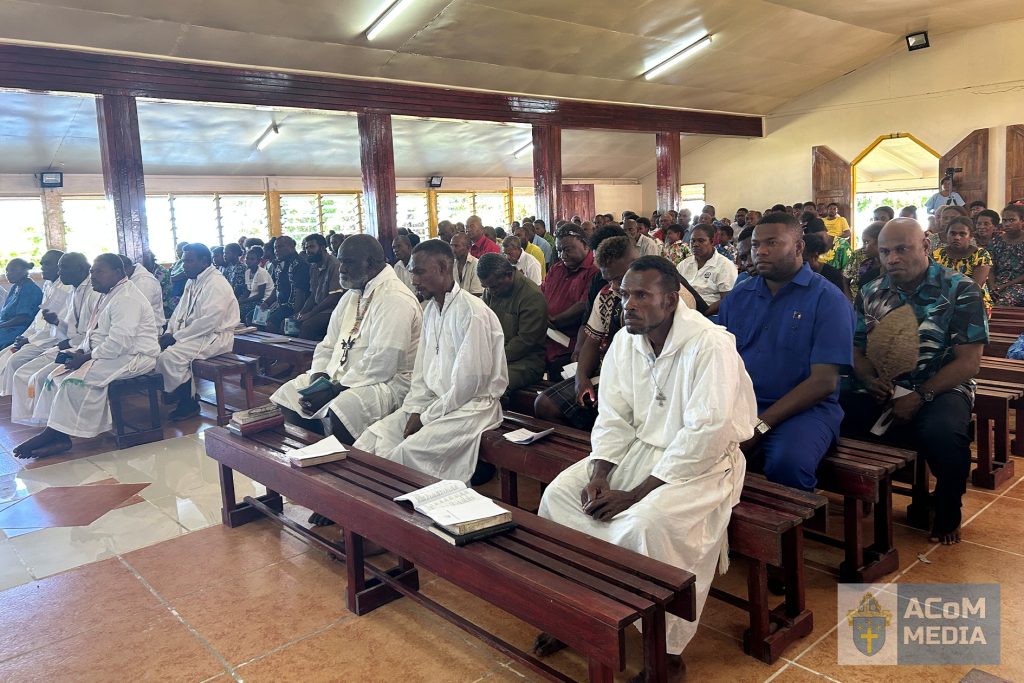
Delegates attending the synod, Photo by ACOMAttendees of the synod, Photo by ACOM
He encouraged Christians to deepen their understanding of scripture and faith so they can recognise their baptismal calling and actively participate in God’s mission.
Both Church leaders stressed that resilience in faith is necessary for Christians to withstand modern-day pressures, including social change, religious pluralism and limited resources.
They also called on Christians to actively participate in mission work at parish, district and community levels while strengthening partnerships with government and education authorities to support families and young people.
The synod also highlighted the importance of reviving customary leadership structures to help communities address disputes, social change, alcohol abuse and family breakdown.
Archbishop Dawea said participation in God’s mission is not limited to clergy members but includes all baptised believers, who must take ownership of spreading the gospel.
Meanwhile, Bishop Koete outlined several priority areas that will guide the Diocese until the next synod.
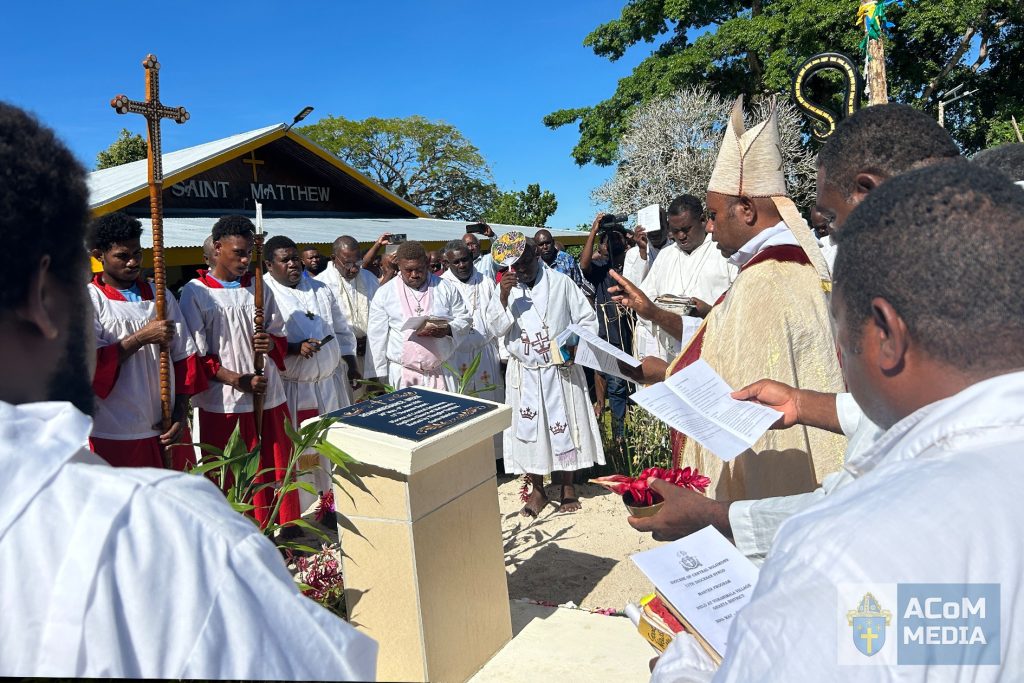
Blessing of a memorial monument marking the hosting of the 11th Diocesan synod in the host community-Vuranimala, Photo by ACOM
These include building a Church that can withstand social and cultural pressures, encouraging Christians to become agents of peace, justice and hope, and strengthening collaboration with provincial authorities in areas such as education, land registration and youth development.
He added that both Church and customary institutions must continue to provide practical leadership and guidance to communities across Central Solomons.
The Archbishop encourages the Diocese to implement the synod theme through education programmes, workshops and mission activities that aim to empower clergy, laity, youth and church institutions.
He said these efforts will help strengthen the spiritual life of the Church and reinforce its role as a moral and community leader.
Bishop Koete concluded by thanking delegates, guests and the host community of Vuranimala for their preparations and commitment towards the synod gathering.
He reminded members that the life of the Church involves both challenges and peaceful moments, calling on the Diocese to remain united as it moves forward under the guidance of the synod theme.
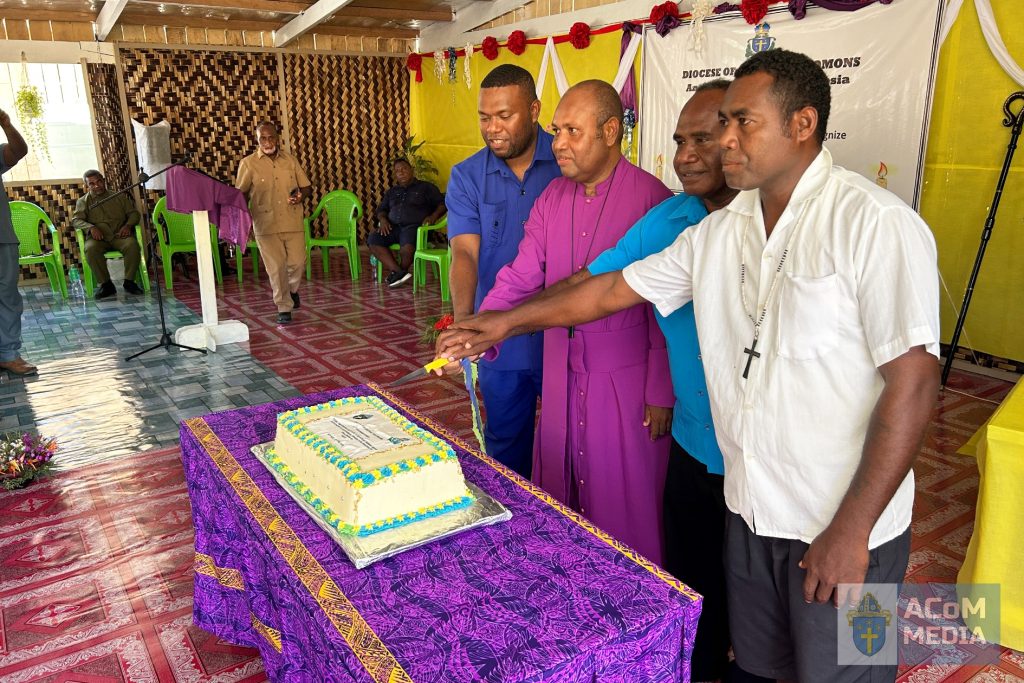
From left Premier Sagupari, Bishop Koete, Peter Pitia and Priest of the host community ready to cut the synod cake, Photo by ACOM
A total of 67 synod members from 12 districts, two parishes, three institutions and staff from the Diocesan Headquarters are attending the meeting, which began on Sunday, May 31, and concludes today, June 5, 2026.
The two-day UNICEF Solomon Islands and Media Association of Solomon Islands (MASI) WASH (Water, Sanitation and Hygiene) Media Workshop wrapped up yesterday.
The workshop aims to strengthen collaboration between the media and stakeholders, ensuring that communities’ voices and experiences are amplified in the national conversation on clean water and sanitation.
The day two-day workshop brought together journalists from SIBC, Tavuli, Solomon Star, Island Sun, In-Depth Solomon, ZFM, Isles Media, Non-Government organisation with the likes of Live & Learn and ADRA.
The even which commenced on Wednesday with opening remarks from Ben Grubb, UNICEF Pacific Chief of SI Field Office, followed by overview of sanitation landscape in Solomon Islands Q& A session, plenary discussion, ethical consideration reporting and impactful story telling for behavioural change and a group activity.
The two days event then ended with a field trip yesterday that brought together journalists, UNICEF staff and WASH officers, NGOs, and government representatives.
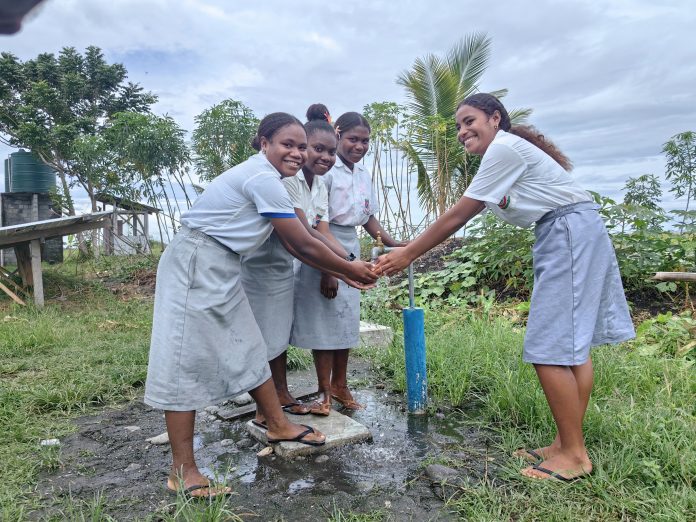
The closing program took participants to three communities and Ghaobata School in North Guadalcanal constituency, where residents are now benefiting from improved Water, Sanitation and Hygiene (WASH) facilities facilitated with the support of UNICEF together with other partners.
Some of the communities showcased projects that are nearly complete, with progress reported at 99 percent completion.
Journalists were given firsthand exposure to the impact of WASH initiatives, highlighting how access to safe water and sanitation is transforming schools and villages in that particular area.
UNICEF, NGOs and Government representatives yesterday, emphasised that partnership with the local media is crucial to raise awareness, promote accountability, and encourage community participation in sustaining WASH projects.
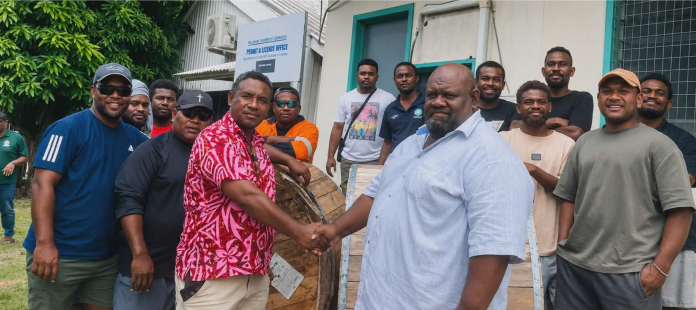
The Rae’ao Community Hydro Committee in East Are’are in Malaita Province and Honiara-based community members acknowledged and thanked the Ministry of Mines, Energy and Rural Electrification (MMERE), particularly the Director of Energy Division, Mr. Gabriel Aimaea, and his team, for supporting the Rae’ao Hydro Power System upgrade through the provision of overhead and service line electrical cables.
These materials will significantly contribute to the maintenance and upgrading of the community hydro system, which has served the people of East Are’are for more than two decades.
The Rae’ao Hydro System was developed under the APACE Program by Pelena Energy Australia and officially commissioned in 2003, following the vision and leadership of the late Hon. Edward Huniehu, whose dream was to bring electricity and development opportunities to the people of East Are’are.
For almost 24 years, the hydro system has continued to provide renewable energy despite many operational challenges. Through fundraising, community contributions, and volunteer efforts, the people of Rae’ao have remained committed to keeping the system operational.
Today, it is encouraging to see younger generations taking responsibility for maintaining and strengthening this important community asset.
The hydro system represents more than electricity—it symbolises community unity, resilience, self-reliance, and the collective vision of those who worked tirelessly to improve the lives of future generations.
The Rae’ao Community also acknowledges MMERE’s continued commitment to supporting community renewable energy initiatives throughout Solomon Islands.
Community representatives reaffirmed their commitment to working closely with MMERE and stakeholders to ensure the long-term sustainability and effective management of the hydro system.
The Rae’ao Community extends its sincere appreciation to everyone who has contributed to the success and sustainability of this important project and looks forward to continuing this journey together.
The growing pollution problem along Honiara’s coastline is a direct consequence of poor waste management practices on land.
Deputy Secretary Corporate of the Ministry of environment (MECDM) Karl Kuper said this at the launch of a major week-long environmental clean-up campaign at Rove Children’s Park on Wednesday this week.
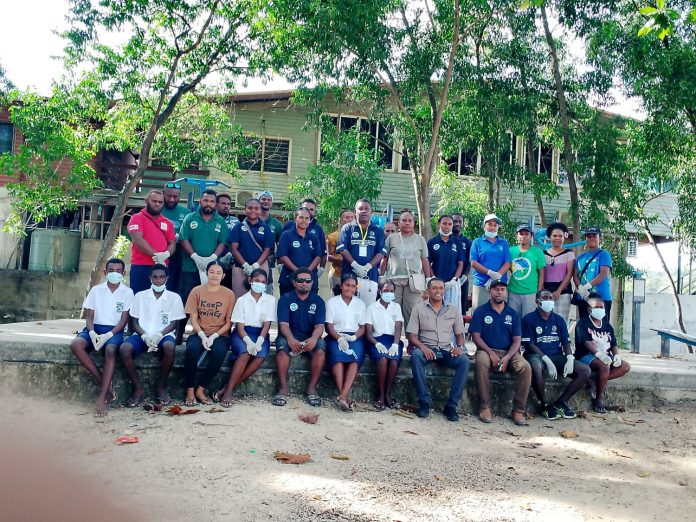
The campaign, which coincides with the observance of World Environment Day 2026, Coral Triangle Day, and World Ocean Day, brought together civil society organisations, community members, and scores of students from Mbokona, Tamlan, and White River School in a united effort to restore the capital’s coastal environment.
Delivering the keynote address, Mr Kuper said the rubbish washing onto Honiara’s shores serves as a visible reminder of how waste is being handled inland.
“What we have washed up on the shores here reflects how we manage waste inside the land,” Kuper told volunteers gathered at the launch site.
“Every piece of rubbish removed today helps protect wildlife and keeps our coastal environment clean and beautiful.”
The clean-up operation, supported by the Honiara City Council (HCC) and sponsored by The Nature Conservancy (TNC), will target heavily littered beaches and public recreational areas throughout the capital in the coming week.
Kuper said environmental protection is not solely the responsibility of government agencies but requires the active participation of communities, businesses, and individuals.
“I would like to remind us to sustain what sustains us, to protect what protects us.
“Environmental stewardship is not just the business of government. It is the responsibility of communities, individuals, businesses, and every citizen,” he said.
He noted that the country’s beaches and marine ecosystems are valuable national assets that support livelihoods, tourism, recreation, cultural practices, and traditional activities across the Solomon Islands.
“Our coastal environments are natural assets that support livelihoods throughout the country.
“They contribute to tourism, recreation, culture, tradition, and many other aspects of our daily lives,” he said.
Organisers encouraged residents to adopt the “Three Rs” approach – Reduce, Reuse, and Recycle – by separating household waste, composting organic materials, and making proper use of HCC waste collection services.
As part of the campaign, volunteers conducted a general clean-up of the coastal area surrounding Rove Children’s Park, while a separate technical team carried out a waste audit to identify and analyse the types of pollution commonly found along the shoreline.
The findings are expected to assist future environmental planning and policy development.
The campaign will continue throughout the week with daily clean-up activities, community outreach programs, and environmental awareness sessions that aim to promote responsible waste management practices.
Phase II of the Youth Social and Entrepreneurship plus Child Protection and Solomon Islands Ending Violence Against Pikinini will focus on young people and children.
The Social and Entrepreneurship plus Child Protection and Solomon Islands Ending Violence Against Pikinini is a continuation of the initiative from Phase I.
The initiative aims to strengthen youth leadership, entrepreneurship, economic resilience, family well-being, and child protection systems to ensure children and young people thrive in safe and supportive environments.
Speaking at the launch of the project, World Vision Solomon Islands Operations Manager, Irene Marbun, said the programme represents an integrated approach that combines sustainable livelihoods, youth engagement, and child protection to create lasting change for communities.
“This project reflects our commitment to youth and children by bringing together sustainable livelihoods, youth engagement, and child protection.
“As we move forward into a new phase, we are building on strong foundations and investing in the next generation of leaders who will drive positive change in their communities,” she said.
She also said significant progress in child protection outcomes during Phase I, including increased awareness of reporting services for violence against children and stronger engagement of parents and caregivers.
The initiative is funded by the New Zealand Government through the Ministry of Foreign Affairs and External Trade (MFAET).
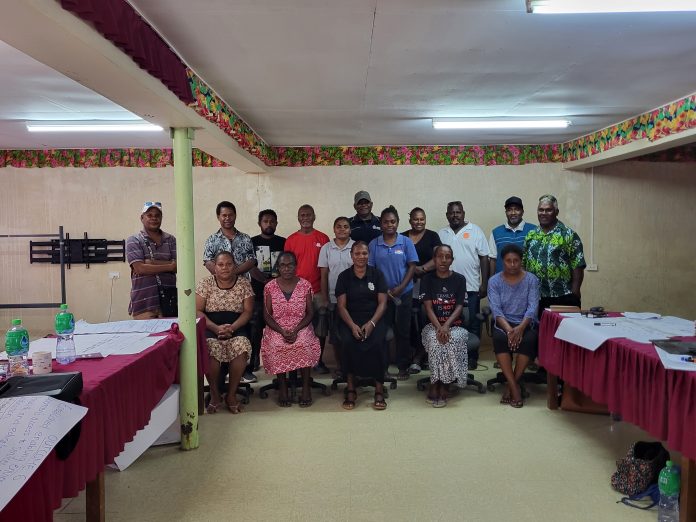
A two-day workshop to review the 2018-2022 policy of the Malaita Provincial Women successfully concluded yesterday at the Green House conference room.
The workshop’s objective was to produce an updated Malaita provincial women’s policy that is responsive, inclusive and aligned with national and global gender equality commitments.
The workshop provided an opportunity for women and stakeholders to discuss the best ways to improve the policy to serve women in the province.
Concluding the workshop, provincial women’s officer for Malaita, Isabel, and Central provinces, Cyrene Vai Deve thanked senior officers and leaders, provincial women, and non-government organisations and partners for their participation throughout the workshop.
She also acknowledged the presence of the media in capturing and for advocating for the challenges and issues affecting women in society.
She said the workshop was vital and significant because it talked about the real and serious issues that impact the lives of women and future of children in the province.
“On behalf of my team, I would like to thank you all for your participation in this workshop.
“Also, I just want to take this opportunity to thank the media for being part of this workshop, promoting and advocating for women, and capturing the real issues affecting their lives.
“Togetherness during this workshop is meaningful as we discuss the lives of our women, the challenges they face, and the way forward to reduce these challenges,” she said.
She said the Ministry of Women will be supporting the Malaita Provincial women’s body in terms of policy formation.
Violence against women and children, as well as women’s accessibility to services in Malaita Province remain a challenge even though activities have been implemented to engage them.
The Malaita Provincial Women concluded their policy review workshop and produced significant outcomes that indicate violence against women and children is an ongoing issue they face.
The outcomes of their discussions among the provincial departments and non-governmental organisations also showed positive hope for the future as they fight to reduce these challenges.
Solomon Sisimia from the Christian Care Centre said that activities and programmes have already been implemented by non-governmental organisations and divisions within the province.
He said that in order to achieve goals, non-governmental organisations and provincial government divisions need to work together.
“From what we have discussed and put here, there are real issues that need to be addressed. But once we (non-governmental organisations and provincial government divisions) come together, we can work on ways to support our women,” he said.
He also thanked those involved in the ongoing projects in the rural communities for engaging the women.
Meanwhile, Chairlady Freda Kofana acknowledged the participation of stakeholders during the two-day workshop.
She said that participating in the workshop might not seem important, but it contributes to the policies.
“I want to acknowledge our stakeholders for your participation during this two-day workshop. You might think that you don’t take part in this policy review, but your contributions and discussions mean that we are reviewing it together,” she said.
With contribution by Duran Angiki, in Brisbane, Australia
Solomon Islands foreign policy practice over the past few years has been described by the Prime Minister as “totalitarian and redundant”.
“We keep (on) saying enemies to none; but it a bit authoritarian and redundant”, said Prime Minister, Matthew Wale, who is currently in Brisbane.
Speaking at a dinner in Canberra on Tuesday night, in honour of his delegation, hosted by the Solomon Islands diaspora community, Mr Wale did not miss the opportunity to highlight an uncomfortable truth about the former government’s foreign policy direction.
“[When we say friends to all, we must mean it. Not the kind of friends to one and enemy to the other – vice versa], which has been the foreign policy in practice for the las few years, and we hope that we will put an end to it.”
“[Australia has been a long-time friend of the Solomon Islands. We’ve been friends for the last 100 years. Even when they came and took some of our people (by force) during the black birding days, they are still our friends].
“[For us, the South Sea Evangelical Church (Sikos), we inherited that legacy – a spiritual legacy]. In terms of spiritual legacy. God uses these things that are evil to bring good. I think if we can claim this historical legacy – although in the surface it did not look good – but deep down, it’s binding peoples together.
“Of course, other missions came out of Australia to the Solomons and brought the gospel to our people. It holds greater significances.
“[We shouldn’t be thinking that foreign policy is conducted at top level and devoid or divorce from things that are affecting simple people; people to people relationships].”
He said, “good international relations built on this people-to people relationships, adding that – “Of course Australia has gone to be a reliable, faithful partner in the developmental aspirations of our country”.
Australia’s contribution through RAMSI in restoring law and order in the Solomon Islands was a clear indication of this relationship.
He said, back then, China was not yet establishing any relationship with the country.
“As someone whom the armed militia almost kill several times, I would say RAMSI was a great success. My being alive here today is a testament to the success of RAMSI.
“We greatly appreciate the Australian assistance,” he said.
There was no doubt Australia had its own interests and calculation, but mostly Australia came and helped to rebuild the country, Wale said.
“I know, RAMSI was success in re-establishing the rule of law [in the country once again].”
Prime Minister Wale acknowledged that: “We have many challenges as well known in our beloved country. Premier among the challenges is one of each.
One: “We have struggled to have leadership that is in touched with challenges that people are facing – leadership that is sensitive to it”.
Two: “We have struggled with a departure, where the government is held hostage by a few interests. Because elite…because of leaders are captured. Corruption is going on in logging that migrate into the mineral sector” he added.
“We need to end this,” Wale said.
“In our discussion with the Australian government, we are looking to Australia for technical assistance to help the country fight corruption.”
Urgently, he said: “We need technical assistance to help us fight corruption that is weakening our state and governance.”
Wale said: “And of course we are also looking for economic opportunities, mostly where Australia will help us to rebuild our country.
“The government intends to build our own economy so that we can offer opportunities for our young people.”
About 50 people from around Canberra and regional South Western New South Wales (NSW) and Sydney came to meet and dine with the Prime Minister, and members his delegation now visiting Canberra for bilateral talks with the Australian government.
Today morning (June 5), the Prime Minister and his delegation will be visiting Golden Cockerel factory, Mout Cotton, South East Brisbane, as part of their facts-finding mission.
On Saturday, the Prime Minister and his delegation will depart Australia to New Zealand in the last leg of its bilateral visit to Australia and New Zealand.
Local workers in Malaita Province have raised concerns over unfair wages by Chinese companies and wholesale shops to their workers, saying the payment is very small compared to the amount of work done.
They also raised concern and questions to the Labour Division within the Ministry responsible, about their rights and safety.
A research done in Auki showed that local workers are working for long hours while earning meager wages.
According to the research, the workers having worked for long hours are left physically and mentally exhausted by the end of the day, diminishing their quality of life and fostering a sense of exploitation.
One worker said the work for almost thirteen hours each day and their rate is eight dollars per hour.
Malaita Provincial Youth coordinator, Frank Samo Sari said he has also witnessed the same scenario with local workers who work as an shop assistants.
He said shop assistants stand almost for the whole day.
“It is unacceptable for our local store assistants to stand for extended periods from early morning until late evening, serving customers without adequate breaks or rest.
“I have been speaking with a few workers. They said they started working at 7am and continued until 8.30pm and beyond,” he said.
He calls on the Ministry of Commerce for intervention into the issues facing local workers in the province and the country as a whole.
He said the Ministry of Commerce, through the Labour Department, needs to investigate the conditions these local workers are facing.
“There is an urgent need for the Ministry of Commerce and the Labour Department to investigate the working conditions faced by local shop assistants.
“Stringent oversight is necessary to ensure that labor laws are adhered to and that workers are treated fairly according to the statutory mandates under the commission with regard to labor law,” he said.
He added that advocating for government intervention can help enforce labour standards and ensure that local workers are protected from exploitation.