The “Maritime Silk Road Media Cooperation Platform” was launched in Guangzhou, China on Dec 1, 2025.
This was initiated by South Guangdong’s international communication media outlet under the Nanfang Media Group with media representatives from countries namely; Solomon Islands, Fiji, Vanuatu, Cambodia, Myanmar, Malaysia, Indonesia, Timor Leste and Egypt.
South’s Editor-in-Chief, Zhao Yang speaking at the ceremony announced a plan embodying six initiative points namely;
-regular joint media coverage
-joint production initiatives
-a coordinated response mechanism for major news
-cross-platform content sharing,
-a sustained dialogue mechanism
– exploration of new business and cultural collaboration.
Yang expressed that they look forward to working with their media partners to develop a more detailed and in-depth corporation.
He added that they would also like to explore areas such cultural exchanges across the region.
The launching program also catered to discussions between media representatives and Mr Yang about future collaborations.
This platform launch concluded a two and a half days tour around different sites relating to areas such as art, history, planning, agriculture and energy.
Media representatives got to see first hand artifacts depicting Chinese culture and relations with others regions in terms of trade, China’s innovation in agriculture, historical sites and a talent park to name a few.
The Ministry of Culture and Tourism (MCT) is proposing significant marketing strategies to reform the tourism sector of the country.
High on this strategic reform is the rebranding of the tourism sector of the country.
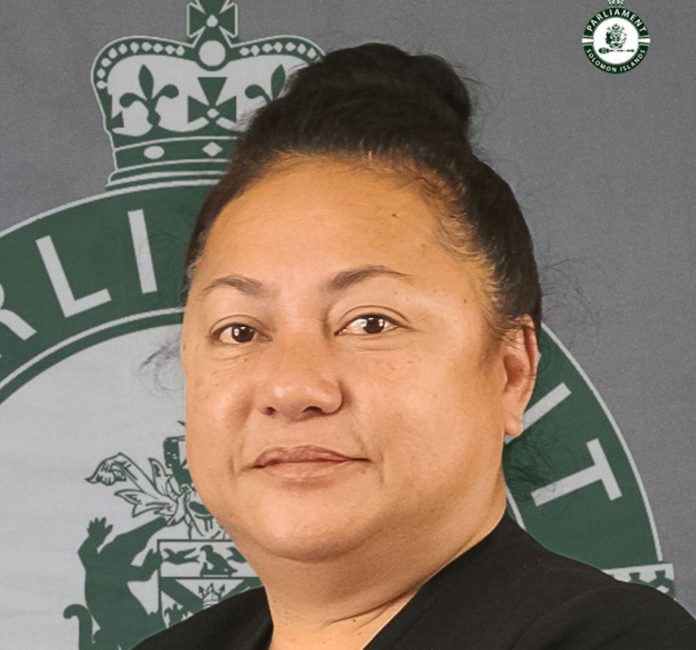
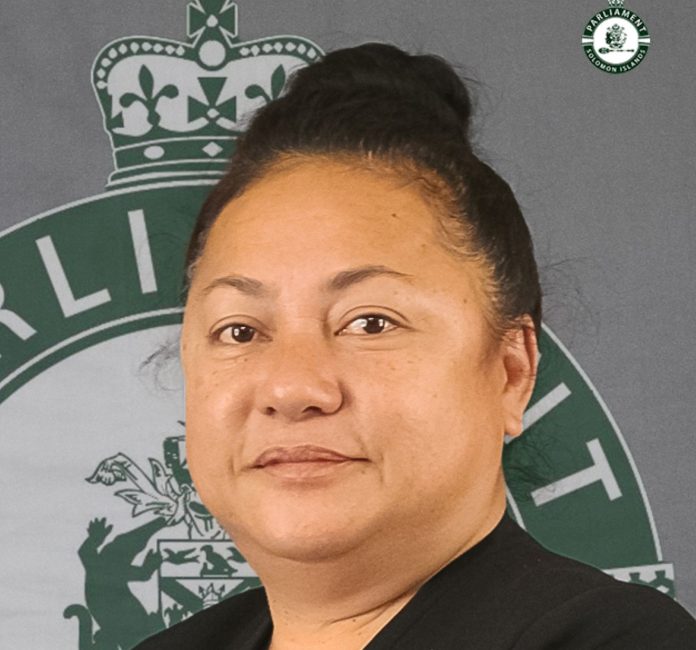
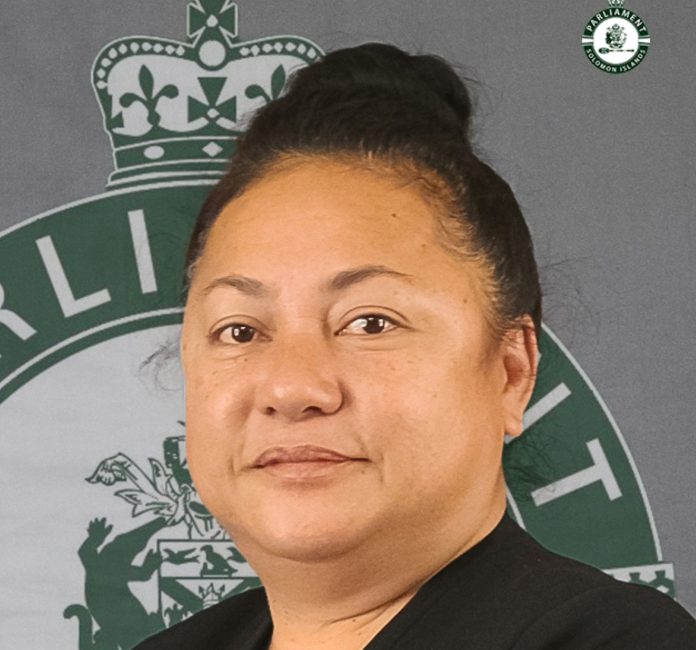
Speaking on the debate of the 2026 Appropriation Bill 2025 in parliament last week, Minister for Culture and Tourism, Choylin Yim Douglas, said having returned to pre-COVID visitor numbers, MCT’s marketing strategy will transition from recovery of growth.
“In 2026, we will adopt a more expressive and targeted marketing approach in which we will explore new markets, while strengthening partnerships with our core long and short-haul markets.
“A key activity in this new phase is the rebranding of Solomon Islands, with cabinet’s recent approval for us to revert to our original global destination brand, Solomon Islands, the Happy Isles.
“The decision is not merely a marketing exercise but a strategic reportioning of our nation,” she said. The Minister noted the Happy Isles carries deep historical and emotional significance,” she said.
She added that it defined Solomon Islands on the world tourism stage for many decades and positioned our country as a warm, peaceful and culturally rich destination.
“By returning to this original brand, we are restoring our powerful national identity that resonates both locally and globally.
“But more importantly, this is also a nation-building agenda directly aligned with priority objective number four of this bill, promoting peace, unity and security,” Douglas said.
She said rebranding to the name “Happy Isles” is also a call to all Solomon Islanders to uphold and live with the values of peace, respect, kindness and unity.
“It values define who we are as a people. For a tourism destination, branding is not only what we promote abroad, it is how we build at home. We must live and champion the brand.
“We must cultivate an environment where visitors genuinely feel welcome, safe and embraced by our natural warmth.
“Friendly attitudes, peaceful communities, respect for diversity and pride in our culture are key ingredients in building a truly successful tourism industry,” the Minister said.
Moreover, she noted that global travellers today are seeking authentic, peaceful cultural experiences.
“Our rebranding aligns perfectly with what the world is looking for and it positions Solomon Islands to compete more effectively in the international market. But a brand can only be powerful if it reflects reality.
“That is why this rebranding must be owned, not just by government, but by every Solomon Islander.
“From our business community to our chiefs, youth, students, women and leaders, let us not repeat the events that brought negative perception about our country and we must move forward.
“As we roll out this campaign in 2026, we will be working closely with government ministries, communities, provincial governments, private sector partners and schools to promote behavioural change and awareness.
“In doing so, we hope to reinforce the message that tourism thrives where peace thrives and that every citizen plays a role in making Solomon Islands a truly happy isles,” the Minister said.
The Ministry of Culture and Tourism (MCT) has an allocation of SBD $46.4 million in the 2026 budget, which will focus on strengthening the tourism sector in the country.
Minister for Culture and Tourism, Hon Choylin Yim Douglas announced the budget, when contributing to the 2026 Appropriation Bill 2025, in parliament last week.
She said the ministry is pleased that its budget allocation for 2026 remains at the same strengthened level as 2025.
“Our priorities for 2026 will continue to build on the momentum established this year under three programs,” the Choylin said.
The Minister outlined the breakdown of the SBD $46.4 million budget as follows;
SBD $22 million allocated for tourism development and institutional strengthening program
SBD $14.2 million allocated for national tourism product development program
SBD $10.2 million allocated for national cultural heritage and tourism infrastructure program.
She said the main focus will be on strengthening the accommodation supply chain, developing new cultural, natural and heritage-based tourism products.
Ms Choylin added the budget will also look at improving visitor experiences, working with partners to enhance air, land and sea connectivity.
She said it will also prioritise development in key tourism hubs, Honiara, Munda, Tulagi and Auki, to target quick wins and address low-hanging opportunities.
The Ministry of Culture and Tourism (MCT) has assured commitment in reforming the tourism sector by empowering the private sector to take the lead in driving tourism growth in the economy.
The statement was made by Minister for Culture and Tourism, Choylin Yim Douglas, in response to a question raised by MP for East Choiseul Constituency, Manasseh Sogavare – in parliament last week, on the plan to reform and develop the country’s tourism sector.
The Minister explained that they have already developed a concept of built and leased tourism development model.
She added that the module will ensure government, through a public-private partnership arrangement will take the lead to finance construction of significant core hotel infrastructure.
Douglas said, this is according to specification of an international brand hotel noting that under this approach, government will also explore mechanisms for the government to hold equity through ICSI.
This will ensure long-term national ownership and revenue through dividend while allowing the private sector to drive operational excellence and market competitiveness.
Moreover, the minister emphasized that the direction of the reform will reflect Solomon Island’s chronic underinvestment in hotel and resort infrastructure.
She added that this is due to high capital development cost, which makes it unattractive for investors, limited access to finance, market-size concerns, land tenure uncertainty and fragmented investor confidence.
Douglas said the model de-risk investment will ensure land tenure security and accelerate the entry of global hotel brands into the Solomon Islands, creating jobs, revenue and confidence for further private sector growth.
“I would like to say again that the tourism and cultural sectors continue to be among the most promising industries capable of driving sustainable economic transformation.
“The achievements of 2025 and our strategic focus for 2026 demonstrate our readiness and commitment to support the national vision embodied in the 2026 budget theme,” the Minister said.
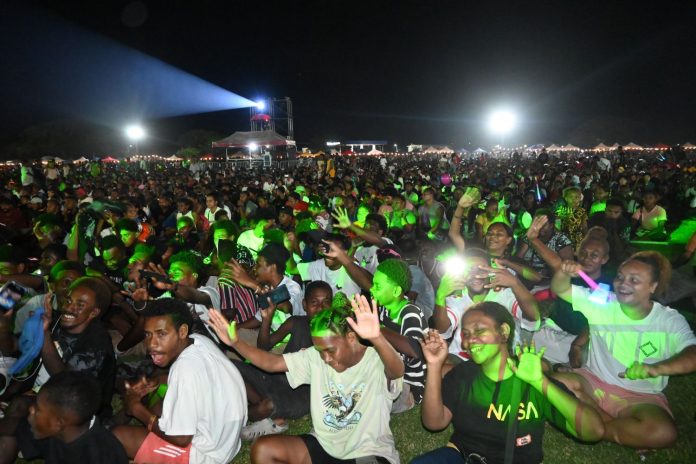
The “Carols in the islands” event on Saturday night, December 6, 2025 pulled in a huge crowd of families and friends.
Early goers to the event
With international and local artists lined up for the show, the location “DC Park” was already packed late in the afternoon as the excited crowd counted down to see their favourite artists perform.
A happy couple at their stall that served refreshing drinks and snacksA stall displaying beautiful handmade accessories
While waiting for the show, a good number of stalls were also at DC Park, ranging from delicious food, snacks and drinks to stalls that had on display, beautiful handmade items and other things.
Ebony Finau (Centre) with family members at their stall at the event
Island Sun caught up with Ebony Finau who was at the event with her family.
She said she and her family came to join the “Carols in the islands” event and they also have a food stall.
Finau said for them as a family, it’s really nice because there are also other families at the occasion and it means a lot for them to come and sell the food they prepared.
She expressed that at events like this, it is important to prepare and serve good food for people as they wait for the show to begin.
“I so happy to be here with my family and also happy to see other families coming together to join Carols in the islands”, she said.
Artists in the line-up for the show included; Solomon Islands artists, Khazin and Blad P2A, Jaro Local, Grace V, and international artists like Vanuatu’s Vanessa Quai and Maori R & B singer Myshaan.
(Left to right) MCs of the night, Ms Salote and Solo Bwoy hyping up the crowdA choir singing at the eventSolomon Islands artists, (Left to right) Khazin and Blad P2A getting the show started in the evening(Left to right) Vanuatu artist, Vanessa Quai and Solomon Islands Jaro Local performing a song togetherYouths enjoying the showSecurity controlling the excited crowdMāori Soul and R&B artist from Hamilton, New Zealand, Myshaan singing at the eventFireworks ignite the evening
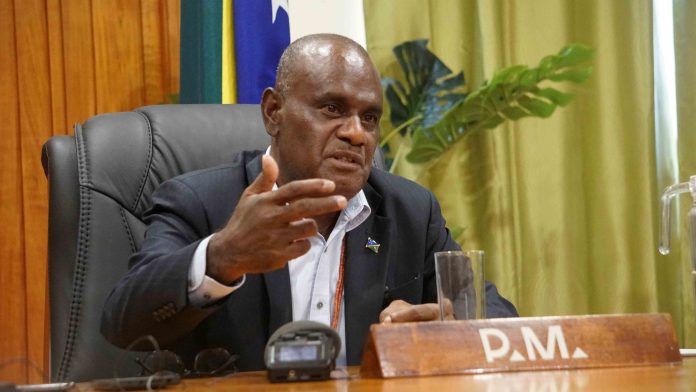
Prime Minister Jeremiah Manele says the Government will work through its existing trade arrangements with the European Union (EU) as Solomon Islands faces a looming deadline to comply with the EU’s new anti-deforestation regulations – rules that could impact the country’s cocoa and palm oil exports.
Speaking during a press conference on Friday, 28 November 2025, the Prime Minister confirmed he was aware of the concerns raised regarding the EU Deforestation Regulation (EUDR) and its potential implications for local exporters.
“I did read or hear about that piece of news. We do have an economic partnership arrangement or agreement with the European Union. Under this, we export tuna products. So that arrangement is already in place,” he said.
PM Manele acknowledged that the EU typically maintains “very strong positions on the environment, including forestry,” noting that ongoing discussions will determine how cocoa and possibly palm oil will be affected under the new rules.
“Without pre-empting, because those discussions are ongoing now… it will take place within the context of the arrangements.
“The Ministry of Agriculture and the Ministry of Foreign Affairs will be the agencies that will take part in the discussions. So, we will wait for those discussions when they come and see how it goes,” he said.
He reiterated that the EU’s environmental and forestry standards are high, and Solomon Islands will need to engage constructively when formal talks begin.
The Prime Minister’s comments follow serious warnings delivered during the country’s first-ever forum on the EUDR, held on Thursday 27 November at the Art Gallery.
Experts say Solomon Islands has less than 12 months left before the EU’s anti-deforestation rules become fully enforceable in December 2025—placing premium cocoa and palm oil exports at risk unless strict new conditions are met.
James Kana, the EUDR Consultant and Chair of the Cocoa Working Group, told stakeholders that exporters must now prove their products are not linked to land deforested after 31 December 2020.
“The European Union is one of the biggest markets in the world. Once they enforce this regulation, any country that does not comply will simply lose access,” Kana warned.
For Solomon Islands, the most affected commodities are cocoa and palm oil. The new rules require:
GPS or satellite mapping of all cocoa farms
Full traceability from farm to EU importer
Digital submission of geolocation data to the EU system
Legal proof of land ownership and production legitimacy
“All cocoa products—beans, paste, powder, fat, even leaves and shells—must meet these requirements,” he added.
Kana said compliance cannot be left to farmers and exporters alone. Government involvement, legal frameworks, and national data-collection systems will be essential.
Cocoa remains one of the country’s most important rural income sources, sustaining thousands of families.
Local exporter Diana Yates of Cathliro Commodities also urged the Government to help secure funding and develop traceability systems, warning that failure to comply would directly impact rural livelihoods and the national economy.
“We must not see this only as a threat. If we adapt, we can continue to access one of the world’s most valuable markets,” Kana stressed.
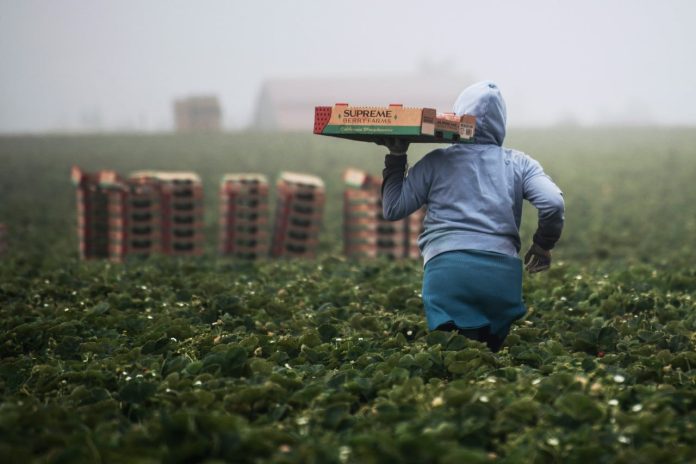
FORTY-FOUR Solomon Islands workers have absconded from their assigned farms under Australia’s Labour Mobility Scheme.
Minister for Foreign Affairs and External Trade, Peter Shanel Agovaka disclosed the figure whilst responding to questions from Opposition Leader Mathew Wale about the welfare of Solomon Islanders working under the Pacific Australia Labour Mobility (PALM) scheme in Parliament last Friday.
Wale raised concerns about a reported case involving a young female worker who became pregnant by another Solomon Islands recruit and gave birth in Australia but couldn’t access medical services because she absconded from her employment agency.
“Absconding from agencies turns into limbo for most locals recruited under the PALM scheme.
“Those agents are responsible for locating the locals in their respective farms to work,” Wale said.
The Opposition Leader said reports suggest that some workers abscond due to hefty deductions from their wages, while others leave for various personal reasons.
Minister Agovaka acknowledged the issue but said the 44 absconders represent a relatively small number compared to other Pacific nations participating in the scheme.
“Comparing the number to other regional countries like Fiji, Tonga and Samoa, we have a smaller number of locals who absconded from their employment agencies,” Agovaka said.
He added that the Ministry has two country liaison officers responsible for visiting Solomon Islands workers on Australian farms, supplemented by visits from the Commissioner in Canberra and the Consular General in Brisbane.
Member of Parliament for Small Malaita, Rick Hou, raised another troubling case involving workers recruited by an employment agency who are currently on the streets after their employer was placed under investigation, leaving work was suspended.
“They were not able to look for another job in another farm because they were handed contracts which create rigidity for them to move around looking for temporary jobs while waiting for their employer to sort things out and get back to normal operations,” Hou said.
Agovaka noted that while the Labour Mobility Unit (LMU) program has helped many Solomon Islanders, social issues among workers have created complications.
“These social issues have spilled over to other workers including other employers as well,” the minister said.
He assured Parliament that the government is working closely with Australian authorities to address the problems and has implemented a blacklist system for workers who abscond.
“When they return home, they cannot go back, because we don’t allow them to go back. They are on our blacklist of people not allowed to go back to Australia and New Zealand through the scheme.
“We are working closely with the Australian and New Zealand authorities in trying to address this issue, basically with consultation with employers and employees,” Agovaka said.
The minister said the government is focused on resolving these issues this year while maintaining the programme’s benefits for Solomon Islands workers.
Meanwhile, as of October, Solomon Islands has sent 5,446 workers to Australia and 622 to New Zealand under the labour mobility scheme. The country has also deployed 67 aged care workers to Australia, as well as nurses working in health sectors in Vanuatu and Niue.
FOR more than half a century, the people of Hagalu village in Big Ngella in Central Islands Province have lived with a water crisis that has shaped their daily lives, strained social unity, and tested their determination to survive.
Despite sitting on the mainland, the community continues to struggle with chronic shortages of clean water and a complete absence of proper sanitation facilities, challenges that have grown increasingly severe as the climate becomes drier and the population continues to expand.
Community catechist and layman, Ben Lilia said the struggle for safe water in Hagalu is not a recent development but an issue dating back generations.
He recalled that the community had once experienced temporary relief after receiving funding support to install water tanks at the main source. However, years of mismanagement, uneven access, and community disagreements caused the system to fail.
Lilia said the village had previously enjoyed more consistent water access, but the lack of collective responsibility eventually caused the system to be unsustainable. Some households began setting up unauthorized pipe connections that diverted more water than they were entitled to. This practice weakened overall water pressure, disrupted equal distribution, and created tension among villagers.
“These actions caused the whole community to suffer.
“Water is life, and everyone should have equal access to it. But unity was difficult in those days, and carelessness made it even harder to solve the issue,” Lilia said.
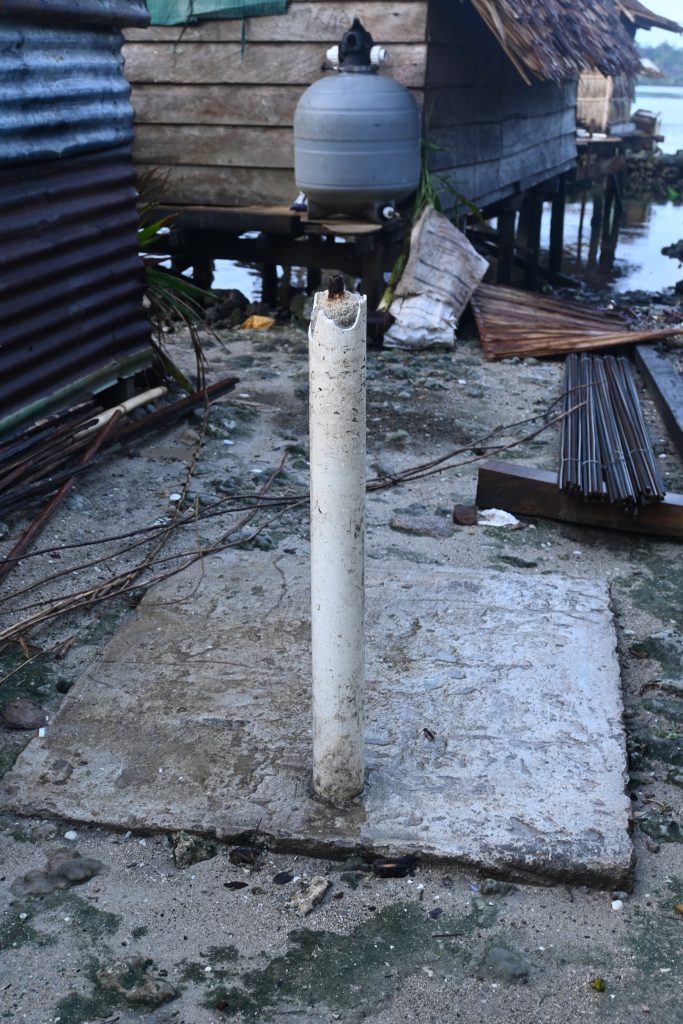
A water supply pipe that was vandalised
Conflicts occasionally escalated into vandalism, with pipes and tap stands damaged during disputes.
With the system no longer functioning effectively, community leaders decided to relocate the funded tanks from the water source down to the community. The chairman instructed that the tanks be divided among the six main groups within the village, while an additional tank was given to the local school to support students.
Today, the people of Hagalu rely heavily on rainfall to fill these tanks. Each tank serves around thirty families, making even the simplest activities such as cooking, washing, and drinking dependent on the weather.
During dry months, families must ration water carefully or look for alternative sources, including bathing in the sea, which is not a new thing for most elders in the community today.
Lilia said the community makes use of a small well and a nearby stream at Bula, which villagers access by canoe for bathing, washing, and cooking. However, these sources are hardly dependable during prolonged droughts, leaving many households in precarious conditions. Because of these ongoing challenges, the people of Hagalu now place their hopes on the construction of proper boreholes that could supply water consistently, regardless of seasonal conditions.
For the past three years, the community has repeatedly called for professional assistance to develop boreholes that would provide long-term relief.
Lilia believes that installing one borehole for each of the six community groups would finally address the water shortages that have plagued the village for decades.
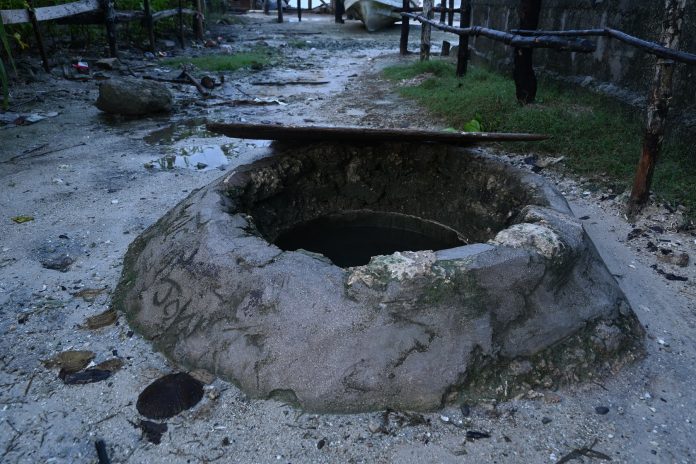
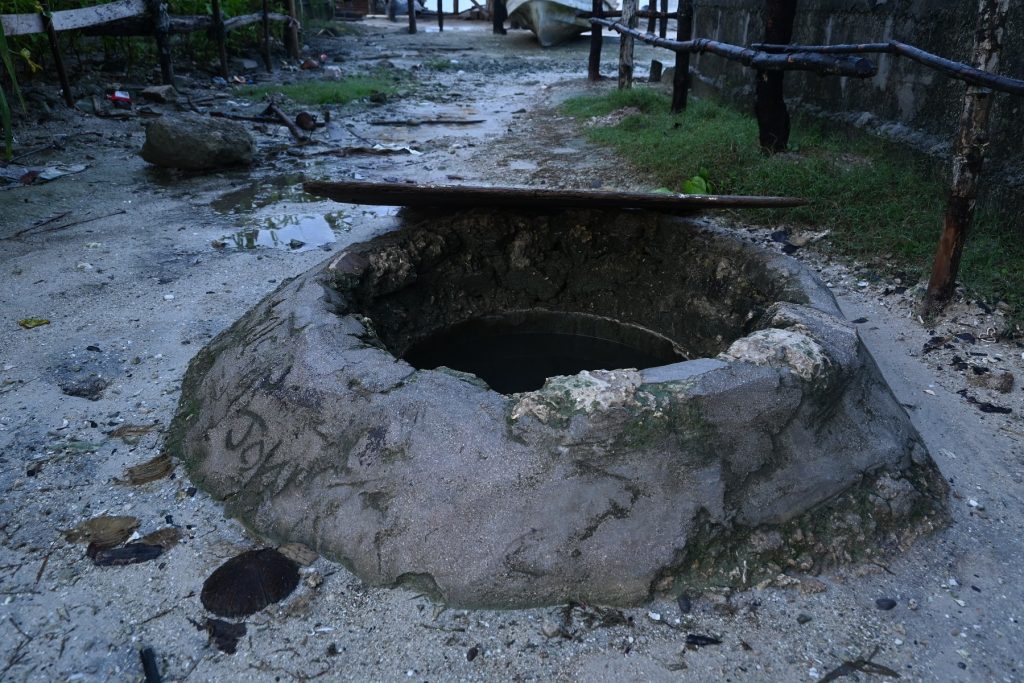
An existing well servicing the community
He explained that some attempts have already been made to utilize a mountain stream by digging wells that act as reservoirs, storing water before it flows down to the village. But during long dry spells, the stream feeding the wells also dries up, rendering the system ineffective.
“When it is sunny for too long, the main stream dries up as well.
“That means the wells cannot supply enough water for everyone. Even this approach is not enough to meet the demand,” Lilia said.
The shortage of water has also created a sanitation crisis that the village has never been able to solve. Since the community first settled in the 1960s, no proper sanitation systems were established.
Another issue in the community today is the lack of proper sanitation.
A section of the mangrove area on the coastal side of the village is used as open defecation site for both men and women, a practice that poses health risks, especially for children and the elderly.
Lilia said the lack of sanitation is one of the community’s most pressing and long-standing problems.
The people of Hagalu originally relocated from Ha’a village decades ago, but despite growth in population and development in surrounding areas, sanitation has remained neglected. The community is now waiting for assistance from provincial leaders, hoping their turn for support will come soon.
He noted that their Member of Provincial Assembly has served for just under two years and has been focusing on other parts of the constituency, with priorities currently placed on school infrastructure, education programs, and women’s initiatives.
While these areas are important, the community hopes that the next phase of projects will address both water security and sanitation, which remain as urgent needs for Hagalu.
One of the regular methods of collecting rain water
For now, the people of Hagalu continue to persevere. They depend on rainfall, improvised wells, and a distant stream for survival, while hoping that long-awaited support will eventually arrive to help them build a cleaner, safer, and more reliable future.
Seeking solutions towards the issue includes daily routine of water from rain using buckets and dishes as well as wise and fair usage of water for everyone.
Lilia said the community remains hopeful that one day their children will grow up with access to proper water and sanitation systems—amenities that while many urban residents take for granted, rural families continue to be denied of for generations.
Junior Ben, an active youth from the community revealed that the issue really affected the community, especially for women and girls who have high demands for water.
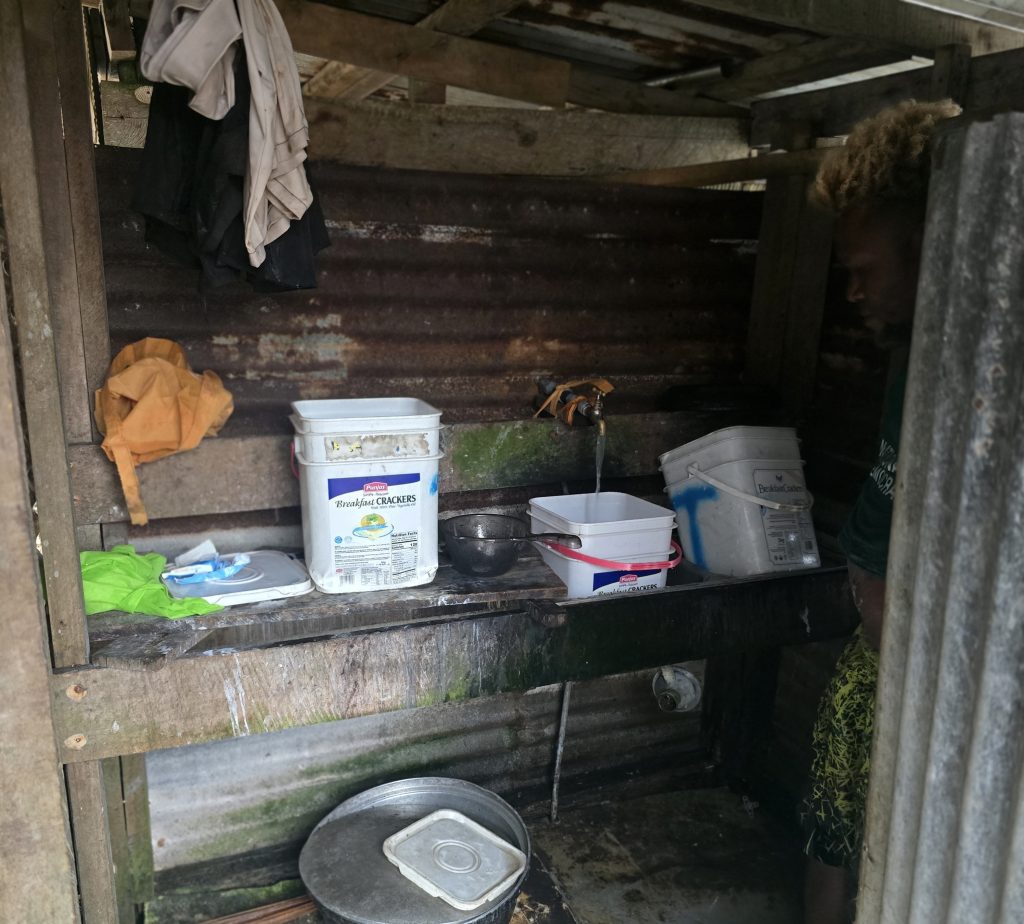
One of the tanks that usually provides water access to members of the communityA bathroom accessing water from a water tank
“The community is depending on the weather to determine the usage of tanks”, he said.
He said a number of families have their own private tanks which also serve the community.
“We have our own private tank for water as well. It also helps the people in the community, especially for drinking and showering, including our fishermen who come to fetch water.
“But when the weather gets dry, the tanks dry up as well.
“So, the people in the community have to paddle for two minutes to Bula stream to get drinking water, do their washing and to bathe.
“Bula stream is good for drinking, cooking and washing so it becomes our last resort,” Ben added.
The challenges faced by Hagalu are part of a much broader national crisis affecting many rural communities in the Solomon Islands. Despite ongoing development efforts between 2020 and 2025, a significant proportion of the population still lack access to clean water and sanitation.
National data shows that a third of the country’s population do not have access to basic drinking water, while nearly two-thirds lack basic sanitation systems. The gap between urban and rural areas is substantial, with water services far more accessible in towns than in remote villages. Sanitation rates in rural communities remain critically low, with many households across the country still practicing open defecation due to the absence of proper sanitation facilities.
These conditions place the Solomon Islands among the lowest-ranked countries globally for rural access to safe drinking water. The health risks associated with unclean water and poor sanitation continue to affect thousands of families, particularly children who are more vulnerable to waterborne diseases.
Efforts to address these challenges are ongoing. Development partners including the World Bank and UNICEF have launched major programs such as the Urban Water Supply and Sanitation Sector Project and the Community-Led Total Sanitation program. Although these initiatives have made progress in selected areas, rural communities like Hagalu still face major gaps in basic services.
*Reporting for this story was supported by Pacific Media Assistance Scheme (PACMAS)
The Government has allocated a major portion of its 2026 development budget toward strengthening the Solomon Islands Broadcasting Corporation (SIBC) and upgrading key government residential and security infrastructure.
A total of $3.45 million has been dedicated to SIBC to expand coverage and improve communication accessibility, particularly for communities in the eastern region.
Prime Minister Jeremiah Manele revealed in Parliament this week that $2.5 million will go towards land acquisition, equipment, and the full commissioning of the Lata SIBC AM Transmission Tower—a long-awaited project expected to significantly enhance radio reach across Temotu Province.
An additional $950,000 is allocated for the construction of a new Lata Radio Station, further boosting SIBC’s capacity to deliver news, alerts, and public information to one of the country’s most remote provinces.
Officials say these investments are crucial for improving communication reliability during disasters and ensuring isolated communities stay connected.
The Prime Minister said development funds—totalling $6 million—will focus on upgrading government accommodation and strengthening security at the Office of the Prime Minister and Cabinet.
Key allocations include:
$500,000 for the final design of the Prime Minister’s official residence, a project earmarked to modernise the country’s highest office residence.
$2.2 million for repairs, maintenance, and the demolition of two dilapidated Tier 2 government houses.
$3 million to construct one new Tier 2 residence, part of broader efforts to improve government housing standards.
$300,000 for the installation of picket fencing at the OPMC office to enhance security.
The government maintains that these development investments are necessary to modernise essential infrastructure, improve service delivery, and ensure safe and functional accommodation for senior officials.
Prime Minister Jeremiah Manele has told Parliament it is time for Solomon Islands to break away from nearly five decades of weak and narrowly based economic growth, saying the country must now “rewrite its economic narrative.”
Speaking during the Second Reading of the 2026 Appropriation Bill on 3 December 2025, the Prime Minister said the nation’s development history since independence is well known — and it must not continue to shape the country’s future.
Manele said Solomon Islands has lived through volatile growth averaging just 2.5 percent, heavily dependent on logging and vulnerable to shocks.
“We have weathered numerous crises — global downturns, a pandemic, tensions, floods and cyclones,” he said. “I wish to acknowledge past leaderships that steered us through these challenges.”
Despite this, the Prime Minister highlighted that core economic structures have barely shifted. Agriculture still makes up 27.8 percent of GDP, Industry 15.2 percent, and Services 57.1 percent, with most activity concentrated in Honiara.
He reminded Parliament of the mid-term review of the National Development Strategy (2016–2035), released two months ago, which found the country off-track on most of its key objectives.
“This is the narrative the GNUT government inherited when we came into office last year,” Manele said. “We made a deliberate decision that Solomon Islands must re-write its economic narrative. The past cannot continue to define who we are, or who we will be.”
The Prime Minister also raised concerns about political instability undermining national development. Over 47 years, the country has seen 33 motions of no-confidence, including two against his own government.
“Most were defeated or withdrawn, but they disrupt government focus,” he said. “While the right to move such motions must be upheld, members of this House must also recognise the importance of political stability to drive sustainable development — the kind our people urgently need.”
Manele said the 2026 Budget reflects the GNUT’s commitment to shifting from a “business-as-usual” approach to one anchored in unity, infrastructure, economic transformation and human capital.
He urged MPs to support the Appropriation Bill and help steer Solomon Islands toward a stronger and more resilient economic future.