Home Blog Page 194

A campaign for dignity and equality of women in health

0

BY LORETTA B MANELE

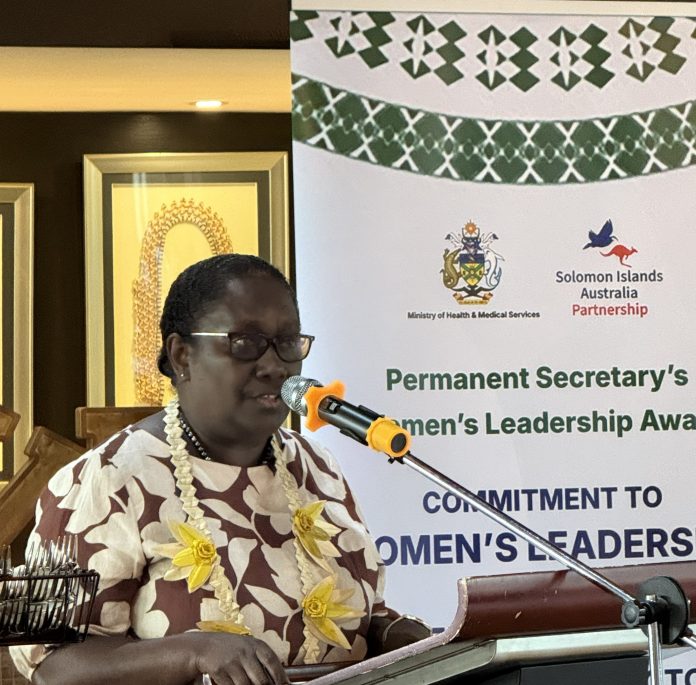
Pauline McNeil, permanent secretary for the Ministry of Health and Medical Services has described the Women’s Leadership Initiative as a campaign to stand up for women in the health sector.

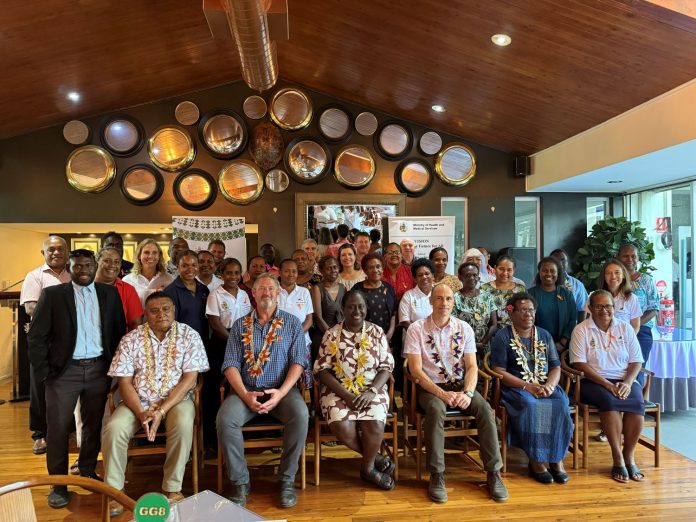
She expressed this at the launch of the “Women’s Leadership Initiative” by MHMS and Solomon Islands Australia Partnership on Wednesday, December 10 at Heritage Park Hotel.

“It is also a campaign that calls on all of us to stand for safety, respect, dignity and equality for all our women, all our health workers who continue to serve and deliver health services; all our girls of today and years to come,” said Mrs McNeil.

She emphasised that for the health sector, this responsibility is immediate and deeply relevant.

McNeil said violence affects the health, safety and dignity of women across our country, hence, strengthening women’s leadership is therefore part of their broader obligation to ensure that our health facilities and workplaces are safe, respectful and equitable.

“It represents a deliberate effort to create pathways for our women in the service. Opening opportunities for them, empowering them, building their capacity to ensure they are confident and competent in the work that they do,” she said.

On this note, the Permanent Secretary stated that for leadership development and for meaningful participation in shaping our health system in this country, they will establish an alignment of network of leaders who can mentor others, regardless of where they are, whether it’s at a lower health facility or at an average ministry headquarter.

“We’ll ensure that the opportunities are available and accessible to ensure that they share experience and serve as role models across the country.

“We will also use evidence from Nationwide Diagnostic Survey of Women in the Health Workforce to identify the barriers, the bottlenecks and the challenges and design effective practical solutions that will be reflected in our strategies, frameworks and policies,” she said.

To top that off, McNeil said they will also continue to advocate for workplace reforms that support women as well as transparent promotion processes, safe and respectable environments that are free of harassment and violence, zero tolerance of violence and flexible arrangements for them to be recognized as they go along in their leadership journey.

She stressed that these commitments are essential if we want a leadership culture that truly reflects the talent, the skills and the diversity of our health workforce.

For feedback, contact: [email protected]

Parliament approves $5.6 billion budget for 2026

0
Solomon Islands National Parliament

BY NED GAGAHE

AFTER five days of intense debate and scrutiny, Parliament has passed the 2026 Appropriation Bill 2025, approving a total government expenditure of SBD$5.6 billion for the 2026 financial year.

The Bill went through the Committee of Supply and the Third Reading without any amendments and was passed on Wednesday, December 10, 2025.

Speaker Patterson Oti declared the Budget approved.

The passage of the Bill authorises government spending amounting to SBD$5,605,482,104, and also sets annual borrowing limits in accordance with the Public Financial Management Act 2013.

These include provisions for Treasury Bills during exceptional situations and borrowing facilities through development partners or local financial institutions to support key infrastructure and development priorities.

Minister of Finance and Treasury, Rexson Ramofafia, confirmed during the third reading that the Bill had emerged from the Committee of Supply unchanged.

He highlighted the Government’s medium-term objectives under the 2026 Budget, which include:

  • Achieving average GDP growth of 3–5 percent, driving increased economic activity in rural and urban areas and boosting employment by around 3 percent.
  • Keeping domestic inflation at or below 3 percent.
  • Maintaining sustainable budget balances consistent with projected revenue and financing capacity.
  • Ensuring debt levels remain manageable.
  • Gradually rebuilding cash reserves through surplus revenue transfers.
  • Budget Aims for Transformative Change

Earlier, Prime Minister Jeremiah Manele said the 2026 Budget represents a shift away from “business as usual” toward a more proactive and transformative direction, guided by the theme:

“Accelerate Economic Transformation: Resourcing the Resourced for Economic Growth and Sustainable Development.”

He said the Budget is anchored on six core development objectives:

  • Promoting transformative and sustainable economic growth
  • Maintaining affordability in the national budget
  • Safeguarding fiscal stability
  • Improving service delivery through quality and targeted spending
  • Strengthening national unity and empowering communities
  • Advancing good governance and accountability

“These objectives highlight the areas central to our work next year,” the Prime Minister said. “With these priorities in mind, my Government will continue its efforts across all sectors and provinces.”

For feedback, contact: [email protected]

A campaign for dignity and equality of women in health

0

BY LORETTA B MANELE

Pauline McNeil, permanent secretary for the Ministry of Health and Medical Services has described the Women’s Leadership Initiative as a campaign to stand up for women in the health sector.

She expressed this at the launch of the “Women’s Leadership Initiative” by MHMS and Solomon Islands Australia Partnership on Wednesday, December 10 at Heritage Park Hotel.

“It is also a campaign that calls on all of us to stand for safety, respect, dignity and equality for all our women, all our health workers who continue to serve and deliver health services; all our girls of today and years to come,” said Mrs McNeil.

She emphasised that for the health sector, this responsibility is immediate and deeply relevant.

McNeil said violence affects the health, safety and dignity of women across our country, hence, strengthening women’s leadership is therefore part of their broader obligation to ensure that our health facilities and workplaces are safe, respectful and equitable.

“It represents a deliberate effort to create pathways for our women in the service. Opening opportunities for them, empowering them, building their capacity to ensure they are confident and competent in the work that they do,” she said.

On this note, the Permanent Secretary stated that for leadership development and for meaningful participation in shaping our health system in this country, they will establish an alignment of network of leaders who can mentor others, regardless of where they are, whether it’s at a lower health facility or at an average ministry headquarter.

“We’ll ensure that the opportunities are available and accessible to ensure that they share experience and serve as role models across the country.

“We will also use evidence from Nationwide Diagnostic Survey of Women in the Health Workforce to identify the barriers, the bottlenecks and the challenges and design effective practical solutions that will be reflected in our strategies, frameworks and policies,” she said.

To top that off, McNeil said they will also continue to advocate for workplace reforms that support women as well as transparent promotion processes, safe and respectable environments that are free of harassment and violence, zero tolerance of violence and flexible arrangements for them to be recognized as they go along in their leadership journey.

She stressed that these commitments are essential if we want a leadership culture that truly reflects the talent, the skills and the diversity of our health workforce.

For feedback, contact: [email protected]

Material shipment for North Malaita soon 

0

BY RODRICK DESURI 

AUKI 

A ship carrying building materials for North Malaita, Malaita Province, is set to sail soon to the constituency. 

The shipment will contain housing scheme materials, project materials and income-generating equipment for the proposed growth centre. 

In an interview with Island Sun Auki, Member of Parliament for North Malaita Constituency, Daniel Waneoroa, said the distribution of the materials to each of the recipients will be based on project proposal submissions. 

He said many project proposals have been submitted and received by his constituency office, but the limited constituency fund does not allow for every application to be approved. 

“Distribution of the materials to the recipients will be based on proposal submissions,” he said. 

“The funding for the materials is limited; however, we will try our best to address everything once the funds are sufficient,” he said.

Waneoroa said that under his leadership, there are a few major plans in place for implementation, but due to pressure from constituents, they will not become a reality.

He said that the pressure from people coming and asking for assistance is one issue that can’t be addressed for any further development.

Island Sun understands that this will be the second chartered materials for the North Malaita Constituency.

Other constituencies in Malaita Province have completed their material shipments.

For feedback, contact: [email protected]

Anti-mining activist acknowledges mining toolkit

0

BY JOHN HOUANIHAU

Anti-mining activist Adi Galokepoto Bennett has acknowledged the Mining toolkit developed by the Development Services Exchange (DSE) and its partners.

The project is a collaboration between ICAAD (International Centre for Advocates Against Discrimination), the Development Services Exchange (DSE), Apunepara Ha’amwa’ora Natural Resources Association (AHRNA), and a CBO from Lauru/Choiseul Province.

It is supported and funded by the Earth Rising Foundation.

Speaking to Island Sun during the DSE-organised Mining Toolkit and Media Advocacy Workshop held at St. Barnabas Melanesia Leaf Hut yesterday, Mrs Galokepoto said that communities can now be informed of their rights with the availability of the mining toolkit.

“You let the community know what their rights are? How to use several pathways for raising issues, if they are unhappy with how the government is carrying out mining, whether it’s affecting their livelihood, there are clear guidelines on how to assist those who are raising the issues, rather than taking matters into their own hands,” she said.

Mrs Galokepoto, a member of the Forum Against Mining on Choiseul (FAMOC), said that the toolkit provides an avenue where communities can also share their disagreements.

“At least they have a mechanism where they can also share their grievances. This mining toolkit can help them understand the laws, what process they can follow, and how they can further advocate if they don’t want mining to affect their area. It’s a useful mining toolkit,” she said.

She said that it allows communities to have a say and be aware of the pros and cons of mining, understand the conditions surrounding mining, and the responsibilities of the government.

“So, for us, we are looking at enhancing the process that we started a few years ago, back in 2014, where we tried to do more awareness. At the time, we used whatever materials we had. But this time, at least there’s a standard way we can use to communicate and encourage collaboration amongst our communities for sharing our thoughts and raising awareness of what our rights are as well,” she said.

For feedback, contact: [email protected]
Government committed to bring down electricity costs: Manele

0

BY NED GAGAHE

PRIME Minister Jeremiah Manele has reaffirmed the Government’s strong commitment to lowering the high cost of electricity in the country, describing the issue as a major barrier to economic growth and an unnecessary burden on households.

Speaking in Parliament yesterday during the Sine-Die Motion, the Prime Minister said significant work is already underway to address the issue through targeted reforms in the energy sector.

He said the review of the Electricity Act is progressing, while the review of the non-fuel tariff component for the next three years has just been completed.

“Solomon Power as a state-owned enterprise must follow the Government policy. There is no way around this,” Mr Manele said.

“Our people deserve better. The high electricity cost makes doing business in Solomon Islands very expensive. We will address this and we are committed to push to bring the price of electricity down.”

The Prime Minister added that the energy sector must also open up to more independent power producers, noting that ongoing reforms are designed to encourage competition and increase efficiency.

Mr Manele also highlighted major progress in the telecommunications sector, pointing to nationwide improvements in digital connectivity.

“Telecommunications connectivity has significantly improved with additional 4G and 5G expansion efforts underway,” he said.

He explained these developments are helping to reduce the digital divide and are unlocking new opportunities for education, business, innovation and community development.

The Government continues to build new communication towers across the country, although some sites face land-related disputes.

“We have signed off on a new submarine fibre optic cable to enhance communication resilience and we look forward to its completion,” the Prime Minister said.

He also stressed that mobile and internet costs must be reduced and made more affordable for all Solomon Islanders.

Mr Manele said the Government places high value on its citizens, describing them as the country’s “greatest asset.”

He said since taking office, the Government has continued to invest in education, health, youth development and skills training to build a stronger and more capable population.

“The 2026 Budget passed this week is a testament to our commitment for human capital development, where health, education and police sectors got unprecedented allocations—and rightly so,” he said.

The Prime Minister outlined the Government’s support toward school infrastructure development across provinces, additional learning resources and strengthened teacher training programmes.

He also confirmed that curriculum reforms are underway to ensure Solomon Islands students gain the skills needed for the future.

In the health sector, Mr Manele said the Government has improved the supply of essential medicines, increased disease surveillance, and supported upgrades to provincial hospitals and clinics.

“We work closely with partners to strengthen emergency response systems and community health outreach programmes,” he added.

For feedback, contact: [email protected]
Mining toolkit and media advocacy workshop underway in Honiara

0

BY JOHN HOUANIHAU

The Development Service Exchange (DSE) Solomon Islands successfully commenced a workshop on the Mining Toolkit and Media Advocacy Workshop yesterday in Honiara.

The programme started yesterday and concludes today, Friday at the St Barnabas Melanesia Leaf Hut.

Graham Tahu, Apunepara Ha’amwa’ora, Natural Resources Association (AHNRA) grant and programme manager, said that this toolkit empowers communities across the Solomon Islands to influence decision makers about mining and protect what matters most to them.

He said that the workshop provides an opportunity to share insights and ensure effective collaboration for the success of advocating on Extractive industry-related issues by using baseline information from the Mining toolkit and survey.

“This project is a collaboration between ICAAD (International Centre for Advocates Against Discrimination), the Development Services Exchange (DSE), Apunepara Ha’amwa’ora Natural Resources Association (AHRNA), and a CBO from Lauru/Choiseul Province, supported by funding from the Earth Rising Foundation,” he said.

He said that the workshop aims to educate resource owners, who are mostly affected by the extractive industry around the country, enabling them to make informed decisions regarding extractive industries or abstain and participate in conservation activities.

He said that participants attending the workshop are from Choisual, Isabel and Guadalcanal, where mining is currently ongoing.

“During these two days, we will be looking at the Mining Mineral Act and laws. Who has the power to make decisions when it comes to the license? Who’s on the Mineral Board? So at least the communities are aware, so when they do their advocacy,” Mr Tahu said.

He said that one of the objectives of the two-day workshop is also to develop a document and make an appeal to the Minister regarding whether changes are needed to the current laws.

“It won’t stop there because we also developed a toolkit over the last seven months. We are also going through this toolkit during the workshop. It will help attendees when conducting their advocacy.  The toolkit is also available online. With that, we are also looking for support to go out to the community and do awareness at the community level,” he said.

For feedback, contact: [email protected]
A bleak Christmas – $44m investment rots while workers left homeless

0

As Honiara lights up for the festive season and families across the Solomon Islands look forward to gathering in the comfort of their homes, a very different reality is playing out for the workers of the South Pacific Economy and Technology Development Co, Ltd (SPETD).

Following the Island Sun’s recent coverage of the halted rice farm project, the situation has worsened as we enter December, a statement by the SPETD yesterday said.

Operations have been suspended since August 12, 2025, due to the ongoing legal impasse, the statement said.

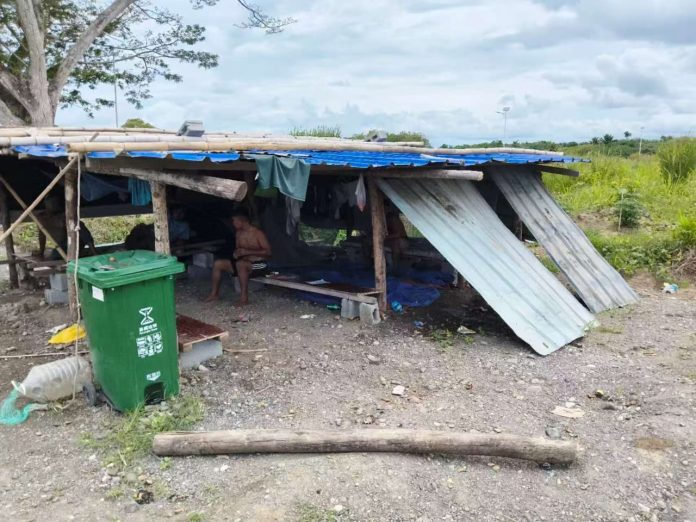
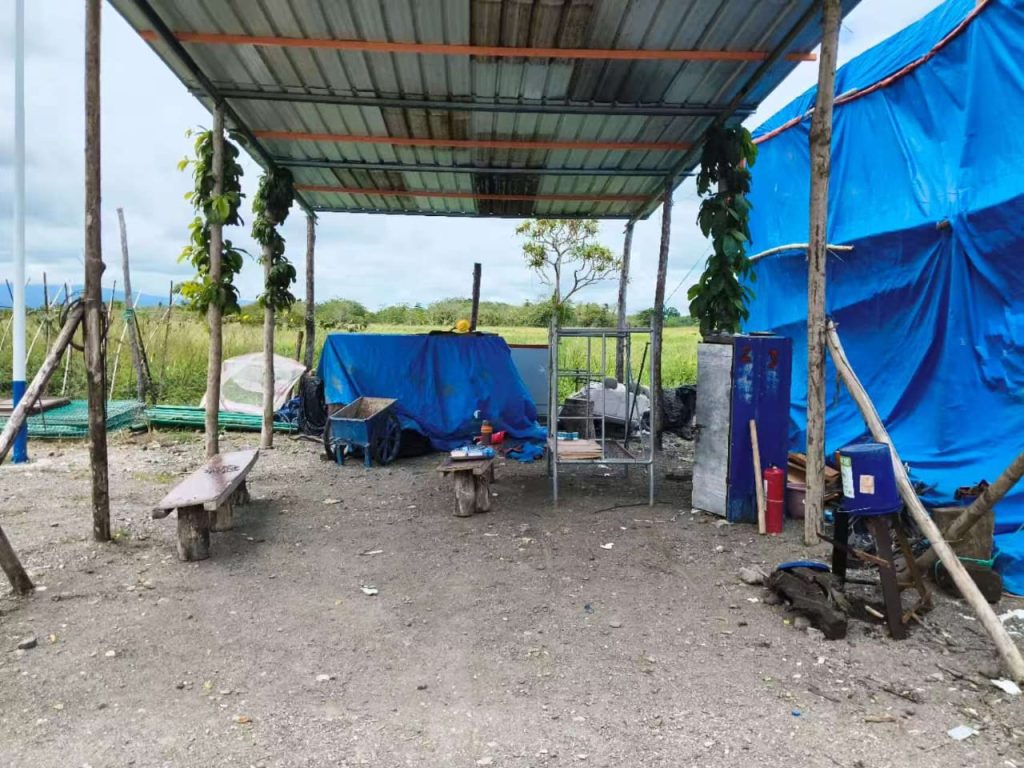
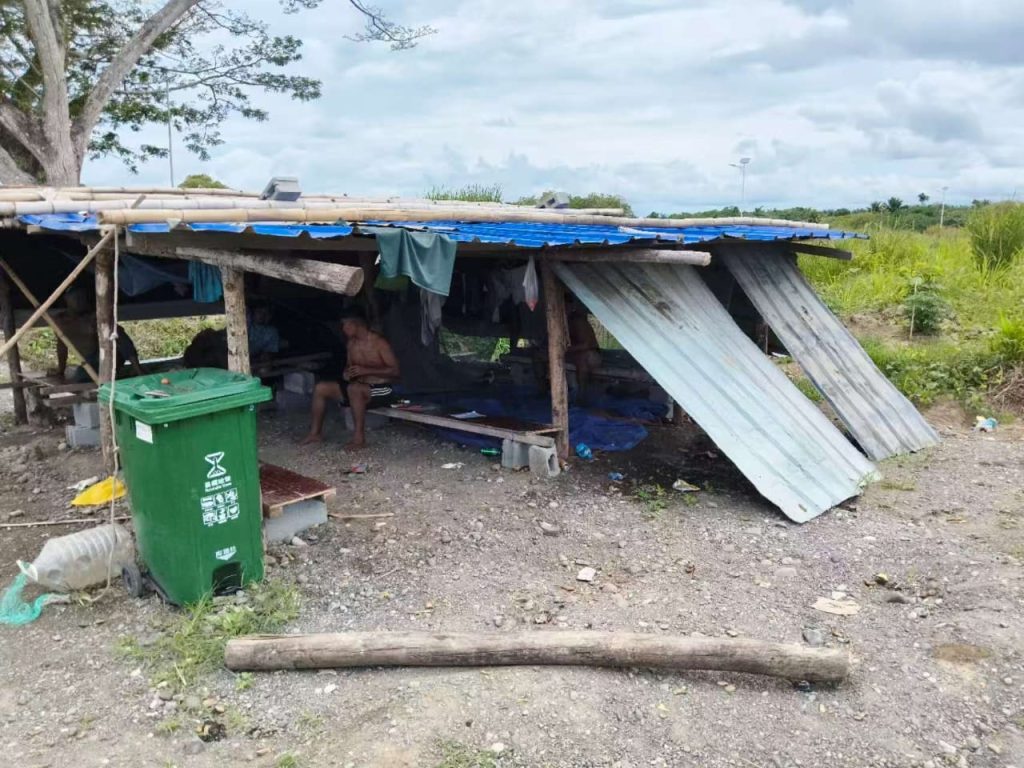
As the holiday season approaches, bringing with it expectations of comfort and security, the staff at SPETD are instead facing a desperate housing crisis, left without adequate shelter as their dormitory remains legally frozen in a half-built state.

This humanitarian hardship is set against a backdrop of immense economic waste, as the nation watches helplessly while millions of dollars in critical agricultural assets—from rusting machinery to spoiling seeds—slowly turn to dust, squandering a fortune that was meant to secure the country’s food independence.

$44 million in assets at risk

The scale of this economic loss is staggering. SPETD has invested approximately $44 million (SBD) into this project.

This investment includes state-of-the-art machinery and 11 tonnes of premium rice seeds intended to kickstart the “First Harvest”.

However, instead of generating revenue for the local economy, these assets are sitting idle.

SPETD workers living in makeshift sheds. Photo supplied

Machinery is rusting in the tropical humidity, and seeds, which have a limited lifespan, are losing their viability in storage.

This is not just a loss for the company; it is $44 million worth of national wealth that is slowly evaporating while the project remains paralysed.

No home for the holidays

While the financial loss is severe, the human cost is heartbreaking.

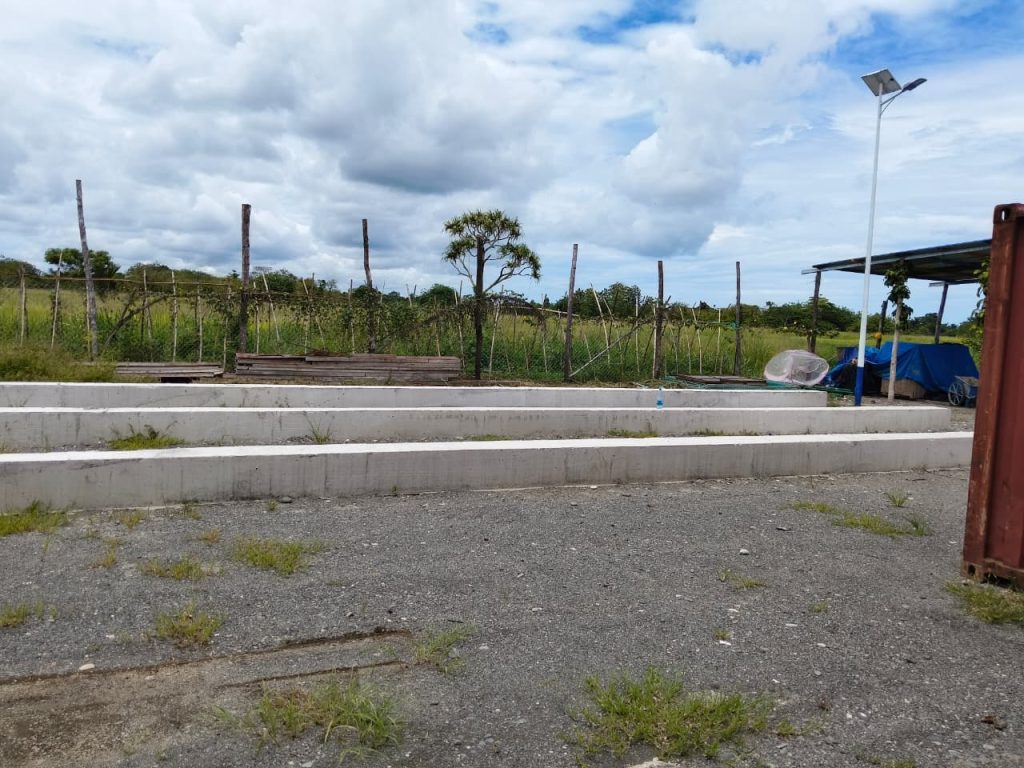
Our staff dormitory, a critical part of the project’s infrastructure, stands half-completed, the SPETD statement said.

Base of incomplete building forced to stop following court order. Photo supplied

When the court order halted work, it effectively barred us from providing shelter for our workers, SPETD said.

“Now, as Christmas approaches—a time for family, safety, and rest—our loyal workforce is left in a precarious position.

“They are skilled agriculturalists ready to feed the nation, yet they are forced to face the rainy season and the holidays without the safe, finished accommodation they were promised.”

A season of silence

The fields that should be ready for harvest this Christmas are overgrown.

The dormitory that should be full of life is an empty shell.

SPETD respects the judicial process and awaits a resolution.

But we ask the public to recognise the reality on the ground: A $44 million engine of economic growth has been turned off, and innocent workers are paying the price with their comfort and dignity this Christmas.

We remain ready to resume work immediately upon resolution, to save the investment and, more importantly, to give our workers the home they deserve, SPETD said.

Veo suggests portion of CDF be channelled through PCDF

0

BY BEN BILUA
Gizo

PREMIER of Western Province, Billy Veo, has called for a portion of the Constituency Development Fund (CDF) to be allocated through the Provincial Capacity Development Fund (PCDF), citing poor administration and limited development impact under the current CDF structure.

Speaking during the Western Day celebrations, Veo said there continues to be a “glaring mismatch” between how CDF and PCDF projects are administered, implemented and monitored. He said PCDF and other donor-supported mechanisms have clear reporting systems, strong governance requirements and stricter accountability—unlike the CDF, where the bulk of government development financing is directed.

Veo revealed that his government had consulted the Minister and Permanent Secretary of the Ministry of Rural Development to seek options for channelling a percentage of CDF funds to Ward Development Committees through the PCDF framework.

“Unfortunately, this was not provided for in the CDF Act and, as advised, it cannot be done. “I urge the government to seriously consider this proposal. It is sad that such arrangements are not institutionalised, making the funds more vulnerable to mismanagement and limiting their impacts on the ground,” he said.

Veo said channeling part of the CDF through PCDF would guarantee more tangible development outcomes because funds would be subject to a robust accountability framework and implementation guidelines.

“At the moment we can only plan and try our best to deliver on this 10-year strategic plan through the limited resources we work hard for under our annual PCDF assessment,” he said.

Prime Minister Jeremiah Manele acknowledged the proposal, noting that the idea of integrating aspects of the CDF into the PCDF would require amendments to existing laws, including the Constituency Development Act.

He said Solomon Islands’ development landscape and its fiscal decentralisation mechanisms are shaped by a complex political economy.

“Understanding the connections between political ideologies, power struggles, social forces and state–society relations are not straightforward,” Manele said.

He added that while the national government’s policy is to explore ways to merge the CDF and PCDF, progress remains slow because of these complexities and the need for broader structural reforms.

For feedback, contact: [email protected]
PM acknowledges Western province for successful ward profile validation

0

BY BEN BILUA
Gizo

PRIME Minister Jeremiah Manele has acknowledged the Western Provincial Government (WPG) and the Ward Development Committees (WDCs) for the successful hosting of the Ward Profile Validation Workshop.

Speaking during the closing of the programme, Mr Manele also commended WPG for allocating SBD$566,910 towards the data collection exercise that covered all 26 wards in the province.

He said the inputs gathered through the profiling exercise are crucial in shaping the Western Provincial Government’s 10-Year Strategic Plan 2025–2035 as well as strengthening the development profile of the 26 wards.

“I sincerely thank the Western Provincial Government and all stakeholders for your active participation and valuable contributions to the successful validation workshop.

“I also wish to recognise the Western Provincial Government for its financial commitment of SBD$566,910, which has facilitated data collection across all 26 wards, encompassing 2,208 people and 168 households,” Manele said.

Premier of Western Province, Billy Veo, acknowledged the Ministry of Provincial Government and Institutional Strengthening (MPGIS) and the IEDCR team for facilitating the exercise.

He said the ward profile process reflects a genuine bottom-up approach where the provincial planning division directly engaged rural communities to identify pressing development needs and service priorities.

“One thing is clear from the exercise — it reflects a truly bottom-up approach where Western Provincial Government, through its planning division, touched base with our rural populace and identified and agreed on development and service needs,” Veo said.

He added that the Ward Profile exercise is a key tool in informing the drafting of the 10-Year Strategic Plan, which outlines how the province can systematically address gaps and priorities despite limited resources.

Veo said the plan aims to guide Western Province toward becoming an economically vibrant, fair, and sustainable province, while also improving the livelihood of its people.

“Under the 10-Year Strategic Plan 2025–2035, as a government, we pledge to develop Western Province into a province that is economically vibrant, fair and sustainable, and at the same time socially advancing the livelihood of our people—drawing on our past experience to navigate the challenges ahead,” he said.

For feedback, contact: [email protected]