Home Blog Page 189

Weak budget target, little change on the ground

0

BY JOHN HOUANIHAU

Member of Parliament (MP) for South New Georgia/Rendova- Tetepare Constituency, David Gina, said the government tends to spread money thinly across too many programs.

He voiced this when delivering his speech during the Sine Die Motion in parliament this week.

“When targeting is weak, budgets look busy on paper but produce little change on the ground. Let me give you two quick examples. The budget figures we have recently scrutinised show persistent problems with targeting,” he said.

He said that the total budget for education in 2026 is $2.8 billion, yet only $83.7 million, around 5 percent, is allocated to development.

“The rest is absorbed by the current costs, including $129 million for teacher payback. We are paying salaries and arrears, but investing very little in classrooms, water, sanitation, and the unreformed lead delivery.

“In agriculture, where the government says growth and exports are the priority, the problem is again clear. The Ministry’s total budget falls from $90 million in 2025 to about $87 million in 2026, with development funding cut by about 20 percent. At the same time, over $72.5 million in donor-funded advanced warrants temporarily prop up activity,” Gina said.

He said that growth is driven largely by prices and donors, not sustained national investment.

“We speak of deficit reduction, yet the deficit still sits around 7.5 percent, with projected improvement rates relying heavily on donor support. Removed donor assistance and the underlying fiscal position remains fragile,” he said.

He said that this is not consolidation driven by reform, it is consolidation driven by assumptions.

He adds that borrowing pressure also coexists with spending patterns that weaken returns.

“Education and health budgets remain dominated by recurring costs, with development shares of roughly 5 percent in education and 8 percent in health. Borrowing in such a structure sustains wages and arrears rather than builds productive assets. If borrowing continues to rise while reform lags, future budgets will be retained by repayment schedules, not by Parliament’s priorities,” he said.

He said that fiscal responsibility requires borrowing only where returns are clear, closing revenue leakages and protecting development space.

“Again, that is the test this House must apply as we conclude this session,” Gina said.

For feedback, contact:

[email protected]

Waqa calls for regional unity

0

BY BEN BILUA

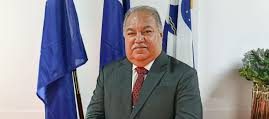
THE Secretary General of the Pacific Islands Forum has renewed his call for unity among Pacific nations, urging member countries to stand together to address the growing challenges the region faces.

Baron Divavesi Waqa made the call while speaking to the media during a press conference held on Wednesday December 17, 2025, where he emphasised the importance of solidarity among Pacific Island countries.

He said member states must remain united as one Blue Pacific family, taking shared and coordinated action to confront issues that continue to affect the region.

Waqa said Pacific unity is especially critical at a time when climate change and shifting geopolitical interests are placing increasing pressure on Island nations.

“The Pacific Ocean does not separate member nations but brings them together through culture, shared identity, and common challenges,” he said.

On the global front, Waqa stressed that a unified Pacific voice is essential in strengthening the region’s influence internationally, particularly in securing key positions within global institutions and advancing advocacy for a nuclear-free Pacific.

He also warned that transnational crime remains a serious and ongoing threat to Pacific countries, noting that collective regional efforts are needed to effectively address such challenges.

Waqa reiterated that only through unity and cooperation can Pacific nations safeguard their shared interests and ensure a secure and sustainable future for the region.

For feedback, contact:

[email protected]

UNICEF boosts provincial capacity on social services delivery

0

BY BEN BILUA
Gizo

Temotu and Western Provincial Governments, have supported capacity building initiatives that aim to strengthen social services delivery at the provincial and ward levels in the Solomon Islands.

This is possible from support received from UNICEF and the Ministry of Provincial Government and Institutional Strengthening (MPGIS).

With support from European Union through the Provincial Governance Service Delivery Programme, this initiative is focused on enhancing the skills of policy makers to improve planning, decision-making and service delivery for local communities.

A three-day workshop was conducted in Temotu and Western Province, bringing together 70 participants from 43 wards.

Participants included representatives from provincial governments, ward committees and civil society organisations.

The workshop emphasised on evidence-based planning, equipping participants with practical tools to assess community needs, analyse data and align local priorities with available resources.

According to UNICEF, the training is designed to ensure that decisions made at the local level result in more responsive, inclusive and equitable social services, particularly for children and vulnerable groups.

Officials from MPGIS and the provincial governments acknowledged the importance of strengthening governance at the grassroots level, noting that effective ward and provincial leadership play a critical role in improving access to essential services such as education, health and child protection.

The capacity-building effort forms part of broader efforts by the Government and its development partners to improve service delivery outcomes across provinces and to strengthen decentralised governance systems in the country.

For feedback, contact:

[email protected]

Transformation central objective of GNUT

0

BY JOHN HOUANIHAU

Transformation remains the central objective of the Government for National Unity and Transformation (GNUT).

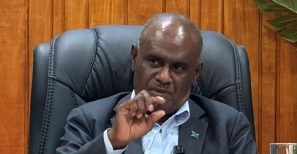
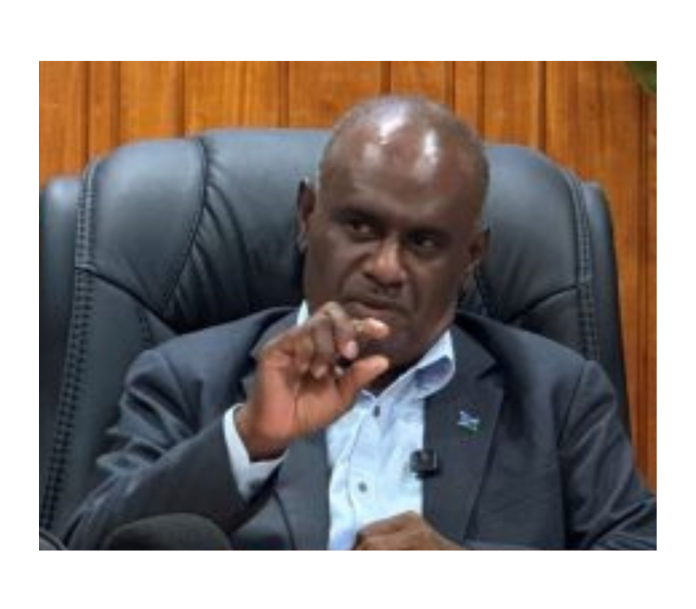
Prime Minister Jeremiah Manele expressed this when he formally concluded the final sitting for 2025 and the Third Meeting of the Twelfth Parliament on Wednesday December 17, 2025.

“As we conclude this meeting of Parliament, I do so with a deep sense of responsibility and reflection on the work undertaken by this Honourable House and the Government for National Unity and Transformation. And with optimism for the path that lies ahead for our nation,” he said.

He said that the debates, legislation and deliberations of Parliament reaffirm a shared commitment to serve the people of Solomon Islands and to advance the national development agenda.

“I thank all who have spoken on the motion,” he said.

He acknowledged those who shared their views on critical issues for growth and development, suggestions on policy gaps and recommendations.

“I thank Ministers of the Crown who took the floor to outline their respective ministries’ achievements in 2025 and their work programmes and priorities for 2026, as well as Government backbenchers who contributed to the debate,” PM Manele said.

He said that the debate on the motion has been very constructive.

“Transformation remains the central objective of the GNUT as it defines the legacy we seek to leave for future generations. The transformation agenda is guided by the four policy pillars of the GNUT, which provide a clear and coherent framework for national development.

“The first pillar, unity and stability, remains the foundation of all progress. Peace, social cohesion and political stability are essential conditions for development. On this note, I thank the opposition and independent leaders for their interventions on the issue of political stability, and others as well who spoke on this subject,” he said.

He confirmed that he was encouraged that they recognised the need for political stability in the Government.

“There have been issues ranging from federalism, suffering wharves, Constituency Boundary Commission reviews, reforms in the mineral sector, school fees, health and medical services, telecommunications, rural development, and a range of issues that have been raised during the course of the debate,” he said.

While he noted his Ministers responded to some of the concerns and observations that have been raised, he said it is time to deal with this issue head-on.

“We cannot allow individual interests to take precedence over national interests. I encourage GNUT’s other coalition partners to do the same. We must come back to Parliament in 2026 with renewed vigour and a sense of purpose,” PM Manele said.

For feedback, contact: [email protected]

Solomon Islands first to implement IUCN Green List certification

0

BY BEN BILUA
Gizo

THE International Union for Conservation of Nature (IUCN) Oceania Protected and Conserved Areas (PCA) team has commended Solomon Islands for becoming the first country in the Pacific to begin the implementation of the IUCN Green List certification.

The initiative is being implemented in Solomon Islands through the Solomon Islands Marine and Coastal Resources Programme (SOMACORE) under the Coral Triangle Project.

The IUCN Green List is a global standard that recognises well-managed and effectively governed protected and conserved areas.

Key partners supporting the programme include the Climate Change Division (CCD) of the Ministry of Environment, Climate Change, Disaster Management and Meteorology (MECDM), the Ministry of Fisheries and Marine Resources, Global Fish, Coral Triangle Initiative on Coral Reefs, Fisheries and Food Security (CTI-CFF), Arnavon Marine Protected Area, and Ecological Solutions Solomon Islands (ESSI).

Recently, these partners attended a workshop in Honiara that aims to share knowledge and build understanding of the IUCN Green List Standards.

The workshop focused on governance, effective management, biodiversity conservation outcomes and long-term sustainability of protected and conserved areas.

Following the workshop, further awareness activities were conducted in Munda, Western Province.

This provided an opportunity for the PCA team to engage directly with local communities and managers of the Munda Lagoon Locally Managed Marine Area.

Five coastal communities participating in the programme are Nusa Roviana, Dunde, Kekehe, Lodumaho and Kindu.

These communities play a key role in protecting vital ecosystems, including seagrass meadows, coral reefs and important fish spawning areas.

The PCA team were encouraged by the unity and strong commitment shown by the communities, noting their ability to carry out self-assessments against Green List requirements.

Particular strengths were observed in governance structures, customary stewardship practices and adaptive management approaches.

The PCA team is expected to return to Solomon Islands early next year to provide further support to the Munda Lagoon initiative and to conduct similar assessments at the Arnavon Marine Protected Area.

According to IUCN, Solomon Islands is taking meaningful steps towards strengthening its protected and conserved areas, demonstrating how community leadership combined with global standards can help build resilient, world-class conservation sites for the Pacific region.

The SOMACORE Programme is supported by the German Federal Ministry for Environment, Climate Action, Nature Conservation and Nuclear Safety (BMUKN) through the International Climate Initiative (IKI) and is being implemented by 10 organisations across the Coral Triangle.

For feedback, contact:

[email protected]

PM shares thoughts and prayers with victims of Bondi shooting

0

BY JOHN HOUANIHAU

Prime Minister Jeremiah Manele shared the government and the people of Solomon Islands’ thoughts and prayers with the victims of Bondi shooting in Sydney, Australia.

He made the profound statement before he closed the final sitting for 2025 and the formal conclusion of the Third Meeting of the Twelfth Parliament yesterday.

“Our thoughts and prayers are with the victims and their families during this time of profound grief. We extend our heartfelt condolences to the Government and people of Australia, and we stand in solidarity with them as they mourn this tragic loss,” he said.

He said that Solomon Islands stands with Australia in rejecting violence in all its forms and in upholding peace, safety and the sanctity of human life.

The PM also strongly condemned the incident, describing it as sad and disturbing to him.

“Let me reflect briefly on the Bondi shooting in Sydney, Australia. Mr Speaker, I am deeply saddened and disturbed by the tragic shooting in Bondi, Sydney, Australia. On behalf of the Government and people of Solomon Islands, I strongly condemn this senseless act of terror and violence.

“I have already written to the Prime Minister of Australia expressing our condolences and sympathies,” PM Manele concluded.

On 14 December 2025, a terrorist mass shooting occurred at Archer Park beside Bondi Beach in Sydney, Australia, in the late afternoon during a Hanukkah celebration attended by approximately one thousand people.

Two gunmen shot at the crowd, killing 15 people, including a child.

For feedback, contact:

[email protected]

Education a shared responsibility: Leokana

0

SYLVANA TEKUMAHA

The Minister for Education and Human Resource Development (MEHRD) Tozen Leokana told parliament that education is a shared responsibility.

Contributing to the Sine Die Motion in parliament on Tuesday this week, he said preparation of a child requires long term vision, policy consistency and discipline implementation.

“Education reforms deliver lasting impact only when sustained beyond political circles. 

“While the state provides leadership regulations, and finances. Families, communities and education providers have an important responsibility in the process. A strong partnership is not optional but fundamental towards a student’s success,” he said.

He highlighted that the Ministry of Education’s focus remains on strengthening the education system around the country.

“The Ministry remains committed to teacher development, improvement of learning environment, inclusive access, strengthened oversights, transparency with a measurable result will remain central to our approach,” he said.

According to Leokana the ministry’s finance is one of the most demanding and politically sensitive responsibility of the government.

“It is disappointing to hear arguments that disregard physical realities and rely on slogans rather than solutions. Successive governments have consistently prioritised education with an expenditure exceeding international benchmarks,” he said.

Furthermore, Leokana said he will not accept perpetuation of the myth of a completely free education, for the narrative is economically dishonest. The former fee free basic education policy was unsustainable. He said if it continues it will bankrupt schools, erode standards and destabilize the system.

“The truth is simple, Education has real and unavoidable cost,” he said.  

Under the Education Act 2023 the maximum tuition fees are as follows:

  • For non-boarding schools for primary in urban schools, they should charge the maximum of $1200, while non-urban schools should charge a maximum fee of $250.
  • Junior secondary for urban schools should charge with the maximum of $2000 while non-urban Junior secondary schools should charge a maximum of $800
  • Senior secondary Education in Urban Centre should charge up to $4000 and non-urban Senior Secondary School should charge a maximum of $3000
  • Boarding schools for Junior secondary in Urban Centre should charge a maximum of $4500 while boarding schools in non-urban should charge a maximum of $2800
  • Boarding schools for Senior secondary in an urban area should charge a maximum of $9000 while a Senior Secondary boarding school in a non-urban school should have the maximum of $7200.

For feedback, contact: [email protected]

North Guadalcanal delivers projects worth $1.4m in 2025

0

BY SAMIE WAIKORI

The North Guadalcanal constituency has successfully delivered projects worth $1.4 million for the year 2025.

An additional SBD $3.7 million is secured to continue these efforts until June 2026.

Speaking during the Sine Die Motion early this week, Minister for Health and Medical Services and Member of Parliament for North Guadalcanal, Dr Paul Popora Bosawai, updated parliament of this.

He also expressed gratitude to his constituents for their ongoing support and cooperation in executing these initiatives.

“We have made significant progress in 2024. For example, our road infrastructure maintenance has helped establish 12 economic zones, which in turn has allowed us to invest in education and improve livelihoods within the community,” he said.

The Member of Parliament further noted that the constituency has already delivered projects valued at SBD $1.4 million this year, with plans to continue executing projects until June 2026, totalling SBD $5.1 billion.

Looking ahead, Bosawai spoke about the upcoming launch of cooperative societies within the 12 zones, acknowledging the leadership and trust placed in him by the community.

“I firmly believe in the importance of developing a sustainable rural economy.

“I urge all constituents to ensure that the work we’ve started is maintained and continues to thrive,” he said.

He also took a moment to thank both local and foreign investors for their ongoing contributions and cooperation in strengthening the economy of the constituency.

For feedback, contact: [email protected]

Parliament passed three bills this year

0

BY JOHN HOUANIHAU

The National Parliament has considered and passed three Bills during the final sitting for 2025, and the formal conclusion of the Third Meeting of the Twelfth Parliament yesterday.

The Third Meeting commenced on Thursday, 24 April 2025, and concluded on Wednesday, 17th December 2025, bringing the total number of sitting days to 50, inclusive.

The three Bills considered and passed include the Special Economic Zone Bill 2024, the National Building Standards Bill 2025, and the Public Service Bill 2025.

In addition, three Appropriation Bills that were presented, debated, and approved are; the 2025 Supplementary Appropriation Bill 2025, the 2024 Supplementary Appropriation Bill 2025, and the 2026 Appropriation Bill 2025.

The Speaker of the National Parliament, Patteson J. Oti, said that the work of Standing Committees’ inquiries and reports during the Meeting relate solely to the six Bills considered by the House.

He said the Public Accounts Committee (PAC) and the Bills and Legislation Committee (BLC) each conducted three inquiries and tabled three reports, respectively.

He said that the Public Expenditure Committee conducted one inquiry, which was not completed; hence, no report was tabled, with several deliberative meetings held by other Standing Committees, with no further inquiries were undertaken, and no reports were presented to the House.

He said that no Private Members’ Business was introduced during the Third Meeting.

The Speaker of Parliament said that there remains a scope for greater productivity, particularly in relation to the oversight role of Standing Committees.

He emphasised the importance of conducting more inquiries into matters of public interest and tabling reports for consideration by the House, to improve the quality of life of citizens.

He highlighted that Statements by Ministers were underutilised, seeing that Ministers are accountable to the people through Parliament by reporting on actions and decisions taken within their portfolios.

The Speaker of Parliament also expressed hope that future meetings will see increased use of ministerial statements, a higher number of committee inquiries and reports, and the introduction of Private Members’ Business going forward.

He also encouraged the adoption of a parliamentary sitting calendar to enhance planning and operational efficiency.

The Speaker conveyed his sincere appreciation to all Members for their contributions to the deliberations of the House throughout the Third Meeting, despite these observations.

He expressed his hope that the coming year will bring renewed unity, peace, and prosperity to all communities across the country.

For feedback, contact: [email protected]

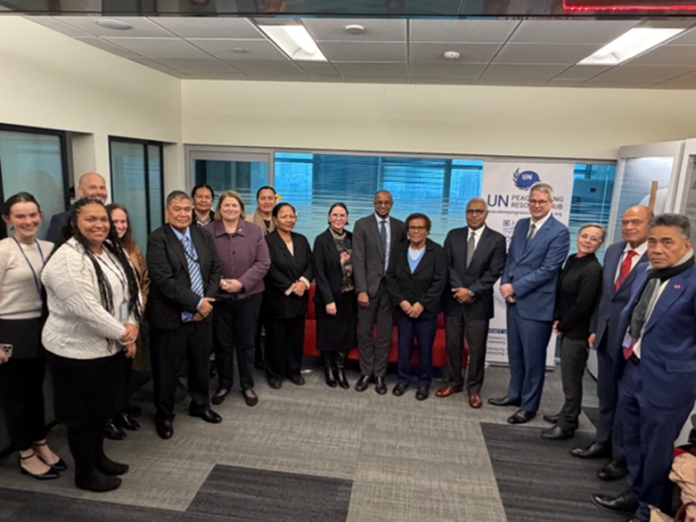
MFAET eyes Solomon Islands’ own UN resident coordinator

0

By Richard Menanopo

The Ministry of Foreign Affairs and External Trade (MFAET) has announced its proposal for Solomon Islands to have its own United Nations Resident Coordinator.

This move aims to increase the presence of United Nations (UN) in the country, a statement by MFAET Tuesday this week said.

This follows a meeting between permanent representatives of the Pacific Islands Forum (PIF) to the United Nations with the three United Nations Resident Coordinators (RCs) for the Pacific.

The UN resident coordinators are: Dirk Wagener, UN resident coordinator for Fiji, Solomon Islands, Tonga, Tuvalu and Vanuatu; Karla Robin Hershey, for Samoa, Cook Islands, Niue and Tokelau; and Mamadou Kane, for the Federated States of Micronesia, Marshall Islands, Palau, Kiribati and Nauru.

The meeting was held on December 2 at the United Nations Headquarters in New York, United States of America, the MFAET statement said.

The meeting was chaired by the Solomon Islands Permanent Representative to the United Nations, Her Excellency Jane Waetara.

Waetara acknowledged the United Nations’ continued commitment to the Pacific and underscored the vital role of Resident Coordinators in ensuring sustained UN engagement in the region.

She noted the importance in advancing national and regional development priorities and in supporting the achievement of the Sustainable Development Goals (SDGs) across Pacific Island countries.

Waetara said the PIF group looks forward to tabling the biennial resolution on cooperation between the United Nations and the Pacific Islands Forum.

Meanwhile, the meeting also discussed the UN80 reform initiative and its potential implications for the Pacific region.

The meeting provided an opportunity for the resident coordinators to brief permanent representatives on their work across the Pacific, promote information sharing and further strengthen cooperation between the Pacific Islands Forum group and the UN Resident Coordinator system.

The permanent representatives highlighted the importance of active engagement by the PIF group throughout the UN80 reform process.

A highlight of the discussions was the need to ensure that any reforms do not compromise support for Small Island Developing States (SIDS), including the preservation of UN programmes tailored to SIDS and strengthened coordination through the UN Resident Coordinator system in the Pacific.

Photo: MFAET

For feedback, contact: [email protected]